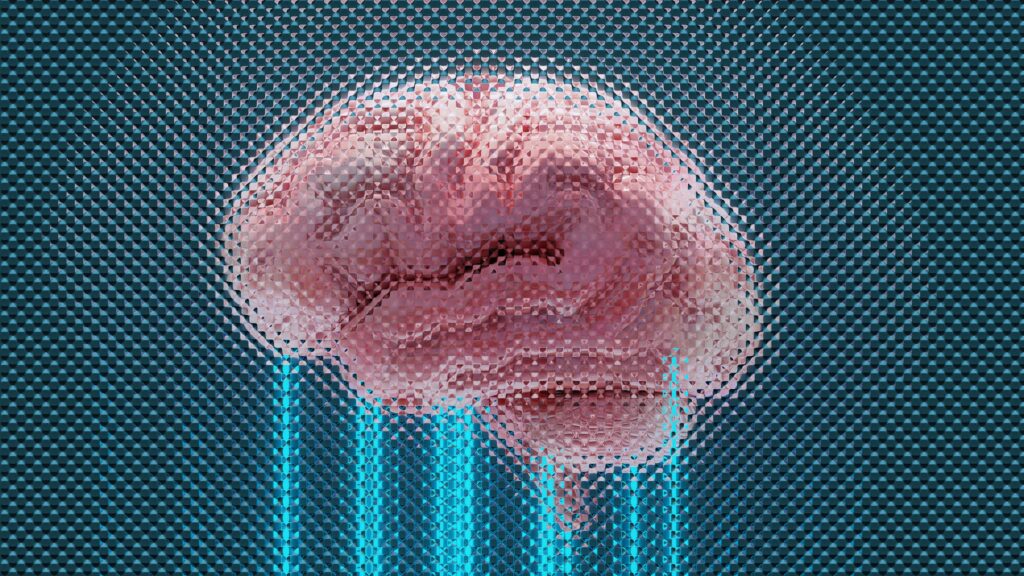
If you could see reality exactly as it is, moment to moment, it would probably feel like standing inside a hurricane made of light, sound, touch, memory, and emotion. Thankfully, your brain never lets that happen. Long before “you” show up as a conscious experience, your nervous system has already censored, compressed, re-colored, and re-framed the world into something you can survive inside. And the wild part is: you almost never notice what was removed.
This is not a small tweak around the edges. Modern neuroscience suggests that what you experience as “the world” is closer to an edited highlight reel than a raw live stream. Your brain quietly throws away most of the data, fills in the gaps with predictions, and then confidently presents the result as obvious truth. Once you start to see how much is filtered out, it becomes very hard to trust your own sense of what is “real” in quite the same way.
The Brain As A Ruthless Editor, Not A Camera
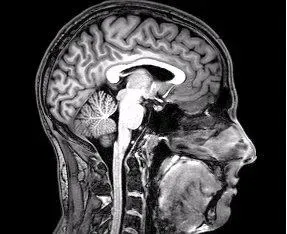
We like to think of our senses as little cameras and microphones faithfully recording whatever happens out there. But biologically, that would be an energy disaster: your eyes alone receive far more information than your brain could ever fully process in real time. So instead of a neutral recording, evolution gave us a ruthless editor whose first job is to cut almost everything that looks irrelevant to staying alive.
Neurons early in the visual and auditory pathways already start reducing redundancy and discarding detail, and it only gets more aggressive as signals move inward. By the time activity reaches higher brain areas that are associated with conscious awareness, it has been through so many layers of selection that most incoming signals never even get a “screen test.” The world you experience is what made it past a long series of biological gatekeepers, not what actually happened.
Change Blindness: How You Miss The Obvious Right In Front Of You

One of the most unsettling findings in psychology is how easily we fail to notice even big, dramatic changes when our attention is elsewhere. In classic experiments, people look at two alternating images, almost identical except for a large difference: an entire building disappears, a person changes clothing, a car moves. You might expect immediate spotting of the change, but many observers stare for long seconds, sometimes longer, without seeing it.
This phenomenon, known as change blindness, shows that your brain does not store a full picture of the visual scene and constantly compare it frame by frame. Instead, it keeps a very rough sketch of what “should” be there and updates only the parts it deems important. If a change happens in a region your brain has labeled as unimportant, it often just never makes it into awareness at all. What feels like a solid, stable view of the world is stitched together from shortcuts and assumptions.
The Invisible Lag: Your Conscious Now Is Always A Little Too Late
Another strange twist is that conscious experience does not happen in true real time. It takes tens to hundreds of milliseconds for sensory information to travel, be processed, integrated, and finally make it into awareness. Your brain quietly buffers and bundles events, then presents them to you as a smooth, continuous “now” that has already happened.
To pull off this trick, neural circuits rely heavily on prediction. Instead of waiting for every signal to arrive, the brain is constantly guessing what will happen a moment from now and then adjusting based on incoming data. You mostly experience the brain’s best guess, retrospectively cleaned up and synchronized, rather than a raw live feed. In a sense, your conscious self is always looking at the world in replay, but with the replay so cleverly edited that it feels live.
Predictive Brains: You See More Of Your Expectations Than Of Reality

Current theories in neuroscience increasingly describe the brain not as a passive receiver of information but as an active prediction machine. Higher brain areas generate expectations about what you should see, hear, or feel, and these expectations flow downward to shape how incoming signals are interpreted. Sensory input is then used mainly to correct errors in those predictions, not to build experience from scratch every time.
This means a surprising amount of what you perceive is top‑down: memories, beliefs, and past patterns filling in the gaps. When signals are weak, noisy, or ambiguous, your brain leans even harder on its internal model and simply assumes the most likely explanation. Sometimes that is incredibly useful, like recognizing a friend from a blurry glimpse; sometimes it leads you astray, like hearing your name in random noise or confidently misreading a situation because it matches an old story in your head.
Attention As A Spotlight: What You Ignore Might As Well Not Exist

Even after all the early filtering and predictive editing, there is still too much going on for you to handle consciously. That is where attention comes in. Attention acts like a tight spotlight sweeping across a much larger stage, lighting up a few items for detailed processing and leaving the rest in relative darkness. What falls outside that beam is still processed at some level, but often never gets promoted into the feeling of “I noticed this.”
Experiments where people track a ball in a video while a person in a costume walks straight through the scene are famous for a reason: roughly about half of viewers do not see the unexpected intruder at all. When attention is locked onto a demanding task, reality beyond that task can be effectively invisible. The uncomfortable implication is that your sense of living in a rich, open world is partly an illusion: you live inside whatever your current spotlight happens to be illuminating, plus your brain’s confident guesswork about the rest.
The Brain Also Edits You: How It Rewrites Your Own Story
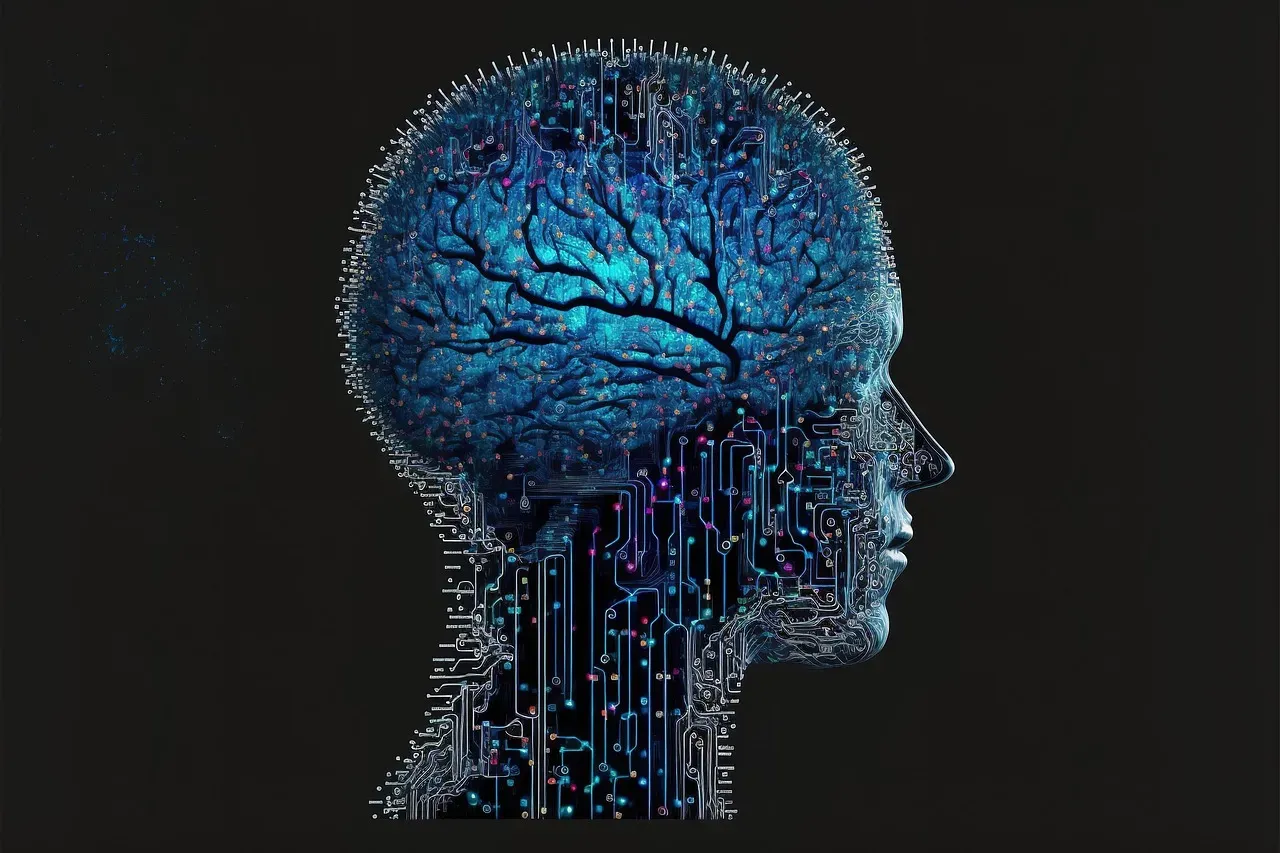
The editing is not limited to the outside world; your brain also quietly revises your own inner life. In some experiments, people are asked to explain why they made a choice, and then the choice is secretly swapped without them noticing. Many participants enthusiastically explain reasons for a decision they never actually made, weaving a coherent story on the spot. The brain seems less interested in historical accuracy than in narrative coherence.
Memory works the same way. Each time you remember an event, you do not simply replay a fixed recording; you reconstruct it from fragments, expectations, and present emotions. Details can shift subtly with every retelling. Over time, the brain’s edits can turn a messy, ambiguous experience into a crisp, emotionally charged story that feels more solid than it ever really was. We often walk around convinced by these edited autobiographies without realizing how much they have drifted from the original events.
Why This Massive Editing Is Actually A Feature, Not A Bug
It is tempting to see all this and conclude that the brain is a bad truth machine. But if you step back, the editing looks more like a survival strategy than a flaw. A nervous system that tried to fully represent every photon, every sound wave, every bodily sensation would grind to a halt. By compressing, discarding, predicting, and filling in, the brain gives you something much more practical than raw reality: a usable reality you can navigate without drowning in noise.
In day‑to‑day life, you usually do not need a perfect depiction of the world; you need just enough accuracy to stay safe, reach your goals, and connect with others. The brain’s shortcuts are very good at those jobs most of the time. Where things get tricky is when we forget that what we experience is an edited model and start treating it as unquestionable fact. That is when misunderstandings, rigid beliefs, and needless conflicts get locked in by our own certainty.
Living With A Filtered Reality: My Take On What We Should Do With This

Personally, I find this research both humbling and strangely liberating. It is humbling because it undercuts the comforting feeling that my perception is the gold standard for what is real. When I disagree with someone, it is very hard to remember that both of us are arguing from inside heavily edited, personalized versions of the same world. But it is also liberating, because if my experience is a constructed model, then I am not trapped by it; I can question it, stretch it, and update it.
In my view, the smartest response is not paranoia about being “lied to” by your brain, but a kind of gentle skepticism toward your own certainty. You can treat your first impression as a draft, not a final verdict, especially in emotionally charged situations. You can deliberately widen your spotlight with curiosity, ask more questions, and expose your internal model to other people’s perspectives and to better evidence. The brain will always quietly edit out most of reality before you become aware of it, but you have a say in how flexible that edited version becomes. And maybe the real power move is to keep asking yourself: what might I be missing right now that I am absolutely sure I can see?