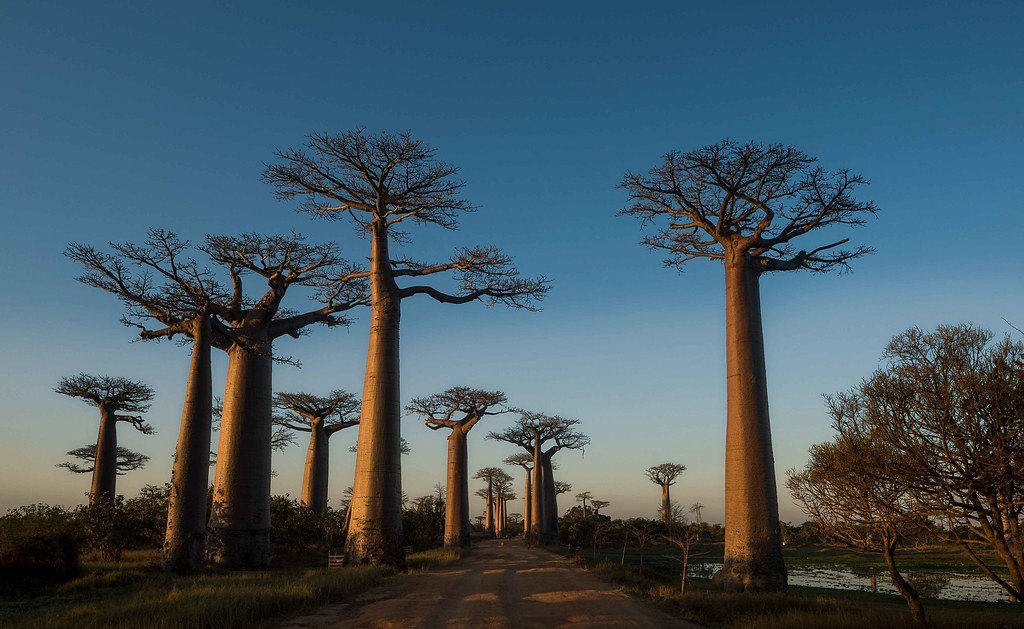
Baobabs: Living Archives of Climate Data (Image Credits: Flickr)
Southwestern Madagascar – Towering baobab trees in this arid region have yielded a groundbreaking 700-year record of rainfall variations, pieced together from chemical signatures in their rings. A team of researchers, led by Estelle Razanatsoa, analyzed carbon isotopes from cores extracted from four ancient specimens to map climate history back to around 1300. When paired with pollen and charcoal data from nearby wetlands, the findings illustrate how droughts and human practices reshaped the landscape over centuries.[1]
Baobabs: Living Archives of Climate Data
Researchers likened these trees to filing cabinets storing annual climate records. Each growth ring captures isotopes that reflect water availability – more of the heavier carbon-13 in dry years when trees close their stomata to conserve moisture, and less in wetter times. Cores from the four baobabs, some over 1,000 years old, provided more than 2,000 samples for analysis at the Mammal Research Institute Laboratory in Pretoria. Radiocarbon dating at iThemba LABS confirmed the timeline spanning seven centuries.
Madagascar hosts seven baobab species, six endemic to the island. Scientists used a long borer to extract samples without harming the trees, then sealed the holes. This marked the first such rainfall reconstruction from baobab rings on the island, filling gaps in paleoclimate data alongside stalagmites and sediments.[1]
Distinct Periods of Wet and Dry Extremes
The isotope record pinpointed the wettest era from 1350 to 1450, a time of abundant rains in southwestern Madagascar’s driest corner. Conditions then stabilized until a prolonged dry spell gripped the region from 1600 to 1750. Since 1750, rainfall has followed a steady decline, contributing to today’s challenging environment.
These fluctuations appear in the following timeline:
- 1300–1350: Start of the continuous record.
- 1350–1450: Peak wetness, supporting lush vegetation.
- 1600–1750: Extended drought, stressing ecosystems.
- 1750–present: Ongoing rainfall reduction.
Such patterns offer a baseline for assessing modern climate impacts.[1]
Climate and Humans: Joint Architects of Change
Pollen from wetland sediments traced vegetation shifts, while charcoal revealed fire patterns linked to human activity. Droughts diminished evergreen and deciduous trees, paving the way for grass-dominated landscapes. Farming practices, including vegetation clearance and fires, amplified these changes.
Humans arrived in Madagascar about 2,000 years ago, transitioning from hunter-gathering to cattle and rice farming amid variable rains. The study challenges views of a fully forested pre-human island, showing open vegetation existed historically. Both climate and people drove the transformation, not one in isolation.[1]
Adaptations That Sustained Life
Ecosystems responded resiliently as drought-tolerant plants replaced water-demanding species. Human communities, like the Mikea, blended seasonal farming with hunter-gathering to cope. Others focused on livestock and crops suited to drier conditions.
This co-evolution underscores deep ties between societies and their surroundings. The detailed record, published in PLOS One, highlights how past strategies could inform future resilience.[1]
Relevance to Contemporary Challenges
The baobab data complements regional climate reconstructions from Botswana and South Africa, painting a fuller picture of southern Africa’s past. It aids biodiversity conservation, land management, and policies tackling global warming’s effects on arid zones. Understanding these long-term dynamics supports poverty reduction and international efforts.
Key takeaways include:
- Climate and human actions together transformed southwestern Madagascar’s landscapes.
- Resilient species and adaptive livelihoods buffered past changes.
- Historical records guide strategies for warmer, drier futures.
As rainfall continues to wane, these insights emphasize the need for integrated approaches to conservation and livelihoods.[1]
The baobabs stand as testaments to endurance, reminding us that landscapes and people have navigated upheaval before. Policymakers and communities can draw from this 700-year saga to build stronger defenses against accelerating climate shifts. What strategies would you prioritize for such regions? Share your thoughts in the comments.