The Sun’s Dramatic Shift (Image Credits: Upload.wikimedia.org)
A significant solar feature captured attention on April 17, 2026, when a massive coronal hole rotated into a geoeffective position directly facing our planet.[1][2] This development promises streams of fast solar wind that could interact with Earth’s magnetosphere. Forecasters expect a co-rotating interaction region, or CIR, to precede the high-speed flow, potentially igniting minor to moderate geomagnetic disturbances through April 18. Northern skywatchers hold promise for vivid auroral shows under favorable conditions.
The Sun’s Dramatic Shift
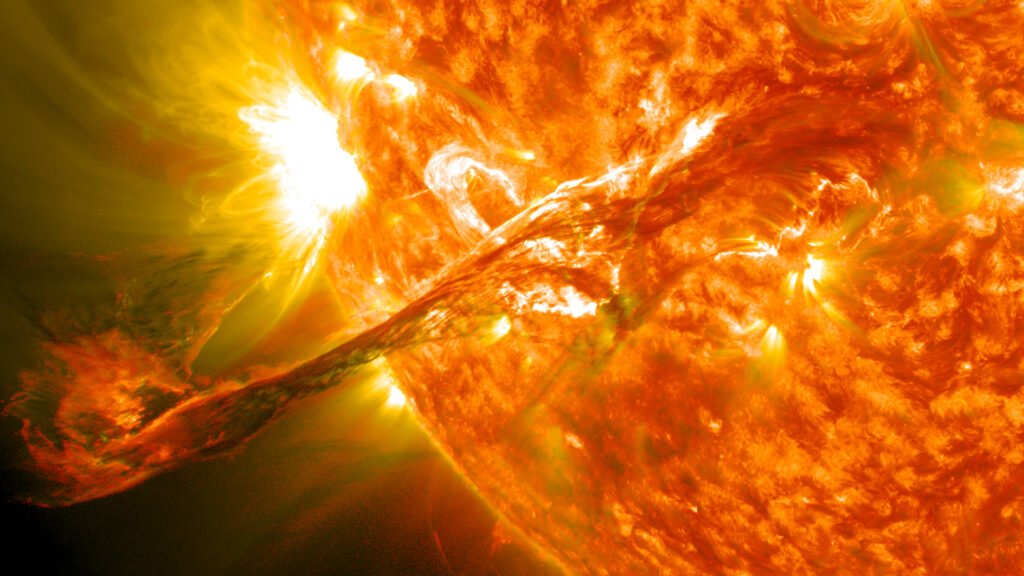
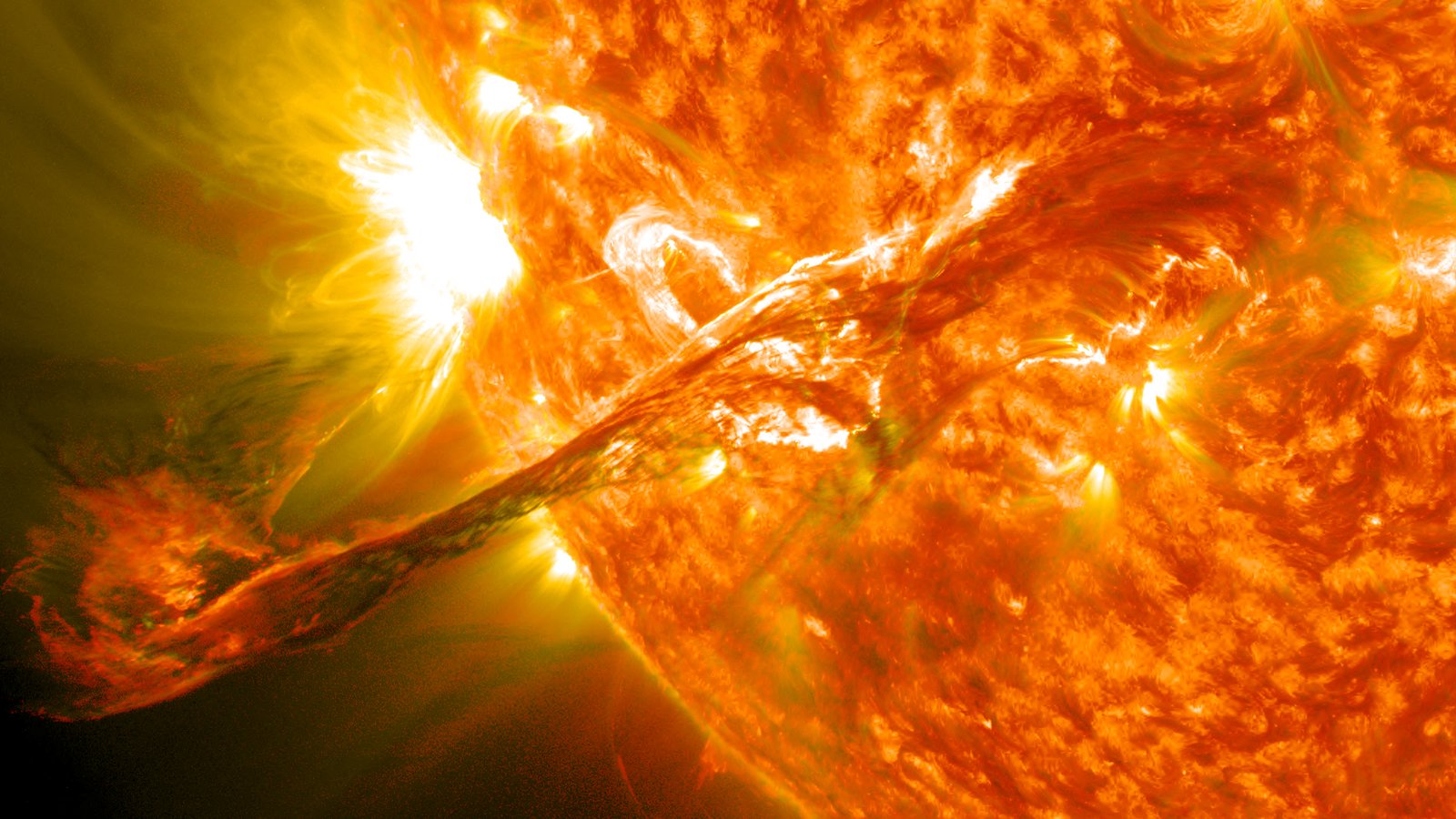
Solar imaging revealed the coronal hole’s growth earlier in the week on the sun’s northeast quadrant.[1] Observers tracked its movement across the solar disk until it settled squarely in Earth’s line of sight. Such positioning maximizes the chance for solar wind to influence our planet’s magnetic environment. The hole stands out as particularly large, enhancing its potential reach.
Recent solar behavior remained subdued over the prior 24 hours, from 11 UTC on April 16 to 11 UTC on April 17. Activity produced 16 flares, including five C-class and 11 B-class events. Active region AR4419 delivered the peak intensity with a C4.2 flare at 4:42 UTC on April 17.[1] This region holds a beta-gamma magnetic complexity amid three numbered sunspot groups visible from Earth. Coronagraph views confirmed no Earth-aimed coronal mass ejections.
Decoding Coronal Holes and Their Reach
Coronal holes form where the sun’s magnetic fields diverge openly into space, creating pathways for accelerated solar wind.[1] These areas appear darker in extreme ultraviolet and X-ray observations because of their cooler, less dense plasma compared to surrounding corona. Wind speeds from such holes often double those from closed-field regions, racing toward Earth at hundreds of kilometers per second when aligned properly.
The CIR arises as faster wind from the hole catches up to slower ambient flows, forming a turbulent boundary. This interaction compresses Earth’s dayside magnetosphere upon arrival. Historical patterns show these events reliably stir auroral activity, though intensities vary with magnetic field orientations.
Geomagnetic Forecast and Aurora Potential
Conditions turned quiet in recent monitoring, with solar wind speeds averaging low and the interplanetary magnetic field remaining weak. A southward Bz component appeared late on April 16, briefly aiding aurora formation. Planetary Kp index hovered between 0 and 1, signaling minimal disturbance.[1]
Prospects shift toward unsettled to active geomagnetic levels starting late April 17, with Kp values of 3 to 4 anticipated. G1 minor storms hold strong likelihood, alongside chances for G2 moderate events on April 17 and 18. NOAA’s Space Weather Prediction Center issued G2 watches for those dates due to coronal hole high-speed stream effects.[3] Activity should ease to quiet-to-unsettled by April 19. Flare outlook stays low-to-moderate, with 75 percent odds for C-class and 25 percent for M-class events, mainly from AR4419.[1]
Preparing for the Show
Aurora chasers at higher latitudes stand the best chance for sightings this weekend, especially during evening hours under dark, clear skies. Geomagnetic storms at G1-G2 levels often expand the auroral oval southward, occasionally reaching mid-northern sites. Real-time tools like Kp index trackers prove invaluable for timing observations.
- Monitor official forecasts from NOAA SWPC for updates on storm thresholds.
- Seek locations far from city lights to maximize visibility.
- Check local weather for cloud cover, as twilight in polar regions may dim fainter displays.
- Use smartphone apps or webcam feeds from aurora hotspots for remote viewing.
- Equip cameras with wide-angle lenses and tripods for long exposures if venturing out.
Key Takeaways
Solar dynamics like this coronal hole underscore the sun’s ongoing influence on our planet, even in quieter phases of its cycle. Weekend stargazers prepare for nature’s light show, a reminder of the intricate dance between stars and Earth. What are your plans for aurora hunting? Tell us in the comments.