World’s First Large Liquid-Argon Detector Proves Its Mettle (Image Credits: Upload.wikimedia.org)
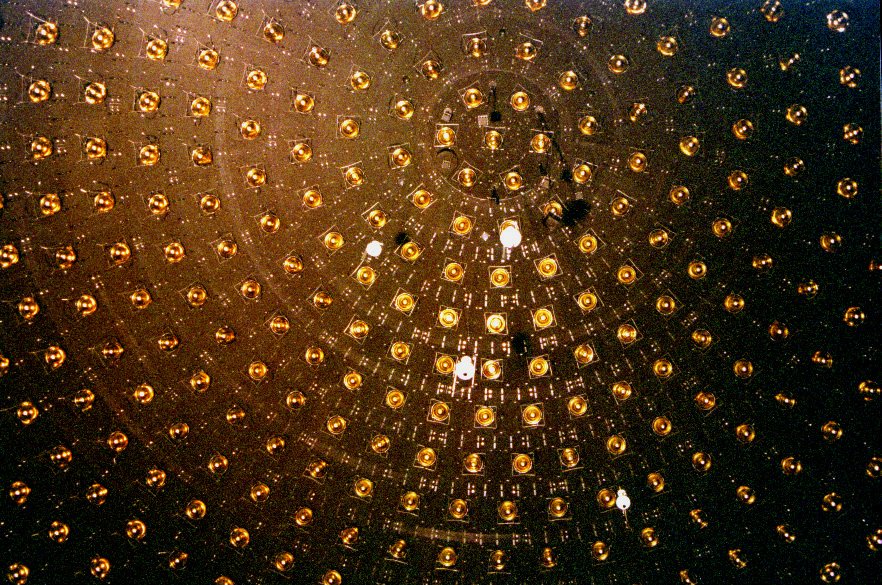
Fermilab – Scientists with the ICARUS collaboration celebrated a significant achievement as their detector delivered its inaugural physics results on neutrino oscillations. Located at the Fermi National Accelerator Laboratory near Chicago, ICARUS stands as the world’s first large-scale liquid-argon neutrino detector. These findings, drawn from data collected between 2022 and 2023, affirm the instrument’s exceptional performance and readiness for deeper inquiries into particle physics.[1]
World’s First Large Liquid-Argon Detector Proves Its Mettle
The ICARUS experiment traces its origins to Italy’s Gran Sasso National Laboratory, where it operated starting in 2010 under the auspices of the Italian Institute for Nuclear Physics. Refurbished at CERN in 2014, the detector arrived at Fermilab in 2017 to join the Short-Baseline Neutrino Program. Comprising a 760-ton T600 liquid-argon time projection chamber, ICARUS captures rare neutrino interactions by drifting ionization electrons to wire planes for precise three-dimensional reconstruction.[1]
This technology breakthrough marked a bold step forward. More than 180 researchers from 27 institutions now drive the effort, demonstrating the detector’s stability after years of relocation and upgrades. The recent results validated not only the data quality but also the sophistication of software for event selection, simulation, and analysis.[1]
Unraveling Neutrino Oscillations in the SBN Program
Neutrinos oscillate between three known flavors – electron, muon, and tau – as they traverse space. The Short-Baseline Neutrino Program positions three detectors along Fermilab’s neutrino beam to scrutinize these shifts over short distances: SBND at 110 meters, MicroBooNE at 470 meters, and ICARUS at 600 meters. Such configuration enables precise comparisons to detect anomalies.[1]
A primary goal targets sterile neutrinos, a hypothetical fourth flavor in the 3+1 model. These elusive particles might cause muon-neutrino disappearance over brief baselines. ICARUS’s position as the farthest detector makes it ideal for capturing potential oscillation signals from Fermilab’s Booster Neutrino Beam.[1]
Insights from the Debut Analysis
Researchers analyzed data spanning 2022 to 2023 and found no evidence of muon-neutrino disappearance. Yet this null result carried profound weight. The study imposed exclusion limits on the 3+1 sterile-neutrino model at 90% confidence level, thanks to meticulous handling of uncertainties in neutrino flux, interactions, and detector response.[1]
“These first disappearance results mark a major milestone for ICARUS and the broader Short Baseline Neutrino Program at Fermilab,” stated Carlo Rubbia, 1984 Nobel laureate and ICARUS spokesperson. “They demonstrate the exceptional performance and stability of the detector and confirm that we now have the precision analysis tools in place to rigorously explore the sterile-neutrino hypothesis.”[1]
- Excellent data quality suitable for advanced physics analyses.
- Mature software ecosystem for simulation and fitting.
- Rigorous uncertainty quantification across beam, interaction, and detector effects.
- Foundation for multi-detector combinations with SBND and MicroBooNE.
Charting the Path to Future Discoveries
ICARUS’s success extends beyond immediate findings. Its liquid-argon time projection chamber design informs the Deep Underground Neutrino Experiment, or DUNE, currently under construction. DUNE will deploy detectors over 20 times larger, leveraging lessons from ICARUS to probe neutrino properties on grander scales.[1]
Upcoming analyses will integrate data from all SBN detectors, sharpening limits on sterile neutrinos. “With ICARUS fully validated and operating we are entering, in concert with SBND, a new era of neutrino physics in which definitive, world-leading measurements are finally within reach,” Rubbia added.[1]
| Detector | Distance (meters) | Role |
|---|---|---|
| SBND | 110 | Near detector |
| MicroBooNE | 470 | Intermediate |
| ICARUS | 600 | Far detector |
Key Takeaways:
- ICARUS confirms top-tier data and tools, no sterile neutrino signal yet.
- Sets 90% confidence exclusion on 3+1 model parameters.
- Paves way for SBN joint analyses and DUNE advancements.
This milestone underscores neutrino science’s rapid evolution, with ICARUS bridging past innovations to future breakthroughs. As sterile neutrino hunts intensify, these results promise sharper insights into the universe’s fundamental building blocks. What do you think about these developments? Tell us in the comments.