Five Striking Parallels to Human Phonology (Image Credits: Upload.wikimedia.org)
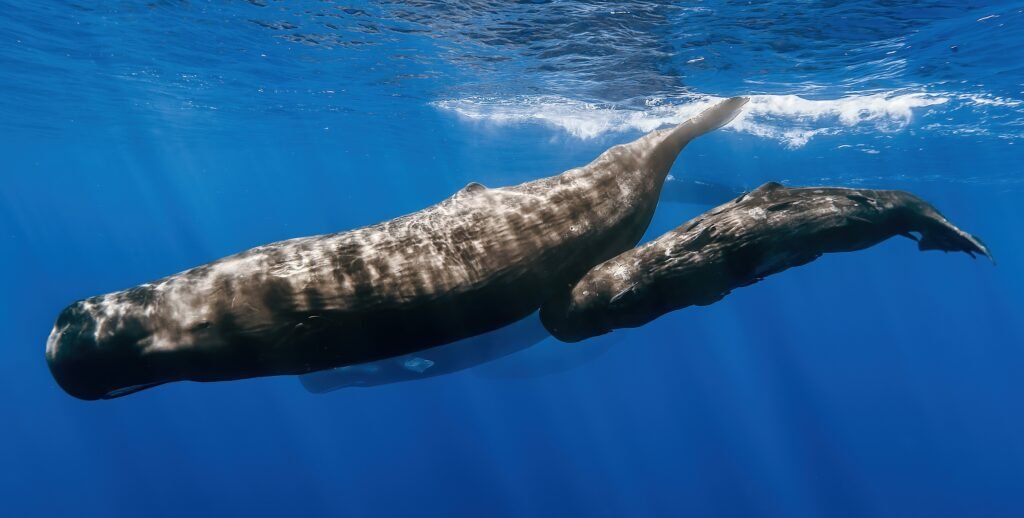
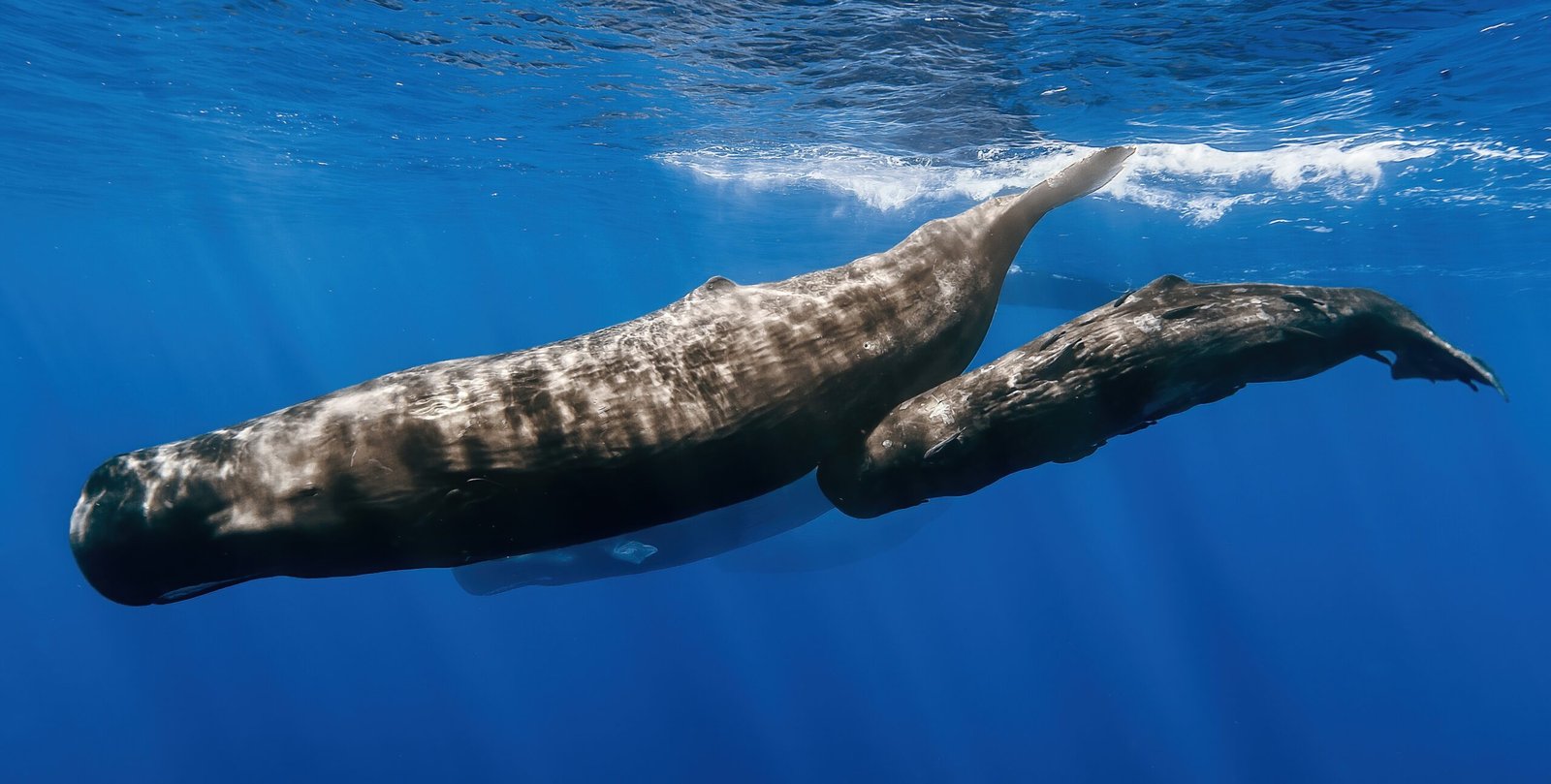
Dominica — Researchers examining sperm whale vocalizations off this Caribbean island’s coast uncovered patterns in the animals’ clicks that closely resemble the building blocks of human language. The team analyzed nearly 4,000 codas, the repetitive click sequences these massive mammals use for communication. Their findings reveal a level of complexity that evolved independently from human speech yet mirrors its phonological structure.[1]
Five Striking Parallels to Human Phonology
A new study highlighted five key features in sperm whale codas that parallel aspects of human phonetics and phonology. These traits suggest the whales possess a nuanced system for combining sounds, much like how humans form words from phonemes. The researchers noted that all five properties show close parallels in human languages, pointing to independent evolution.[1]
The similarities break down as follows:
- Sperm whales produce two main coda types: a-codas with one frequency peak and i-codas with two peaks, akin to distinct vowel categories in speech.
- A-codas consistently lasted longer than i-codas, while i-codas varied between shorter and longer forms, reflecting duration differences in human sounds.
- Each whale exhibited unique click timing, with some producing clicks faster or slower than others, similar to individual accents or dialects.
- During transitions between codas, the first click of a new sequence often matched the acoustic quality of the preceding or following coda, echoing coarticulation effects in human speech where sounds influence neighbors.
- Whales combined these elements flexibly, enabling thousands of potential variations and hinting at a combinatorial code.
Unpacking the Data from Dominica’s Waters
The research focused on 15 female and immature sperm whales, excluding solitary mature males to capture social interactions. Scientists from Project CETI recorded a vast dataset of these codas in the waters near Dominica. They scrutinized sound wave shapes, frequency peaks in spectrograms, and precise intervals between individual clicks.[1]
This meticulous analysis revealed how codas function beyond simple repetition. To human ears, the clicks resemble mechanical taps, but deeper examination exposed their layered structure. The work appeared in Proceedings of the Royal Society B: Biological Sciences.[1]
Codas as Acoustic Vowels
Prior studies had likened sperm whale codas to human vowels based on their acoustic profiles. The latest research built on this by detailing type distinctions and behavioral patterns. For instance, a-codas and i-codas not only differed in peak count but also influenced sequence flow, much like vowels shape consonants around them.
Visualizations from the study illustrated variations across four whales, showing how vowel-like qualities combined with timing. Such diversity underscores the system’s adaptability for conveying information in the deep ocean, where visibility remains limited.[1]
A Leap in Understanding Whale Communication
The discovery positions sperm whale vocalizations as one of the most phonology-like systems in the animal kingdom. “Sperm whale coda vocalizations are thus highly complex and represent one of the closest parallels to human phonology of any analyzed animal communication system,” the team concluded. With thousands of combinable elements, the codas likely support nuanced exchanges among clan members.
Future efforts may decode specific meanings, bringing scientists closer to translating whale “conversations.” This independent evolution challenges assumptions about language origins and highlights convergent solutions in intelligent species.[1]
Key Takeaways
- Nearly 4,000 codas from 15 Dominica whales revealed five human-like phonological features.
- Coda types, durations, timings, transitions, and combinations enable vast variety.
- The system evolved separately, marking a pinnacle in nonhuman communication complexity.
Sperm whales demonstrate that sophisticated sound organization transcends species boundaries, inviting deeper exploration of oceanic dialogues. As research progresses, these findings could reshape views on animal cognition. What do you think this means for whale intelligence? Share your thoughts in the comments.