A Gelatinous Survivor Unveils Hidden Talents (Image Credits: Pexels)
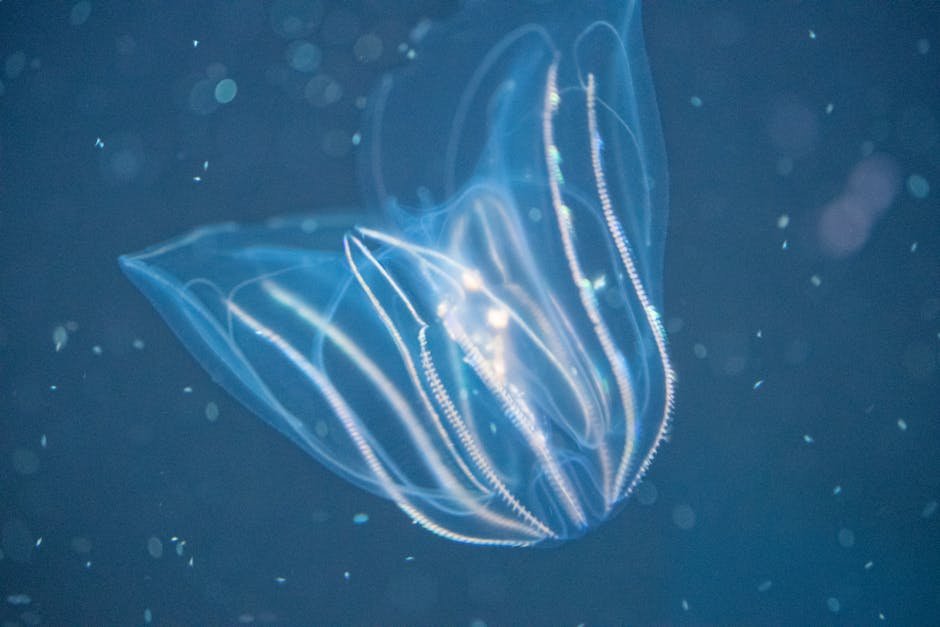
In the vast oceans, where survival demands extraordinary adaptations, the warty comb jelly emerges as a biological enigma. Scientists have observed this gelatinous marine organism, Mnemiopsis leidyi, transform from a mature adult back into its larval form under severe stress. A 2024 study highlighted this reversal as a deliberate survival tactic, prompting questions about the boundaries of aging in the animal kingdom.[1]
A Gelatinous Survivor Unveils Hidden Talents
Researchers marveled at the comb jelly’s ability to rewind its development when confronted with starvation or injury. This process not only preserved the creature but also restored youthful traits essential for enduring tough conditions.[1]
Mnemiopsis leidyi possesses several remarkable features that aid its resilience. It regenerates lost body parts, fuses with others for mutual support after damage, and even forms a temporary waste opening only as required. These adaptations underscore its evolutionary prowess in unpredictable marine environments.
- Regeneration of damaged tissues
- Body fusion with kin for recovery
- On-demand digestive adjustments
- Reproduction from larval stages
Details from the Groundbreaking Experiment
Marine biologist Joan J. Soto-Angel from Norway’s University of Bergen led the investigation, alongside Pawel Burkhard. The team published their findings in Proceedings of the National Academy of Sciences after monitoring 65 adult specimens.[1]
They subjected the comb jellies to controlled stressors over two weeks. Initially, the creatures received no food for 15 days, followed by minimal weekly feedings. In a subset of 15 individuals, the researchers surgically removed gelatinous lobes to simulate physical trauma. This rigorous setup revealed clear patterns in the reversal process.
Thirteen of the starved specimens reverted to larval form over several weeks. Those with added injury accelerated the change, with six out of 15 completing the transition in just 15 days. The study confirmed that harsher conditions sped up the de-aging, turning potential death into renewal.[1]
Step-by-Step: The Mechanics of Reversal
The transformation begins with environmental cues like nutrient scarcity or bodily harm. Adult features, particularly the prominent gelatinous lobes, start to shrink and get reabsorbed into the core body mass. Over time, the creature reduces in size while reacquiring the compact shape of its cydippid larval stage.
This shift extends beyond appearance. The comb jelly adopts larval dietary preferences, thriving on scant resources that would doom an adult. Soto-Angel described the observation vividly: “Witnessing how they slowly transition to a typical cydippid larva, as if they were going back in time, was simply fascinating.”[1]
- Stress trigger activates (starvation or trauma).
- Body mass decreases; lobes retract.
- Larval morphology reemerges.
- Feeding habits revert to juvenile patterns.
- Survival odds improve dramatically.
Echoes of Immortality in Other Species
The comb jelly’s feat draws parallels to Turritopsis dohrnii, often called the immortal jellyfish. That species routinely reverts to its juvenile polyp stage upon reaching maturity, effectively restarting its life cycle. However, Mnemiopsis leidyi activates de-aging selectively, only when survival hangs in the balance.
While the immortal jellyfish’s cycle occurs as a standard quirk, the warty comb jelly’s response represents a stress-induced strategy. Both phenomena highlight developmental plasticity rare among animals, fueling speculation about untapped regenerative potential across phyla.[1]
Pathways to Broader Discoveries
This research illuminates the flexibility of life cycles in simple organisms. Burkhard noted the excitement ahead: “This fascinating finding will open the door for many important discoveries. It will be interesting to reveal the molecular mechanism driving reverse development, and what happens to the animal’s nerve net during this process.”[1]
Scientists now probe deeper into the genetic and cellular drivers behind such reversals. Understanding these could inform studies on regeneration in more complex animals, though direct links to human longevity remain speculative. The comb jelly serves as a model for exploring how evolution equips species to defy conventional aging trajectories.
Key Takeaways
- Mnemiopsis leidyi de-ages faster under combined starvation and trauma.
- The process reabsorbs adult structures, restoring larval efficiency.
- Findings suggest widespread potential for reverse development in nature.
The warty comb jelly’s story reminds us that nature often holds counterintuitive solutions to existential threats. As investigations unfold, this unassuming drifter might unlock mechanisms mimicking eternal youth. What do you think this means for our grasp of biology? Tell us in the comments.