Precision Flying Ushers in a New Era of Solar Study (Image Credits: Pexels)
The European Space Agency achieved a significant victory when the Coronagraph spacecraft of its Proba-3 mission resumed contact with ground controllers following over a month without communication.[1][2] Engineers at ESA’s Villafranca station in Spain received vital telemetry data, marking a turning point for the precision formation-flying project. This development offers hope for continued observations of the Sun’s corona through artificial eclipses created by the satellite pair.
Precision Flying Ushers in a New Era of Solar Study
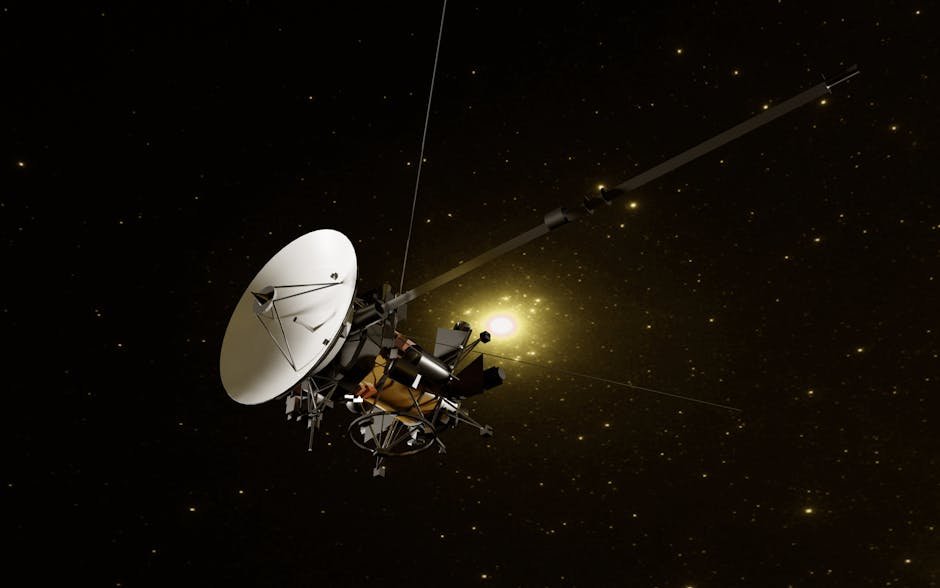
Proba-3 stands as ESA’s pioneering effort in precision formation flying, where two satellites maintain exact positions to simulate solar eclipses in orbit. The Occulter spacecraft blocks the Sun’s disk, allowing the Coronagraph to capture clear images of the surrounding corona without glare interference. Launched on December 5, 2024, from India’s Satish Dhawan Space Centre, the pair entered a highly elliptical orbit reaching up to 60,500 kilometers in altitude.[3]
The mission demonstrated its capabilities early on. Operators confirmed precise alignment as soon as May 8, 2025, followed by the world’s first artificial eclipse on June 16, 2025. These successes filled critical gaps in solar observations by December 17, 2025.[3]
- May 8, 2025: Achieved precise formation flying at 150 meters separation.
- June 16, 2025: Produced initial artificial solar eclipse for corona imaging.
- December 17, 2025: Extended observations to bridge solar data gaps.
Sudden Anomaly Disrupts Operations
Trouble struck over the weekend of February 14-15, 2026, when an unspecified anomaly aboard the Coronagraph triggered a cascade of failures. The spacecraft lost attitude control, or orientation, and failed to enter its programmed safe mode. Without proper alignment, solar panels turned away from the Sun, rapidly draining the battery and forcing the satellite into minimal survival mode.[4][5]
Communication ceased immediately, leaving the Coronagraph incommunicado for more than a month. The Occulter satellite remained operational, providing a key asset for recovery attempts. Mission controllers prioritized using the healthy craft to maneuver closer and visually assess the Coronagraph’s position in space. This setback halted all formation flying and scientific data collection, underscoring the mission’s dependence on both satellites functioning in tandem.[1]
Relentless Teamwork Yields Contact
ESA’s mission team, operators, and industry partners labored nonstop since detecting the issue. On March 19, 2026, the Villafranca ground station captured a data packet from the Coronagraph, revealing temperatures, voltages, and system health indicators. The spacecraft had stabilized itself in safe mode, with its solar panel now oriented toward the Sun to power electronics and recharge the battery.[2]
Damien Galano, Proba-3 Mission Manager, expressed profound relief. “Hearing back from the Coronagraph is amazing news, and a great relief!” he stated. The team noted the palpable excitement upon receiving the signal but emphasized caution. “Since the issue was detected a month ago, the mission team, operators and our industry partners have been working tirelessly to get the spacecraft back,” officials added. “When we got the call from the operators at Villafranca, the excitement in the team was palpable. But the hard work is not over yet – we need to carefully look at the data before we take any further steps.”[2]
Health Checks Pave Way Forward
Engineers now focus on warming the Coronagraph’s systems after prolonged exposure to extreme cold in orbit. Comprehensive health assessments will determine if any components suffered irreversible damage. The Occulter continues normal operations, ready to resume formation flying once both craft align perfectly again.[1]
Full recovery remains uncertain, yet this reconnection bolsters confidence in the mission’s durability. For more details, see ESA’s update.[2]
Key Takeaways
- Coronagraph stable in safe mode with solar panel powered and battery charging.
- Telemetry confirms basic systems operational post-cold exposure.
- Ongoing diagnostics to enable return to formation flying and eclipse observations.
Proba-3’s revival highlights the tenacity required in space exploration, where a single anomaly can silence ambitious science but dedicated effort often prevails. As health checks progress, the mission edges closer to unveiling more solar secrets. What do you think lies ahead for this innovative duo? Share your thoughts in the comments.