Some cities do not die slowly. They disappear in a single terrifying night – swallowed by ash, drowned in mud, or silenced by the sea. For centuries, these places lived, loved, traded, argued, and dreamed like any modern town, and then, in a violent instant, were gone. Their streets froze in time, their stories locked beneath layers of ash, sand, or silt, waiting for some future stranger with a shovel and a question.
I still remember standing in a ruined Roman street for the first time, realizing I could see the exact stones someone stepped on almost two thousand years ago. It felt less like visiting the past and more like eavesdropping on it. These seven buried cities all vanished abruptly, but what they left behind is astonishing: warnings about climate and geology, clues about how ordinary people really lived, and hard lessons about human denial when danger feels distant – until suddenly it isn’t.
1. Pompeii: The Day the Sky Turned to Stone
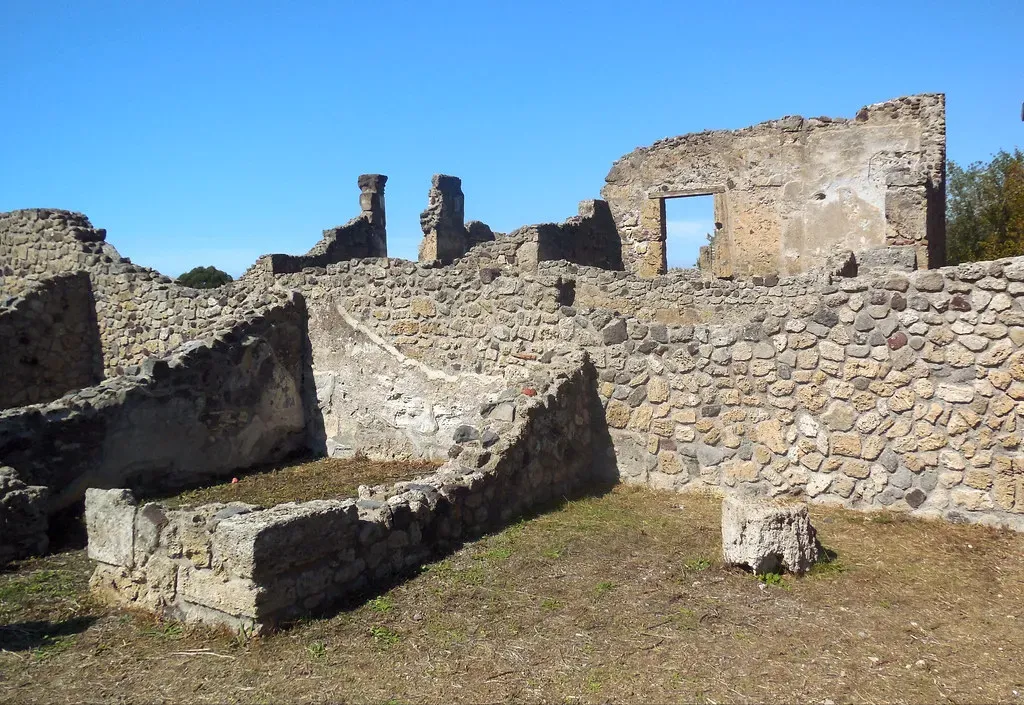
Imagine going to sleep in a bustling port city and waking to a sky that rains fire, ash, and toxic gas. Pompeii’s destruction in the first century during the eruption of Mount Vesuvius is one of the most chilling examples of a city frozen in its final moments. The ash that buried it – deadly on that day – became a kind of geological time capsule, preserving everything from frescoes and shop signs to bread left in ovens.
What we have learned from Pompeii is as unsettling as it is fascinating. Archaeologists have reconstructed daily life with startling precision: graffiti on walls shows political jokes and love notes, while latrines and kitchens reveal diets, hygiene, and social habits more complex than many imagined. Pompeii also stands as a brutal lesson in ignoring risk; the people living in the shadow of Vesuvius had experienced tremors and warning signs, yet life went on as usual. Today, we talk a lot about “low probability, high impact” disasters – Pompeii is the ancient poster child for what happens when we gamble that tomorrow will look just like today.
2. Herculaneum: A Wealthy Resort Turned Carbon Shadow
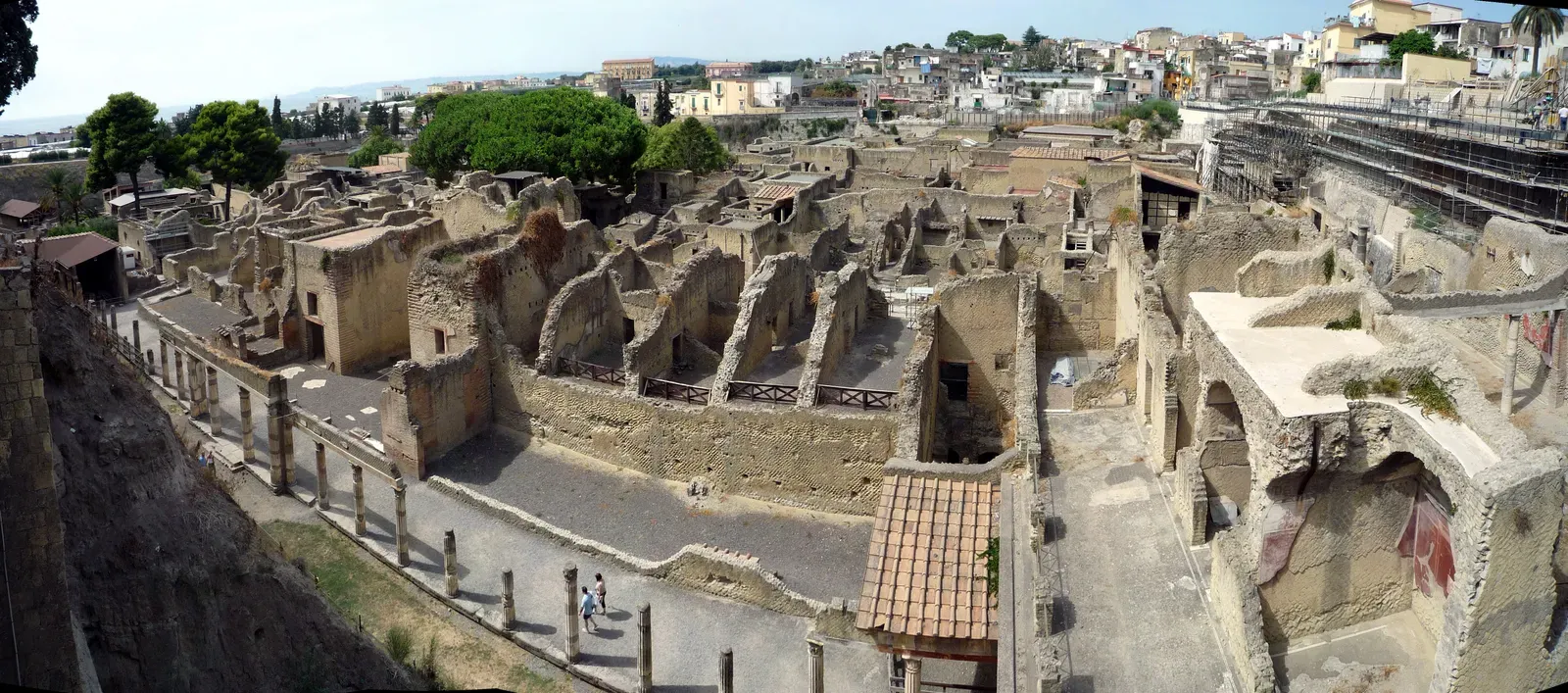
While Pompeii was buried mainly in ash and pumice, its coastal neighbor Herculaneum was hit by something even more terrifying: superheated pyroclastic surges that carbonized wood and instantly killed people sheltering by the shoreline. Once a luxurious resort town for Rome’s wealthy, with grand villas and intricate mosaics, it vanished under thick volcanic material and mud in a matter of hours. In some places, the buried layers reached the height of a modern apartment building.
The uncanny preservation at Herculaneum has taught us things we did not even know to ask. Wooden furniture, doors, scrolls, and even food were carbonized rather than burned away, giving archaeologists intimate access to household layouts, storage methods, and literacy levels. Hundreds of skeletons found near the ancient shoreline show people trying to flee by boat, changing earlier assumptions that residents calmly stayed in place. To me, the most haunting lesson is psychological: even in a disaster, people cling to familiar plans – reach the sea, wait for rescue – even when the real danger behaves in ways nobody has seen before. That tendency is still with us every hurricane, wildfire, and heatwave season.
3. Akrotiri (Santorini): A Bronze Age World Stopped Mid-Sentence
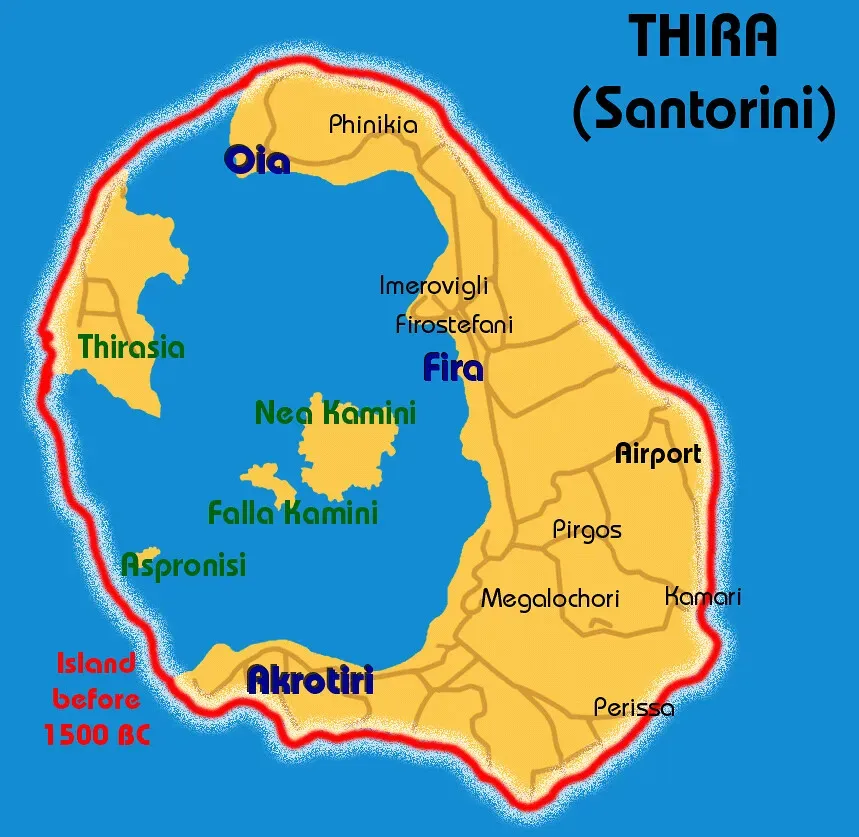
Long before the Greek classics we learn in school, a sophisticated Bronze Age town thrived on the island now known as Santorini. Akrotiri was buried by one of the most powerful volcanic eruptions in human history, an event so large it reshaped parts of the Mediterranean world. The city vanished beneath volcanic deposits, but its multi-story houses, painted walls, and carefully designed streets remained sealed away, like a paused film of a world many people did not realize even existed at that level of complexity.
Excavations at Akrotiri have revealed advanced drainage systems, interior staircases, and stunning wall paintings that show ships, landscapes, and everyday scenes. What fascinates researchers is the strong suggestion that many residents may have escaped before the final catastrophe, because far fewer bodies have been found than expected. That implies they recognized warning signs – earthquakes, ash fall, rumbling – and fled. In a way, Akrotiri gives us the opposite message of Pompeii: early action can work. It quietly pushes back against the fatalistic idea that ancient people were helpless victims, and it reminds us that paying attention to patterns in nature, and believing them, has always been a survival skill.
4. Thonis-Heracleion: The Egyptian Port That Slipped Beneath the Sea
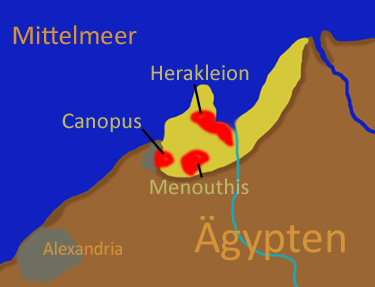
For centuries, Thonis-Heracleion existed more as a rumor in old texts than a place anyone could point to on a map. Once a bustling gateway city at the mouth of the Nile, controlling maritime trade into ancient Egypt, it ultimately vanished beneath the waters of the Mediterranean. Submerged for more than a thousand years, it was rediscovered only in the late twentieth and early twenty-first centuries, when underwater archaeologists began finding colossal statues, temple ruins, and shipwrecks resting quietly on the seabed.
Thonis-Heracleion is often held up as a sobering example of how fragile coastal cities really are, especially on soft, waterlogged ground. Geological studies suggest a combination of gradual subsidence, unstable sediments, and rising waters, likely made worse by sudden events like earthquakes or flooding, caused it to sink. The city teaches us that “overnight” sometimes means one catastrophic tipping point after centuries of accumulating strain. Looking at modern coastal megacities built on deltas and reclaimed land, it is hard not to feel a shiver of recognition. The lesson is uncomfortable but clear: if you build your future on sinking ground and rising seas, the clock starts ticking the day you lay the first stone.
5. Helike: A Greek City Swallowed by Land and Sea
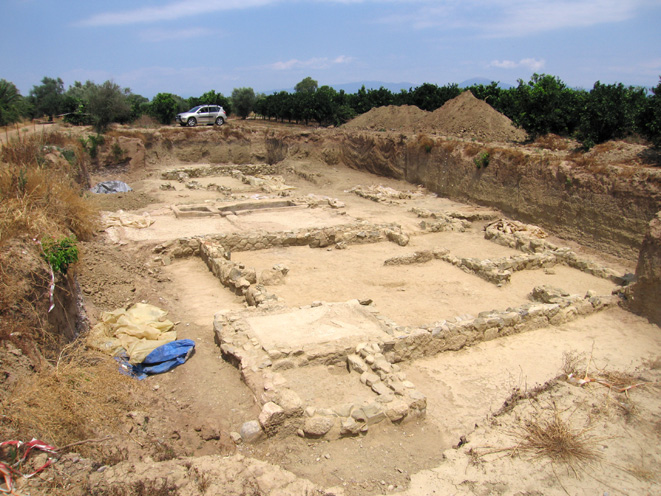
Helike, a prosperous city in ancient Greece, is a classic example of a place that literally fell between categories: part earthquake disaster, part tsunami tragedy, part long-lost mystery. Ancient writers described how the ground shook, the city was destroyed, and the sea covered it, leaving only the tops of buildings visible for a time before even those disappeared. For centuries, no one was entirely sure where it had been, and it took modern surveys, drilling, and archaeology to uncover its remains buried under layers of sediment inland from the current coastline.
The story of Helike hits close to home in a world where more people than ever live near fault lines and coastlines. Its destruction shows how earthquake damage, soil liquefaction, and tsunami waves can combine in a chain reaction that turns solid ground into something like wet cement. Helike also underlines how human memory works: as time passed, myth and report blurred together, and many scholars doubted the accounts until physical evidence emerged. I find that deeply relevant today; when local communities talk about strange floods or long-ago shaking, those stories might be warning flares rather than folklore. Ignoring them can cost lives in a single bad night.
6. Teotihuacan’s Sudden Silence: A Metropolis That Emptied Out
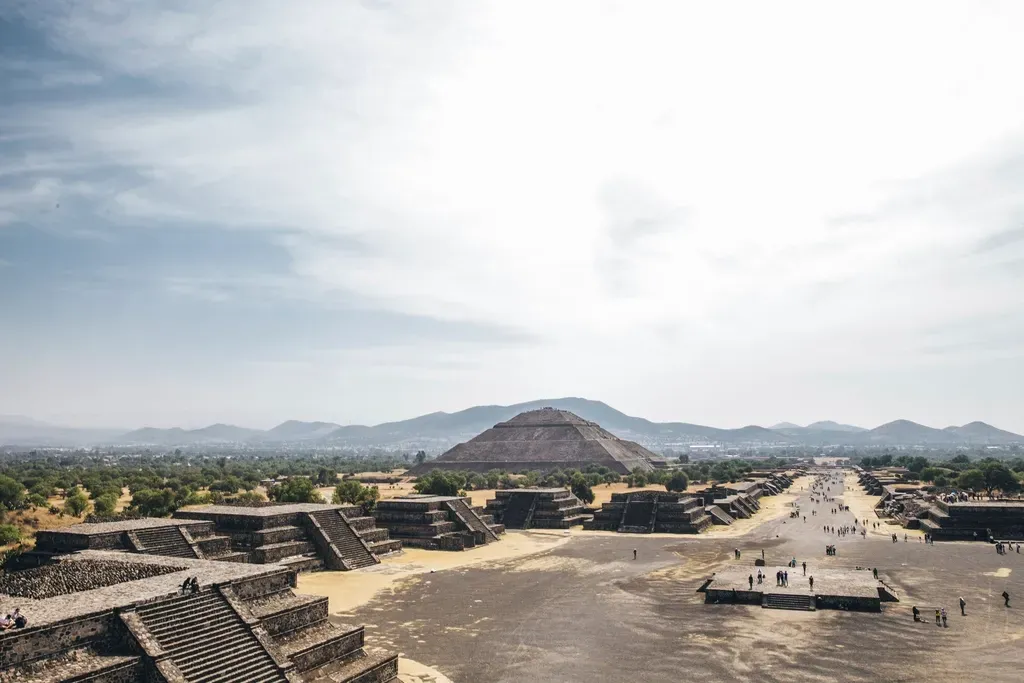
Teotihuacan in central Mexico did not vanish under ash or waves, but its disappearance from history feels almost as abrupt. At its height, it was one of the largest cities in the world, with broad avenues, grand pyramids, and a complex urban layout that influenced later Mesoamerican civilizations. Then, around the middle of the first millennium, large parts of the city show signs of burning, public buildings were destroyed, and within a relatively short period, the great metropolis was largely abandoned.
The reasons for Teotihuacan’s sudden collapse are still debated: internal unrest, shifting trade networks, climate stress, and political upheaval all likely played a part. What we have learned is that even cities that seem unstoppable can unravel quickly once key systems – food supply, governance, economic trust – start to fail. To me, Teotihuacan is a reminder that “buried” is not always literal; sometimes a city is buried under layers of forgetting, while its walls still stand. We tend to think our own sprawling urban hubs are immune to that kind of sudden silence, but history quietly disagrees. Social fractures and environmental pressure can make a city as fragile as any volcano.
7. The Lost Maya Cities: Forests That Remember Everything
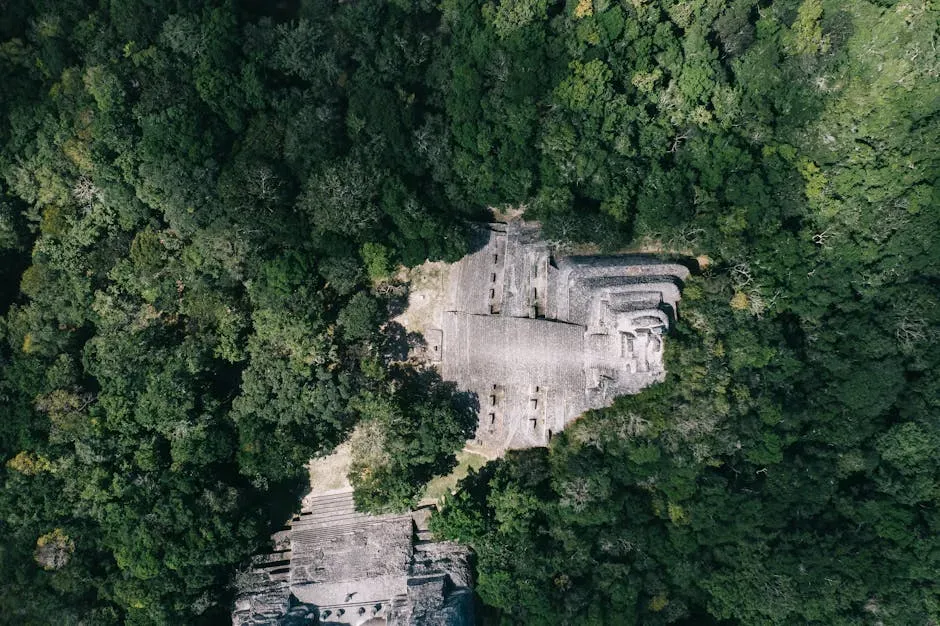
Across parts of modern Mexico, Guatemala, Belize, Honduras, and El Salvador, entire Maya cities were swallowed not by ash or ocean, but by jungle. Many were abandoned over a period that, in historical terms, still feels alarmingly fast, and then overgrown until massive temples looked like natural hills. When explorers and archaeologists began mapping them in detail, they realized these were not small ceremonial centers – they were full-scale cities, with causeways, markets, water systems, and dense neighborhoods that supported huge populations.
What we have learned from these buried-in-plain-sight cities keeps evolving as new technologies like airborne laser scanning reveal more hidden structures under tree canopies. Evidence points toward a complex mix of climate shifts, prolonged droughts, deforestation, political conflict, and overuse of land contributing to the decline of classic Maya urban centers. The hardest lesson, in my view, is that intelligence and cultural brilliance do not guarantee resilience. The Maya had advanced astronomy, writing, and mathematics, yet large parts of their urban world still became unsustainable. Forests may forgive slowly, but they never forget how we treated them, and in the end, they took their ground back.
Conclusion: Cities Vanish Fast, Warnings Arrive Slowly
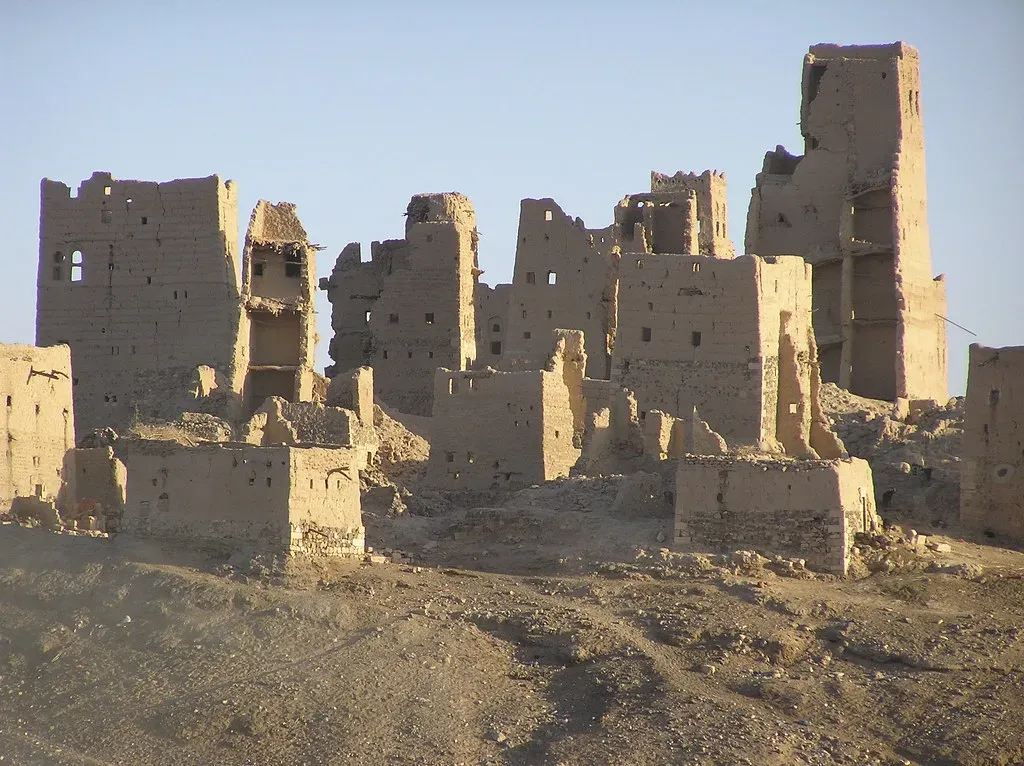
Looking across these seven stories, the pattern is unsettling: cities can take centuries to build but only hours, days, or a few turbulent years to fall apart. Volcanic eruptions, earthquakes, tsunamis, subsiding coasts, political chaos, and climate stress all play different roles, yet the human reactions feel eerily familiar. People downplay distant risks, cling to business as usual, and trust that tomorrow will look like yesterday, right up until the night it does not. The buried streets and drowned harbors are not just archaeological curiosities; they are feedback from past civilizations about what happens when we underestimate the ground, the sea, or our own social fault lines.
My own bias, after sitting with these histories, is that we do not take their warnings nearly seriously enough. We still build massive cities on unstable deltas, expand into fire-prone hillsides, and treat climate and infrastructure planning like optional upgrades instead of survival tools. At the same time, the fact that we have dug these places up at all is hopeful: it means we are at least willing to look honestly at how things went wrong before. The real question is whether we will act on what these lost cities are still trying to tell us, or whether some future archaeologist will be sifting through our buried train stations and wondering why we thought we had so much time. What would you bet on, if you had to choose today?