
You might think we know our own planet better than anything else in the cosmos. Here’s the thing, though: we’ve mapped the far side of the Moon in stunning detail, sent probes billions of kilometers into interstellar space, and even imaged black holes millions of light years away. Yet the center of our own planet remains profoundly mysterious, an enigma wrapped in molten iron and unimaginable heat.
Humans have journeyed roughly 25 billion km beyond our planet, yet drilling beneath Earth’s surface has only reached a depth of just over 12 km. That’s barely a scratch on the surface when you consider that the core sits nearly 3,000 kilometers below our feet. The far side of the Moon, on the other hand, has been photographed, mapped, and even sampled by robotic missions. Meanwhile, the deepest parts of Earth remain as inaccessible to us as another world entirely. So let’s dive in and explore why this hidden heart of our planet is so baffling.
You Can Actually See the Moon’s Far Side, But Earth’s Core Is Completely Hidden
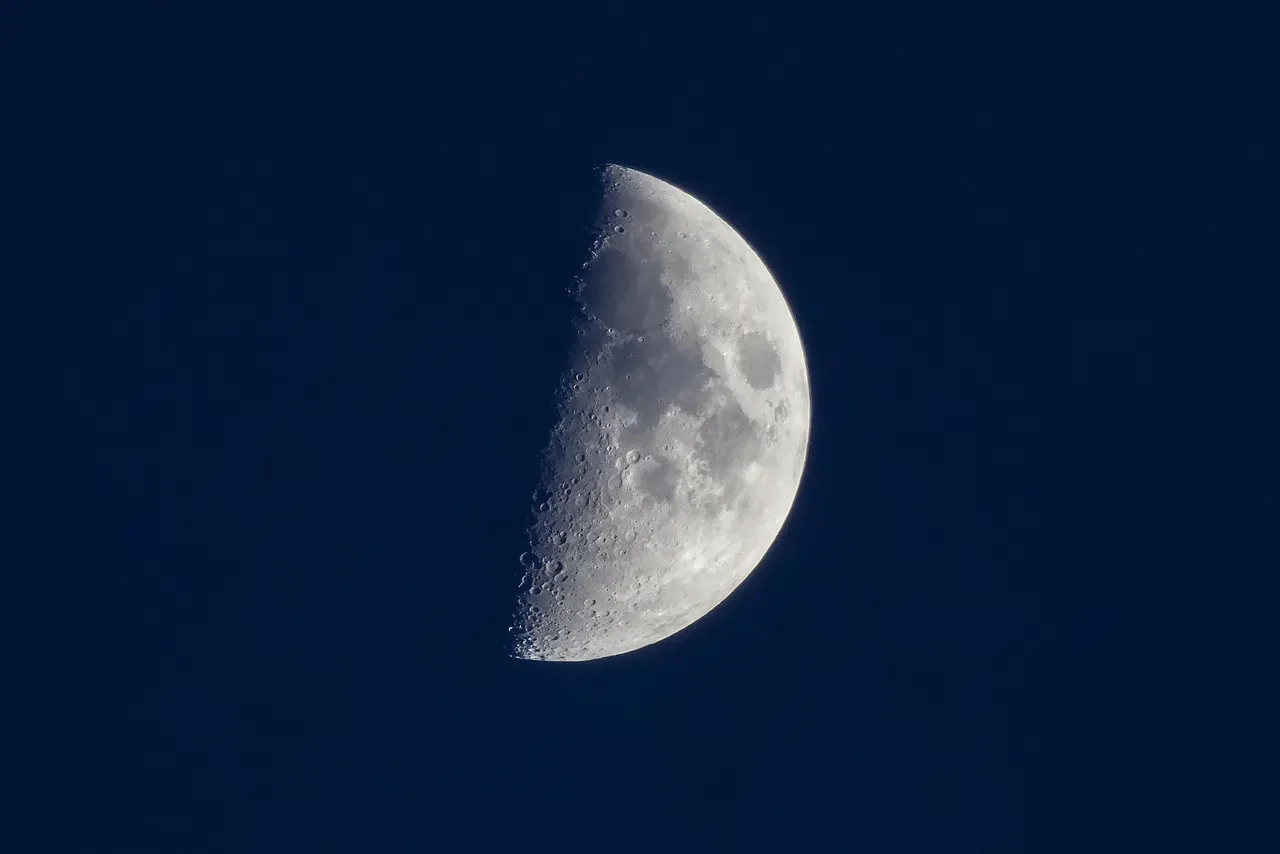
The far side of the Moon used to be a total mystery until the 1960s. Soviet spacecraft first photographed it in 1959, and astronauts aboard Apollo 8 became the first humans to see it in person in 1968. China’s Chang’e-6 mission, the first sample return mission to the far side of the Moon last year, made a fascinating discovery when it brought back lunar rock samples for direct analysis.
Compare that to Earth’s core. Scientists still know relatively little about what lies far below the crust. The Kola Superdeep Borehole in Russia, the deepest human-made hole on Earth, attained maximum true vertical depth of 12,262 metres in 1989. To put that in perspective, that’s less than one percent of the distance to the core. We cannot physically visit it, cannot drill to it, cannot even send a probe there. Everything we know comes from indirect methods like studying earthquake waves.
The Core Contains Vast Oceans of Hydrogen Nobody Predicted
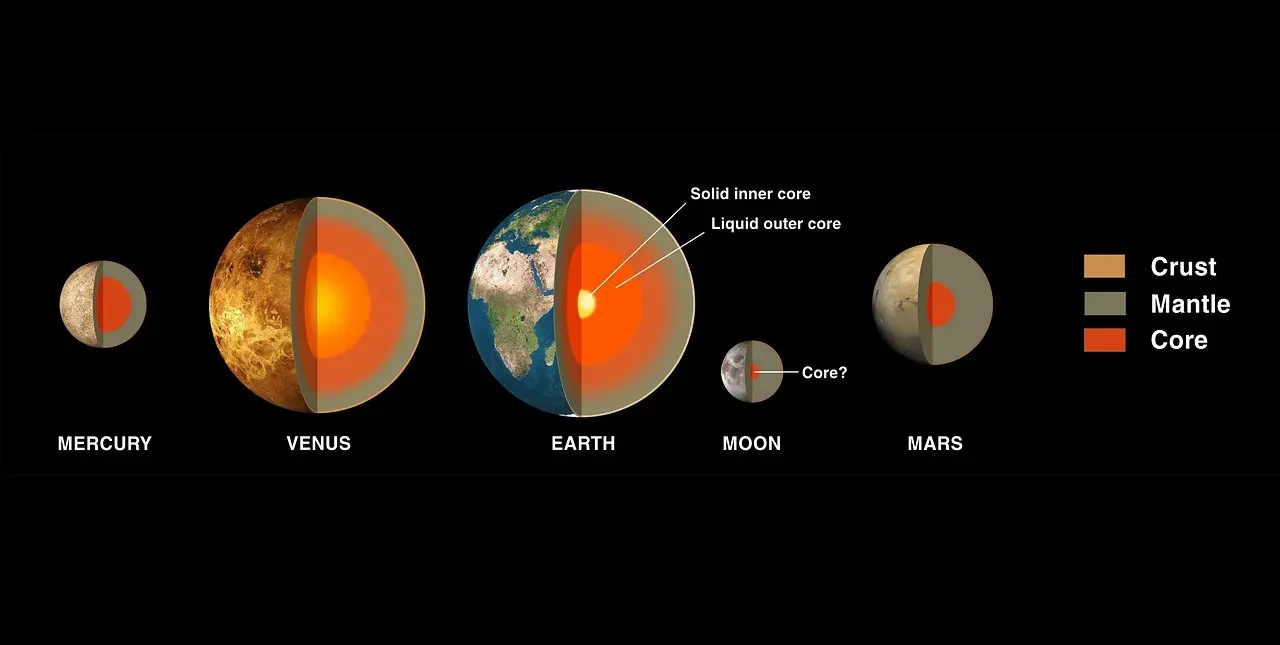
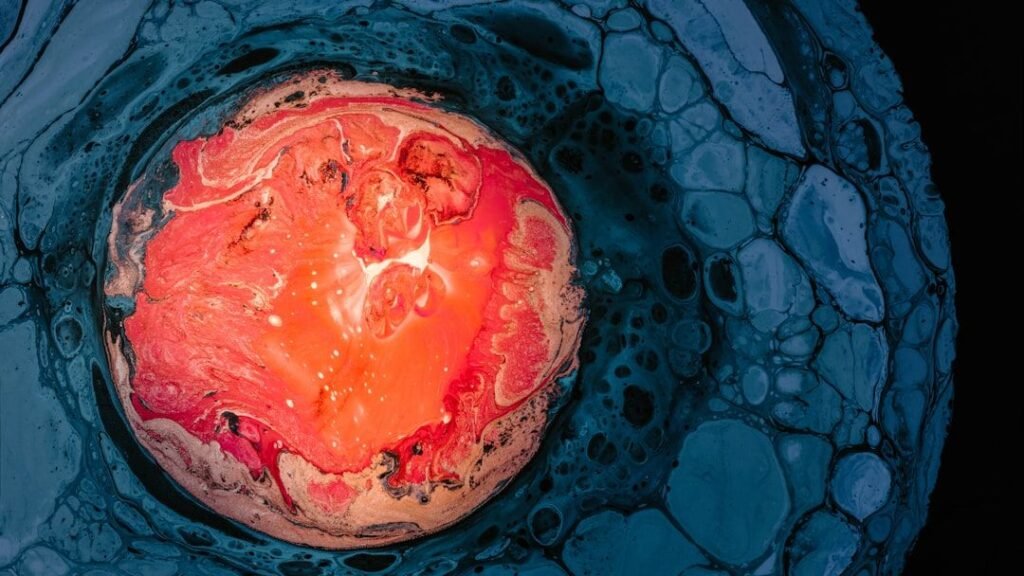
A new study indicates that vast oceans of hydrogen are locked deep inside our planet, helping to explain a strange “density deficit” and shedding light on the origin of life. Scientists recently discovered something shocking: the core may contain the equivalent of nine to 45 oceans worth of hydrogen. That’s not a typo. Nine to forty-five oceans.
This discovery came from extreme laboratory experiments. This approach involved heating up iron metal with lasers to a fully-molten state that resembles ancient Earth’s inner magma ocean, which reached temperatures up to 8,700°F, and pressures more than a million times more intense than those we experience on Earth’s surface. The results were mind-blowing. Nobody had expected hydrogen in such staggering quantities. Honestly, it changes everything we thought we knew about how Earth’s water formed and where it came from originally.
Giant Mysterious Blobs Are Shaping Earth’s Magnetic Field
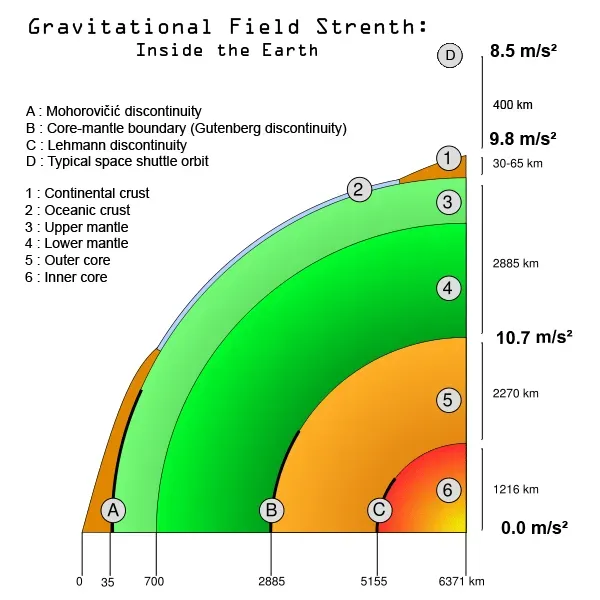
Deep beneath Africa and the Pacific Ocean sit two enormous formations of superheated rock. Two immense, enigmatic masses of superheated rock situated deep within Earth’s core are strongly implicated in the generation and long-term asymmetry of our planet’s magnetic field. These structures extend vertically for approximately 1,000 kilometers and have been influencing Earth’s magnetic field for millions of years.
Scientists discovered that these formations influence the movement of liquid iron in Earth’s core. The fact that we only recently figured this out shows just how little we understand about what’s happening down there. The Moon has no such hidden structures affecting its behavior. It’s geologically dead, straightforward. Earth’s interior, by contrast, is a churning, dynamic engine that we’re only beginning to comprehend.
The Inner Core Is Slowing Down and Possibly Reversing
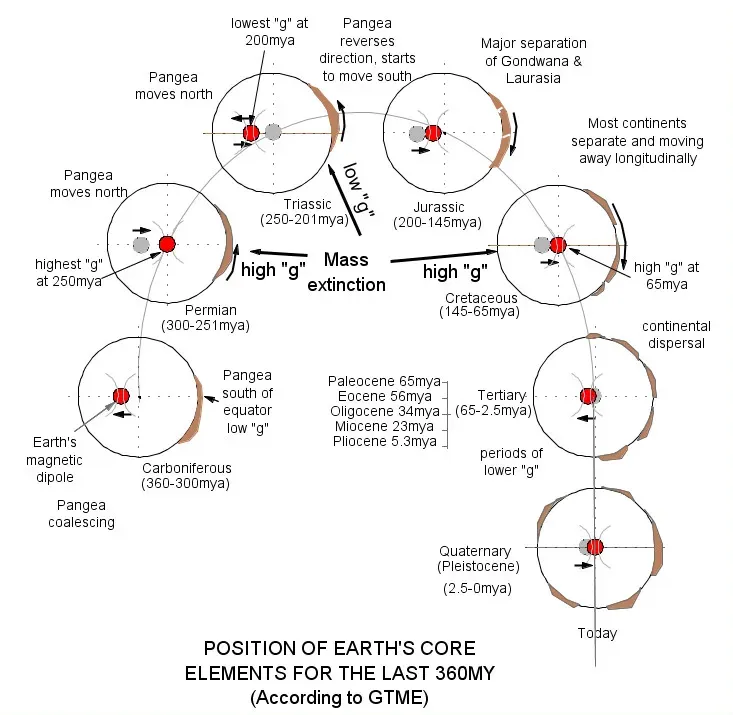
A new USC study provides clear evidence that Earth’s inner core began to decrease its speed around 2010. Let that sink in for a moment. The solid metal sphere at the center of our planet, spinning independently from the rest of Earth, started slowing down about a decade ago. Some researchers suggest it may even be reversing direction.
A growing body of evidence suggests the core’s spin has changed dramatically in recent years, but scientists have remained divided over what exactly is happening – and what it means. Different research teams propose different rotation cycles: some say 70 years, others say 20 to 30 years, and some argue for cycles as short as six years. We still can’t agree on the basic mechanics. The far side of the Moon, meanwhile, is relatively simple to understand by comparison. It rotates with the rest of the Moon in tidal lock with Earth, nothing unexpected or controversial about it.
We Don’t Even Know What the Core Is Made Of
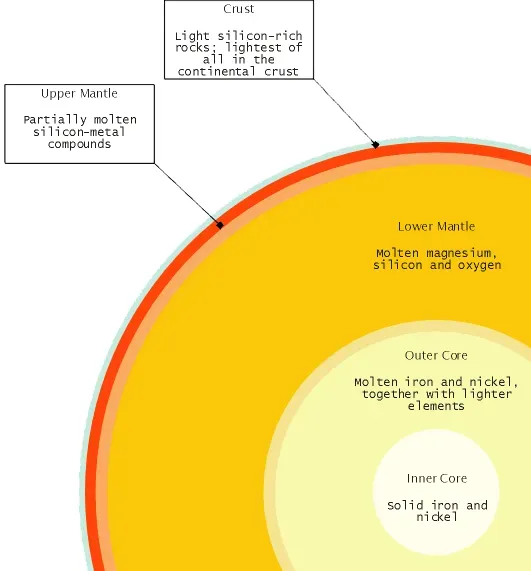
Despite its importance, many of the most fundamental properties of the core are unknown. We do not know exactly how hot the core is, what it is made of or when it began to freeze. Scientists have educated guesses, sure. They know it’s mostly iron and nickel, with some lighter elements mixed in. The problem is figuring out exactly which lighter elements and in what quantities.
Meteorites show us that the core should be made of iron and nickel, and maybe a few percent of silicon or sulphur, but it’s difficult to be more specific than this. Recent research suggests carbon may be a critical ingredient, possibly accounting for a few percent by mass. Others point to oxygen, sulfur, or silicon. The truth is, we’re still guessing based on indirect evidence. By contrast, we have actual samples from the Moon brought back by Apollo astronauts and robotic missions, giving us direct, tangible proof of what lunar rock contains.
The Core Might Be Deforming Before Our Eyes
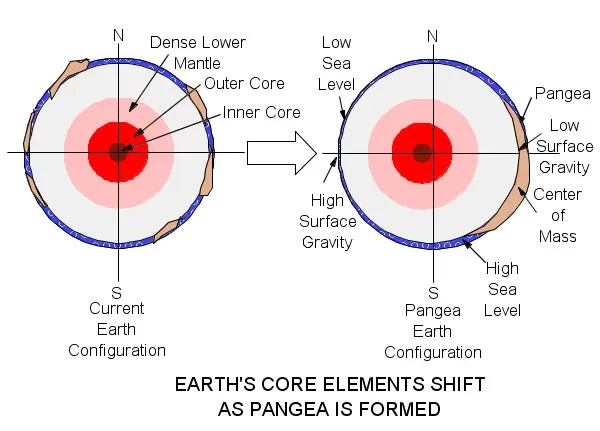
Not only is the core slowing down, it appears to be changing shape. Scientists who just months ago confirmed that Earth’s inner core recently reversed its spin have a new revelation about our planet’s deepest secrets – they identified changes to the inner core’s shape. This is a recent discovery, published in early 2025, showing that our understanding of the core is constantly evolving.
The inner core is also deforming, with the height of some “dents” forming in the core exceeding 100 meters. This is caused by the connection between the topography of the core-mantle boundary and mantle density anomalies. These deformations could influence Earth’s magnetic field, which protects all life on the planet from deadly solar radiation. It’s hard to say for sure, but if the core’s behavior changes significantly, it could have profound effects on the surface. The Moon, being geologically inactive, has no such concerns.
Nobody Knows How Old the Inner Core Really Is
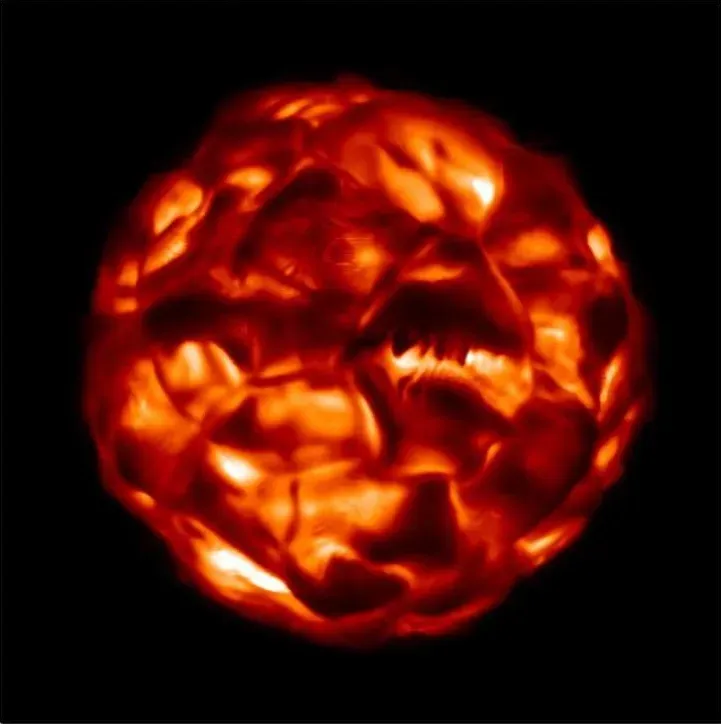
Some argue it began crystallizing over two billion years ago, while others suggest it happened less than half a billion years ago. That’s a staggering range of uncertainty. Imagine trying to date a historical event and being off by a billion years. That’s where we are with Earth’s inner core.
But 565 million years ago, the field was sputtering, dropping to 10% of today’s strength, according to a recent discovery. Then, almost miraculously, over the course of just a few tens of millions of years, it regained its strength – just in time for the sudden profusion of complex multicellular life known as the Cambrian explosion. Increasingly, scientists believe it was the birth of Earth’s inner core, a sphere of solid iron that sits within the molten outer core, where churning metal generates the planet’s magnetic field. If that’s true, the inner core may have literally saved life on Earth. We can date Moon rocks with precision, analyze their isotopes, and construct a detailed timeline of lunar history. Earth’s core timeline? Still a mystery.
Conclusion
Earth’s core remains one of the last great frontiers of exploration. We’ve sent people to the Moon, robots to Mars, and probes beyond the solar system. Yet the center of our own planet, just a few thousand kilometers beneath our feet, is almost completely inaccessible. The far side of the Moon has been mapped, sampled, and studied in ways that would have seemed like science fiction a few decades ago.
Meanwhile, we’re still debating what the core is made of, how old it is, whether it’s speeding up or slowing down, and why it behaves the way it does. The core is changing before our eyes, deforming and shifting in ways that could affect Earth’s magnetic field and ultimately life itself. It’s humbling, really, to realize that our home planet holds secrets deeper and . What do you think surprises you most about Earth’s hidden depths?