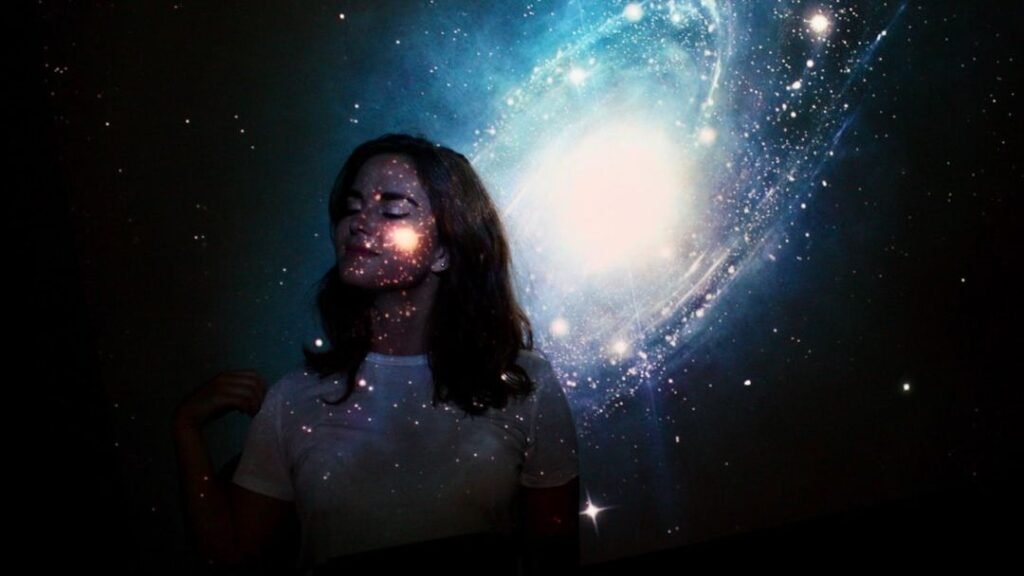
When you look up at the night sky, it is easy to feel small, like you are just a brief flicker in a vast, indifferent cosmos. But what if that feeling itself points to something deeper, something built into the fabric of reality? Instead of seeing consciousness as just a side effect of your brain, some scientists and philosophers are seriously exploring a more radical idea: that consciousness might be as basic to the universe as space, time, and energy.
This does not mean throwing science out the window or drifting into fantasy. It means asking whether your inner experience belongs on the same fundamental list as gravity or electromagnetism. The evidence is not settled, and you will not find a neat formula for consciousness in a physics textbook yet. Still, the questions you can ask right now are thrilling, unsettling, and oddly personal: if consciousness is fundamental, then what exactly are you?
The Strange Mystery of Your Own Awareness

Start with something so ordinary you usually ignore it: the simple fact that you are aware. You can feel a headache, taste coffee, remember a song, or worry about next week, and all of that shows up as experience on your inner “screen.” You are not just a biological machine reacting to inputs; you have a point of view, a sense of being someone. You can describe brain circuits, hormones, and neural pathways all day, but that still leaves a nagging question: why does any of this feel like something from the inside?
Neuroscience is incredibly good at showing how brain activity correlates with experience. When you see red, certain regions of your visual cortex light up; when you feel fear, specific networks in your amygdala fire. You can even predict decisions a moment before you consciously notice making them. But no scan explains why any of that electrical buzzing comes with the vivid, private movie you call your life. That gap between brain facts and lived experience is sometimes called the “hard problem” of consciousness – and it is the crack where the idea of consciousness as a fundamental feature of reality starts to slip in.
Why Brains-Only Explanations Run Into Trouble
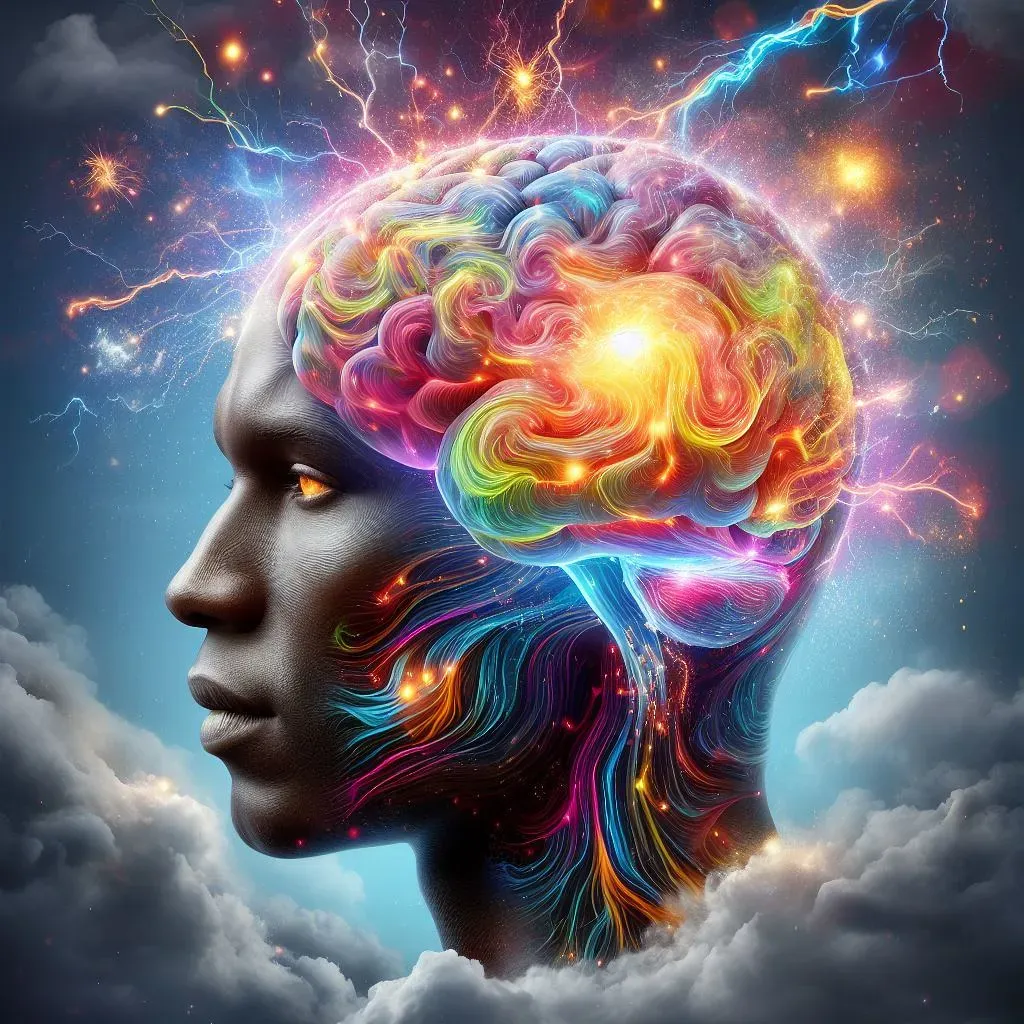
If you stick strictly to the idea that consciousness is nothing but brain activity, you run into puzzles that are surprisingly hard to ignore. You have to believe that at some point in evolutionary history, a line of non-conscious organisms suddenly produced a creature that felt pain, joy, color, and curiosity, all from rearranging the same basic matter. If you map every neuron, measure every chemical, and understand every signal, you still end up just describing structure and function. That still does not tell you why there is an inner life rather than a silent, dark, unconscious machine.
You also bump into questions about what counts as conscious. If you see consciousness as just what a brain does, you have to decide precisely how complex a brain needs to be before awareness magically appears. Does a fish feel anything? What about an insect, or a future AI system? Without a clear theory linking physical processes to subjective experience, your answers begin to feel arbitrary. That is why some thinkers suggest you may be starting from the wrong assumption: maybe consciousness does not come out of matter; maybe matter and consciousness are both rooted in something deeper.
Panpsychism: Consciousness Everywhere, Not Just in You
One of the boldest ideas you will encounter is panpsychism, the view that consciousness is a basic feature of the universe, present in some extremely simple form even in very small or simple systems. On this view, your rich, human awareness is not a sudden miracle emerging from dead matter; it is a highly organized combination of tiny building blocks of experience that were already there. You can think of it a bit like how temperature emerges from the motion of countless particles. No single molecule is “hot,” but together they give rise to heat.
In panpsychism, instead of saying consciousness suddenly pops into existence when matter reaches a certain level of complexity, you say that the universe was never entirely without experience to begin with. The challenge, of course, is not to imagine rocks having daydreams or electrons worrying about their careers. You are talking about unimaginably simple, primitive “feels,” nowhere close to human thoughts. Your brain, on this view, organizes and unifies a staggering amount of this micro-level “proto-experience” into the vivid, coherent awareness you recognize as yourself.
Physics Already Treats Some Things as Fundamentally Mysterious
You might wonder whether adding consciousness to the list of basic features of the universe is just cheating. But if you look at physics honestly, you are already living with a set of deeply mysterious primitives. No one knows why there is gravity; you have a precise mathematical description of how it behaves, not a deeper explanation of what it is. The same goes for electric charge, mass, or the constants of nature. At a certain level, physics says: here is how these things behave, and that is as far as your explanations go.
Thinking of consciousness as fundamental is a way of placing your inner life into that same category. Instead of insisting that awareness must reduce completely to something else, you treat it like you treat space or time: you describe how it behaves, how it relates to physical processes, and how it can be measured indirectly. You are not saying every wild spiritual claim is true; you are saying that, just like with gravity, at some point you may have to accept that consciousness is a basic part of the story, not an afterthought your brain somehow creates out of nothing.
Clues from Quantum Weirdness and Observation
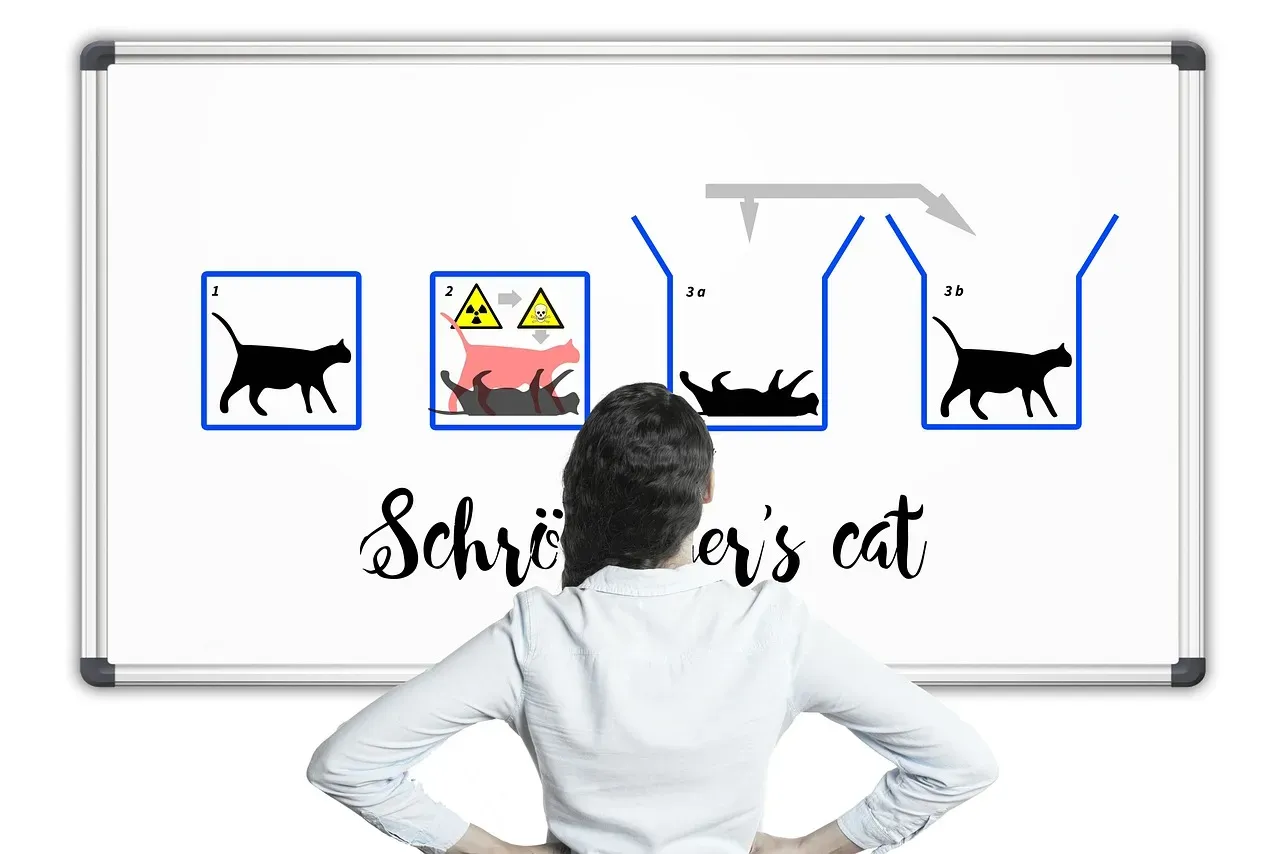
Whenever you bring up consciousness as a fundamental feature of reality, quantum physics is never far behind. You may have heard that in quantum experiments, what you observe seems to affect how reality shows up, especially in famous setups like the double-slit experiment. Some interpretations of these results suggest a deep connection between measurement, observation, and how the physical world “chooses” a definite outcome from many possibilities. This leads some people to wonder whether your act of observing is woven into the rules of the game.
To stay honest, you have to admit that the mainstream scientific view does not say quantum physics proves consciousness creates reality. There are interpretations that do not give any special role to awareness. But the unresolved debates around measurement, observation, and probability leave the door open to serious questions about the role of an observer. At the very least, you are forced to confront a universe that is less like a fixed machine and more like a probabilistic, relational web where what is known and what is real are deeply entangled in ways your common sense never expected.
Information: A Bridge Between Mind and Matter
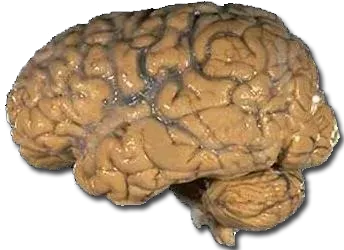
If you are looking for a more grounded way to connect consciousness and the universe, information is a powerful bridge. In modern physics and computer science, information is treated as something almost as basic as energy. Black hole research, for example, has pushed scientists to consider how information is stored, preserved, or lost in extreme conditions. This focus makes it natural to ask whether your conscious experience is tightly linked to how information is processed, integrated, and transformed in physical systems.
Some theories propose that what you call consciousness arises when information reaches a certain level of integration or complexity, such that the system has a unified, irreducible “informational structure.” If you adopt the idea that information is fundamental in the universe, it becomes less far-fetched to see consciousness as another expression of how information behaves at high levels of organization. In that picture, you are not a ghost trapped in a machine; you are what it feels like when information about the universe richly and coherently knows itself through a living system like your brain.
How a Fundamental Consciousness Changes Who You Think You Are
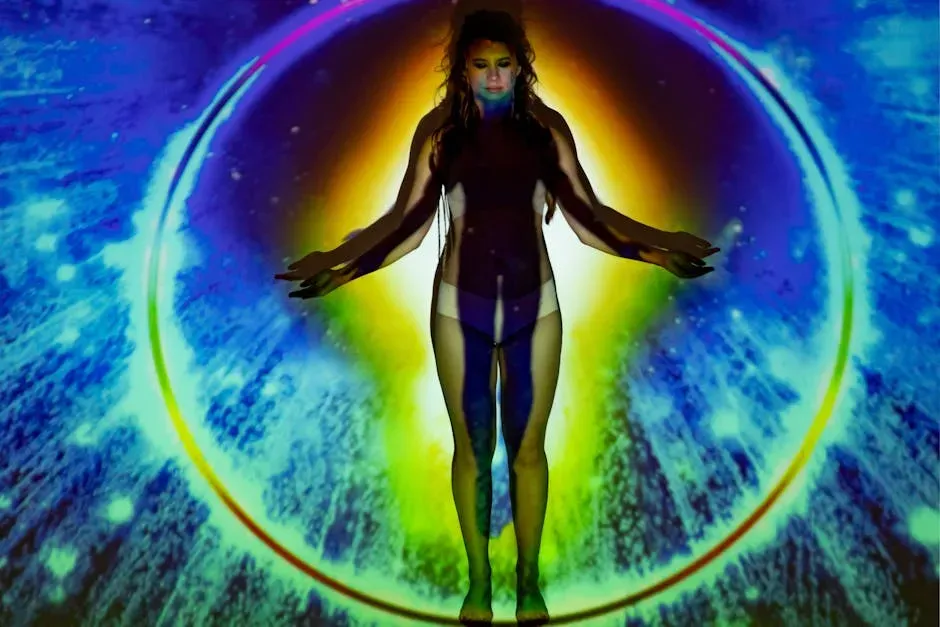
If you even entertain the possibility that consciousness is fundamental, your sense of identity starts to stretch. You are still a particular person, with a name, a body, and a history, but you are also a local expression of something more general, the way a wave is a momentary pattern in the ocean. This does not mean your individuality is an illusion; it means your personal stream of experience might be one instance of a much wider field of awareness woven through reality itself.
This shift can change how you relate to other people and the world around you. Instead of seeing yourself as a separate, isolated thinker floating in a meaningless universe, you can see yourself as part of a larger tapestry of experiencing systems, from animals and ecosystems to potential artificial minds. That perspective does not magically solve your problems, but it can make your choices feel more connected. Harming others can start to feel less like damaging “outsiders” and more like fraying the wider fabric of awareness you are part of.
Staying Skeptical Without Closing Your Mind

At the same time, you do not have to wait for a final verdict to let these questions reshape how you think. You can hold a stance of open-minded skepticism: you take the evidence seriously, stay alert to wishful thinking, and still allow yourself to explore bold, carefully framed ideas. Instead of treating the “mind versus matter” debate as a fight with winners and losers, you can treat it as an ongoing investigation into what kind of universe could give rise to a being who can ask questions like this in the first place.
Practical Ways This Cosmic View Can Affect Your Daily Life

Even if the idea of consciousness as a fundamental feature of reality stays unproven, exploring it can quietly shift how you live. You might find yourself paying more attention to the sheer fact that you are aware, not just to what you are aware of. Practices like mindfulness or simple moments of stillness become less like trendy techniques and more like tuning in to the most basic layer of what you are. You start to notice how thoughts, sensations, and emotions appear and disappear in your awareness without fully defining you.
This perspective can soften some of your existential fears. If consciousness is not just a glitch of your particular brain but part of a deeper pattern in the universe, your life can feel less like an accident and more like a meaningful episode in a larger story you only partially understand. You may still fear pain, loss, and death, but you might also feel a strange comfort in belonging to something that is bigger than your personal biography. Instead of asking only what you can get from life, you start to wonder what it means to be a brief, shining local expression of a universe that can know itself.
Conclusion: Living Inside a Question

You live in a time when your best sciences can send probes across the solar system and manipulate subatomic particles, yet still cannot fully explain the simple feeling of being you. That gap is not a failure; it is an invitation. Whether consciousness turns out to be a fundamental feature of the universe, an emergent property of complex brains, or something no one has quite imagined yet, the fact that you can even pose the question means your inner life matters in the deepest possible way. You are not just looking at the universe; you are the universe looking back at itself.
If you let that idea sink in, even for a moment, your everyday routines take on a quiet strangeness. Washing dishes, walking the dog, answering messages – all of it becomes part of this impossible experiment where matter, energy, and awareness meet. You do not need final answers to live more awake, more curious, and more kind. You just need to remember that behind every thought, fear, and plan lies the most mysterious fact of all: that you are here, conscious, witnessing a universe that might be just as conscious of you. What changes for you if you start living as if that might be true?