Articles for category: News, Space

Orion Nebula

Did James Webb Spot Ghosts in Space? New Simulations Suggest These Mysterious ‘Rogue’ Objects May Not Exist

Jan Otte

Astronomers were confused when the James Webb Space Telescope (JWST) first saw strange, free-floating pairs of Jupiter-sized objects in 2023. These strange cosmic objects, called “JuMBOs” (Jupiter-mass binary objects), seemed to go against the usual ideas about how planets form because they didn’t have a parent star and were drifting through space in tight gravitational ...

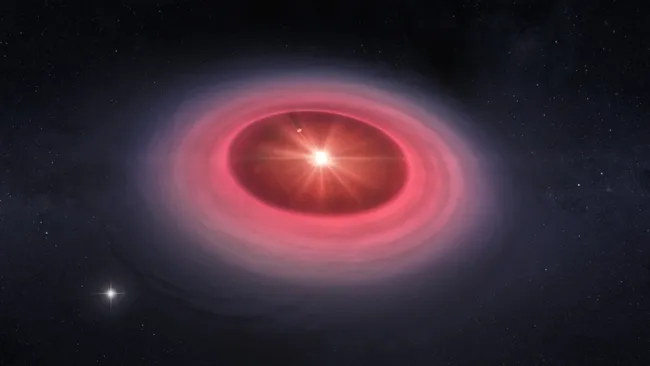
star HD 100453

Alcohol Cloud in Deep Space May Be Key to Life on Earth, Say Scientists

Jan Otte

A young star is surrounded by a swirling disk of gas and dust in the depths of the cosmos. This disk is full of alcohol. Astronomers using the Atacama Large Millimeter/submillimeter Array (ALMA) have found methanol, an important organic molecule, in the protoplanetary disk of a star called HD 100453. This star is 330 light-years ...

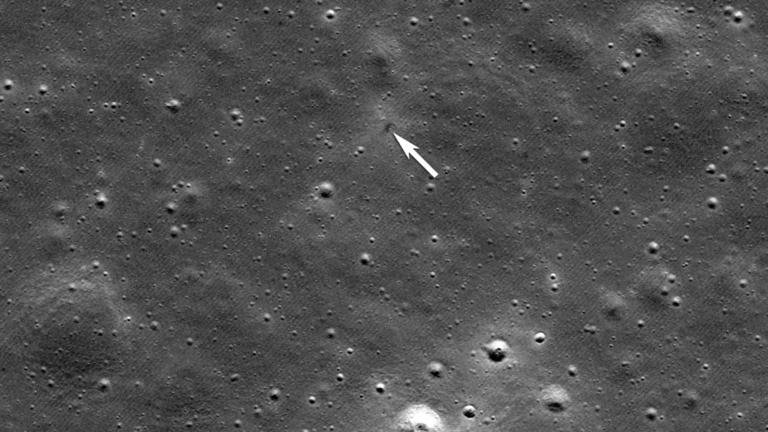
NASA's Lunar Reconnaissance Orbiter

NASA Finds Japan’s Crashed Moon Lander — Debris Scattered Across Lunar Surface

Jan Otte

NASA’s Lunar Reconnaissance Orbiter (LRO) took the first pictures of Japan’s doomed Resilience moon lander. The pictures show a grim scene: broken pieces of the lander spread out across the moon’s surface. The spacecraft, made by the Tokyo-based company ispace, was supposed to make a historic soft landing on June 5, but it didn’t and ...

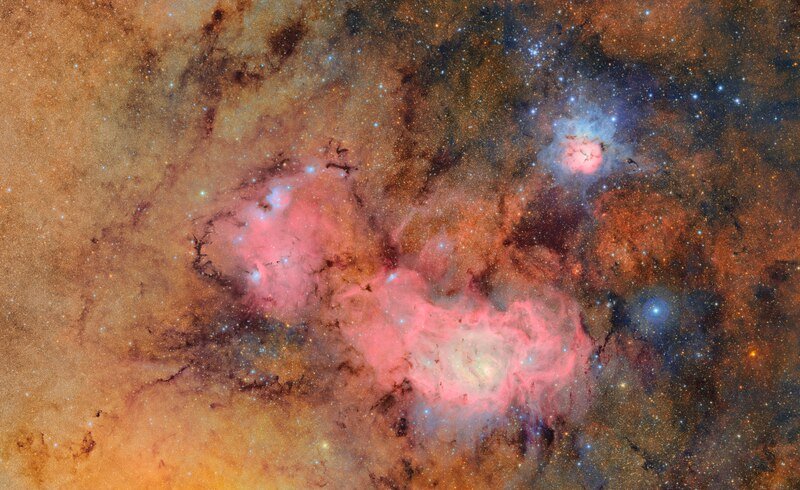
Trifid and Lagoon nebulae

Rubin Observatory Unveils Stunning First Space Images

Jan Otte

The universe has never looked this clear or this bright. The NSF-DOE Vera C. Rubin Observatory sent out its first scientific pictures on June 23, 2025. These pictures gave people an unprecedented look at the universe, which is always changing. The biggest digital camera ever built took these early pictures. They are just a taste ...

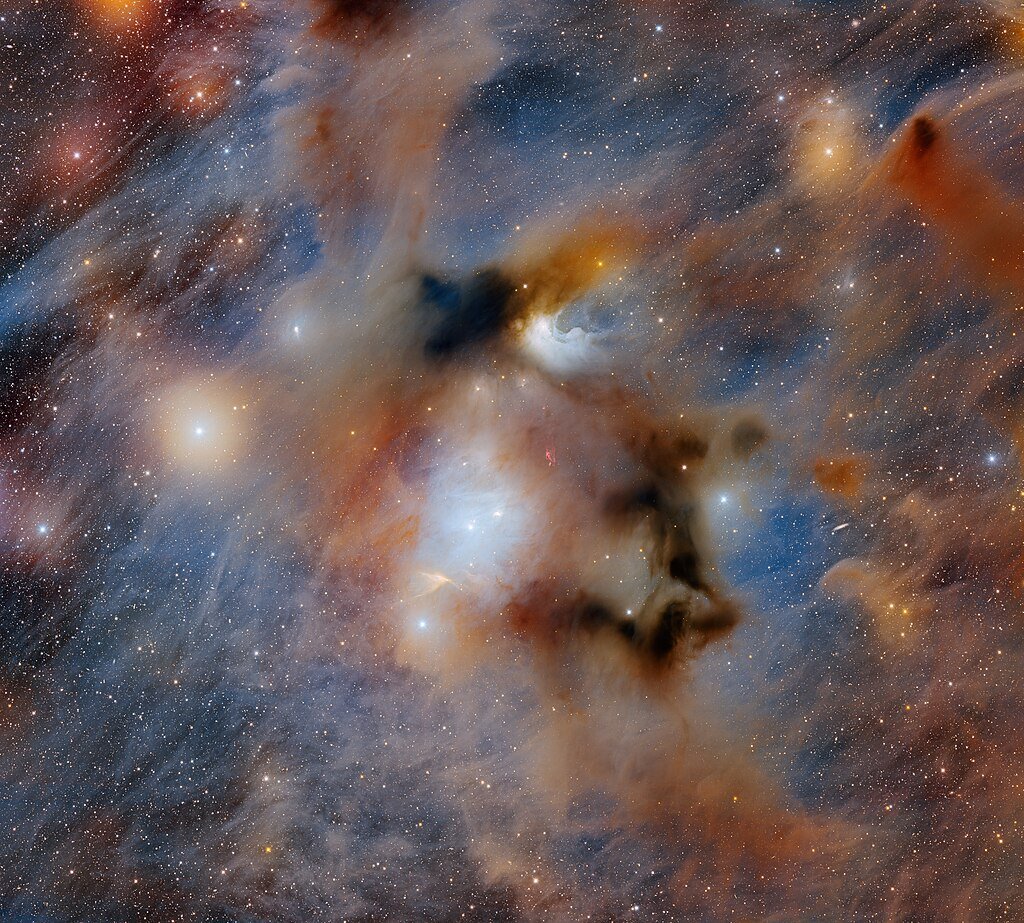
The ominous Chamaeleon I dark cloud, the nearest star-forming region to Earth, is captured in this image taken with the 570-megapixel Department of Energy-fabricated Dark Energy Camera mounted on the U.S. National Science Foundation Víctor M. Blanco 4-meter Telescope at Cerro Tololo Inter-American Observatory, a Program of NSF NOIRLab. Chamaeleon I is one portion of the larger Chamaeleon Complex and is home to three reflection nebulae that are brightly illuminated by nearby newly formed stars.

Chamaeleon I: Where New Stars Light Up Cosmic Darkness

Jan Otte

Behind clouds of interstellar dust, a cosmic drama is playing out deep in the southern constellation of Chamaeleon. The Chamaeleon I dark cloud is one of the closest places to Earth where stars are born. It is only 550 light-years away. In this “stellar nursery,” newborn stars break through the darkness and light up huge ...

light didn't emerge unfettered after the Big Bang. Here, we see the phases following the Big Bang (top left), about 13.8 billion years ago, to present day (lower right).

Was the Early Universe Dark or Full of Light?

Jan Otte

For most of human history, the night sky has been a place where stars, planets, and faraway galaxies can be seen. But what was there before the first stars came to life? Was the universe full of light when it was young, or was it a dark void? The answer is much more interesting than ...

Photo of the constellation Lupus produced by NOIRLab in collaboration with Eckhard Slawik

Nova V462 Lupi Ignites the Skies: A Rare Stellar Explosion Captivates Earth

April Joy Jovita

A spectacular astronomical event has unfolded in the southern constellation of Lupus as a newly discovered nova, V462 Lupi, surged into view this June. Initially recorded on June 12, 2025, by the All-Sky Automated Survey for Supernovae (ASAS-SN), the nova has rapidly brightened to naked-eye visibility, stunning both professional astronomers and casual skywatchers alike. With ...

A hycean planet is a hypothetical type of planet, described as a hot, water-covered planet with a hydrogen atmosphere. The presence of extraterrestrial liquid water makes Hycean planets promising candidates for planetary habitability. According to researchers, density data imply that both rocky Super-Earths and Sub-Neptunes can fit this type, and it is thus expected that they will be common exoplanets. Currently there are no confirmed hycean planets, but the Kepler mission detected many candidates. Hycean planets could be considerably larger than what habitable planets were previously thought to be, with radii reaching 2.6 R⊕ (2.3 R⊕) and masses of 10 M⊕ (5 M⊕). Moreover, the habitable zone of such planets could be considerably larger than that of Earth-like planets. The planetary equilibrium temperature can reach 500 K (227 °C; 440 °F) at late M-dwarfs. There could also exist tidally locked 'Dark Hycean' planets (habitable only on the side of permanent night) or 'Cold Hycean' planets (with negligible irradiation). Hycean worlds could be soon investigated for biosignatures by terrestrial telescopes and space telescopes like the James Webb Space Telescope. The term "Hycean planet" was coined in 2021 by a team of exoplanet researchers at the University of Cambridge, as a portmanteau of "hydrogen" and "ocean", used to describe planets that are thought to have large oceans and hydrogen-rich atmospheres. Hycean planets are thought to be common around red dwarf stars, and are considered to be a promising place to search for life beyond Earth. Although the presence of water may help them be habitable planets, their habitability may be limited by a possible runaway greenhouse effect. Hydrogen reacts differently to starlight's wavelengths than do heavier gases like nitrogen and oxygen. If the planet orbits the star at one Astronomical unit (AU), the temperature would be so high that the oceans would boil and water would become vapor. Current calculations locate the habitable zone where water would remain liquid at 1.6 AU, if the atmospheric pressure is similar to Earth's, or at 3.85 AU if it is the more likely tenfold to twentyfold pressure. All current Hycean planet candidates are located within the area where oceans would boil, and are thus unlikely to have actual oceans of liquid water. Hycean planets have hydrogen-rich atmospheres. The atmospheres on Hycean planets are thought to be made up of hydrogen, helium, and water vapor. They are thought to be covered in oceans. The oceans on Hycean planets are thought to be much deeper than the oceans on Earth. They are thought to be common around red dwarf stars. Red dwarf stars are the most common type of star in the Milky Way galaxy. They are considered to be a promising place to search for life beyond Earth. Hycean planets have the ingredients necessary for life, including liquid water, energy, and organic molecules. The discovery of Hycean planets may represent a new frontier in the search for life beyond Earth. These planets are thought to be very different from Earth, but they could still be home to forms of life. Astronomers plan to use telescopes like the James Webb Space Telescope to search for Hycean planets and to learn more about their potential for human habitability. One such candidate planet is K2-18b, which orbits a faint star with a period of about 33 days. It could have liquid water, contains a considerable high amount of hydrogen gas in its atmosphere, and is far enough from its star. It clearly resides in its star’s habitable zone. It is discovered to contain water in its atmosphere. Such candidate planets can be studied for biomarkers. Image created by Pablo Carlos Budassi in 2023 (pablocarlosbudassi.com)

Do Deep Exoplanet Oceans Hide Clues to Life? Exploring Hycean Habitable Zones

Jan Otte

The quest for life beyond Earth has centered for decades on rocky, Earth-like planets, but a new class of enigmatic worlds called Hycean planets may upend this way of thinking about habitability. These ocean-laden exoplanets, cloaked in dense hydrogen atmospheres, could have great hidden seas thousands of miles below their surfaces, and tidal forces and geothermal heat ...