
You have probably been told your whole life that time moves in one direction: past, present, future. End of story. But when you peek into the strange world of quantum physics, that neat picture starts to wobble. Experiments over the past few years suggest that, under certain conditions, time can behave as if events are in more than one order at once, as if reality cannot quite decide what happened first until you look.
That sounds like science fiction, and honestly, it feels like it when you first encounter it. Yet this idea grows naturally from the same quantum rules that give you particles that are also waves, cats that are both alive and dead (in theory), and information that seems to teleport. To make sense of it, you have to loosen your grip on the everyday meaning of “before” and “after” and let physics show you how slippery time really is at the smallest scales.
The Classical Story of Time You Grew Up With

In your everyday life, time feels like a one-way street. You wake up, eat breakfast, go to work, come home, sleep. There’s a clear order to events: first this, then that, and never the other way around. Broken eggs do not leap back into their shells, spilled coffee does not pour itself back into the cup, and you never watch yesterday’s sunset tomorrow. Classical physics, the kind that governs cars, planets, and soccer balls, fits this intuition perfectly.
In that familiar picture, if you know the state of a system at one moment, you can, in principle, calculate what it was a moment before and what it will be a moment after. Time is just a smooth parameter you move along, like sliding a finger across a ruler. Even when Einstein enters the scene with relativity and tells you time runs at different rates for different observers, the basic idea of a single, well-defined order of events stays intact. Something either happens before or after something else; you never get both at once.
Quantum Weirdness: Superposition Comes for Time
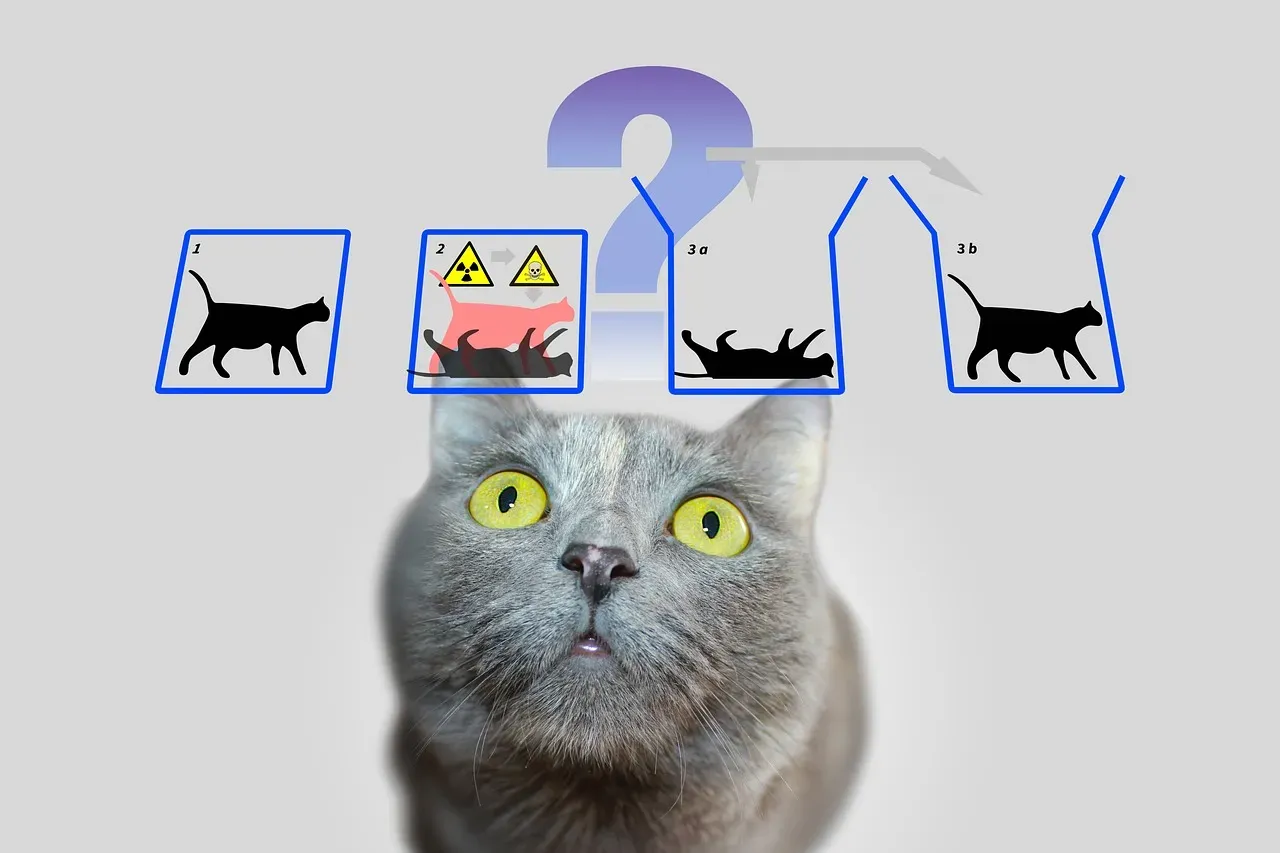
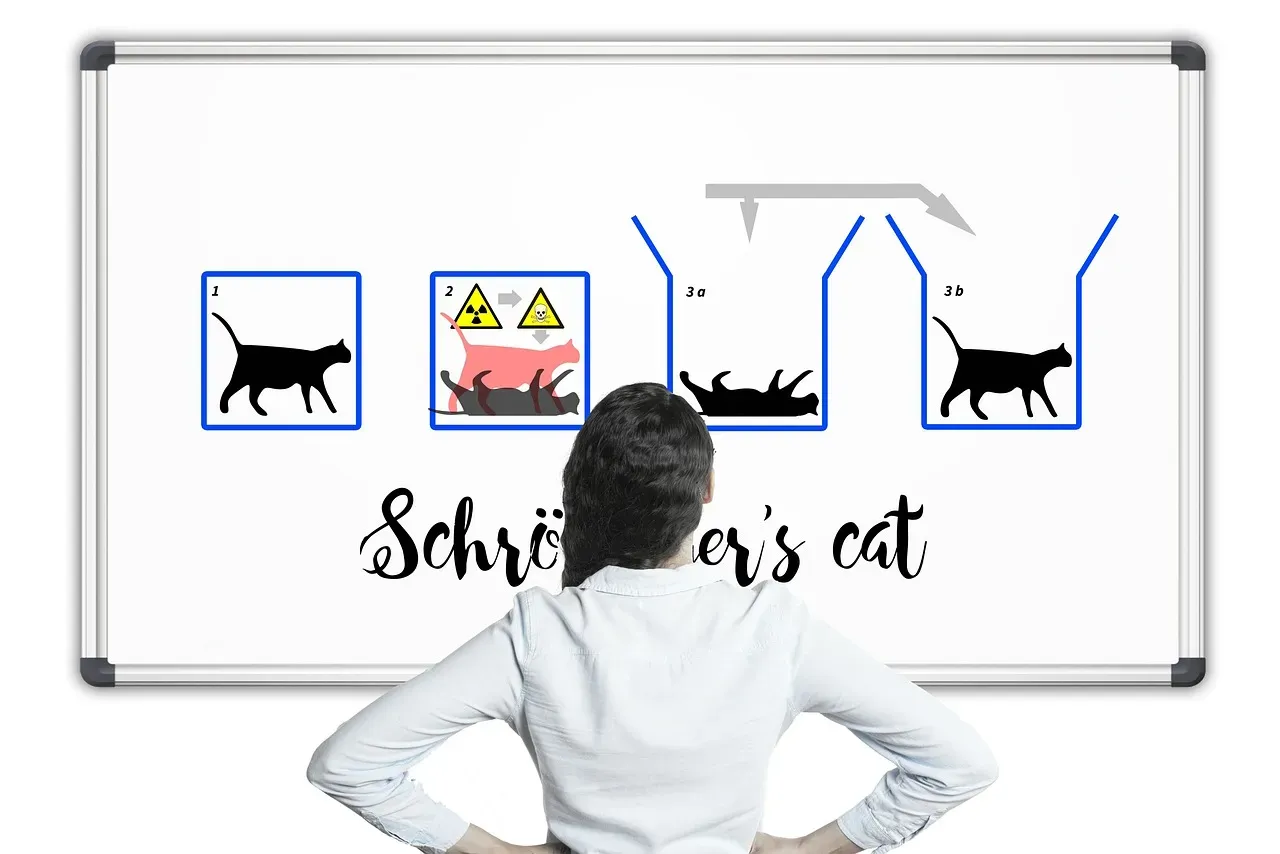
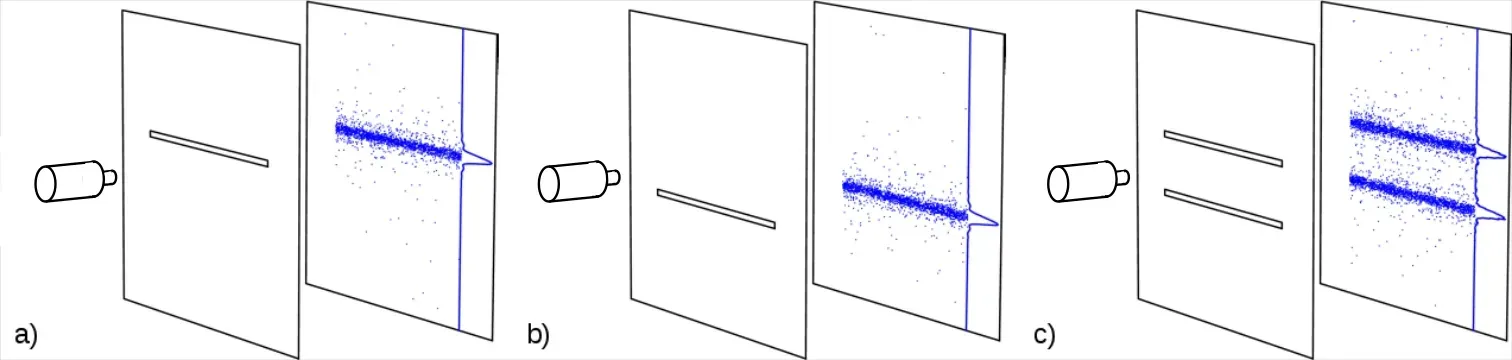
Quantum mechanics throws a wrench into that tidy narrative. At the quantum scale, particles can exist in a superposition of states: a particle can be here and there at the same time, spin up and spin down, go through the left slit and the right slit simultaneously until you measure it. Instead of a single definite reality, you work with a wave-like description that encodes many possibilities at once, only one of which becomes actual when you interact with it.
Now imagine applying that same logic, not just to where a particle is or what state it is in, but to the order in which things happen. In quantum theory, processes themselves can be placed in superposition. That means you can have a situation where, for a while, it is not simply “A happens then B” or “B happens then A,” but a blend of both orders at once. It is as if the universe is undecided about the sequence until you force it to show its hand by making a measurement.
What “Two Orders of Time at Once” Really Means
When you hear that time can be in “two states at once,” it is tempting to picture your whole life branching into multiple histories where breakfast both precedes and follows your commute. That is not what current experiments are saying. Instead, they are telling you that, at the level of carefully controlled quantum processes, the order of operations can be put into a superposition, just like a particle’s position or spin.
To get a feel for it, think about shuffling two steps in a recipe. In normal life, you either add water first and then coffee, or coffee first and then water. Those two sequences are mutually exclusive. In a quantum scenario, you engineer a setup where the “add water then coffee” path and the “add coffee then water” path are both part of a single, coherent process. Only when you finally “open the box” and examine the outcome do you see a definite order emerge, and the interference between those two possible orders can change what you observe.
Quantum Switches: When A Happens Both Before and After B
Physicists have actually built devices that rely on this idea, often called quantum switches. In a typical version, you send a quantum system, like a photon, through two operations, A and B. In classical terms, you must choose: the photon either experiences A first and then B, or B first and then A. A quantum switch uses an additional quantum system as a control that places the order of A and B itself into a superposition, making the overall process behave as if both sequences are happening together.
When you later measure the photon and the control system, you can detect effects that simply cannot be explained if there were a single, fixed order of events behind the scenes. The results line up with the predictions of quantum theory, which treats the order of operations as just another property that can be entangled and superposed. From your perspective, it is like watching a movie where two different edit orders are overlaid, and only at the end does one cut become the version you actually see on the screen.
Does This Mean Time Travel or Parallel Timelines for You?
With talk of superposed time orders, your mind might jump straight to time travel tales and branching universes where you meet your younger self. The reality is less dramatic for your daily life, but no less profound conceptually. These experiments do not allow you to walk into a machine and come out yesterday; they operate on carefully prepared quantum states in tightly controlled setups, far removed from the messy complexity of your brain and body.
What they do say is that your everyday intuition about time as a single, universal background might be an approximation that breaks down at very small scales. In that microscopic regime, “before” and “after” can blur into one another in a way that has no direct analog in your usual experience. You still move through your day along a single timeline, but the underlying fabric of reality that gives rise to that timeline might be stranger and more flexible than you would assume.
Why Putting Time in Superposition Could Be Useful
This whole story is not just philosophical navel-gazing; it might actually be useful. When you allow the order of operations to be in superposition, you can, in some cases, perform tasks more efficiently than any classical process would allow. In quantum information theory, the indefinite causal order provided by devices like quantum switches can reduce the resources you need to distinguish between different processes or to transmit information under noisy conditions.
If you are interested in quantum computing, this should catch your attention. Just as superpositions of states and entanglement give you advantages over classical computers, superpositions of causal order might open new doors for algorithms and communication protocols. You can think of it as adding a new dial to the quantum toolbox: not only can you play with what states your system is in, you can also play with the very structure of “what happens when,” turning time’s ordering into something you can engineer and exploit.
What This Tells You About Reality and Your Place in It
When you step back, the idea that time’s order can be put into a quantum superposition nudges you toward a humbling realization. The solid, common-sense world you navigate is probably just one layer of a much richer structure. Your brain has evolved to handle cause and effect in a straightforward way because that is enough to keep you alive and functioning, not because it reveals the deepest truths about the universe. Quantum experiments are like cracks in the surface, letting you glimpse the strange machinery underneath.
You may never personally operate a quantum switch or write protocols that exploit indefinite causal order, but you live in a universe where such things are possible. That alone reshapes how you might think about concepts like time, causation, and reality. Instead of a rigid cosmic clock ticking away the same for all, you are looking at a world where, in some regimes, even the notion of “what happened first” can refuse to be pinned down until you ask in the right way.
How to Wrap Your Head Around Time in Two States
If your mind feels stretched, you are not alone. One way to cope is to treat these quantum effects the way you treat optical illusions: your eyes and brain insist on seeing something familiar, but careful measurement tells a different story. You can accept that, at a fundamental level, your temporal intuitions are like those illusions, useful most of the time but not reliable guides to the underlying rules. You do not have to abandon them in daily life; you just recognize their limits when you zoom in far enough.
It can also help to lean into metaphor, even if you know it is imperfect. Picture time as a playlist you usually play straight through, track by track. Quantum mechanics lets you briefly have a strange mash-up where tracks overlap in ways your usual player never allows, and only when you press export does a single, clean track order appear. You still listen to a normal playlist in your car, but once you know these mash-ups are possible behind the scenes, your sense of what a playlist can be is permanently expanded.
So, can time be in two states at once? At the level of quantum processes, it looks like the answer is that the order of events can indeed exist in a superposition, defying your classical sense of before and after. That does not rewrite your daily schedule or hand you a time machine, but it does quietly revolutionize the story you tell yourself about how reality is structured. And maybe that is the most intriguing part: knowing that, while you live in a world that feels linear and orderly, the universe itself might be playing a far subtler and stranger game than you ever imagined.
As you sit with that, you might find your usual sense of time loosen just a little, like a tight knot starting to unwind. You still have deadlines, alarms, and anniversaries, but behind them lies a picture of time that is less a rigid arrow and more a flexible, quantum tapestry. The next time you glance at a clock, you might quietly wonder: if you could zoom down to the tiniest scales, what would “now” even mean?