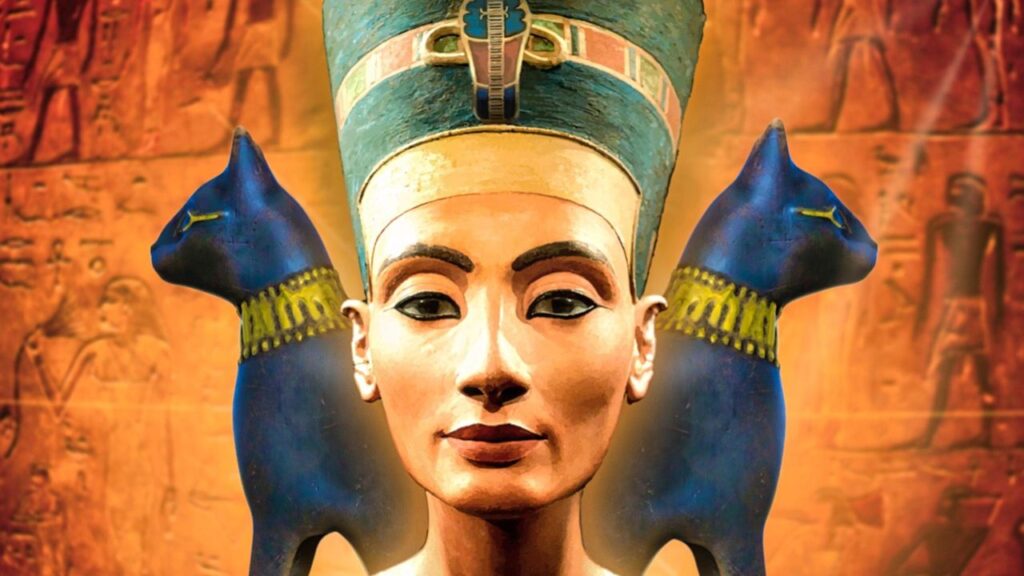
If you only know Nefertiti as “that famous bust in Berlin,” you’re missing the most electrifying parts of her story. Behind that serene face stood a woman who helped flip Egypt’s religion on its head, shared power at the very top, and then vanished so completely that modern archaeologists are still arguing about what happened to her. You’re not just looking at an ancient beauty; you’re staring at the echo of a political earthquake.
As you dig into Nefertiti’s life, you’ll find a mix of solid facts, tantalizing clues, and frustrating mysteries. You see how much influence she held, yet how carefully the past tried to erase or blur her. That tension is what makes learning about her so addictive: you’re constantly balancing what you know for sure with what you can only reasonably suspect. By the time you reach the end, you may feel that you know her better – while also realizing how much of her was deliberately hidden from you.
1. You’re Meeting a Queen Whose Very Name Means “A Beautiful Woman Has Come”
When you say “Nefertiti,” you’re literally speaking her reputation out loud: her name is usually translated as “A Beautiful Woman Has Come.” You can imagine how that would hit in a royal court obsessed with symbolism and status – her identity is tied to arrival, presence, and allure. Ancient inscriptions describe her with phrases that celebrate her appearance and grace, and the art that survives backs that up, showing a queen presented in an idealized but powerful way.
But if you stop at the idea that she was only about looks, you miss the point. In ancient Egypt, beauty was not just surface-level; it signaled divine favor, order, and legitimacy. When you look at Nefertiti’s title and images, you’re seeing a political message wrapped in aesthetics. Her beauty was a kind of visual argument that she belonged at the very center of power, not off to the side as a decorative figure. You’re meant to understand that her presence itself was part of how her dynasty justified ruling Egypt.
2. You’re Looking at One of Egypt’s Most Powerful Queens, Not Just a Consort
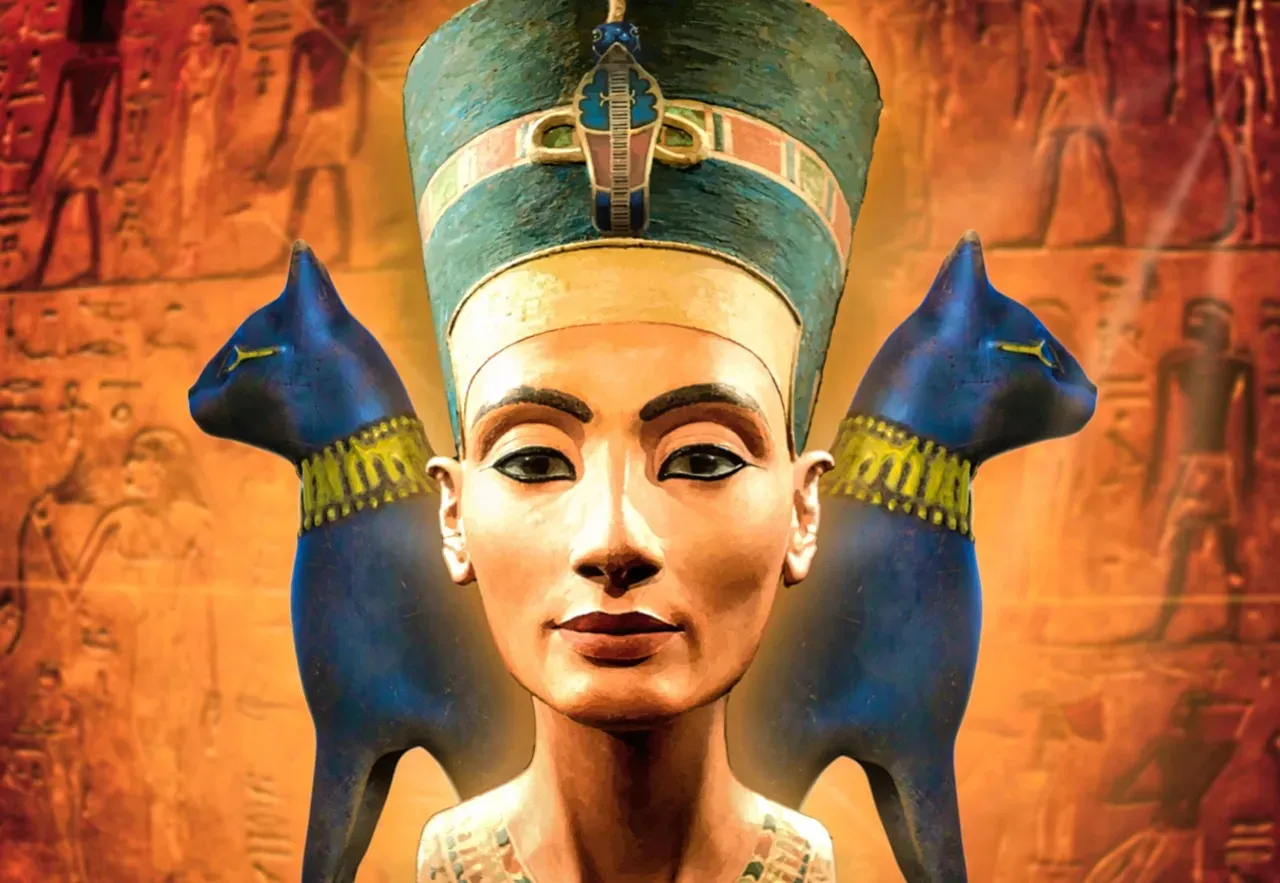
When you think of Egyptian queens, you might jump straight to Cleopatra or Hatshepsut, but Nefertiti stands right beside them in terms of influence. During the reign of her husband, Akhenaten (mid–fourteenth century BCE, Eighteenth Dynasty), she appears next to him again and again in official art, sometimes almost equal in scale, sharing in ceremonies usually reserved for a king. That visual equality is your first clue that her role went far beyond the traditional image of a royal wife quietly in the background.
Some scholars argue that she acted as co-ruler, or at least as something very close to it, based on how frequently she’s shown performing royal rituals and even smiting enemies in art – imagery usually reserved for pharaohs. You cannot say with absolute certainty that she held the full formal title of pharaoh during her husband’s lifetime, because the surviving inscriptions stay maddeningly vague. But when you look at the sheer weight of images and titles, you’re clearly dealing with a woman whose political presence was front and center, not a modest figure hiding in the shadows of the throne.
3. You’re Stepping Into a Religious Revolution She Helped Drive
Nefertiti lived through, and actively participated in, one of the most dramatic religious shifts in ancient history. Together with Akhenaten, she promoted the worship of Aten, the sun disk, at the expense of Egypt’s traditional pantheon of many gods. In scenes carved on temple walls and household altars, you see both of them standing under the rays of Aten, which stretch down like hands offering life to the royal family. You are supposed to see the king and queen as the key link between the god and everyone else.
This was not a minor adjustment; it was a near-total religious rebranding of the state. Temples to older gods were sidelined, and a new capital dedicated to Aten, Akhetaten (modern Amarna), was built from the ground up. When you picture Nefertiti in that city, you’re not just imagining a queen walking through courtyards. You’re watching a political and spiritual experiment with her at the center, presenting herself as the female half of a sacred partnership that redefined how Egyptians were supposed to understand the divine.
4. You Don’t Actually Know Where She Came From – And That Mystery Matters
Here’s one of the most frustrating and fascinating things you have to accept: Nefertiti’s origins are not clearly recorded. No ancient text calmly explains whose daughter she was or where she grew up. Many Egyptologists think she was probably Egyptian and may have been related to a powerful court official named Ay, who later became pharaoh, but that is pieced together from circumstantial clues rather than a neat, definitive line in a tomb inscription. Earlier theories that she was a foreign princess from the kingdom of Mitanni have lost favor as more evidence has been reconsidered.
Why should you care about this uncertainty? Because a queen’s background in ancient Egypt was not trivial; it affected how you interpret her political support and how easily she could rise. If she was tied to an influential court family, you see her as part of a tight internal power network. If she had been foreign, you’d read her name, “A Beautiful Woman Has Come,” in a very literal way, as someone arriving from abroad. Since you do not have solid proof either way, you have to live with a version of Nefertiti where her early life remains in soft focus, reminding you that even world-famous figures can emerge from a fog of silence.
5. You’re Watching a Royal Mother Whose Daughters Shaped Egypt’s Future
When you look at family scenes of Nefertiti, you do not see the stereotypical “empty” royal couple; you see a crowded, affectionate household. She and Akhenaten had six known daughters, who appear on reliefs climbing on their parents, sitting on laps, or standing behind them during ceremonies. These are some of the most intimate domestic scenes preserved from ancient Egypt, and you’re allowed to peek right into the royal nursery, complete with carefully styled wigs and miniature jewelry.
Two of those daughters later became queens themselves, tying Nefertiti directly into the later line of rulers that includes Tutankhamun. When you think about Nefertiti’s influence, you should not stop with her own lifetime; you should follow the thread into the next generation. Through her daughters’ marriages and positions, she helped shape the political landscape even after she disappears from the record. The family dramas you see in those carved scenes were not just tender moments; they were the early chapters of Egypt’s next dynastic moves.
6. You’re Facing the World’s Most Famous Ancient Bust – and a Modern Cultural Tug-of-War
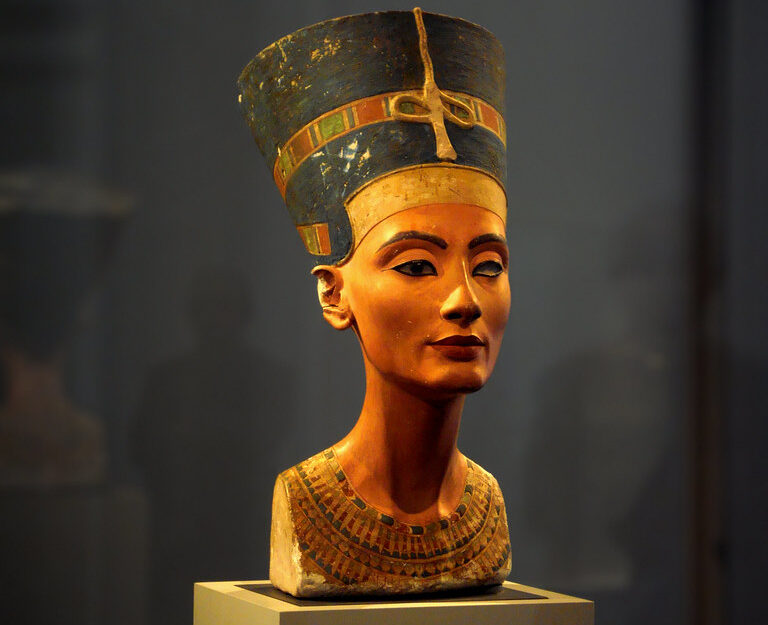
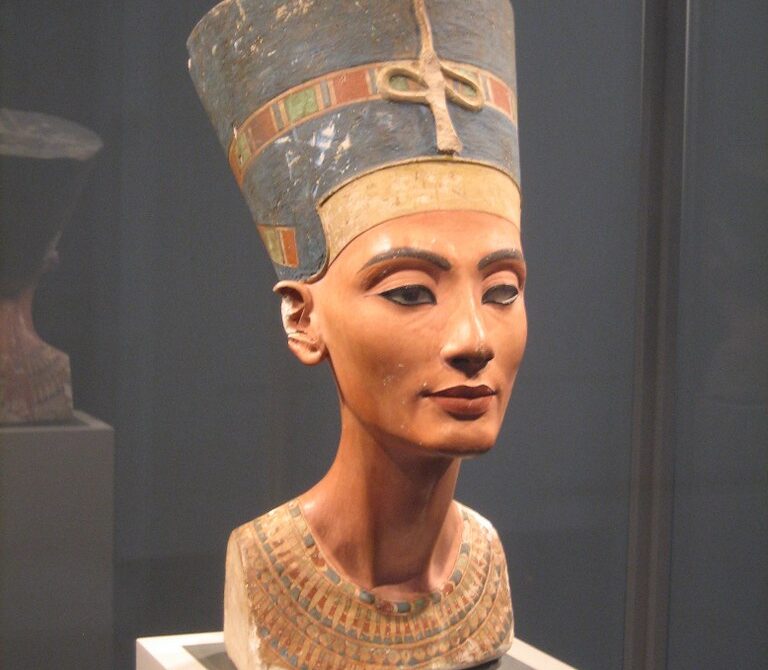
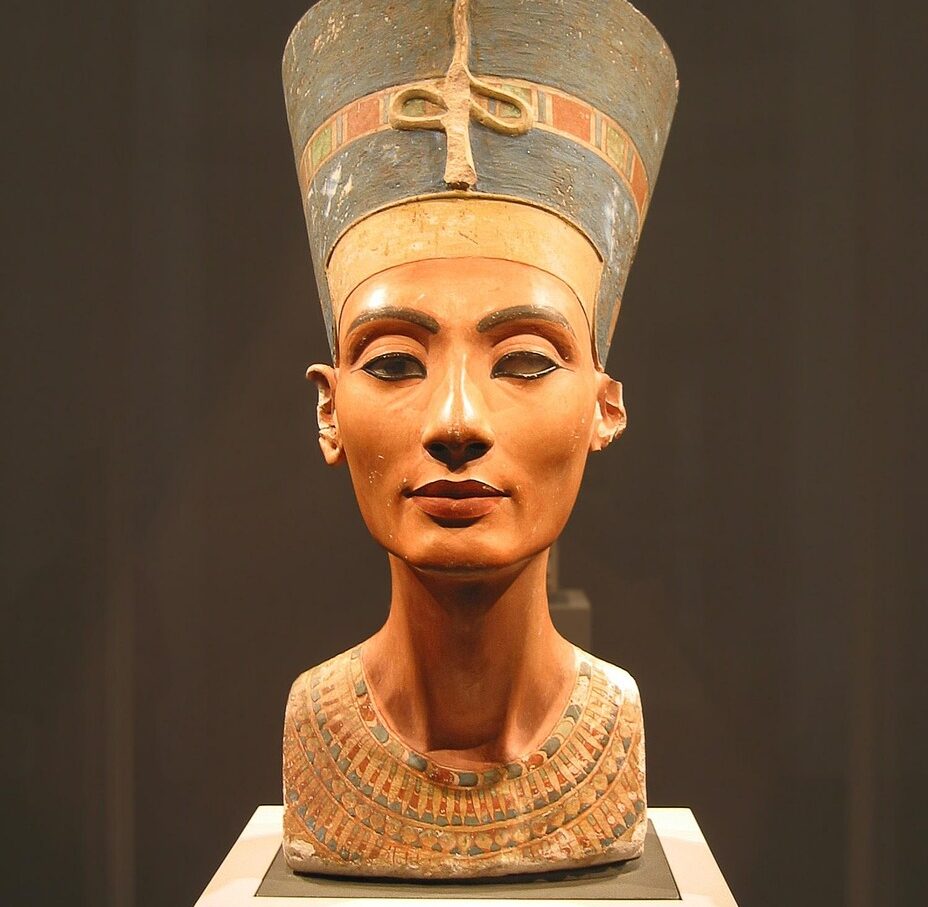
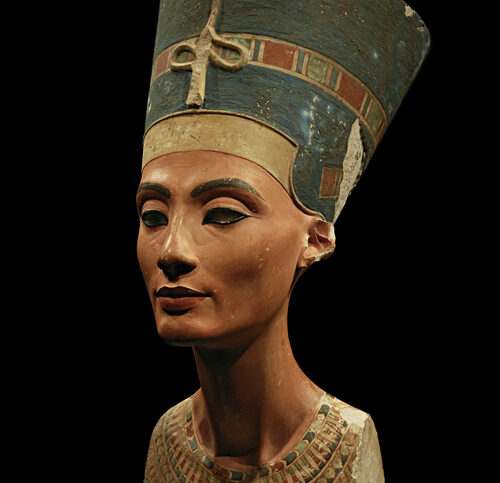
The image you almost certainly know best is the painted limestone bust discovered in 1912 at Amarna and now displayed in Berlin’s Neues Museum. When you stand in front of it, you see Nefertiti with her tall blue crown, long neck, and sharply defined features, one eye inlaid and the other left unfinished. That incomplete detail only makes her seem more alive, as if you’re catching her mid-creation. The bust has become an international symbol of ancient beauty, elegance, and royal poise.
But once you step back from the aesthetics, you run straight into politics. Egypt has repeatedly requested the bust’s return, arguing that it’s a core piece of their cultural heritage and may have been removed under questionable circumstances. Germany maintains that it was legally acquired under the rules in place at the time of excavation. When you look at Nefertiti’s face in that gallery, you’re not just admiring art; you’re watching a century-long debate about ownership, colonial-era archaeology, and who gets to decide where the world’s most iconic artifacts belong.
7. You’re Confronting the Mystery of a Queen Who Vanished From History
For several years of Akhenaten’s reign, Nefertiti is everywhere in the archaeological record – carved on walls, shown in shrines, mentioned in inscriptions. Then, around the later part of his seventeen-year rule, she suddenly drops out of sight. You don’t get a clear death record, no neatly labeled tomb, no official farewell. This silence has fueled endless theories: did she die of illness, fall out of favor, change her name, or step into an even more powerful role that was recorded differently?
Some researchers suggest that she may have ruled after Akhenaten under a different royal name, possibly the mysterious figure Neferneferuaten, although not all scholars agree. Others think she might simply have died and been buried in a way that has not yet been securely identified in the archaeological record. For you, the key point is this: Nefertiti’s disappearance is not a solved puzzle. When you read any claim about her final years, you have to pay attention to whether you are being given firm evidence or a carefully argued possibility resting on incomplete data.
8. You’re Entering the Debate Over Whether She Became a Pharaoh in Her Own Right
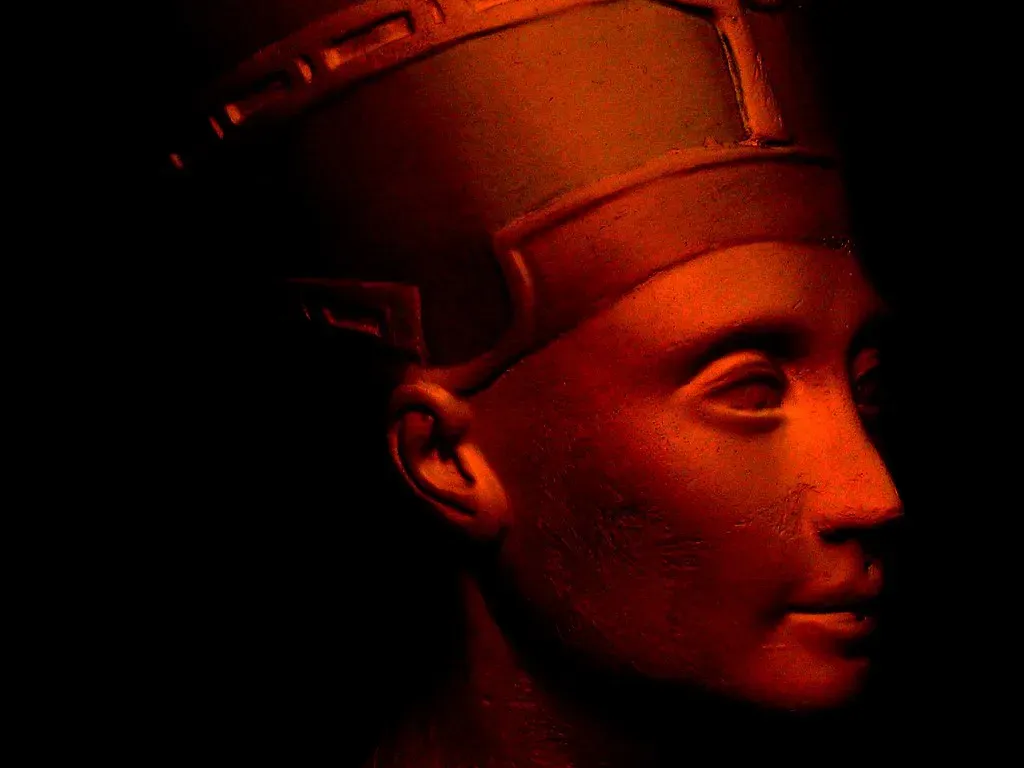
One of the most hotly discussed questions you encounter is whether Nefertiti went on to rule Egypt independently after Akhenaten’s death. Some inscriptions and objects refer to a ruling figure called Neferneferuaten – a name closely tied to Nefertiti’s extended royal titles – and show a female ruler performing kingly roles. That has convinced a number of scholars that she briefly took the throne before Tutankhamun, effectively becoming a female pharaoh in the tradition of earlier rulers like Hatshepsut.
However, the evidence is not ironclad. Some experts interpret the same clues differently or argue that another royal person may have held that name. You’re operating in a space where the stone and text fragments do not line up into a simple timeline. So when you imagine Nefertiti wearing the full double crown of Egypt as pharaoh, you’re stepping partly into the realm of plausible reconstruction rather than firmly documented fact. The responsible way for you to think about it is this: her rise to that level of power is possible and even likely in the eyes of many specialists, but it is not universally accepted as proven.
9. You’re Seeing How Her Image Was Both Celebrated and Attacked
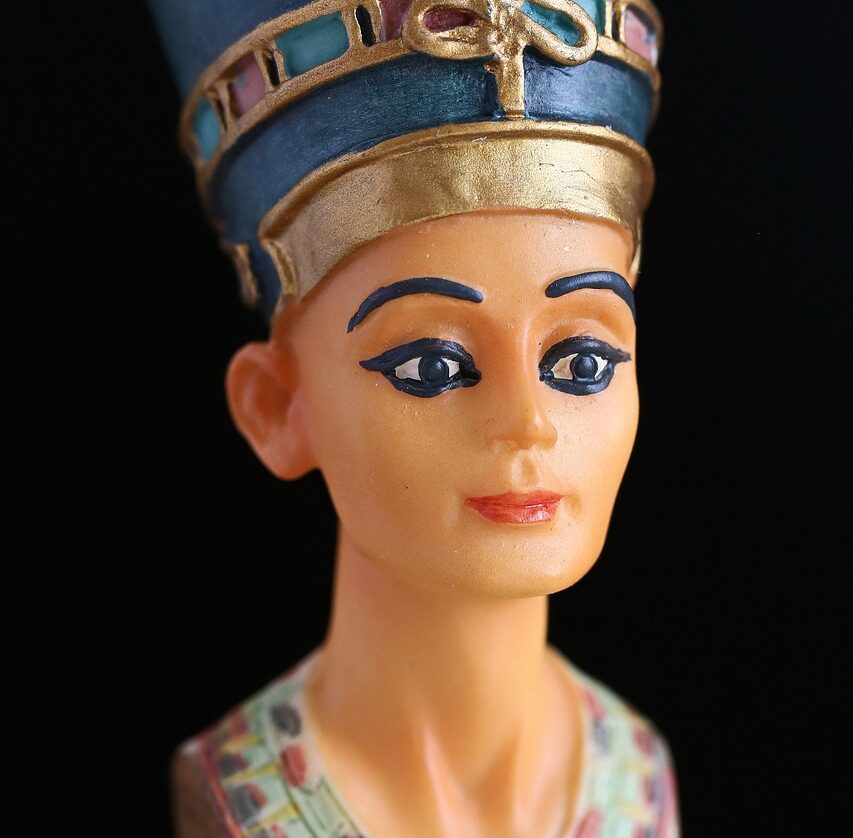
Nefertiti appears on a remarkable number of monuments and objects, more than almost any other Egyptian queen whose record survives. You see her in statues, reliefs, and small personal items, which tells you she was not just a palace figure but a public and devotional one. People in her time used her image in household shrines, suggesting that ordinary Egyptians were encouraged to see her as a powerful intercessor and ideal woman. Her crowned profile became part of the visual language of the era.
Yet some reliefs and statues of her were later defaced, especially during or after the backlash against Akhenaten’s religious reforms. In certain scenes, her name or face is deliberately damaged, a kind of magical attack intended to weaken her memory and power in the afterlife. When you notice those chisel marks, you’re witnessing ancient cancel culture in stone. Her prominence made her impossible to ignore – but also made her a prime target when later rulers tried to restore older traditions and wipe out the Aten experiment.
10. You’re Following a Queen Whose Story Is Still Being Rewritten Today
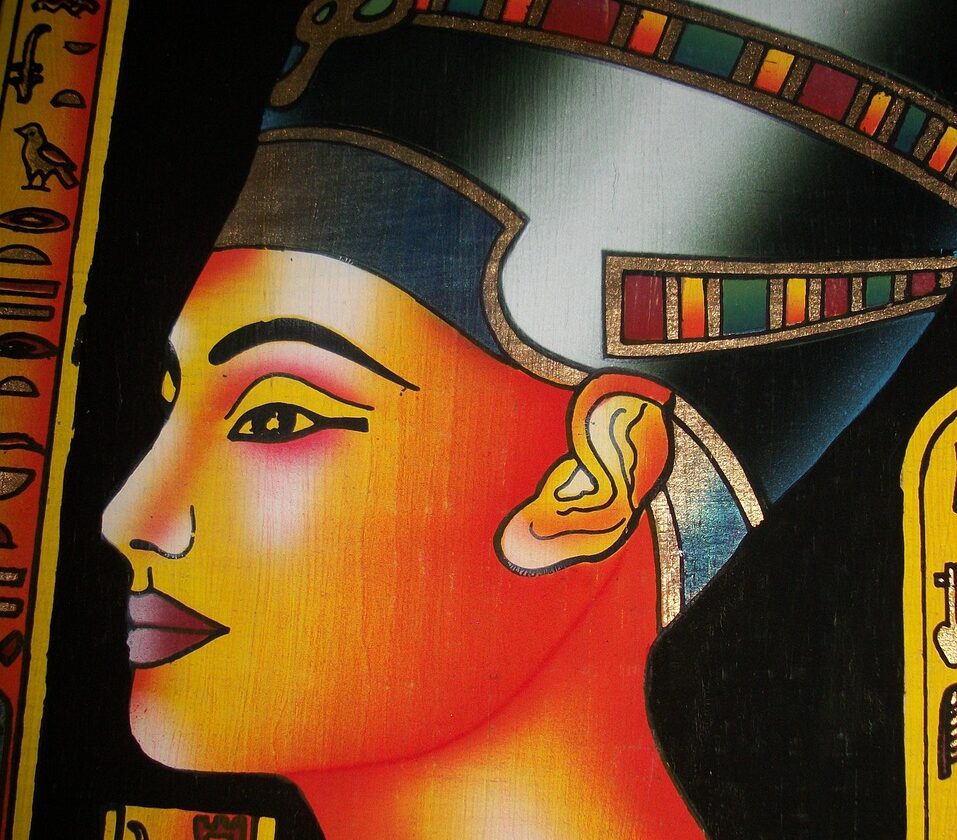
Nefertiti is not frozen in the past for you; her story keeps evolving as new discoveries and re-interpretations emerge. Over the last few decades, scholars, museums, and new technologies like advanced scanning and imaging have continued to re-examine objects linked to her, from the famous bust to lesser-known statues and inscriptions. Every time new data appears, your understanding shifts slightly – whether it is confirmation of a title, a new depiction from a private tomb, or a revised reading of a damaged name.
You have also seen modern claims about her possible mummy, hidden chambers near Tutankhamun’s tomb, or secret rooms in known sites, but so far none of these possibilities has been confirmed to the standard that would settle the debate. That means you should treat sensational headlines with caution and always look for whether the evidence has been verified and widely accepted. In a way, you are part of this unfolding story: every time you question, read critically, and separate what is proven from what is merely exciting speculation, you help keep Nefertiti’s legacy grounded in reality instead of myth.
Conclusion: You’re Left With a Face You Recognize and a Life You Only Half Know
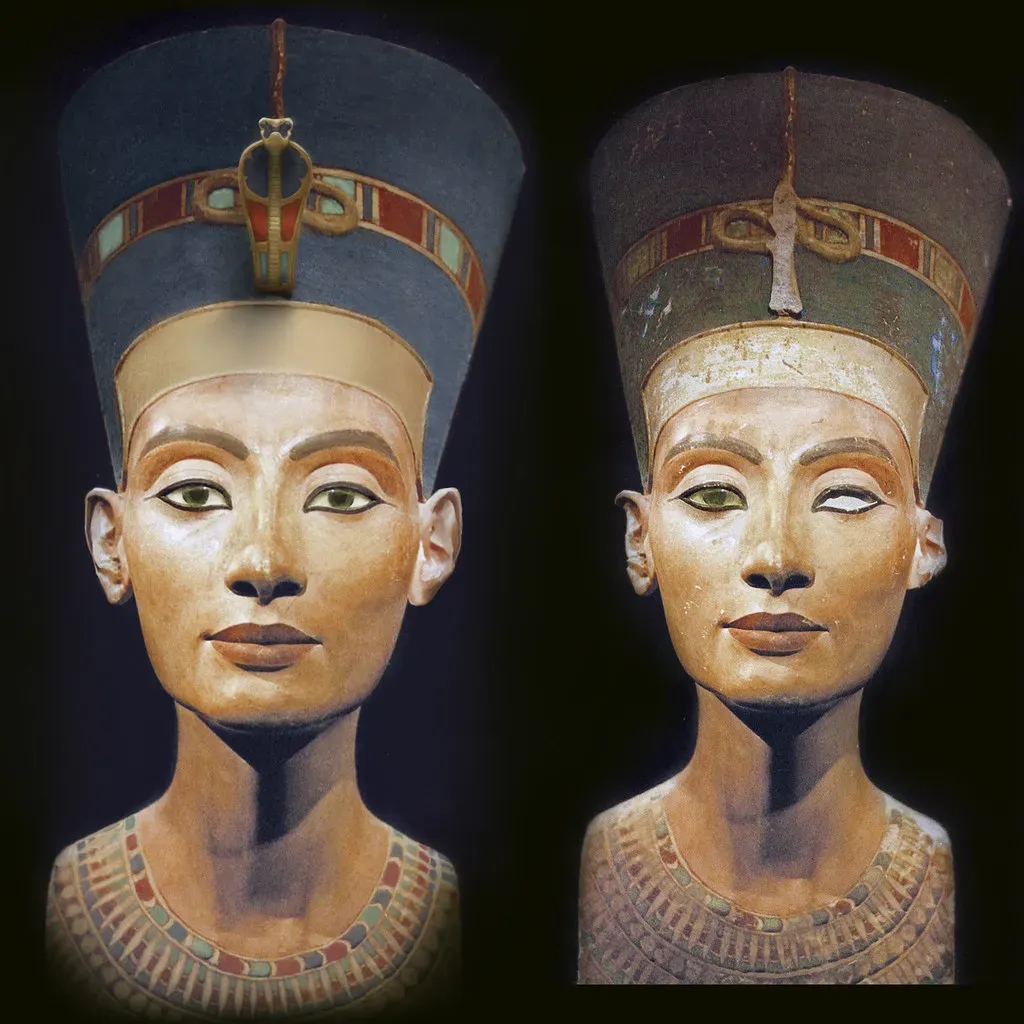
By now, you can see that Nefertiti is far more than the iconic bust you meet in photos and textbooks. You’ve walked through her role in a religious upheaval, her unusual visibility as a royal woman, her complex family ties, and the unsolved riddle of her disappearance. You can point to real, documented facts about her life and power, while also recognizing the gaps where evidence thins out and careful guesswork begins.
When you think about her now, you’re not just admiring an ancient beauty; you’re engaging with a living historical investigation that is still unfolding more than three thousand years later. Her name – “A Beautiful Woman Has Come” – takes on a new meaning for you, because she keeps arriving in fresh ways as research continues. The next time you see her famous profile, will you just see a pretty face, or will you remember the revolution, the mysteries, and the unanswered questions standing quietly behind that calm gaze?