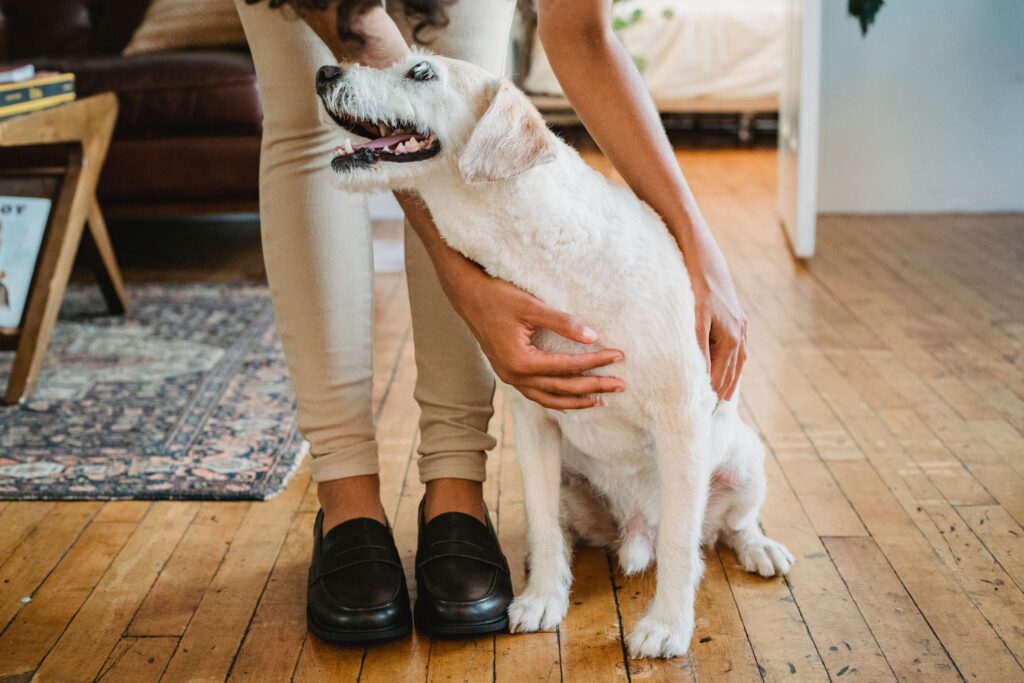

You know that feeling when a dog walks up, sighs dramatically, and drops its full weight against your legs like you’re suddenly their personal wall? Most people laugh, maybe wobble a bit, and assume the dog just needs balance or wants a lazy cuddle. But beneath that warm, heavy lean is a surprisingly complex mix of chemistry, emotion, and ancient survival programming that modern animal behavior science is still unpacking.
Far from being random affection, this “full-body lean” is a sophisticated social contact behavior. Your dog is not only seeking touch and reassurance; it’s also quietly layering you with its scent, reinforcing a shared “safety matrix” that tells its brain: this human is mine, and I am safe near them. When you realize how much is going on in that one simple lean, it stops being just cute and starts looking like an entire emotional language pressed against your shins.
The Hidden Language of the Dog Lean
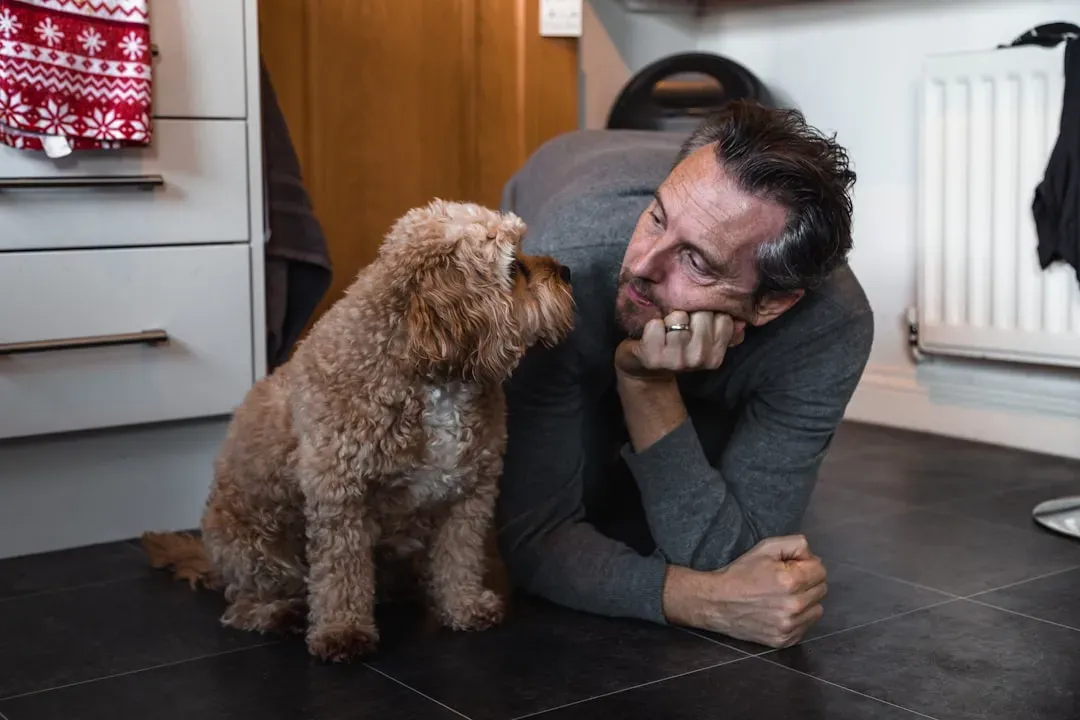
When a dog leans its whole body into you, it isn’t just collapsing from laziness; it’s initiating contact the way humans might reach for a reassuring hug. Dogs are intensely social mammals, and physical closeness is one of their primary communication channels. That lean is the canine version of saying, “I’m here, you’re here, we’re together, and that feels right,” only in a language made of weight, warmth, and proximity instead of words.
From an evolutionary standpoint, canids have survived by maintaining tight social bonds where touch played a big role in group cohesion and emotional regulation. Wolves and related species rest in piles, brush up against one another, and sleep in tight clusters. When your dog leans into your legs, it’s tapping into that same ancient script, rewriting it for a human pack: the lean becomes a quiet but powerful statement that you are part of its trusted inner circle.
Scent-Marking: Why Your Dog Is “Chemically Claiming” You
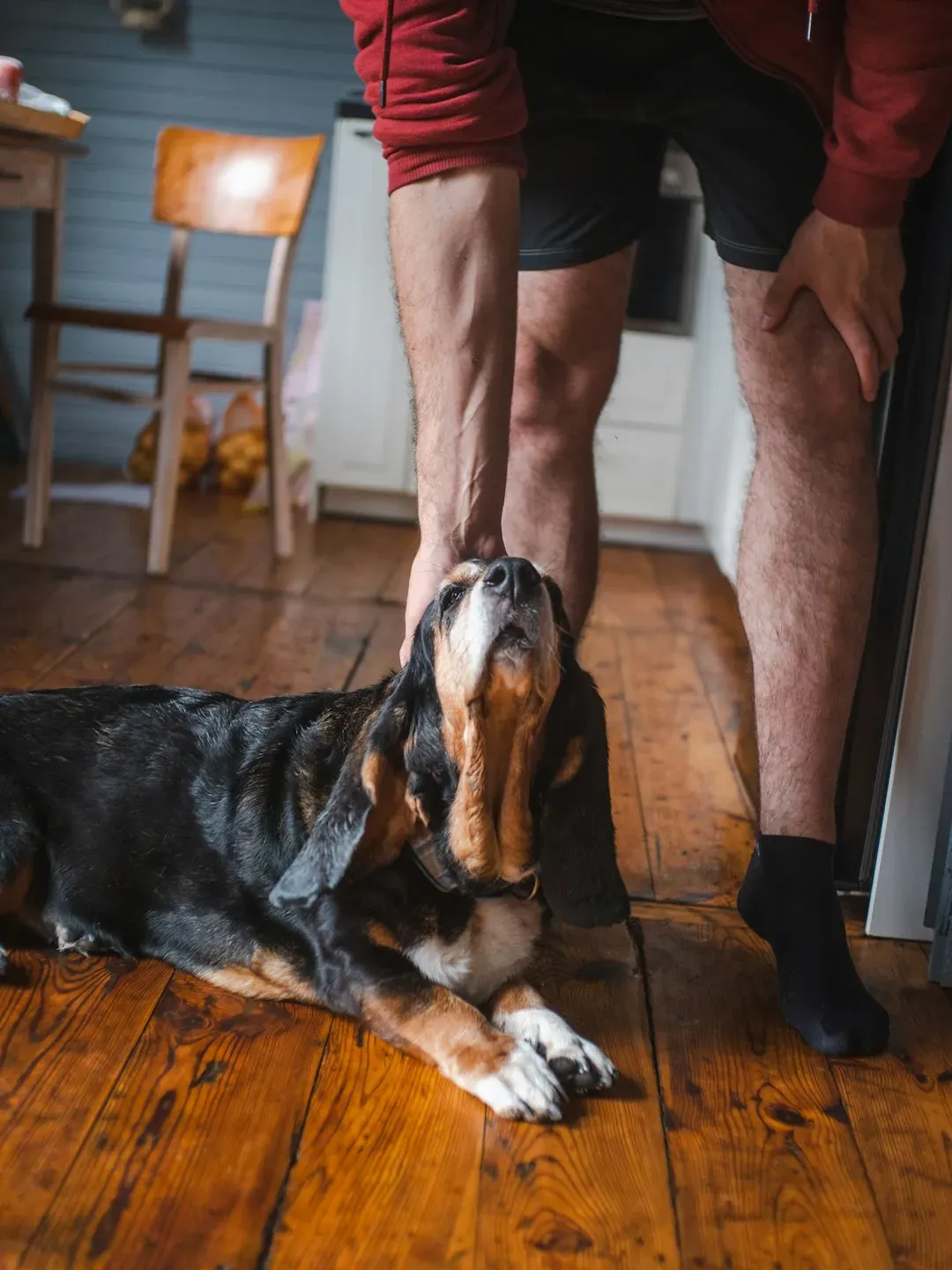
Dogs live in a world of scent in a way humans can barely imagine. Their skin, fur, and glands constantly release chemical markers that tell stories about identity, mood, and belonging. When a dog presses its entire body against you, those natural odors and microscopic skin secretions transfer onto your clothes and skin, creating a kind of invisible chemical name tag that says you are linked to them.
This is not dominance theater in the simplistic way people sometimes claim; it’s more like a social signature, similar to how you might put family photos on your desk. To other dogs, your scent now carries traces of that particular animal’s chemical profile, which can subtly signal that you are connected. In multi-dog households or dog-heavy environments, this kind of scent sharing can help stabilize social relationships and reduce uncertainty about who “belongs” with whom.
The Safety Matrix: How Leaning Regulates a Dog’s Emotions
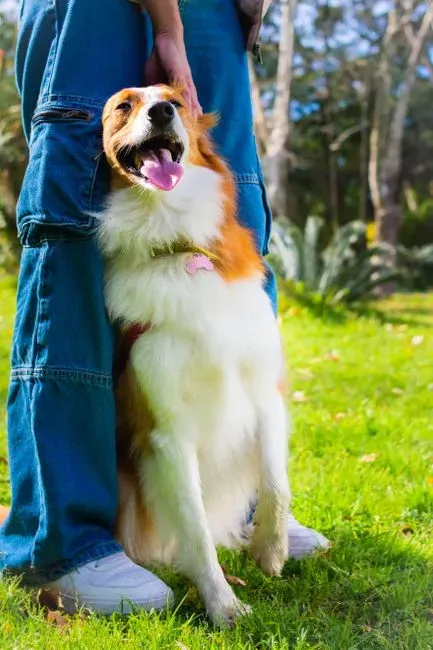
Think of your dog’s nervous system as constantly scanning the world for patterns of safety and danger. Close physical contact with a trusted figure is one of the most powerful safety signals an animal can receive. When a dog leans into you, it’s not just touching you for fun; it is plugging into its personal “safety matrix,” using your presence to regulate stress, fear, and arousal.
Physical closeness can help lower a dog’s emotional temperature after something startling or overwhelming, the way a child calms down when they press into a caregiver’s side. Heart rate can settle, muscle tension often softens, and breathing becomes steadier. The lean signals to the dog’s brain that it is anchored; the unpredictable world is now filtered through the known, stable presence of its human, and that simple contact can make the difference between mild worry and full-on anxiety.
Oxytocin, Touch, and the Biochemistry of Bonding
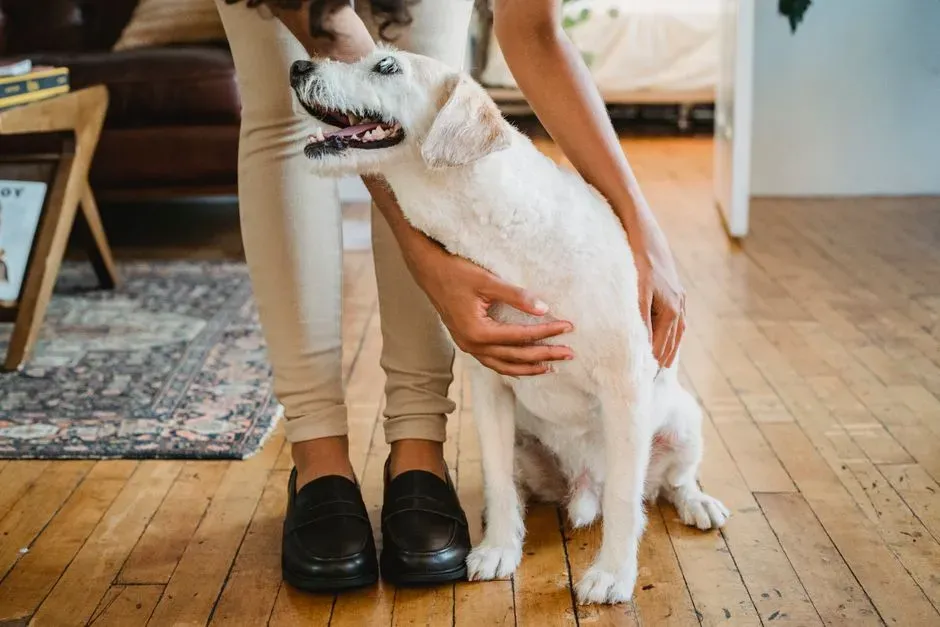
Under the surface of that lean, chemistry is busy. Gentle touch between dogs and their humans has been linked with changes in hormones associated with social bonding and stress regulation. When your dog presses against you and you respond with calm, affectionate contact, both of your bodies can enter a more relaxed, connected state that feels good on a deep, almost primal level.
This neurochemical dance helps explain why the leaning habit tends to reinforce itself over time. The dog feels safer and more at ease, you feel comforted and connected, and that mutual reinforcement encourages the behavior to repeat. It becomes a kind of shared ritual: the dog leans, you soften; you pet, the dog melts; and together you build a feedback loop that strengthens the emotional glue between you.
Leaning vs. Needing Balance: How to Tell the Difference
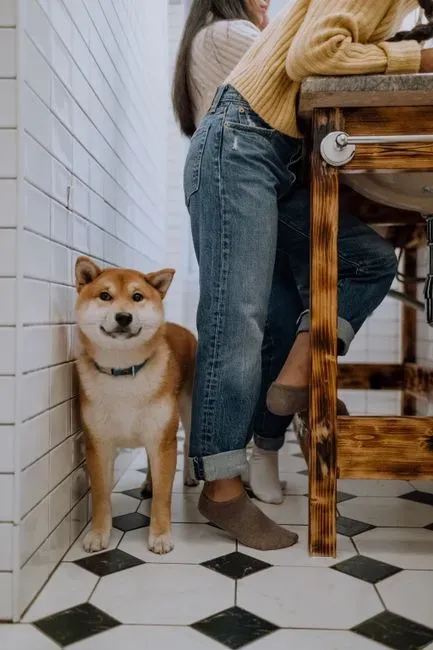
To be fair, not every lean is a grand emotional statement; sometimes a dog genuinely does need a bit of physical support, especially if it’s older, unsteady, or injured. The trick is to look at the whole picture: relaxed facial muscles, soft eyes, loose tail, and a calm, almost contented stillness usually point to emotional contact instead of mechanical balance. If the dog is leaning but seems tense, limping, or unstable, then your first assumption should be comfort or medical support rather than affection alone.
Context matters, too. A dog that leans into you during calm downtime in the living room is probably seeking closeness and reassurance. A dog that suddenly starts leaning heavily, stumbling, or pressing in strange ways may be signaling pain, dizziness, or a neurological issue. The lean is a behavior that can carry multiple meanings, so being a good observer – notice when, how, and in what mood it happens – turns you from a casual pet owner into a more accurate interpreter of your dog’s body language.
Attachment Styles: Why Some Dogs Lean Constantly and Others Rarely Do

Not all dogs are leaners, just like not all people are huggers. Some dogs seem to be glued to their humans, constantly pressing against legs, hips, or shoulders, while others keep a bit more physical distance. This can be influenced by genetics, early socialization, past experiences, and even individual personality. A dog that grew up with plenty of gentle touch may default to leaning as a comfort strategy, while one that had less positive contact might prefer closeness without full pressure.
Leaning can also be more common in certain environments or life stages. A newly adopted dog might lean more as it tests out whether you are a reliable source of safety, while an older, confident dog may lean less because its sense of security is already deeply rooted. Rather than judging a non-leaning dog as less bonded, it’s more accurate to see leaning as one of many possible attachment displays – alongside following you from room to room, checking in visually, or resting near you without actually touching.
When Leaning Signals Stress, Insecurity, or Over-Dependence
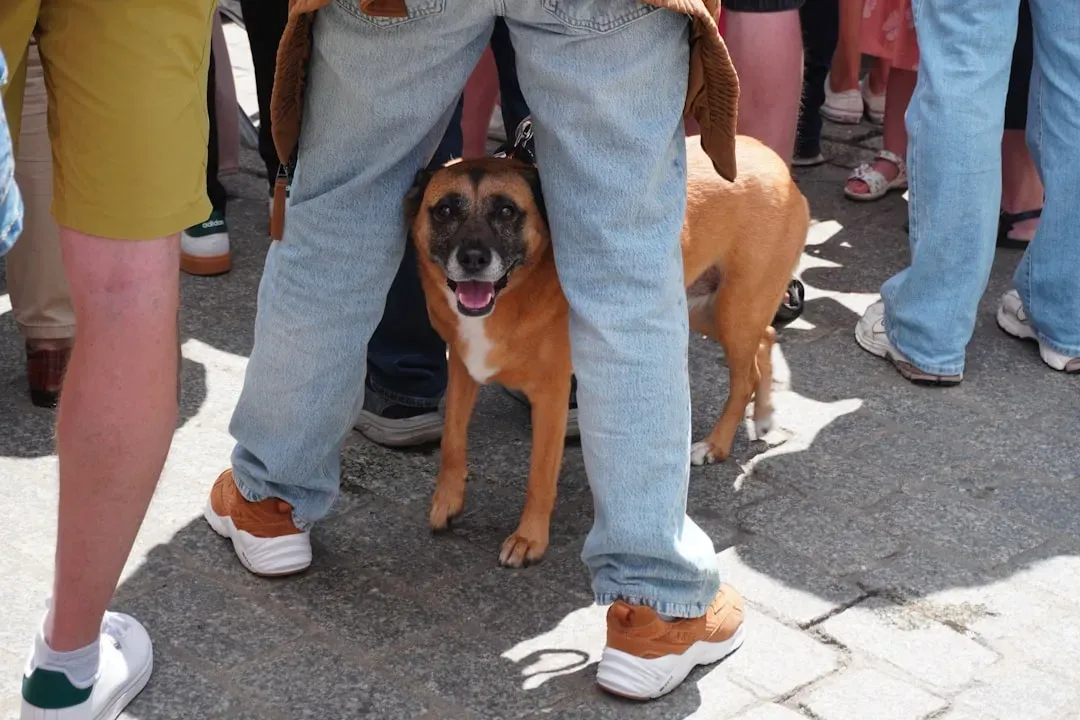
Here’s the slightly uncomfortable part: leaning is not always just sweet affection. In some dogs, especially those prone to anxiety or poor confidence, the behavior can become a crutch. A dog that is terrified of the world might plaster its body to your legs not only to mark you but to hide behind you emotionally. If the dog trembles, pants, or seems hyper-alert while leaning, it may be using you as a shield rather than simply enjoying warmth and connection.
In those cases, the kind thing isn’t to push the dog away, but to address the underlying insecurity. Gentle training, gradual exposure to triggers, and possibly professional behavioral support can help the dog build internal coping skills so that leaning becomes a choice, not a desperate strategy. The goal is not to eliminate leaning, but to ensure it comes from a place of trust and comfort rather than fear and panic.
How to Respond: Turning the Lean into a Healthy Ritual

When a dog leans on you in a relaxed, friendly way, the best response is usually to meet it with calm, grounded affection. Stand or sit steady, soften your body, and offer slow strokes or quiet words if your dog enjoys that. You’re essentially confirming the message the dog is sending: “Yes, I’m here. Yes, you’re safe. Yes, this connection is real.” Over time, that consistency builds a powerful shared ritual that makes both of you feel more anchored in a hectic world.
At the same time, it’s okay to set boundaries if the leaning becomes overwhelming – nobody needs a forty-kilogram dog smashing into their knees every moment of the day. You can gently step aside, cue the dog to lie down beside you, or redirect to another calm behavior without scolding. The point is to protect your own body and space while still honoring what the lean represents: a deep, instinctive drive for closeness, scent-sharing, and safety that your dog has chosen to express with you, and that is no small compliment.
Conclusion: The Humble Lean Deserves More Respect
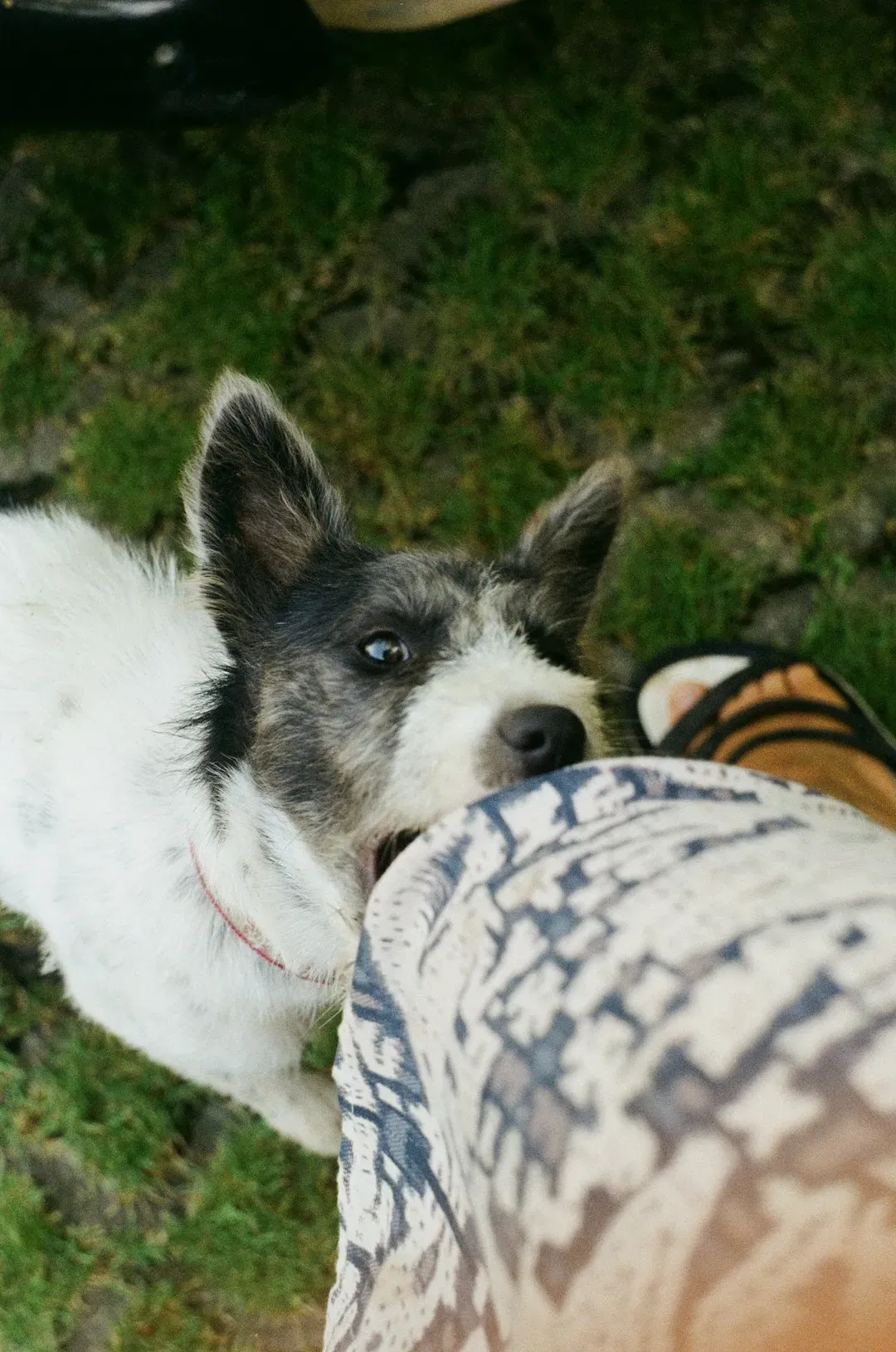
I’ll be honest: once I started paying attention to dog leans with this level of nuance, I stopped brushing them off as cute quirks and started treating them as serious emotional statements. A dog throwing its whole weight against your legs is not just using you like furniture; it is layering you with scent, anchoring its nervous system, and quietly voting you into its inner circle of safety. That’s a lot of trust to carry on your shins.
My personal opinion is that we should treat the lean as one of the clearest, most underrated signs that a dog sees us not as a resource dispenser, but as a genuine social partner. It is rooted in chemistry, history, and emotional need, but it shows up in the simplest possible way: a warm body pressing into yours. The next time a dog does that to you, ask yourself what mix of comfort, anxiety, bonding, and marking might be behind it – and what it says about the role you play in that animal’s fragile little safety matrix. Did you ever imagine that a casual lean could mean this much?