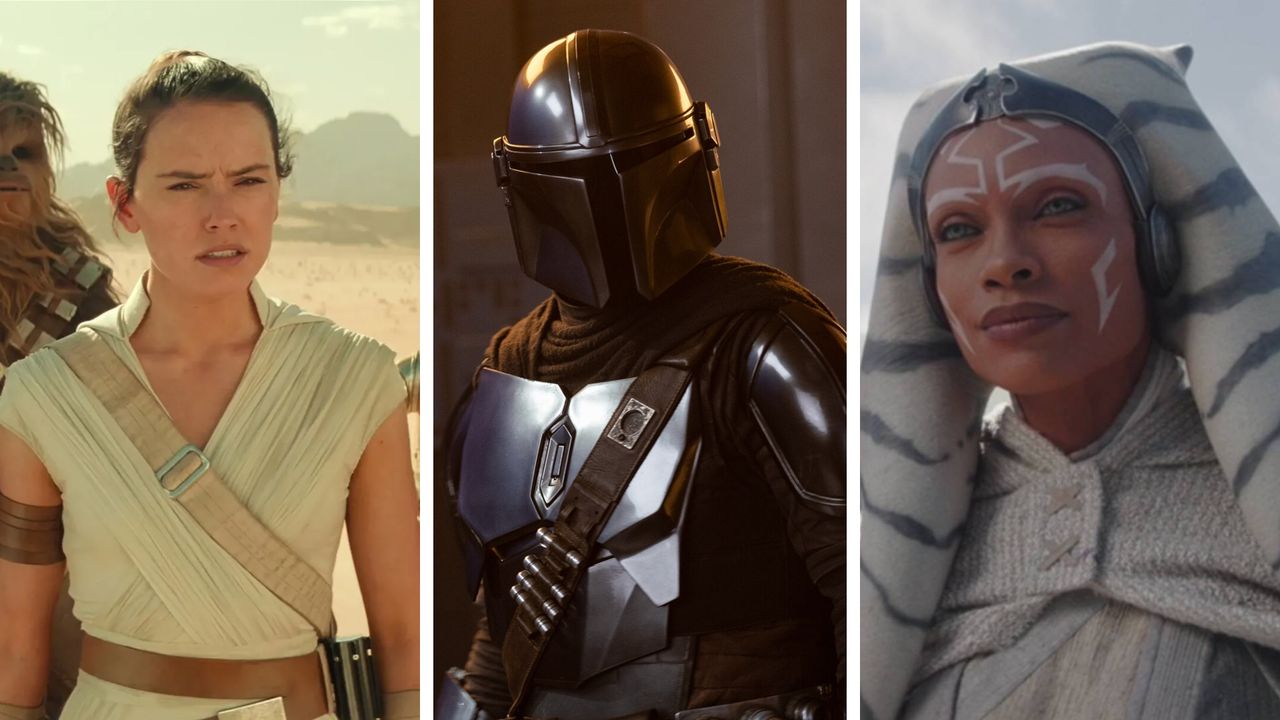
The Sequel Trilogy’s Forceful Start and Fading Momentum (Image Credits: Cdn.mos.cms.futurecdn.net)
Ten years after Disney’s acquisition of Lucasfilm ushered in a new era for the Star Wars franchise, the galaxy far, far away has expanded dramatically, blending cinematic spectacles with expansive television storytelling.
The Sequel Trilogy’s Forceful Start and Fading Momentum
The Force Awakens arrived in 2015 as a triumphant return, recapturing the magic of the original trilogy while introducing fresh faces like Rey, Finn, and Kylo Ren. Directed by J.J. Abrams, the film grossed over $2 billion worldwide and reignited global excitement for the saga. Audiences praised its nostalgic nods and high-stakes action, marking a strong debut for Disney’s stewardship.
However, the trilogy’s trajectory faltered with subsequent entries. The Last Jedi, helmed by Rian Johnson, divided fans with its bold narrative choices, including subverted expectations around Luke Skywalker’s arc. While critics lauded its visual innovation and themes of failure, box office returns dipped compared to its predecessor. The Rise of Skywalker aimed to unify the storyline but faced criticism for rushed plotting and unresolved threads, ultimately underperforming at the theaters.
Television’s Rise as the Franchise’s New Frontier
Disney+ transformed Star Wars storytelling by prioritizing character-driven series over blockbuster films. The Mandalorian emerged as a standout, blending Western influences with bounty hunter adventures in a post-Empire galaxy. Its episodic format and Baby Yoda phenomenon drew massive viewership, proving the franchise’s enduring appeal on the small screen.
Other series like Andor delivered gritty, mature narratives focused on rebellion origins, earning acclaim for its political depth and production quality. In contrast, The Book of Boba Fett struggled with pacing and tonal inconsistencies, while Obi-Wan Kenobi offered emotional reunions but faltered in execution. Animated efforts, including the conclusion of The Clone Wars, enriched the lore without the pressure of live-action budgets.
Spin-Off Films and Broader Expansions
Rogue One: A Star Wars Story succeeded as a war thriller, chronicling the theft of Death Star plans with a diverse ensemble and intense ground battles. Released in 2016, it connected seamlessly to A New Hope and became a fan favorite for its self-contained heroism. Solo: A Star Wars Story, however, faced production troubles and lukewarm reception, barely breaking even despite strong performances from Alden Ehrenreich and Donald Glover.
Beyond films, Disney invested in games, comics, and novels that fleshed out unexplored eras. Projects like Jedi: Fallen Order highlighted innovative gameplay, while books delved into Jedi lore. These extensions kept the universe alive, though some fans lamented the dilution of core mythology amid rapid content output.
Fan Divide and the Path Forward
The Disney era sparked intense debates, with social media amplifying voices on both sides. Supporters celebrated diversity in casting and storytelling innovation, while detractors decried perceived deviations from George Lucas’s vision. Box office totals exceeded $4.5 billion for films alone, yet fatigue set in from oversaturation.
Looking ahead, upcoming projects like The Mandalorian & Grogu film signal a pivot back to cinema. Disney’s strategy now emphasizes quality over quantity, learning from past missteps to sustain the franchise’s cultural dominance.
Key Takeaways
- The Mandalorian and Rogue One represent the era’s creative peaks, blending accessibility with depth.
- Sequel trilogy inconsistencies highlighted challenges in long-term planning for a shared universe.
- Television has emerged as Star Wars’ strongest medium, fostering deeper fan engagement.
As Star Wars marks this milestone, its legacy endures through innovation and heart, reminding us that even in a galaxy of conflicts, hope persists. What aspects of Disney’s Star Wars have resonated most with you? Share your thoughts in the comments.