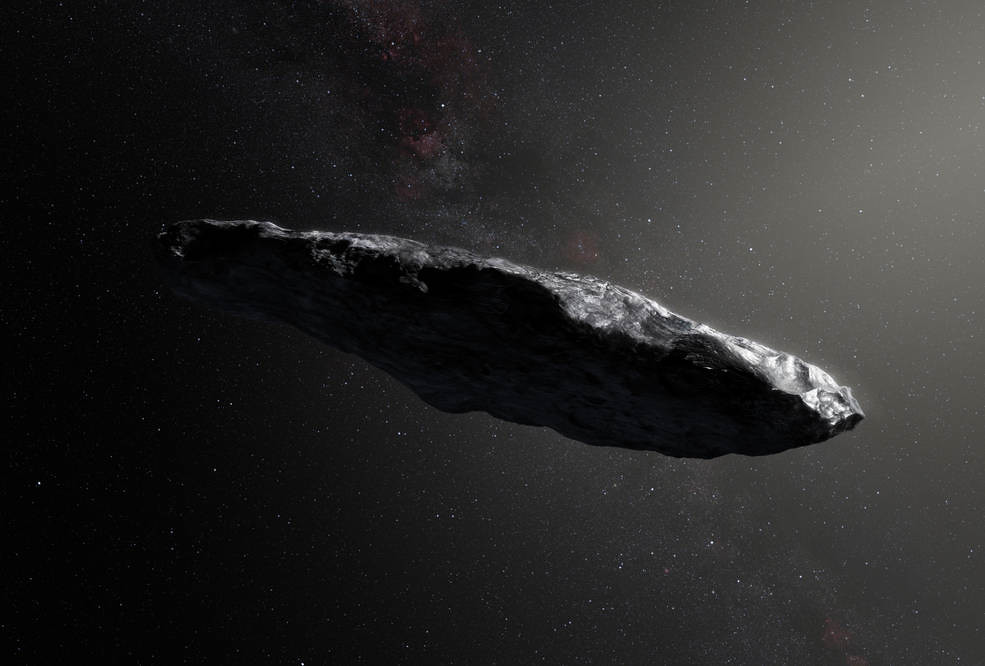
Every so often, science stumbles on something that does not just break the rules, it shrugs at the very idea of rules. These are the finds that do not sit neatly in any museum drawer or database field, the discoveries that force experts to say the three most honest words in research: we do not know. They are rare, unsettling, and absolutely thrilling.
In a world that loves labels and tidy explanations, these objects feel like glitches in reality. Some come from the deep past, others from the far reaches of space, and a few from the quiet corners of everyday life where nobody thought anything strange could be hiding. What they share is simple: no one can agree what box to put them in.
We are going to look at 11 of the most baffling examples known today. For each one, we will unpack what it is, why it is so deeply confusing, what experts have proposed so far, and where the mystery still stubbornly remains. By the end, you might feel that the universe is stranger, wilder, and far less finished than you were ever taught. Ready to lean into the unknown?
#1 The Wow! Signal: A Message That Refused To Repeat
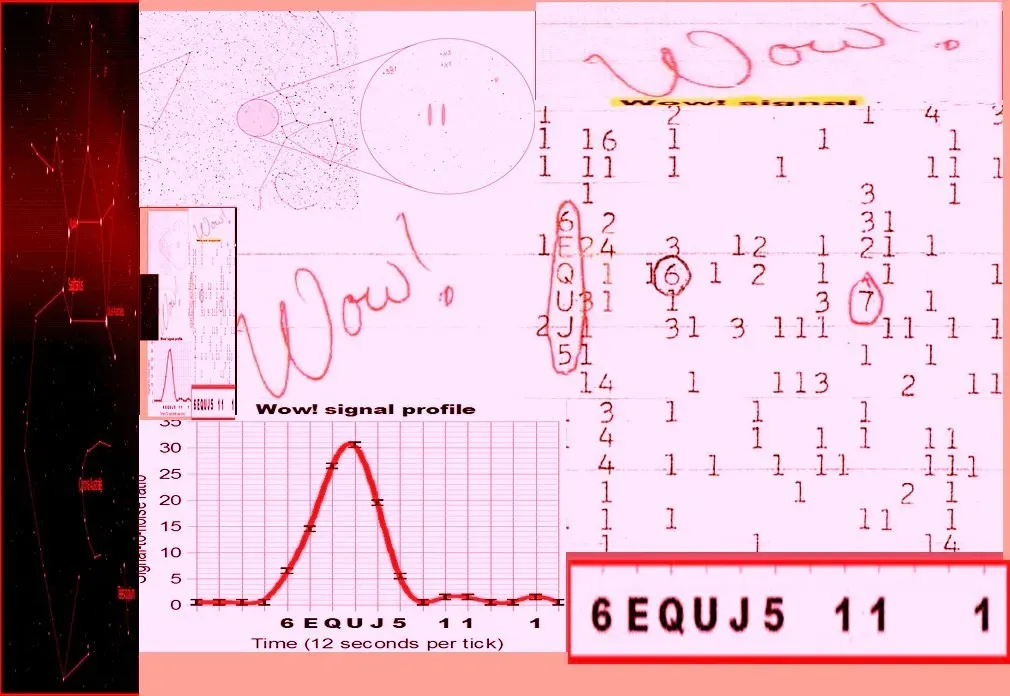
Imagine listening to the cosmos for years, mostly hearing static, and then suddenly something blares through your headphones that looks exactly like the thing everyone has been hoping for. That was the Wow! Signal in the late 1970s: a brief, incredibly strong radio burst from space that matched expectations for an artificial transmission, then vanished forever. It has never repeated, never been fully explained, and never allowed itself to be comfortably filed under “known phenomenon.”
The signal came from the direction of the constellation Sagittarius, lasted just over a minute, and showed up in a narrow radio band where natural sources tend to be weak. It was so striking that the astronomer who saw it literally circled the data on the printout and wrote “Wow!” in the margin. That emotional scrawl has become shorthand for the entire puzzle: something remarkable happened, and we still have no category in which to place it.
Over the decades, scientists have tested ideas: a rare natural radio flare, an Earth-based signal bouncing off space junk, even a distant comet’s hydrogen emission lined up just right. None of these explanations has reached the level of “case closed.” The possibilities tend to fall into awkward in-betweens: too unlikely to be confident, not impossible enough to throw away. The Wow! Signal sits in a kind of scientific limbo, neither dismissed nor embraced, an object in the archives that refuses to behave like anything else we have ever recorded.
#2 ‘Oumuamua: The Visitor That Did Not Act Like A Rock
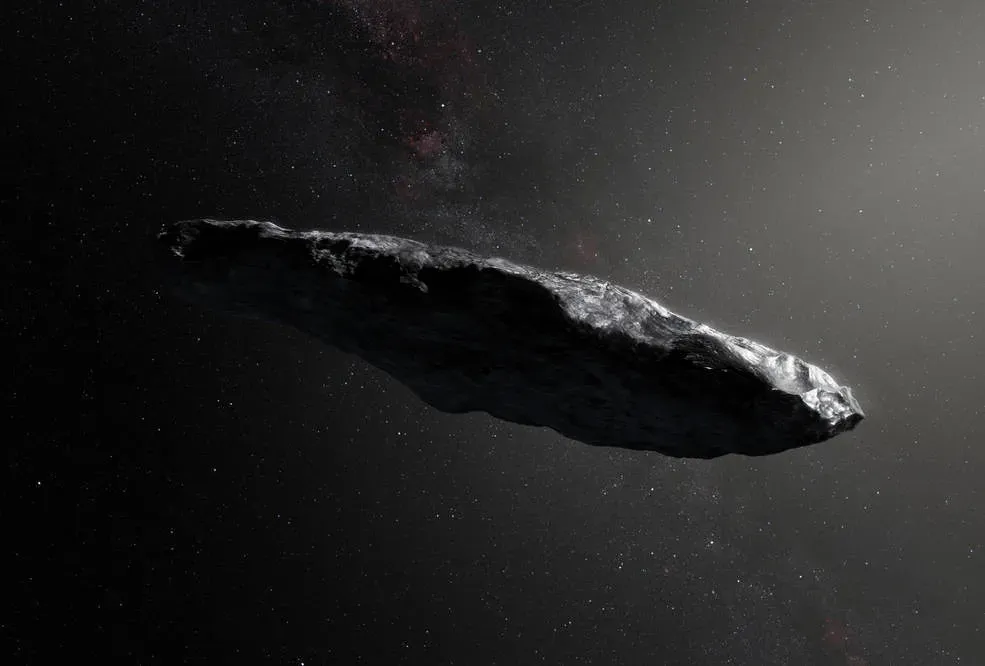
When astronomers first spotted ‘Oumuamua in 2017, they thought they had finally caught their first confirmed interstellar object passing through our solar system. That alone is extraordinary. But what really scrambled brains was how this thing behaved once we watched it closely. It did not move or look like any comet, asteroid, or space rock we have on record.
First, its shape and spin were weird. The brightness changed in a way that suggested a long, possibly cigar-shaped or pancake-like object tumbling end over end. Second, it was not surrounded by the classic fuzzy haze of gas and dust that comets show when they get close to the Sun, but its motion hinted that something was giving it a tiny push, as if some gentle outgassing was happening anyway. In short: it accelerated slightly as it left, without the usual visible reasons.
Researchers have thrown out a whole buffet of hypotheses: a chunk of nitrogen ice from a Pluto-like world, a wafer-thin shard of material, an exotic, very faintly outgassing comet, even an artificial probe from another civilization. Each idea solves one piece of the puzzle while breaking another. That is why ‘Oumuamua is so unsettling: every attempt to classify it turns into a game of scientific whack‑a‑mole, where explaining one oddity causes two new ones to pop up.
Right now, the cautious leaning is towards some kind of highly processed, unusually shaped natural object, possibly made of materials that vaporize without leaving a bright coma. Still, the truth is that we have never seen anything quite like it before or since. It passed through our cosmic neighborhood once, left behind a pile of debated papers and hot takes, and then was gone for good – an object that fits no comfortable category of rock, comet, or artifact.
#3 Fast Radio Bursts: Cosmic Flashes That Break Their Own Rules
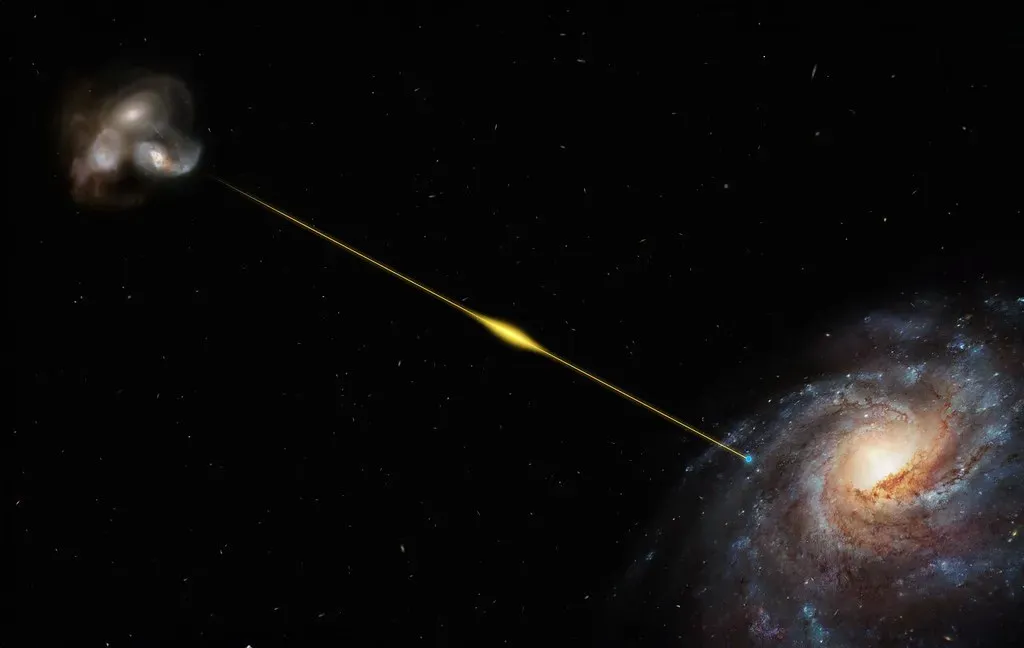
Fast radio bursts (FRBs) are one of those discoveries that sound like bad science fiction at first: millisecond-long blasts of radio energy from far beyond our galaxy, bright enough to be detected across billions of light‑years, appearing without warning. The first one was noticed almost by accident in archived data, and for a while scientists were not even sure it was real. Then more turned up, scattered all over the sky, and the mystery began.
Here is where FRBs stomp all over neat categories. Some of them repeat, while others have only been seen once. A few repeat on semi-regular schedules; others seem to fire almost randomly. When we trace them back to their host galaxies, they come from wildly different environments: bustling star-forming regions, quiet galaxies, and places that do not fit a single, unified story. That makes it very hard to claim they all come from one known type of object like pulsars or magnetars without stretching those categories beyond comfort.
Leading ideas involve extremely dense, extreme objects like neutron stars with intense magnetic fields, or catastrophic events like stellar collisions. That sounds specific, but when you line up all the observed FRBs and compare them, no single model neatly explains every property. They resist being boxed into a single phenomenon. To cope, astronomers have begun suspecting there may be multiple classes of FRBs – some from young magnetars, some from older systems, maybe others from yet-unknown processes.
In other words, FRBs have forced astronomers to admit that “fast radio burst” is not a real category in the usual sense. It is more like a visual description of what our telescopes see, covering several different kinds of engines under one shared symptom. These events have turned into a category that actually hides sub-mysteries, a file folder labeled with one name that almost certainly contains several unrelated beasts.
#4 Dark Matter: The Invisible Stuff That Acts Like Matter, But Is Not
Dark matter is a strange kind of non-object: we cannot see it, touch it, or bottle it, yet the behavior of galaxies screams that something massive and invisible is there. Astronomers noticed that stars in the outer parts of galaxies move too fast to be held in by the visible mass alone. Galaxy clusters show similar discrepancies. The math only works if there is far more matter present than we can detect with light.
Here is the heart of the problem: dark matter behaves like a substance by exerting gravity, but we have no confirmed interaction beyond that. It does not fit neatly into the menu of known particles from the Standard Model of physics, and decades of experiments in underground labs and particle colliders have failed to find a definitive dark matter particle. That leaves it hovering in a limbo: real enough to shape cosmic structures, but not pinned down to any accepted category of matter.
Scientists have proposed a dizzying range of candidates. Some ideas picture dark matter as a sea of heavy, slow-moving particles. Others imagine ultralight fields spread across the universe, or even more radical changes to gravity itself that would remove the need for extra mass. The longer the direct searches come up empty, the more unsettling it feels. At some point, you start wondering whether the very question is misframed, like trying to classify a shadow as a type of paint.
What makes dark matter particularly odd is how central it has become to modern cosmology. Our best models of how galaxies and large-scale structures formed rely on its presence. It is not a fringe idea. Yet, in a basic, personal sense, no one could put a dark matter “object” on a desk and say, here it is. Until that happens, it remains a ghostly, dominant part of the universe that refuses to play by normal categorical rules.
#5 Dark Energy: A Force, A Field, Or Something We Do Not Even Have Words For?
If dark matter is unsettling, dark energy is downright rude. In the late twentieth century, astronomers expected that the expansion of the universe would gradually slow over time, pulled back by gravity. Instead, observations of distant exploding stars showed that expansion is speeding up. Something is pushing space itself apart, and that something is now thought to make up the majority of the universe’s total energy content.
Dark energy is not a thing you can point at. It has no clear particles, no neatly described field, and no obvious source in known physics. Some theories treat it as a cosmological constant, an inherent property of space. Others imagine a slowly changing energy field filling the cosmos. Either way, it does not behave like matter, radiation, or any familiar force. It is like a category error baked into the universe’s operating system.
Physicists find dark energy deeply uncomfortable because it connects to some of the biggest theoretical tensions in science. Calculations from quantum field theory overshoot the observed dark energy density by absurd factors, while more exotic models risk conflicting with precision tests of gravity. Yet the observational evidence that the universe’s expansion is accelerating has held up and improved with better data. The effect is robust; the interpretation is not.
So dark energy sits in this strange corner of reality: undeniable in its impact, yet totally unclassifiable. It is not a normal object, not a regular field as we currently understand them, and not a simple tweak to gravity without knock‑on issues. For now, it is a placeholder for a phenomenon we have named but not truly grasped, a reminder that the universe is doing something we do not yet have a proper conceptual shelf for.
#6 Extremophile Microbes: Life That Redraws The Edges Of “Habitable”

For a long time, textbooks gave a reassuring list of what life supposedly needs: moderate temperatures, liquid water around room temperature, gentle chemistry. Then microbiologists started finding organisms that exploded those assumptions. There are microbes thriving in boiling hot springs, in subzero brines under Antarctic ice, deep in acidic mine runoff, and kilometers below the seabed where pressure would crush most familiar cells.
These extremophiles do not just stretch categories, they mock them. Some survive doses of radiation that would shred human DNA, others metabolize sulfur, iron, or even hydrogen gas instead of the sugars and oxygen we are used to. There are microbes that essentially “breathe” metals, and bacteria that can go into suspended animation for astonishing lengths of time. Life, it turns out, is not politely staying within the boundaries biology once drew.
To handle this mess, scientists have tried to broaden the idea of a “habitable zone” and invent new subcategories of life, but it often feels like treating symptoms rather than causes. The real issue is that much of our thinking about life was based on a single example: us, and our friendly neighborhood Earth biosphere. Extremophiles show that life is more like a hacker improvising its way through any open loophole in physics and chemistry rather than a neat rule follower.
For astrobiology, this changes everything. Worlds once dismissed as too harsh may now be considered candidates for hosting something weird and tenacious. But while that makes the universe feel more alive, it also erases the simple categories that once seemed comforting. There may be forms of life out there that are as far beyond our extremophiles as those extremophiles are beyond houseplants. At some point, we may have to admit that “life” itself is less a strict category and more a family resemblance among wildly different survival strategies.
#7 The Voynich Manuscript: A Book Without A Language

Among mysterious objects, the Voynich manuscript feels oddly intimate. It is not a galaxy, not a particle, but a book: human-sized, handwritten, illustrated, and clearly crafted with care. Yet everything that should make a book understandable – its language, its script, its illustrations – seems to point in no familiar direction. The text does not match any known language or code, and the drawings show plants and diagrams that mostly defy identification.
Over the last century, cryptographers, linguists, historians, and enthusiastic amateurs have all taken a shot at it. Some proposed it was a cipher hiding real text, others thought it might be an unknown language written in an invented script, and still others suspected an elaborate hoax. Statistical studies of the text show patterns similar to natural language, but that alone does not tell us what is being said, or even if it truly encodes meaningful content.
Part of what keeps the Voynich manuscript uncategorizable is how it sits at the crossroads of so many fields. It is an object from medieval or early modern Europe, but its language is unattached to any known tradition. Its botanical drawings look like plants, but not quite any real species. Its circular diagrams hint at astronomy, astrology, or medicine, yet never line up cleanly with known systems. It is like a cultural UFO, recognizable as a book but detached from any library we know.
Personally, I find it strangely moving. You are looking at pages that someone, long ago, clearly poured time and thought into. Whether it was a serious handbook, an artistic experiment, or something we do not even have a word for, it was meaningful to its creator. The fact that it sits on modern shelves as an unsolved puzzle says as much about the limits of our categories – language, genre, discipline – as it does about the manuscript itself.
#8 Tabby’s Star: A Sun That Flickers Like It Is Hiding Something
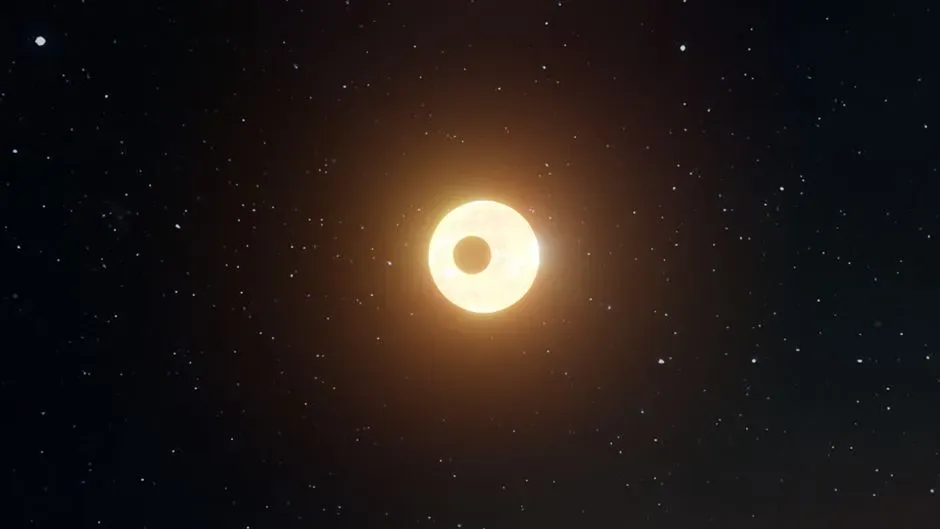
When astronomers monitor stars for planets, they look for small, regular dips in brightness as a planet passes in front. Tabby’s Star, officially known by a catalog name, did something far stranger. Its light dropped by huge, irregular amounts, at odd intervals, with no clear pattern. Sometimes the star dimmed by a few percent, other times by much more, and then it brightened again. Nothing in the standard catalog of stellar behavior neatly matched the data.
Initial theories ran wild: swarms of comets, dust clouds, intrinsic stellar variations, even hypothetical alien megastructures. Careful studies eventually pointed strongly toward natural explanations involving dust and complex, possibly long-term changes in the star’s environment. But even there, the precise combination of processes is not agreed upon. Tabby’s Star sits awkwardly between boxes: not a classic variable star, not a simple transit system, and not a neat one-off event.
What makes this case particularly interesting is how it exposed our tendency to jump for familiar labels or dramatic narratives. It is tempting to say it is a new kind of variable star, or that it belongs to the “strange transit” category. Yet each suggested class misses something about the weirdness of the light curve. The star essentially forced researchers to expand their mental map of what normal and abnormal stellar behavior can look like.
In a way, Tabby’s Star is a good humility check. It reminds us that even something as basic as “how stars shine and dim” is not completely nailed down, and that edge cases exist which strain our best models. It is not an alien artifact, but it is also not just business as usual. It occupies that uncomfortable territory where we know enough to doubt the wildest ideas, but not enough to confidently write it off as ordinary.
#9 Time Crystals: Matter That Refuses To Sit Still, Even In Its Ground State

Time crystals sound like the kind of thing a fantasy video game would drop in a dungeon, yet they are a real, experimentally realized state of matter. In normal crystals, atoms are arranged in a repeating pattern in space. In time crystals, the system shows a repeating pattern in time as well – it oscillates in a stable, regular way – even when it is in what should be its lowest‑energy, “do nothing” state. That defies how we were taught ground states are supposed to work.
These objects do not violate the laws of thermodynamics, but they do stretch the way we think about symmetry and phases of matter. They belong to a category that did not exist before: nonequilibrium phases that show a kind of time-translation symmetry breaking. You cannot just call them solids, liquids, or gases. Even typical exotic states like superconductors or superfluids do not capture what is going on. It is as if nature added a new, hidden menu of behaviors we only recently discovered how to order from.
Some practical implementations involve carefully driven quantum systems, like chains of interacting spins that, when periodically prodded, settle into oscillations at a rhythm different from the driving force. The whole setup feels more like orchestrating a dance than discovering a static object. That makes “time crystal” an odd kind of entity: it is defined as much by its dynamics and environment as by what it is made of.
To make sense of them, physicists have had to expand the basic language of phases, symmetry, and order. Suddenly, time is not just a background parameter but part of the pattern itself. It is a bit like realizing that a wallpaper design can be classified not only by how it tiles a wall, but also by how it could animate over time. Time crystals remind us that even in the supposedly well-charted world of condensed matter, there are behaviors that refuse to live inside old categories.
#10 Rogue Planets: Worlds Without A Star To Call Home
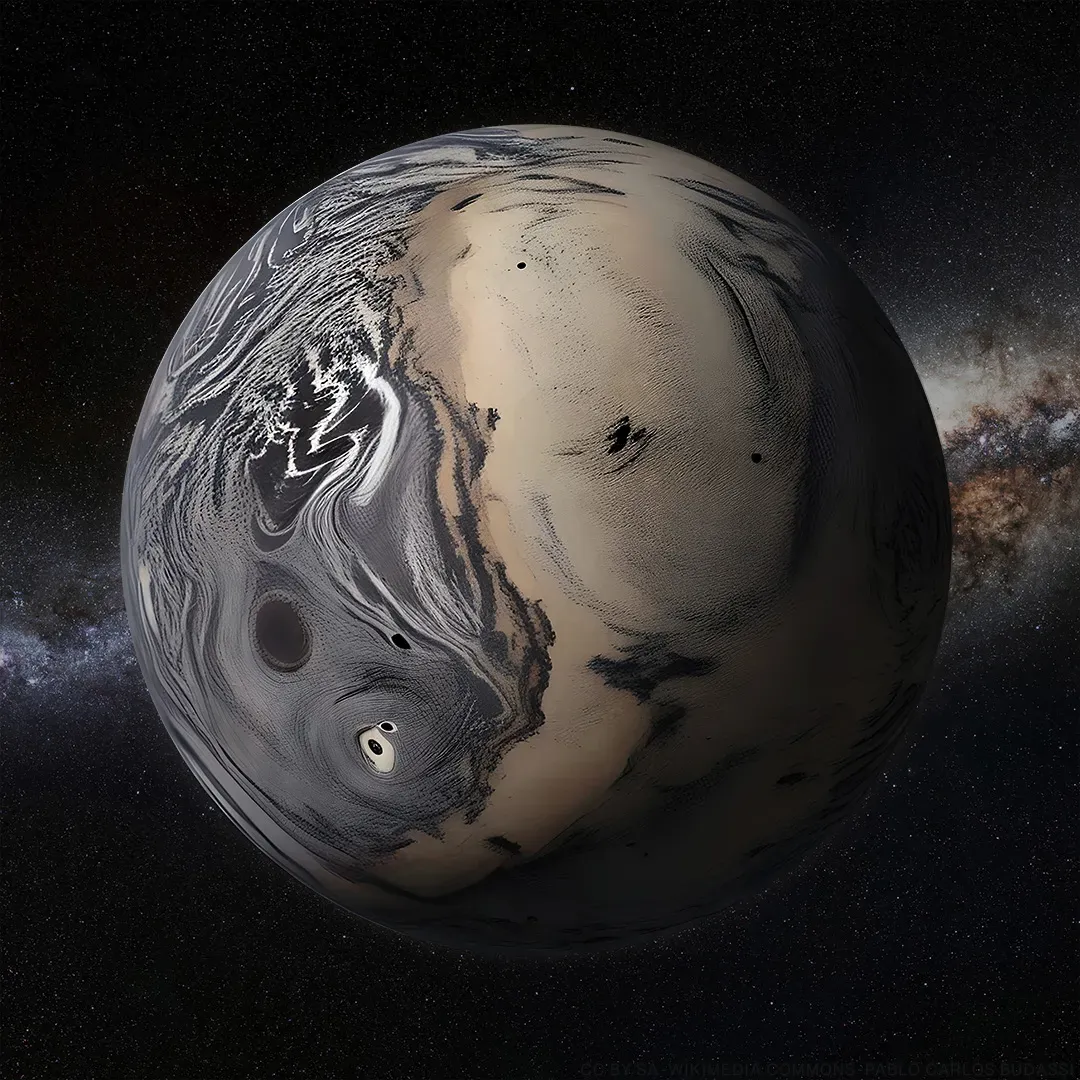
Most people grow up with a neat picture in mind: planets orbit stars, stars orbit within galaxies, and so on. Then along come rogue planets to ruin that comforting hierarchy. These are planetary-mass objects drifting through space without being bound to any star. They might have been flung out of their birth systems by gravitational chaos, or in some cases perhaps formed alone in gas clouds without an obvious parent star at all.
From an observational point of view, rogue planets are sneaky. Without a nearby star to light them up in silhouette, they are extremely hard to detect. Some are found through tiny gravitational lensing effects when they pass in front of background stars. Others are inferred from surveys of star-forming regions. What is clear is that there may be many of them, potentially outnumbering the planets that live in tidy orbits around stars.
And this is where the category problem hits. Are these truly “planets” if they no longer orbit a star? Or are they more like failed stars, brown dwarfs, or some intermediate class of object? Astronomers argue over definitions, but the underlying unease is simple: our words were built for a star-centered view of planetary identity. Rogue planets expose the fact that a “planet” is partly a relationship, not just a mass range or composition.
Thinking about these lonely worlds is oddly emotional. A planet floating in silent darkness, with any ancient skies it once knew long gone, feels like the ultimate exile. Yet some models suggest that massive rogue planets might still host subsurface oceans heated from within, potentially preserving conditions for life. Whether barren or secretly warm inside, they refuse to fit into the old solar-system-centric categories we learned as kids.
#11 Quantum Entanglement: A Connection That Ignores Distance
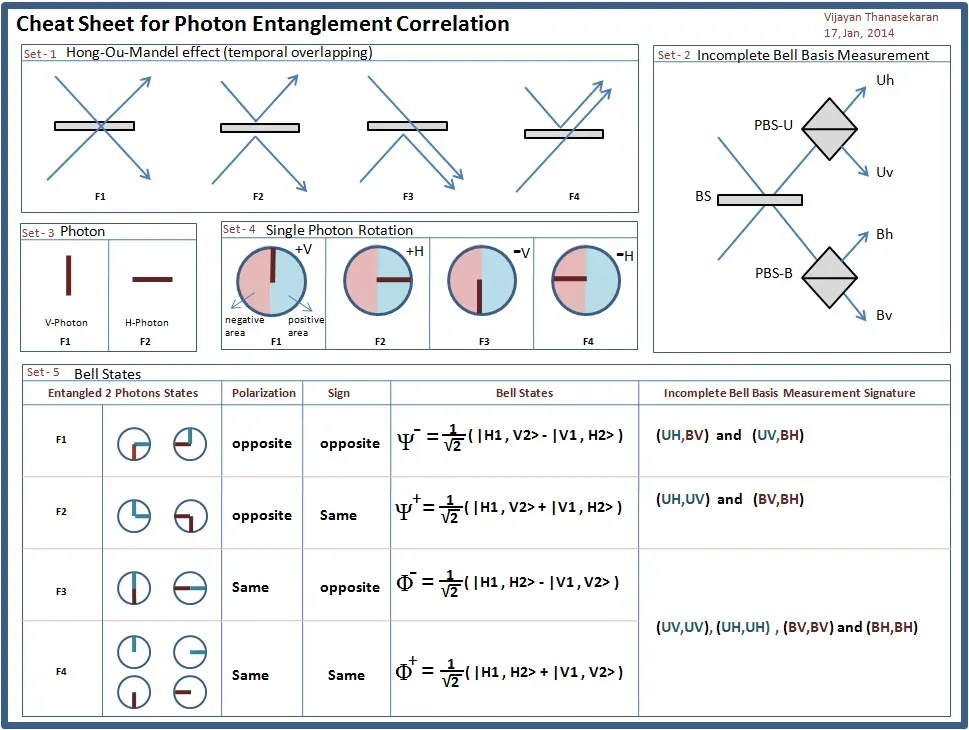
Quantum entanglement is not an object in the everyday sense, but it is a kind of “thing” you can prepare, manipulate, and even use in technologies like quantum communication and computing. Two or more particles become entangled when their properties are correlated so strongly that measuring one instantly tells you something about the other, no matter how far apart they are. This does not allow faster‑than‑light messaging, but it does shatter classical ideas about separateness.
For a long time, people tried to treat entanglement as if it were just a fancy kind of correlation, like knowing that if one glove is left-handed the other must be right-handed. But experiments have repeatedly shown that quantum entanglement does not behave like any classical hidden variable system. It violates inequalities that all normal, locally defined correlations must satisfy. That leaves it as a category of connection that is not information, not force, not standard causation, yet not mere coincidence.
In practical terms, entangled states are now resources. Engineers and physicists talk about generating, distributing, and consuming entanglement in networks almost the way you would talk about bandwidth or power. That alone signals we are dealing with something object‑like, even if it is more abstract. We can quantify how much entanglement a system has, move it around, and break it. It is a real player in the world, yet it defies every intuitive box our brains built from macroscopic experience.
For me, entanglement is the ultimate reminder that our categories are rooted in human‑scale habits. We evolved to handle rocks and rivers, not spooky correlations between photons separated by kilometers. As our experiments reach further into the quantum and cosmic realms, we keep bumping into phenomena like this that demand entirely new ways of sorting reality. Entanglement is less a thing you can hold and more a flavor of “how the universe connects,” one that sits utterly outside the classic menus of forces and objects.
Conclusion: The Universe Does Not Care About Our Filing System
Looking across these 11 cases – from rogue planets and time crystals to the Voynich manuscript and the Wow! Signal – a pattern emerges that has nothing to do with the objects themselves. The real constant is our discomfort. We love categories because they make the world feel tame and manageable. When something refuses to fit, it exposes how fragile our frameworks really are. It is like discovering that the carefully labeled drawers in your mental cabinet do not actually reach all the way to the back wall.
Some of these mysteries will almost certainly be tamed with time. Fast radio bursts may settle into multiple well-understood classes; Tabby’s Star may turn out to be a complex but ultimately ordinary case of dust and stellar physics. Others, like dark matter or dark energy, may force revolutions in our understanding before they can be properly named. And a few, especially human artifacts like the Voynich manuscript, may simply remain silent, never offering enough evidence to be placed with confidence anywhere.
Personally, I think that is a feature, not a bug. A universe where every puzzle has been neatly solved would be sterile, like a museum with all the labels filled in and no new wings being added. These off‑category objects keep science risky, strange, and alive. They are the grit in the oyster that sometimes leads to pearls and sometimes just keeps us awake at night, arguing over possibilities. If anything, they hint that truly unknown kinds of objects and phenomena are still out there, waiting for someone curious enough not to look away.
So the next time you hear about an observation that “does not fit any known category,” maybe treat that not as a failure but as an invitation. It might be the universe’s way of tapping us on the shoulder and saying: your map is not the territory, and there are still blank spaces left to explore. Which of these mysteries would you most want to see finally cracked open – and which part of you secretly hopes it never is?