
You’ve probably heard the line before: we’ve mapped more of the Moon than we have our own ocean floor. It sounds like a bar-trivia exaggeration. It isn’t.
Buried in decades of Cold War hydrophone tape and modern ocean-observatory data are sounds that hard-nosed acoustic scientists, not conspiracy forums, still can’t confidently name. Some are almost certainly boring: ice cracking, tectonic groaning, whales doing whale things. But a stubborn handful refuse to fit any known category, no matter how many research cruises get sent out to chase them. Here are 14 real recordings still sitting in scientific limbo, filed under some version of “unknown.”
14. The Upsweep: A Sound That Just Won’t Stop
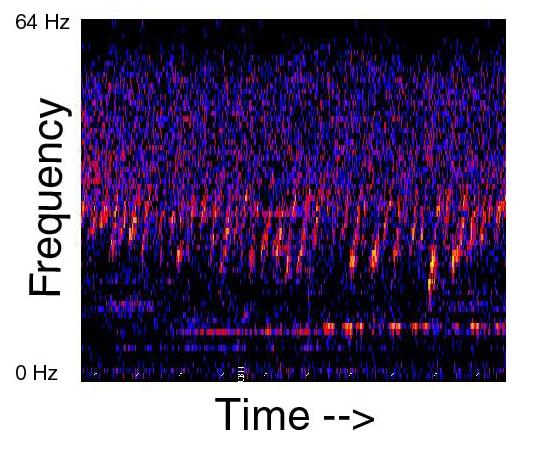
The Upsweep isn’t a one-off mystery. It’s a background soundtrack that’s been running for more than 30 years, and nobody has fully pinned it down. First detected in 1991 by the U.S. Navy’s SOSUS hydrophone network, it’s made of long, rising tonal sounds clustered somewhere in the central Pacific. It shows up every single year like clockwork, usually peaking in spring and fall.
That seasonal rhythm makes biologists lean toward “animal.” But the sheer scale, audible thousands of kilometers away with no confirmed source location, screams geology or ice instead. Some oceanographers point to massive undersea volcanic activity reacting with seawater; others suspect an unknown deep-pelagic species using low-frequency sound for migration on a basin-wide scale. The signal has faded over the decades, but it’s still humming out there, unclaimed.
Fast Facts
- First picked up in August 1991 on NOAA’s PMEL SOSUS hydrophone array.
- Roughly located near 54°S, 140°W, close to a zone of inferred underwater volcanic activity.
- Built from narrow-band “upsweeping” tones lasting several seconds each, repeating in long trains.
- Loud enough to be recorded throughout the Pacific, yet its exact source has never been confirmed.
- Overall loudness has been declining since the 1990s, but the signal has never gone silent.
13. The Whistle: A Perfect Signal With No Owner
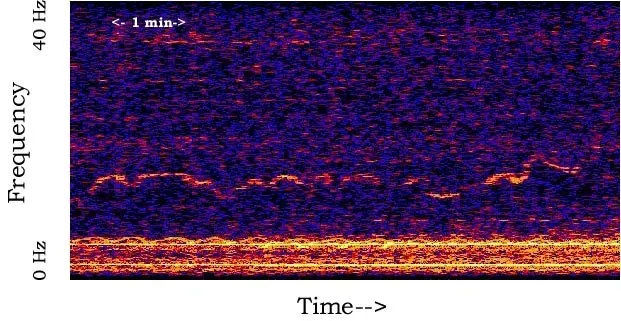
If Upsweep sounds messy and volcanic, The Whistle is the opposite. It’s a sharp, clean tone that showed up once, loud and lonely, in 1997, recorded by NOAA’s Vents Program in the eastern equatorial Pacific. On a spectrogram it looks almost engineered, a smooth rising frequency that’s fueled everything from “unusual whale call” theories to the inevitable alien comments.
The problem is that it doesn’t cleanly match anything in the catalog. It’s not a ship, a torpedo, or a sonar ping, and marine mammal experts can’t force it into any known whale repertoire without a lot of hand-waving. Geophysically, it’s too narrow-band for a standard earthquake or volcanic signature. And because it never repeated, scientists are stuck with a perfect fingerprint and zero suspects.
12. Julia: The Sound That Blanketed the Pacific
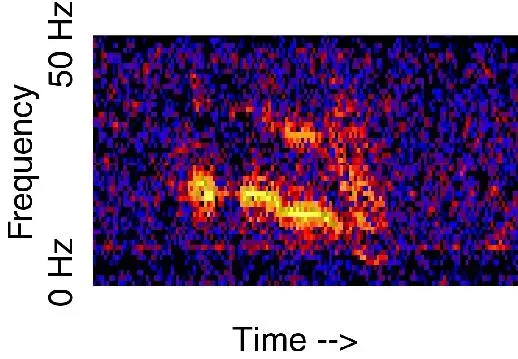
Julia is the recording that convinces casual listeners something huge is moving under us. Detected on March 1, 1999, it was a low, drawn-out moan lasting about 15 seconds, loud enough to register on hydrophones over 5,000 kilometers apart. That alone puts it in a different weight class than most biological noise.
NOAA’s working theory has always been ice, likely a massive iceberg grounding or breaking apart near Antarctica. But Julia’s acoustic profile only partly matches known iceberg sounds, and there’s no satellite imagery that clearly confirms the event. Skeptics argue you don’t get that kind of volume from ice without something obvious to point a camera at, and a few marine biologists quietly note we still don’t actually know the upper limits of sound the largest blue or fin whales can produce.
11. The Train: A Deep-Sea Rumbling With No Tracks
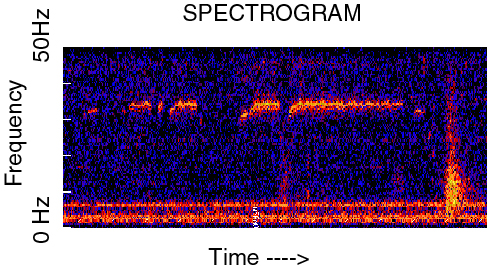
Recorded in 1997, The Train sounds exactly like its name: a rhythmic, chugging noise that rises in frequency, like some enormous locomotive passing underwater. It’s short, but it’s one of those clips where your brain instantly says “machine.” The twist is that it was heard far from shipping lanes, and no logged vessel traffic or military exercise matches the timing or location.
Acoustically it has hallmarks of ice grinding along the seafloor: repetitive pulses, low frequencies, a gradual Doppler-like shift. That’s why the ice camp leans toward a giant iceberg scraping a ridge. But other researchers point out that confirmed iceberg sounds don’t usually have this kind of mechanical regularity, and conspiracy theorists jump straight to secret submarines with zero declassified evidence to back it up. What’s left is an oddly “normal-sounding” mystery where every plausible explanation has a hole in it.
10. The Slow Down: A Planet-Scale Braking Noise
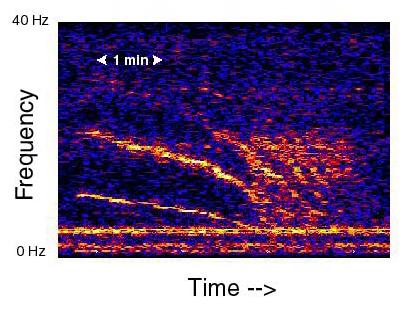
Slow Down is a descending frequency that takes roughly seven minutes to glide downward, as if some colossal engine were powering off. Detected in 1997 in the South Pacific, it was so loud it triangulated across multiple distant hydrophones, pointing generally toward Antarctic waters.
NOAA’s cautious label is “probably ice,” again invoking a massive iceberg grinding to a stop against the seafloor. Critics aren’t fully satisfied, since the spectral shape doesn’t perfectly match known ice-grind signatures, and seven minutes is a strange length for one coherent event. No known whale call sustains a coherent sweep that long at that volume, so Slow Down sits in limbo: not enough evidence to overturn the ice theory, but too smooth and sustained to close the file with a straight face.
9. The 52-Hertz “Loneliest” Frequency Cluster
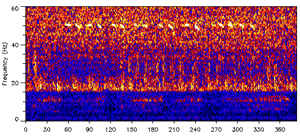
Everyone has heard of the so-called 52-Hertz Whale, famous for calling at a pitch that doesn’t match blue, fin, or humpback whales. What gets less attention is that hydrophone records have captured multiple calls in that same odd frequency neighborhood over the years, some clearly from different locations and possibly different individuals. That means we might not be dealing with one lonely whale at all, but an entire acoustically off-standard population, or an unknown species entirely.
Despite decades of interest, nobody has ever visually confirmed the animal making these calls. They turn up consistently in deep water along migration corridors used by blue and fin whales, yet the frequency structure sits stubbornly outside every known template. Some researchers suspect hybrids or anatomical anomalies; others think it could be a slowly emerging vocal culture drifting among a subset of whales, the way human dialects shift over generations.
Worth Knowing
- First detected in 1989 by Navy hydrophones that initially mistook it for a submarine engine.
- Calls at 52 Hz, well above blue whales (10 to 39 Hz) and fin whales (around 20 Hz).
- Detected almost every year since, typically between August and December.
- Its travel path doesn’t match the known migration route of any living baleen whale species.
- Despite more than three decades of tracking, the animal itself has never been visually confirmed.
8. The Unexplained Knocks Deep in the Mariana Trench
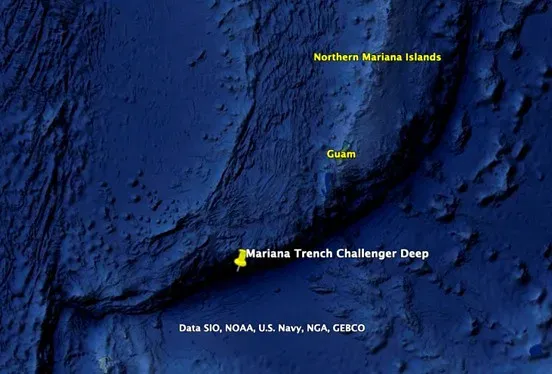
Near the bottom of the Mariana Trench, autonomous recorders have picked up isolated, powerful “knock” sounds: sharp, broadband pulses arriving in irregular sequences. They travel far, and they don’t line up neatly with any documented seismic event, which is slightly embarrassing given that the trench is one of the most heavily instrumented deep-sea regions on Earth.
Biologists aren’t thrilled either. Some fish and invertebrates make percussive noises, but the intensity here is off the charts for any known species at those crushing depths. A few researchers think rockfalls or sudden gas releases along the trench walls could explain it, small enough to dodge global earthquake catalogs but big enough to shout underwater. Others note the timing clusters look oddly like some kind of unknown animal display, which is not exactly reassuring for anyone who thought we understood our deepest trench.
7. The Bio-Metallic “Pings” Under Arctic Ice
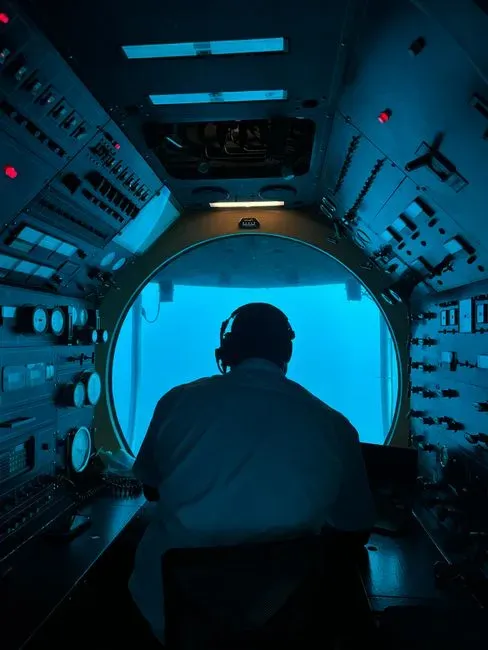
As Arctic sea ice thins, hydrophones planted beneath it have started catching strange, musical pings and twangs that don’t fit any classic ice-cracking library. These are short, bell-like tones with unusually clean frequency peaks, sometimes repeating in patterns over hours or days, and they turn up even in winter, when biological activity is supposed to be at its quietest.
One camp insists it’s just ice doing things we haven’t cataloged yet, micro-flexing, brine channel collapses, platelets shifting as the pack grows brittle. Marine biologists who spend time listening under the ice quietly suspect undocumented vocal behavior in Arctic whales or seals, possibly using the ice canopy itself as a resonance chamber. The tones have a metallic timbre that sounds almost engineered to human ears, which is exactly why every proposed explanation eventually gets broken by a new dataset that doesn’t fit.
6. The Bloops That Weren’t Just One Bloop
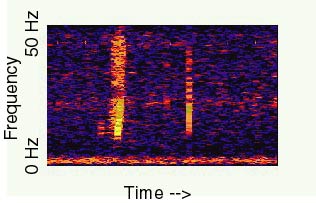
Everyone knows The Bloop, the 1997 recording once hyped as a possible sea monster because it was louder than any known animal sound at the time. Later analysis suggested it was most likely ice, specifically massive icequakes from fracturing icebergs, and that explanation probably covers most of the signal’s characteristics. That’s the official story, and it’s a good one.
What rarely makes it into the simplified version is that similar bloop-like events have shown up on other dates in other regions, sometimes with subtly different spectral shapes, which hints we’re not looking at a single phenomenon. Some are almost certainly ice; others stubbornly refuse to match lab-recorded icebreak signatures. A few overlooked papers suggest complex interference from multiple sources could create ghost signatures that look biological when they aren’t, while a smaller group of researchers points out we still haven’t fully mapped the vocal range of deep-diving beaked whales in the Southern Ocean. The Bloop is probably solved. Bloops, as a category, are not.
Quick Compare
- The Bloop (1997): Once the world’s most famous sea-monster candidate; now mostly attributed to icequakes.
- Julia (1999): Similar iceberg theory, but the acoustic profile only partly matches known ice sounds.
- Slow Down (1997): Also filed under “probably ice,” yet its seven-minute sweep has no clean precedent.
- All three share the same pattern: a plausible cover story, and a detail that refuses to fully cooperate.
5. The Mid-Atlantic Choruses With No Choir
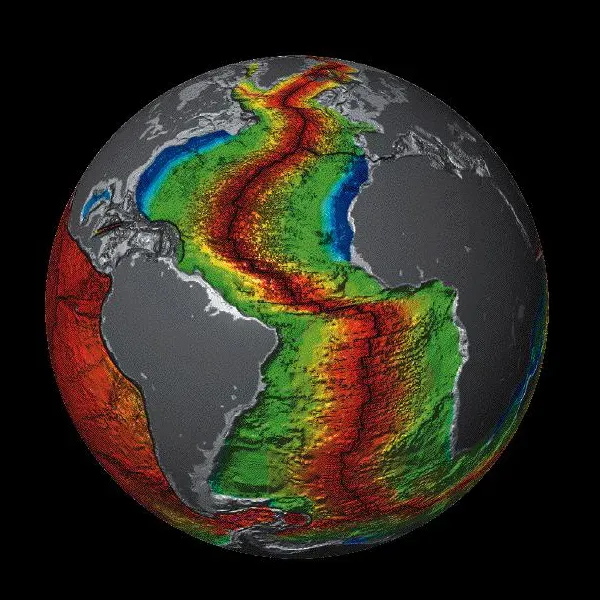
In parts of the mid-Atlantic, long-term acoustic monitoring has revealed mysterious daily “choruses,” broad bands of sound that rise and fall predictably with daylight, season, or the lunar cycle. In shallow coastal water, that makes sense; it’s usually mass vocal activity from fish or shrimp. What doesn’t make sense is hearing the same kind of chorus in deep pelagic zones, far from any known spawning ground or reef.
Every attempt to pin these choruses on a specific species has failed. Some frequencies overlap with fish calls; others don’t. The directionality is fuzzy, almost as if the sound is coming from everywhere and nowhere at once. One theory holds that vast mid-water communities of lanternfish and other mesopelagic drifters are collectively producing soundscapes nobody has individually characterized. A more radical idea is that this is emergent, ecosystem-level signaling tied to the nightly vertical migration of billions of animals, a kind of ocean-wide choir with no known members.
4. The Deep Drumming Beneath Hydrothermal Vents
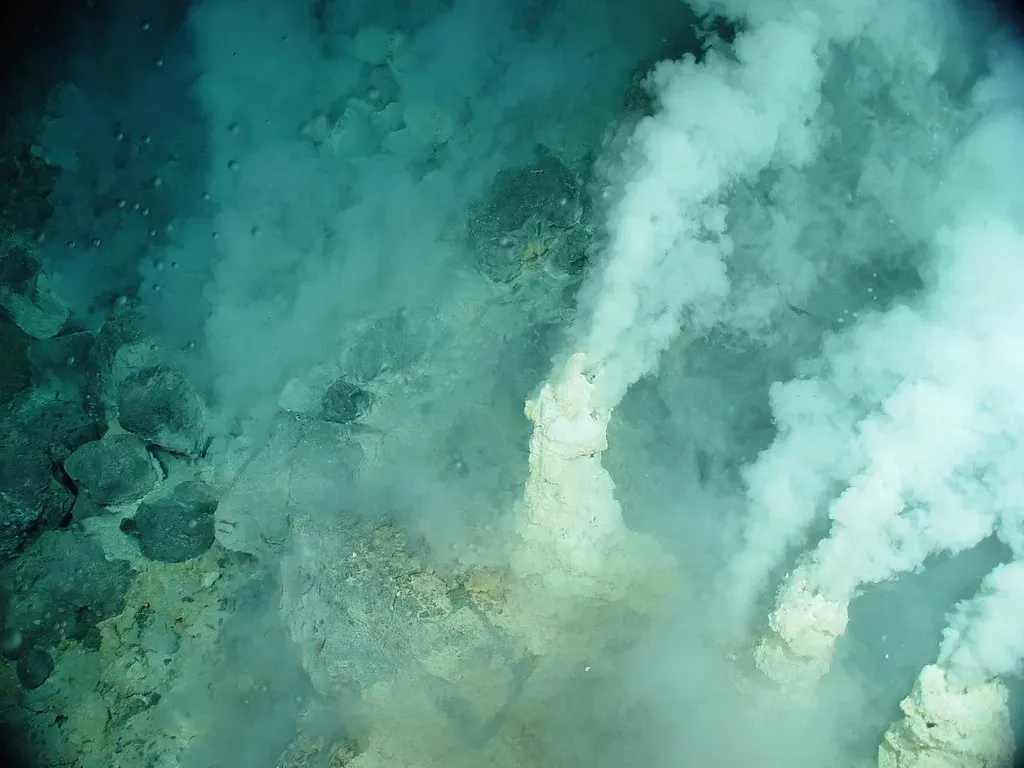
Hydrothermal vent fields are already noisy places, full of crackling fluids, gassy bursts, and popping rock. But several expeditions have reported a completely different sound layered underneath that chaos: a slow, rhythmic drumming at low frequencies, pulsing like a distant engine. It doesn’t match the known physics of vent discharge or magma movement, and it persists for hours with almost no variation, which is strange for such a dynamic environment.
One fringe but genuinely intriguing idea is that large, still-unseen animals could be using the vent structures as acoustic amplifiers, drumming against them to broadcast over long distances, something we already know some shallow-water fish and crustaceans do with rocks and reef cavities. The conservative alternative is an under-documented form of bubble resonance or sub-seafloor fluid movement. Controlled experiments at vent depths are brutally hard and expensive, so for now these drums sit filed under “unclassified vent acoustics,” which is really just a polite way of saying nobody knows.
3. The Ultra-Low Hum That Never Turns Off
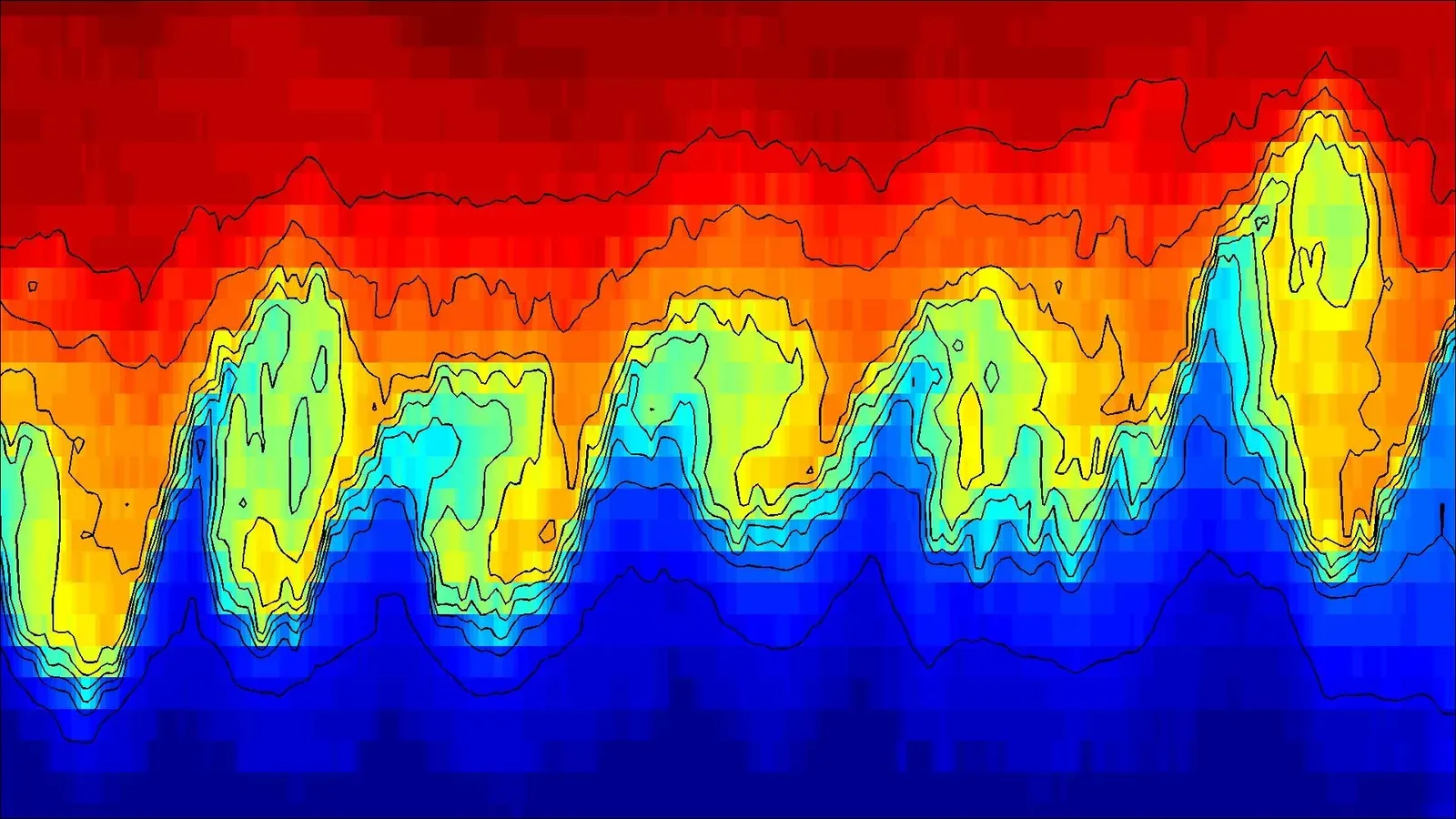
For decades, very-low-frequency hydrophones have recorded a persistent global hum, sitting so low it borders on seismic noise. Some of it has been successfully traced to microseisms, ocean waves pounding coastlines and feeding energy into the crust. But layered on top of that, in certain deep basins, are discrete hum modes that don’t track cleanly with storms, surf, or local geology the way they’re supposed to.
A few geophysicists think these could be vibration modes involving the entire water column, excited by complex interactions between tides, basin shape, and stratification. Others suspect subtle ocean-atmosphere coupling, essentially a planet-scale resonance we’re only starting to notice. The uncomfortable alternative is that we still don’t fully understand the basic acoustics of large ocean basins, and that some of what we casually call “noise” is actually structured signal from processes we haven’t named yet.
How inappropriate to call this planet Earth when it is quite clearly Ocean.
Arthur C. Clarke
2. The Quackers: Phantom Submarine Duck Calls
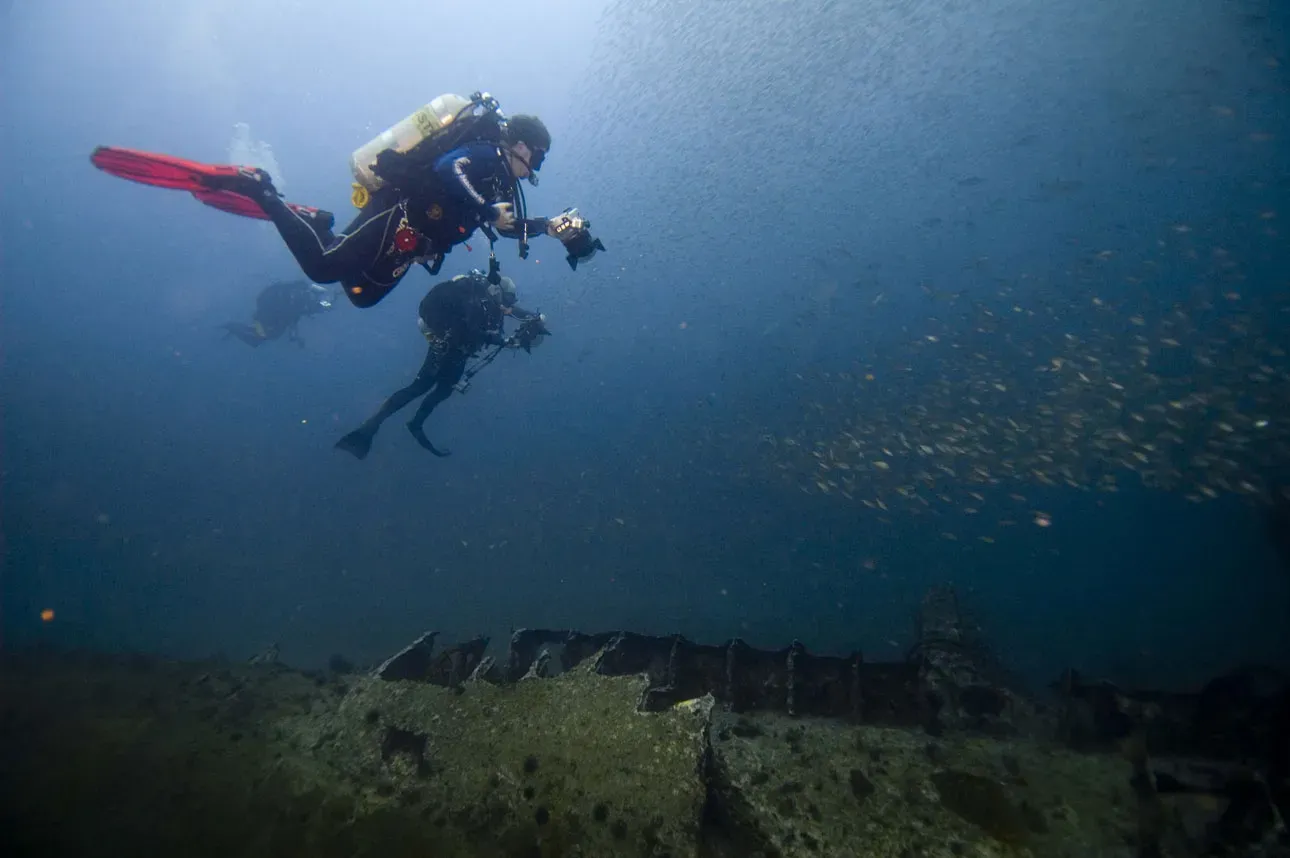
During the Cold War, Soviet and later Russian submariners reported bizarre acoustic contacts they nicknamed “Quackers” because they sounded like ducks quacking underwater. These contacts appeared suddenly, sometimes chasing or circling submarines, then vanished with no visual confirmation and no matching vessel on record. Western navies have their own quiet stories about similarly maneuvering “biological-sounding” contacts that unnerved their sonar techs.
Official explanations range from squid schools to experimental drones, but nothing has ever been proven either way. Biologists struggle with the extreme maneuverability implied by the sonar tracks, while defense analysts point out that no declassified drone program from that era matches the reported behavior or frequency of sightings. One under-discussed possibility is that we’ve badly underestimated the acoustic sophistication of deep-diving marine mammals like beaked whales, which can appear on sonar abruptly and vanish just as fast. Even now, Quacker-like contacts still occasionally get logged as “biologics, unknown.”
Why It Stands Out
- Reported independently by multiple navies during and after the Cold War, not a single isolated claim.
- Sonar tracks describe maneuverability that outperforms known submarines and most cataloged marine animals.
- No declassified drone, decoy, or biological program from that era cleanly matches the pattern.
- Similar “biologics, unknown” contacts are still occasionally logged today.
1. The Single-Frame “Something’s There” Events
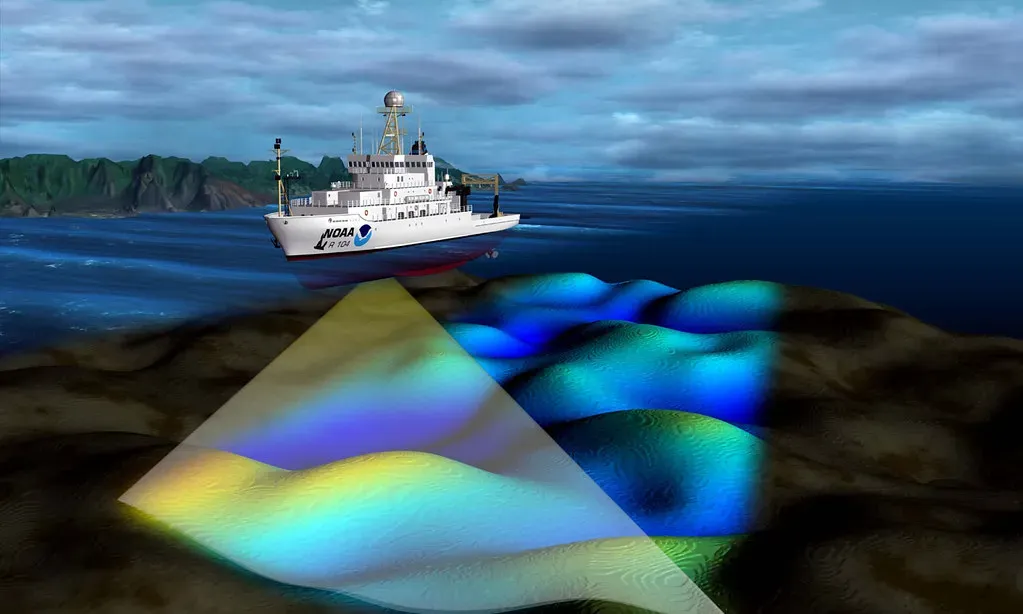
The most unsettling deep-sea sounds aren’t the famous bloops; they’re the one-frame anomalies that sonar analysts genuinely dislike dealing with. These are ultra-brief, high-energy spikes or complex waveforms that appear in exactly one sampling window, on one or two instruments, with no clear pattern before or after. They’re too structured to write off as electronic noise, too isolated to triangulate, and too unique to categorize.
Some of these events have partial spectrograms showing layered harmonics or frequency sweeps that resemble neither earthquakes, ice, nor equipment glitches. Others look like truncated versions of known biological or mechanical sounds, as if something emitted a single pulse and then stopped, or simply left detection range. Because each one is effectively a one-off, they never get papers or names; they just accumulate quietly as a shadow dataset of things we noticed and filed away. If anything on this list proves how little we understand the deep ocean’s soundscape, it’s these anonymous ghosts on the tape.
The Bottom Line
Strip away the clickbait and the sea-monster memes, and here’s the uncomfortable truth: even with Cold War-grade hydrophones and modern ocean observatories, a stubborn slice of deep-sea recordings still sits in the “no idea” folder. Some, like The Bloop, probably have mundane explanations we simply haven’t nailed with lab-perfect proof. Others, the vent drumming, the basin hum modes, the one-frame spikes, hint that basic ocean physics and marine biology aren’t nearly as “solved” as textbooks like to pretend.
The deeper pattern here is humbling. Our listening gear keeps improving, but so does the complexity of what it picks up, and every time we think we’ve closed a case, a new dataset quietly breaks the rulebook. My honest bet is that most of these are natural, not mythical, but natural was never the same thing as boring. It just means we’re floating above a planet-wide acoustic system we’ve barely begun to read. So which one of these fourteen do you think has the least boring explanation waiting underneath it?