
Museums are supposed to be the one place where the label doesn’t lie. A glass case, a gold plaque, a hushed tone from the tour guide, it all adds up to an unspoken promise: this is real, this is ancient, this is priceless. So it’s almost funny, in a deeply unsettling way, how many of history’s most reverently displayed treasures turned out to be garbage dressed up by con artists, bored farmers, and one guy carving fake Egyptian princesses in his garden shed.
What’s wilder than the fakes themselves is who fell for them. Yale historians. Louvre curators. The British Museum. The Getty. Real experts with real credentials staked their reputations on objects that turned out to be modern inventions wearing borrowed history like a costume. Here’s exactly how fourteen of the biggest embarrassments in art and archaeology finally got caught.
#14 – The Kensington Runestone
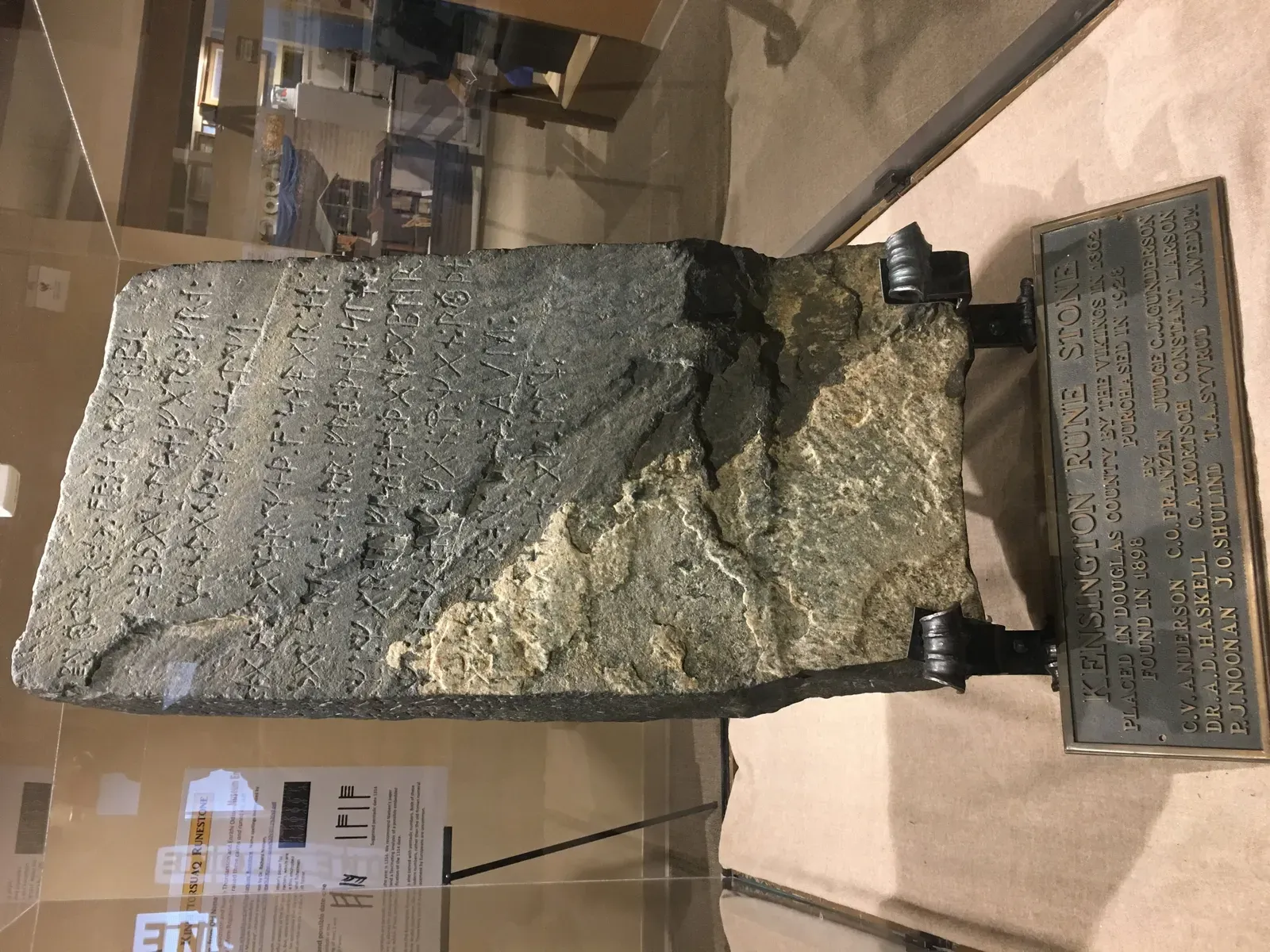
A Minnesota farmer’s 1898 “discovery” convinced generations of Scandinavian-Americans that Vikings had reached the Midwest centuries before Columbus.
The stone, supposedly carved by 14th-century Norse explorers, contains runic inscriptions describing a massacre of their party. Most linguists who’ve studied the runes say the grammar is closer to 19th-century Swedish dialect than anything medieval, and the farmer who found it, Olof Ohman, had both the skills and motive to carve it himself. Runologists have also flagged letter forms that simply didn’t exist in genuine medieval Scandinavian writing.
Despite decades of amateur historians defending its authenticity, mainstream archaeology has largely dismissed the runestone as a 19th-century hoax rather than proof of pre-Columbian Norse settlement. It still sits in its own museum in Alexandria, Minnesota, drawing tourists who want to believe. But that’s nothing compared to what we found about #13.
#13 – The Michigan Relics
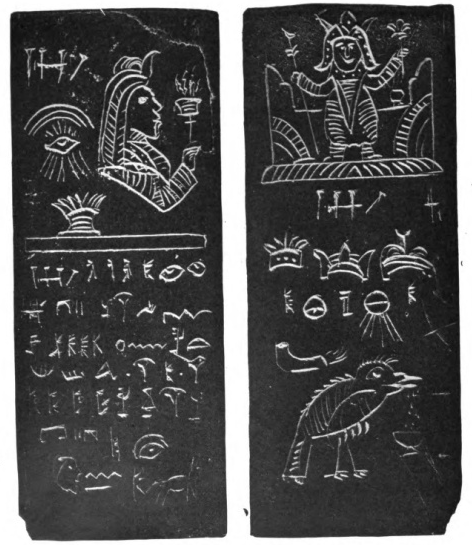
Nearly 30,000 “ancient” tablets, cups, and copper tools flooded out of Michigan farmland in the 1890s, supposedly proving a lost Near Eastern civilization had settled North America.
A man named James Scotford claimed he kept stumbling onto these relics while digging on his own land, decade after decade, an unbelievable streak of luck that should have been the first red flag. Scholars grew suspicious fast. Researchers including Kelsey and Jastrow eventually branded the Michigan Relics frauds containing a “horrible mixture” of jumbled, mismatched ancient scripts that no real civilization would have produced.
Fast Facts
- Roughly 30,000 tablets, cups, and tools surfaced on Scotford’s land over decades
- Some clay pieces were only air-dried and dissolved in water, ruling out real burial
- “Ancient” copper tools showed zero wear despite needing 2,200-degree smelting heat
- A newspaper investigation traced production to a boarding house workshop
The physical evidence sealed it. Some clay pieces had simply been air-dried and dissolved in water, meaning they couldn’t have survived buried for even a decade; others bore the marks of a modern saw-cut board, and the copper had been smelted using a technique requiring 2,200-degree heat with zero wear on the “ancient” tools. A later newspaper investigation revealed Scotford allegedly paid his own sons and son-in-law to manufacture the fakes in a boarding house, where a neighbor said the hammering went on day and night.
#12 – The Ica Stones of Peru
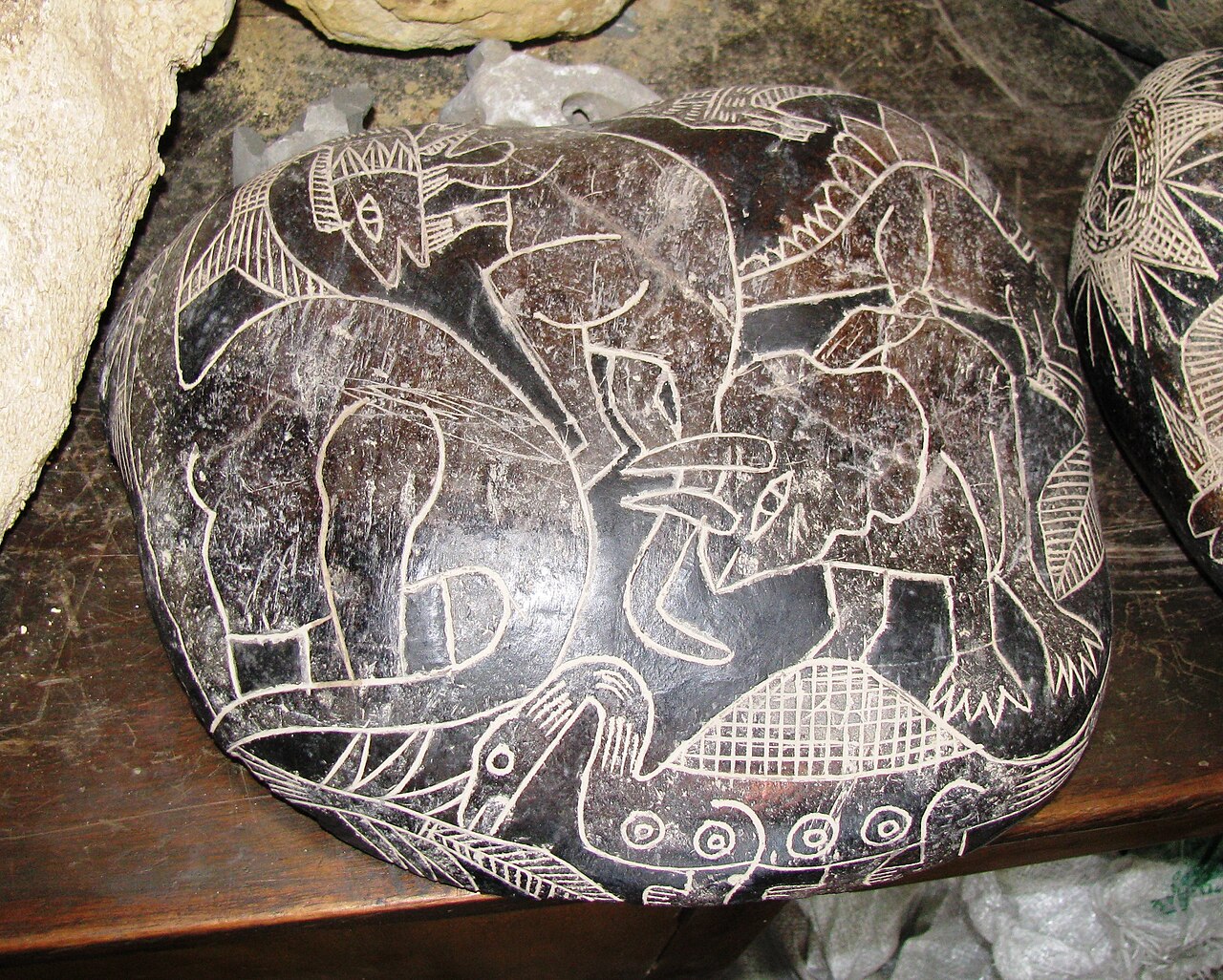
Thousands of engraved black stones depicting humans riding dinosaurs and performing brain surgery convinced fringe researchers that an advanced lost civilization once roamed South America.
They were actually carved in the 1960s by a Peruvian farmer named Basilio Uschuya, who sold them as genuine pre-Columbian antiques for years before finally admitting the truth. The confession only came after Peruvian police threatened him with prison time for trafficking looted artifacts, which is exactly why true believers still insist he was coerced into lying.
Facing years behind bars, Uschuya recanted, claiming he’d carved all 15,000 stones himself, and even demonstrated the process live using a simple dental drill. Archaeologist Ken Feder didn’t hold back either.
The Ica Stones are not the most sophisticated of the archaeological hoaxes discussed in this book, but they certainly rank up there as the most preposterous.
Ken Feder
But that’s nothing compared to what we found about #11.
#11 – The Cardiff Giant
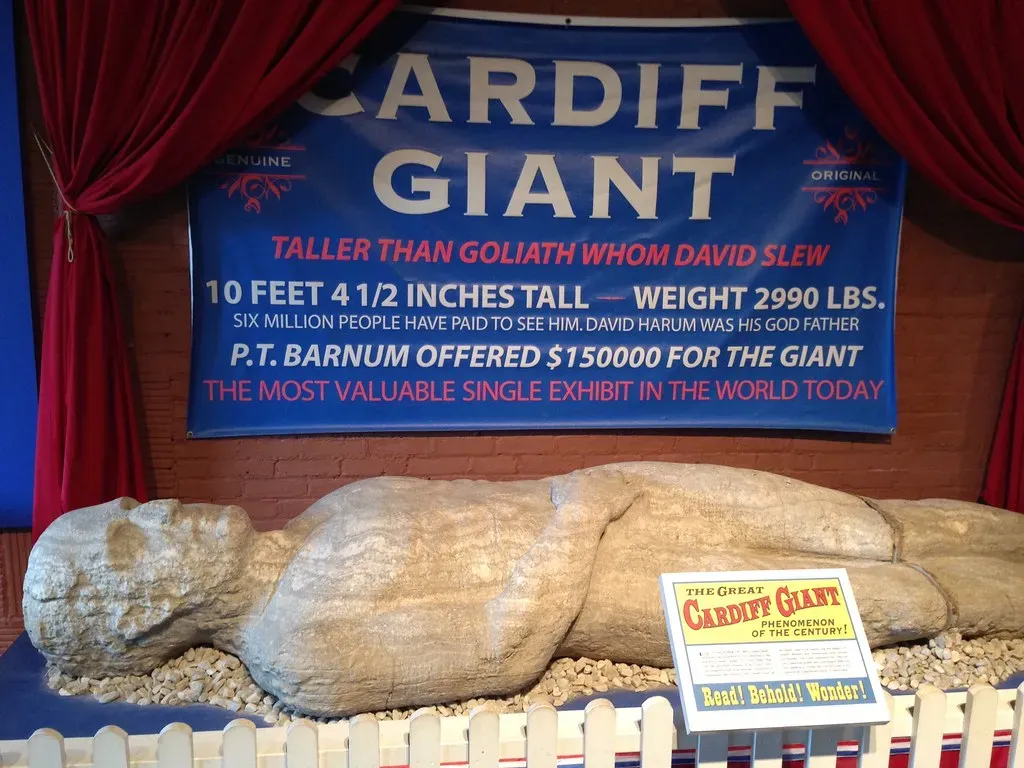
In 1869, workers digging a well in upstate New York unearthed a ten-foot stone “man,” instantly sparking a national sensation about biblical giants and lost races.
Newspapers ran breathless coverage, and crowds paid fifty cents a head to gawk at what many assumed was a fossilized human or an ancient statue. The truth was far less mystical: a tobacconist named George Hull had commissioned the giant from a gypsum block, aged it with acid and stains, and buried it a year earlier specifically to fool believers after a heated argument with a fundamentalist preacher over whether giants once walked the earth.
Even P.T. Barnum got involved, offering to buy the giant and, when refused, commissioning his own copy to display as the “real” fake. Hull eventually confessed once scientists began pointing out fresh tool marks on the surface. The giant now sits, appropriately, in a museum dedicated to hoaxes and curiosities rather than natural history.
#10 – The Vinland Map
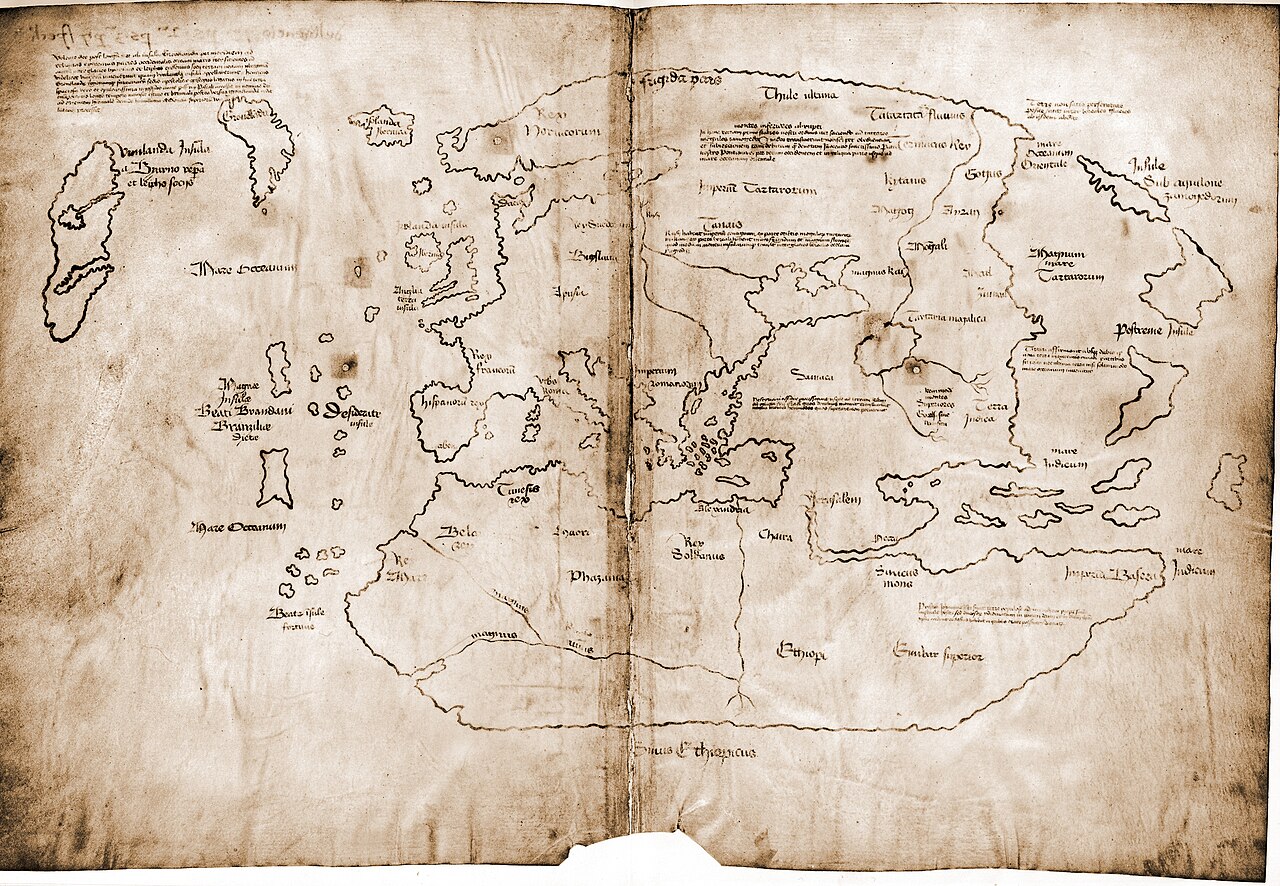
For decades, this parchment convinced historians that Vikings had documented North America nearly a century before Columbus ever set sail.
Yale University unveiled it with enormous fanfare in 1965, claiming after seven years of analysis that it was genuine and that the Viking voyage preceded Columbus by at least 50 years. Skeptics circled almost immediately. Ink analysis eventually showed the ink contained titanium, which only became commercially popular in the 1920s, and scans revealed a note on the back of the parchment that had been intentionally altered to make the document look more convincing.
Quick Compare
- Believed: a genuine 15th-century Norse map predating Columbus by decades
- Revealed: ink contains a titanium compound unavailable before the 1920s
- Believed: authenticated after seven years of Yale analysis in 1965
- Revealed: formally declared a modern forgery by Yale in 2018
The final verdict didn’t arrive until 2018, when Yale specialists declared the map a modern forgery after decades of debate. Even skeptics were impressed by the craftsmanship; one map historian admitted “whoever did it must have been a really skilled calligrapher,” noting the map had fooled “some wonderful scholars.” Yale still keeps the fake on display, a monument to how badly everyone wanted it to be real.
#9 – The Tiara of Saitaphernes
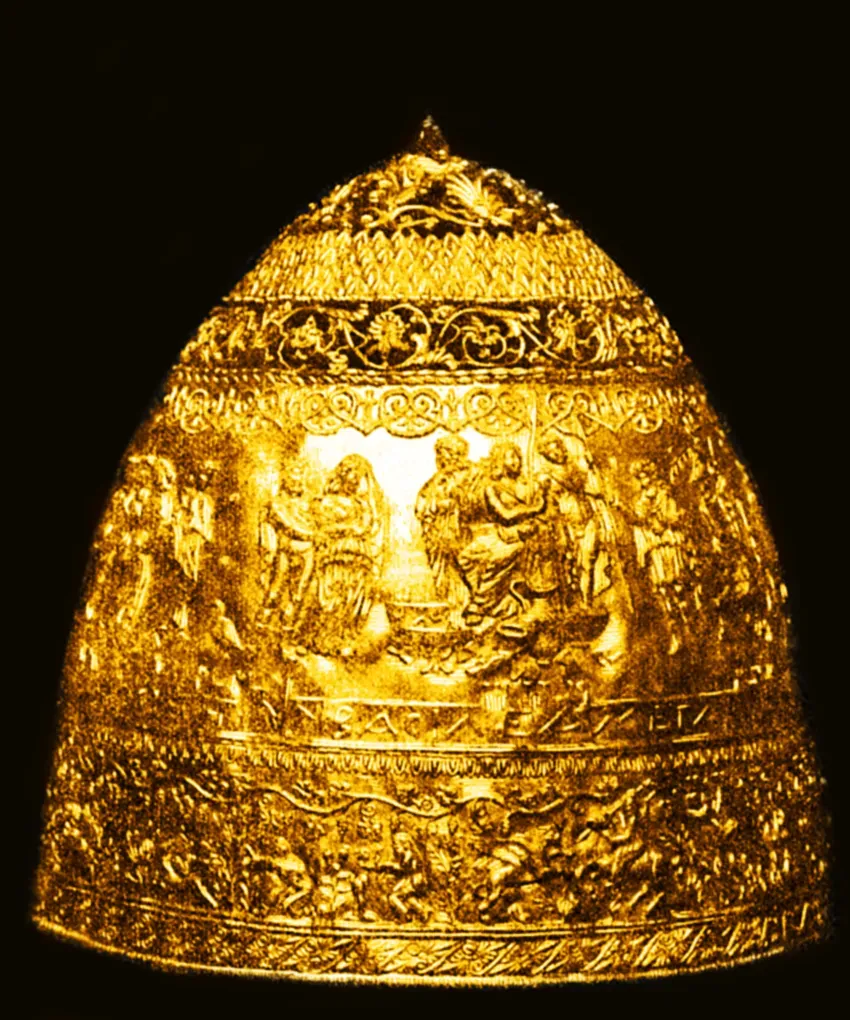
The Louvre paid a fortune in 1896 for what curators believed was an ancient Scythian crown gifted to a third-century BC king, complete with intricate mythological scenes.
French experts examined the gold tiara extensively before purchase, praising its craftsmanship as proof of sophisticated ancient Greek-Scythian artistry. The embarrassing truth surfaced in 1903 when a Russian goldsmith named Israel Rouchomovsky came forward and proved he’d made the tiara just years earlier as a wedding gift, recreating the exact tools and techniques to demonstrate his authorship beyond doubt. He’d apparently based some imagery on published archaeological drawings, which is exactly why it looked “authentically” ancient to trained eyes.
The scandal rocked the French art establishment and became a case study in how badly people can want something to be real. Curators had craved a spectacular find so much that they overlooked stylistic inconsistencies flagged by dissenting scholars before the purchase ever went through. The tiara remains in French collections today, now displayed honestly as a masterful 19th-century forgery.
#8 – The Getty Kouros
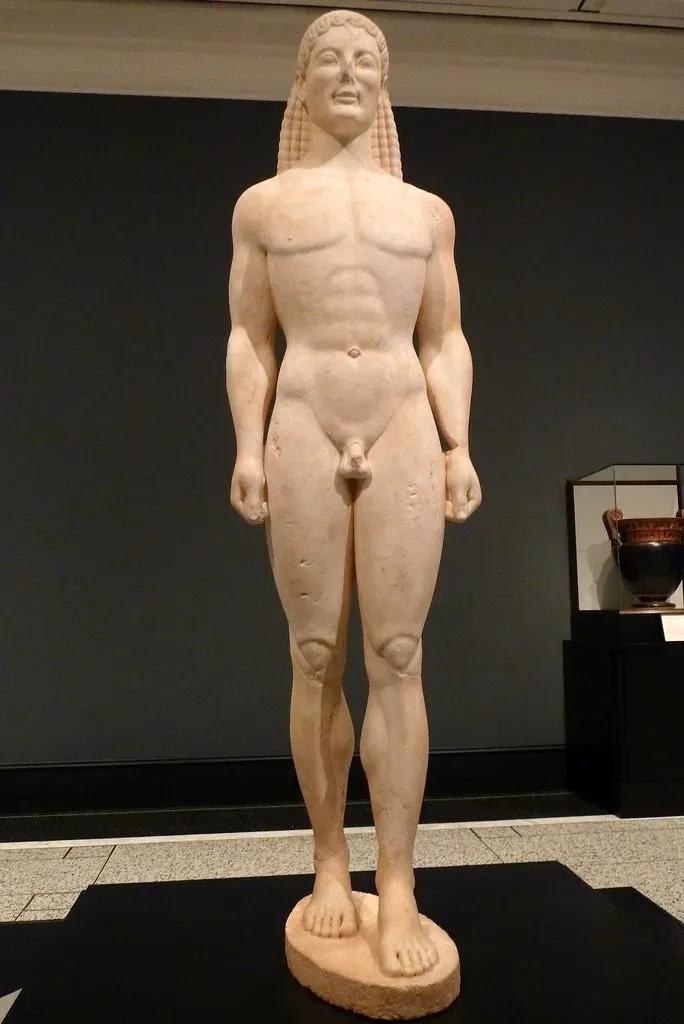
This six-foot marble statue of a nude Greek youth cost the Getty Museum a fortune in 1983, and its authenticity question became one of the longest-running scandals in the art world.
Scientists initially convinced themselves the surface chemistry proved ancient age, but the same weathered look was later replicated in a lab within weeks. Even more damning, testing suggested the “aging” was likely induced by potato mold over a couple of months, not thousands of years underground. The provenance paperwork made things worse, since the documents used to trace the statue’s history turned out to be forged, and the sculpture itself was a stylistic pastiche that didn’t match kouroi from any single region.
By 2018, Getty director Timothy Potts confirmed the sculpture had been pulled from display over its disputed authenticity. The label now simply reads “Greek, about 530 B.C., or modern forgery,” a rare case of a museum admitting it genuinely doesn’t know.
#7 – The Etruscan Terracotta Warriors
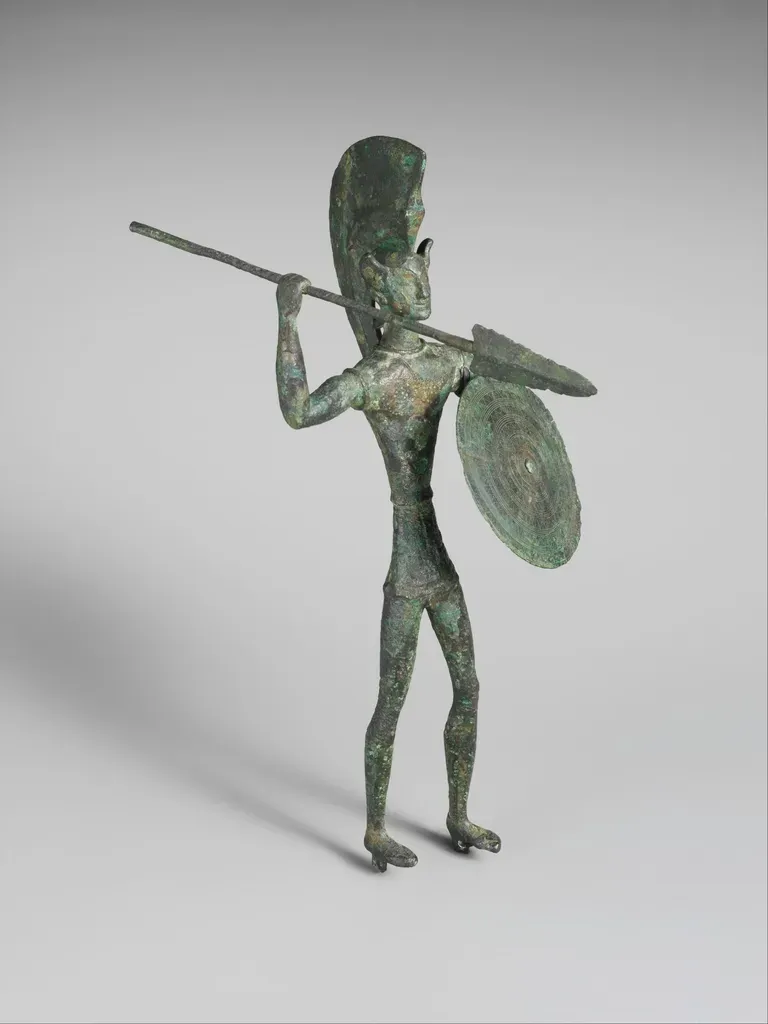
Three massive terracotta warrior statues, acquired by the Metropolitan Museum of Art between 1915 and 1921, were celebrated for decades as rare surviving examples of monumental Etruscan sculpture.
Displayed prominently in the museum’s classical galleries, the statues drew scholars eager to study a civilization whose large-scale art had rarely survived intact. They were actually manufactured in pieces by Italian forgers in the early 20th century, then deliberately broken and shipped abroad disassembled to avoid detection, only to be reassembled once safely in American hands. Suspicions grew over the decades as scholars noticed oddly uniform glaze and proportions that didn’t match genuine Etruscan craftsmanship.
Worth Knowing
- Acquired by the Met between 1915 and 1921 as prized Etruscan masterpieces
- Deliberately smashed apart and shipped abroad in pieces to dodge inspection
- 1960s chemical testing found manganese in the glaze, impossible in antiquity
- One of the original forgers eventually confessed his role in the scheme
Chemical testing in the 1960s finally confirmed it: the glaze contained manganese in a form that couldn’t have existed in antiquity. One of the forgers involved eventually admitted his role, describing how the pieces were smashed on purpose to look ancient and smuggled out disguised as scrap. The Met quietly removed the statues from its ancient art galleries once the fraud was confirmed.
#6 – The Amarna Princess
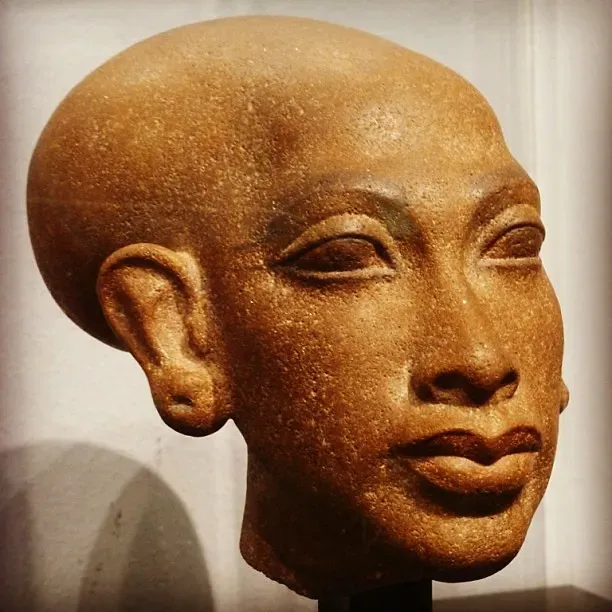
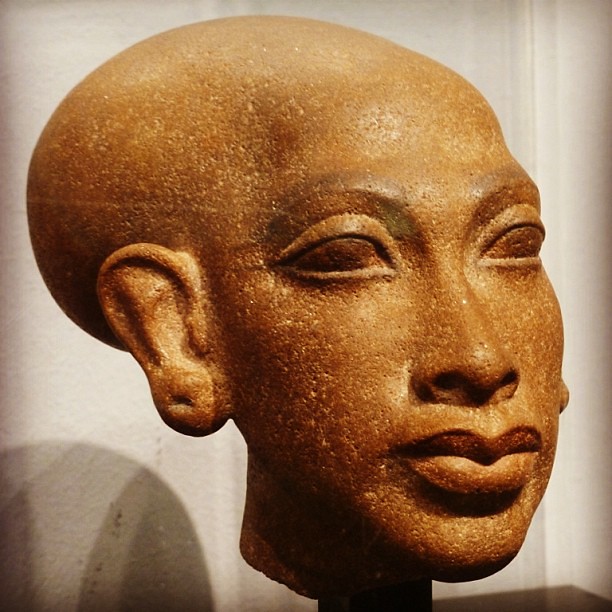
Sold to Bolton Museum in England for over £400,000 in 2003, this alabaster Egyptian statue was hailed as a stunning Amarna-period masterpiece linked to the family of Akhenaten.
Egyptologists praised its stylistic sophistication, and the museum proudly displayed it as one of its most valuable acquisitions. Its real origin was a garden shed in Bolton, where career forger Shaun Greenhalgh had carved it from a genuine ancient alabaster jar lid, using photographs from a museum catalogue to nail the period style. His own elderly parents unwittingly helped sell it, posing as the “honest” family sellers with a fabricated provenance story.
The forgery only unraveled when police investigating another Greenhalgh scheme raided the family home and found tools, half-finished fakes, and reference materials in the shed workshop. Greenhalgh was convicted in 2007 and later revealed he’d sold dozens of fraudulent antiquities to museums and collectors worldwide over three decades. Experts have since called him one of the most prolific and skilled forgers in modern British history.
#5 – The Persian Princess Mummy
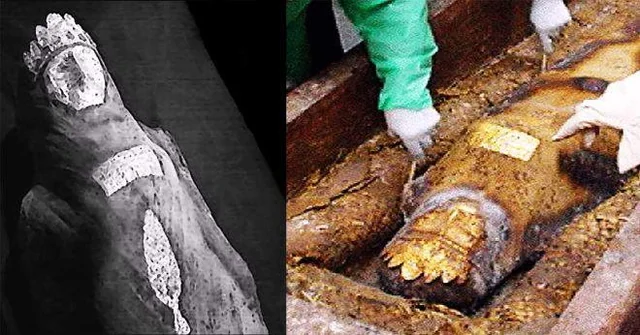
In October 2000, a mummy surfaced on Pakistan’s black market with a golden crown and inscription claiming she was the daughter of the Persian king Xerxes, sparking a diplomatic standoff between Iran and Pakistan.
Both nations claimed ownership of what seemed like the first Persian royal mummy ever discovered, since mummification was thought to be an exclusively Egyptian practice. Experts moved fast, and cracks appeared almost immediately: there were grammatical errors on the breastplate’s inscription, and the inscriber had used the later Greek version of the princess’s name, Rhodugune, instead of the correct Persian, Wardegauna.
The forensic conclusion was even darker than a simple forgery. Chemical analysis revealed the hair and body had been bleached, the abdomen was packed with modern desiccating chemicals like sodium chloride and bicarbonate of soda, and carbon dating showed the remains belonged to a woman who died no earlier than 1996. What started as an archaeological sensation ended as a possible homicide case that Pakistani police never closed.
#4 – Han van Meegeren’s Fake Vermeer Paintings
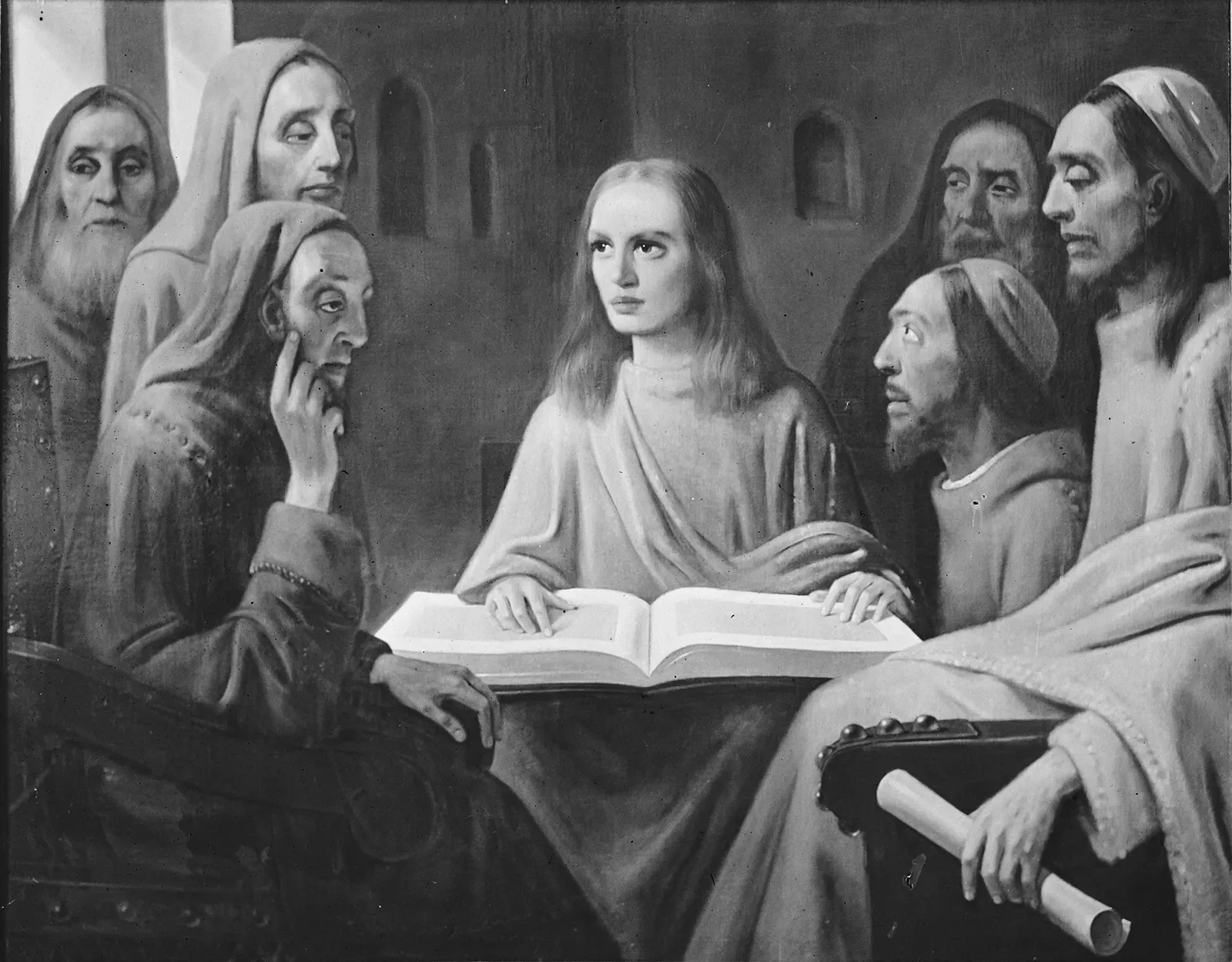
During the 1930s and ’40s, art dealer and painter Han van Meegeren sold several “newly discovered” Vermeers to prestigious collectors and even, unwittingly, to Nazi official Hermann Göring.
His masterwork forgery, “Christ at Emmaus,” fooled the era’s leading Vermeer scholar, who declared it one of the artist’s finest works and championed it for acquisition by a respected Rotterdam museum. Van Meegeren only confessed after World War II, when Dutch authorities charged him with treason for selling a national treasure to a Nazi leader, forcing him to admit the painting was his own forgery rather than face execution for collaboration.
Why It Stands Out
- Unknowingly sold a fake Vermeer to Nazi official Hermann Göring
- Painted a brand-new “Vermeer” live in custody to prove his forgery skill
- Mixed pigments with Bakelite resin and baked canvases to fake centuries of cracking
- Convicted only of fraud, dodging a treason charge, and became a wartime folk hero
To prove his claim, he painted a brand-new “Vermeer” in front of witnesses while under arrest, using the exact techniques that had fooled experts for over a decade, mixing pigments with Bakelite resin and baking the canvases to mimic centuries of cracking. The scandal humiliated the art establishment, and Van Meegeren was ultimately convicted only of fraud, not treason, becoming something of a folk hero for duping the Nazis without even knowing it.
#3 – The Crystal Skulls
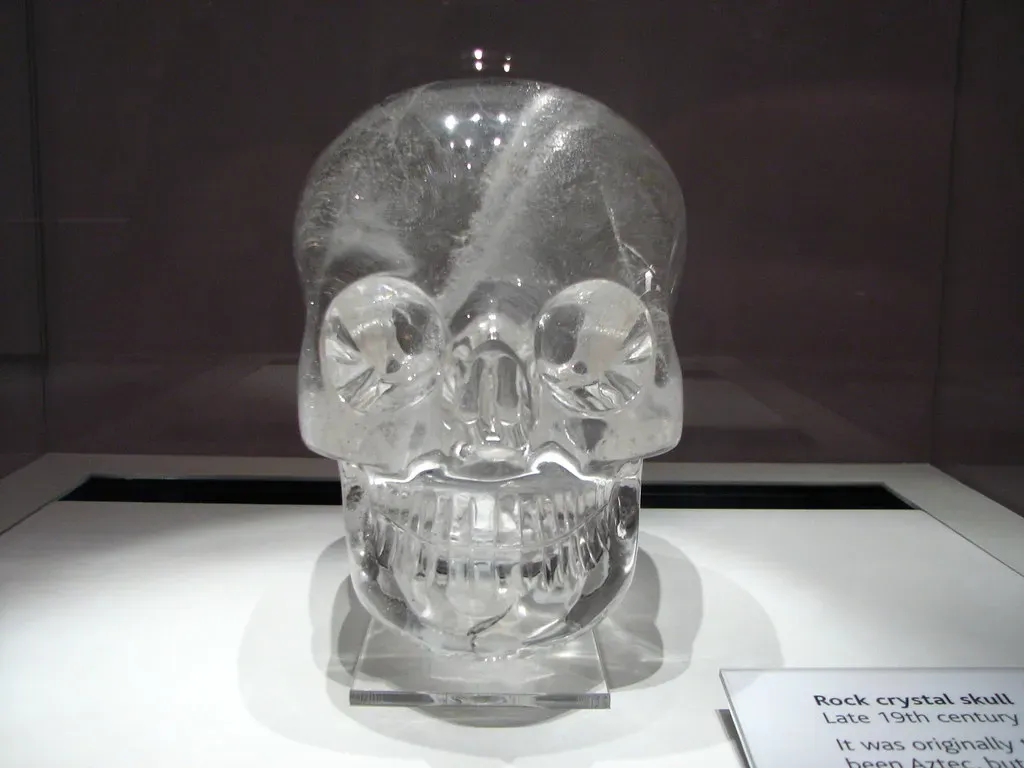
Displayed in major institutions including the British Museum and the Smithsonian, these life-size carved quartz skulls were long presented as pre-Columbian Aztec or Mixtec artifacts of mysterious spiritual power.
Legends grew around them, claiming the skulls held ancient wisdom or even paranormal properties, fueling a cottage industry of books and documentaries. Electron microscopy eventually revealed rotary tool marks on the skulls’ surfaces, a manufacturing technique that simply didn’t exist in the Americas before European contact. The British Museum’s own skull was traced back to a Paris dealer with no verifiable pre-20th-century provenance.
Researchers now believe most of the famous crystal skulls were carved in European workshops, likely in Germany, during the 19th century to feed a booming market for exotic “ancient” curiosities among Victorian collectors. The British Museum and Smithsonian have both relabeled their skulls as 19th-century European work. It’s a rare case where the “ancient mystery” turned out to be barely older than the museums displaying it.
#2 – Piltdown Man
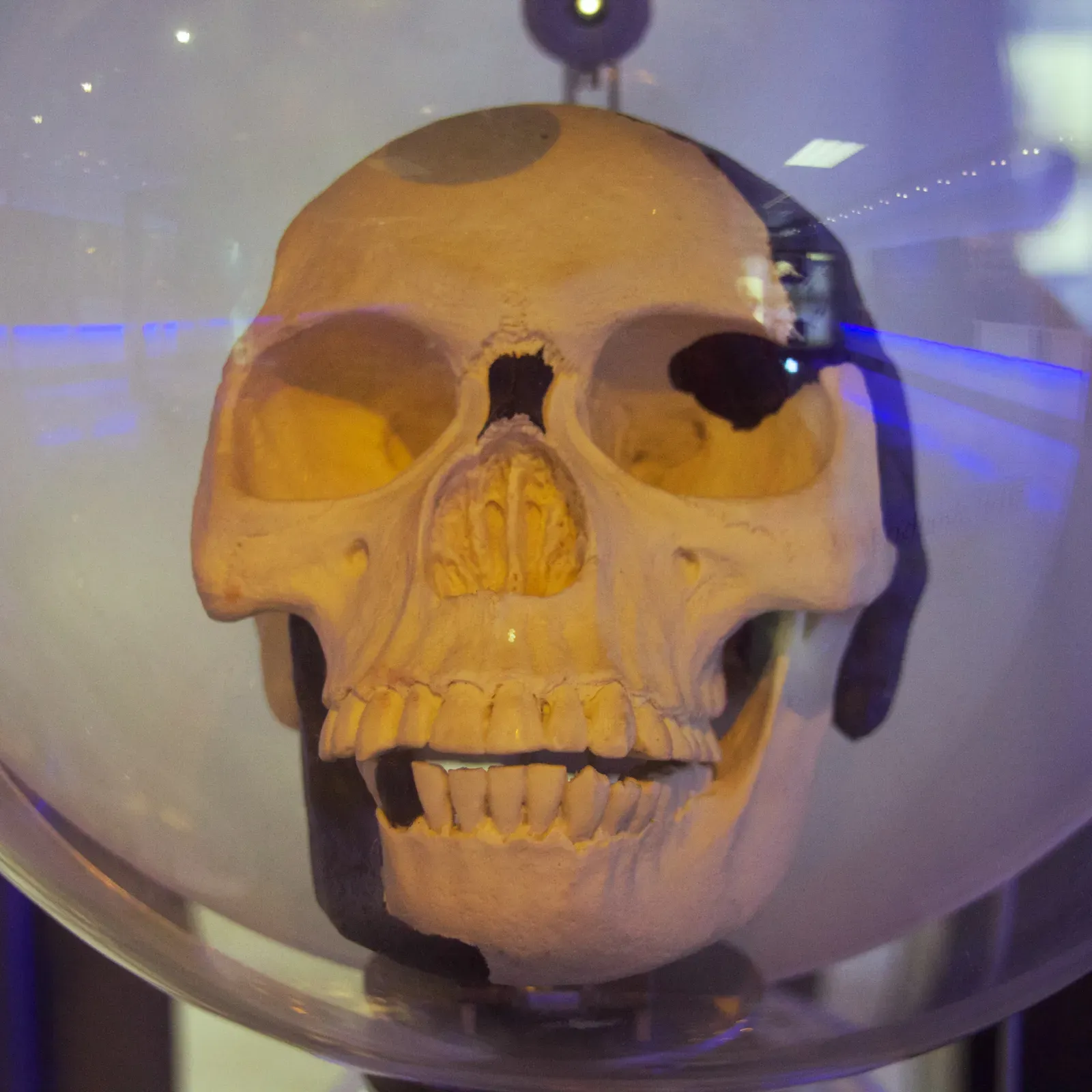
For over 40 years, this supposed “missing link” fossil, discovered in England in 1912, was treated as definitive proof of early human evolution in Britain, shaping textbooks and museum exhibits worldwide.
The skull fragments combined what appeared to be a human-like cranium with an ape-like jaw, exactly the transitional anatomy evolutionary scientists were desperate to find. It took until 1953 for researchers to definitively prove the whole thing was staged, using an orangutan jawbone deliberately filed down and stained to match the cranium’s aged appearance, paired with a genuinely old but unrelated human skull fragment.
Fluorine dating tests finally exposed the mismatched ages between the jaw and skull pieces, something earlier, cruder testing methods had missed entirely. The identity of the actual hoaxer remains debated, with suspects ranging from an amateur archaeologist to a museum curator. Piltdown Man is now taught in universities specifically as a cautionary tale about how eager scientists can be fooled when a discovery confirms exactly what they wanted to find.
#1 – The Shroud of Turin
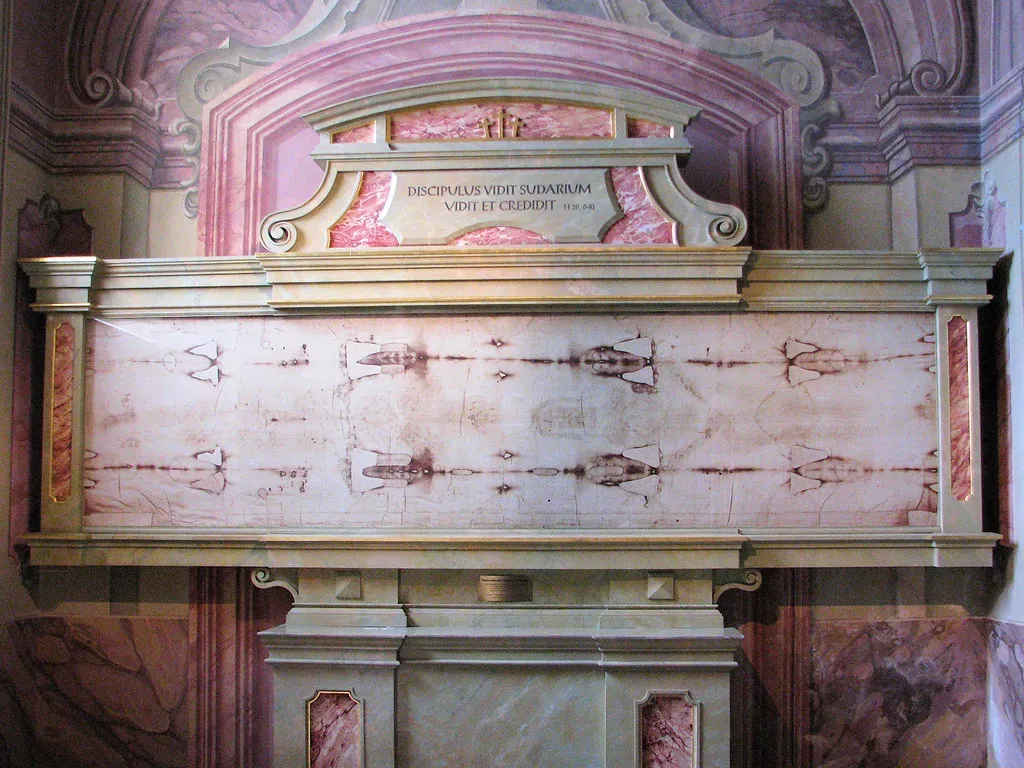
No artifact on this list carries more emotional and religious weight than the linen cloth many believers insist bears the miraculous image of the crucified Christ himself.
Venerated for centuries and drawing millions of pilgrims to Turin Cathedral, the shroud became one of Christianity’s most powerful relics, its faint image of a bearded man analyzed obsessively by scientists and theologians alike. In 1988, radiocarbon dating conducted by three independent laboratories placed the cloth’s origin between 1260 and 1390 AD, squarely in the medieval period rather than first-century Jerusalem, directly contradicting centuries of tradition about its origin.
At a Glance
- Radiocarbon dated in 1988 by three independent laboratories
- Results placed the cloth’s origin between 1260 and 1390 AD
- Findings directly contradict the claimed first-century Jerusalem origin
- The Catholic Church has never officially declared the shroud authentic
Some shroud defenders have since challenged the sampling methodology, arguing contamination or a repaired section skewed the results, keeping the debate alive decades later. The Catholic Church itself has never officially declared the shroud authentic, treating it instead as an object of devotion rather than a scientifically verified relic. That careful ambiguity hasn’t stopped the shroud from remaining one of the most fiercely contested objects where forensic science and faith collide head-on.
The Bottom Line
The pattern across all fourteen cases is impossible to ignore: institutions wanted these objects to be real so badly that basic red flags got explained away for years, sometimes decades. Titanium ink, potato-mold aging, filed orangutan jaws, modern dental drills, none of it should have fooled trained experts, yet it did, repeatedly.
I don’t think that’s a coincidence, and I don’t think it’s stupidity either. Prestige and profit motive corrupt scientific scrutiny just as easily in a museum boardroom as they do in a back-alley antiques shop. If institutions with unlimited budgets and rooms full of PhDs can be fooled this badly, ordinary collectors stand almost no chance at all. The real lesson here isn’t that these fourteen fakes got caught, it’s how long they didn’t.