
Most people assume museum labels are permanent – that once an artifact gets its official story, it’s locked in forever. Truth is, historians have spent the last ten years quietly gutting some of the most famous “facts” you learned as a kid, using new dating tech, forensic-level scans, and translations nobody could manage before.
In case after case, the accepted story just fell apart. Royal treasures turned out to be modern fakes. “Mysterious cult objects” turned out to be someone’s sewing kit. Supposed war trophies revealed ugly colonial theft nobody wanted printed on a museum placard. And here’s the unsettling part: almost none of these reversals made headlines. Below are the 21 objects that quietly got a new identity – and what the more honest curators will tell you if you actually ask.
#21 – The Antikythera Mechanism: From “Mystery Box” to Ancient Greek Computer
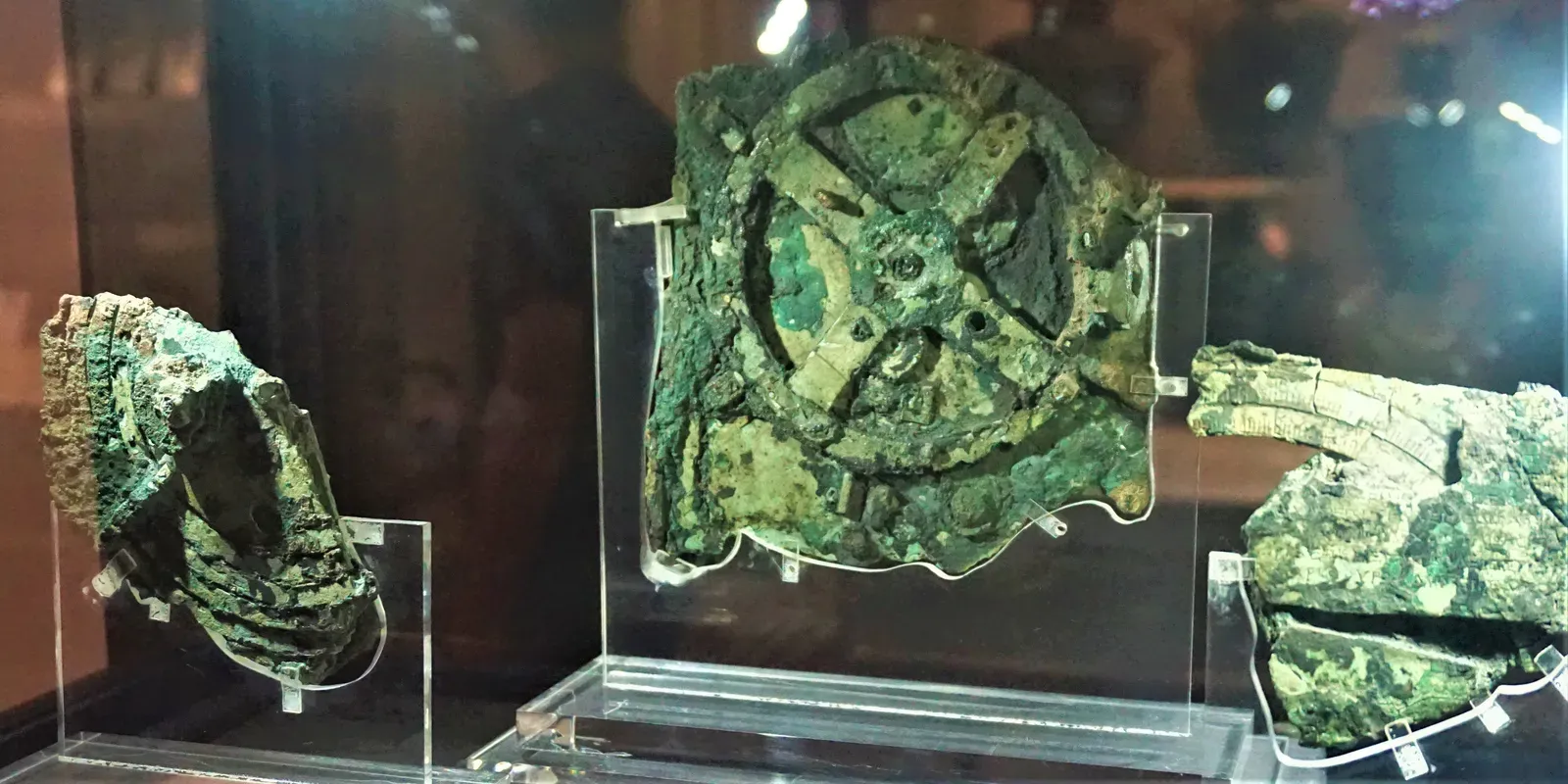
For decades, the Antikythera Mechanism lived in the museum’s “we honestly have no idea” bucket, vaguely labeled a mysterious astronomical device. Tour guides loved calling it a fancy ancient clock. That story is now dead.
High-resolution 3D scans and fresh inscription analysis have pushed historians to reclassify it as an analog mechanical computer built to predict eclipses, lunar phases, and possibly even Olympic Games dates. Calling something a “clock” suggests passive timekeeping. Calling it a computer admits someone deliberately programmed complex astronomical cycles into bronze gears around 100 BCE – which raises an uncomfortable question: if they could build this, what else did we lose? Some researchers now argue Greek mechanical engineering was running at least 1,500 years ahead of what most textbooks still teach. That’s a big claim on its own – but it’s nothing compared to what happened to #20.
Fast Facts
- Pulled from a shipwreck off the Greek island of Antikythera in 1901
- Built from at least 30 interlocking bronze gears
- Dated to roughly 100 BCE
- Modern replicas confirm it could track solar and lunar cycles and forecast eclipses
#20 – The Vinland Map: From Viking “Proof” to Modern Forgery
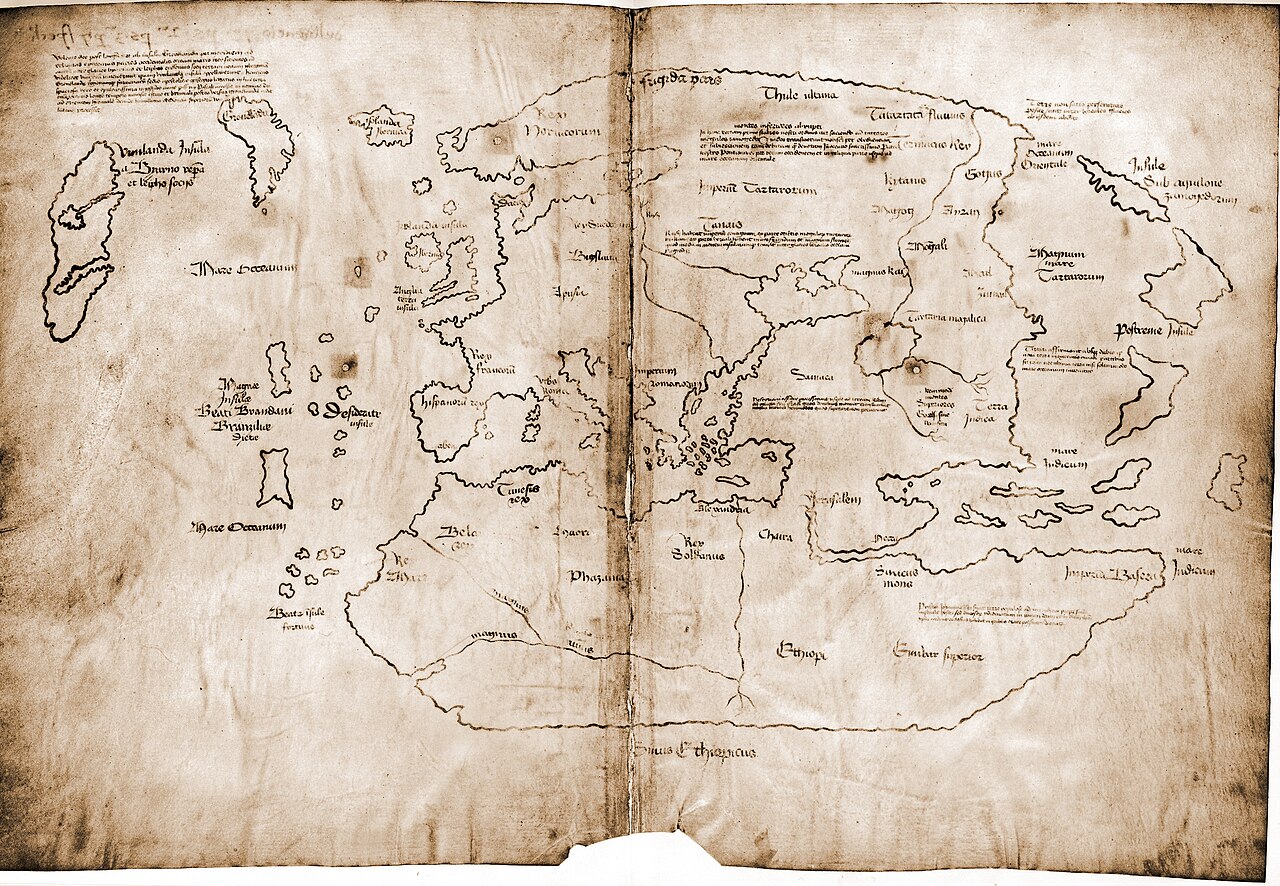
For years, the Vinland Map was paraded around as possible proof that Norse explorers beat Columbus to North America – an irresistible headline. It lived in popular culture as a “maybe real, maybe not” curiosity, the kind of object that made for great documentary cliffhangers.
That ambiguity is mostly gone now. Chemical analysis in the 2010s and early 2020s found modern compounds inconsistent with genuine 15th-century materials, and historians now widely classify the Vinland Map as a 20th-century forgery, not a medieval chart. The evidence wasn’t in the drawing style – it was in the ink itself. That discovery quietly pushed institutions, including Yale, to relabel the artifact from “possibly authentic” to “demonstrably modern,” turning the exhibit narrative from heroic Vikings into a case study on wishful thinking. Yet the Vinland Map is mild compared to how brutally #19 had to be rethought.
#19 – The Shroud of Turin: From Medieval Relic to Layered Historical Object
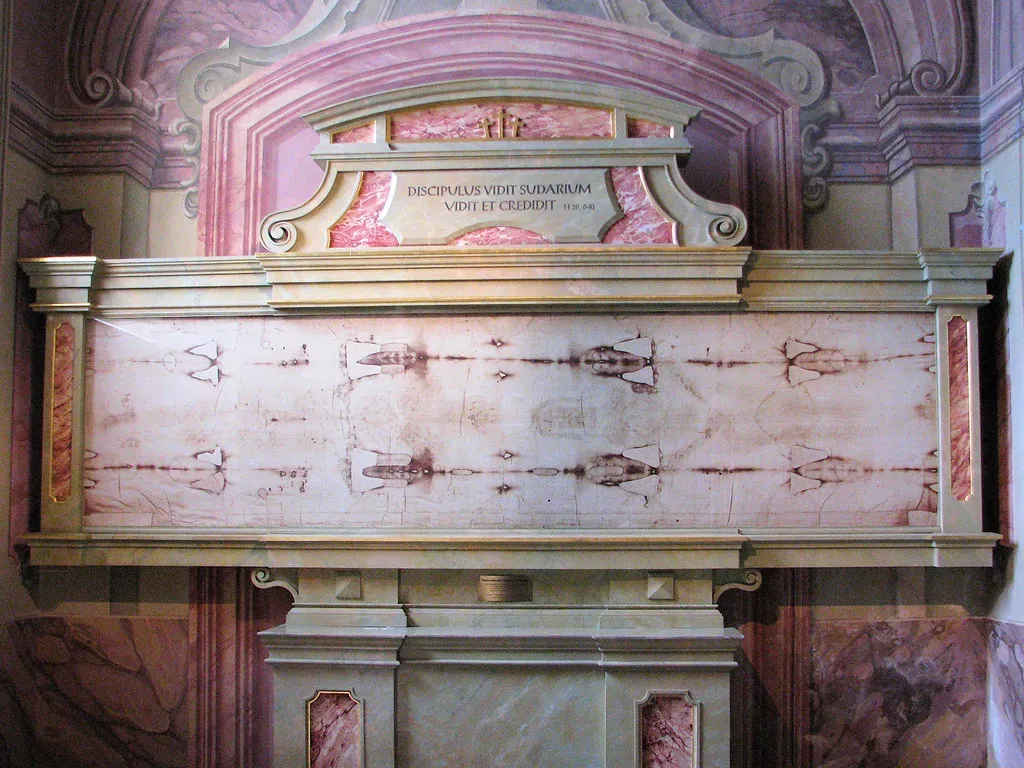
The Shroud of Turin used to be framed as a simple binary: either the authentic burial cloth of Jesus, or a medieval hoax. That black-and-white framing has quietly eroded over the past decade.
Historians and scientists increasingly treat the Shroud as a layered object with different components from different periods, rather than one clean, single-date artifact. Radiocarbon testing already pointed to a medieval origin for the cloth, but newer work on repair patches, contamination, and image-formation chemistry has pushed many historians to classify it primarily as a 14th-century devotional artifact that later acquired mythic status – the image and bloodstains produced by processes that are complex, but not fully replicated, and not magic. This nuanced reclassification annoys both hardcore skeptics and true believers equally, which is exactly why curators have softened their labels. It’s still less politically charged than what happened to #18.
#18 – Benin Bronzes: From “Tribal Art” to Looted Royal Court Masterpieces
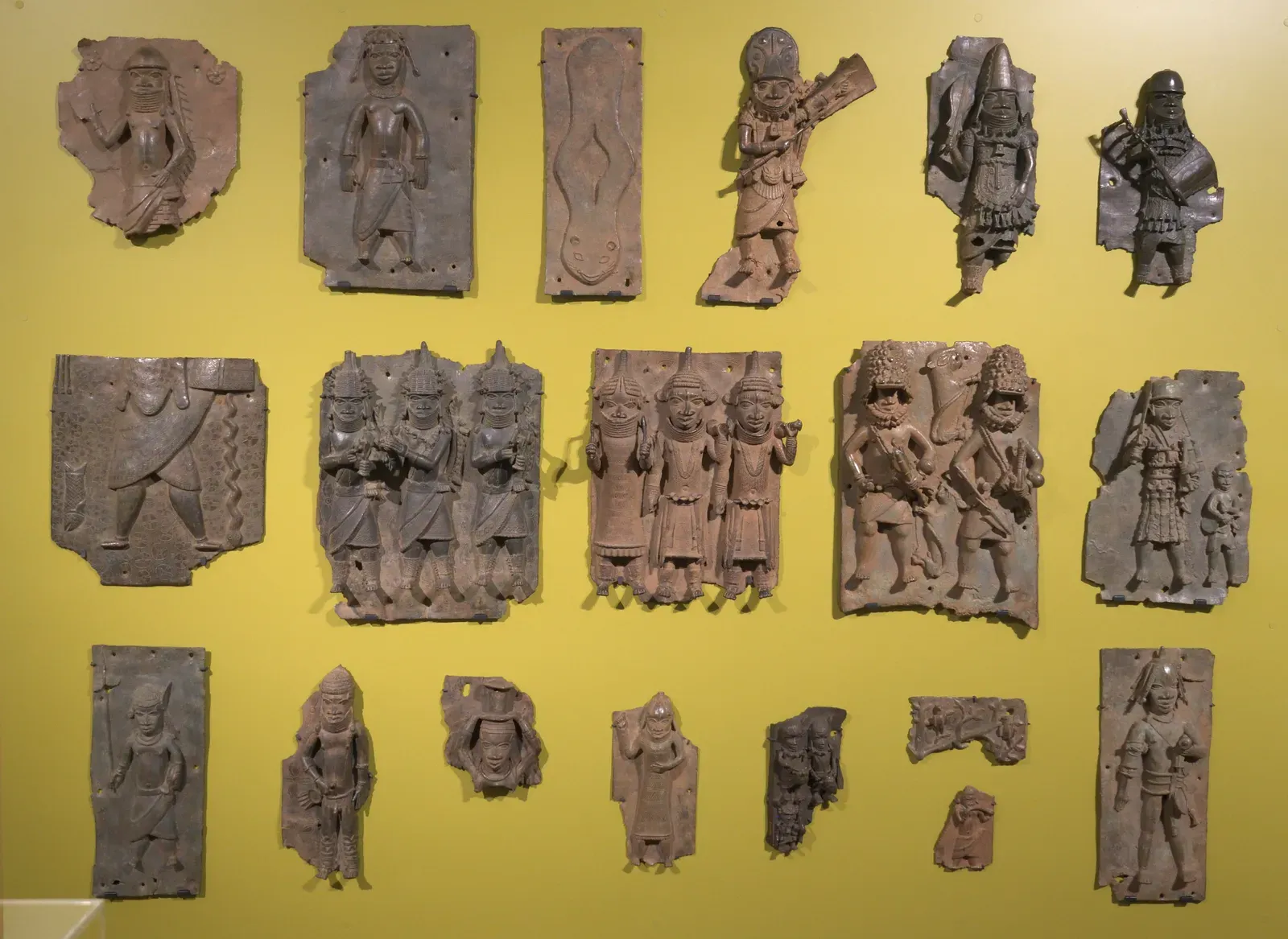
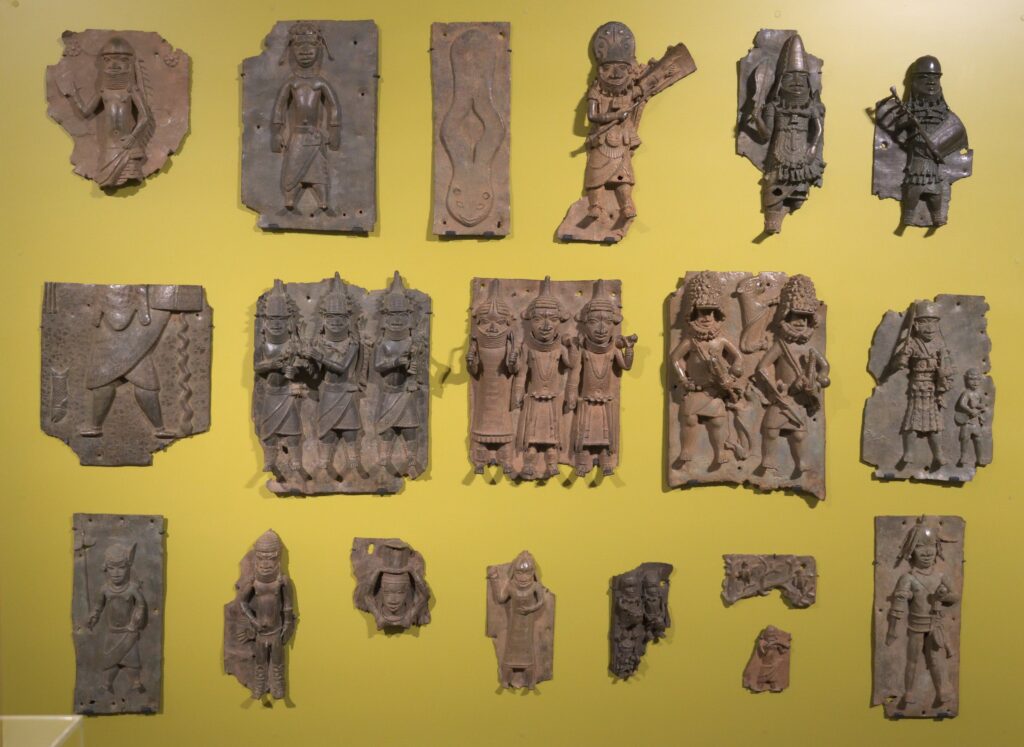
Walk into European museums in the 1990s and you’d often see the Benin Bronzes framed as generic “African tribal art.” That language has since been dismantled piece by piece.
Historians have firmly reclassified these works as court art from the Kingdom of Benin, looted during the 1897 British punitive expedition – a legal and moral bombshell that’s still playing out today. Calling them “tribal” implied anonymous, primitive origins. Calling them “royal court art” acknowledges organized states, elite patronage, and casting traditions that rival anything in Europe. Labeling them “looted” forces museums to treat them as contested property rather than trophy displays, and provenance research and repatriation talks have exploded as a result. Some visitors grumble about the “politicization,” but historians argue it’s simply telling the truth. And if you think that’s dramatic, wait until you see what changed for #17.
#17 – The Staffordshire Hoard Helmet: From Warrior’s Gear to Ceremonial Power Symbol
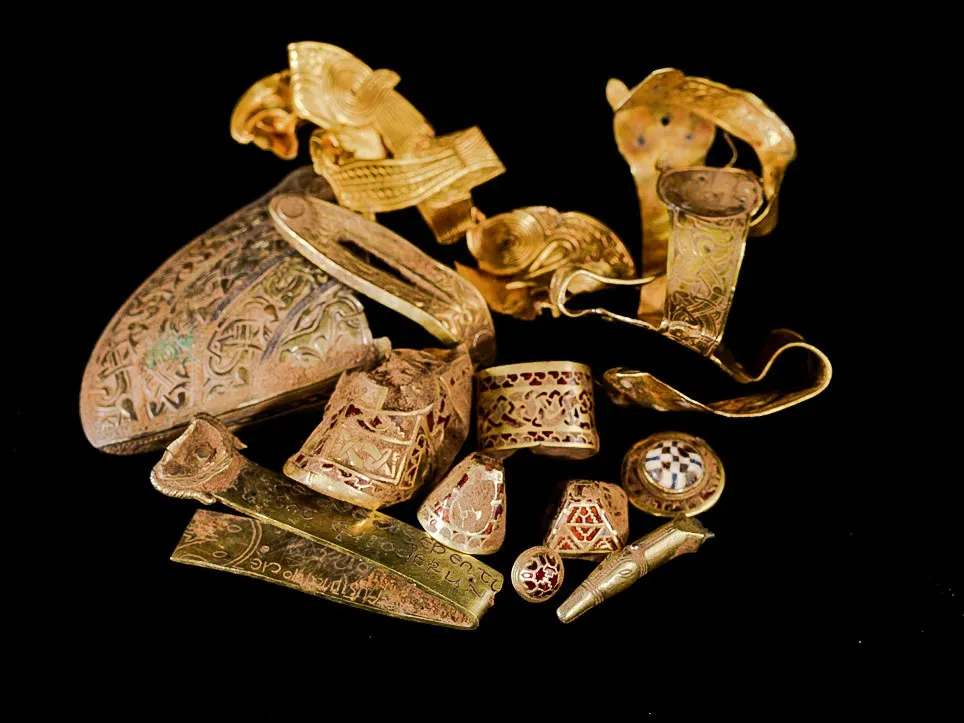
When the Staffordshire Hoard was first unveiled in 2009, the glittering gold and garnet fittings were sold as elite Anglo-Saxon battle gear. That interpretation has since been trimmed back to something quieter and stranger.
As conservators pieced fragments together and historians compared wear patterns, a consensus grew that much of this “war kit,” including the famed helmet components, was likely ceremonial or diplomatic, not everyday battlefield equipment. Metal fatigue, missing reinforcement, and sheer extravagance all point to limited-use display pieces – think royal parades or oath-taking, not muddy battlefields. The hoard is now framed as a curated deposit of elite regalia, not simply “stuff lost in a fight,” which quietly swaps a violent story for a political one. It’s still less shocking than the U-turn on #16.
#16 – The “Female Warriors” of Birka: From Shieldmaidens to Complex Gender Roles
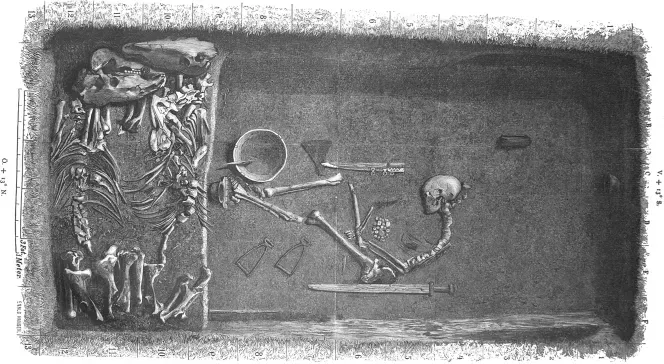
For decades, a richly furnished Viking grave at Birka, Sweden, cataloged as Bj 581, was described plainly as a high-status male warrior burial. Full stop, no debate. Then genetics crashed the party.
DNA analysis revealed the skeleton belonged to a biologically female individual buried with full warrior gear, including weapons and gaming pieces suggesting she held a command role. Rather than quietly explaining away the weapons as symbolic, many historians now describe Bj 581 explicitly as a female warrior or military leader, while debating what that meant socially. Some scholars push back hard, arguing the label is overhyped; others say that very resistance exposes decades of gender bias baked into archaeology. If you thought Viking Age gender politics was contentious, the identity shake-up around #15 is even messier.
Quick Compare
- Old label: presumed male warrior, gender assumed purely from grave goods
- New evidence: DNA sequencing confirmed a biologically female skeleton
- Old reading: weapons treated as symbolic or ceremonial only
- New reading: full command-level warrior burial, gender roles reconsidered
#15 – The “Scythian Gold” of Crimea: From National Treasure to Disputed Cultural Property
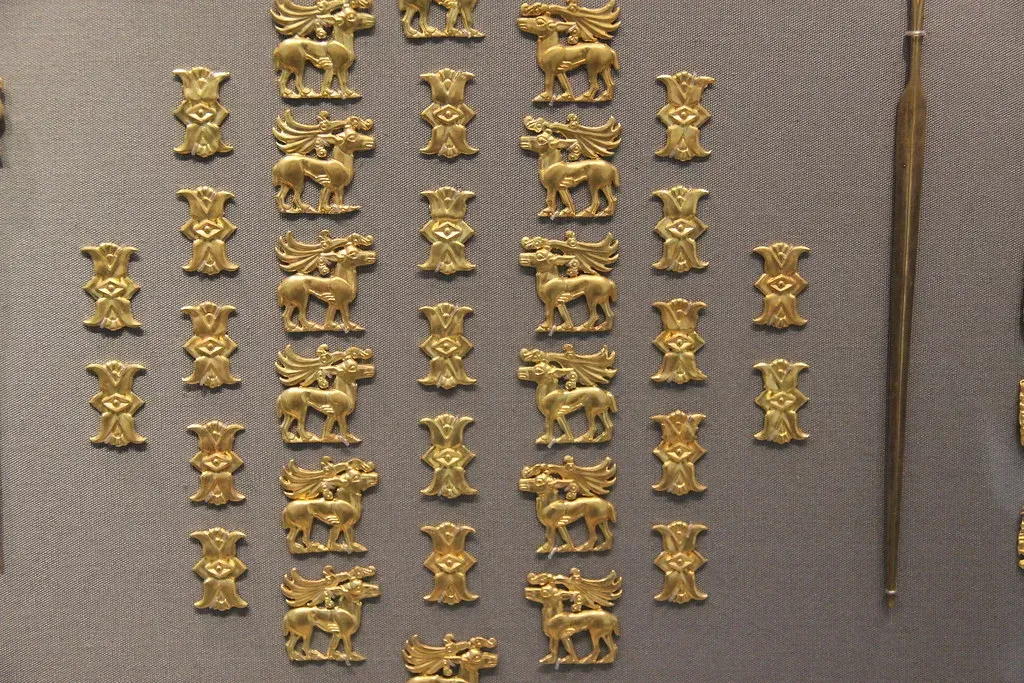
What used to be presented as straightforward “Scythian Gold from Crimea” has actually been reclassified in two separate ways. First, stylistic and chemical analysis has split pieces once lumped together as generic Scythian into distinct local workshops and time periods across the Black Sea region.
Second, and far more explosively, the collection has been relabeled by many institutions as disputed cultural property caught between Ukraine and Russia. Historians and legal experts now discuss these artifacts as part of a shifting geopolitical landscape, not just ancient nomad jewelry sitting quietly in a case. Exhibition text increasingly emphasizes the layered identities of the peoples who made them, and the modern legal battles over where they belong. Some visitors complain the politics “ruin the magic,” but it’s tame compared with the quiet, brutal reassessment of #14.
#14 – Easter Island Moai “Topknots”: From Hair Buns to Sacred Hats
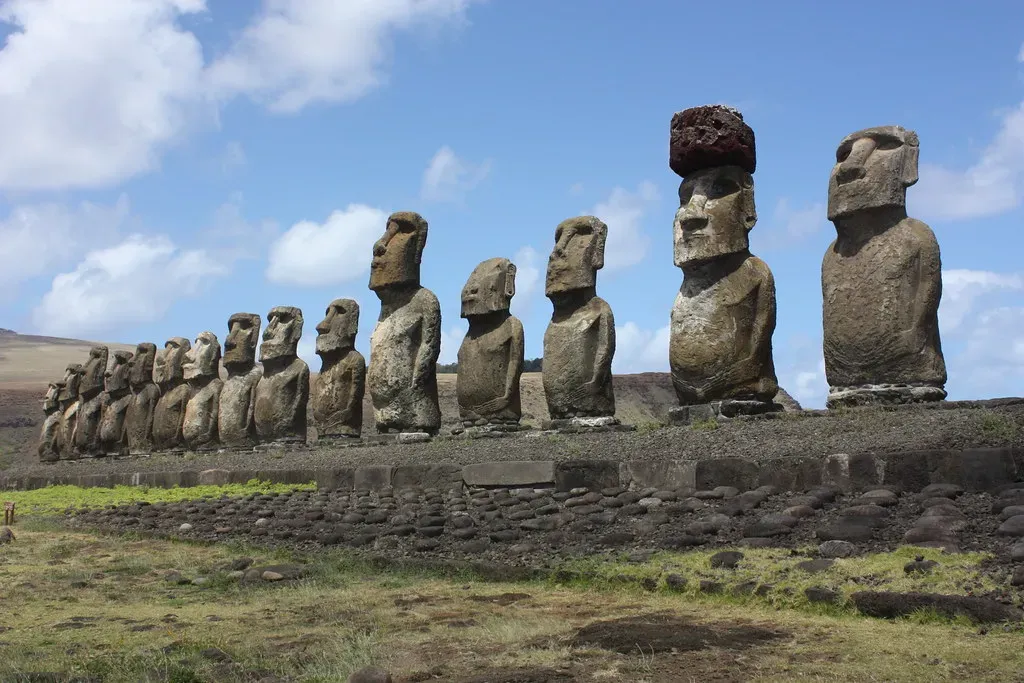
Those red, cylindrical stones balanced on top of some Easter Island moai used to get casually described as “topknots” or even “hair buns” – a guess based purely on visual similarity, nothing more.
Closer study of Rapa Nui language, oral traditions, and wear patterns has led researchers to reclassify them more carefully as pukao – distinct ritual headgear likely representing status-marking hats or headdresses, not literal hair. The difference changes how we imagine the statues entirely. Instead of frozen hairstyles, we’re looking at a codified system of regalia, with transport marks and positioning suggesting the pukao were carved and moved as their own project, sometimes at different times than the bodies below them. If that feels like overthinking, wait until you hear how much we overthought #13 for years.
#13 – The London “Roman Walbrook Skulls”: From Ritual Victims to Floodplain Casualties
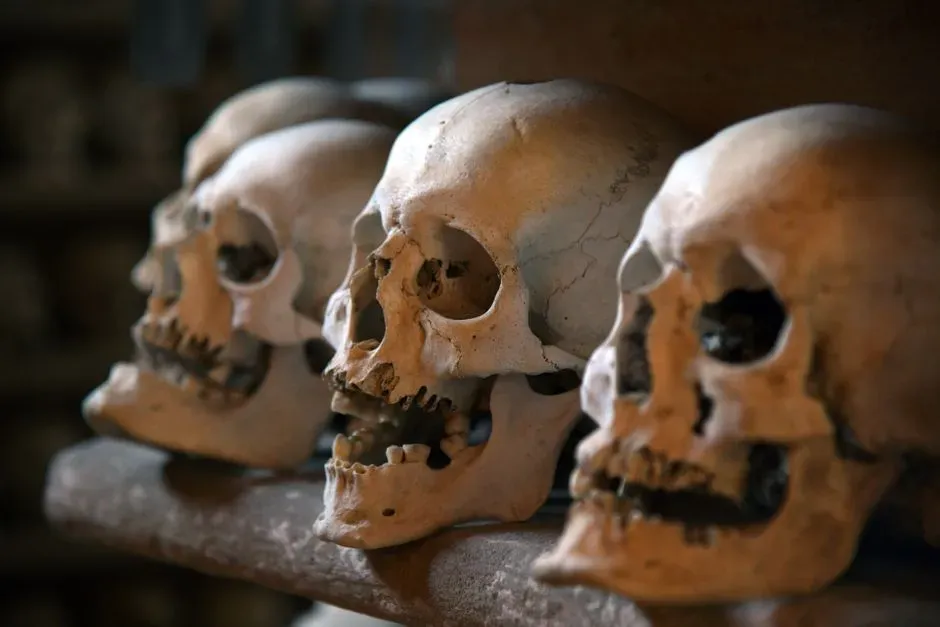
For decades, hundreds of skulls found along London’s Walbrook stream were spun into stories about Roman head cults, ritual sacrifices, and mass executions. It made for unforgettable tour-guide patter.
But as dating methods improved and site mapping got precise, archaeologists landed on a more mundane, if still grim, explanation: the skulls likely accumulated over time from disturbed cemeteries, floods, and urban reworking – not a single cult site. Fragment patterns, missing bodies, and proximity to known burial grounds all pointed toward repeated natural and human disturbance rather than ritual beheading. The “Roman skull cult” label has largely vanished from serious literature, a rare case of archaeology getting reined in by data instead of drama. And the same cooling-off is hitting #12 in a big way.
#12 – Ötzi the Iceman’s Equipment: From Survival Kit to Evidence of Social Networks
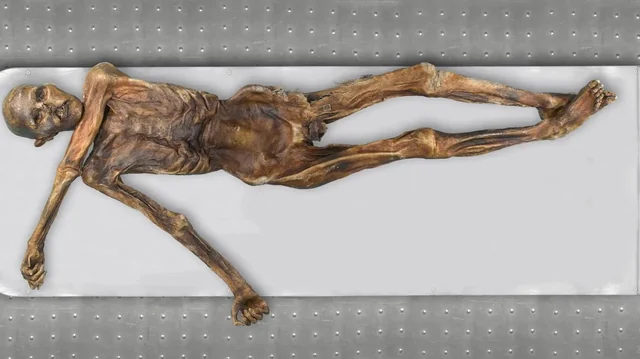
When Ötzi was discovered in 1991, most of his gear was described in lone-wolf survival terms – tools a solitary man carried into the Alps and nothing more.
Microscopic wear analysis, raw material sourcing, and residue studies have since reclassified parts of his kit as highly curated items reflecting trade, repair culture, and social ties. The copper in his axe traces back to specific ore sources; his flint tools show careful retouching patterns; even his fungi pieces look like purposeful medicinal and fire-starting resources, not random foraging. Historians now present Ötzi less as a rugged individualist and more as a node in a wider network – which quietly kills a lot of romantic myths. But the romance died even harder with #11.
#11 – The Terracotta Army: From Unique Portraits to Standardized Workshop Output
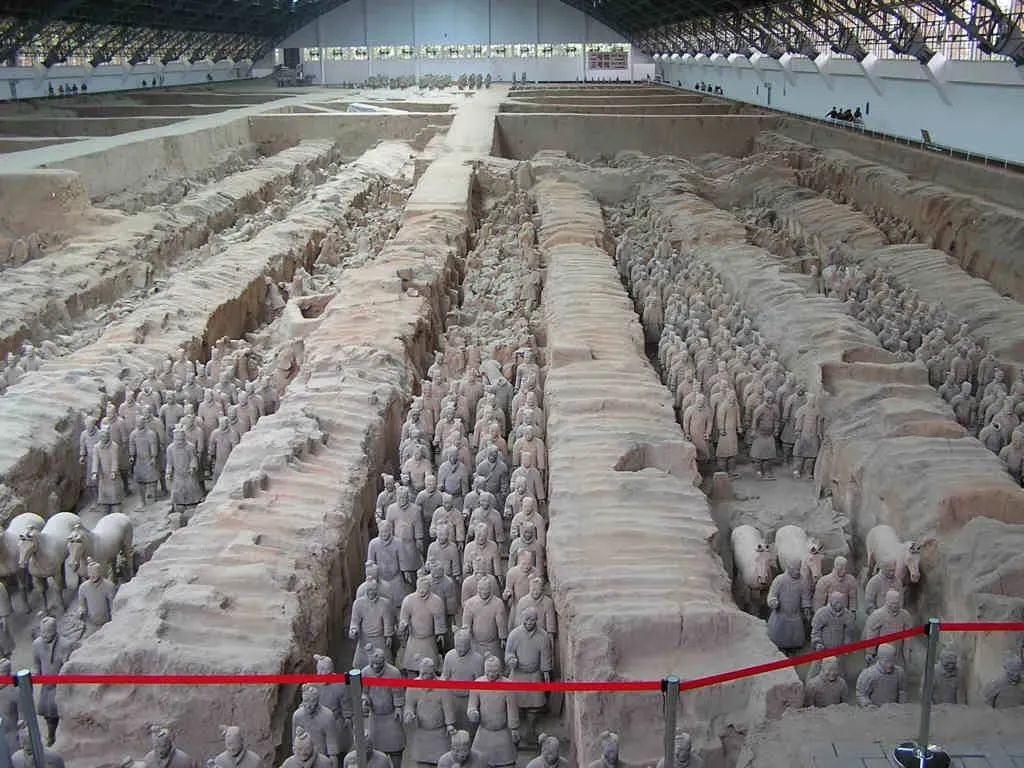
Tour guides love to say every warrior in China’s Terracotta Army is a unique portrait of a real soldier. It’s a powerful image – and recent research has heavily qualified that line.
3D scanning and statistical shape analysis show the figures were assembled from standardized molds and component sets, then customized with surface details, not sculpted individually from scratch. Historians now frame them as products of industrialized imperial workshops, with modular systems built for rapid production at scale. That doesn’t make the army less impressive – if anything, it underscores the Qin state’s terrifying logistical power. Still, plenty of people cling to the “every soldier is unique” myth because it feels more human, and they’re not going to like what’s emerged about #10.
#10 – The Grolier Codex: From Suspect Outlier to Oldest Surviving Maya Book
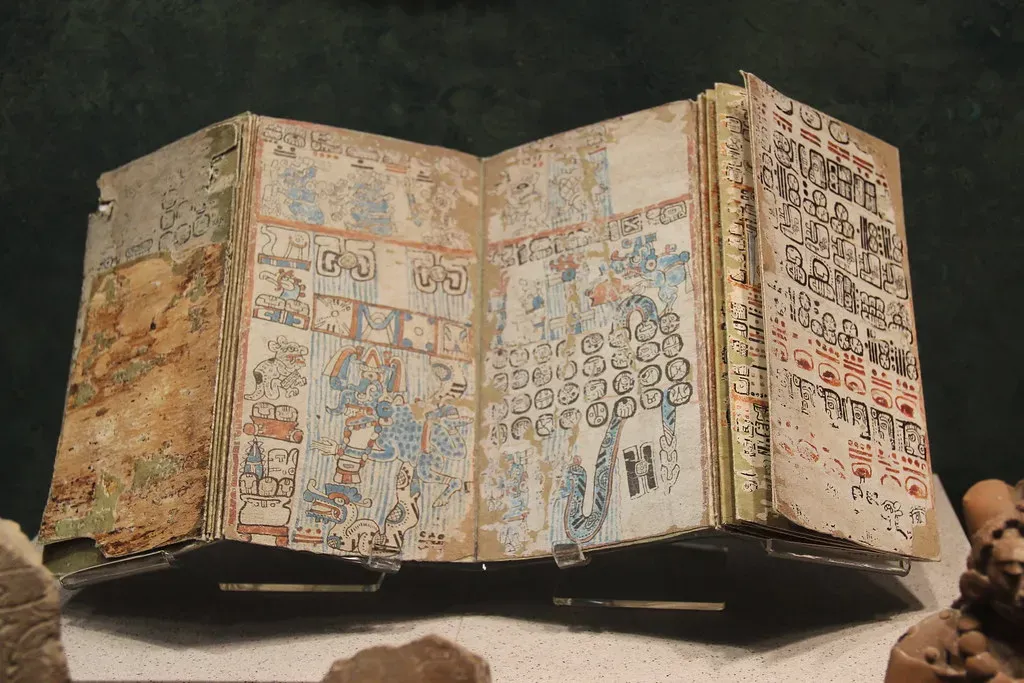
For years, the so-called Grolier Codex, later renamed the Maya Codex of Mexico, was treated with deep suspicion. Stylistic quirks and fuzzy provenance left it stuck in limbo as a “probable forgery” in many textbooks.
That has flipped completely. Radiocarbon dating, pigment analysis, and iconographic comparison have led scholars to reclassify it as an authentic Pre-Columbian manuscript, likely the oldest surviving Maya book. Instead of being an embarrassment, it’s now central evidence for Late Postclassic Maya astronomical and ritual practice, its stripped-down depictions of deities tied to Venus cycles no longer read as sloppy fakery but as accurate to its function and period. That’s a rare case of an artifact getting promoted, while #9 went the opposite way.
At a Glance
- Surfaced publicly in the 1960s, reportedly recovered from a cave in Chiapas
- Dismissed as a likely forgery for decades due to its unusual, sparse style
- Now regarded by many scholars as the oldest surviving Maya codex
- Content centers on Venus-cycle almanacs tied to ritual and astronomical timing
#9 – “Neolithic Goddesses”: From Mother Deities to Possible Everyday Figurines
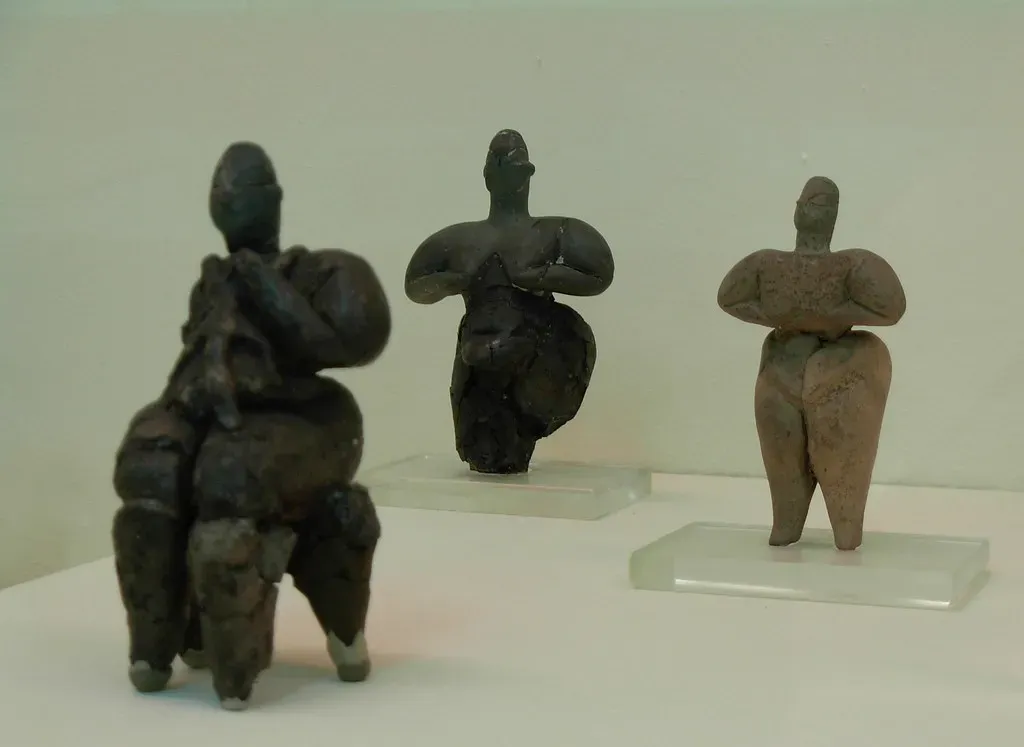
Small prehistoric female figurines, especially the so-called “Venus” types, were long interpreted as fertility or mother-goddess idols. That narrative was so popular it became almost impossible to challenge.
Over the last decade, though, a growing body of work has reclassified many of these pieces more cautiously as multifunctional objects: toys, teaching aids, ancestors, or self-representations, not automatically divine figures. Wear patterns and find-spots suggest these figurines didn’t always sit on altars – some show handling by children, others were discarded like broken household items. This has sparked fierce debate, especially among people who see the goddess interpretation as empowering, but it reflects a broader move away from over-reading ancient symbolism. And nowhere is that corrective mood stronger than with #8.
#8 – The “Priest-King” of Mohenjo-daro: From Ruler to Ambiguous Elite Figure
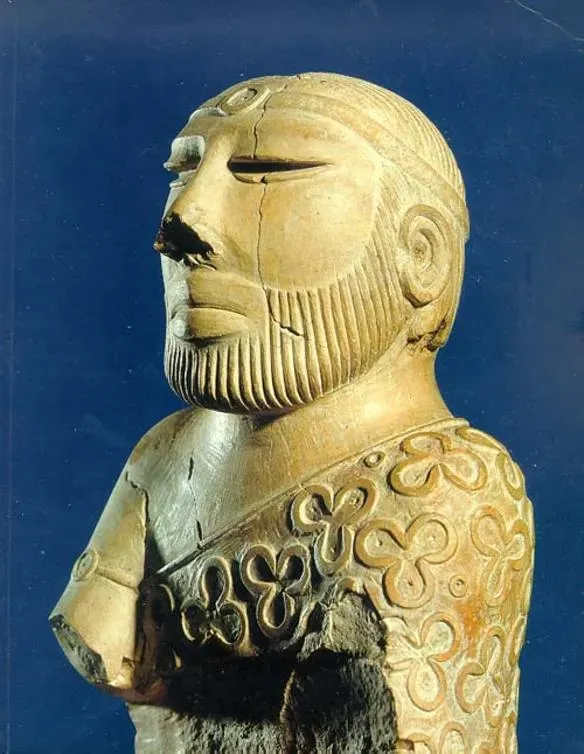
For decades, a finely carved steatite bust from Mohenjo-daro was confidently called the “Priest-King” and used in textbooks as the face of the Indus Valley Civilization’s leadership. The title was pure speculation, dressed up as fact.
Archaeologists have largely retired the “Priest-King” label, reclassifying the piece simply as an elite male figure or dignitary, with no firm evidence of kingship or priesthood attached. The rebranding matters because it exposes how colonial-era scholars projected Mesopotamian and Biblical models onto a culture whose writing we still can’t read. Cautious curators now emphasize what we actually know – intricate clothing and jewelry suggesting status, nothing more – and that same humility finally hit a famous “king” closer to home in #7.
#7 – Tutankhamun’s Dagger: From Egyptian Masterwork to Gift From the Stars
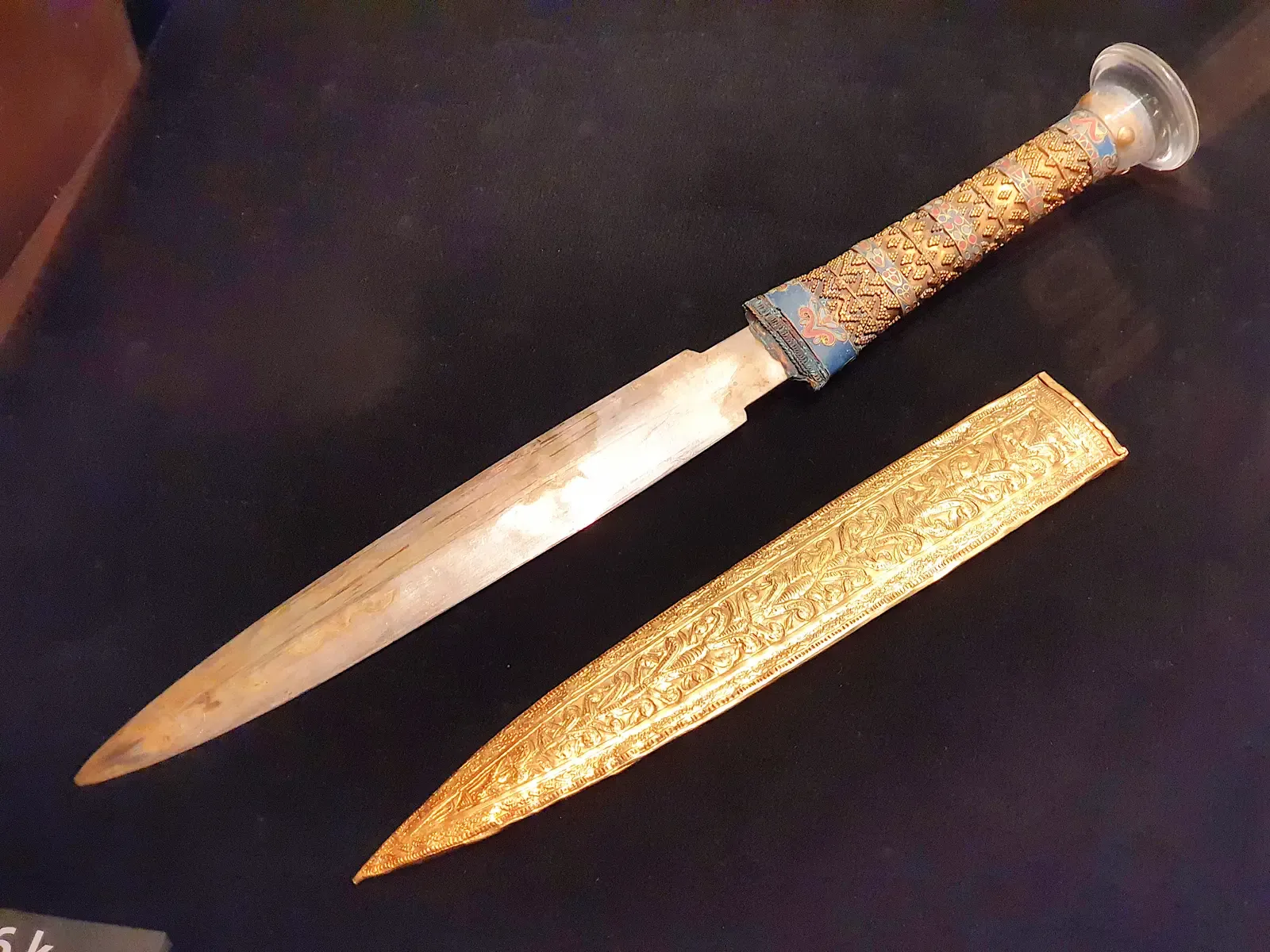
Tutankhamun’s gold-handled dagger dazzled viewers from the moment it was unearthed, automatically filed away as top-tier Egyptian luxury craft. Then material analysis rewrote the whole story.
Yes, wonderful things.
Howard Carter, on first glimpsing Tutankhamun’s tomb
Recent studies confirmed the blade is made from iron derived from a meteorite, with nickel and cobalt ratios characteristic of extraterrestrial origin. That forced a reclassification of the dagger as a meteoritic iron object, likely a diplomatic or ceremonial gift, not a routine Egyptian product. Iron was rare and symbolically loaded in 14th-century BCE Egypt, so using space rock for a royal blade hints at international exchange networks and a level of cosmological significance no one expected from “boy-king bling.” If that sounds like nitpicking, wait until you see what got dismantled around #6.
#6 – “Celtic” Artifacts in Britain: From Ethnic Markers to Style Zones
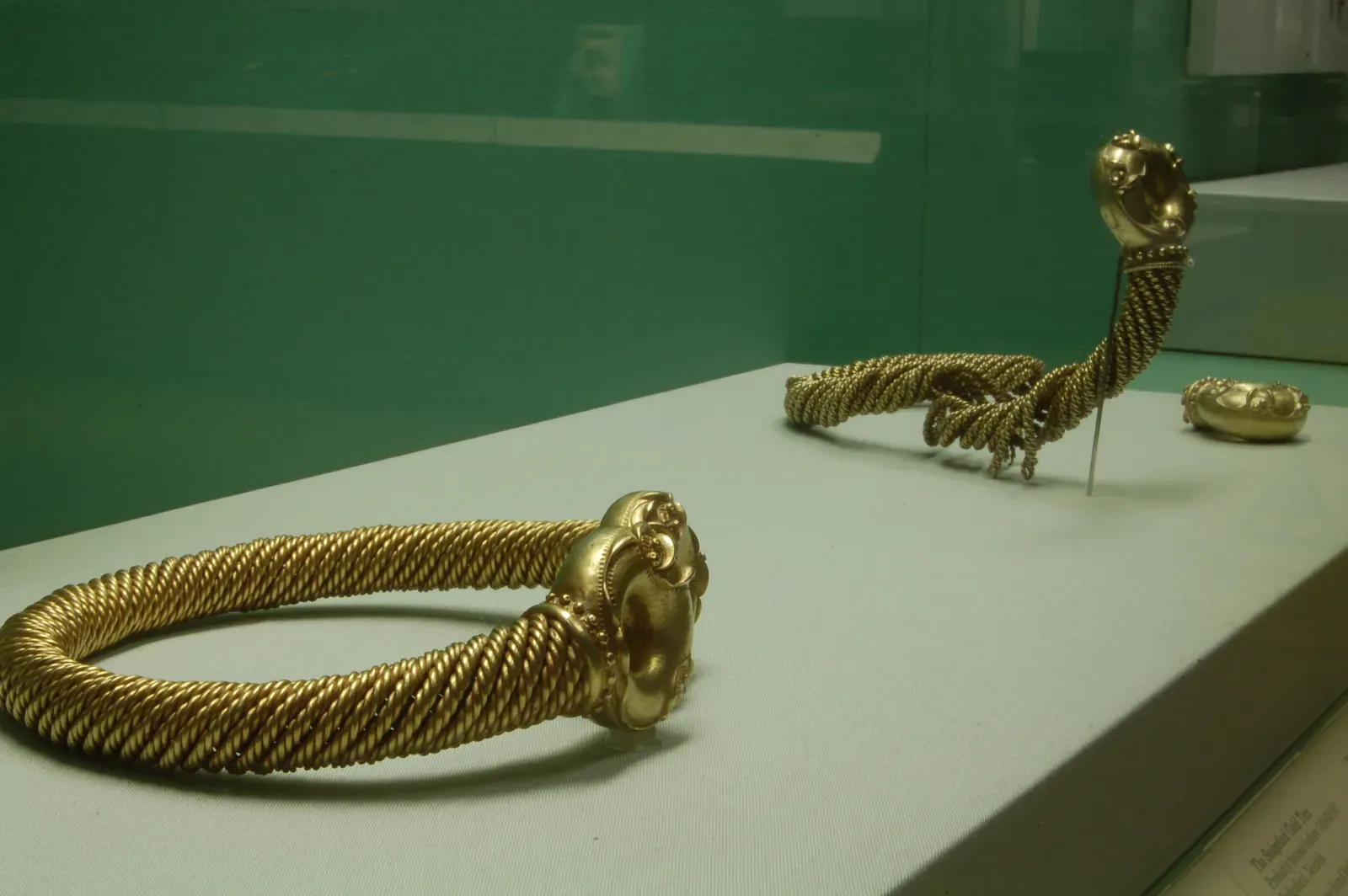
For a long time, Iron Age torcs, shields, and metalwork in Britain got casually labeled “Celtic,” as if they mapped directly onto one clearly defined people. That assumption has been quietly dismantled.
Historians and archaeologists have steadily reclassified many of these objects as expressions of La Tène-style art and regional identities, rather than simple ethnic badges. The word “Celtic” hasn’t vanished, but serious scholarship now treats it as a cultural umbrella, not a precise tribe label – artifacts once used to “prove” a Celtic invasion are now discussed as part of messy, broader Atlantic networks of fashion and technology. Museum labels increasingly say “Iron Age communities in Britain and Europe” instead of “the Celts,” a shift some nationalist narratives absolutely hate. Yet it pales beside the uncomfortable rethinking of #5.
#5 – Human Remains in Old Museum Collections: From Specimens to Ancestors
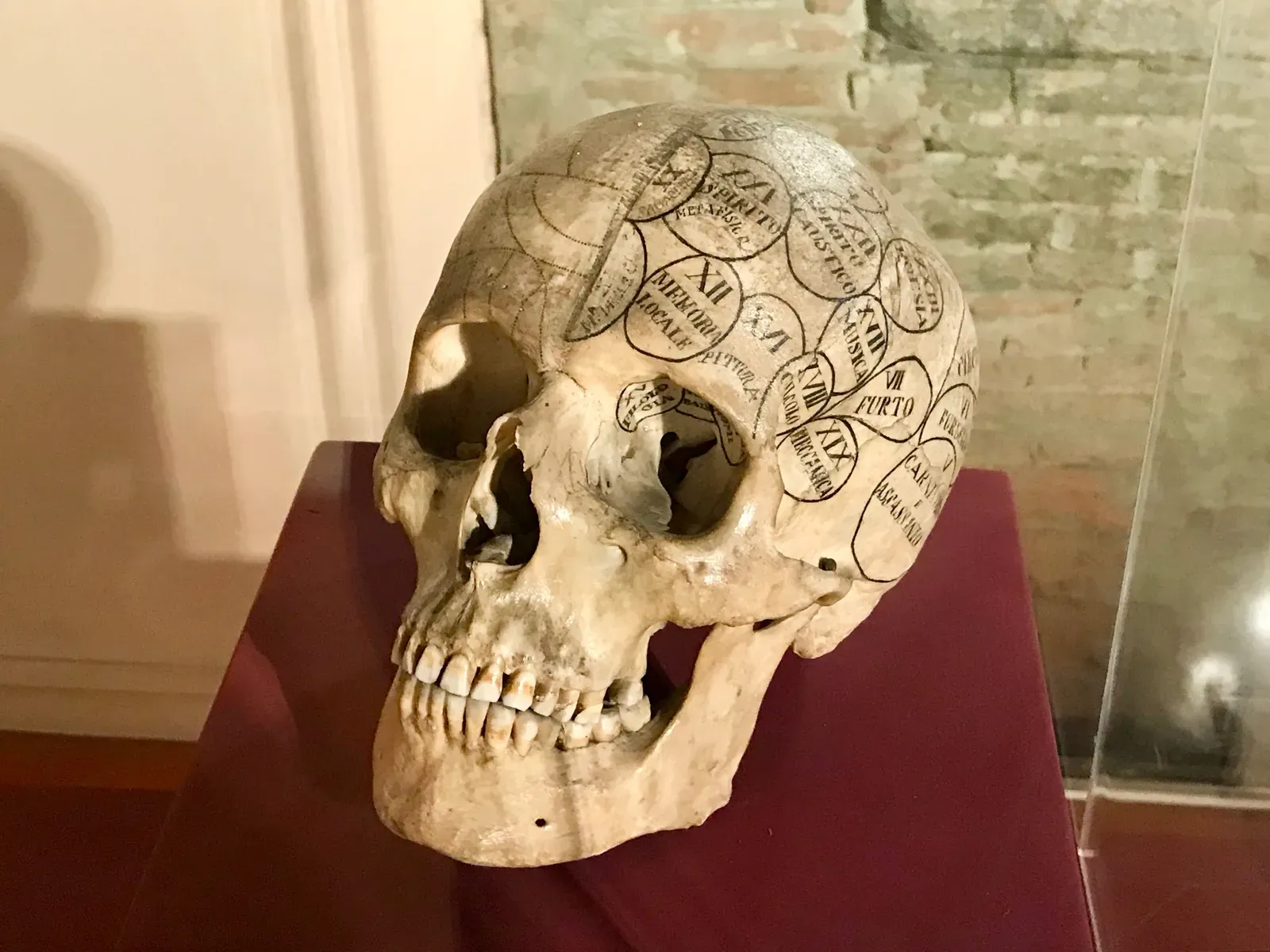
It sounds obvious now, but for over a century, many museums classified human remains – especially skulls taken from colonial contexts – as “scientific specimens.” That language has been aggressively challenged over the last decade.
Numerous institutions now explicitly reclassify these remains as ancestors, individuals, or human remains requiring ethical care and, in many cases, repatriation, not just data points on a shelf. This isn’t cosmetic – it means restricted access, new storage protocols, and collaboration with descendant communities, sometimes complete removal from public display. Critics complain that “politics” is interfering with research, but the old specimen label was hiding an ugly history of racial science and grave-robbing. And that same logic is now being turned on seemingly innocent objects like #4.
#4 – “Roman” Artifacts That Are Actually Medieval or Modern Intrusions
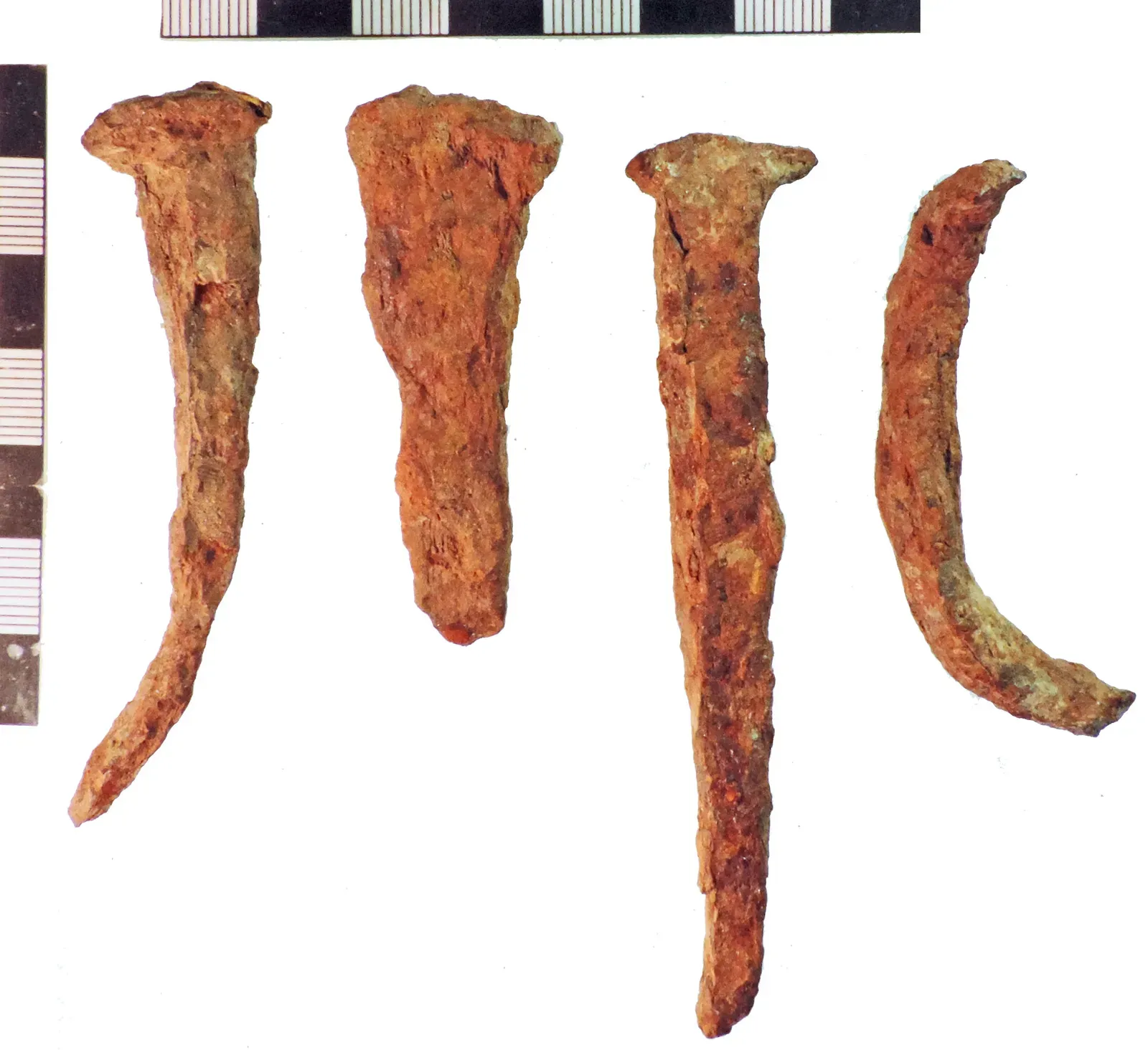
On classic European sites, the temptation to call anything found in a Roman layer “Roman” used to be overwhelming. Better stratigraphy and radiocarbon dating have led to a wave of quiet corrections over the last decade.
Numerous artifacts once confidently tagged as Roman have been reclassified as intrusive medieval, post-medieval, or even 19th-century items that slipped into earlier layers – everything from nails and pottery to the occasional metal object that fooled early excavators. This usually happens in technical reports, not press releases, which is why the public rarely hears about it, but it fundamentally changes site timelines and occupation density maps. It’s a humbling reminder that even professional archaeologists can be biased toward exciting dates. And that humility reaches a pinnacle in the story of #3.
Worth Knowing
- Common intrusions include later-period nails, coins, pottery sherds, and small metal fittings
- Corrections typically surface in technical excavation reports, rarely in public announcements
- Revised dating can shift an entire site’s occupation timeline by centuries
- The bias toward “exciting” Roman dates has skewed public site narratives for generations
#3 – The “Oldest” Cave Art: From Fixed Champions to Moving Targets
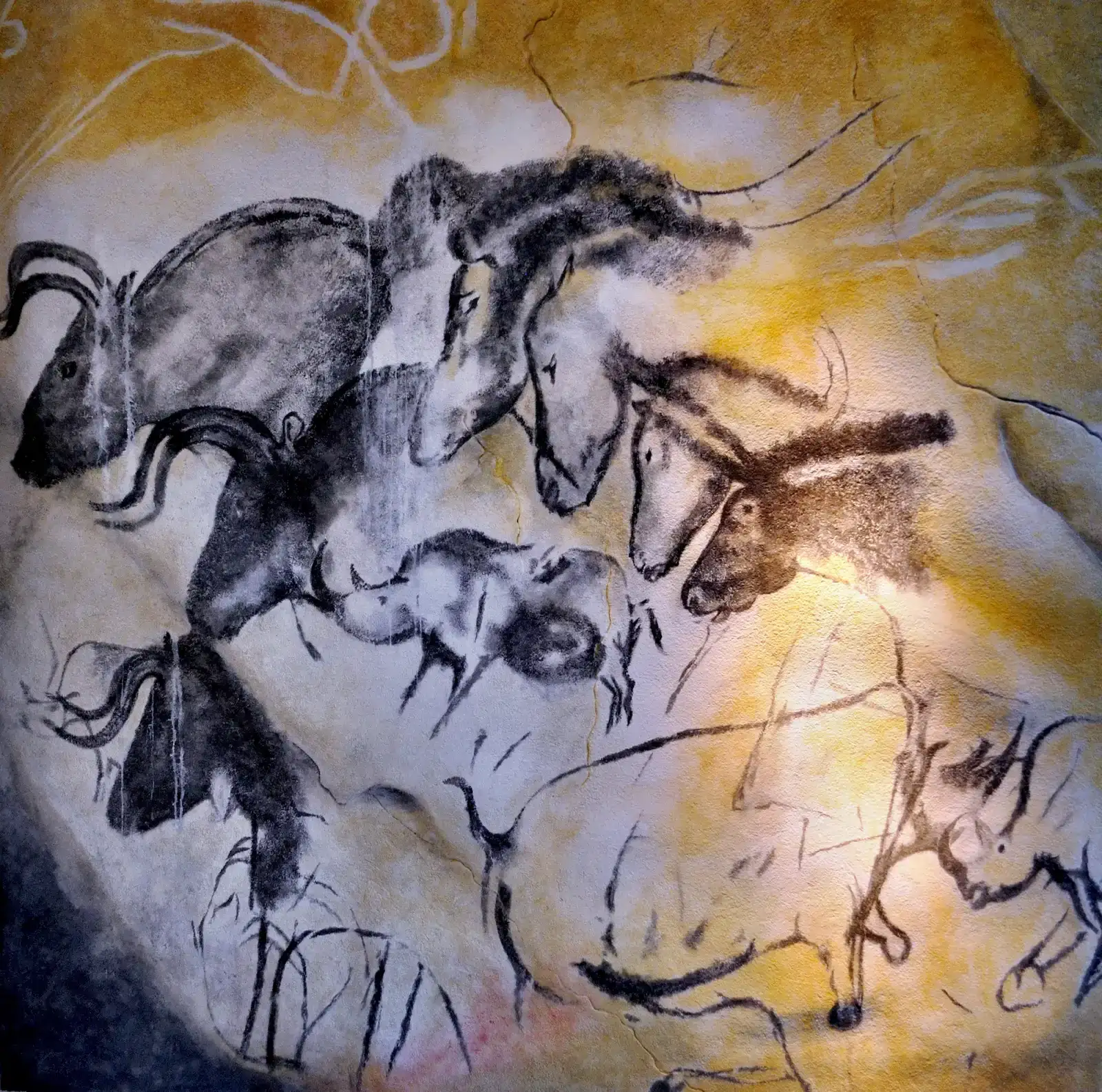
For years, certain caves – Chauvet in France, El Castillo in Spain – were marketed as housing “the oldest cave paintings in the world,” full stop, end of discussion.
Improvements in uranium-thorium dating and re-evaluation of calcite layers have repeatedly reshuffled which sites currently hold the “oldest” title, forcing historians to reclassify several artworks from record-holders to simply “very early examples.” Rather than fixating on a single champion cave, many specialists now prefer to talk about regional traditions of early symbolic behavior, since some “younger” markings turned out older once their overlying deposits got re-analyzed. Public exhibits lag way behind this churn, which is why people still repeat outdated superlatives. Surprisingly, the artifact that best captures this new caution might be #2.
#2 – The “World’s Oldest” Known Writing Samples: From Singular Origins to Parallel Experiments
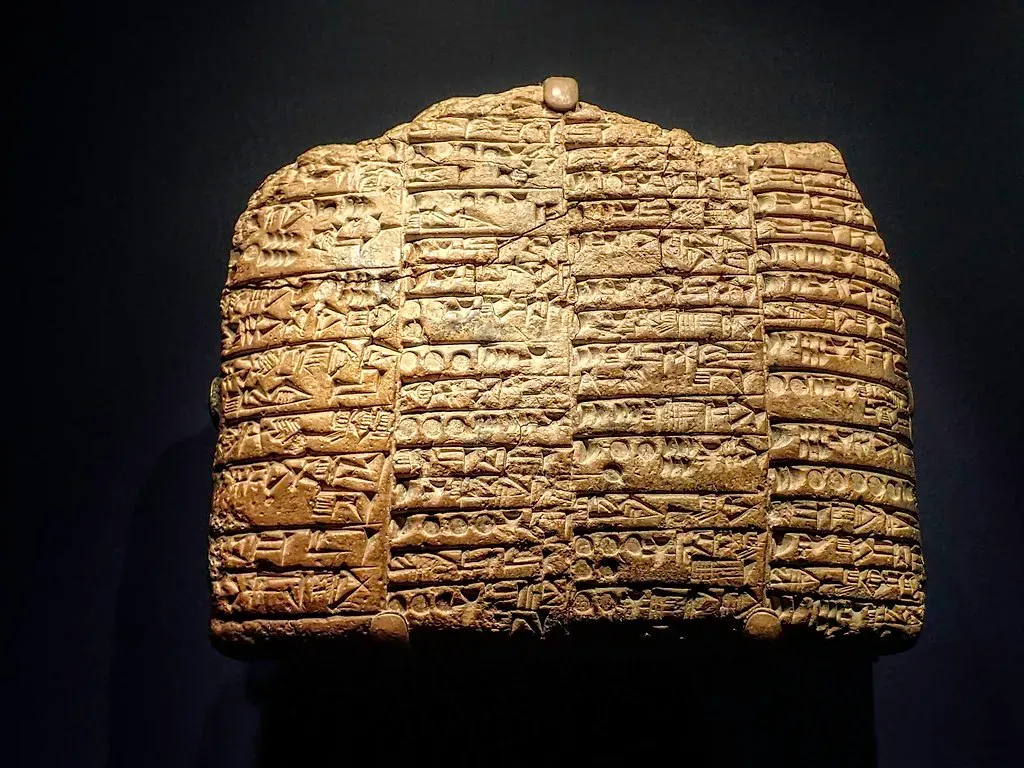
Textbook stories used to favor one single origin point for writing – usually Sumerian cuneiform, with Egyptian hieroglyphs trailing a distant second. That tidy story has gotten a lot messier.
Re-dating of early tablets, seals, and inscriptions has nudged historians toward a more complex picture, with several candidate artifacts once touted as the oldest writing reclassified as among the earliest known examples of emerging notation systems, part of parallel experiments in Mesopotamia, Egypt, and even early Chinese contexts. Some items once described as fully developed writing are now framed as proto-writing or accounting marks once their context is reconsidered – which doesn’t make them less important, just less “first.” Which brings us to #1, a case where historians didn’t just tweak a label. They basically admitted we told the wrong story for a century.
#1 – The Paleolithic “Spear-Thrower” That Was Actually a Sewing Tool
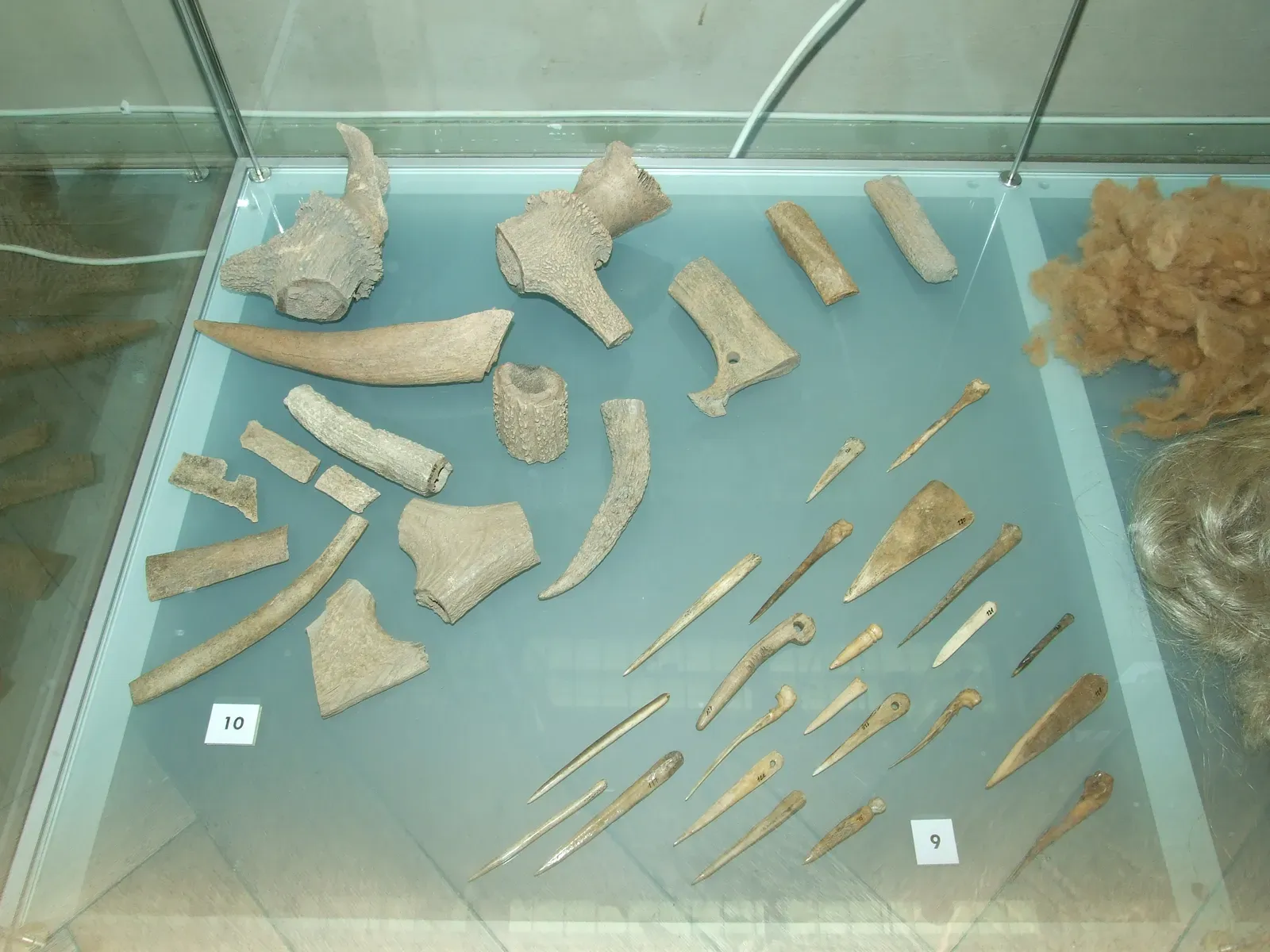
In Ice Age collections across Europe, beautifully carved bone and antler pieces were long classified as spear-throwers or hunting weapons, partly because early archaeologists prioritized male hunting narratives above almost everything else.
Micro-wear analysis and experimental archaeology have overturned several of these identifications, showing that some famous “weapons” actually function far better as textile or hide-working tools – needles, shuttles, or cordage aids. One especially telling case: an object with a decorative animal motif, displayed for decades as a spear-thrower, has been reinterpreted as part of a complex sewing or net-making toolkit, since its polish patterns and breakage lines simply don’t match projectile use. This isn’t just a technical correction – it moves key artifacts from the domain of heroic hunting into painstaking craft, often associated, rightly or wrongly, with women’s work. That single reclassification exposes how gender bias shaped our entire reading of prehistory.
Why It Stands Out
- Identity flipped through polish patterns and breakage lines, not new discoveries
- Shifts the object from a hunting weapon to a domestic craft tool
- Directly challenges a century of male-centric assumptions in prehistoric archaeology
- Encourages a fresh look at similar “weapons” still on display elsewhere
The Bottom Line
Across these 21 cases, the pattern is brutal: when better data arrives, cherished stories die. Objects once sold as heroic weapons, sacred idols, or neat “firsts” keep getting quietly reclassified into something messier – gifts, fakes, diplomatic trophies, household tools, or ethically contested loot.
The most honest historians now treat big labels – “oldest,” “first,” “goddess,” “warrior” – as hypotheses, not truths. That’s uncomfortable if you want museums to feel like temples of certainty, but it’s healthier for history in the long run. The real scandal isn’t that experts change their minds; it’s how slowly those changes reach the public, while exhibition text, schoolbooks, and viral listicles keep recycling debunked stories because the drama sells better than the correction. If anything here surprised you, ask yourself: which other artifacts are we still getting wrong – and which one would you reclassify first?