
You probably wake up, grab your phone, scroll a bit, drink some coffee, and call that being “conscious.” But what if that everyday, slightly distracted, slightly stressed state you live in is closer to a fog than to full clarity? Across cultures and centuries, spiritual traditions have basically whispered the same scandalous idea: the way you normally experience yourself and the world is not the peak of awareness but a kind of halfway point. What’s new, and honestly pretty thrilling, is that tools like brain imaging, neurochemistry, and sleep science are now starting to give you a way to test parts of this for yourself. You no longer have to choose between “mystical” belief and hard-nosed science; you can look at what your brain actually does in different states, and compare it to what meditators, mystics, and shamans described long before anyone knew what a neuron was. You might not walk away convinced that enlightenment is a lab variable, but you may start to suspect your default mode is not the whole story.
Spiritual Traditions Keep Saying the Same Wild Thing
If you zoom out across history, you see a pattern that’s hard to ignore. In Indian yoga and Buddhism, you’re told ordinary thoughts are like waves on the surface of a much deeper mind, and that real insight arrives when those waves settle. In Christian mysticism, you’re pointed toward states of contemplative prayer that feel more vivid and real than everyday busyness. Indigenous traditions emphasize trance, vision quest, and ceremony as ways of shifting into an awareness that feels more connected and less ego-bound. When you look at these teachings side by side, you see a family resemblance: your everyday, chattering, self-focused consciousness is treated as limited, noisy, and incomplete. Higher states are described as calmer but more awake, less self-centered but more precise, more loving yet oddly impersonal. The languages and symbols differ, but the underlying claim is remarkably consistent: the “you” that rushes through the day on autopilot is not the final version of you.
Neuroscience Already Knows Your “Normal” Mind Is Weirdly Limited
Before you even talk about altered states, it helps to admit this: your normal waking consciousness is full of blind spots. Your visual field is missing a chunk where the optic nerve enters the eye, but your brain fills it in so smoothly you never notice. Your attention can be so focused you literally fail to see something obvious right in front of you, a phenomenon researchers call inattentional blindness. You think you see a complete, objective world, but you’re actually experiencing a stitched-together best guess. That alone should make you suspicious of the idea that “how you usually see things” equals “how things really are.” Your brain is constantly filtering, editing, and compressing reality to keep you functional and not overwhelmed. From that angle, it becomes less strange to imagine there might be qualitatively different modes of awareness available to you – modes that loosen some filters, alter priorities, or quiet certain brain networks so other patterns can emerge.
The Brain’s Default Mode Network and the Story of “You”
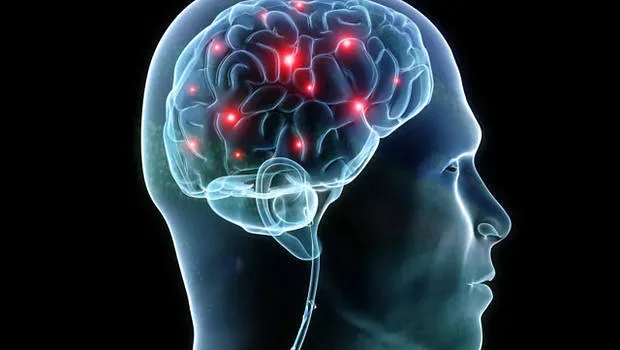
One of the most important discoveries for this whole conversation is something called the default mode network, often shortened to DMN. When your mind wanders, when you replay old conversations, when you imagine your future self, this network – linking several brain regions – lights up. It is heavily involved in constructing your inner narrative: the ongoing story about who you are, what others think of you, and how you fit into the world. What’s fascinating is that many contemplative practices and some altered states are associated with decreases in activity in this network. In plain language, when meditators report a quieter, less self-centered awareness, you can sometimes see less DMN activity to match that. You might experience this as less rumination and more presence, less “me, me, me” and more “just this.” From the spiritual angle, this looks a lot like the age‑old claim that a less clingy sense of self opens the door to clearer perception.
Meditation: From Sacred Practice to Brain Training Lab

If you sit still, follow your breath, and keep doing that for weeks and months, something measurable starts to happen. Brain scans of people with long-term meditation experience often show changes in attention-related networks, emotional regulation circuits, and in some cases even structural differences in regions linked to awareness and self-control. You’re not just feeling calmer; your brain is literally wiring itself to stabilize attention and dampen reactivity. From the inside, you may notice that your thoughts feel less sticky, your sense of “I” less cramped, and your awareness more panoramic. Spiritual traditions will tell you this is the beginning of tasting a higher state; neuroscience will tell you your brain is reducing noise and improving signal in systems that track sensation, emotion, and thought. You do not have to buy mystical language to appreciate that you can learn to inhabit a different quality of consciousness than the one you defaulted into as a teenager.
Dreams, Lucid Dreams, and the Edges of Waking Reality

Every night, your brain proves it can produce entire worlds with their own logic, physics, and emotional weight. During dreaming sleep, especially rapid eye movement sleep, areas involved in emotion and imagery ramp up, while regions needed for self-monitoring and logical control often quiet down. You experience vivid realities that feel utterly convincing until you wake up and shake your head at how bizarre they were. Lucid dreaming – when you realize you’re dreaming while still inside the dream – shows that even this isn’t the limit. In lucid dreams, certain frontal regions linked to meta-awareness can become more active again, while the dream world continues. You can sometimes influence the scene, change your behavior, or explore fears from a place of curiosity. This is not exactly the “higher consciousness” of spiritual literature, but it is a clear, personal demonstration that your waking state is just one configuration among many that your brain can support.
Psychedelics, Ego Dissolution, and the Question of Insight

Psychedelic substances are controversial, but scientifically they have offered a powerful way to probe altered states of consciousness. Under carefully controlled conditions, people sometimes report experiences of ego dissolution, deep emotional catharsis, and a sense of unity or connection that feels more real than ordinary life. Brain imaging during these states often shows reduced activity and reduced tight coordination in the default mode network, alongside increased communication between regions that usually do not “talk” as much. You can look at this in at least two ways. Skeptically, you might say the substances are just disrupting normal brain function, producing hallucinations and emotional storms that feel meaningful but are not. More generously, you might see them as temporarily silencing rigid patterns and opening a window where new perspectives and insights can arise. Even if you never touch these substances, the research hints at a broader truth: your sense of self and world is surprisingly malleable, and it may be possible to intentionally move toward more flexible, less self‑trapped ways of being.
Flow States: When You Quiet Down and Life Sharpens

You’ve probably had at least a glimpse of a flow state, even if you did not call it that. Maybe you were so immersed in playing music, rock climbing, writing, or even a fast-paced game that time seemed to warp and your usual self-talk dropped away. People often describe these moments as effortless and deeply satisfying, despite the fact that they are often performing at a very high level of skill and focus. When researchers look at the brain in flow, they often see a mix of heightened task-related activity and dialed-down self-referential chatter. The noisy commentator in your head steps back so that perception, action, and feedback loop quickly and cleanly. That does not make flow some ultimate mystical state, but it does show you a direction: as your inner story relaxes, your sense of presence, connection, and aliveness can intensify in ways that feel both ordinary and extraordinary at the same time.
What This Means for You and How You Might Explore It

So where does this leave you, standing in your kitchen or scrolling on a train, wondering if any of this actually matters? The big takeaway is not that you should chase fireworks or label every odd feeling a spiritual revelation. It is that your usual sense of “this is just how I am, this is just how the world is” is more like a habit than a law of nature. Both spiritual traditions and modern neuroscience converge on the idea that you can train, refine, and broaden your awareness. In practical terms, that might mean you commit to a simple daily meditation practice, pay more attention to your dreams, or notice when you drop into flow and what conditions help it happen. You could choose to treat your mind less like a fixed operating system and more like a musical instrument you can learn to tune. You may never know whether the highest states described by mystics are fully reachable for you, but you can absolutely verify this for yourself: ordinary waking consciousness is not the only way you can be awake. And now that you know that, how do you really want to spend your time in this one wild, precious awareness you’ve been given?