
Most people still believe their brain works like a hard drive, quietly filing away every birthday, breakup, and fender-bender in perfect, permanent detail. It doesn’t. For decades, psychology classrooms taught a tidy, comforting version of memory – and neuroscientists have since walked away from almost all of it. No headlines. No retractions. Just a slow, awkward retreat from ideas that never survived the data.
Textbooks got quietly revised. Professors swapped out old slides. And almost nobody outside a research lab ever got the memo. What’s left is a gap between what you were taught in tenth-grade psychology and what memory scientists actually believe today – and some of that gap is genuinely unsettling. Here’s what changed, one myth at a time.
#13 – Your Brain Never Recorded Anything In the First Place
For a century, the go-to metaphor was simple: your brain is a camera, and memory is the footage sitting on the tape, waiting to be replayed. It’s a comforting idea. It’s also completely wrong, and no serious memory lab in the world still teaches it that way.
Memory is an active, creative, reconstructive process, prone to real errors and biases every time it fires. Researchers trace this back to British psychologist Frederic Bartlett, whose 1932 experiments first showed that people don’t play back the past – they rebuild it from fragments, filling gaps with assumption and expectation. Elizabeth Loftus later proved the same thing with decades of false-memory experiments, and it’s now considered settled science.
Memory, like liberty, is a fragile thing.
Elizabeth Loftus
#12 – Left-Brain, Right-Brain Memory Is Basically Fiction
You’ve heard it a thousand times: creative people run on their right brain, analytical people run on their left. It sounds like science because it grew out of real, Nobel-winning research from the 1960s. Memory researchers stopped teaching it years ago anyway.
A 2013 review using MRI scans on 1,011 people found no proof that either hemisphere dominates personality or thinking style the way the myth claims. Your hemispheres aren’t rival departments – they’re constant collaborators, wired together through the corpus callosum. Every memory you form, recall, or lose involves both sides firing together, never one side doing the heavy lifting alone.
#11 – “Photographic Memory” Almost Certainly Doesn’t Exist

Somewhere along the way, pop culture convinced everyone that a rare few people can mentally photograph a page and recall it perfectly years later. It’s a great plot device. It’s just not real, and scientists quietly stopped teaching it as a legitimate phenomenon.
A 2016 literature review concluded there is “a lack of compelling evidence that eidetic memory exists at all among healthy adults, and no evidence that photographic memory exists.” What people actually have are trained mnemonic tricks, rare autobiographical recall, or plain old exaggeration. Mnemonists, savants, memory athletes, and people with highly superior autobiographical memory all get lumped into one “super-memory” myth – but they’re four completely different abilities, none of which involve an actual camera in the skull.
#10 – “Repressed Memories” Were Built on Shakier Science Than You Think

For decades, therapy culture assumed the brain could bury traumatic memories so deep that only hypnosis or guided imagery could dig them back up. Plenty of clinicians still lean on that assumption. The scientific footing underneath it has crumbled.
Outdated beliefs about memory helped popularize suggestive interventions like repeated prompting, guided imagery, and hypnotic age regression – all aimed at recovering memories that may never have been “lost” to begin with. Memory researchers now argue traumatic events are usually remembered too well, not conveniently erased. That single reversal flips the entire premise of repressed-memory therapy on its head.
#9 – Eyewitness Errors Don’t Mean ALL Memory Is Unreliable

Because courtroom eyewitnesses get things wrong so often, an entire generation was taught that human memory in general can’t be trusted. That’s a mistake – and it’s the kind of correction that makes courtrooms uncomfortable.
Eyewitness testimony usually relies on remembering fleeting, unexpected events glimpsed in the periphery, with no reason to pay close attention until the moment turns out to matter. The failure isn’t memory decay – it’s the selectivity of attention and encoding in the moment itself. Extensive research actually supports the accuracy of long-term memory for personal experiences and major emotional life events, which is the half of the story most people never hear.
#8 – The “Memory Palace” Isn’t the Magic Trick You Were Told
Ancient orators supposedly used the “method of loci” to memorize entire speeches by mentally walking through a familiar building. For years this got taught as either a legend or a party trick. It’s neither – but it’s also not the guaranteed superpower influencers sell online.
A meta-analysis of 13 randomized clinical trials found a clear, real benefit for people who used the technique to memorize lists. The catch: almost every study was run on young psychology students. Only a tiny handful of trials have ever tested it in older adults, so the confident “this rewires anyone’s memory at any age” claim was oversold from the start.
#7 – Forgetting Isn’t a Glitch. It’s a Feature.
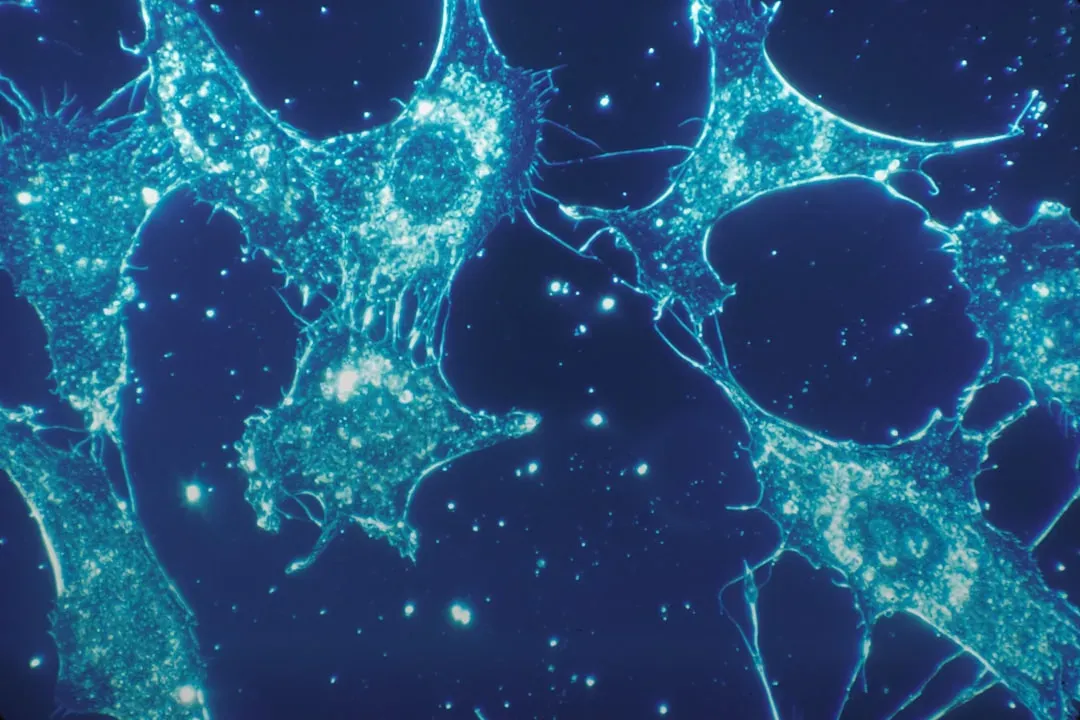
Old-school memory science treated forgetting like a system failure – a leaky bucket losing information it should have kept forever. That framing has quietly been abandoned by the people who study memory for a living.
Forgetting may actually be a functional feature of the brain, letting it interact dynamically with a constantly changing environment. Researchers formally identified a process called intrinsic forgetting in 2017, involving a specific set of cells scientists casually nicknamed “forgetting cells” because their entire job is degrading old memory traces. Losing your third-grade locker combination isn’t your brain failing you – it’s your brain doing exactly what it evolved to do.
Fast Facts
- Intrinsic forgetting was formally identified as its own brain process in 2017.
- “Forgetting cells” have one job: actively degrading old memory traces.
- Forgetting is now framed as adaptive housekeeping, not a system malfunction.
#6 – “You Can’t Teach an Old Brain New Tricks” Is Officially Retired
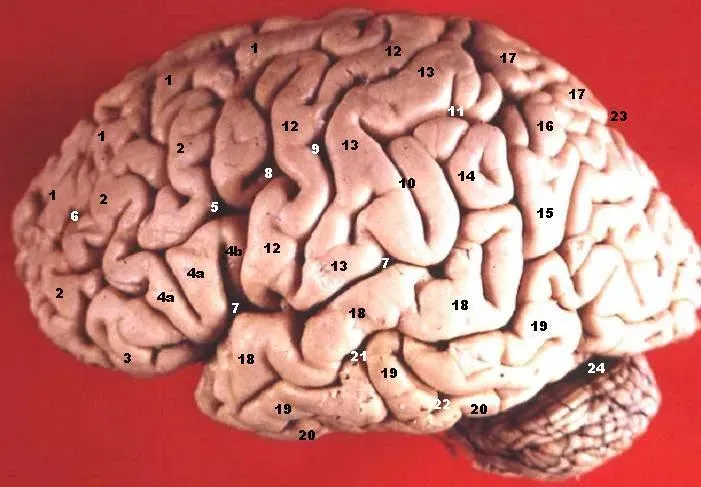
Neuroscience used to teach that plasticity – the brain’s ability to rewire itself – peaked in childhood and flatlined by adulthood. For years, that idea shaped how people talked about learning a language or an instrument later in life.
Modern longitudinal studies have chipped away at that belief so consistently it’s no longer taught as fact in serious neuroscience programs. Unlike a machine, your brain retains the capacity to grow and change throughout your entire life, shaped continuously by experience and habit. That’s a hard pill for anyone who’s ever used “I’m too old” as the reason to quit something new.
#5 – There’s No Single “Memory Vault” in Your Brain
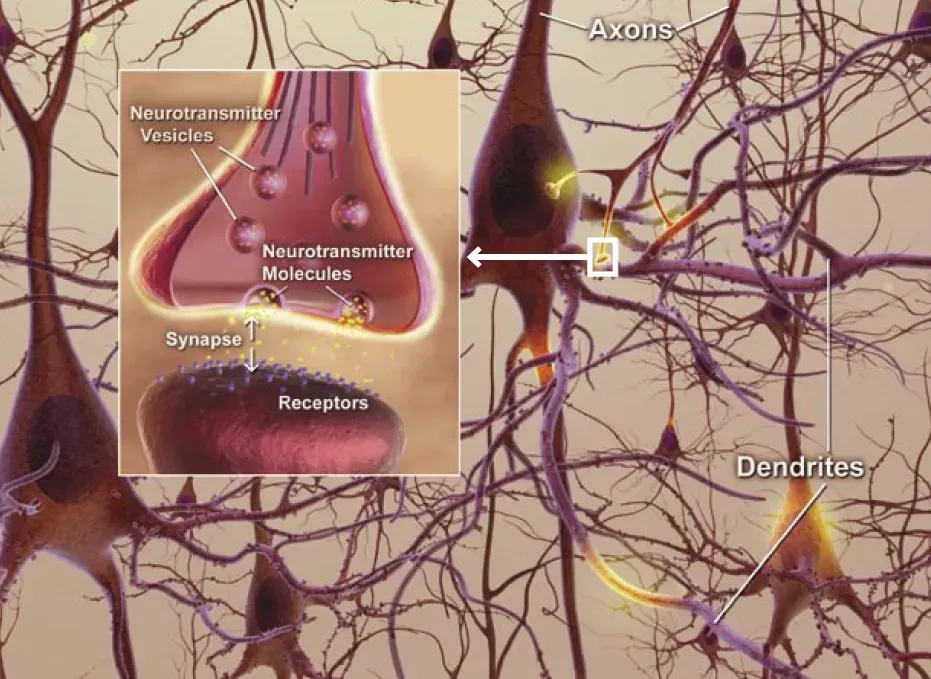
Older textbooks implied memory lived in one tidy location – find the spot, find the memory. That model has been replaced by something far messier, and honestly far more interesting.
Competition between engrams affects what you recall, and a forgotten memory trace can be reactivated by natural or artificial cues, then updated with new information layered on top. The constant flow of new experience means multiple engrams are always competing for consolidation at once. Your memories aren’t filed away peacefully – they’re on a crowded stage, and only the loudest, most reinforced ones keep the spotlight.
Worth Knowing
- Memories exist as “engrams” – traces distributed across brain networks, not one filing cabinet.
- Old engrams can be reactivated by cues and updated with new information on the spot.
- Multiple engrams compete for consolidation at once, so the most reinforced memory wins the spotlight.
#4 – “Learn It Well Enough and You’ll Never Forget It” Was Oversold

Generations of students were told that if you study hard enough, a memory becomes permanent – locked in forever, immune to time. That promise doesn’t hold up the way it was taught.
Even researchers who use the term “permastore” for durable memories admit permanence and near-permanence aren’t the same thing. It’s possible to learn something so well it’s nearly impossible to forget in a lifetime – but every long-term memory still comes with an expected lifespan, depending on its strength. “Nearly impossible to forget” and “impossible to forget” sound identical in a classroom. Memory scientists treat that gap as the whole point.
#3 – Memory Superstars Aren’t All Doing the Same Thing
World memory champions, savants, and people who remember every single day of their lives get lumped together as having “amazing memory.” Scientists no longer teach it that way, because the underlying mechanisms are nothing alike.
Mnemonists lean on deliberate strategies like vivid imagery or synaesthesia. Savants show prodigious recall in one narrow domain, often alongside real difficulties elsewhere. Memory athletes train ordinary memories to championship level using techniques like the method of loci, while people with highly superior autobiographical memory can recall almost every day of their own life in detail – without training at all. No method has ever been shown to produce genuine photographic memory in any of these groups; what actually works is proven strategy, not a hidden gift.
Quick Compare
- Mnemonists: deliberate strategies like vivid imagery or synaesthesia.
- Savants: prodigious recall in one narrow domain, often with other challenges.
- Memory athletes: ordinary memory trained to championship level via method of loci.
- HSAM: near-total recall of personal daily life, with no training at all.
#2 – Vivid, Confident Memories Are Not the Same as Accurate Ones

This is the one that unsettles people the most: the memories you feel most certain about are often the ones drifting furthest from what actually happened.
Researchers tracked people’s recall of September 11, 2001 immediately afterward, then again at one, three, and ten years later. Every participant felt vividly confident about their memories because of how emotionally intense that day was. Yet at least a third of people were relaying meaningfully different details just one year later. Emotional intensity makes a memory feel bulletproof – but feeling certain and being correct turned out to be two entirely separate things.
At a Glance
- Recall was tracked immediately after 9/11, then again at 1, 3, and 10 years later.
- At least a third of participants gave meaningfully different details after just one year.
- Confidence in the memory’s accuracy stayed high even as the actual details shifted.
#1 – Every Time You Remember Something, You Quietly Rewrite It

Here’s the one that changes everything else on this list: memory was never a fixed file waiting to be opened. It’s rebuilt from scratch, slightly differently, every single time you access it.
Research on memory reconsolidation, documented since roughly 2000, shows memory is edited a little each time it’s retrieved – with the edited version becoming the new stored version, replacing the original. A 2023 study in Nature Communications used fMRI to watch this happen in real time, tracking misinformation-induced false memories through the hippocampus. When a false detail creeps in, it competes directly with the original trace, and the lateral prefrontal cortex steps in to resolve the conflict – often siding with the false version. Every retelling of your favorite childhood story may already be a slightly different story than the one you actually lived.
The Bottom Line

Here’s the uncomfortable truth textbooks are only now catching up to: memory was never a recorder, a vault, or a permanent archive. It’s a living, editable process that quietly rewrites itself every time you use it. The most controversial part isn’t that memory fails sometimes – it’s that “failure” was the wrong framework all along.
Forgetting, reconstructing, and even drifting from the truth aren’t malfunctions. They’re the system working exactly as it was designed to work. That should change how much blind trust you put in courtroom testimony, cherished childhood stories, and your own most “certain” memories – the ones you’d swear on. Which of these thirteen surprised you the most? Say it in the comments.