

You close your eyes, the world fades, hours pass, and then your alarm explodes into your skull. You say you were “out cold,” like you briefly stopped existing and then snapped back into place. But did you really disappear during those stretches of dreamless sleep, or did something stranger happen to your consciousness while you were gone? When you start looking at what neuroscientists and philosophers have actually found so far, the picture is not soothing. Instead of a simple on–off switch for awareness, you find something more like a flickering, glitchy dimmer, with moments where you may not exist as a subject at all, and others where a thin, fragile sense of “being there” might persist even without any thoughts, memories, or dreams you can recall later. Once you realize this, closing your eyes at night feels a little less like resting and a little more like stepping into an experimental black box.
You Think You “Black Out” in Deep Sleep – But That Story Is Probably Too Simple

When you say you had a dreamless night, what you usually mean is that you do not remember anything from long stretches of sleep. It feels natural to assume that your consciousness literally turned off, like a light switch, then turned back on in the morning. This story is comforting because it is clean and binary: awake or gone, present or absent.
Neuroscience keeps running into evidence that this clean picture does not quite fit how your brain behaves. Even in the deepest stages of non‑REM sleep, your brain does not go silent; it shifts into slow, synchronized waves and complex patterns that look less like a shutdown and more like a different operating mode. So the unsettling question is not whether your brain is active, but whether anything it is doing in those moments still counts as you being there in any conscious way at all.
Your Brain in Deep Sleep Looks “Offline,” Yet It Still Processes More Than You Notice

During the deepest stage of non‑REM sleep, your brain shows those big, slow oscillations that researchers once took as a sign of near-total disconnection. From the outside, you are hard to wake, your muscles are slack, and your responsiveness to the world drops dramatically. It is tempting to call this unconsciousness and move on. But your brain quietly keeps handling sounds, touch, and even internal signals like pain far more than your morning memory suggests.
Experiments have shown that while you sleep in a lab, your brain can still respond differently to familiar names, certain tones, and subtle sensory patterns, even if you will swear later that you noticed nothing. The disturbing implication is that your brain may be doing meaningful work behind your back, while your sense of “I am experiencing this” goes missing. You might not just be “off”; you might be partially bypassed, like your consciousness is being sidelined while the machinery keeps running.
Short Gaps in Consciousness May Happen More Often Than You Realize

You probably imagine awareness as fairly continuous: you drift off, then eventually wake up, with maybe a few islands of dreaming in between. But when researchers track brain activity and wake people at different times, the stories they tell suggest something choppier. Your night may be full of micro‑arousals, brief half‑awakenings, and patchy dream fragments that you forget almost instantly.
From your point of view, those little blips might as well not exist. You just remember being awake, then nothing, then awake again. That “nothing” might actually hide a jagged coastline of short conscious episodes separated by tiny gaps where there really is no subject “in there” at all. If that is true, you are not a steady flame; you are a candle that goes out and relights, over and over, while your memory stitches the night into a smooth line after the fact.
Some Evidence Suggests a Bare, Content‑Free Awareness Might Survive Deep Sleep

On the other hand, a few studies hint at something even weirder: the possibility that in some moments of deep, apparently dreamless sleep, you may not be entirely gone. When awakened at carefully chosen times, some people report a vague sense of peacefulness, presence, or “being there” without any images, thoughts, or stories attached. It is not a dream, and it is not like normal waking awareness; it sounds more like a thin shell of consciousness stripped of content.
This idea lines up eerily with some contemplative traditions that claim you can learn to notice a quiet background awareness during deep sleep. Neuroscience has not nailed this down, and results are mixed and controversial. But if even a slice of it is right, then you might sometimes be hovering in a kind of blank, content‑free state at night – present but with nothing to be present to. That is not the cozy oblivion you probably imagine when your head hits the pillow.
Brain Damage and Anesthesia Show How Fragile Your Sense of “Being Someone” Really Is

Medical cases add another disturbing layer to this puzzle. Heavy anesthesia, certain seizures, and some types of brain injury can produce periods where patients later report absolutely nothing – no time passing, no sensation, no self – despite clear biological activity in the brain. When these people wake or recover, they describe those intervals not as blackness, but as if they simply were not there at all.
These cases suggest there are states where your brain keeps functioning enough to maintain your body and simple responses but not enough to sustain any conscious subject. Dreamless deep sleep might sometimes fall into a similar category. That means you may regularly slip into a state at night that is functionally very close to being erased as a subject, only to have your sense of self reconstructed when you wake, as though nothing had happened.
Different Theories of Consciousness Point You in Opposite Directions

When you look at leading scientific theories of consciousness, they do not agree on what happens to you in dreamless sleep, and that disagreement is telling. Some frameworks argue that when the brain’s long‑range communication and information‑sharing drop below a certain complexity, your consciousness switches off entirely. Under that view, deep non‑REM sleep is mostly a series of genuine absences – you are simply not there, full stop.
Other theories focus less on complexity and more on particular types of brain patterns or ignition events, leaving room for low‑level, reduced forms of experience that you cannot recall. From that angle, you might never fully vanish; you just sink into modes of awareness that are too faint, too fragmented, or too disconnected to leave a trace when you wake. The unsettling part is that right now, the data are not strong enough to let you pick a clear winner, so you are stuck living inside a mystery your own science cannot yet settle.
Your Memory of Sleep Is a Terrible Guide to What You Actually Experienced

One big trap in thinking about sleep is that you trust your memory way more than you should. You tell yourself you did not dream because you remember nothing, or that hours passed in pure blankness because your first conscious moment was the alarm. But sleep research keeps showing that recall is shockingly unreliable. You forget most dreams within minutes, and your brain is very good at compressing or erasing long stretches of experience.
This means you cannot simply read your sleep backwards from your morning memories. Your brain could give you many short, thin moments of awareness, or even entire simple dream scenes, and scrub them before you wake. When you say “I was gone,” what you might really mean is “my brain decided not to save any of that.” It is like waking up to find your phone wiped its overnight notifications – you do not actually know what came in; you just know what is left.
For you, this raises an uncomfortable possibility: you might be vanishing from the inside out long before your body does, night after night, and you would never be able to tell. If parts of your sleep involve real gaps in subjectivity, then your life already contains countless episodes where you simply are not there, tucked invisibly between the remembered moments. On the flip side, if some quiet thread of awareness persists, then you are haunted by an invisible, mostly forgotten version of yourself that watches over the night without leaving a record.
Living with the Idea That You Regularly Disappear and Return

Once you take these findings seriously, ordinary sleep feels a lot stranger. You are no longer just resting; you are cycling through states where your consciousness may dim, fragment, transform, or fully vanish, only to be rebuilt in the morning without your input. Every night is a rehearsal in losing yourself and coming back, and you do it so often that you stop noticing how radical that is.
You might find this deeply unsettling, or you might see a strange kind of freedom in it. If your sense of self can be switched off and on, chipped away, or temporarily erased while your body carries on, then maybe you are less solid than you assume – more like a pattern that can blink out and still be reignited by the same underlying machinery. Either way, the next time you feel yourself drifting off, you might pause for a moment and wonder: during those hours you call “nothing,” are you quietly there, or do you truly cease to exist until morning?
Conclusion: Sleep as a Nightly Glitch in Your Story of Self
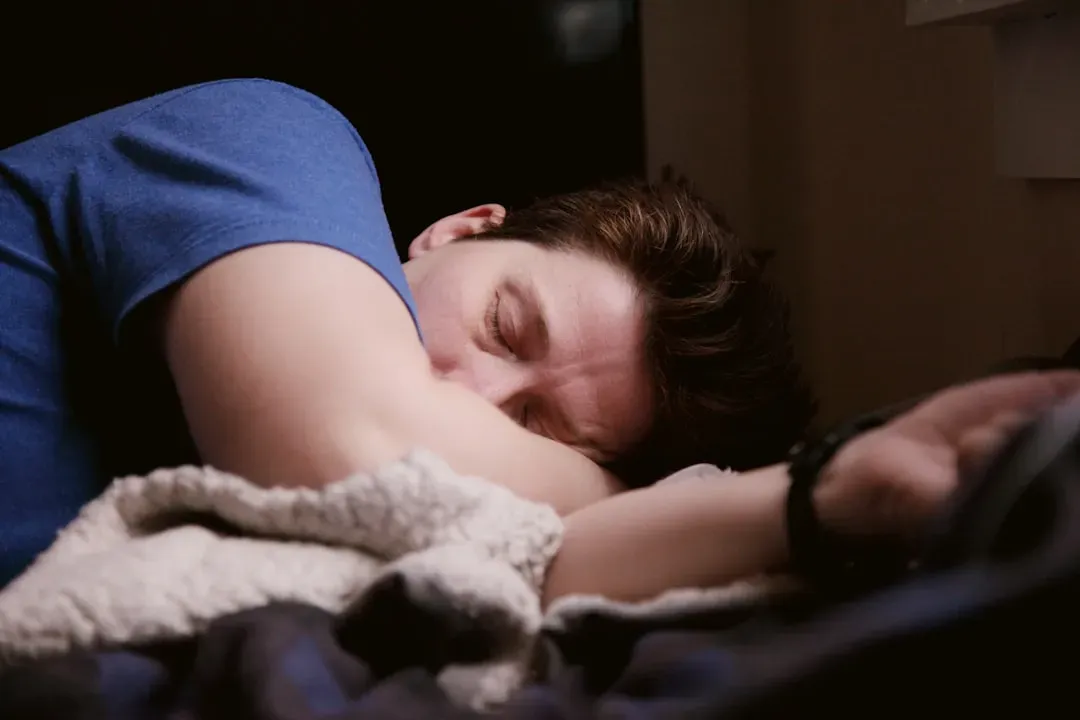
When you zoom out, dreamless sleep is not the harmless blank you were taught to imagine. The science you have today points toward a more disturbing picture: nights filled with flickering awareness, forgotten episodes, possible stretches of total absence, and maybe even rare flashes of bare, content‑free presence. None of these options leave your comforting story of an always‑there, continuous “you” intact.
Until neuroscience can pin down exactly what happens to consciousness in deep sleep, you are left living with a question mark right in the middle of your own life: for hours each night, do you become a thin shadow of awareness, or do you truly vanish and return as if rebooted? Either way, every morning you wake up and pick up the story as though it never skipped a beat – but now that you know better, will closing your eyes ever feel quite the same again?