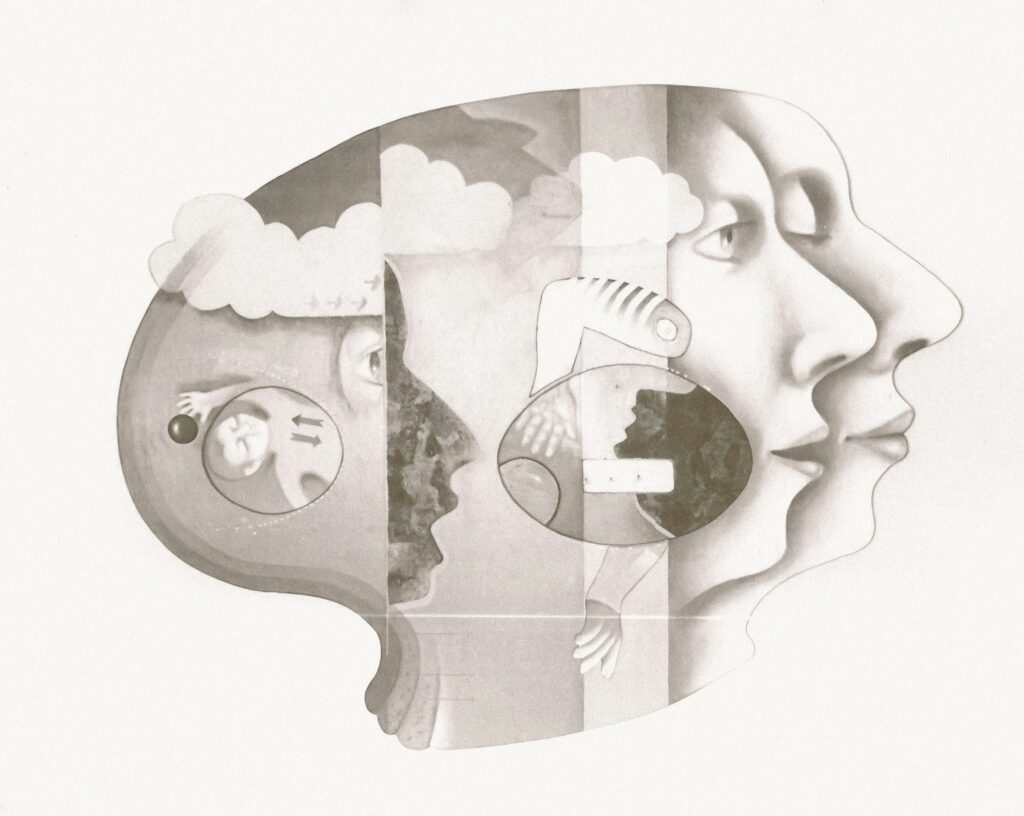

If you have ever felt like your thoughts are flowing past you like water, you are already living inside William James’s most famous idea. When he described consciousness as a “stream” back in 1890, he gave you a picture that is so intuitive you almost forget it is a theory at all. Since then, almost every serious attempt to understand the mind has had to wrestle with that one image: is your consciousness really a smooth, continuous flow, or is that just how it feels from the inside?
As you explore modern theories of the mind, you will see a surprising pattern: people either double down on James’s stream, trying to explain exactly how a brain could generate something that feels so continuous, or they try to dismantle it, arguing that your experience is actually choppy, fragmented, or even illusory. Once you start noticing this debate, you cannot unsee it. The stream metaphor becomes a kind of test: what you believe about it quietly reveals what you think consciousness really is.
The Shock of the Stream: What James Was Really Saying
You might think calling consciousness a stream is just a poetic flourish, but for James it was a radical rejection of the idea that your mind is made of separate, fixed building blocks. He pushed you to notice how one thought shades into the next, how your feelings, memories, and sensations refuse to line up like beads on a string. Instead of sharp edges, you get blending, overlapping, and constant change, like colors mixing as they swirl down a river.
James also wanted you to see that you never step outside this flow to observe it from a safe distance. You are always inside the current, never standing on the bank, and that means your sense of “self” is wrapped up in this ongoing movement. When you remember your past or imagine your future, you are not pulling up frozen snapshots; you are reconfiguring the stream in real time. To take his metaphor seriously is to accept that your consciousness is not a thing you have but an activity you are constantly doing.
From Beads to Waves: How the Brain Challenges the Stream
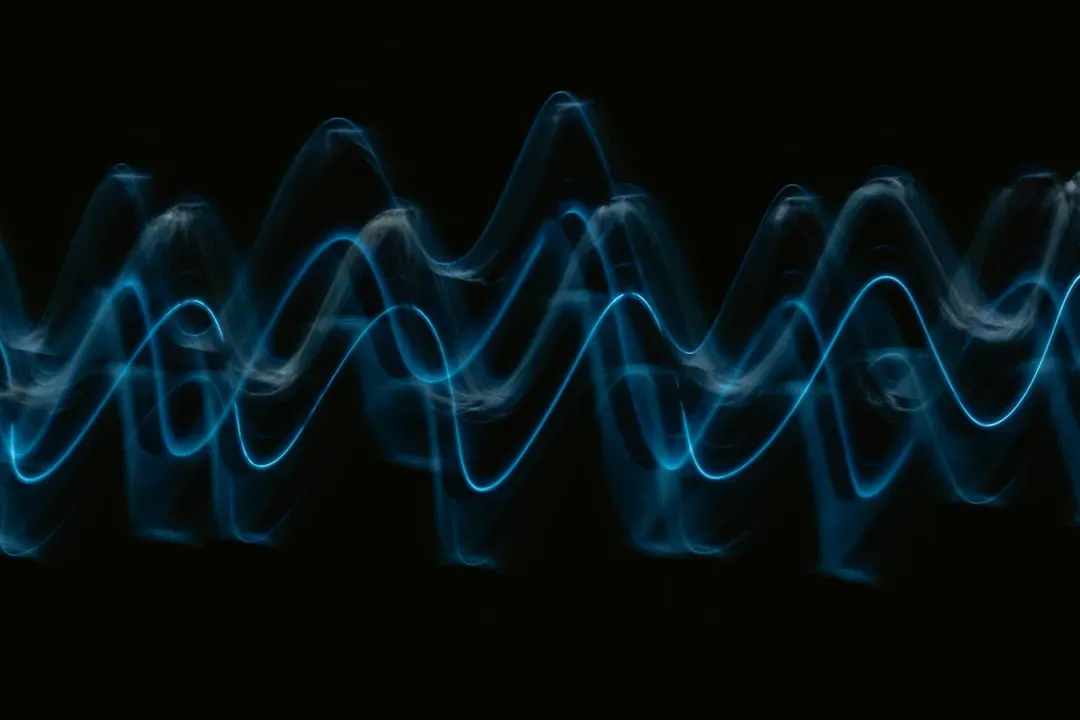
As brain science has advanced, you have learned that neural activity does not look like a smooth river at all. It comes in spikes, bursts, and pulses, with different brain regions flickering on and off in patterns that look more like a strobe light than a gentle flow. Some researchers argue that what feels to you like continuity is actually the brain stitching together many fast, discrete events, the way a movie projector turns individual frames into apparent motion.
This tension between what you feel and what the brain seems to be doing is at the heart of the “stream versus chunks” debate. If the brain operates in rhythmic pulses, maybe consciousness is more like a rapid slideshow, and the stream is a trick your mind plays on you. On the other hand, the fact that your experience feels so fluid pushes you to ask whether the brain’s bursts can still give rise to a genuinely continuous subjective life, in the same way that waves in the ocean emerge from countless individual water molecules.
Global Workspace: Turning the Stream into Broadcast
One of the most influential modern theories, the global workspace idea, basically tells you that consciousness is what happens when certain information in your brain gets “broadcast” to many different systems at once. In that picture, your thoughts are less like a river and more like a series of announcements on a stage, where different mental contents take turns under the spotlight. Yet from your perspective, that series of broadcasts can feel like a flowing narrative, a stream of “what’s happening now” that moves from one moment to the next.
If you buy into this theory, you might reinterpret James’s stream as the subjective side of an underlying switching process. Your conscious stream would be the ongoing story created as different bits of information win temporary access to the global stage. It is not that your mind is literally continuous in a physical sense, but rather that the rapid handoff between contents is smoothed into a felt flow, the way a playlist can feel like a single musical journey even though each song is distinct.
Integrated Information: When the Stream Becomes a Web

Another major approach, integrated information theory, starts from the idea that what makes you conscious is how deeply and irreducibly your brain’s activity is woven together. Instead of a line of thoughts, you get a complex, high-dimensional structure where each part influences and constrains many others. If you look at consciousness from this angle, James’s stream starts to look too simple, like trying to describe the internet as a single road.
Yet you can still rescue something important from the stream metaphor here. From the inside, that vast informational web shows up to you as a unified, coherent flow of experience, even though, under the hood, it may be more like a densely interconnected network. You might say that the stream is the way this intricate integration feels from your point of view, a user-friendly interface floating above a dizzying tangle of causal connections and feedback loops.
Predictive Processing: The Stream as Controlled Hallucination

Predictive processing theories invite you to see your brain as a prediction machine, constantly guessing what will happen next and updating itself when it is wrong. In this picture, your conscious experience is less like passively watching a stream and more like actively generating one, moment by moment. Your mind is always a little ahead of reality, pushing its expectations forward in time, which can make your experience feel continuous even when the incoming data is noisy or incomplete.
From this point of view, James’s stream becomes a kind of controlled hallucination that you use to keep your grip on the world. The flow you feel is your brain’s way of smoothing over the gaps, delays, and interruptions in sensory input so that you can act effectively. You do not experience flickers, freezes, or separate chunks in daily life because your predictive machinery is constantly filling in the blanks, like a painter rapidly covering the canvas so you never see the bare patches underneath.
The Case Against the Stream: Is Your Experience Actually Chunky?
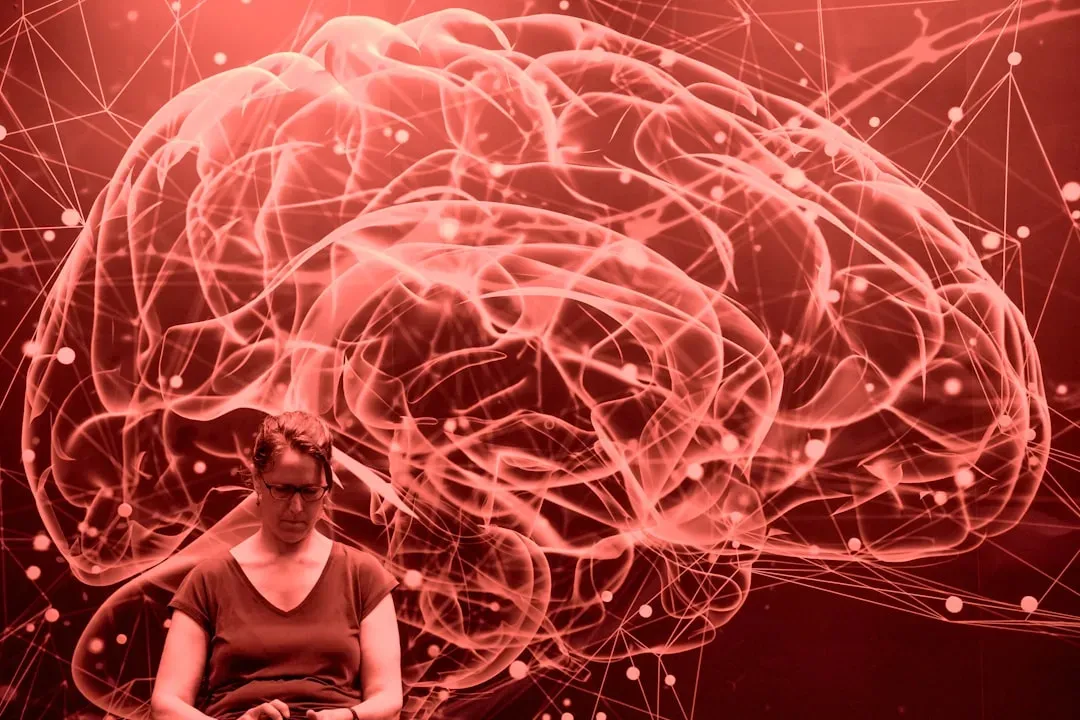
Not everyone agrees that the stream metaphor is helpful for you. Some researchers argue that your consciousness may come in discrete pulses, a bit like frames in a video, each with its own brief window of awareness. On this view, the sense of smoothness is something you add after the fact, a retrospective gloss you place on a sequence of separate events, just as you remember a bumpy road trip as one continuous journey rather than thousands of small jolts.
You can see hints of this in phenomena where time seems to break down: when you mishear a word but suddenly “correct” it a moment later, or when a fast visual stimulus seems to slide backward in time in your awareness. These effects suggest that what you think is happening “now” might actually be constructed over short windows, with your brain editing the story before you get conscious access to it. If that is right, then James’s stream might be dangerously misleading, tempting you to imagine a literal flow where there are really stitched-together snapshots.
The Case for the Stream: Why Your Continuity Still Matters

Even if the brain works in pulses or frames, you still live your life as if your awareness is ongoing, and that matters in practice. Your identity, your relationships, your moral choices – all of these feel to you like they unfold in a continuous story, not a series of disconnected flashes. The stream metaphor captures this lived sense that you are carried from moment to moment, never fully stopping, always already becoming your next self.
Supporters of James’s idea argue that you should not throw away this phenomenological fact just because the brain has discrete processes underneath. In the same way that a continuous melody can be built from separate notes, your conscious life can be genuinely flowing even if it rests on many tiny steps. The important point for you is that you experience integration over time: you remember what just happened, anticipate what is about to happen, and hold both together in a moving present.
Why This Debate Matters for Your Sense of Self
However abstract this debate sounds, it cuts straight into how you understand who you are. If you imagine yourself as a stream, you are more likely to think of your identity as evolving, flexible, and open-ended. You might feel less tied to fixed labels and more comfortable with the idea that you are always in transition, like water flowing through different landscapes but still somehow “you” across the journey.
By contrast, if you see your consciousness as composed of discrete moments or constructed narratives, you might feel a sharper distance from your own story. Your sense of self can start to look like a convenient fiction, a way of connecting separate episodes that would otherwise not hang together. Depending on your temperament, that can be liberating – giving you permission to rewrite your story – or unsettling, because it suggests there is no underlying steady current holding everything in place.
Living with the Stream: How You Can Use These Ideas

Once you start to think of your mind in these terms, you can actually use the stream metaphor as a tool rather than just a theory. In meditation or reflective practice, you can watch your thoughts and feelings roll by like currents, noticing how nothing really stands still, no matter how solid it feels at first. That can help you loosen your grip on painful stories or looping worries, seeing them as passing movements in the stream rather than permanent features of who you are.
At the same time, knowing that your brain may be stitching this stream together from many hidden processes can make you a little more humble about your own certainty. You learn to question first impressions, to allow for gaps in memory, and to accept that your sense of a seamless story is partly a construction. Instead of undermining your life, this awareness can give you room to rewrite the flow, to steer the current a little more deliberately, even if you can never fully step outside it.
Conclusion: You Are Always Already in the Water
When you look back from 1890 to today, it is striking how one simple image has kept its grip on the scientific and philosophical imagination. Every modern theory you encounter, from global workspaces to predictive machines, is still either defending James’s stream, reinterpreting it, or trying to replace it. That should tell you something important: the way your experience feels from the inside is not an accidental detail, but a central clue any serious account of consciousness has to reckon with.
You never get to stand on the shore and watch your mind flow past; you are always already in the water, trying to understand the current from within it. Whether you end up thinking of your consciousness as a true stream, a stitched-together sequence, or a shimmering web that only feels like a flow, the metaphor forces you to look more closely at what it is like to be you, right now, in this moving moment. If you let that question sink in, you may find yourself wondering: when you say “my mind,” are you picturing a thing you own – or a river you are learning to ride?