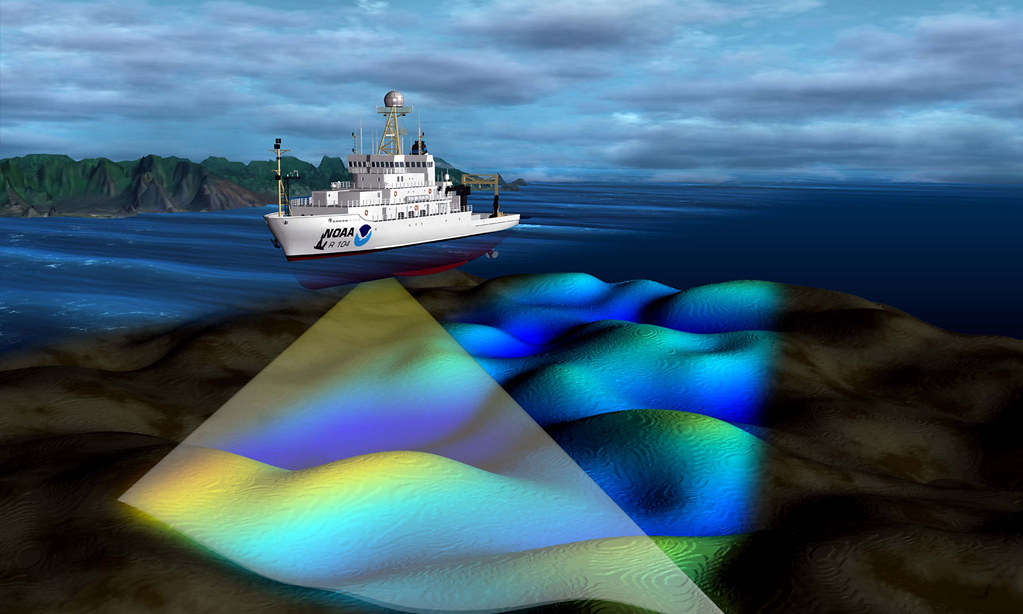

The deep ocean is the loudest, strangest silence on Earth. Down where sunlight never reaches, the water is full of thuds, howls, metallic groans, and chirps that sound like they belong in a sci‑fi movie more than on our own planet. For decades, NOAA’s hydrophones have been eavesdropping on this hidden soundscape, capturing a handful of mysterious signals so weird and so distinct that scientists gave them names like characters in a story.
What makes these eight sounds so unnerving is simple: nobody can say with confidence what made them. We have best guesses, competing hypotheses, and a lot of “probablys” and “maybes,” but no smoking gun. In an age where your phone can recognize a song playing in a noisy bar, it’s humbling that we still can’t identify noises echoing through our own oceans. Let’s dive into eight of the strangest deep‑sea sounds that NOAA recorded and named, but still haven’t definitively tied to any known source.
The Bloop: The Famous Roar That Was Too Big for Any Known Creature
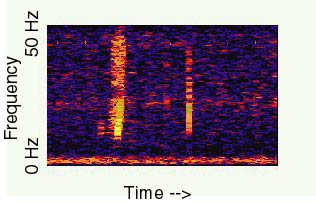
The Bloop is the celebrity of weird ocean sounds, the one that escaped the world of research papers and ended up in conspiracy forums and casual conversation. Recorded in 1997 by NOAA’s hydrophone network in the South Pacific, it was an ultra‑low, powerful sound that rose rapidly in frequency, unlike the slow, drawn‑out rumble you’d expect from earthquakes or simple geologic noise. Triangulation suggested that the source was somewhere off the west coast of South America, and it was loud enough to be detected thousands of kilometers away.
At first, some researchers speculated that it could be biological because the frequency pattern looked vaguely similar to animal calls, just on a scale far beyond anything we know. That idea lit up imaginations: what if something bigger than a blue whale was calling in the depths? Later work pointed strongly toward big ice activity, like massive icequakes or icebergs cracking and moving. Even so, no one has conclusively associated a specific event or exact physical structure with that precise recording. So the Bloop remains in this uncanny middle ground: very likely ice, yet never fully matched, and still a reminder of how quick we were to imagine a monster when we heard something we didn’t understand.
Slow Down: A Long, Haunting Descent in the South Pacific
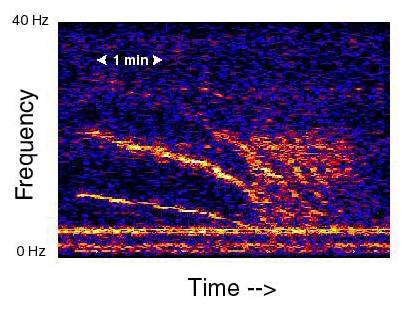
Recorded in 1997, Slow Down sounds exactly like its name: a drawn‑out, descending moan that lasts several minutes, as if something unimaginably large is grinding to a halt somewhere in the deep. NOAA’s hydrophones picked it up across a wide area of the Pacific, and the signal was powerful and clear enough to warrant naming. The sound’s slow frequency drop is what makes it so eerie; it feels like listening to the planet change its mind in real time.
Scientists suspect that Slow Down is probably associated with ice as well, such as a large iceberg scraping along the seafloor or interacting with other ice masses in a complex way. That theory fits the general acoustic pattern and the broad location, but, again, it’s an informed guess, not a matched fingerprint. No one has located the precise structure or event that created that particular recording. So while the physics of ice friction and deformation make sense on paper, Slow Down still sits in the “likely, but not proven” category, a long sigh from somewhere in the dark that refuses to be neatly filed away.
Upsweep: A Seasonal Mystery That Just Keeps Going
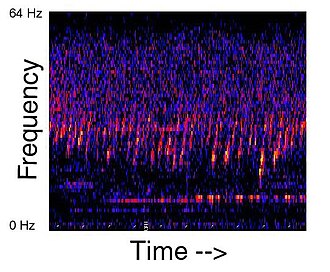
Upsweep is not a single event, but a recurring pattern that has been haunting acoustic records since the late 1980s. It sounds like a series of rising‑tone bursts, almost like someone running a finger repeatedly up a piano keyboard. NOAA first noticed it in data from the central Pacific, and what makes Upsweep especially strange is that it appears to be seasonal, with stronger signals at certain times of year.
The leading ideas lean toward some kind of volcanic or hydrothermal process, possibly related to fluid moving through cracks in the seafloor, heating and cooling in a way that changes the acoustic signature throughout the year. Yet no specific vent field or volcanic structure has ever been definitively pinned down as the Upsweep source. You can think of it like hearing a recurring whistle in your house every autumn and never quite figuring out which pipe, valve, or radiator is truly responsible. Until there’s a clear one‑to‑one match, Upsweep stays on the list of nameless culprits.
Whistle: A Short, Sharp Call from Nowhere in Particular
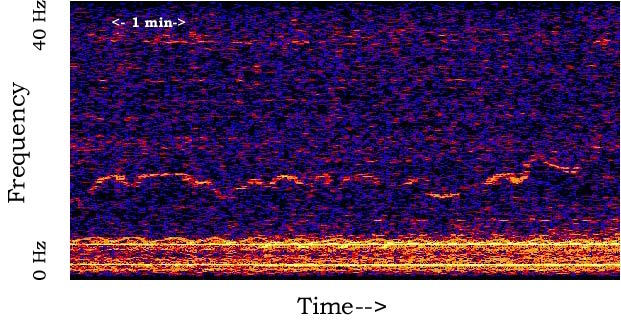
Compared with some of the long, moaning ocean sounds, Whistle is brief and punchy, a high‑pitched, almost comical whoop recorded in the Pacific in the 1990s. At first listen, it sounds a lot like something a marine mammal might produce, which naturally pushed researchers toward biological explanations. But no known species’ call library has provided a confident match, and the context of the recording – where and how it was heard – does not neatly line up with familiar whale or dolphin behavior.
Another possibility is that Whistle is a kind of small‑scale geophysical sound distorted by the water column, perhaps something like gas escaping or a shifting, resonant cavity in seafloor rock. The problem is that short, high‑frequency signals are easy to misinterpret and hard to track. It is like hearing someone laugh in a crowded room but never spotting who did it. NOAA gave it a name because it kept showing up as a recognizable shape in the spectrograms, but even today Whistle feels like a sound stuck in limbo between the animal and the inanimate.
Julia: A Low, Muffled Cry Lost in Southern Oceans
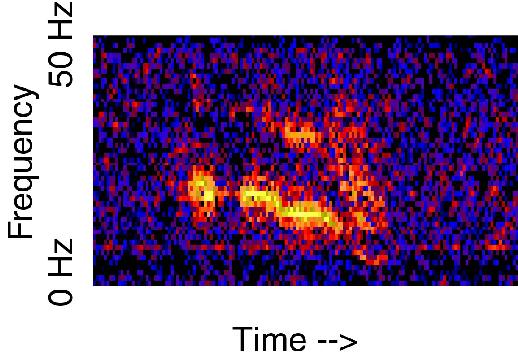
Julia was recorded in 1999 in the eastern equatorial Pacific and is characterized by a long, low, somewhat muffled sound that drifts through the data like a background lament. It is not as dramatically famous as the Bloop, but it still captured attention because of its strong energy and unusual character. The shape of the signal hints at something large and slow, not the quick, sharp crack you would expect from simple rock fracturing.
One idea is that Julia came from a large iceberg running aground or interacting with the seafloor, a kind of slow collision that rang through the water column. That aligns with where and when it was detected and with what we know about iceberg movements in that region at the time. But again, no one has pointed to a single, documented event and said with certainty, “this is Julia.” For me, that gap matters: calling it “probably ice” is fair, but acting as if the case is closed would be overstating what we actually know.
Train: The Deep Ocean Rumble That Sounds Uncannily Human-Made
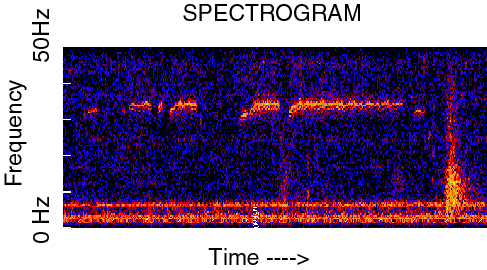
Train is one of those sounds that instantly feels familiar and wrong at the same time. Detected by NOAA hydrophones in the Pacific, it resembles the steady, rhythmic clatter of a distant locomotive rolling along tracks. In an era where shipping noise, submarines, and undersea infrastructure are everywhere, it is tempting to assume it must be human‑made. But careful checks against known vessel locations and typical industrial noise failed to produce a clean match.
As with several other entries on this list, the leading idea is that Train is linked to ice activity, maybe an iceberg being dragged by ocean currents or interacting with seafloor topography in a repeated, mechanical‑sounding way. Nature is surprisingly good at imitating machines when you listen closely enough. Still, without a direct observation of the object and environment that created that specific sound, Train sits stubbornly in the unknown column. It is a good reminder that not every “industrial” sound in the ocean is ours – and not every weird sound is a secret military project, either.
Judy: A Brief, Puzzling Burst with No Clear Family Resemblance
Judy is less famous outside specialist circles, partly because it is shorter and less dramatic than some of the big low‑frequency mysteries. Think of it as a brief, unusual burst recorded by NOAA in the Pacific that did not look or sound like any of the usual suspects. It was distinct enough in its acoustic shape to be singled out and named, but not so obvious that it fit neatly into known categories like ice, earthquakes, or marine mammals.
The frustrating thing about signals like Judy is that data alone can only take you so far. Without simultaneous visual observations, environmental measurements, or multiple recordings that show a consistent pattern, you are basically trying to solve a jigsaw puzzle with most of the pieces missing. Scientists can compare it against huge databases of known sounds and rule out some options, but “not a good match to X” is not the same as “definitely Y.” In my view, Judy represents the honest edge of ocean acoustics: we admit that sometimes we simply do not know, and that not every mystery needs a dramatic theory attached to it.
Miscellaneous Unmatched Signals: The Everyday Weirdness of the Deep
Beyond the headline names like Bloop and Upsweep, NOAA’s hydrophones are constantly picking up strange, one‑off blips and patterns that never make the news. Some of these get informal nicknames or simple catalog labels, then quietly sit in archives as reference points for “unknown, but interesting.” They might be brief tonal sweeps, clusters of clicks that do not match known species, or low‑frequency rumbles that defy easy classification. Together, they form a kind of background tapestry of unresolved questions.
These unnamed or lesser‑known signals are, in a way, the most important part of the story. They show that our oceans are not just occasionally mysterious; they are systematically under‑observed. We have only mapped a small fraction of the seafloor in detail, and we visually observe even less of the deep water column. So when a sound comes in that does not match our library, it is just as likely that we are missing basic context as it is that something exotic is happening. To me, the real takeaway is not that there are monsters in the deep, but that we are still at the early stages of learning how to listen properly.
Conclusion: The Ocean Is Not Hiding Monsters, It Is Hiding How Little We Know
Looking across these eight named but unmatched NOAA sounds, a pattern emerges: our planet is noisy, complex, and constantly surprising, and our understanding is still playing catch‑up. In many cases, the best explanations involve ordinary processes like ice movement or seafloor geology acting on massive scales, filtered through water over enormous distances. Yet because we lack direct, on‑the‑spot observations, we cannot honestly claim to have nailed down the exact source for any of them. Personally, I think that uncertainty is more thrilling than any sea monster theory, because it points to real scientific frontiers instead of easy myths.
At the same time, it is fair to be a bit impatient. We pour huge effort into listening for signals from other planets, but we still have mysterious noises echoing through the depths of our own world. That mismatch says something uncomfortable about our priorities – and about how easy it is to overlook the alien world beneath our ships and satellites. If we invested in the deep ocean with the same curiosity and urgency we give to space, how many of these enigmas would finally move from “named and unknown” to “understood at last”? And when that happens, which will be more surprising: the truth we find, or the fact that it was right here all along?