
Historians love to act like the ancient world is a closed case – artifact found, artifact dated, artifact filed away in a museum basement, done. That confidence falls apart the moment you look at the objects nobody can actually explain: bronze gears too advanced for their century, gold trinkets shaped like modern aircraft, a battery-shaped jar sitting quietly in a museum with no agreed-upon job description. These aren’t obscure curiosities pulled from conspiracy forums. They’re real, catalogued, professionally studied pieces that have humbled some of the sharpest minds in archaeology.
Some of what follows might get solved with the right lab test someday. Others have already resisted three centuries of scrutiny and show no sign of surrendering. Here are 15 ordinary-looking objects that turned into permanent headaches for the people whose entire job is figuring out the past.
#15 – The Newark Holy Stones That Split a Whole Field
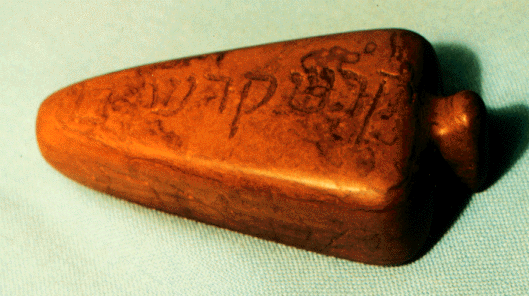
The Newark Holy Stones, unearthed in Ohio burial mounds in the 1860s, feature carvings some researchers initially linked to ancient Hebrew script. One detail keeps mainstream historians deeply skeptical: every discovery happened alongside the same excavator, at suspiciously convenient timing. Most professional archaeologists now treat the stones as a probable 19th-century hoax rather than genuine evidence of pre-Columbian contact.
Yet nobody has ever produced the hard forensic proof that would close the case for good, and that gap is exactly why the stones keep resurfacing in serious academic debate. A handful of researchers still argue the carving style doesn’t match known 1860s forgery techniques. A century and a half later, “probably fake” is still the strongest verdict anyone can offer.
#14 – The Aluminum Wedge That Shouldn’t Exist
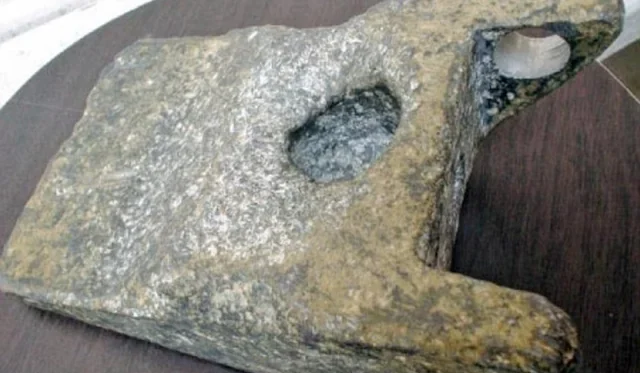
The Aiud object is an aluminum wedge pulled from Romania’s Mureș River in 1974, and ufologists have long claimed it’s proof of ancient extraterrestrial visitors. The far likelier explanation is a fragment of modern machinery lost during excavation work. But aluminum wasn’t industrially produced until the 1800s, which is exactly why the wedge sparked so much speculation once it turned up buried alongside mastodon bones.
Mainstream researchers point to industrial contamination, not ancient technology, as the obvious answer. Still, no lab has ever published a rock-solid dating report that definitively closes the file. Until that happens, the wedge stays technically, officially, unresolved.
Fast Facts
- Discovered in 1974 along the banks of the Mureș River, Romania
- Composed largely of aluminum, a metal rarely found in a raw, worked state
- Recovered near mastodon bones believed to be over 10,000 years old
- Aluminum wasn’t isolated and industrially refined until the early 1800s
#13 – The “Perfect” Stone Spheres Nobody Can Explain

Hundreds of massive stone balls scattered across the Costa Rican jungle are so uniformly round that early explorers assumed they had to be man-made for ceremonial purposes. They’re often described as “perfectly spherical,” which isn’t quite accurate – part of an ongoing scholarly correction around these objects. Some weigh over 15 tons and clearly required serious tool work to shape, yet no written record survives explaining who ordered them made or why.
The real sticking point among archaeologists isn’t the shaping technique, it’s the purpose. Theories range from status markers to astronomical alignment tools to simple wealth displays for elite households. Looters and collectors scattered many spheres from their original locations decades ago, destroying the context that might have settled this for good.
#12 – The Stone Disc That Looks Like a Steering Wheel
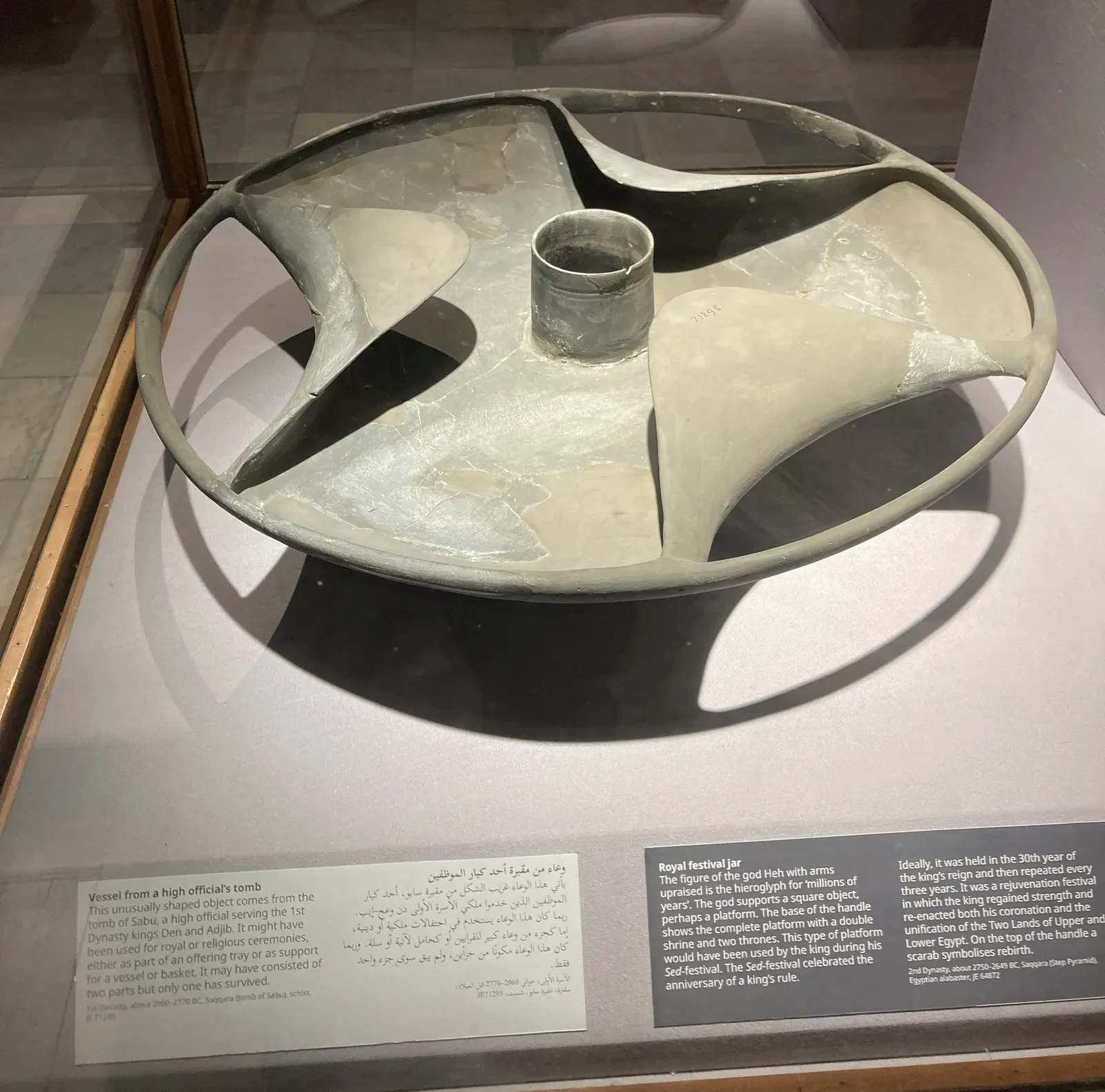
The Sabu Disc was carved from metamorphic siltstone and discovered in 1936 inside a First Dynasty Egyptian tomb at Saqqara. It’s a shallow, three-lobed disc about 24 inches wide with a central hole and a thin rim connecting the lobes – carved nearly a century before anyone had invented the wheel-and-axle machinery it resembles. The design is so unusual that early researchers proposed it functioned as a mechanical component rather than an art object.
Carving brittle siltstone into thin, curved lobes without shattering it is considered a serious technical feat even by modern standards. Most Egyptologists now lean toward ceremonial or symbolic use tied to the tomb owner’s status. But nobody has matched the shape to any known ritual practice from the period, which means the “art or machine” question never fully closed.
#11 – The Goggle-Eyed Figurines of Ancient Japan
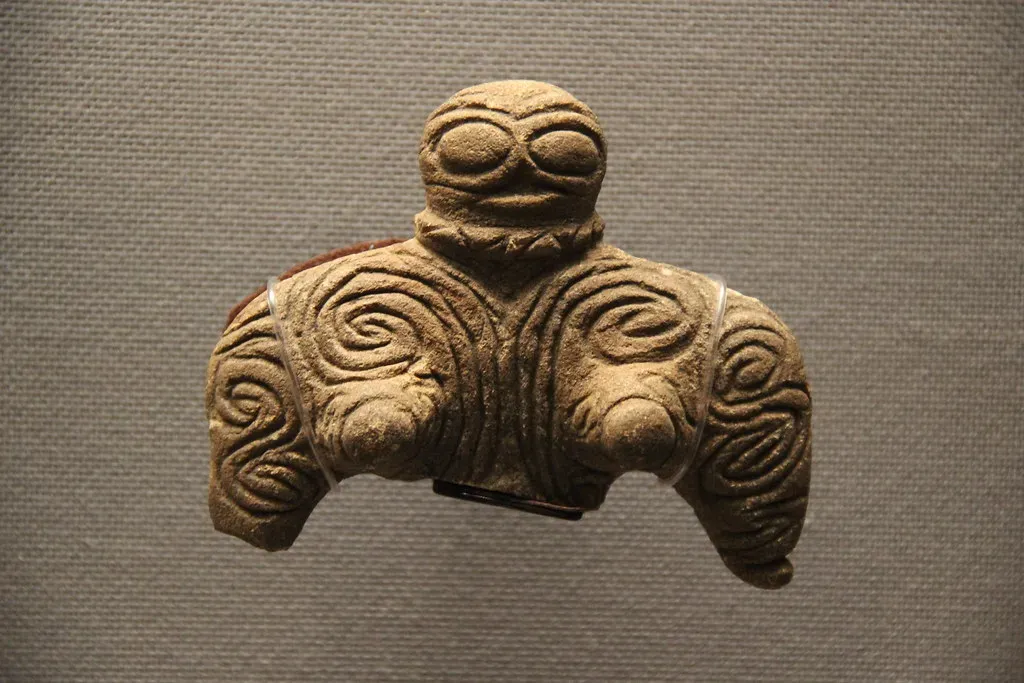
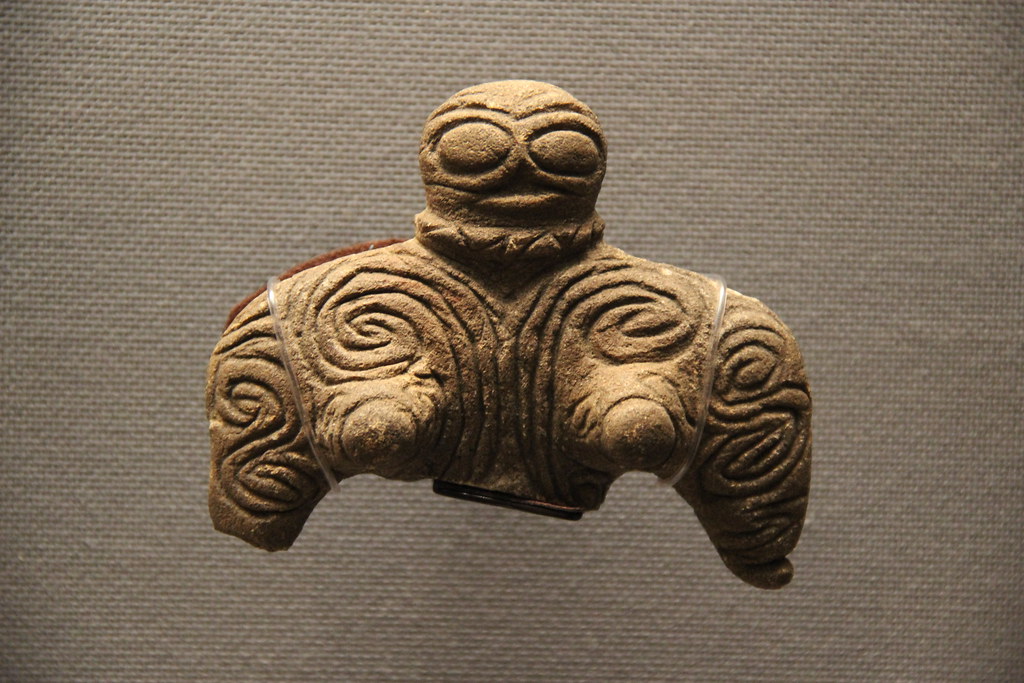
Shakōkidogū are small humanoid and animal figurines made during the late Jōmon period of prehistoric Japan, and their strange goggle-shaped eyes have made them one of the most instantly recognizable prehistoric art forms anywhere. Thousands have been found, and their surfaces were often deliberately broken before burial – a detail that fuels ongoing debate about ritual function.
Many dogū were intentionally smashed into pieces before being buried, suggesting a symbolic “healing” or fertility ritual rather than simple decoration. Archaeologists broadly agree they served ceremonial purposes. What that ceremony actually meant, and why the exaggerated eyes mattered so much, has never been pinned down with certainty.
#10 – The Stones That Fit Together Like Machine Parts
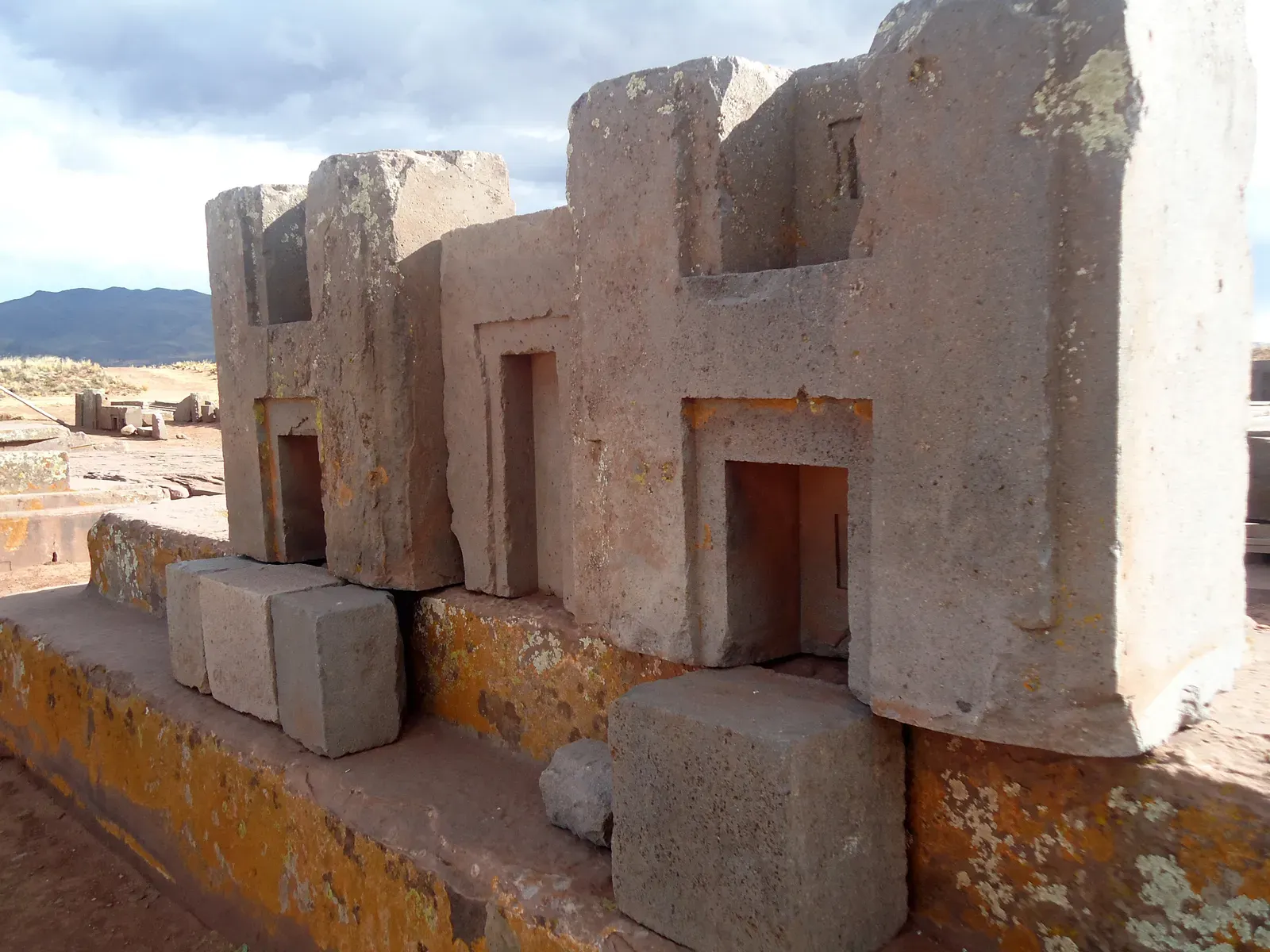
High in the Bolivian Andes sits Puma Punku, where massive stone blocks were cut with such geometric precision that some appear almost mass-produced, long before anything resembling industrial tooling existed in the region. The H-shaped blocks feature interlocking notches, flat faces, and perfect right angles carved into hard andesite and sandstone. Researchers have never fully agreed on which tools the original builders used, since abrasion marks on the stone don’t match simple hammerstone techniques cleanly.
The genuinely controversial opinion inside archaeology circles is that the standard “they just used copper chisels and patience” explanation feels too convenient given the precision involved. Most scholars date the site’s main construction to the Tiwanaku civilization. But the exact methods, and the full purpose of the site’s layout, remain actively debated rather than settled fact.
#9 – The Oldest Wooden Sculpture Ever Found
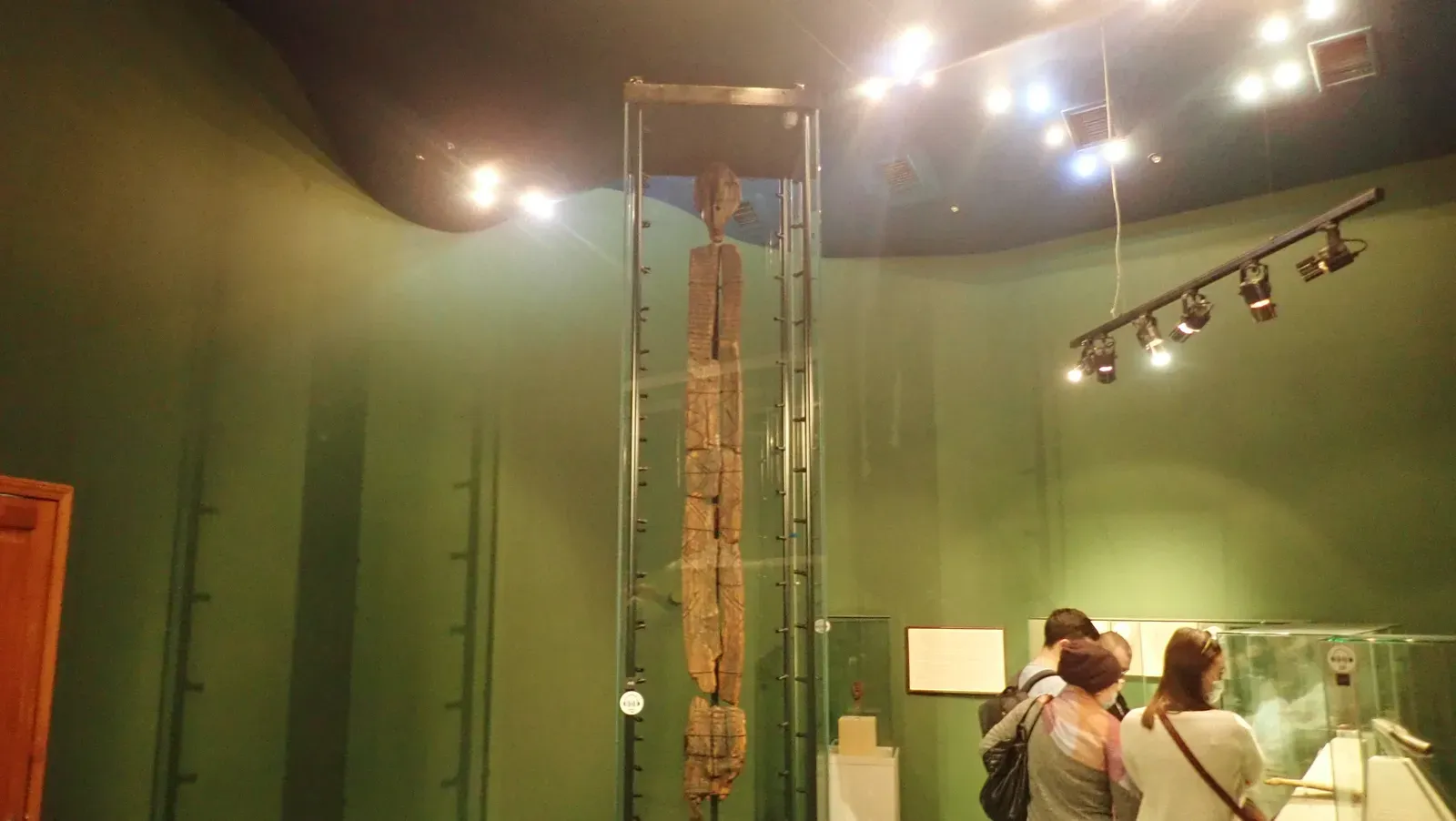
Deep in a Russian peat bog, workers pulled out a carved wooden figure so old that confirming its true age forced researchers to rewrite timelines for prehistoric art entirely. The Shigir Idol, found in the Ural Mountains, is covered in geometric patterns, zigzag lines, and small carved faces running the length of the wood. It ranks among the oldest known monumental wood carvings on the planet, made by hunter-gatherers with no written language to explain their own symbolism.
Nobody has cracked what the carved patterns actually communicate – whether it’s a calendar, a genealogy, a spirit map, or decoration passed down through oral tradition. Wood this old almost never survives, which means researchers can’t even compare it to similar objects to look for a pattern. It’s a message from ten thousand years ago that nobody alive can translate.
At a Glance
- Found in a peat bog in the Ural Mountains, Russia
- Carved from larch wood, an unusually durable but still fragile material
- Multiple radiocarbon rounds place it at roughly 11,000-plus years old
- Covered top to bottom in zigzags, geometric bands, and small carved faces
- Predates the pyramids of Egypt and Stonehenge by thousands of years
#8 – The Bone With Math Humans Weren’t Supposed to Know Yet
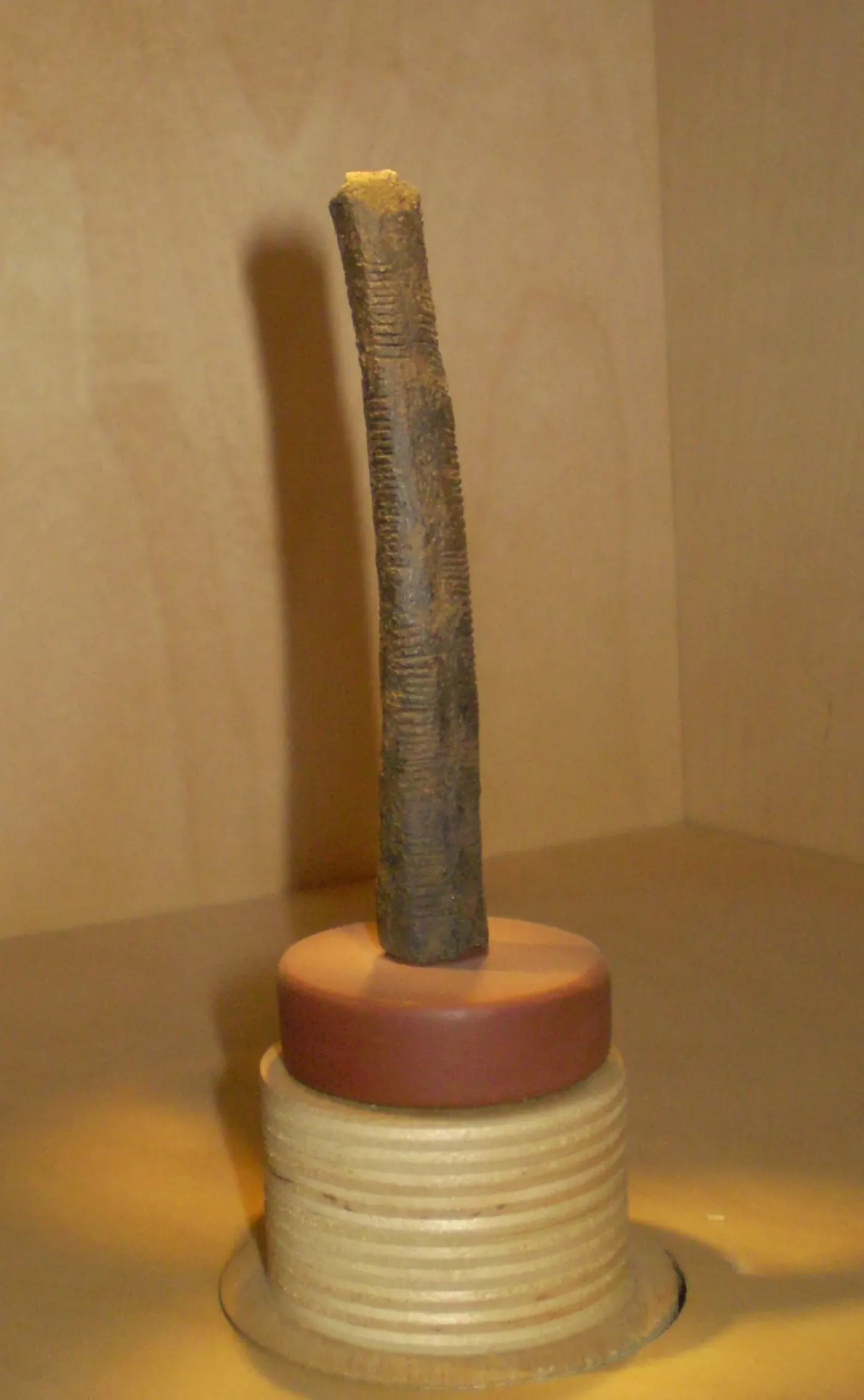
A small curved bone from Central Africa forced historians to admit that prehistoric humans were doing something that looks suspiciously like structured counting, tens of thousands of years earlier than textbooks assumed. The Ishango Bone was unearthed in 1950 by Belgian geologist Jean de Heinzelin along the Semliki River, engraved with sixteen groups of notches organized into three distinct columns. Some scholars treat it as humanity’s earliest known mathematical tool.
Researchers still can’t agree whether it’s a lunar calendar, an early counting system, or a random tally with no deeper meaning at all. Early interpretations suggest it functioned as a time-reckoning device, reflected a base-12 numerical system, or even worked as a mathematical sieve. Every theory has defenders, and seventy years later, none has definitive proof.
#7 – The Wooden Bird That Might Be an Ancient Glider
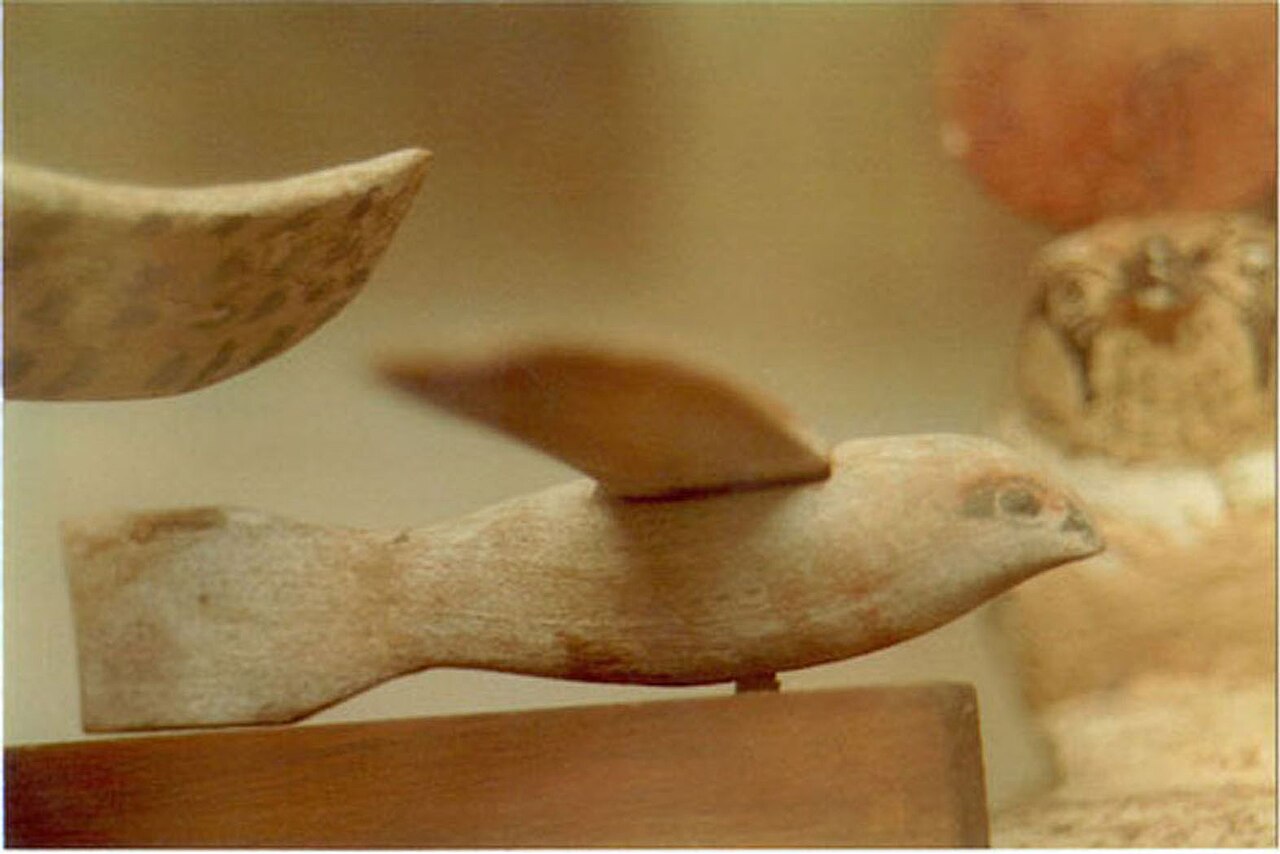
Buried in an Egyptian tomb for over two thousand years, this small wooden object has a wing shape that some aviation enthusiasts insist shouldn’t exist without knowledge of actual flight mechanics. The Saqqara Bird is a sycamore wood artifact found in 1898 in the Pa-di-Imen tomb, dating to the Ptolemaic period, with a seven-inch wingspan and straight, stiff wings angled upward – resembling the dihedral common on modern glider wings. That single design detail is what keeps the debate alive decade after decade.
Most Egyptologists firmly reject the glider theory, identifying the bird as a ceremonial object or child’s toy, likely representing a falcon sacred to Horus. Similar wooden models found in other tombs lack aerodynamic features entirely, and a 2002 test by an aeronautics expert showed it couldn’t sustain flight without modifications like a stabilizer. The wing shape remains an odd coincidence nobody has fully explained away.
#6 – The Metal Spheres Trapped in Rock Older Than Life on Land
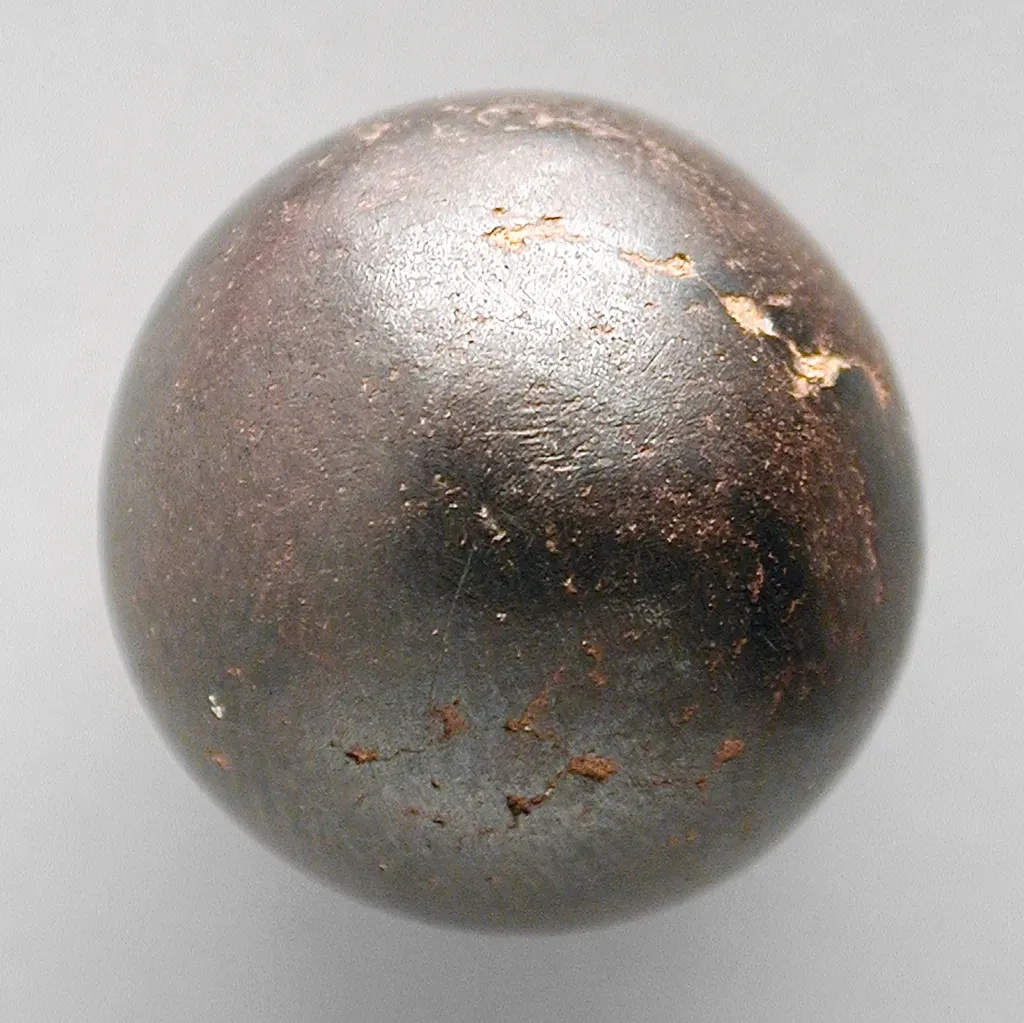
Miners in South Africa kept pulling strange, perfectly grooved metal spheres out of rock layers dated to billions of years old, and the internet ran wild with theories long before geologists ever weighed in. Since the 1980s, miners in Ottosdal have found hundreds of these small metallic spheres – half an inch to four inches wide, smooth, often grooved, and made of hematite or wollastonite – sitting inside 3-billion-year-old pyrophyllite deposits. That combination of extreme age and industrial-looking grooves turned them into a genuine phenomenon.
Geologists have largely settled this one, concluding the objects are not manufactured and are the natural result of geological processes rather than ancient engineering. A small but stubborn corner of the internet still insists they could only have been made by intelligent hands. Science has an answer here – pop culture just refuses to accept it.
#5 – The “Battery” That Might Predate Volta by 1,800 Years
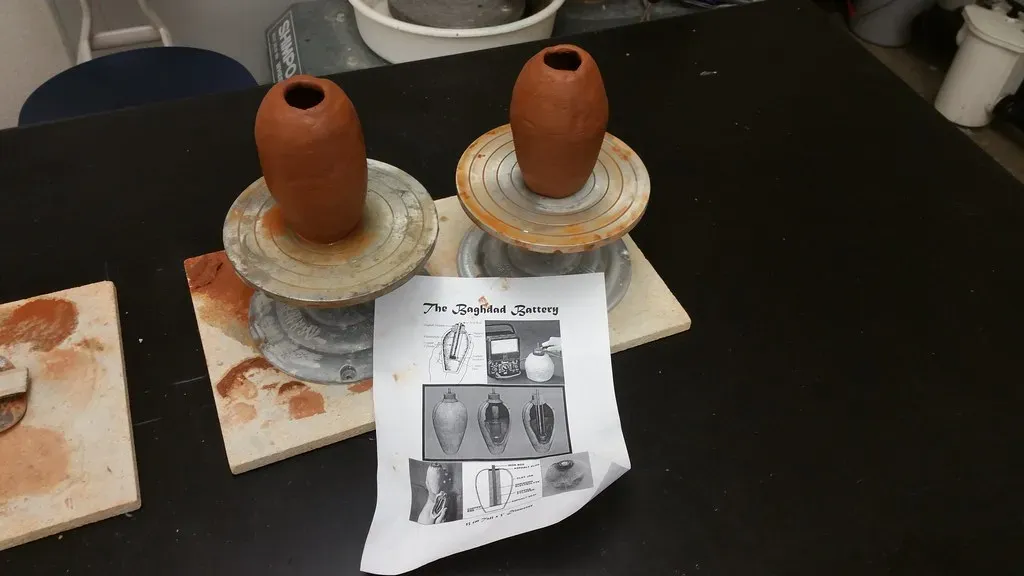
A clay pot dug up near Baghdad in the 1930s contains a copper cylinder and iron rod arranged in a way that looks suspiciously like a functioning electrical cell, decades before batteries were supposedly invented. The Baghdad Battery consists of a ceramic pot, a copper tube, and an iron rod fixed together with bitumen, discovered in 1936 near the ancient city of Ctesiphon. Testing later suggested the vessel really could have held an acidic liquid capable of generating a weak current.
One theory that keeps historians divided suggests it was used for electrotherapy, since other ancient cultures used electric sea creatures to treat ailments, making a homemade galvanic device plausible. But no electroplated object from this period has ever been found to support that theory, and the claims are largely rejected by mainstream archaeologists, who lean toward a far less exciting explanation: a container for sacred scrolls or magic spells.
Quick Compare
- Mainstream view: a storage vessel for papyrus or parchment scrolls, with the metal parts serving no electrical purpose
- Fringe view: a working galvanic cell, possibly used for mild electrotherapy or small-scale electroplating
- Point in favor of the battery theory: the vessel could plausibly hold an acidic liquid capable of producing a weak current
- Point against it: no electroplated artifact from the same era has ever turned up to back the claim
#4 – The Golden “Airplanes” of a Lost Colombian Civilization
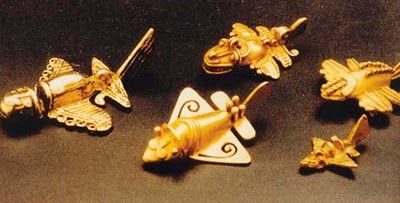
Tiny gold figurines from Colombia have triangular bodies, delta-shaped wings, and vertical tail fins so precise that aviation engineers have built working scale models from the design. The Quimbaya artifacts date between 300 and 1000 AD, measure roughly 2 to 3 inches long, and number over 100 known pieces. Archaeologists classify them as zoomorphic art representing birds, fish, insects, and bats, while a fringe of researchers insists a handful don’t match any known animal at all.
Most archaeologists insist this is simple stylized animal art, pointing out that ancient goldsmiths regularly used geometric wings and exaggerated features for symbolic effect rather than biological accuracy. That’s a fair point – it just doesn’t fully explain why replica models built to the figurines’ exact proportions genuinely fly.
#3 – The Rock Crystal Lens 2,700 Years Ahead of Its Time
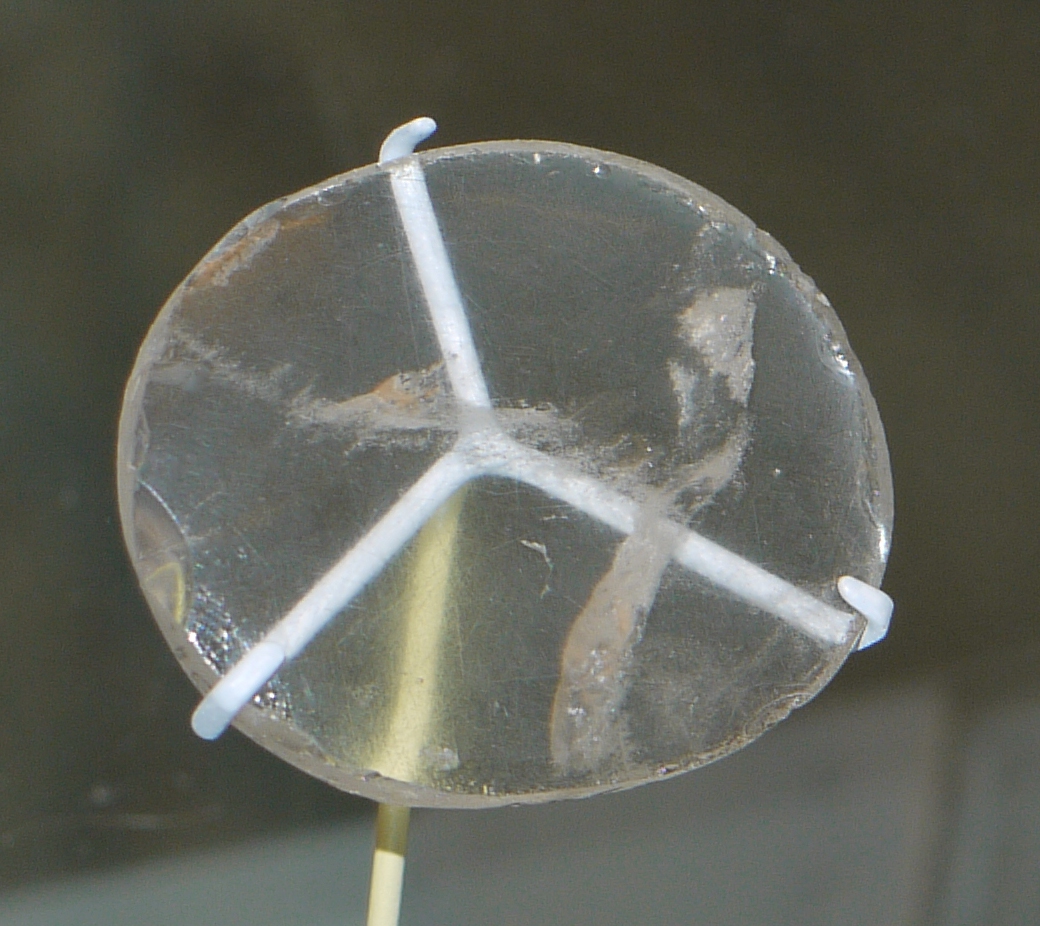
An oval piece of polished crystal pulled from an Assyrian palace looks so much like a modern magnifying lens that some historians think ancient craftsmen may have quietly used optical tools centuries before anyone credited them with the knowledge. The Nimrud lens, also called the Layard lens, is an 8th-century BC piece of rock crystal unearthed in 1850 by Austen Henry Layard at the palace of Nimrud, in modern-day Iraq. Its polish and curvature are precise enough that early researchers assumed it had to serve a functional purpose rather than a decorative one.
Nobody has definitively proven it was used as a lens, and that ambiguity is the whole mystery. Some scholars argue for a purely decorative role, while others point out that Assyrian craftsmen produced intricate engravings so small that Layard himself suspected they’d been made with the aid of magnification. Nearly two centuries after its discovery, the debate hasn’t moved much past that same standoff.
#2 – The “Ancient Computer” That Broke Everything Historians Thought They Knew
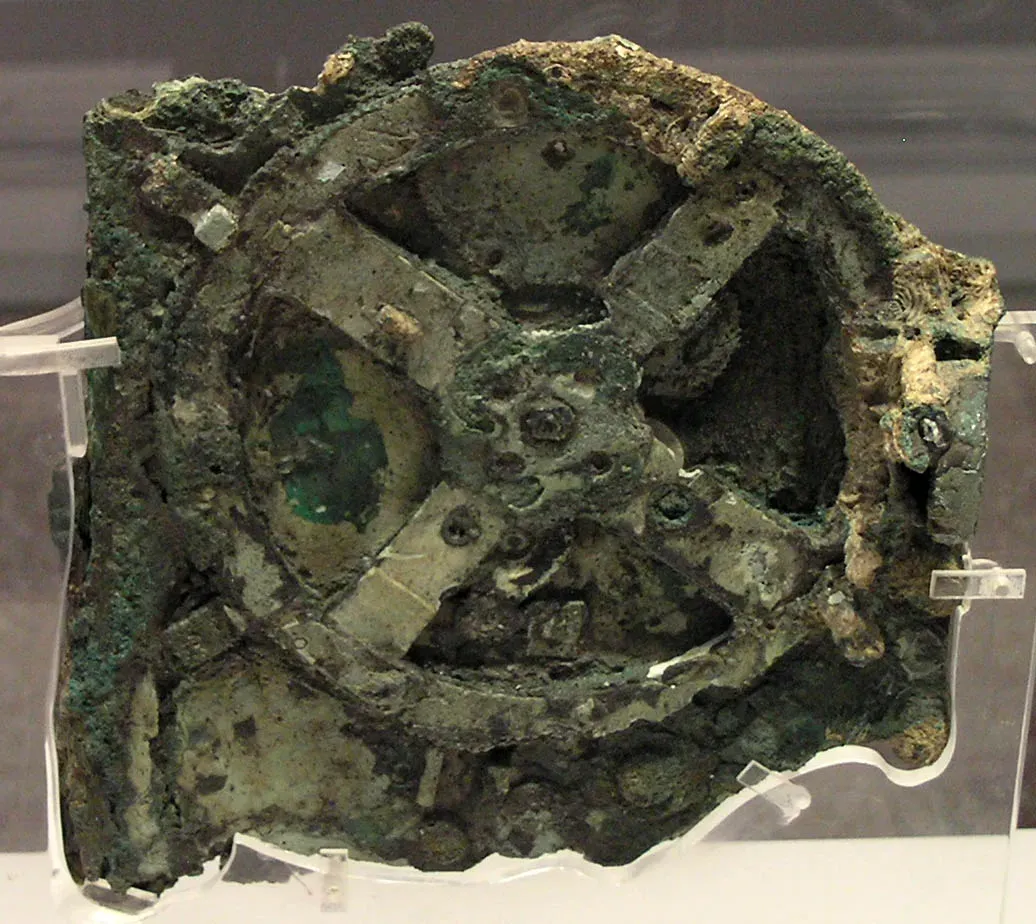
A corroded lump of bronze fished out of a Greek shipwreck in 1901 turned out to contain gear systems so advanced that nothing comparable appeared again for over a thousand years. The Antikythera Mechanism dates from the end of the 2nd century BC and remains the most sophisticated surviving device from antiquity. For a thousand years after the fall of the Roman Empire, no workshop and no lone genius produced anything close to it.
Even now, with modern scanning technology, historians can’t fully agree on how reliably the thing actually worked. Recent research has raised the possibility that the mechanism may have functioned far less precisely than assumed – if it was even built to function reliably at all. Its creator remains unknown, with historians naming Archimedes, Posidonius, and Hipparchus as the leading suspects, and no way yet to prove any of them right.
#1 – The 12-Sided Object That 300 Years of Scholarship Couldn’t Crack
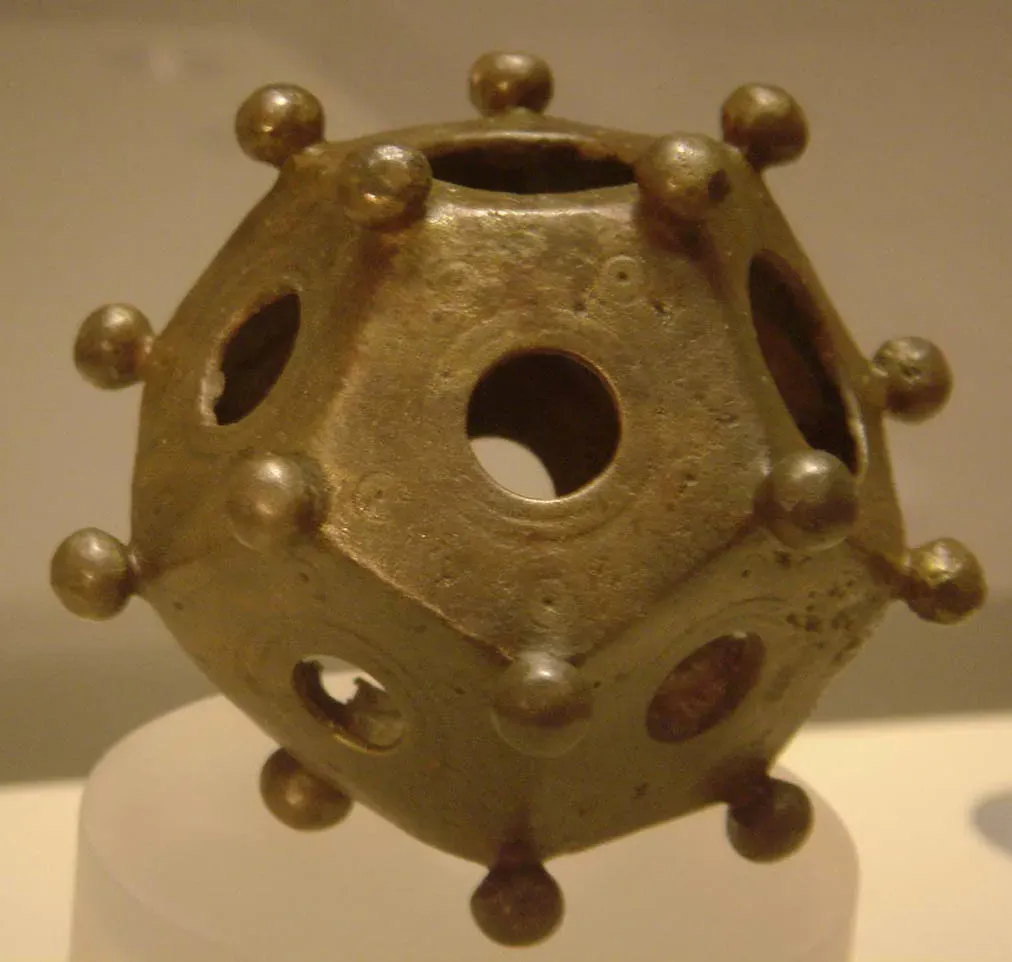
Over a hundred small bronze objects, each with twelve pentagonal faces, circular holes of different sizes, and strange knobs on every corner, have been dug out of Roman-era sites across Europe – and to this day, not a single ancient text mentions what they were for. Roman dodecahedra have baffled archaeologists since 1739, when the first example turned up in the English Midlands. Nearly three centuries later, at least 120 examples have been found across the northwestern provinces of the Roman Empire, and no two are identical.
This is the detail that should bother every armchair historian: not one Roman document, painting, or mosaic ever depicts these objects being used. They’ve turned up in graves, in coin hoards, and even in refuse heaps, with theories linking them to Celtic tribes, dice, candle holders, and knitting tools. Over fifty formal theories exist for what this 12-sided object actually did – and after 300 years of study, archaeology still can’t pick a winner.
Fast Facts
- First documented discovery: 1739, English Midlands
- At least 120 confirmed examples found across northwestern Roman provinces
- Cast in bronze with 12 pentagonal faces and variable-sized circular holes
- No two known dodecahedra share the same size or hole pattern
- Zero surviving Roman text, painting, or mosaic depicts one in use
The Bottom Line

Here’s the uncomfortable truth: history isn’t a finished textbook, it’s a pile of unanswered questions with excellent PR. The Roman dodecahedra alone should embarrass anyone who thinks the ancient world has been fully mapped – over 120 examples, three centuries of study, and still zero consensus on what people actually did with them.
Objects like the Antikythera Mechanism and the Baghdad Battery prove ancient engineers were sharper and stranger than textbooks give them credit for, while the Newark Stones and the Aiud wedge are a reminder that not every mystery is glamorous – some are almost certainly just old hoaxes nobody has finished debunking. My money’s on the dodecahedra outliving us all as an open question; something that survived three centuries of expert scrutiny without a scratch isn’t going down easy.