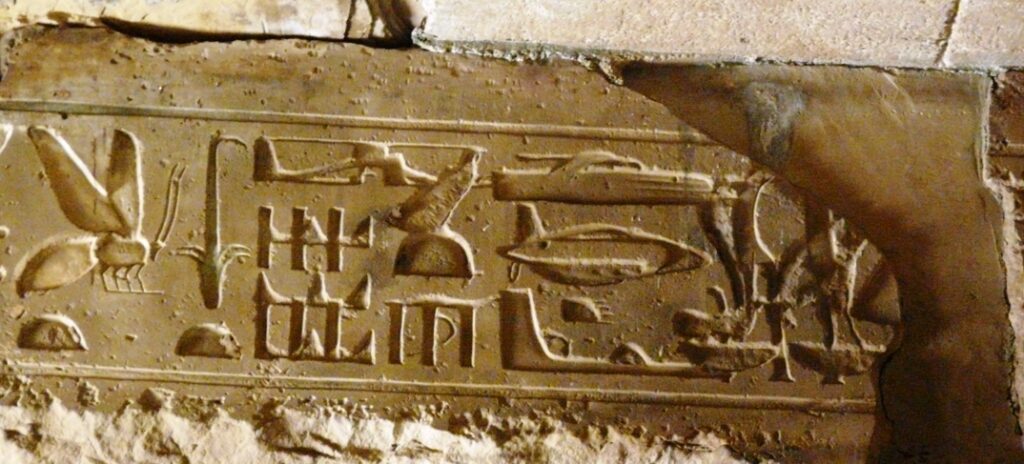

Before jumping in, a quick reality check: archaeologists do not accept any of these images as proof of literal ancient aircraft. What we really have are strange, sometimes haunting depictions that people today love to read as “flying craft.” The science is cautious, the imaginations are not. Somewhere between those two is a fascinating story about how humans have always looked up and wondered what might be in the sky with us. I’ve gone down this rabbit hole more than once, and the pattern is always the same: the art is real, the dates are broadly known, but the “spaceships” are usually our modern eyes projecting our tech back onto ancient symbols. Still, when you line these cases up from different continents and different millennia, you can see why people get hooked. Let’s walk through eleven of the best‑known examples, what they actually show, how they’re dated, and why they keep fueling debates about gods, myths, and maybe more.
1. Tassili n’Ajjer “Round Head” Figures, Sahara Desert (Around 9000–6000 BCE)
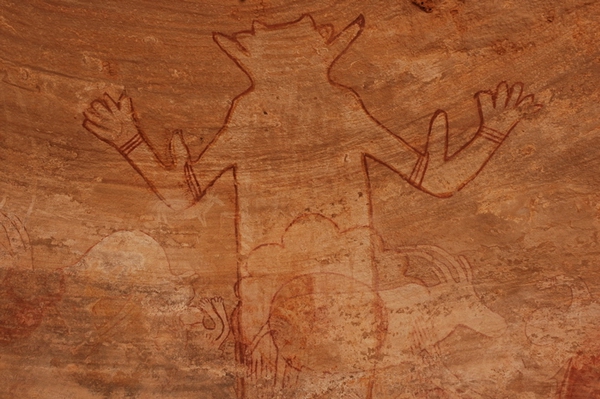
Imagine hiking across a remote sandstone plateau in the central Sahara and suddenly standing in front of towering painted beings with bulbous, featureless heads floating above slender bodies. In Algeria’s Tassili n’Ajjer, some of the oldest rock art, known as the “Round Head” style, goes back roughly nine to six thousand years before the present, at the tail end of the African Humid Period when this desert was still a greener landscape. Archaeologists date these works mainly through stylistic comparison, superposition (what is painted over what), and correlation with environmental and archaeological layers from the early Holocene.
UFO enthusiasts often seize on a subset of these figures that look helmeted, or as if encased in strange suits, sometimes surrounded by dots and floating shapes. From a scientific standpoint, the dominant interpretation is ritual or shamanic imagery, spirits, or deities rather than literal astronauts or flying machines. But emotionally, it is hard not to feel a jolt when you see a multi‑meter figure with a huge round head hovering in a composition that almost feels weightless. It is a classic case where the gap between what we can prove and what we imagine is especially wide – and irresistibly tempting.
2. The Nazca Lines “Astronaut,” Peru (Roughly 100 BCE–500 CE)
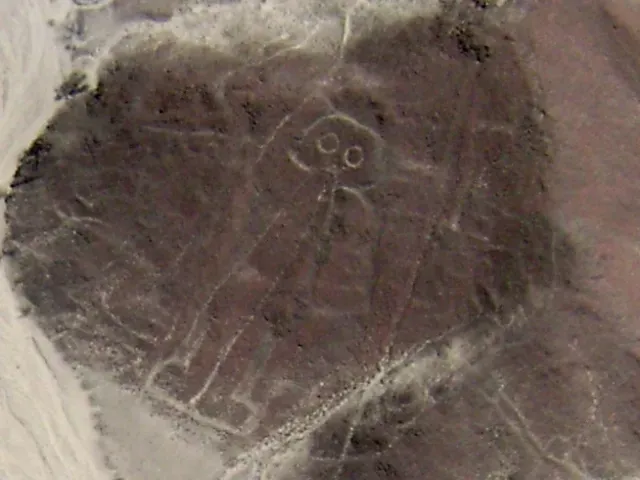
On a dusty slope overlooking the famous Nazca Lines in southern Peru, there is a quirky figure that looks, at first glance, like a cartoon spaceman waving at passing pilots. This geoglyph, informally nicknamed the “Astronaut,” is part of a vast system of lines, geometric patterns, and giant animal shapes created by the Nazca culture roughly between the first century before the common era and the fifth century of the common era. Researchers date the Nazca Lines through associated pottery styles, radiocarbon dating of nearby features, and the cultural timeline of the Nazca themselves.
To modern eyes flying overhead, that single humanoid with a huge head and raised arm gives off serious “ancient alien” vibes, especially when you remember that the lines and figures really only make sense from the air. Mainstream scholarship, though, tends to see these geoglyphs as ritual pathways and symbols tied to water, fertility, and cosmology, not navigational signs for spacecraft. For me, the “Astronaut” is a perfect example of how perspective matters: the Nazca never saw it from a plane, but we mostly do, so of course our brains reach for aviation metaphors the original creators never had.
3. Vimana Imagery in Ancient Indian Texts and Art (Core Traditions c. 500 BCE–500 CE, with Later Retellings)

In South Asia, the most famous “flying craft” never appear as stone machines at all, but as literary and religious vehicles called vimanas in Sanskrit epics. Stories that took shape from about the middle of the first millennium BCE through the first millennium CE describe gods and heroes traveling the skies in elaborate aerial chariots or palaces. The texts themselves can often be dated in layers, and surviving temple and manuscript art that hints at flying chariots or sky‑borne thrones generally follows the same broad time frame, expanding in the early centuries of the common era.
Modern speculative writers love to reframe vimanas as technological aircraft, sometimes claiming detailed “blueprints” in later pseudo‑texts that historians reject as modern fabrications. The more sober reading is that these are mythic sky vehicles, the way we might depict angels with wings or saints in radiant clouds – symbolic, not engineering diagrams. Still, the sheer density of flight imagery across centuries of Indian art and storytelling makes this one of the most robust ancient traditions of aerial travel anywhere, and it shows just how natural it was for people to imagine sophisticated journeys through the sky long before any culture invented machines capable of it.
4. The Abydos “Helicopter” Carving, Egypt (Original c. 1290–1279 BCE, Recut c. 1279–1213 BCE)
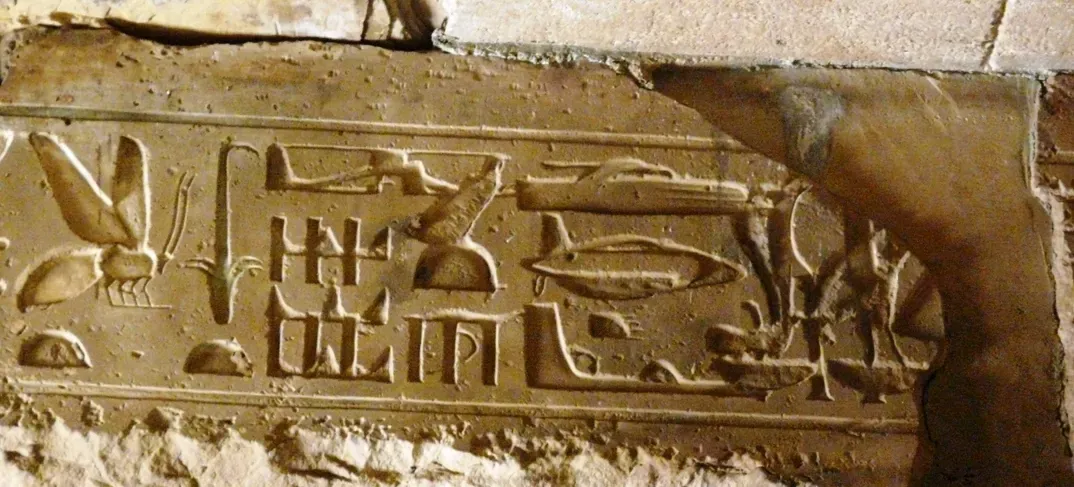
If you have ever fallen down a YouTube hole on “ancient aircraft,” you have almost certainly seen the so‑called Abydos helicopter: a row of hieroglyphs in the Temple of Seti I that, in photographs, looks uncannily like a helicopter, a submarine, and a jet. The temple itself, at Abydos in Upper Egypt, dates to the reign of Seti I around the late thirteenth century BCE, and the inscription was later recarved under his son Ramesses II, also in the thirteenth century BCE. Egyptologists can date the reliefs based on royal names, construction history, and inscriptions elsewhere in the temple.
What looks like futuristic machinery is, under better lighting and close study, a palimpsest – older hieroglyphs plastered over and re‑carved, with the plaster later eroding so that fragments of both texts combine into new, accidental shapes. To a modern brain primed by military hardware, one composite shape screams “attack helicopter.” To an epigrapher, it is a layering of signs that once formed completely ordinary royal titles. This example is a reminder that our eyes are pattern‑making machines, as eager to see rotor blades where none were intended as we are to find faces in clouds.
5. The Dendera “Light Bulb” Reliefs, Egypt (Main Temple Built c. 54 BCE–14 CE)
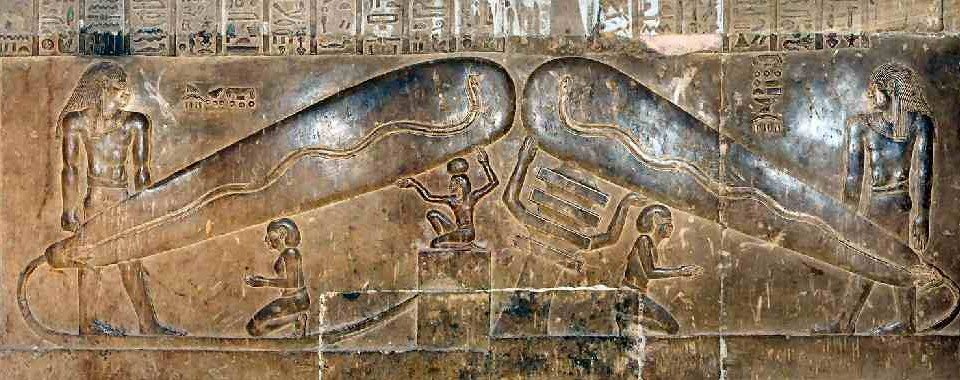
In the Temple of Hathor at Dendera, carved in the late Ptolemaic and early Roman periods, there are reliefs showing a serpent emerging from a long, oval bubble supported by human figures and lotus‑like stands. To some late‑night documentaries, this scene is a smoking gun: an ancient “light bulb” connected to what looks like a cable and power source, supposedly proving the existence of lost electrical technology around the first century BCE to the first century CE. The temple building itself can be dated from inscriptions naming Ptolemaic rulers and the Roman emperor Tiberius.
Egyptologists, unsurprisingly, see nothing of the sort. In their reading, the serpent is a manifestation of a god emerging from the primeval lotus, a complex religious image about creation and divine power, not a set of electrical diagrams. Yet the composition – long oval shapes, coiled lines, pedestals – strongly triggers our modern mental dictionary of glass bulbs, filaments, and cables. This is one of those cases where I think both sides talk past each other: one focused on symbolic meaning, the other fixated on visual resemblance. The art is real, the date is secure; what it shows depends a lot on which century your imagination lives in.
6. Mesoamerican Feathered Serpents and Sky Bands, Mexico (c. 600 BCE–900 CE)
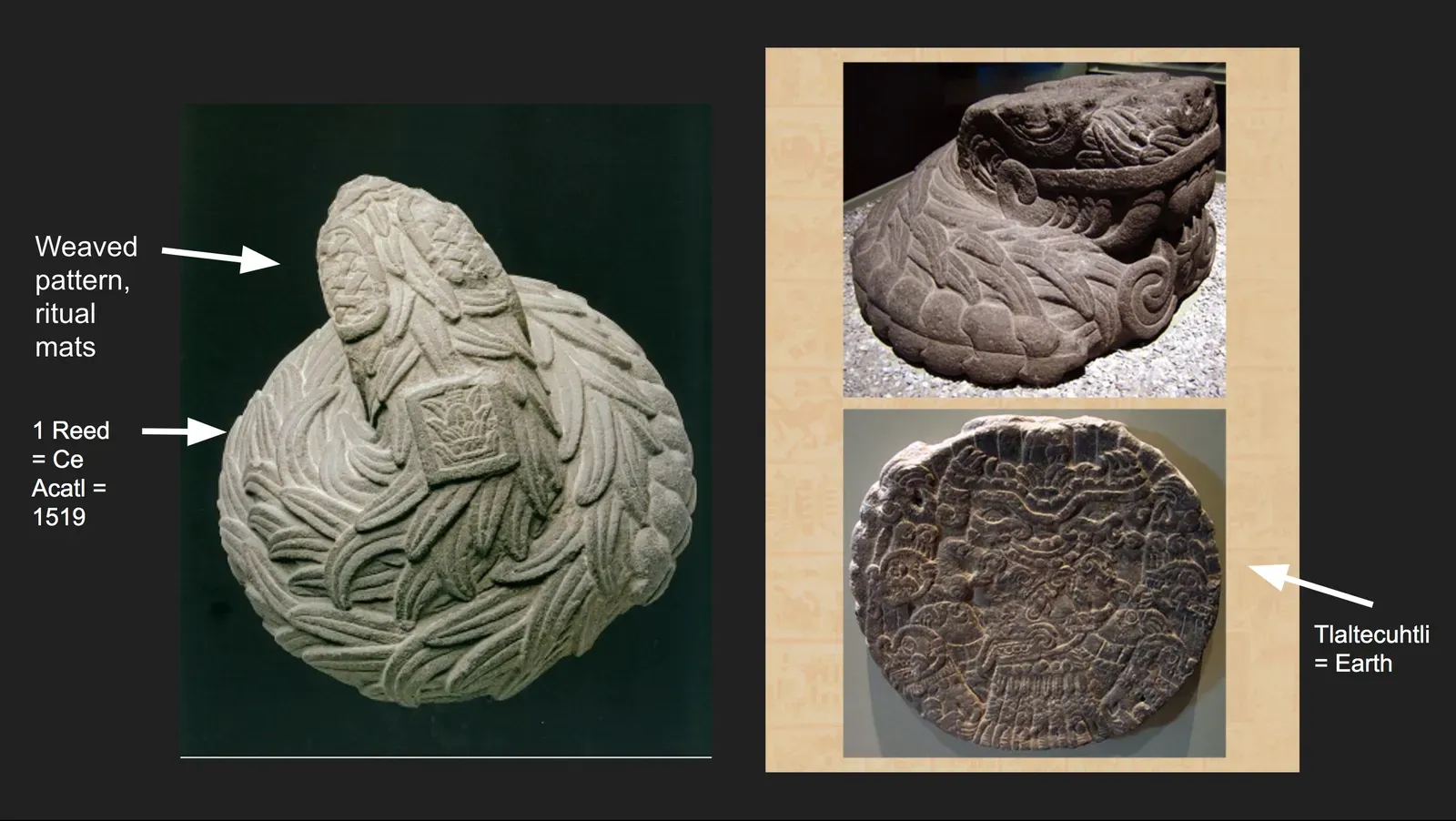
Across ancient Mesoamerica, from the Olmec and Maya to central Mexican cultures, gods associated with the sky often appear as feathered serpents or beings traveling along sky bands covered in stars and celestial symbols. Some Maya stelae and ceramics from roughly the middle of the first millennium BCE through the late Classic period in the ninth century CE show rulers riding in stylized “sky boats” or emerging from the jaws of serpents that undulate across the heavens. Archaeologists date these works through stratigraphy, inscriptions with calendar dates, and well‑developed ceramic chronologies.
To a science‑fiction tuned eye, a ruler sitting in an ornate, enclosed space framed by flames and feathers can easily be reframed as a pilot in a rocket or pod, blasting through stylized exhaust. Scholars, however, read these compositions as mythological journeys between earthly and celestial realms, often linked to rituals of kingship and ancestor veneration. What fascinates me here is that the core idea – a special vehicle that only elites or gods can use to cross cosmic boundaries – is nearly identical to many modern space fantasies. The difference is the medium: stone lintels and painted codices instead of sleek metal hulls.
7. Prehistoric Rock Art with “Disc” Motifs, Western Europe (Broadly c. 4000–1500 BCE)
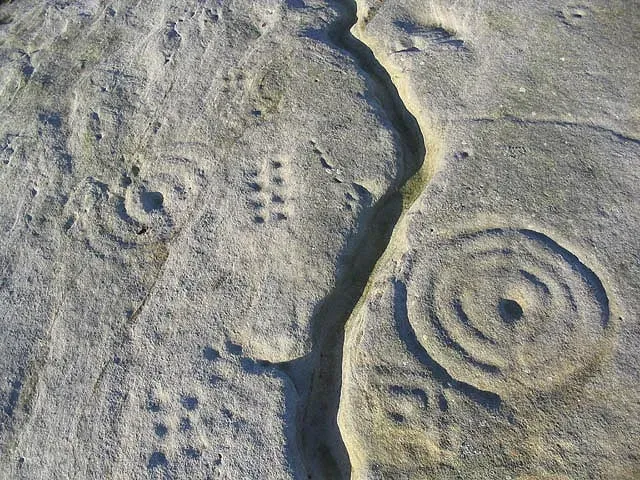
In parts of Western Europe, especially in Neolithic and Bronze Age rock art, you sometimes find combinations of circles, rays, and lines that people today eagerly label as “UFOs.” Petroglyphs in regions like Val Camonica in Italy or carved stones in the Iberian Peninsula, dating broadly from about the fourth to the second millennium BCE, often show circular motifs above human or animal figures. Archaeologists date many of these works through association with nearby settlements, tool styles, and, in some lucky cases, radiocarbon‑dated material in related ritual sites.
The safest, most evidence‑based interpretations call these discs suns, stars, shields, wheels, or symbolic markers in complex cosmological diagrams. But the visual resemblance to a classic flying saucer – a circle with radiating lines, sometimes hovering over a scene – is too strong for modern UFO folklore to ignore. Personally, I think these carvings reveal more about how central the sky was to farming and ritual life than about any traffic from other planets. Yet when you stand in front of a weathered stone, its circular mark hovering over a tiny stylized human, it is easy to feel that old thrill: someone, long ago, saw something overhead important enough to carve in stone.
8. The “Shaman in a Boat” Petroglyphs, Siberia and Northern Eurasia (Roughly 2000 BCE–1000 CE)
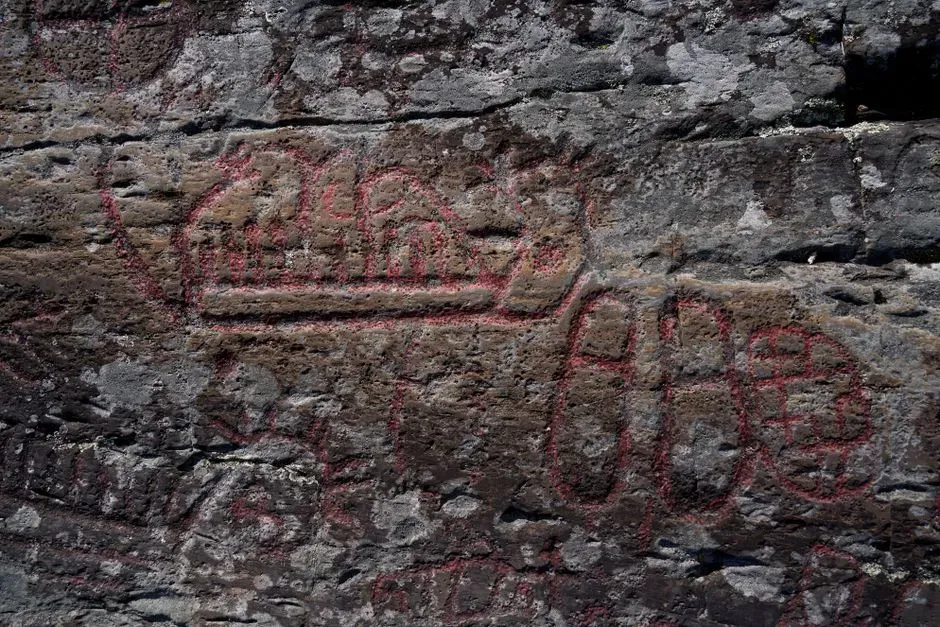
Across northern Eurasia, from Siberia into parts of Scandinavia, rock carvings often show small humans standing in narrow, crescent‑shaped boats that sometimes appear to float in mid‑air or sail beneath stylized sun discs. These petroglyphs span a long period, often dated between the second millennium BCE and the first millennium CE, depending on the specific site and its archaeological context. Researchers rely on superposition, tool mark analysis, and associations with known cultural horizons in the region to narrow down the dates.
To indigenous cosmologies, these boats are often interpreted as spiritual vessels carrying shamans between worlds, or as solar boats transporting the sun or souls across the sky or the underworld. To a modern alien‑hunters’ audience, those same crescent shapes can morph into “flying craft,” with the shaman as a pilot on a cosmic journey. What strikes me is how consistent the idea of a special craft for crossing invisible boundaries is, whether we call it a soul boat, a spaceship, or a vision chariot. The technology is different, but the metaphor of a vehicle cutting through the unknown is almost timeless.
9. Pre‑Columbian “Winged Discs” and Bird‑Man Motifs, Andean and Caribbean Regions (c. 500 BCE–1500 CE)
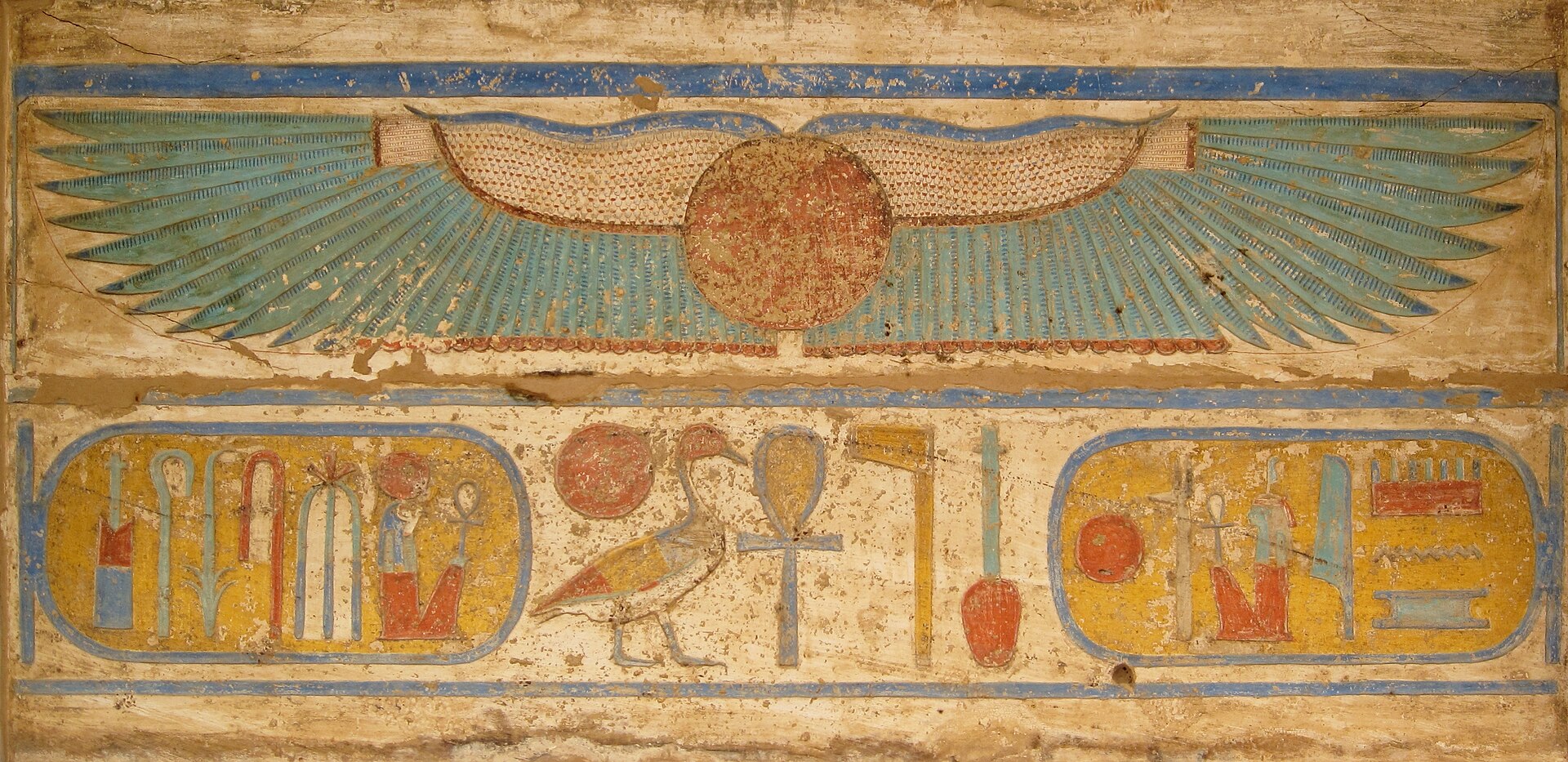
In parts of pre‑Columbian South America and the Caribbean, including Andean and Taino contexts, artifacts sometimes show circular or oval central elements flanked by stylized wings, along with hybrid bird‑man figures. These works, created over a broad window from around the middle of the first millennium BCE to the eve of European contact in the fifteenth century CE, are dated primarily through stratigraphy, stylistic sequences, and radiocarbon sampling of associated organic materials. In goldwork and carved stone, these winged forms are often linked to deities or elites associated with the sky, thunder, or storms.
Modern eyes might compress these into a single image that looks suspiciously like a tiny flying craft, complete with a central cockpit and wings. Archaeologists instead see them as abstractions of birds, storms, or celestial beings, emphasizing the power to move between realms – earth, sky, and water. From my perspective, the emotionally interesting bit is that nearly every culture that watches birds long enough dreams of joining them. Whether it is a god with wings, a hero with a feathered cape, or a metallic machine with engines, we keep returning to the same emotional core: envy of effortless flight and the desire to ride the winds ourselves.
10. The Ica Stones’ “Flying Machines,” Peru (Modern Forgeries Claiming Ancient Dates)
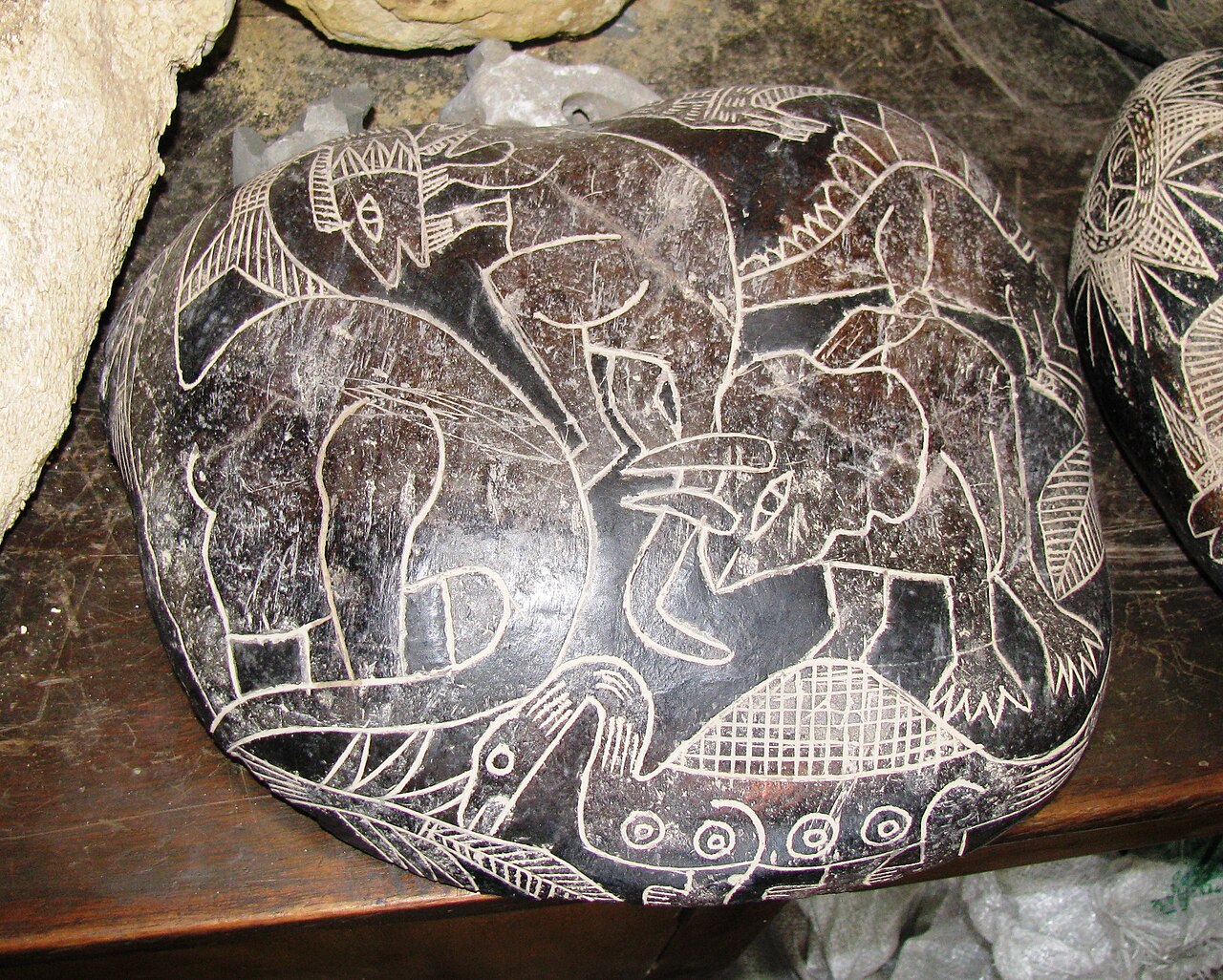
No survey of supposed ancient flying craft is complete without mentioning the Ica Stones, even though they are a cautionary tale more than anything else. These engraved stones, widely circulated in the twentieth century in the Ica region of Peru, show humans riding in flying machines, performing advanced surgeries, and even interacting with dinosaurs. Sellers and promoters claimed they were ancient, sometimes tying them to pre‑Inca cultures, but modern investigations have demonstrated that the vast majority, if not all, are modern creations, with fresh engravings and patinas that do not match genuine archaeological artifacts.
Scientists and professional archaeologists consider the Ica Stones a textbook example of how the market for mysteries can encourage outright fabrication. The “flying craft” here are not cautiously interpreted religious symbols; they are deliberate attempts to draw ancient astronaut enthusiasts into a story that never happened. I include them because they expose a hard truth: our hunger for spectacular evidence of ancient technology is so strong that it can overshadow slower, less flashy real research on genuine sites like Nazca or Tiwanaku. In my view, the Ica affair makes the authentic but ambiguous ancient images even more precious, because they are rare places where the past still resists our desire for a neat, sensational answer.
11. Medieval and Early Renaissance “Strange Objects in the Sky,” Europe (Roughly 900–1500 CE)

Stepping a bit later in time, some of the most shared images online of “ancient UFOs” actually come from medieval and early Renaissance Europe, not the distant Bronze Age. Illuminated manuscripts, religious paintings, and woodcuts from about the tenth to the fifteenth century occasionally show unusual discs or glowing shapes in the sky near biblical or saintly scenes. Art historians can often date these works quite precisely thanks to signatures, documented commissions, or stylistic analysis tied to specific decades or ateliers.
In context, these floating shapes are usually halos, symbolic suns or moons, or abstract representations of divine presence – visual metaphors meant to signal holiness, not aeronautical hardware. But when you crop an image, strip away the caption, and share only the disc with rays, it suddenly looks a lot like a hovering craft shining a spotlight on the scene below. To me, this gap between intent and later interpretation is a powerful reminder that every age rewrites older images through its own preoccupations. In a world obsessed with aviation and space, even a medieval sunburst can be reimagined as an unidentified flying object.
Conclusion: Ancient Aircraft or Ancient Imagination?

Put side by side, these eleven cases stretch from early Holocene rock shelters to medieval altarpieces, from the Sahara to the Andes, India, and northern Eurasia. The strict archaeological story is fairly clear: none of them can be conclusively shown to depict literal machines built by humans or visitors from elsewhere. Dates are usually broad, derived from pottery, inscriptions, stratigraphy, and stylistic comparison, and interpretations that involve gods, rituals, cosmology, and symbolism fit what we know about each culture much better than secret hangars full of forgotten technology.
And yet, I do not think the enduring fascination with these images is foolish. What they really prove, in my opinion, is that the idea of extraordinary flight – special vehicles reserved for gods, heroes, or spiritual specialists – runs surprisingly deep in the human mind. Long before we engineered metal wings, people carved and painted their longing for the sky onto stone, pottery, desert plains, and temple walls. Seen that way, “ancient aircraft” are less about aliens and more about us: our urge to project stories onto the unknown, and our habit of reading our own technology back into the past. Maybe the more interesting question is not whether they saw what we see, but why, thousands of years later, we are still so eager to see ourselves in them – if you looked at these images with no knowledge of planes or rockets, what would you think was flying?