You probably think mountains are predictable: plates collide, rocks crumple, volcanoes erupt, job done. But when you look closely at some of the strangest peaks on Earth, the usual rules start to wobble. You find summits that are rising where they should be sinking, towers of stone that should have eroded long ago, and lone giants that stand miles from any obvious tectonic battlefield. As you explore these seven mountains, you’ll see a pattern: nature keeps breaking the neat models you’re taught. Geologists constantly revise their theories because places like these refuse to behave. Instead of undermining science, these misfit peaks actually push it forward – and by the end, you may look at every mountain on the horizon with a lot more suspicion and awe.
1. Everest: A Mountain That Should Be Collapsing Under Its Own Weight
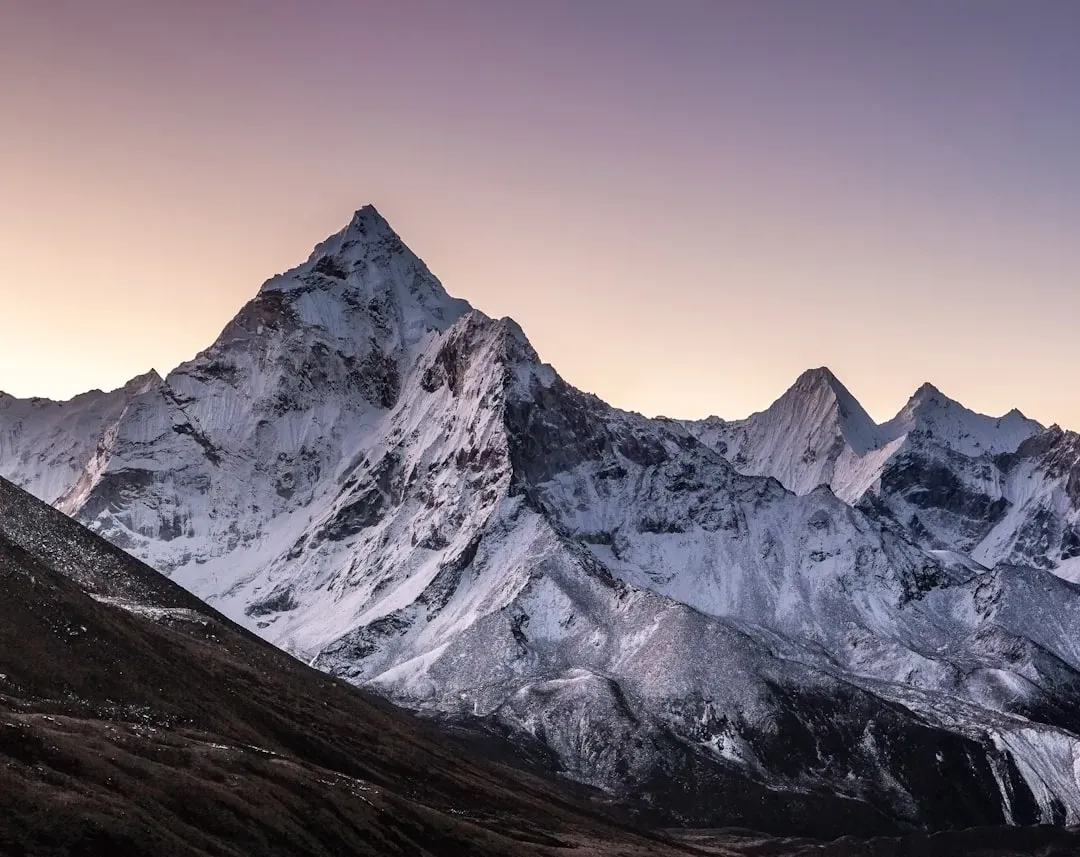
When you picture geological “impossibilities,” you probably start with the obvious one: the tallest mountain on land. Mount Everest is built from marine sedimentary rocks that were once at the bottom of the Tethys Ocean, now sitting almost nine kilometers in the sky. By basic physics, a pile of fractured sedimentary layers that tall should be intensely unstable, constantly slumping and collapsing under gravity in huge chunks. Yet Everest is still rising by a few millimeters each year as India keeps plowing into Asia. You’re looking at a mountain caught in a tug-of-war between uplift and erosion, with powerful crustal thickening and deep structural support barely outpacing its own self-destruction. Modern models say such a heavily over-thickened bit of crust should eventually spread and sag sideways, almost like cold honey. The fact that you can still climb a sharply defined, sky-scraping peak instead of a broad plateau shows how finely balanced – and still not fully understood – that battle really is.
2. The Dolomites: Vertical Fossil Reefs That Should Have Been Flattened
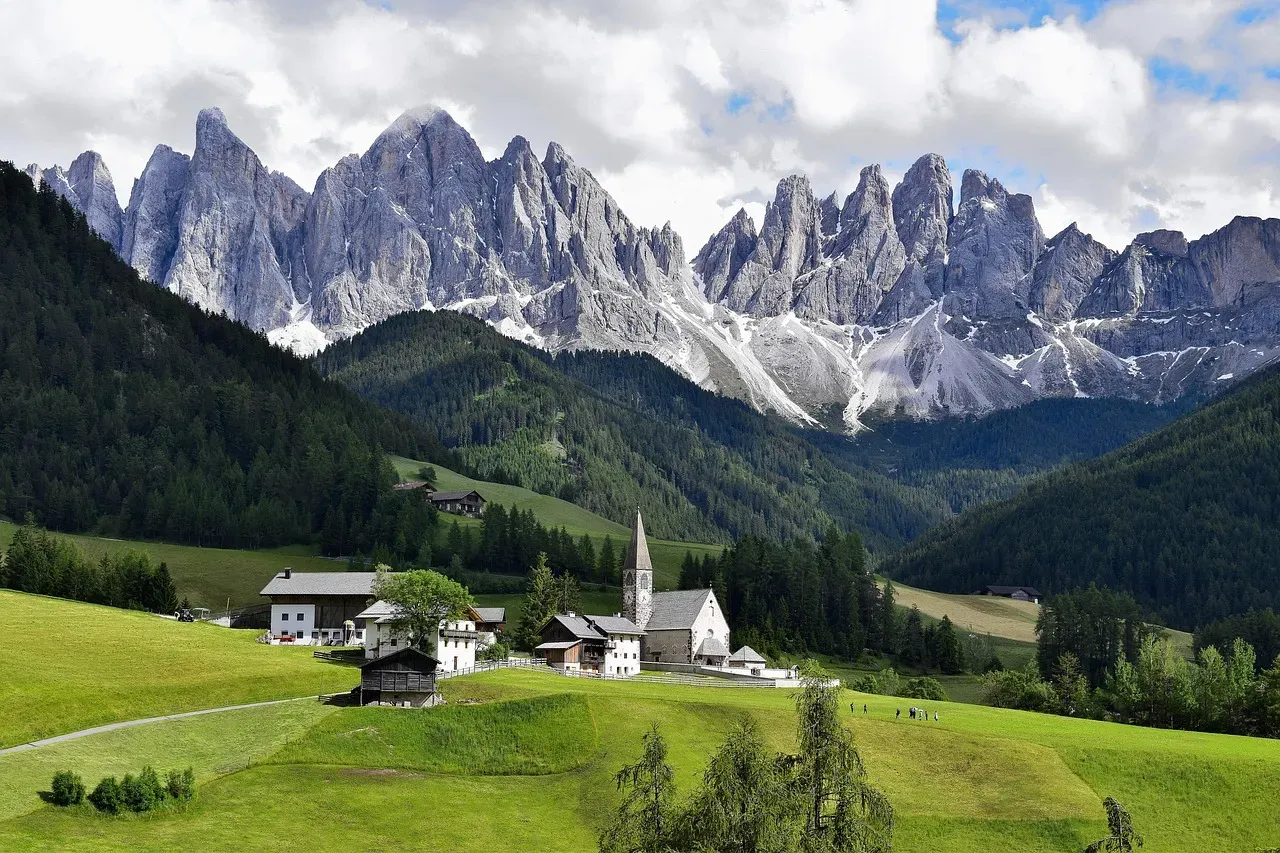
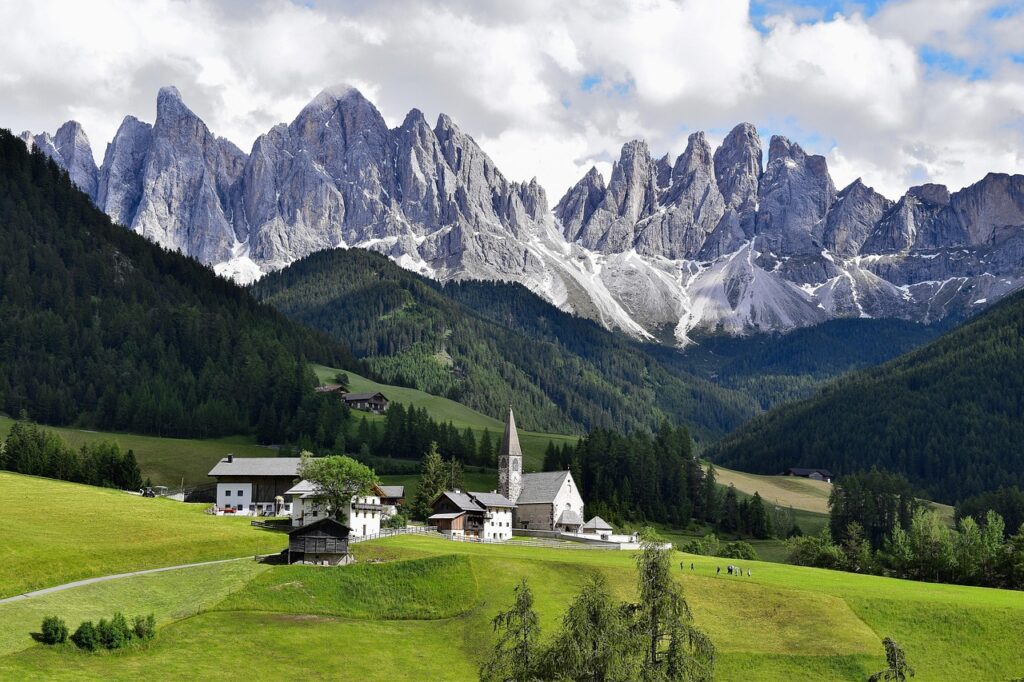
If you hike in the Dolomites of northern Italy, you’re walking among pale, vertical walls that look like someone yanked fossil coral reefs straight out of a tropical sea and hammered them into the sky. That is, in fact, roughly what happened: you’re dealing with ancient carbonate platforms and reef systems that were buried, lifted, and carved into cliffs. But here’s the awkward bit for simple geological models: soft, soluble limestone and dolostone of this sort is supposed to dissolve and slump into gentler, rounded hills over long timescales. Instead, you get knife-edge pinnacles and sheer faces that rise abruptly from green valleys, as if erosion quit halfway through the job. You’d expect more uniform smoothing, yet glaciers, frost, and rain have created over-steepened towers and freestanding spires that feel almost theatrical. Part of the solution lies in subtle differences in hardness, fracturing, and protective caps of more resistant rock. But when you stand there pressed up against a vertical reef wall, you can feel why older, overly tidy erosion models had to be thrown out in favor of a far more chaotic, patchwork understanding of how landscapes actually evolve.
3. Devils Tower: A Lava Plug That Should Have Weathered Away
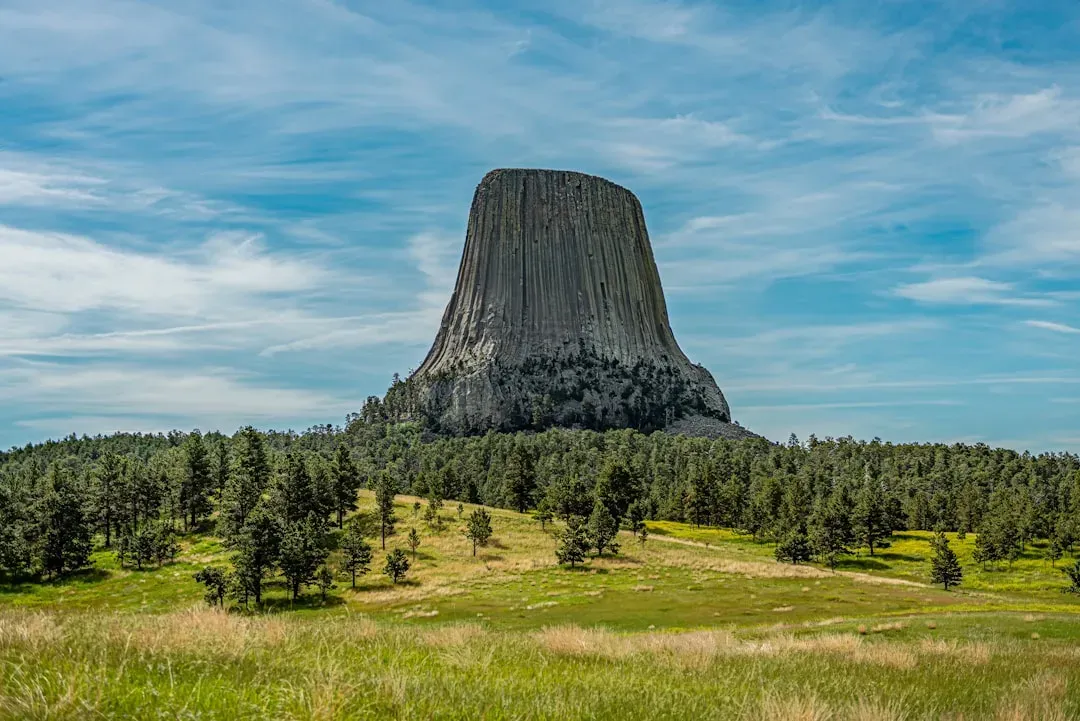
Devils Tower in Wyoming looks like a giant stone tree stump someone left in the middle of the plains. It’s widely interpreted as an igneous intrusion, probably the solidified “throat” or plug of an ancient volcano, but the surrounding volcanic structure and most of the original host rocks are gone. If you follow the usual erosion logic, the stubby cone of hardened magma should have worn down along with everything else, not remained as a solitary column sticking hundreds of meters above the prairie. You’re standing in front of columns of rock that cooled in near-perfect vertical joints, turning the plug into a bundle of geometric pillars that erosion could exploit – but only selectively. Softer surrounding sedimentary layers vanished far faster than the cooled igneous core, leaving the tower stranded like a tooth in a worn jaw. What makes it especially awkward is that you still don’t have a unanimous, detailed model of exactly how it formed, what the original volcanic edifice looked like, or why the differential erosion produced this precise, almost sculptural shape instead of a scatter of resistant knobs. The tower’s ongoing stability reminds you that ancient volcanic plumbing systems can stubbornly survive long after the volcano itself has vanished from the map.
4. Mount Roraima: A Flat-Top Island in the Sky That Should Have Eroded to Nothing
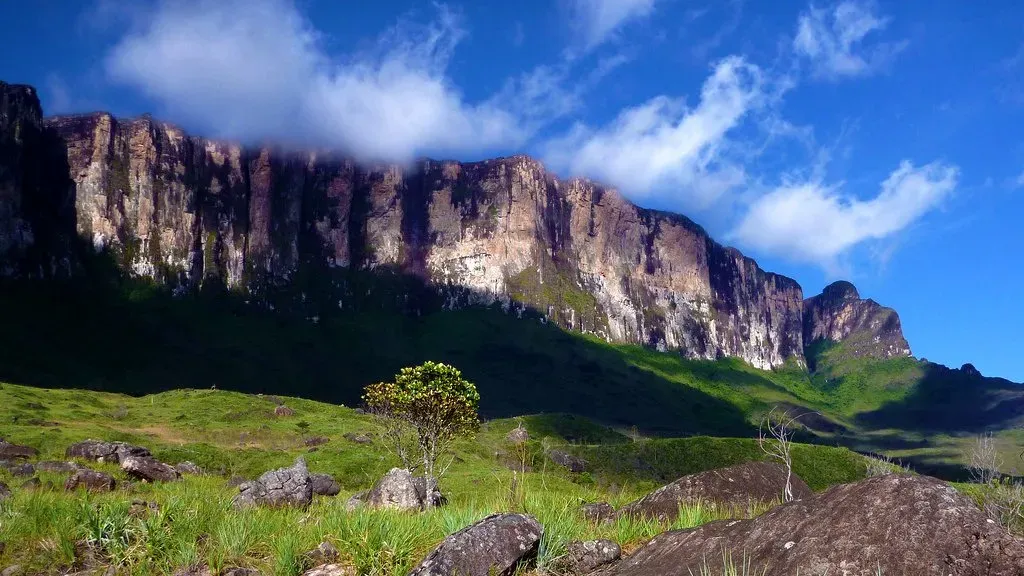
Mount Roraima, on the border of Venezuela, Brazil, and Guyana, feels like something out of another planet: a tabletop of Precambrian sandstone perched more than two thousand meters high, with vertical cliffs that drop straight into jungle. These tepui plateaus are some of the oldest exposed rocks on Earth. If you trust simple erosion timelines, they should have been completely worn down ages ago, especially given the intense tropical rains hammering them for millions upon millions of years. Instead, you get isolated mesas with flat summits and sheer sides, like stranded islands of ancient crust. You’re seeing the survivors of a former high plateau where only the toughest blocks resisted. The puzzle is not that erosion left anything at all – differential erosion is expected – but that such tall, near-vertical walls are still intact and that the plateau tops remain relatively flat instead of collapsing into chaotic piles. The best explanations rely on extremely resistant quartz-rich layers, subtle regional uplift, and the way fractures guided water. But when you stand on the edge and peer over, you can feel the quiet contradiction: by simple “wearing down” models alone, you shouldn’t still be on this stone table; it should have been sand long ago.
5. Uluru: A Monolith That Should Not Stand Alone
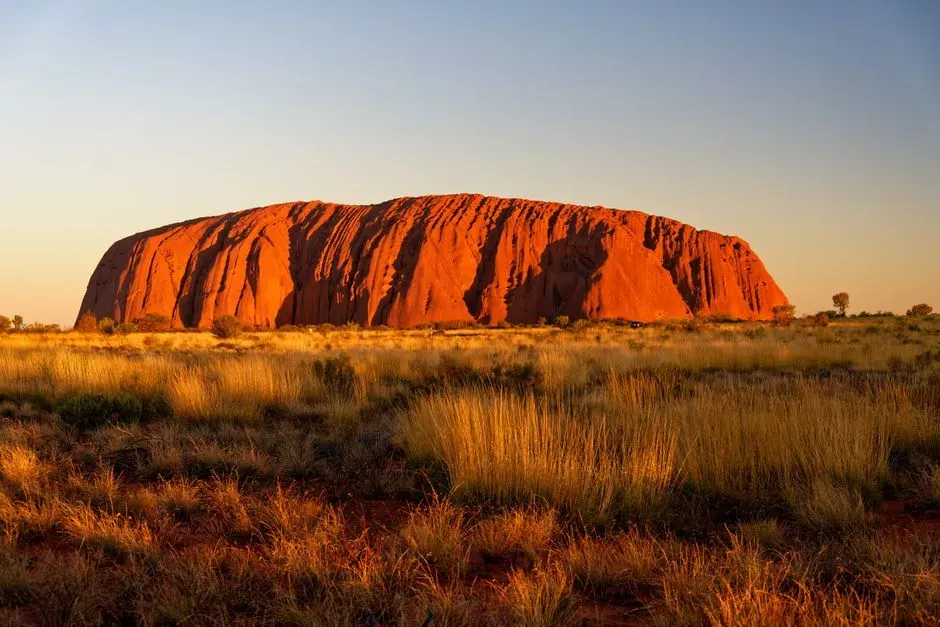
When you visit Uluru in central Australia, you’re looking at a single massive sandstone and conglomerate outcrop that rises abruptly from an almost featureless plain. It’s part of a much larger, mostly buried rock body that formed from debris shed off ancient mountains. The weirdness is how it presents itself to you now: one lone, smooth-sided giant in a landscape where everything else of similar age and composition has mostly disappeared or lies hidden underground. On paper, you would expect roughly similar rocks in the region to weather in more comparable ways, leaving a broader spread of resistant hills instead of one celebrity monolith and a few much smaller siblings. Uluru defies that expectation. Its internal structure, joint patterns, and protective iron-rich “skin” make it unusually resistant to the kind of aggressive flaking and collapse that should have broken it into ridges and slabs. You’re looking at a geological lottery winner: a piece of crust whose particular tilt, burial and exhumation history, and chemical hardening let it survive while its neighbors crumbled so completely that casual visitors think Uluru came from nowhere.
6. Nanda Devi and the Himalayas’ Inner Fortress Peaks
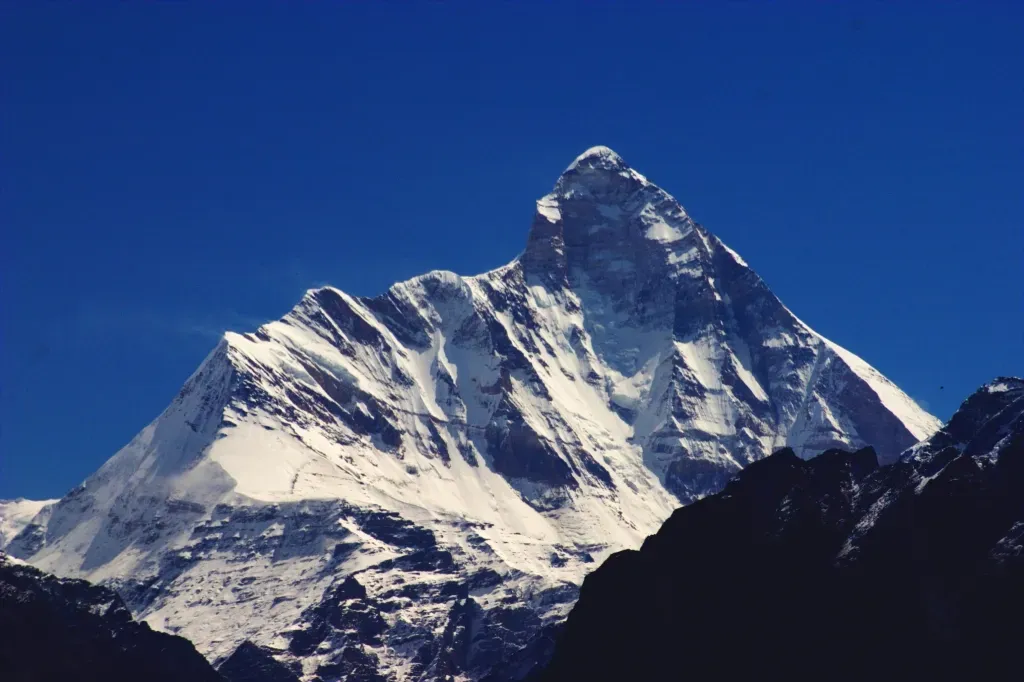
If you look deeper into the Himalayas beyond the obvious giants, you find a strange set of high, steep-walled peaks like Nanda Devi in India, which is ringed by a fortress of ridges. Standard models say an actively growing mountain belt with very high topography should also have extremely high erosion, especially with monsoon rains and river incision cutting deep valleys. In theory, once the crust gets too thick and high, erosion should win and start pulling everything down more quickly, softening the peaks into broader, less extreme forms. But you still see peaks such as Nanda Devi standing shockingly steep, surrounded by walls that keep weather systems and glacier dynamics uniquely focused. You’re watching a feedback loop that models struggle to capture: intense uplift, focused precipitation, rapid glacier flow, and areas of relative protection all stacked together in ways that keep some summits sharper and higher than they “ought” to be on a simple curve of uplift versus erosion. These fortress-like mountains show you that the real Earth is not a smooth, averaged-out line on a graph but a messy mesh of local quirks, where a slight structural difference in the crust or a shift in drainage patterns can keep a single peak extra-tall while others around it mellow.
7. Olympus Mons (Mars): A Mountain That Breaks Your Terrestrial Rules
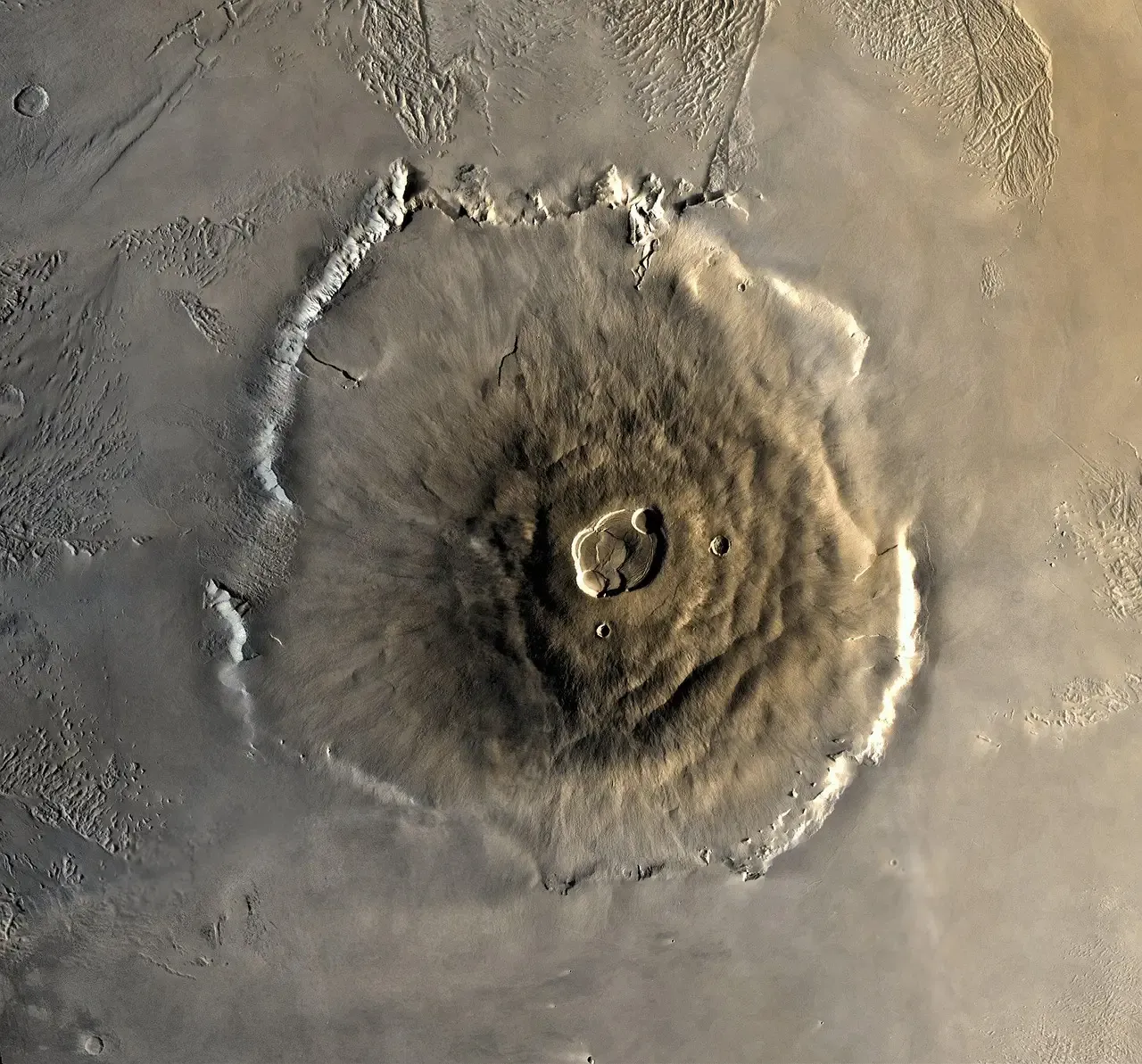
The last mountain sits far outside your usual field guides: Olympus Mons on Mars, the largest volcano known in the Solar System. It rises about three times higher than Everest and sprawls across an area roughly the size of a small country. If you tried to explain it using the plate tectonics and erosion rules you apply on Earth, you’d run into trouble. On a planet with no active plate tectonics like ours and lower gravity, you simply don’t get the same mechanisms for breaking and recycling crust, so volcanic systems can stay rooted over long-lived hot spots far longer. You’re looking at what happens when eruptions keep piling lava in one place for unimaginably long periods with very little erosion to fight back. On Earth, the moving plates carry volcanoes away from their magma sources, creating chains like Hawaii; volcanoes get cut off and brought down by weather and ice. On Mars, Olympus Mons could stay parked above its heat source, growing and growing in incredibly broad, gently sloping layers, with thin air and minimal water-driven erosion to wear it down. From your Earth-trained point of view, that makes it seem geologically impossible – but really it’s a reminder that your models are tuned to one planet. Change the gravity, atmosphere, and tectonics, and suddenly a mountain that would collapse here can sit serenely for eons there.
Conclusion: When Mountains Refuse to Fit the Model
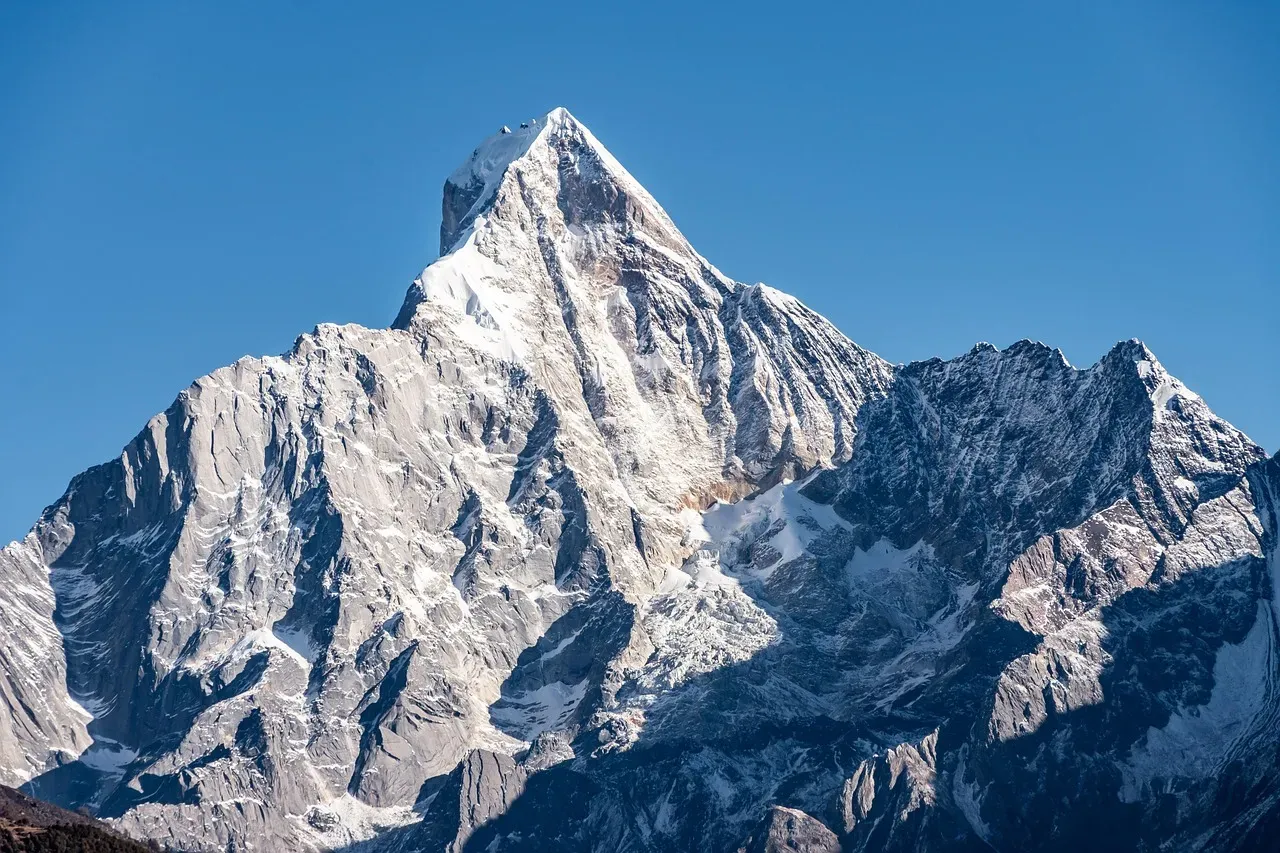
If you step back and look at these seven mountains together, you start to see a pattern: each one breaks a rule you might have been tempted to treat as universal. A sedimentary skyscraper that should have slumped, fossil reefs turned into cliffs, a volcanic plug marooned on the plains, ancient plateaus still standing, a lonely monolith, fortress peaks that out-climb erosion, and a Martian volcano that laughs at Earth’s limits – all of them force you to refine what you think you know. Instead of proving geology wrong, they show you where the diagrams were too simple and where the equations left out crucial details. The next time you see a mountain, you can treat it less like a static lump of rock and more like a slow-motion argument between competing forces: uplift and gravity, erosion and resistance, heat from below and cold from above. Some mountains follow the script closely; others, like these, tear up whole pages and improvise. That is exactly why they are still standing and why they keep scientists – and curious people like you – coming back with new questions. Which of these misfit peaks do you now see in a completely different light?