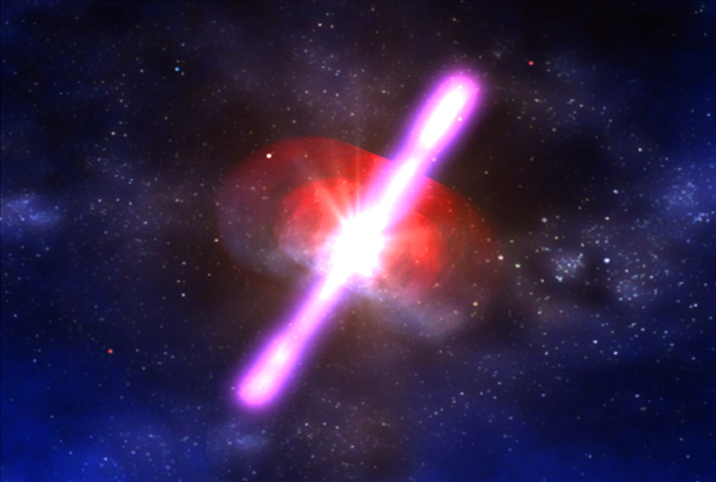

Imagine an explosion so intense that in a few seconds it outshines every single star in the observable universe, while our Sun quietly chugs along by comparison like a dim desk lamp left on in the next room. That is the kind of terrifying, exhilarating power we are talking about with gamma-ray bursts, and they are not just distant, abstract fireworks; at least a few seem to have happened close enough to Earth to leave actual scars in our planet’s geological and atmospheric records. The universe, it turns out, has a flair for drama that makes every science fiction disaster scenario look tame.
In this article, we are going to unpack how these events work, why astrophysicists are convinced they unleash more energy in seconds than the Sun emits over billions of years, and what the evidence looks like that some have brushed past our cosmic neighborhood. We will move from the raw physics to the subtle, eerie fingerprints buried in rocks, ice, and isotopes, and then circle back to what it all means for life on a fragile planet orbiting an ordinary star. Along the way, you might find yourself looking at the night sky a little differently – a mix of gratitude, curiosity, and a healthy dose of awe.
What Exactly Is a Gamma-Ray Burst, and Why Is It So Extreme?
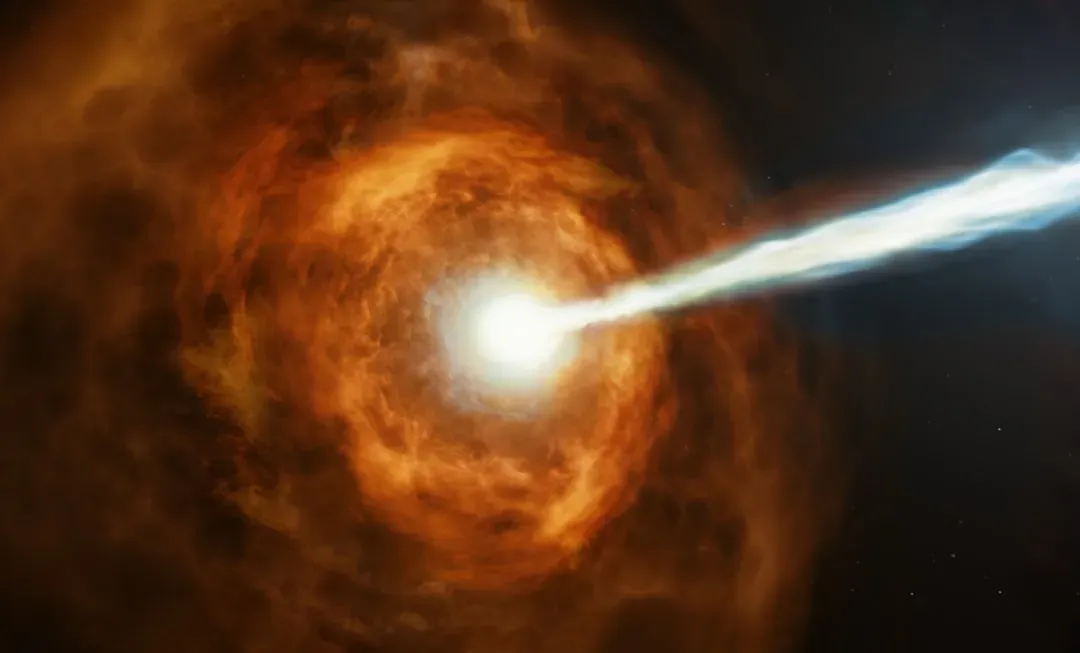
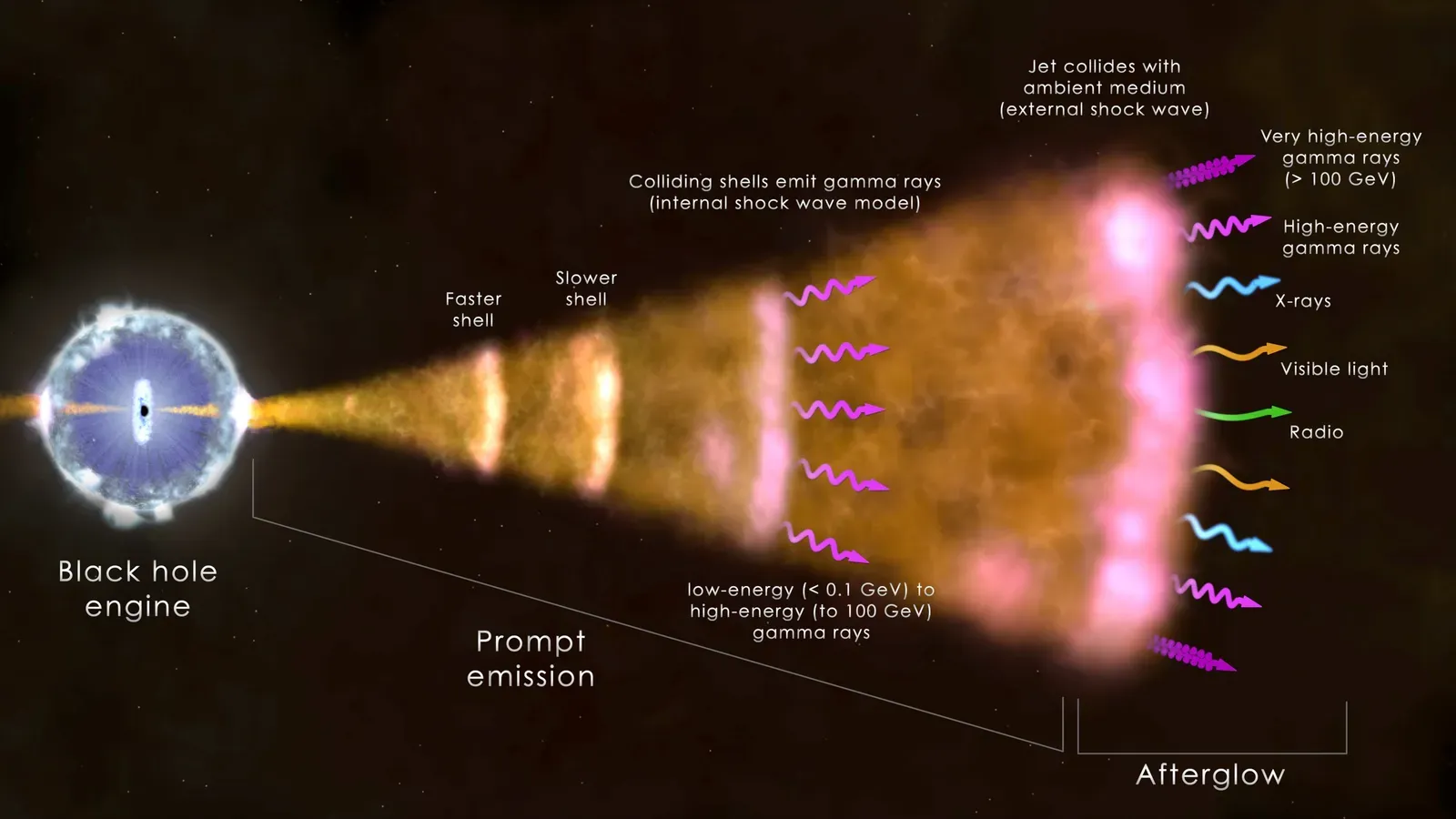
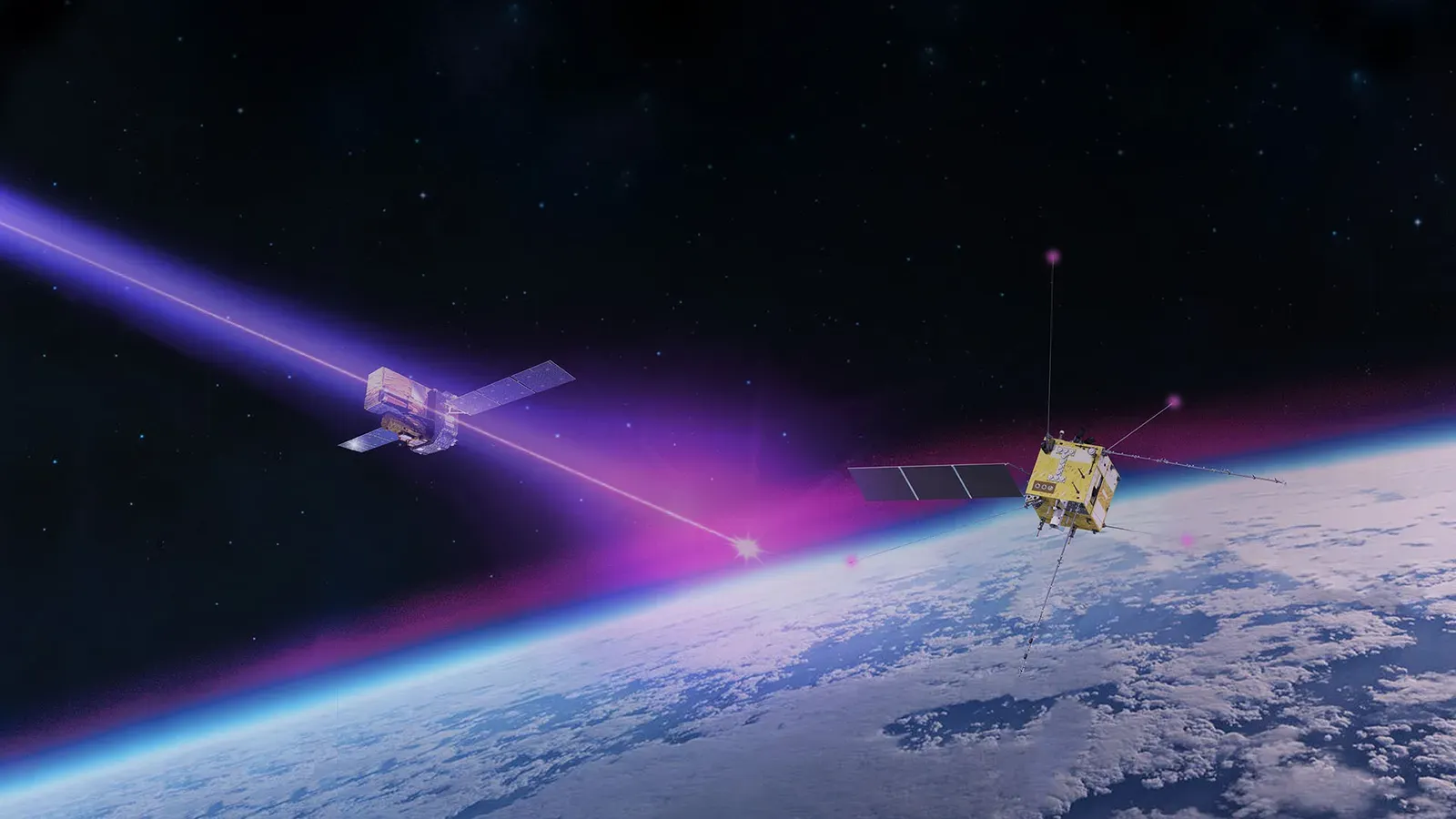
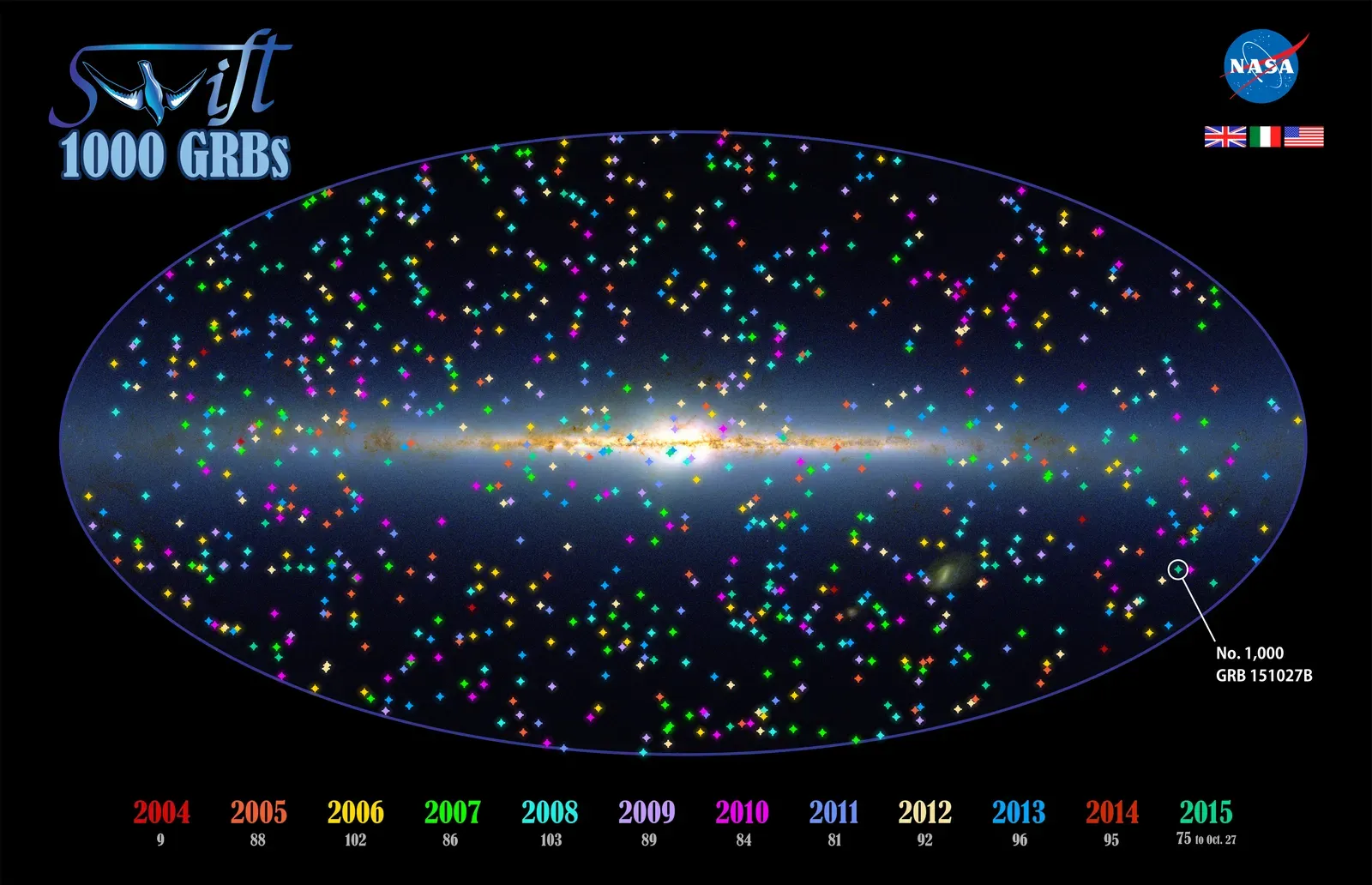
Gamma-ray bursts, often shortened to GRBs, are sudden, intense flashes of high-energy gamma radiation that can last from a fraction of a second up to a few minutes. They were discovered accidentally in the late twentieth century by satellites meant to monitor nuclear weapon tests, which is already a hint at how extreme they are: they were bright enough, from galaxies away, to get noticed by instruments hunting for human-made explosions. From our point of view, they show up as brief spikes in gamma-ray detectors, then fade, leaving astrophysicists scrambling to catch the afterglow in X-ray, optical, and radio light.
What makes GRBs so outrageous is the amount of energy they pack into that short window of time. When astronomers estimate what is called the isotropic equivalent energy – basically, how much energy they would have if the explosion were radiating equally in all directions – they often get numbers that dwarf the Sun’s entire lifetime output. Even accounting for the fact that GRBs are strongly beamed into narrow jets, the true energy budget is still staggeringly large. This is not just a notch above a regular supernova; it is a fundamentally more violent way for massive stars or compact objects to die.
How Can a Few Seconds Beat the Sun’s Whole Lifetime of Light?
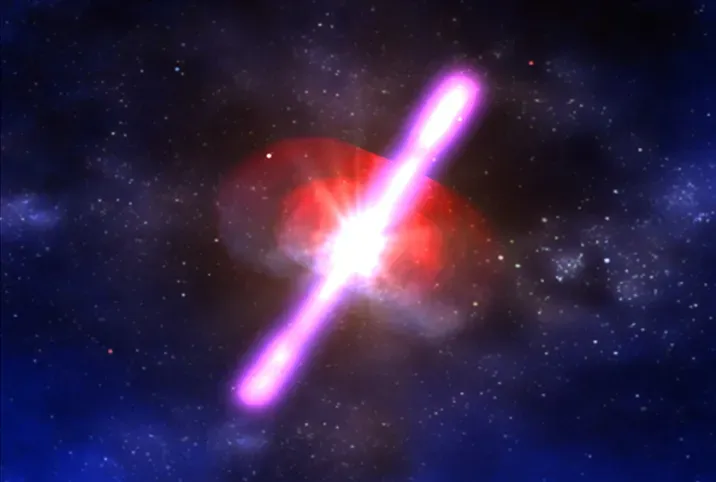
To get a feel for the comparison, think about the Sun: over roughly ten billion years of nuclear fusion, it steadily converts hydrogen to helium, radiating energy at a nearly constant pace. If you integrate that output over its entire life, you get a huge number, but it is spread out over an almost unimaginably long time. A long-duration gamma-ray burst, by contrast, can dump a comparable or larger amount of radiated energy into space in tens of seconds, like the cosmic equivalent of detonating every solar flare the Sun will ever have, all at once and then some.
The way astrophysicists justify that statement is by measuring the brightness of GRBs at Earth, estimating the distance to the host galaxy, and then calculating how much energy must have been emitted to appear that bright across such a gap. Even after correcting for beaming – because the burst is focused into tight jets rather than a perfect sphere – the energy released in gamma rays alone is still enormous. Add in the kinetic energy of the outflowing material and the energy carried by neutrinos and magnetic fields, and you have events that easily earn their reputation as the most luminous explosions we currently know about.
Two Main Engines: Collapsing Stars and Colliding Corpses
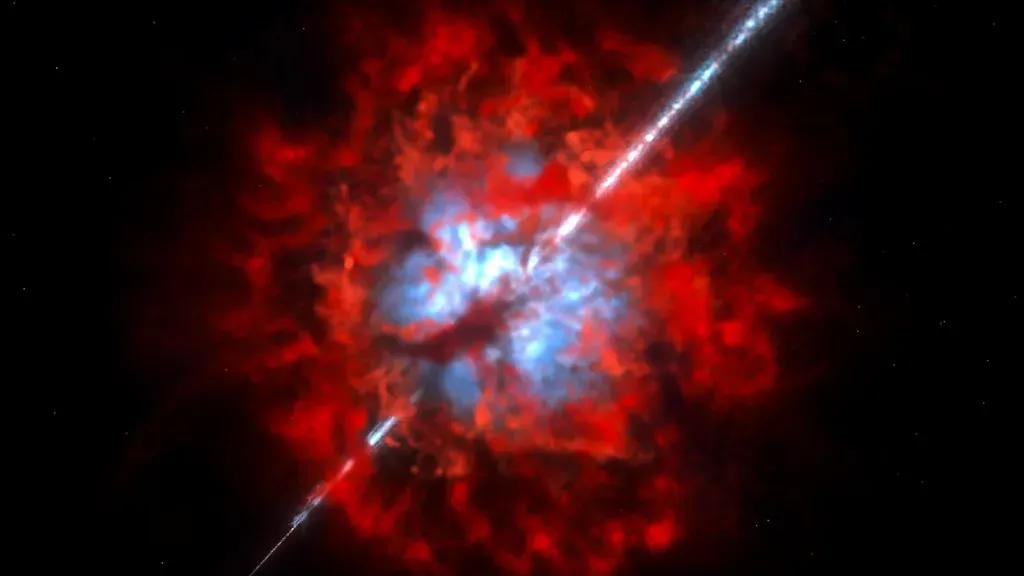
Astrophysicists now think there are two main types of GRB engines, each terrifying in its own way. Long gamma-ray bursts, which last more than a couple of seconds, are usually linked to the collapse of very massive, rapidly rotating stars at the end of their lives. When the core collapses into a black hole or a highly magnetized neutron star, it can launch narrow, relativistic jets that punch through the star’s outer layers and blast gamma rays out into space, often accompanied by an unusually energetic supernova.
Short gamma-ray bursts, on the other hand, are associated with mergers of compact objects like neutron star–neutron star pairs or neutron star–black hole systems. When these ultra-dense remnants spiral together and collide, they release energy through gravitational waves and electromagnetic radiation, including jets that generate a brief but violent flash of gamma rays. These collisions are also strong candidates for being factories of heavy elements like gold and platinum. In both cases, the core idea is similar: a newly formed compact central object plus an accretion disk and magnetic fields act as an engine that converts gravitational energy into a focused blast of radiation.
One detail that makes GRBs especially interesting for Earth’s history is that they do not happen just in one kind of galaxy or one specific era of the universe. Long bursts tend to favor star-forming galaxies with lots of massive stars, while short bursts can occur in more varied environments, including older, more quiescent galaxies. That range means that over billions of years, our own Milky Way has likely hosted its share of GRBs, raising the possibility that at least some past events happened close enough to have touched Earth in measurable ways. Determining how often that happens is a whole separate challenge, but the fact that there is a plausible physical pathway is what makes the geological clues so compelling.
Could a Gamma-Ray Burst Actually Affect Earth’s Atmosphere?
From a safe distance of many millions or billions of light-years, GRBs are just data spikes. If one went off within our own galaxy and its jet happened to be aligned with Earth, though, the story becomes much more personal. Gamma rays are far too energetic to reach the ground directly in large quantities because they interact strongly with the upper atmosphere, but that is precisely where the risk lies: they can ionize nitrogen and oxygen, break molecular bonds, and drive chemical reactions that reshape the delicate balance of our air.
One of the main worries is the production of nitrogen oxides, which can catalytically destroy ozone in the stratosphere. Models suggest that a sufficiently close GRB could poke a serious hole in Earth’s ozone layer, temporarily lowering our shield against the Sun’s ultraviolet radiation. That, in turn, could stress ecosystems, especially near the ocean surface and on land for organisms not adapted to heightened UV exposure. Even if life does not get wiped out, an atmospheric shock of that kind would be a big enough event to leave some kind of imprint in climate, chemistry, or the fossil record, which is exactly what researchers have gone looking for.
Hunting for Cosmic Fingerprints in Earth’s Geological Record
So how do you look for the ghost of a gamma-ray burst in rocks and sediments? You cannot dig up a crater from gamma rays the way you might for an asteroid impact because gamma rays interact mostly with the atmosphere, not the crust. Instead, scientists focus on indirect signatures, like unusual spikes in certain isotopes that can be formed or altered when high-energy radiation showers the atmosphere with secondary particles. These isotopes can get locked into tree rings, ice layers, or ocean sediments, acting like tiny time capsules for ancient radiation events.
A few of the more intriguing candidates involve sudden jumps in cosmogenic isotopes such as carbon-14 or beryllium-10, recorded in well-dated archives. These spikes suggest that Earth was momentarily bathed in a stronger-than-usual flux of high-energy particles or radiation. While solar superflares and nearby supernovae are also on the table as explanations, gamma-ray bursts are attractive for some of the most extreme cases because they can deliver a sharp, intense dose without necessarily leaving the kind of long-lived radioactive debris that a very close supernova would. The debate is ongoing, but the fact that we can even frame the question in those terms shows how far the field has come.
Close Calls: Evidence That Some Bursts May Have Brushed Past Earth
Over the past decade or so, several studies have pointed to events in the last few thousand years where the patterns in tree rings and ice cores hint at something more dramatic than the usual solar variability. In a couple of cases, the apparent radiation surge looks too abrupt and powerful to fit comfortably within standard solar flare scenarios, at least with our current knowledge. That has led some researchers to propose that a relatively nearby, beamed high-energy event – possibly a short gamma-ray burst or a similar transient – might have been the culprit.
The distances involved would still be on the order of thousands of light-years, far enough that we are not talking about an extinction-level catastrophe, but close enough for the upper atmosphere to feel the hit. The claim that several such events have left measurable traces in Earth’s geological and atmospheric records is not wild speculation; it is rooted in real anomalies that need explaining. What remains controversial is how many of those anomalies can reasonably be pinned on GRBs rather than exotic solar behavior or other astrophysical sources. Personally, I think the most honest position right now is that GRBs are a serious candidate for at least some of these signatures, but pinning down cause and effect with high confidence is still a work in progress.
Life, Extinctions, and the Grim Possibility of a Direct Hit
Every time the topic comes up, someone asks the uncomfortable question: could a gamma-ray burst wipe us out? The short answer is that a truly close, directly beamed GRB could be devastating for the biosphere, but the odds of that happening in any human timeframe are thought to be extremely low. Models suggest that only bursts within our own galaxy and pointed right at us would be dangerous, and even then, the size of the danger zone depends on the energy of the burst and details of Earth’s atmosphere at the time.
Some researchers have speculated that past mass extinctions might have been triggered or intensified by such events, especially in cases where there is no clear impact crater or volcanic province that fully explains the loss of biodiversity. A GRB could, in theory, deliver a sudden jolt of atmospheric damage and climate stress that pushes already vulnerable ecosystems over the edge. But connecting any specific extinction to a GRB is challenging because the geological record is messy and many catastrophic processes can leave overlapping fingerprints. To me, the more interesting takeaway is that our planet’s story is probably shaped not just by what happens on or beneath its surface, but also by rare, violent events in the surrounding galaxy.
Why Gamma-Ray Bursts Make the Universe Feel Both Terrifying and Beautiful
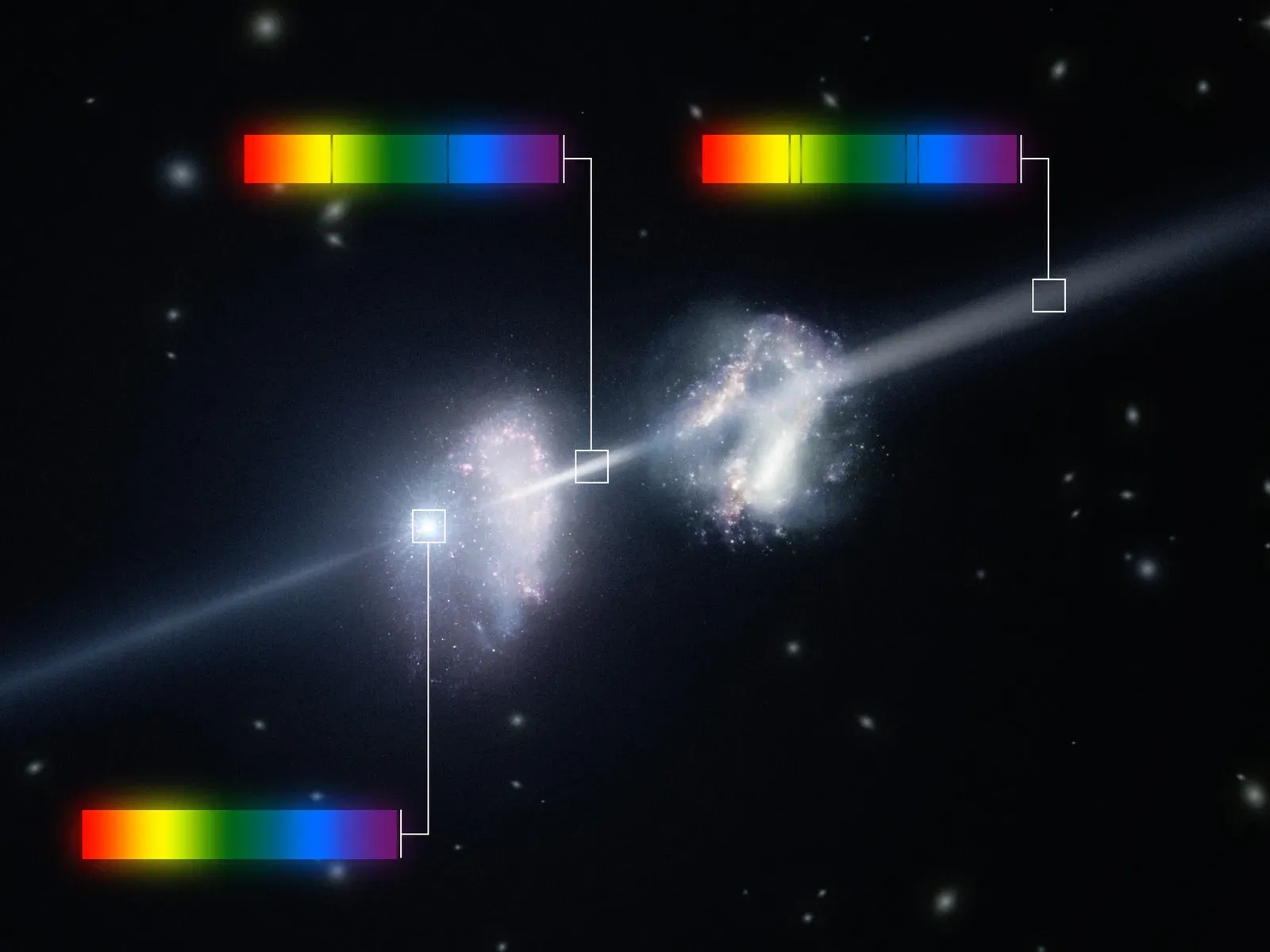
Stepping back, gamma-ray bursts are one of those astrophysical phenomena that make you feel small in that oddly satisfying way. On one hand, they highlight how fragile life is: a few seconds of fury in a star system halfway across the galaxy could, under just the wrong circumstances, rattle Earth’s atmosphere and stress the web of life that we depend on. On the other hand, the fact that our species has built detectors, telescopes, models, and geological techniques that can even recognize such events – and maybe find their traces in ancient ice and wood – is quietly amazing.
My own opinion is that GRBs are a reminder that the universe is not a calm, gentle backdrop; it is dynamic, volatile, and sometimes brutally indifferent. Yet that same violent creativity forges heavy elements, drives the evolution of galaxies, and paints a richer, wilder story of how we came to be. We probably owe some aspects of our existence to the same kinds of events that could, in principle, make things very difficult for us. That tension is part of what makes astrophysics so compelling: every new piece of evidence, from a distant gamma-ray spike to a strange isotopic bump in a tree ring, connects the vastness of cosmic processes to the very specific, very human question of how we fit into it all. The next time you hear about a burst that outshone the universe for a heartbeat, will you feel more fear, or more wonder?