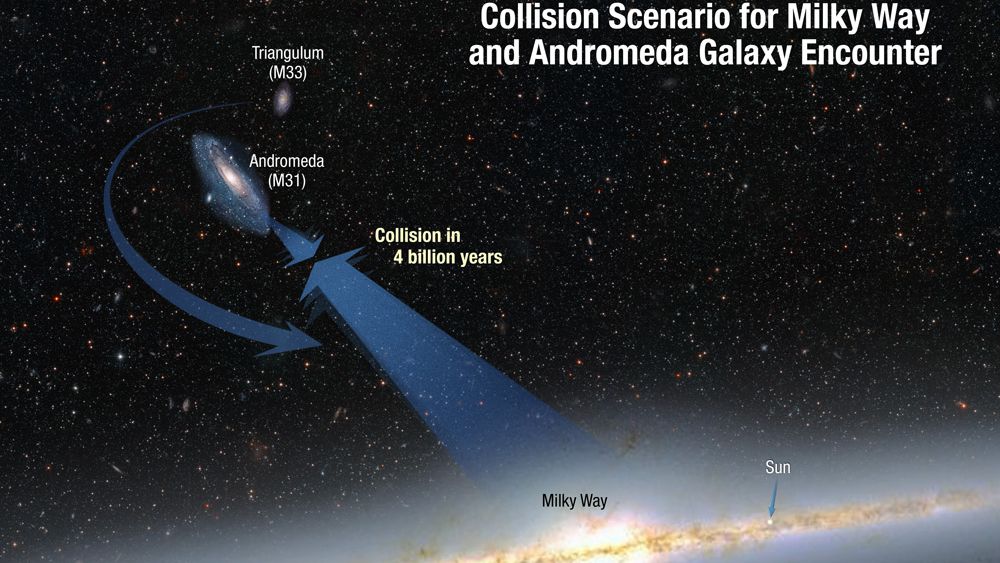

Stand outside on a clear night, look up, and realize this: the calm, glittering sky above you is lying. It looks frozen and peaceful, but on a truly cosmic scale, the Milky Way is already in the middle of a gigantic slow-motion collision with the Andromeda galaxy. Not “someday,” not “in the distant future” as if nothing is happening yet – the interaction is underway right now, and has been for longer than any human lineage has walked the Earth. We are living inside a galaxy that is already responding to Andromeda’s pull, caught in a silent gravitational dance that is reshaping both systems over billions of years.
That idea feels almost unfair, like discovering that your quiet hometown has secretly been moving toward another city the entire time. But this is what astrophysics keeps revealing: the universe is not static; it is restless, dynamic, and always in motion, even when our eyes cannot see it. The Milky Way and Andromeda are not politely waiting for some future appointment to crash together. Their mutual gravity has already linked them, distorted them, and set their fates on a shared trajectory. Once you see our place in that story, it’s hard to ever look at the night sky the same way again.
The Hidden Gravitational Bridge Between the Milky Way and Andromeda
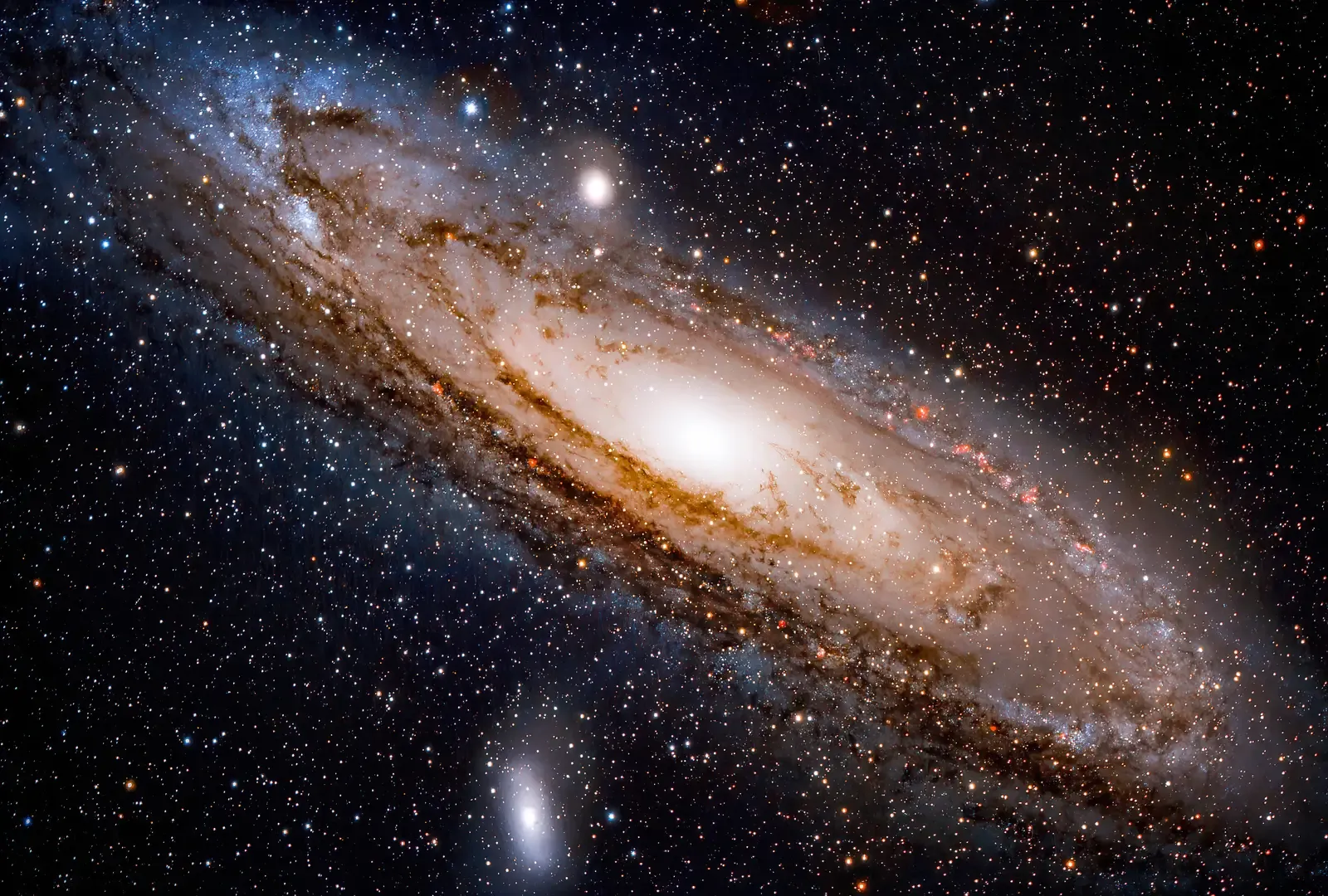
Here’s the wild part: even though Andromeda sits about two and a half million light-years away, the two galaxies are already locked together by gravity as firmly as if they were connected by an invisible bridge. Their mutual gravitational attraction is strong enough that both galaxies are falling toward a common center of mass, slowly accelerating as if sliding down a very long, very shallow hill. From our point of view inside the Milky Way, it feels like nothing is happening, because these motions unfold over billions of years – far too slow for a human lifetime to notice.
Astronomers know this motion is real because they can measure Andromeda’s velocity with staggering precision using the light it emits. When a galaxy is moving toward us, its light is slightly shifted toward the blue end of the spectrum, and Andromeda shows exactly that pattern. That blue shift tells us it is heading in our direction at hundreds of kilometers per second, already in-bound, already responding to the shared pull of gravity between our two galaxies. Even more striking, careful measurements of how stars move in our own halo and in Andromeda’s outskirts suggest that a giant, overlapping gravitational field – dominated by dark matter – links the two systems like a massive, invisible scaffold.
The Merger Timeline: A Collision That Started Before We Did
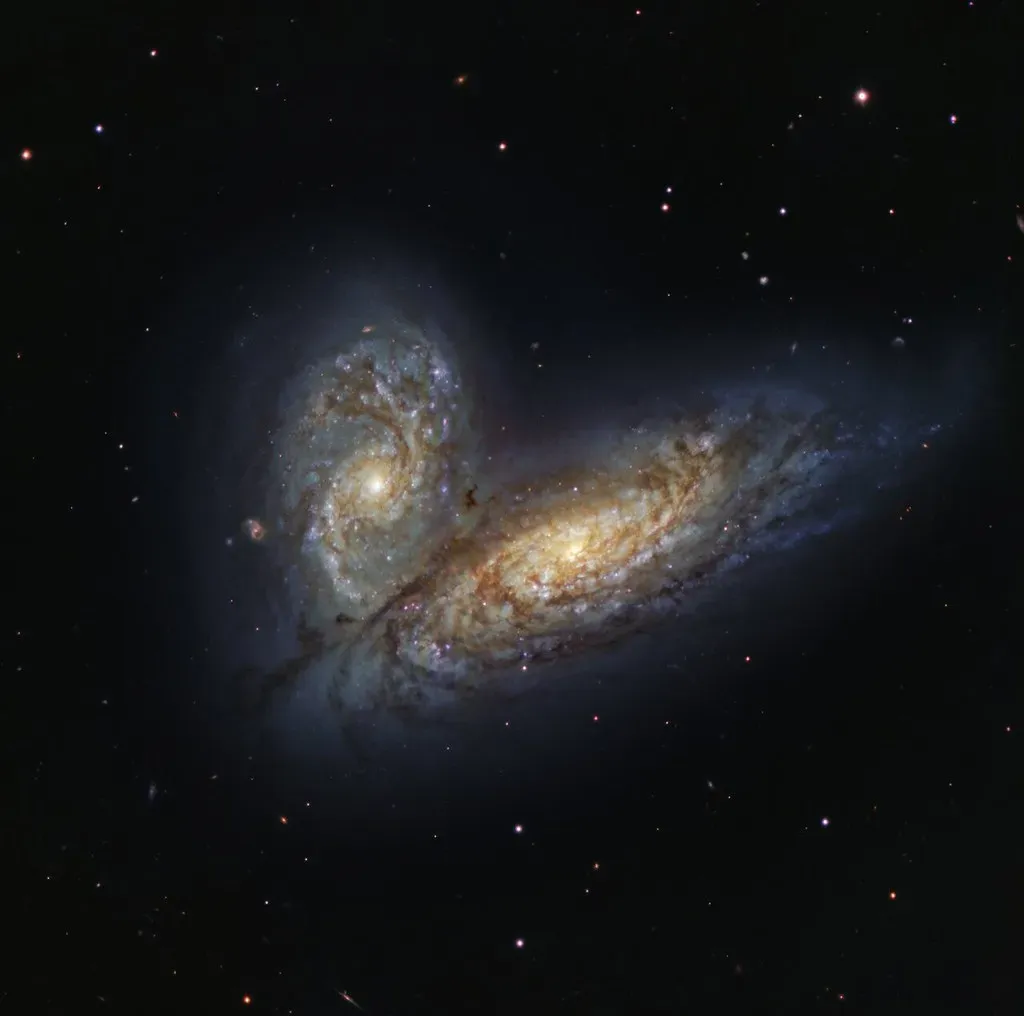
People usually hear that the Milky Way and Andromeda will collide in about four to five billion years and picture that as a single future event, like a fireworks finale scheduled far down the road. But if you zoom out to true galactic timescales, a merger is not a moment; it is a multi-stage process that begins long before the visible disks overlap. The instant the two galaxies became gravitationally bound – probably many billions of years ago – the merger, in a physical sense, had already started. Everything from the shape of their dark matter halos to the motions of their outer stars has been quietly responding to the connection ever since.
By the time humans appeared, that slow dance was well underway. Our species is just a late-arriving spectator, stepping into a theater long after the first act began. The closest analogy might be two ocean liners on a collision course from the day they leave their ports, even though they will not actually scrape hulls until far out at sea. Right now, we are in the early-to-middle chapters of that story: the galaxies are closing the gap, their dark matter halos already overlapping, their outer stars subtly tugging and stretching in response. The grand, visually dramatic phase – with disks warping, gas clouds colliding, and intense star formation – is still far ahead, but the setup is complete and the script is already in motion.
Dark Matter Halos: Where the Real Collision Is Already Happening
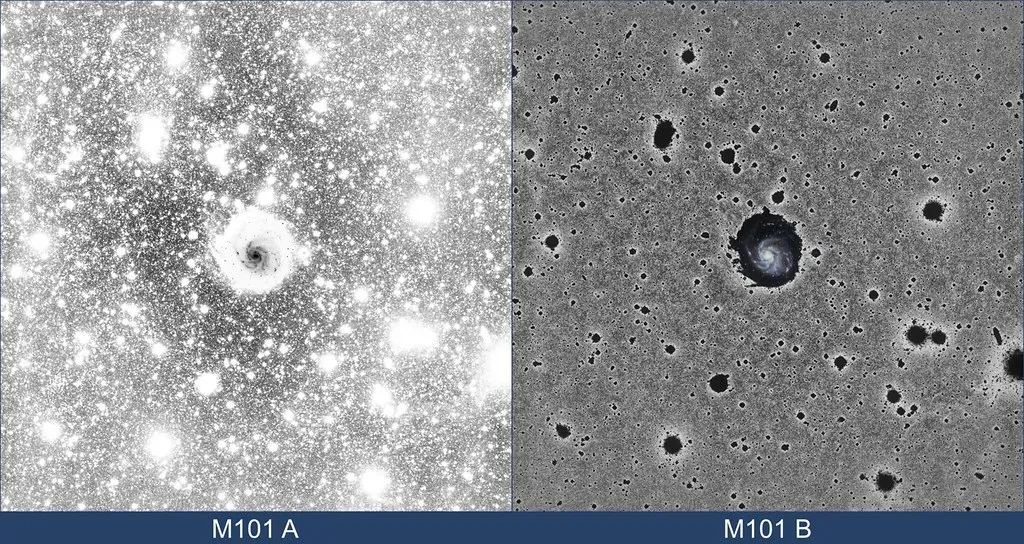
If you could switch your vision to see dark matter instead of starlight, you would probably never again say that the Milky Way and Andromeda “will merge in the future” – you would say they are in the middle of it right now. Both galaxies are embedded in enormous halos of dark matter, roughly spherical cocoons that extend much farther than the visible starry disks. These halos likely already overlap, which means the first true contact between the two galaxies happened not with stars crashing together, but with these vast, ghostly envelopes blending and interacting on a gravitational level.
Astrophysicists use computer simulations to reconstruct what this looks like, and the picture that emerges is more like two clouds merging than two solid objects colliding. The dark matter halos interpenetrate, reshape each other, and adjust the orbits of the galaxies’ outer stars long before anything dramatic happens in the bright central regions. You can think of it as the deep “weather system” of the universe, with currents and tides that guide everything else. From that perspective, the merger is not just a future headline event; it is an evolving state that has been rearranging the structure and dynamics of both galaxies over billions of years already.
Ripples in Our Own Galaxy: Subtle Signs the Dance Is Underway
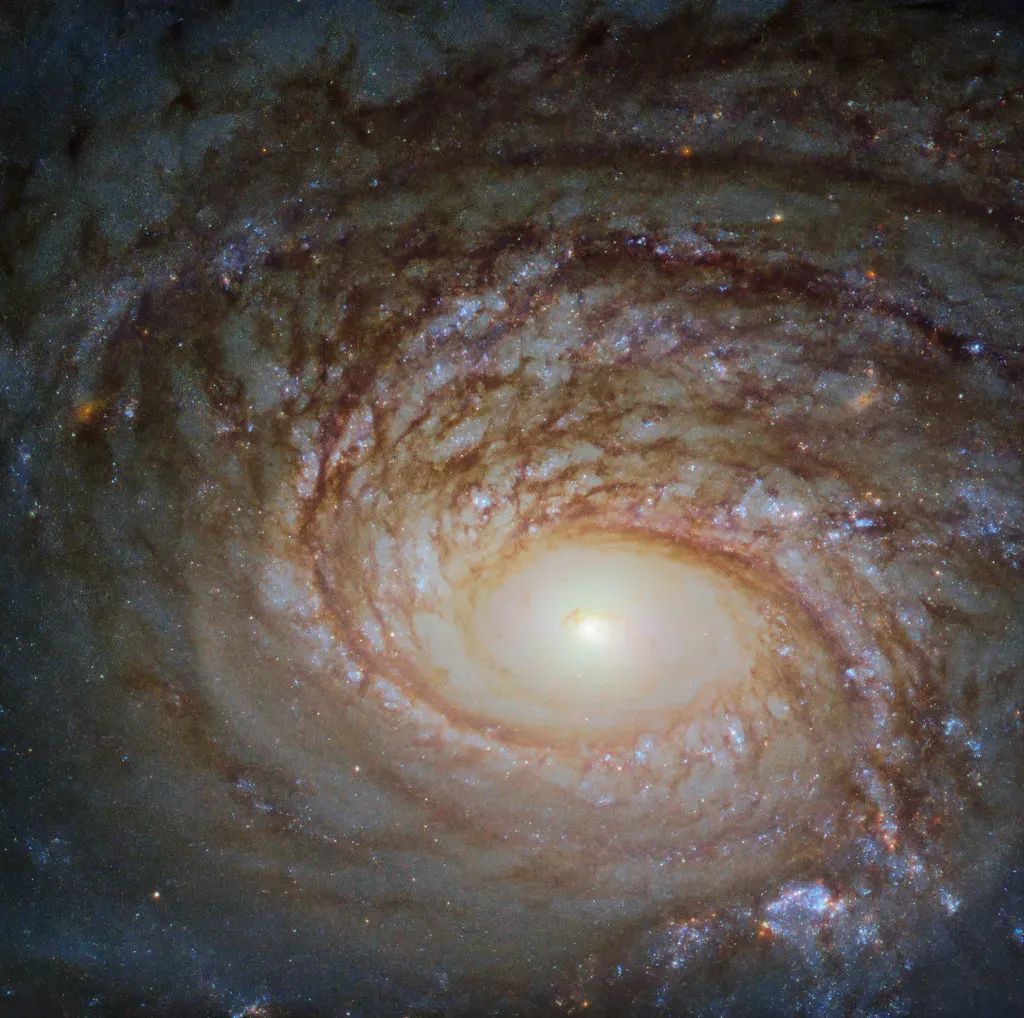
It is tempting to imagine the Milky Way as a neat, orderly spiral quietly minding its business until Andromeda eventually arrives to cause trouble. But detailed maps of our own stellar disk tell a messier, more dramatic story. Using precise measurements of star positions and motions, astronomers have found ripples, waves, and vertical oscillations running through the Milky Way’s disk, almost like someone plucked a cosmic guitar string. Some of these disturbances are probably caused by smaller galaxies passing through or merging with us, but the broader large-scale pattern is consistent with a galaxy that is not isolated, but living inside a bigger, ongoing gravitational drama.
When I first saw those maps – stripes of stars moving up and down relative to the galactic plane, like a warped vinyl record – it felt less like a calm spiral and more like a galaxy experiencing echoes from a long series of gravitational nudges. The approaching Andromeda galaxy, with its overlapping dark matter halo and shared gravitational field, is part of that story. Even if Andromeda is not the only culprit, the fact that we are embedded in a complex gravitational environment, already shaped by interactions within our local group of galaxies, reinforces the idea that this merger is not a future interruption, but the continuation of a long-running process. The Milky Way is already responding, already slightly bent and stirred by forces reaching far beyond our visible edge.
What the Final Merger Will Look Like – And Why It Is Less Apocalyptic Than It Sounds
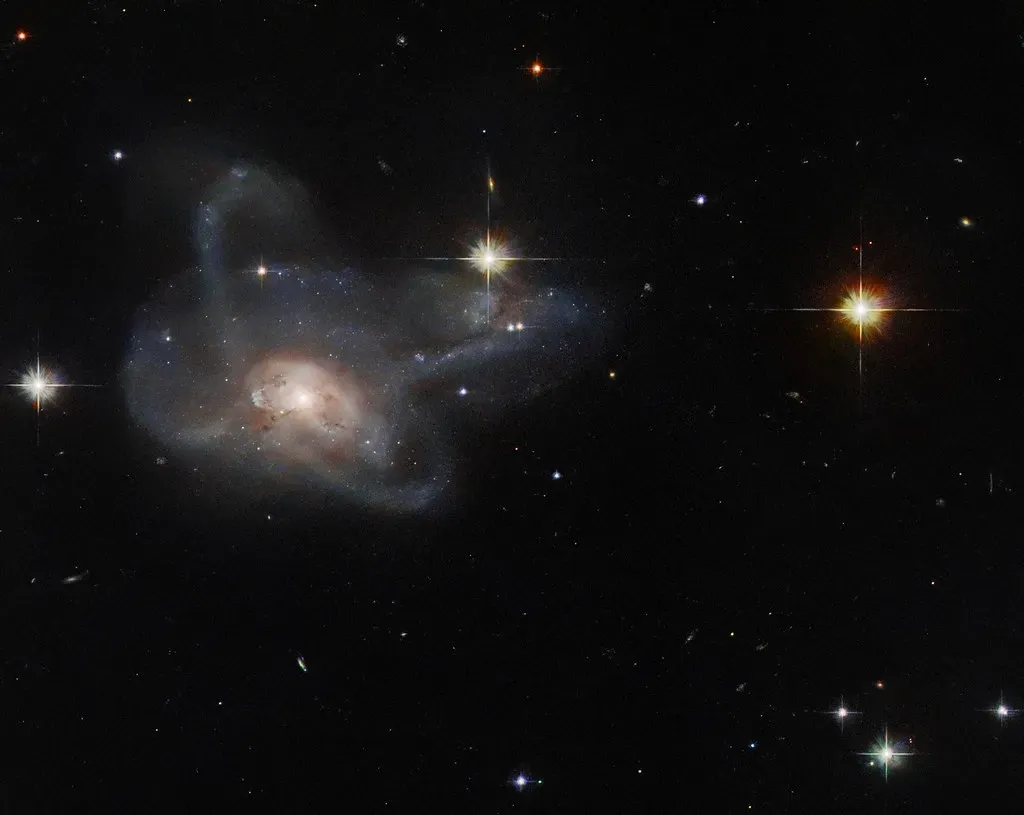
When people hear “galactic collision,” they often picture something like two solid objects smashing together in a catastrophic explosion. Reality is stranger and, in some ways, gentler. Galaxies are mostly empty space; stars are incredibly far apart relative to their sizes, so direct star-to-star collisions will be rare even when the Milky Way and Andromeda fully overlap. The real chaos unfolds in the gravitational rearrangement: orbits stretch and twist, spiral arms distort, gas clouds slam together, and new waves of star formation ignite in bright, turbulent regions. Over billions of years, the two disk galaxies will gradually fuse into a single, larger, more rounded system – likely an enormous elliptical or something close to it.
For any future beings living inside that merged galaxy, the sky will be stunningly different. Instead of the familiar barred spiral of the Milky Way, they might see thick swarms of stars in all directions, remnants of once-separate structures now combined. The Sun itself (or whatever survives of it) will not be spared from the gravitational reshuffling, but it is far more likely to be gently repositioned into a new orbit than flung violently out of the galaxy. That is the almost paradoxical nature of these events: from a distance, they are epic and dramatic transformations; up close, they can feel eerily smooth and spread-out, like watching a mountain range rise in extreme slow motion. To call this “apocalyptic” for Earth is misleading – the real threat to our planet will be the Sun’s evolution, not the galactic merger.
Humans Caught in a Cosmic Story: Why This Merger Changes How We See Ourselves
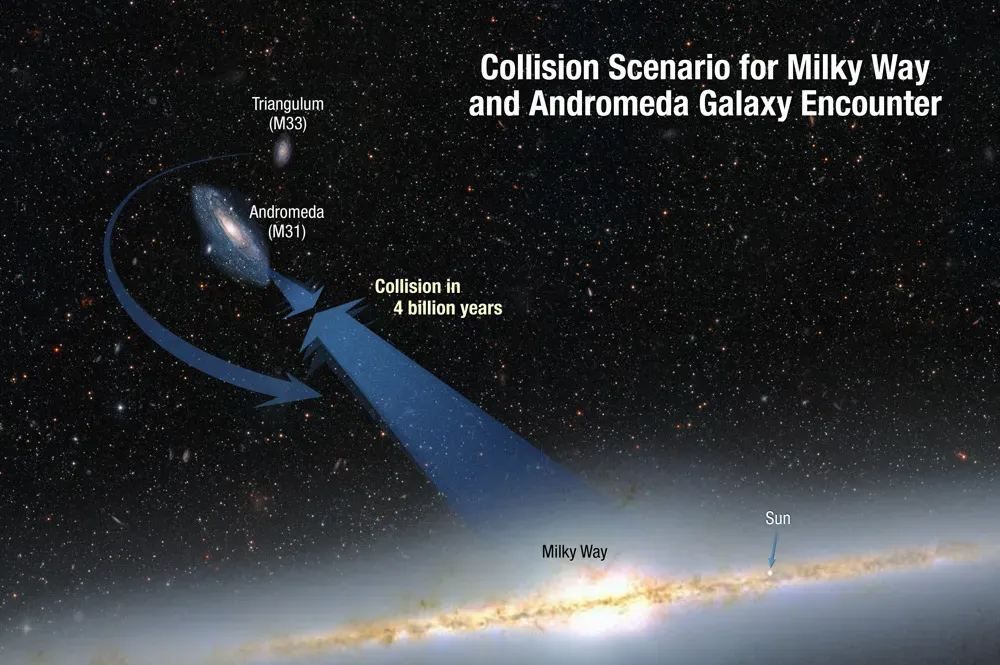
There is something humbling and oddly comforting about realizing that our entire species arose and built civilizations during a merger that was already in progress. We tend to imagine ourselves at the center of the story – the main characters who show up just in time to witness some future cosmic drama. In reality, we arrived in the middle chapters, on a small rocky world orbiting an ordinary star, in a galaxy that had already been shaped by countless past interactions and was already locked into a future with Andromeda. Our myths talk about destinies and chosen moments, but the universe had its own long-term plans set long before there were humans to notice.
Personally, I find that idea more grounding than depressing. It means that our meaning does not come from being cosmic VIPs or from living at a uniquely special time, but from being able to understand the story at all. We are creatures made of stardust, living in a galaxy that is slowly merging with another, and we have figured that out using nothing but light, math, and shared curiosity. That is extraordinary. The Andromeda–Milky Way merger is not a looming catastrophe we should fear, but a reminder that everything – even galaxies – is part of a larger, evolving tapestry. The real question is what we choose to do with the tiny, bright window of time we get inside that vast, ongoing transformation. Did you ever expect that our quiet night sky was already mid-collision all along?