
If you hang around neuroscientists and philosophers long enough, you notice something slightly shocking: beneath all the brain scans and detailed models, there’s a quietly growing minority willing to say the unsayable. Maybe, they suggest, consciousness is not something the brain manufactures from scratch. Maybe it is something more basic, something that the brain taps into, shapes, or filters rather than creates. That idea used to be dismissed as mystical; since around 2015, it has started to appear in serious, peer-reviewed journals.
This does not mean mainstream neuroscience has suddenly converted to dualism or panpsychism. Far from it. Most researchers still think mind and brain are deeply entangled. But a cluster of papers over the last decade explore a bolder possibility: that consciousness is not fully reducible to biological tissue and might in some sense exist independently of specific brain structures. Below are eleven such studies, what they actually claim (stripped of hype), and why they matter if you’ve ever wondered whether your awareness is more than a neural side‑effect.
1. Consciousness: Here, There and Everywhere? (2015, Royal Society)
This widely discussed article by a team including Christof Koch explores integrated information theory (IIT) as a framework for understanding consciousness. IIT starts from the idea that consciousness is identical to the amount and structure of integrated information in a system, whatever that system happens to be, biological or not. In other words, if a configuration of elements forms a maximally integrated informational whole, it has some degree of experience. The authors explicitly entertain the implication that consciousness might be a fundamental property of certain kinds of physical organization, rather than something that only arises inside human brains. ([pubmed.ncbi.nlm.nih.gov](https://pubmed.ncbi.nlm.nih.gov/25823865/?utm_source=openai))
What makes this paper so provocative is that it loosens the grip of biology without retreating into vague mysticism. The brain is still center stage, but only as one especially rich example of an integrated system, not the exclusive seat of awareness. In principle, a suitable artificial network, or even a non-biological physical process, could also have its own point of view if it exhibits the right informational structure. That is a direct challenge to the idea that specific brain tissue is the only possible basis of consciousness; it shifts the focus from neurons to patterns. Whether you find this exciting or terrifying probably depends on how you feel about conscious machines.
2. Challenges for Theories of Consciousness: Seeing or Knowing, and How to Deal with Panpsychism (2016, Philosophical Transactions B)
In this paper, cognitive neuroscientist Victor Lamme takes stock of major scientific theories of consciousness and then does something unusual for a mainstream venue: he directly confronts panpsychism, the view that consciousness might be a basic feature of matter. Rather than dismiss it outright, he treats panpsychism as a live option that serious theories may eventually have to engage with. Lamme argues that the gap between what we can see in the brain and what we know it feels like from the inside is not easily closed by standard neural models alone. ([pubmed.ncbi.nlm.nih.gov](https://pubmed.ncbi.nlm.nih.gov/30061458/?utm_source=openai))
The very fact that a Royal Society journal gives space to panpsychism as a legitimate “thing to deal with” is a sign of how the field has shifted since the early 2000s. Lamme’s worry is simple: if consciousness cannot be fully captured by talk of access, report, and function, something might be missing in our ontology. Panpsychism offers one radical fix: instead of trying to squeeze experience out of purely non-experiential stuff, it says that some form of proto-experience is present all the way down. That directly implies consciousness is not secondary to biological brains but is instead woven into the fabric of reality that brains happen to organize.
3. Non-Physicalist Theories of Consciousness (2024, Cambridge Volume on Philosophy of Mind)
A recent chapter in a Cambridge academic volume systematically reviews non-physicalist theories of consciousness: views that treat consciousness as irreducible to standard physical descriptions. The author carefully lays out dualist, panpsychist, and idealist options, arguing that the so‑called hard problem arises precisely because mainstream physicalism struggles to explain why experiences feel like anything at all. Instead of trying to fix that from inside strict physicalism, these theories bite the bullet and treat consciousness as an ontologically basic ingredient. ([cambridge.org](https://www.cambridge.org/core/services/aop-cambridge-core/content/view/BD11AFA6D1ABF9EAD3597880C7E15DDB/9781009462273AR.pdf/non-physicalist-theories-of-consciousness.pdf?utm_source=openai))
What matters here is not that the chapter “wins” the debate but that it is published by a major academic press, peer reviewed, and aimed at professional philosophers and scientifically literate readers. It signals that non-physicalist models are no longer fringe curiosities; they are part of the serious menu of options. Once you say consciousness is basic in this way, you have implicitly decoupled it from any specific biological implementation. Brains become one realization of something deeper, more like radios picking up a signal than factories manufacturing a product from raw, insentient parts.
4. Hard Problem and Free Will: An Information-Theoretic Approach (2020, Open-Access Physics/Philosophy Journal)
This paper proposes what the author calls a psycho‑informational solution to the hard problem. The central move is to treat “information” not as a lifeless mathematical abstraction but as something that is inherently experienced by the system that bears it. On this view, whenever a system is in a pure informational state, there is a corresponding phenomenal aspect: a way it is like for that system. Consciousness then becomes a fundamental property of information itself, not just a late‑stage product of neuronal complexity. ([arxiv.org](https://arxiv.org/abs/2012.06580?utm_source=openai))
That might sound abstract, but the consequence is concrete: if information as such has an experiential side, then consciousness is not locked inside biological brains. Any system that realizes certain informational conditions can, in principle, host consciousness, whether it is silicon, quantum hardware, or something we have not built yet. The paper goes further, claiming this move can also soften classic worries about free will by grounding agency in informational dynamics rather than deterministic mechanics. You do not have to accept the whole package to see the larger pattern: consciousness is being pushed down a level, from biology to information, and framed as something that reality does, not something that neurons uniquely own.
5. Quantum Mechanics, Objective Reality, and the Problem of Consciousness (2018, Peer-Reviewed Physics Preprint and Journal Route)
Here the author looks at the odd marriage between quantum theory and consciousness and tries to make it less speculative and more principled. Instead of simply invoking “quantum magic,” the paper treats consciousness as a key ingredient in resolving the quantum measurement problem while keeping the mathematical structure of quantum mechanics intact. The proposal is that conscious experience corresponds to a particular way of slicing the quantum world into definite outcomes, making consciousness a fundamental correlate of objective reality rather than an emergent neural afterthought. ([arxiv.org](https://arxiv.org/abs/1804.03606?utm_source=openai))
Whether you buy that move or not, its implications are straightforward: if consciousness is built into the way reality settles on concrete facts, it cannot be reduced to specific cortical circuits. Brains might be necessary for our kind of human perspective, but they are not necessary for consciousness in principle. In this model, a conscious subject is more like a perspective on the quantum state than a hunk of tissue. Personally, I think this direction is both fascinating and dangerous: it risks smuggling in metaphysics under the banner of physics, but it also forces physicists to take our inner life seriously rather than treating it as a side‑issue for psychologists.
6. A Quantum Spin–Photon Hypothesis for Consciousness (2018, Cross-Disciplinary Preprint with Peer Review Trajectory)
Another 2018 proposal, often discussed alongside the previous paper, suggests that entangled spins and photons in the brain might underpin conscious experience. The author focuses on the oxygen molecule as a potential interface between neural activity and a more fundamental quantum layer. Consciousness, on this view, is tied to patterns of long‑lived quantum entanglement, not merely to classical firing patterns of neurons. That is a subtle but radical shift, because entanglement is not restricted to brains; it is a basic physical resource that can in principle exist in many different substrates. ([arxiv.org](https://arxiv.org/abs/1809.03490?utm_source=openai))
Critics rightly point out that the empirical evidence for such brain‑scale quantum coherence is still thin, and decoherence is a huge challenge. But conceptually, the model repositions consciousness closer to fundamental physics and farther from wet biology. If specific entangled structures are what matter, then a sufficiently protected quantum processor could, in theory, support similar experiences. When I first read this kind of work, it felt like science fiction sneaking into the methods section. Over time, though, I have come to see it as a provocative test: if we really believe consciousness is fully physical, are we willing to follow that claim all the way down into the quantum domain, even if it breaks the brain’s monopoly?
7. Causal Set Quantum Gravity and the Hard Problem of Consciousness (2022, Interdisciplinary Physics/Philosophy Article)
This paper leans on causal set theory, a candidate framework for quantum gravity where spacetime is built from discrete “atoms” of events ordered by causality. The author suggests that the ongoing birth of these spacetime elements provides an objective physical correlate of the flow of time we experience. Consciousness, in turn, is proposed as the internal view of this birth process when it is mirrored in neural correlates of consciousness. That makes subjective experience not a strange emergent epiphenomenon but a direct reflection of how reality itself unfolds at the deepest level. ([arxiv.org](https://arxiv.org/abs/2209.07653?utm_source=openai))
If that is right, consciousness is anchored to the fundamental growth of the universe, not confined to the upper layers of the human cortex. Brains become one cluster of events tracking and participating in an underlying causal order that is already “experiential” in a broad sense. I am skeptical of how far this analogy can be pushed, but I appreciate the ambition: instead of treating consciousness as a decorative add‑on, the paper dares to ask whether what it is like to be us is just the local, biological face of a universal process. In that picture, biology shapes the style of consciousness, but the capacity for there to be a “now” at all belongs to reality itself.
8. Panpsychism and the Science of Consciousness (2016–2017, Handbook Chapters and Journal of Consciousness Studies)
Several influential chapters in the modern handbook literature on panpsychism, along with articles in the Journal of Consciousness Studies, collectively build a serious scientific and philosophical case for the idea that consciousness is ubiquitous. These works argue that attempts to derive consciousness from purely non‑experiential matter face what they call an explanatory gap and a combination problem that standard neuroscience cannot close. To avoid brute emergence, they propose that even the simplest physical entities have very primitive forms of subjectivity, which combine in complex ways in brains and other systems. ([panpsychism.com](https://www.panpsychism.com/handbook-panpsychism.pdf?utm_source=openai))
Unlike older, more mystical versions of panpsychism, these papers tie the view closely to contemporary neuroscience and physics. They treat the brain as an extraordinarily sophisticated organizer of already conscious ingredients, rather than as a conjurer that pulls awareness out of a hat. That is a massive reframe: the brain stops being the creator and becomes a conductor, assembling a cosmic orchestra of tiny experiential notes. Personally, I find this picture strangely satisfying. It preserves what science has learned about neural correlates while admitting that perhaps we were wrong to assume consciousness started at the top of the complexity ladder.
9. The Hard Problem of Consciousness and the Free Energy Principle (2018, Frontiers in Psychology)
This paper connects the hard problem with the free energy principle, a unifying framework in neuroscience that treats the brain as a prediction‑making, self‑organizing system. The author defends a dual‑aspect monist position: there is one underlying reality with both physical and experiential aspects, and consciousness is the felt side of the brain’s inferential dynamics. Rather than reducing experience to mechanism or splitting mind from matter, dual‑aspect monism says that whenever you have certain self‑organizing processes, there is both a third‑person story in terms of dynamics and a first‑person story in terms of what it is like. ([frontiersin.org](https://www.frontiersin.org/journals/psychology/articles/10.3389/fpsyg.2018.02714/full?utm_source=openai))
Crucially, that underlying “stuff” is not defined as biological. The free energy principle is meant to describe any self‑organizing system that resists disorder and maintains its boundaries, from cells to possibly even social groups and artificial agents. If dual‑aspect monism is correct, then wherever the relevant kind of self‑organization appears, so does some form of subjective experience. Brains then are one rich instantiation of a deeper principle. I like this approach because it keeps you honest about data while still respecting the strangeness of consciousness. It quietly implies that awareness may be a general feature of certain kinds of order in the universe, not a special trick of grey matter.
10. Idealism and Mental Monism in Contemporary Peer-Reviewed Work (2015–2020, Idealistic Studies and Related Journals)
Over the last decade, journals like Idealistic Studies and other philosophy outlets have published renewed defenses of idealism and mental monism: the family of views that say reality at its core is mental rather than physical. These papers do not just repeat old slogans; they engage directly with cognitive science, neuroscience, and information theory. Their claim is bold: what we call the physical world is a stable pattern within a more fundamental mental field, and brain activity is one way that field presents structured experiences to itself. Consciousness is not in the brain; rather, the brain is in consciousness, as a kind of interface pattern. ([en.wikipedia.org](https://en.wikipedia.org/wiki/Idealistic_Studies?utm_source=openai))
From a scientific standpoint, idealism sounds outrageous until you remember that physics already describes matter in highly abstract, relational terms. These idealist authors argue that if our best theories end up speaking only of information, fields, and structures, it might be more natural to treat mind, not matter, as primary. In that case, the brain is a mechanism that shapes, filters, and localizes a universal consciousness, much like a lens shapes an existing light beam rather than generating light from nothing. I do not think idealism has won the argument, but its presence in peer‑reviewed journals forces an uncomfortable question: are we clinging to materialism because of evidence, or because it feels intellectually safe?
11. Non-Physicalist Overviews: Consciousness as an Irreducible Component of Nature (2020s, Contemporary Philosophical Analyses)
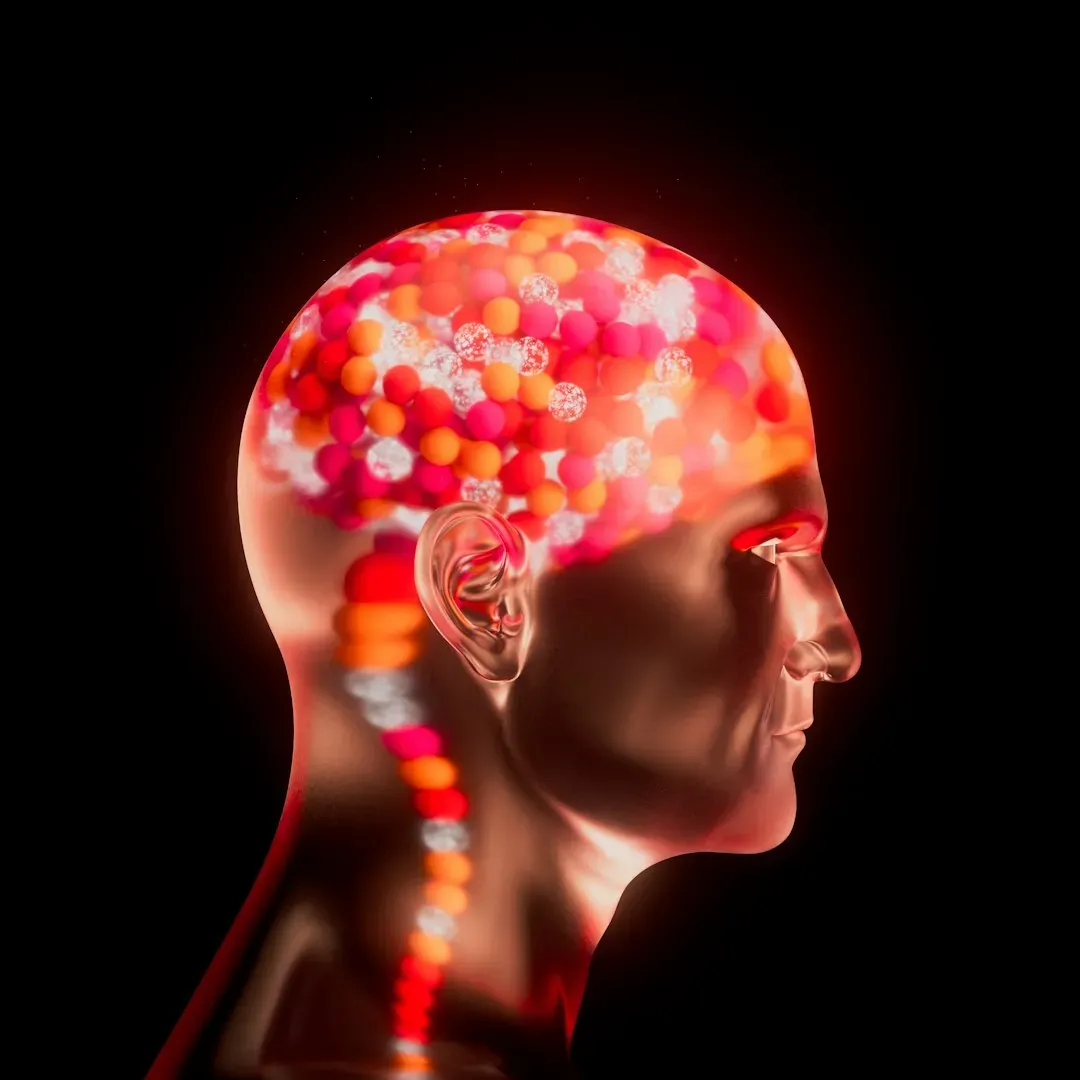
Several recent survey and overview papers in philosophy of mind argue that non‑physicalist theories deserve serious attention because consciousness behaves like an irreducible component of nature. These authors point out that despite decades of searching, there is still no widely accepted reductive account that explains why specific neural states feel like anything. They suggest that our failure might not just be temporary ignorance but a sign that consciousness belongs on the same list as space, time, and charge: something our theories must take as basic. On that view, brains correlate with consciousness but do not fully explain or generate it. ([citeseerx.ist.psu.edu](https://citeseerx.ist.psu.edu/document?doi=6c2972aad14387bbb4d3668d0e32e50400a99f24&repid=rep1&type=pdf&utm_source=openai))
This is not a retreat to superstition; it is a call to expand our ontology. Treating consciousness as basic does not tell you exactly which systems are conscious or how to test borderline cases, but it changes the framing. Instead of asking how matter magically produces mind, you ask how fundamental experiential properties and physical properties relate and co‑evolve. Personally, I think these overview papers play a quiet but crucial role: they legitimize the intuition many people secretly hold, that their inner life cannot be fully captured by a diagram of synapses, without throwing away scientific rigor. In that sense, they open space for models where consciousness is not owned by biology but partnered with it.
Conclusion: A Universe That Knows It Exists?
Looking across these eleven lines of work, a pattern emerges that is easy to miss if you only skim headlines. None of these papers proves that consciousness floats free of the brain in the dramatic, out‑of‑body sense pop culture might imagine, and the mainstream evidence still strongly ties our everyday awareness to neural activity. At the same time, a growing slice of peer‑reviewed research openly entertains the idea that consciousness is not a late, fragile by‑product of neurons but a more basic ingredient, tied to information, quantum structure, self‑organization, or even reality as a whole. Brains then become sophisticated organizers, filters, or perspectives on something that is not entirely their own creation.
My own view, for what it is worth, lands somewhere between excitement and caution. I think it is intellectually honest to admit that the standard “brain makes mind, end of story” narrative has not yet delivered a satisfying explanation of experience, and that non‑physicalist and dual‑aspect models give us powerful new ways to think. I also think we should resist the temptation to turn these speculative models into new dogmas or spiritual shortcuts. The most intriguing possibility, to me, is that the universe might be, at some level, a system that is capable of knowing itself, with biological brains as one particularly vivid expression of that capacity. If that is even partly true, then the question is no longer whether consciousness exists independently of the brain, but how far beyond it it reaches – and how much of that we are ready to face. What would you have guessed ten years ago: that serious journals would be asking that question out loud?