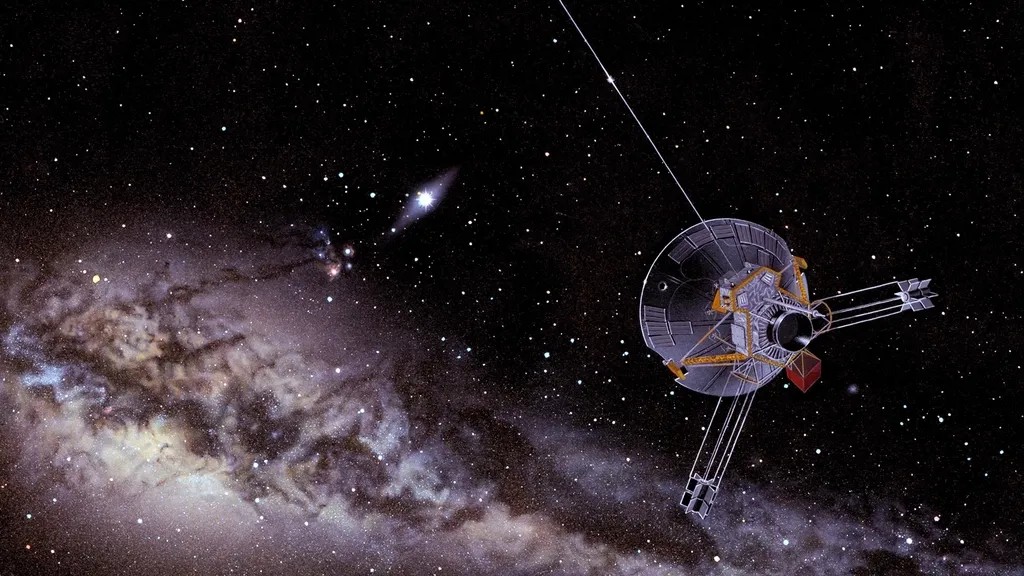

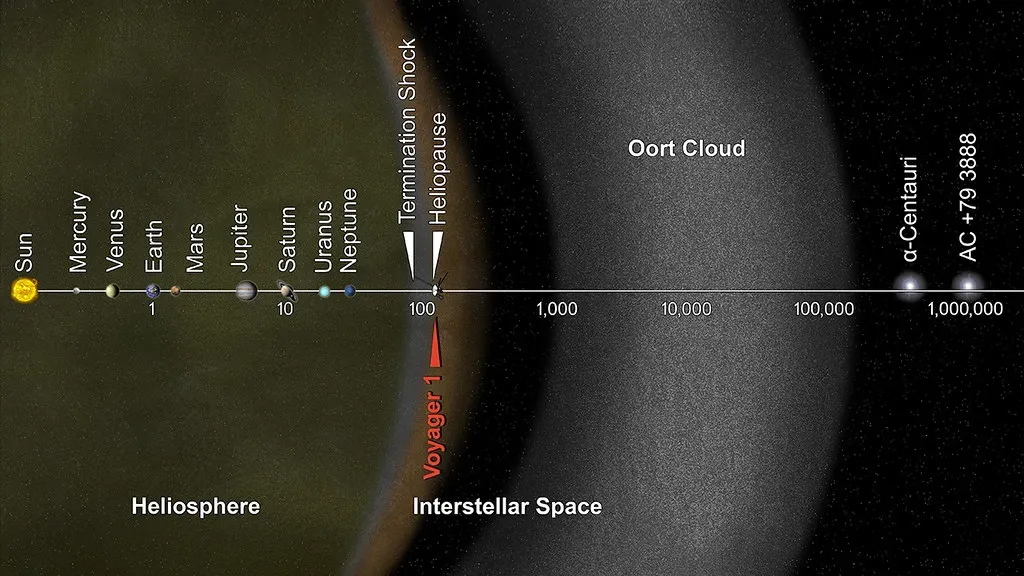
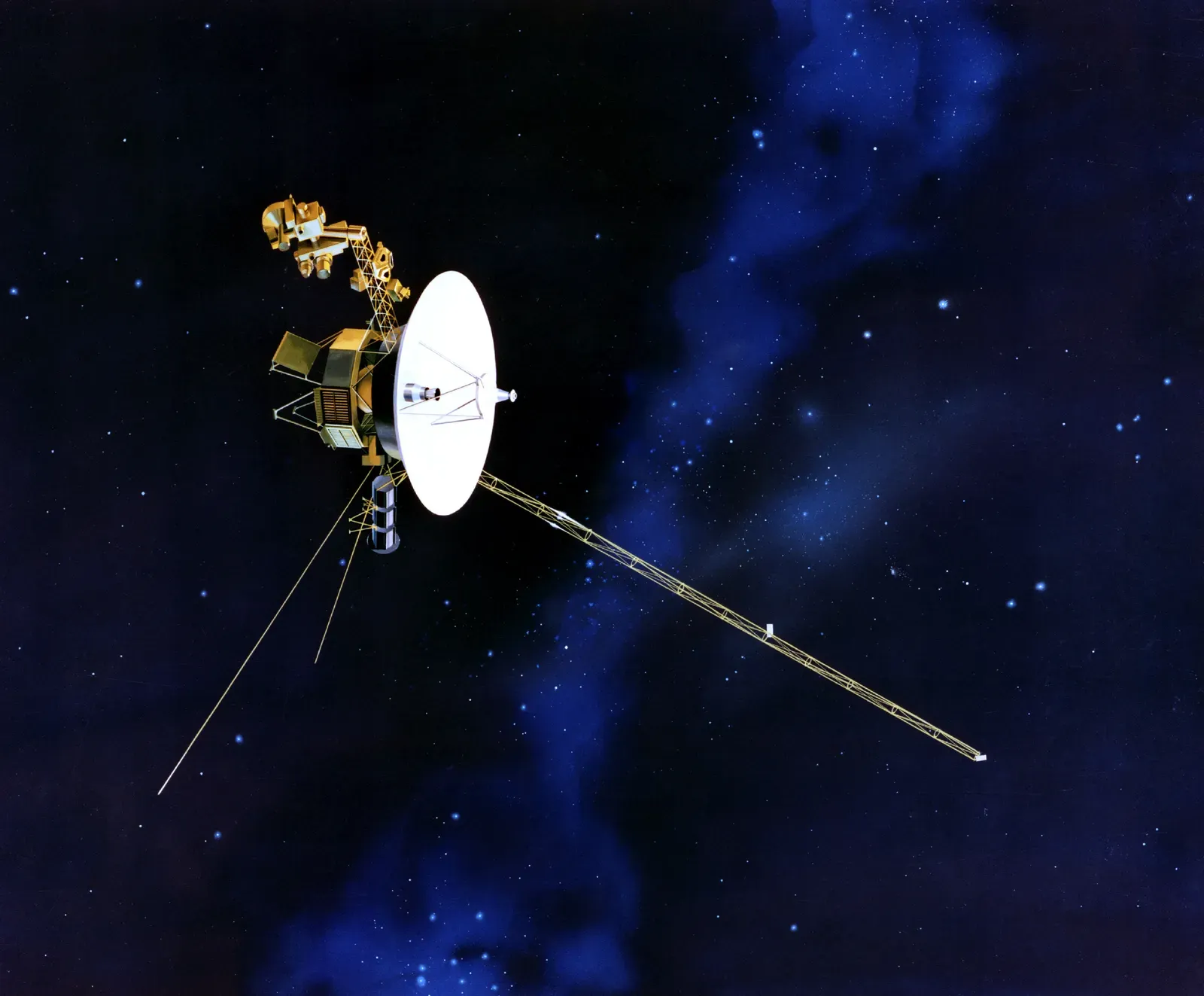
Out beyond the edge of the planets, where the Sun is just another bright star and the darkness between worlds turns almost absolute, a tiny machine the size of a small car is still talking to us. That machine is Voyager 1, launched in 1977, now more than twenty-three billion kilometers from Earth, and lately it has been behaving…oddly. Its data has turned strange, its signals at times seem scrambled, and yet the spacecraft itself appears, in some ways, to be fine.
There is something quietly gripping about the idea that a forty‑plus‑year‑old robot, running on computers weaker than a basic calculator, is glitching out at the edge of interstellar space – and no one on Earth can walk over and jiggle the cables. The mystery is not just about a weird readout; it is about the limits of our engineering, the fragility of our contact with the wider galaxy, and the eerie sense that the closer we get to deep space, the more it refuses to behave exactly as we expect.
The Most Distant Human‑Made Object Is Acting Weird
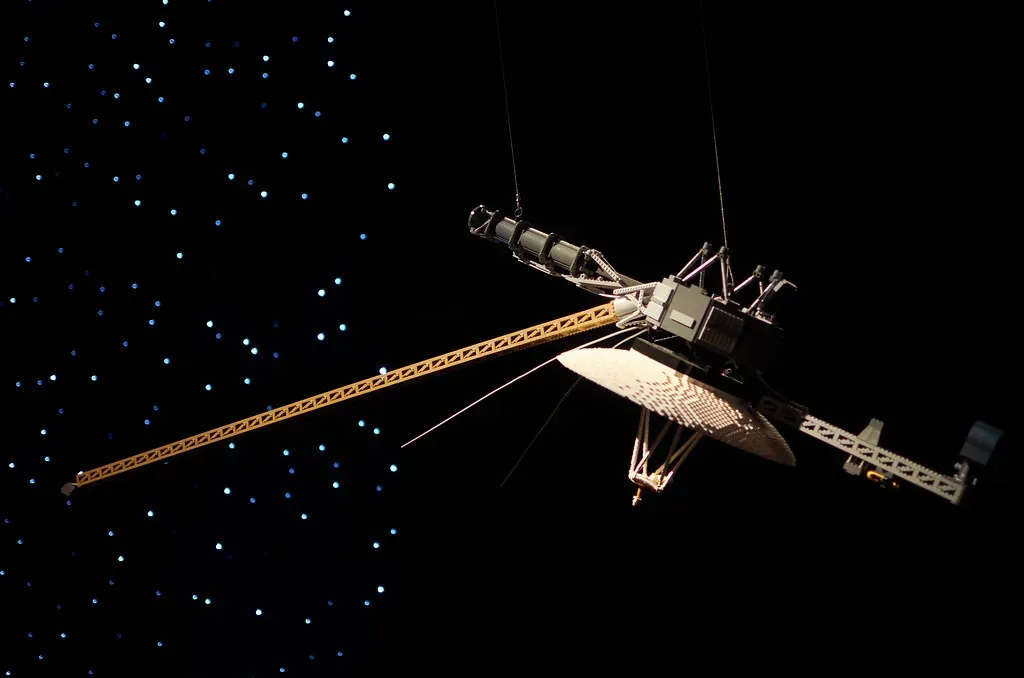
Here’s the hook: the farthest human‑made object in history is sending home data that does not make sense, and yet it stubbornly keeps talking to us. Voyager 1 has crossed into interstellar space, leaving the bubble of the Sun’s magnetic influence, and it should be giving scientists a clean, if faint, view of the environment between the stars. Instead, some of its telemetry about its own orientation and status has turned inconsistent, almost as if the spacecraft cannot agree with itself about how it is pointed or what condition it is in.
What makes this so unsettling is that nothing obvious appears catastrophically broken. The communications link still works, the signals arrive, and many of the instruments continue to behave as expected, but certain control systems have been sending what amounts to nonsense for long stretches of time. From Earth, that looks like watching a trusted old friend start to say things that do not quite line up with reality, while they still insist they are fine. It is a reminder that deep space exploration is not just heroic and inspiring; sometimes it is confusing, messy, and a little bit unnerving.
A Spacecraft Older Than Most of Its Engineers
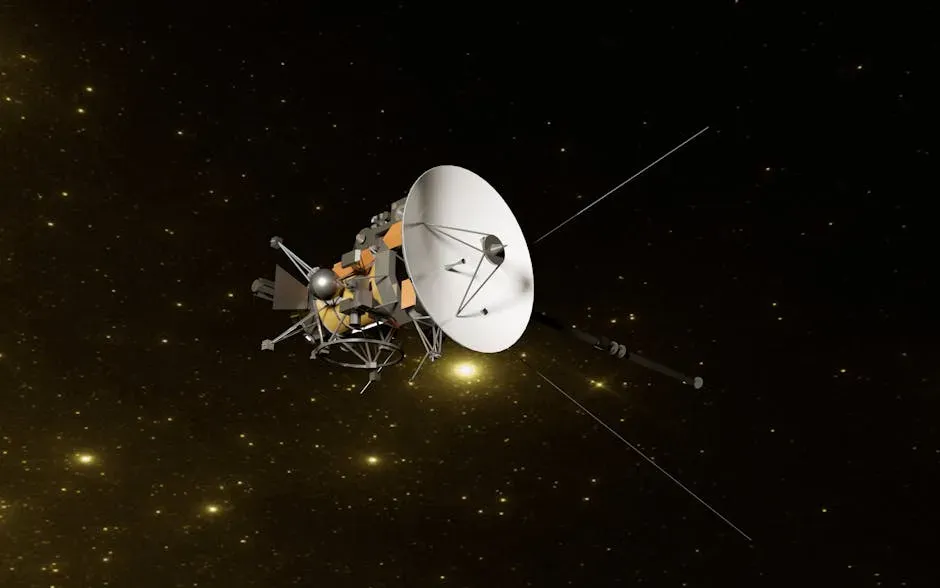
To really feel how wild this is, you have to remember just how old Voyager 1 is. It left Earth during the late 1970s, when home computers were rare and the internet was still a research experiment. Many of the people currently working on the mission were not even born when it flew past Jupiter and Saturn. Yet this spacecraft, built with technology that looks almost antique by modern standards, is still running on its original hardware, sipping a dwindling power supply generated by radioactive decay.
The fact that it keeps going at all is already an engineering miracle, so strange data is not entirely surprising. Components age, wires degrade, and radiation from cosmic rays slowly chews away at electronics that were never meant to last forever. Still, there is a difference between predictable wear and tear and behavior that defies straightforward diagnosis from billions of kilometers away. The team is operating a museum‑grade machine in the harshest environment imaginable, and there is no way to swap out a part, reboot it with a button, or send a repair crew; every fix is a blind, high‑stakes guess carried on radio waves that take many hours to arrive.
The Harsh Reality of Interstellar Space
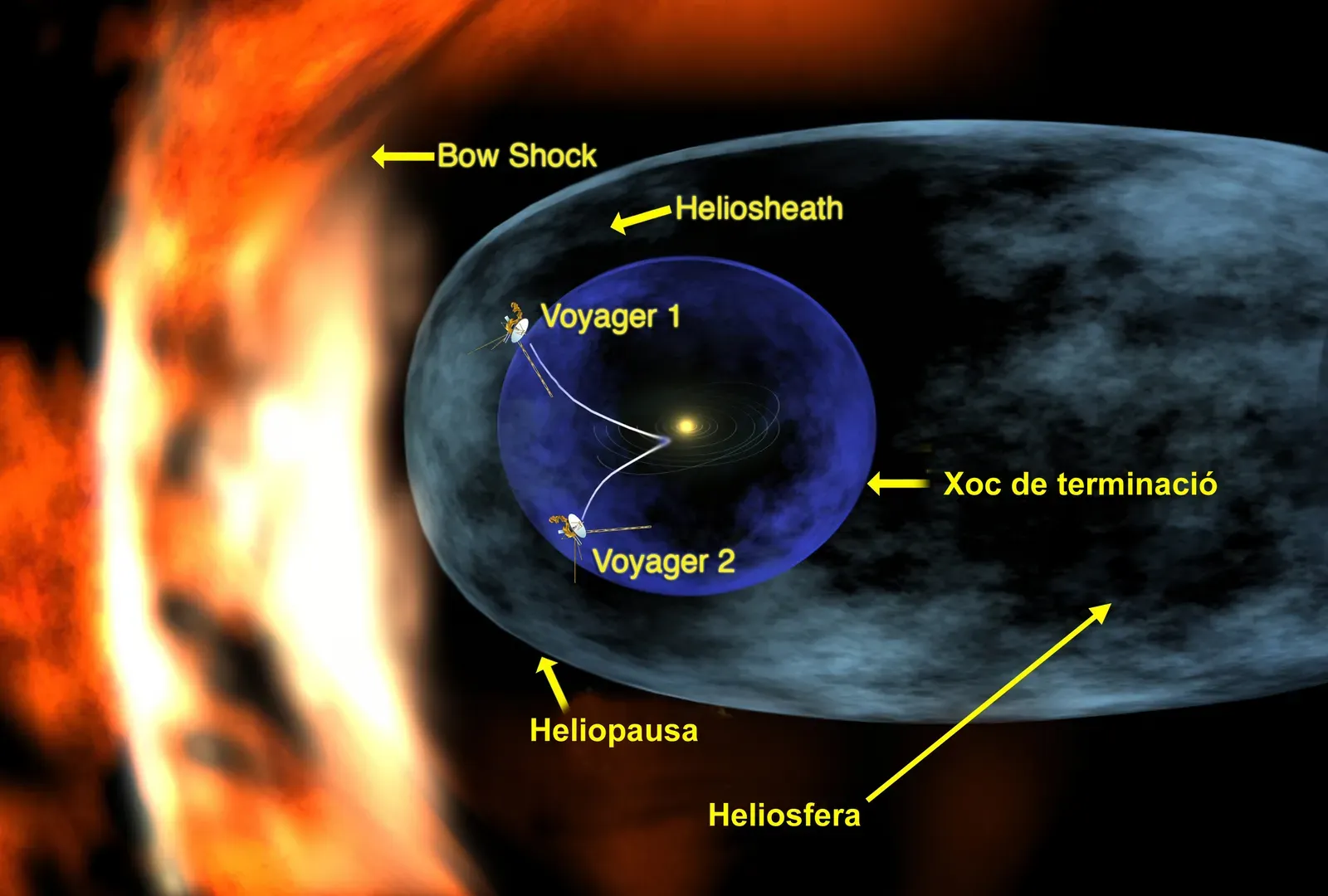
When people hear “interstellar space,” they often imagine emptiness, but for a spacecraft built in the 1970s, that emptiness is anything but gentle. Outside the Sun’s protective bubble, Voyager 1 is exposed to higher levels of energetic particles and cosmic rays that can quietly flip bits in its memory or slowly damage circuits. Over years, even minor hits can accumulate into serious quirks, like a brain that occasionally misfires. Some of the strange data could be the signature of this relentless radiation environment gradually scrambling parts of the control systems.
On top of that, interstellar space is a region that we have almost no direct experience with. Voyager 1 is literally our first in‑situ probe of this environment, so when it acts up, it is hard to know whether we are seeing a spacecraft problem, a space weather effect, or some interaction we did not fully model. Scientifically, that is thrilling, because every anomaly is a clue, but operationally it is a nightmare. When what you are trying to understand is also the thing breaking your only measuring stick, you are basically learning to fix a thermometer while sitting in a storm you have never seen before.
Signals That Take a Day to Say “Hello”
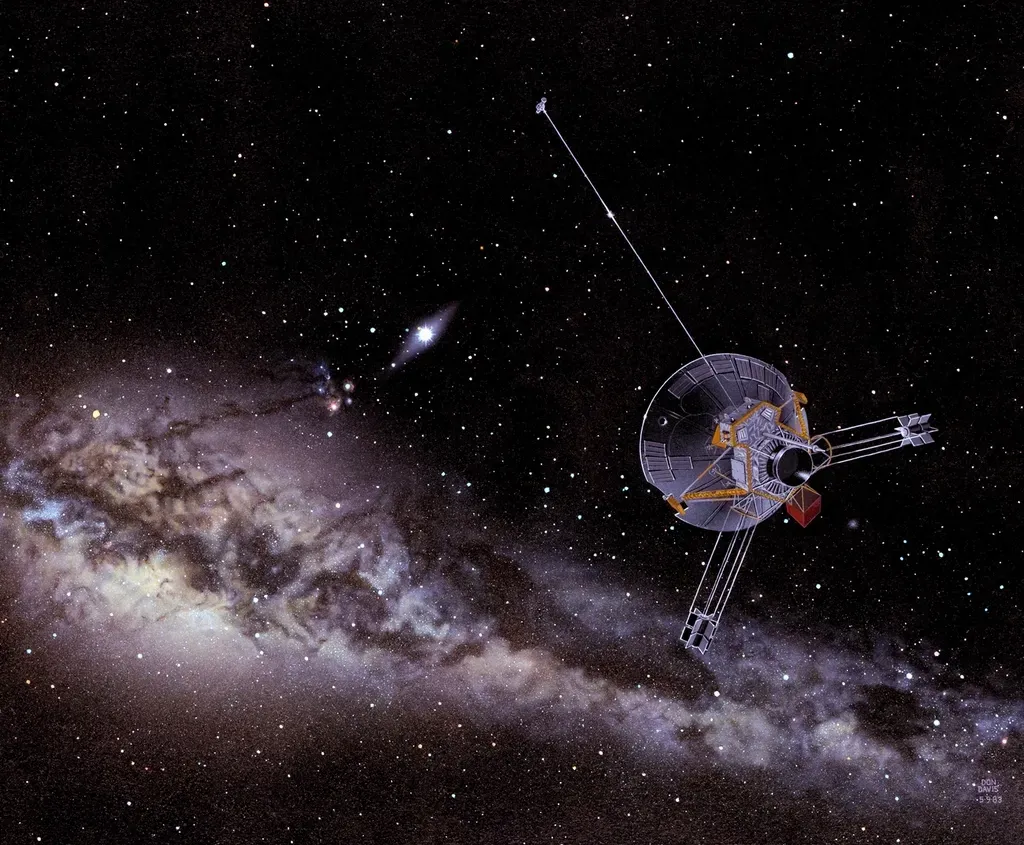
Even if Voyager 1’s problems were simple – which they are not – the sheer distance makes troubleshooting agonizing. Radio signals traveling at the speed of light now take well over ten hours to go one way between Earth and the spacecraft. That means any command sent from a Deep Space Network antenna is like mailing a letter to another planet: you ask a question, wait almost a day for the full round trip, and hope the answer is both understandable and useful. There is no real‑time control, no quick debugging session, just long pauses and careful planning.
This delay turns every attempt to solve the strange data issue into a slow‑motion chess game against an invisible opponent. Engineers on the ground have to simulate and debate every potential command, knowing that a wrong move might waste precious power or push the spacecraft into a worse state that could be hard to reverse. From the outside, it is easy to romanticize Voyager 1 as a bold explorer, but on the inside, its care is more like tending a fragile, distant patient whose medical tests arrive only once a day and sometimes in an unknown language.
How Much of the Weirdness Is Just Old Age?
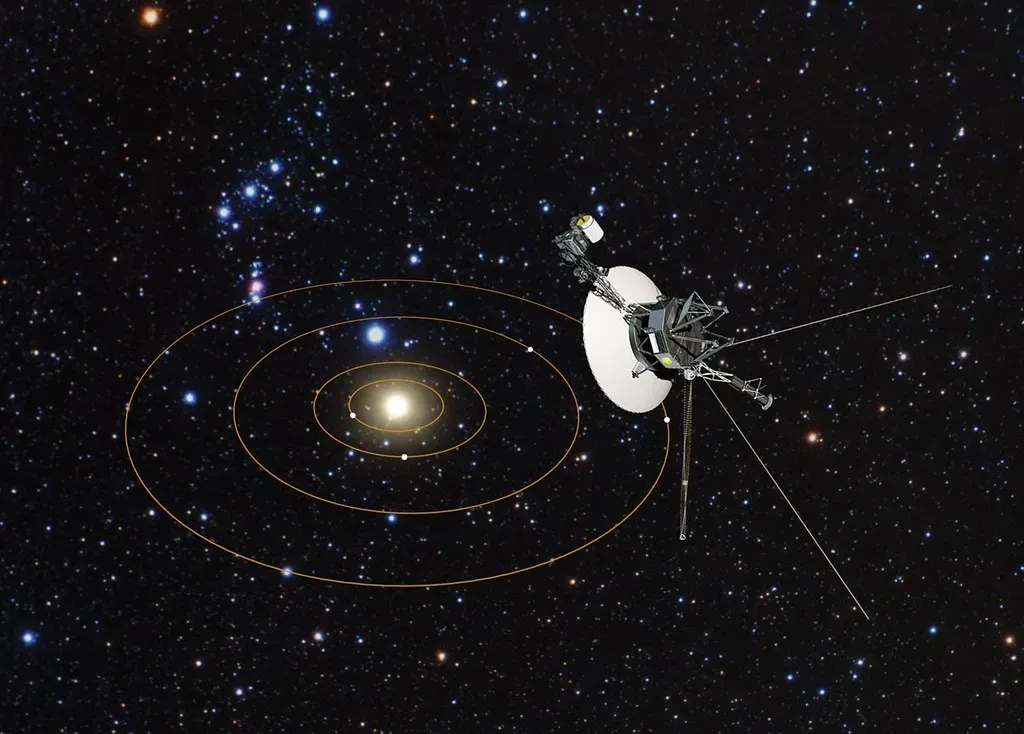
One of the big questions is how much of Voyager 1’s bizarre behavior is simply what happens when you run hardware decades past its original design lifetime. Electronic components can drift out of spec; solder joints can crack subtly; and stored software can develop corruption after years of radiation hits. Some of the anomalous data could be a sign that part of the spacecraft’s brain is routing information through the wrong pathway or mislabeling what it sends back, even while the physical attitude and orientation remain stable.
At the same time, it would be lazy to chalk everything up to “it’s old” and move on. Space missions carry a culture of squeezing every last bit of science and performance out of what they have, and Voyager is the ultimate example of that mindset. When it sends data that clashes with expectations, teams do not just shrug; they comb through decades of documentation, compare behaviors, and hunt for creative workarounds. Personally, I find this stubborn refusal to give up deeply human: we see something we built struggling far from home, and our first instinct is not to disconnect, but to ask what we can still learn and how we can keep it going just a little longer.
The Science Payoff: Mysteries Between the Stars
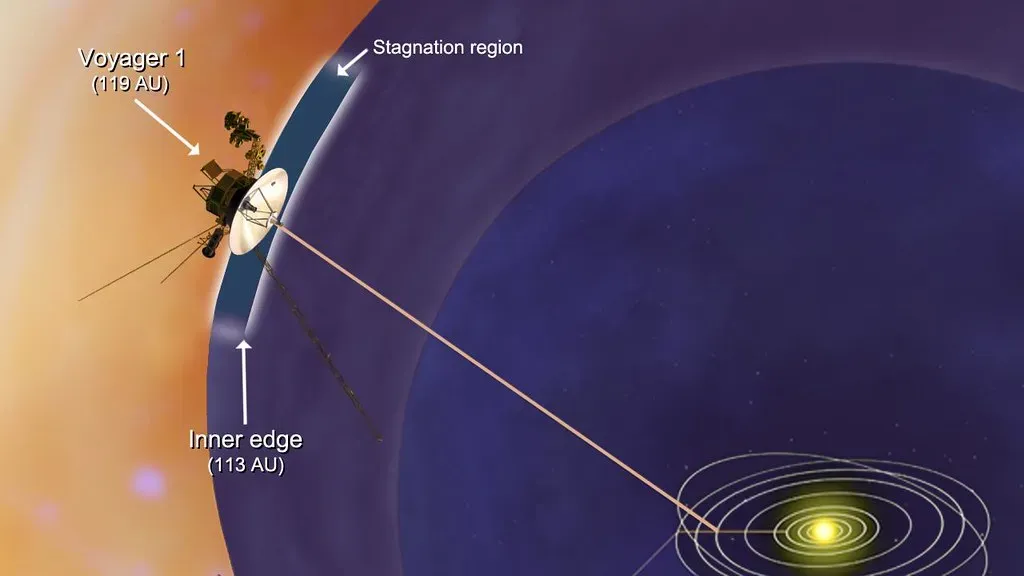
Underneath all the engineering drama, there is a scientific reason people care so much about these strange signals: Voyager 1 is sitting in a region of space that no other spacecraft has directly measured. Its instruments probe the density of particles, the behavior of magnetic fields, and the structure of the boundary between our Sun’s influence and the wider galaxy. When the data looks odd, it might be a malfunction, but it might also be telling us that interstellar space is more complicated and dynamic than our models predicted.
That is the tricky balance: every anomaly could either be a hardware failure or a discovery. Maybe the magnetic field is twisting in unexpected ways; maybe the density of charged particles is fluctuating faster than thought; maybe structures at the edge of the heliosphere are more tangled and layered than our textbooks suggest. Sorting that out requires brutal honesty, because it is tempting to declare every surprise a new phenomenon, but the more responsible path is to first rule out every mundane explanation. For all the bafflement, the strange data is exactly why you send a probe this far in the first place – to be confused by reality and forced to upgrade your understanding.
A Glimpse of Our Future with Aging Spacecraft
Looking at Voyager 1, it is hard not to see a preview of our future relationship with many other deep‑space missions. As we send probes to the outer planets, asteroids, comets, and maybe even interstellar targets again, we will face the same pattern: ambitious launches, triumphant early results, and then a long, slow fade into glitchy twilight as hardware ages in harsh environments. Voyager is teaching us, in real time, how to manage that twilight – how to design systems that can be debugged from light‑hours away and how to emotionally handle the fact that some mysteries will outlive the spacecraft that found them.
I think there is something strangely comforting in that. Just as we accept that buildings need maintenance and that old cars have quirks, we are learning that deep‑space machines have personalities shaped by their scars. Future missions may be designed with even more redundancy, smarter fault detection, and better ways to reconfigure around damage. But we will likely still end up with spacecraft that, like Voyager 1, send home data that makes us scratch our heads and argue late into the night. In a way, that ongoing argument is part of the point: it keeps us engaged, curious, and humble in the face of a universe that does not owe us clean, tidy answers.
Conclusion: The Most Human Thing in the Dark Is a Machine
Voyager 1’s baffling behavior is not just a technical footnote; it is a mirror held up to how we do exploration. We launched a fragile robot into the void with limited knowledge, limited tools, and very human hopes, and decades later it is still confronting us with puzzles we cannot completely solve. Personally, I think that is exactly what exploration should feel like – uncomfortable, surprising, and slightly beyond our ability to control. The strange data is frustrating, but it is also evidence that we pushed far enough into the unknown that our intuition breaks down.
In the end, my opinion is that the mystery itself is the real gift Voyager 1 is giving us now. Its weird signals force us to stretch our engineering, question our models, and accept that some of the universe’s answers arrive garbled, delayed, and incomplete. One day, the spacecraft will fall silent for good, and the last unsolved glitches in its data will become part of its legend. When that happens, the most honest response will not be certainty but gratitude – that a machine built by hand on a small blue world managed to confuse and inspire us from between the stars. When you think about that, is there anything more human than being baffled and still wanting to know more?