
You probably know someone who swears they floated above their own body during a heart attack or surgery, watching doctors work while feeling strangely calm. Stories like that are so common that they force you to ask: are these just tricks of a stressed brain, or glimpses of something science has not fully mapped yet? When your life is on the line and your brain is pushed to the edge, your sense of self can bend in ways that feel nothing short of supernatural.
In the last few decades, researchers have started to take these reports seriously, especially when they happen during cardiac arrest and other medical crises. You now have brain scans, carefully documented hospital cases, and controlled lab experiments that all point in the same direction: your feeling of “being you” in a body is fragile, constructed, and surprisingly easy to scramble. Once you see what is known – and what is still a mystery – you may never look at your own consciousness the same way again.
What You Actually Mean By “Out-of-Body Experience”

When you say you had an out-of-body experience during a medical emergency, you are usually describing a very specific cluster of sensations. You feel as if your awareness has shifted away from your physical body, often floating above it, looking down at the scene as if you were a camera on the ceiling. You may feel light, detached, strangely peaceful, and convinced that what you perceived was more real than waking life.
At the same time, your sense of location, ownership of your body, and time can feel distorted. You might feel like your body is lying in one place but “you” are elsewhere, or that everything is happening in slow motion or outside of time altogether. These experiences often come bundled with near-death experiences more broadly – things like moving through a tunnel, seeing a bright light, or meeting deceased loved ones – but the out-of-body element is specifically about where you feel you are in space, and what you believe you are looking at.
How Your Brain Normally Builds a Sense of “Being in Your Body”
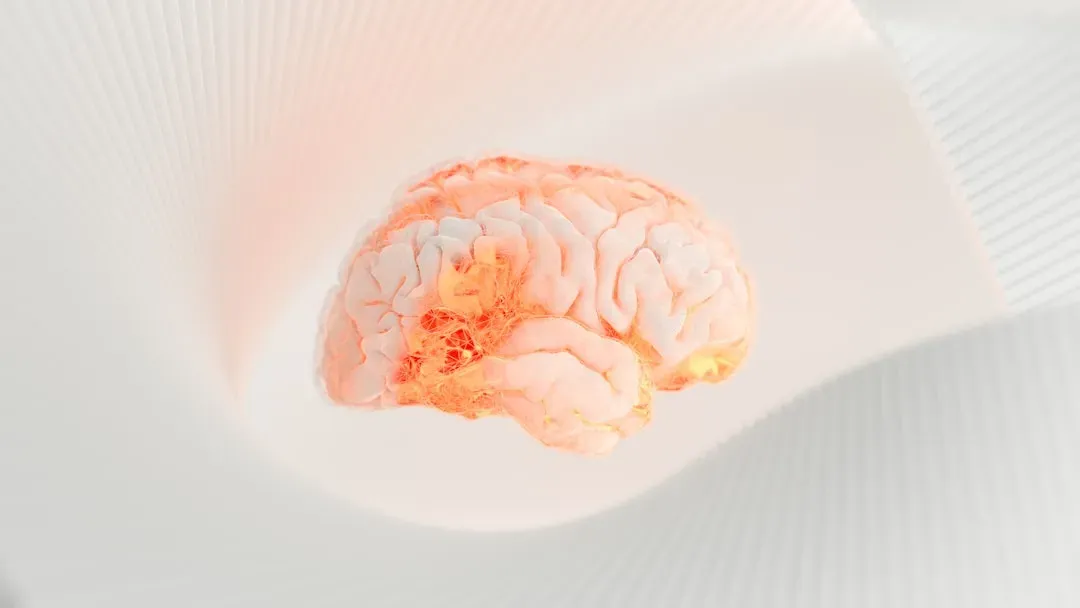
To understand why you might suddenly feel outside your body, you first need to know how your brain keeps you inside it in everyday life. Right now, without trying, you feel that your eyes are “in your head,” your hands are “yours,” and you occupy a specific spot in space. That feeling does not just exist; your brain constructs it by constantly integrating signals from your eyes, ears, skin, joints, inner ears, and internal organs, and then stitching them into one smooth story about where “you” are.
Regions near the junction of the temporal and parietal lobes are especially important for this. They act like a hub that blends touch, vision, and balance information into a coherent sense of self-location. When everything runs smoothly, you feel anchored in your body without ever thinking about it. But if those signals conflict or the hub is disturbed – by seizures, strokes, drugs, or a medical crisis – your brain can miscalculate and place “you” in the wrong spot, sometimes just a few feet above your actual body.
What Happens to Your Brain During Medical Emergencies
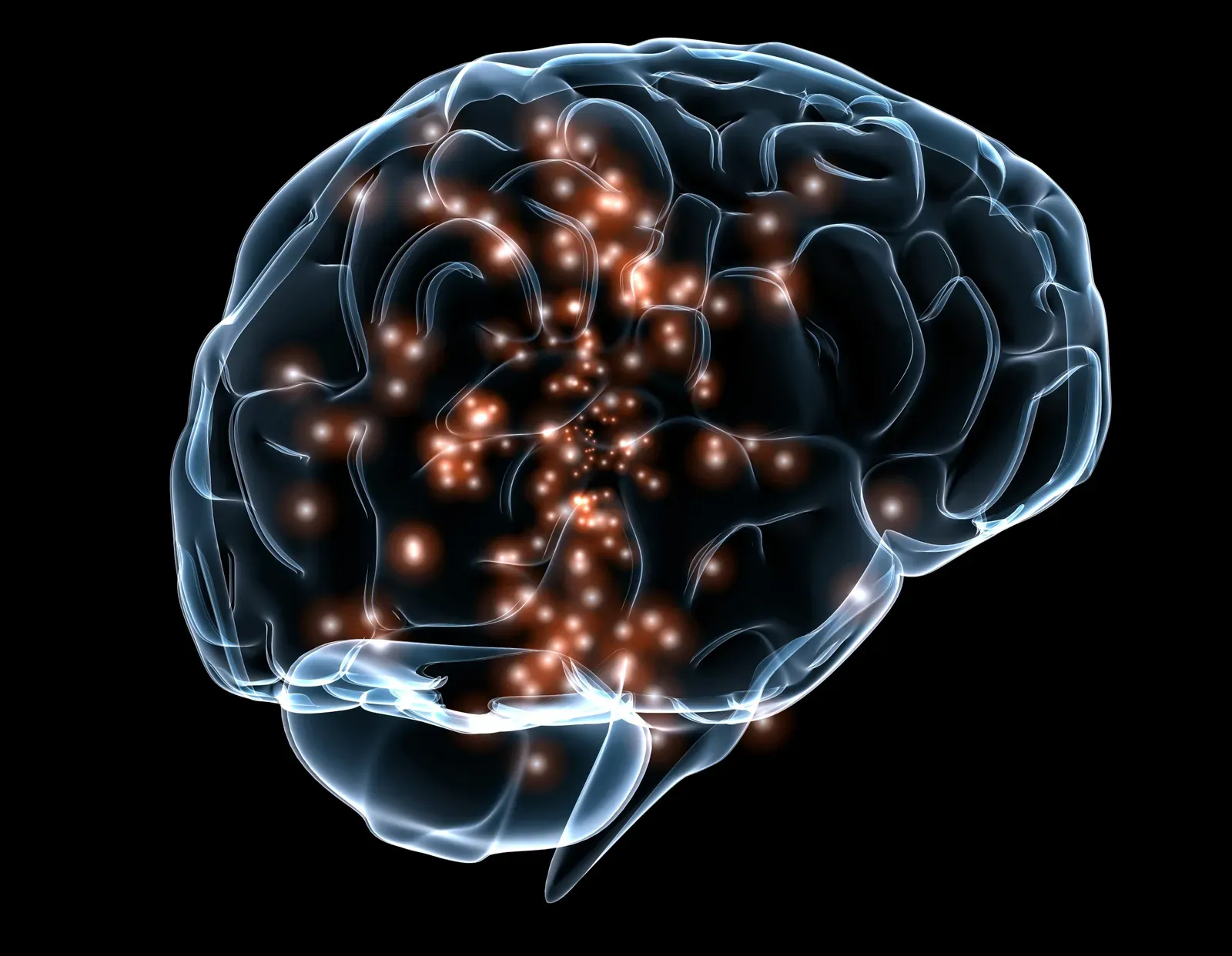
During a serious medical emergency such as cardiac arrest, your brain is not operating under normal conditions. Blood flow drops dramatically, oxygen levels fall, and within seconds the electrical activity that normally supports your conscious experience begins to break down. You might expect that to mean nothing is experienced at all, but what you often see instead is a brief, chaotic window where neural networks fire in disorganized, extreme patterns before they go quiet or recover.
In that window, the brain regions that construct your sense of self and bodily location can become especially unstable. Circuits that normally integrate vision, balance, and touch may start misfiring or desynchronize from one another. You can think of it like a computer glitching midway through a system crash: instead of shutting down cleanly, it briefly spits out distorted images and strange combinations of data. For you, that distorted output may be felt as separation from the body, a floating perspective, or sensations that do not match the physical reality of what is happening in the room.
The Role of the Temporo-Parietal Junction in Out-of-Body States

One of the strongest scientific clues about out-of-body experiences points you straight to the temporo-parietal junction, a region on each side of your brain where the temporal and parietal lobes meet. When this region is stimulated directly – for example, during certain types of brain surgery – people sometimes report feeling like they have left their body or are seeing themselves from above. You are essentially watching the brain’s body-location system being nudged off course in real time.
In other cases, damage or disruption to this area from epilepsy, strokes, or migraines has led people to spontaneously experience out-of-body states even when they are not near death. During a medical emergency, if blood flow to this region is compromised or its electrical activity becomes unstable, the same kind of misalignment can occur. You still have sensory information coming in, but the brain’s internal map of “where you are” no longer lines up with your physical body, so your conscious mind grabs the only story that fits: you must have left your body.
Why These Experiences Feel More Real Than Reality

If you have ever had an out-of-body experience, you probably noticed how convincing it felt. Even years later, people often say the memory is sharper and more emotionally charged than many major events in ordinary life. Part of this comes from the intense emotional state during a medical emergency: fear, urgency, and the possibility of death all push your brain into high-alert mode, which tends to burn memories in more deeply.
On top of that, certain neuromodulators surge during extreme stress, boosting the salience of whatever you are experiencing. Your attention narrows, your sense of time may stretch, and the brain may temporarily prioritize vivid, internally generated imagery over dull or incomplete sensory input from a compromised body. The result is an experience that feels crystal clear, profoundly meaningful, and nearly impossible for you to dismiss as a hallucination, even if every scientific model you see later calls it one.
Memory, Meaning, and the Stories You Tell Afterwards

Your out-of-body experience does not end when your heart is restarted or your crisis passes; in many ways, it begins its second life in your memory. Right after recovery, you might have fragments – a sense of floating, a few images, a strong emotion. As you think about it, talk to others, and try to make sense of what happened, you naturally shape that raw experience into a story with a beginning, middle, and end. You are not lying; you are doing what every brain does when it tries to impose order on something overwhelming.
Over time, the meaning you attach to the experience can grow even more important than the event itself. You may see it as proof that consciousness can exist without a body, a spiritual wake-up call, or a reminder to change how you live. Even if the underlying cause is rooted in misfiring neurons, the impact on how you feel about life, death, and your relationships is very real. In that sense, the science of what happened and the story you draw from it are not enemies; they just operate on different levels of your experience.
What Science Can Say Honestly – and What It Cannot
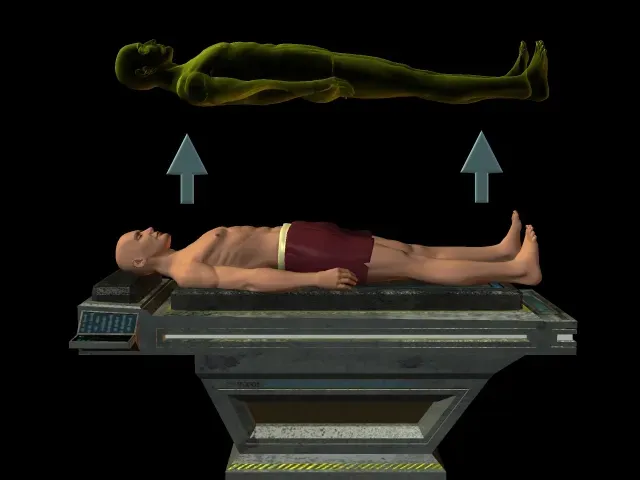
When you look at all the evidence together, you can say with some confidence that have strong ties to how the brain constructs self-location and bodily awareness under stress. You see similar phenomena in brain stimulation studies, neurological disorders, and virtual-reality experiments that trick your senses into “moving” you into another place. These parallels make it reasonable to see medical-emergency out-of-body states as part of the same family of brain-based alterations of self.
What science cannot tell you, at least honestly right now, is whether your conscious awareness ever truly detaches from the brain or persists after death. Reports of accurate details perceived while a person was clinically unresponsive are intriguing but not easy to verify perfectly. When researchers scrutinize them, many details can often be explained by memory gaps, prior knowledge, or subtle sensory input that the person was not aware of at the time. You are left with a humbling middle ground: there is a lot the brain can already explain, and there may still be aspects of consciousness you do not yet fully understand.
Conclusion: Standing at the Edge of What You Know

When you peel back the layers of , you find a story that is both comforting and unsettling. It is comforting because it shows you that these events are not random or absurd; they follow patterns tied to specific brain regions, physiological stresses, and well-studied quirks of perception and memory. It is unsettling because it reveals how easily your deepest conviction – that you are solidly located inside your body – can come apart when your brain is pushed to its limits.
At the same time, these episodes often leave you more reflective, more aware of your own mortality, and sometimes more grateful for the life you still have. You do not have to decide today whether they are purely neural illusions or glimpses of something beyond, because the honest answer is that science has explained part of the picture but not all of it. Maybe the most useful stance is a mix of humility and wonder: you respect the data, you listen to the stories, and you accept that your own consciousness is still one of the biggest frontiers you will ever face. When your turn comes to stand at that edge, how will you choose to make sense of what you see?