You wake up, you see colors, you feel the weight of your body on the bed, you remember a dream, you worry about the day ahead. All of that is happening inside a kilogram and a half of wet, gray tissue in your skull. Neuroscientists can measure your brain waves, map your neurons, and scan your cortex in dazzling detail. Yet they still can’t explain the simple fact that any of this feels like something from the inside. That gap between brain processes and lived experience is exactly where consciousness becomes .
When you look closely, you realize that almost every other big scientific mystery at least seems like the sort of thing science could eventually solve by collecting more data, refining equations, and building better models. With consciousness, you keep running into a wall: you can describe what the brain is doing, but not why that activity lights up your inner world. That strange mismatch is what makes consciousness feel not just unsolved, but deeply puzzling in a way that threatens your usual picture of what science can do.
The shocking gap between brain activity and inner experience
Think about the last time you burned your hand on a hot pan. A neuroscientist can tell you which nerve fibers fired, which spinal pathways relayed the signal, and which brain regions lit up in response. But none of that technical detail really captures what it was like for you to feel that sharp sting of pain, the instant jolt of “ouch” that made you yank your hand away. The physical story and the felt story sit side by side, and you can see they match, but you still do not know why this physical pattern should produce that specific feeling.
This is what philosophers call the “hard problem” of consciousness: explaining why and how physical processes in your brain give rise to subjective experience at all. You can imagine, at least in principle, building a perfect simulation of all the neural signals, down to each spike and chemical pulse, and you would still be left asking whether anything is actually being felt inside that simulation. You are not just missing a few details; you are missing a bridge between two kinds of description that do not obviously connect.
Why more data and better scans might never be enough

Modern neuroscience is astonishingly powerful. You can now watch individual neurons fire in real time, trace networks across the brain, and link patterns of activity to specific behaviors or reports. If you see a certain area light up every time you recognize a face or recall a memory, it is tempting to think you are closing in on consciousness itself. But all you are really doing is mapping correlations: when this pattern appears in your brain, you say you are seeing red, or feeling afraid, or remembering your childhood bedroom.
Correlations tell you that experience and brain activity travel together, but they do not tell you why one comes with the other instead of empty, unconscious processing. You can vary the resolution of your scans, improve your models, and gather mountains of data, but the basic question stays the same: why does any of this information processing light up from the inside? At some point, it feels like you are staring at a beautifully detailed map that refuses to turn into the landscape you actually care about.
The invisible first-person perspective science struggles to touch
Science is built on public, repeatable measurements. You point instruments at the world, you share your readings, and anyone else can, in principle, check them. Consciousness, by contrast, is stubbornly private. Only you can directly access what your headache feels like or how your favorite song moves you. When you tell others about it, they have to trust your report; they do not get to plug a sensor directly into your inner life. That makes consciousness feel slippery, as if the most important part is always just out of reach.
Because of that, you end up trying to study consciousness sideways, using behavior, brain scans, reaction times, and questionnaires as stand‑ins for the thing you actually care about. It is a bit like trying to understand what a movie feels like to an audience by measuring heart rates and tracking eye movements without ever watching the film. You can learn useful patterns, but you still sense that the glowing center of the phenomenon – the lived, first‑person part – is missing from your equations.
Machines, zombies, and the uneasy question of who really feels
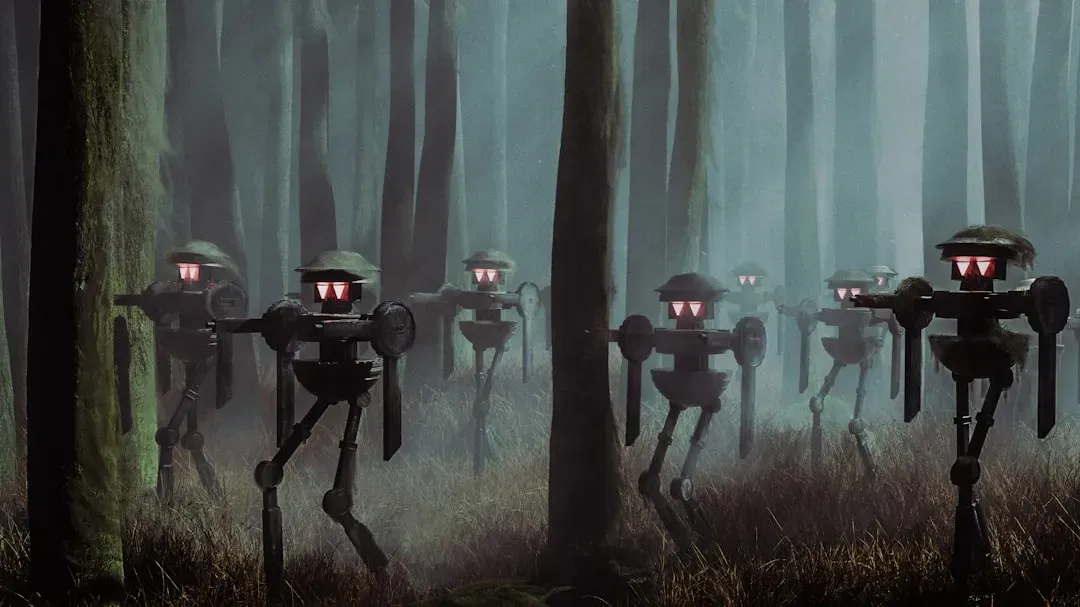
Imagine a future robot that moves like you, talks like you, laughs at jokes, and insists that it loves sunsets. From the outside, you might not be able to tell it apart from a conscious human being. Now imagine, uncomfortably, that inside it there is no experience at all – no color, no pain, no joy – only clever processing. Philosophers call this a “zombie”: a creature that behaves like a person but has no inner life. You instinctively doubt such a thing is real, but the very fact that you can conceive it shows how fragile your grip is on what consciousness actually is.
This thought experiment spills over into real debates about artificial intelligence. If you build systems that can describe feelings, apologize, or claim to be conscious, you suddenly have to ask yourself: are they just parroting patterns, or is there something it is like to be them? You could open up their code, trace every operation, and still not find a neat label saying “here is where the experience lives.” That uncertainty makes consciousness not just an abstract puzzle but a moral minefield, because you might someday have to decide who or what deserves empathy and ethical consideration.
Why your own awareness feels undeniable yet impossible to explain
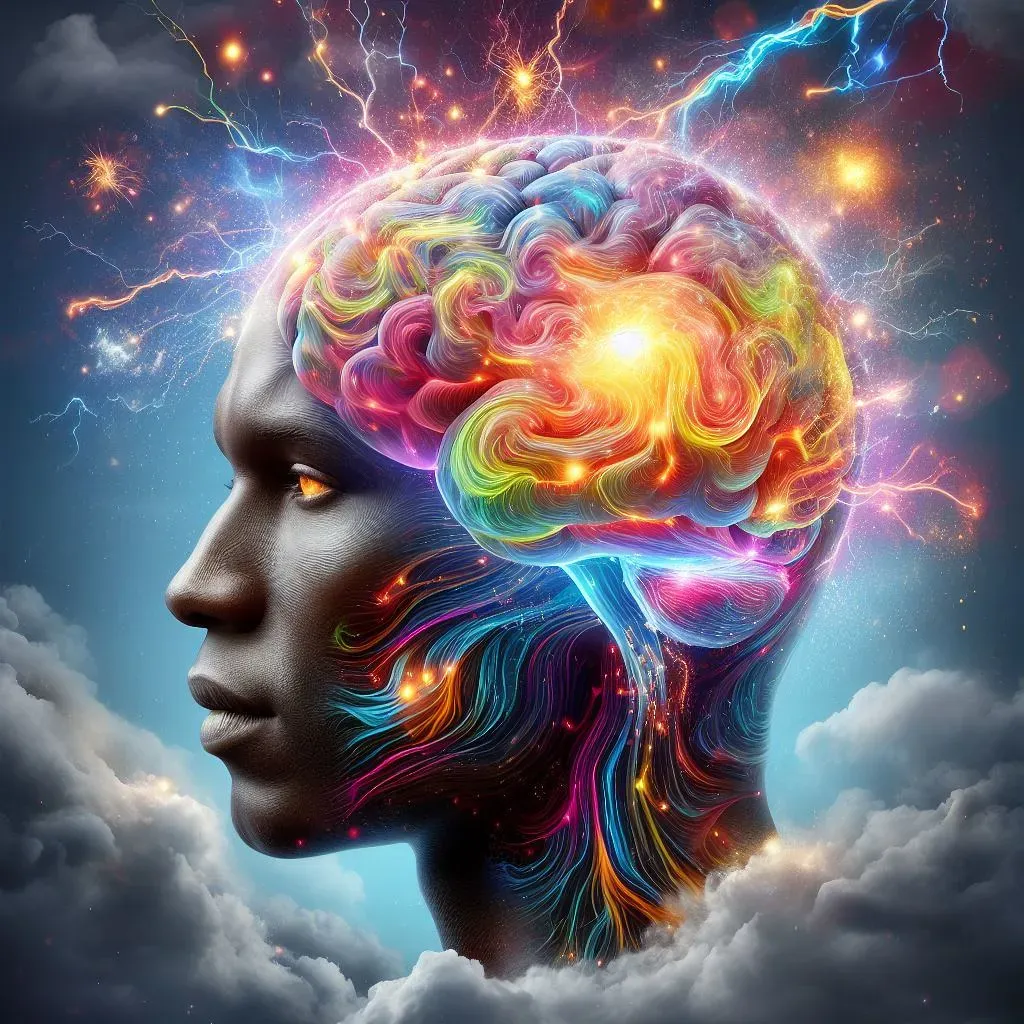
There is one thing you are more certain of than almost anything else: you are conscious. You might doubt your memories, question your beliefs, or change your opinions, but you cannot seriously deny that you are having experiences right now. This rock‑solid certainty sits in weird tension with how little you can say about what consciousness actually is. You know it directly, but when you try to pin it down in words, it slips away into vague phrases like “subjective feeling” or “what it is like,” which do not feel very scientific.
This mix of absolute certainty and conceptual fuzziness is part of what makes consciousness so maddening. You are used to science starting from things you can define and measure clearly, then building from there. Here, you start from something you cannot doubt but also cannot cleanly define or capture in instruments. It is like trying to draw a map beginning from a place you can see perfectly but are not allowed to look at from the outside. You keep circling back to what you already knew at the start: you are aware, and that awareness is still a mystery.
Competing theories that all sound plausible – and incomplete
Over the last few decades, researchers have proposed many theories of consciousness. Some suggest that when information is globally available across your brain, you become conscious of it. Others focus on specific loops between cortex and thalamus, or on the complexity of the interactions among neural networks. There are also more radical ideas that treat consciousness as a fundamental feature of the universe, something that does not magically appear only when brains get complicated enough. Each of these views highlights a piece of the puzzle that seems to resonate with what you intuitively feel.
The problem is that none of these theories has clearly won. You can find evidence that supports aspects of each one, and you can usually tweak definitions to absorb new data. At the same time, you still do not get a satisfying answer to the original question: why does this particular pattern of information, complexity, or connectivity feel like anything at all from the inside? You end up with impressive‑sounding frameworks that map the terrain but leave the center of the target frustratingly empty, like an outline sketch with no color filled in.
How consciousness forces you to rethink what science might be
Because consciousness resists your usual methods, it pushes you to ask whether science itself needs to evolve. Maybe you have to find ways to systematically incorporate first‑person reports, treating them not as soft, unreliable data, but as essential facts about the world. Or perhaps you need new concepts that bridge the gap between physical processes and subjective experience in a way that current physics and biology simply do not. That is a daunting thought, because it suggests that your deepest theories might be missing a crucial dimension.
At the same time, consciousness might be exactly the puzzle that stretches human understanding into new territory. Just as earlier generations had to accept that space and time were not absolute, you might have to accept that the relationship between matter and mind is stranger than you imagined. Wrestling with this could reshape everything from how you think about free will and identity to how you design technologies and legal systems. In that sense, the difficulty of consciousness is not a failure of science, but a sign that you are standing on the edge of a frontier you barely know how to explore.
Living with the mystery without giving up on the search
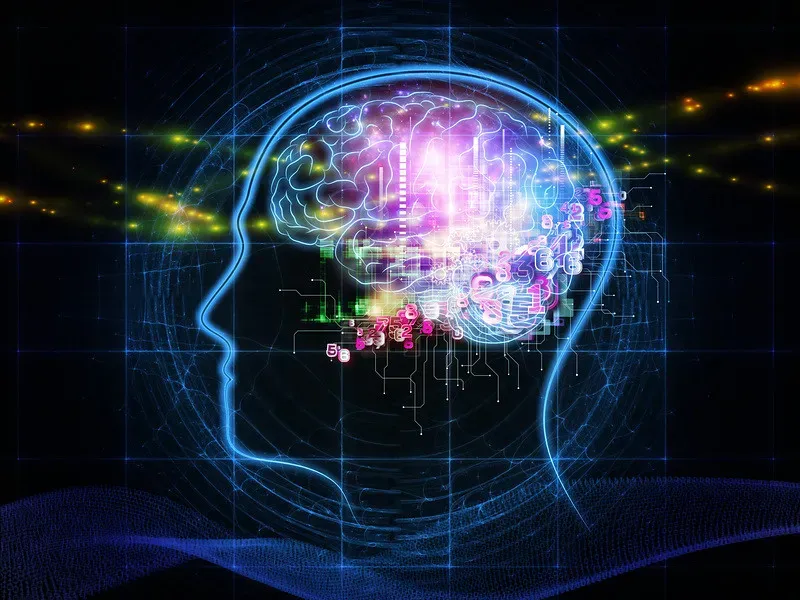
When you realize how deep the problem of consciousness runs, it is tempting to throw up your hands and declare it unsolvable. But you do not have to choose between naive optimism and total despair. You can admit that you are dealing with one of the hardest questions imaginable and still chip away at its edges. Every study that links specific experiences to brain patterns, every careful description of altered states, every comparison between human and machine cognition gives you a bit more structure, even if it does not yet reveal the core mechanism.
In your own life, the mystery of consciousness can also be a source of awe rather than frustration. Every time you notice a vivid color, a subtle emotion, or a sudden insight, you are brushing up against something that no equation yet fully captures. That does not mean you should stop asking how it works; it means you are lucky enough to be the kind of being that can notice the question at all. Maybe the hardest problem in science is also the most personal one, because in trying to solve it, you are ultimately trying to understand what you really are.
So you are left with a mind that can map galaxies, split atoms, and edit genes, yet still cannot fully explain its own shimmering inner light. Instead of seeing that as a defeat, you can treat it as an invitation – to stay curious, to question your assumptions, and to keep looking for new ways of thinking that might finally connect brain and experience. If , maybe that is exactly why it is the one you cannot afford to ignore: when you follow it all the way down, you are not just studying the universe – you are studying the part of the universe that is suddenly aware it exists. What could possibly be more gripping than that?