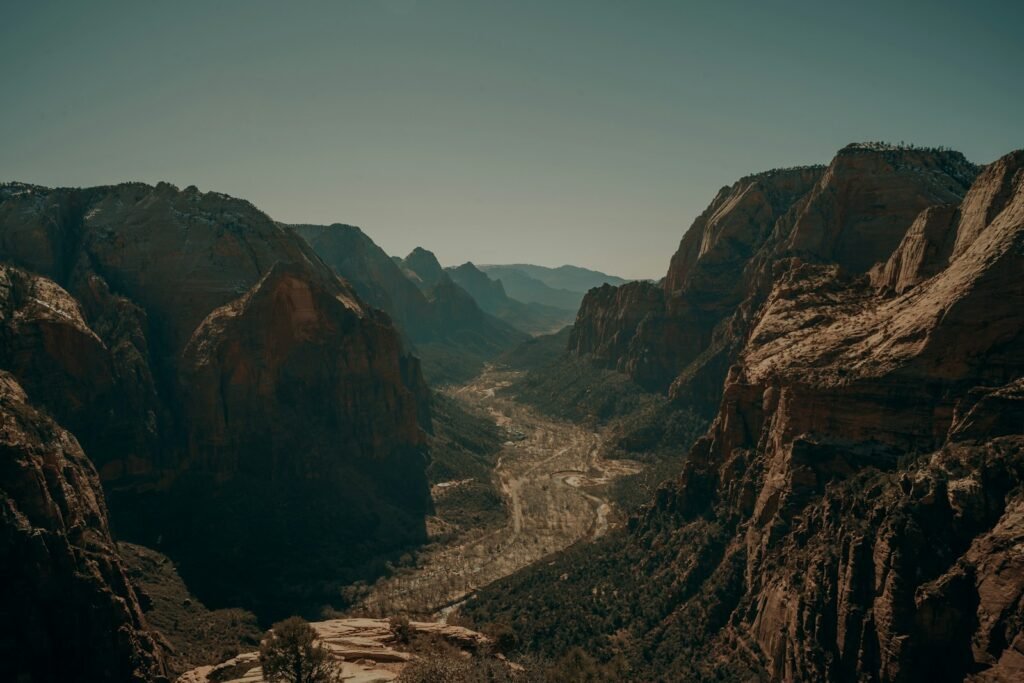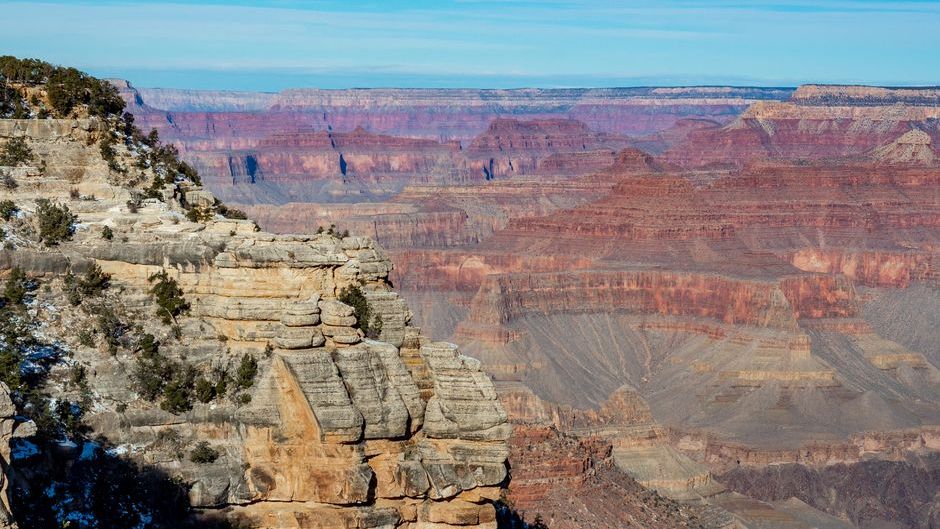
You have probably seen dramatic headlines claiming that a new Grand Canyon rock layer just shattered everything geologists thought they knew. It sounds thrilling, like the scientific version of a plot twist in a disaster movie: one strange layer of stone that breaks all the rules and proves the experts wrong. But when you slow down and actually walk through what geologists really see in the canyon walls, the story becomes far more interesting – and far more grounded – than those viral claims suggest.
Instead of a single magic layer that overturns geology, you’re looking at one of the clearest natural classrooms on Earth for how rock layers form, bend, vanish, and reappear. Some of what you see will absolutely challenge your intuition about how rocks “should” behave. It might even feel, at first glance, like the laws of stratification have been broken. The twist is that geologists have been wrestling with those very puzzles in the Grand Canyon for more than a century – and the real story is how those “violations” actually deepen and refine the rules, not destroy them.
The Laws of Stratification You Were Taught Are Only the Starting Point
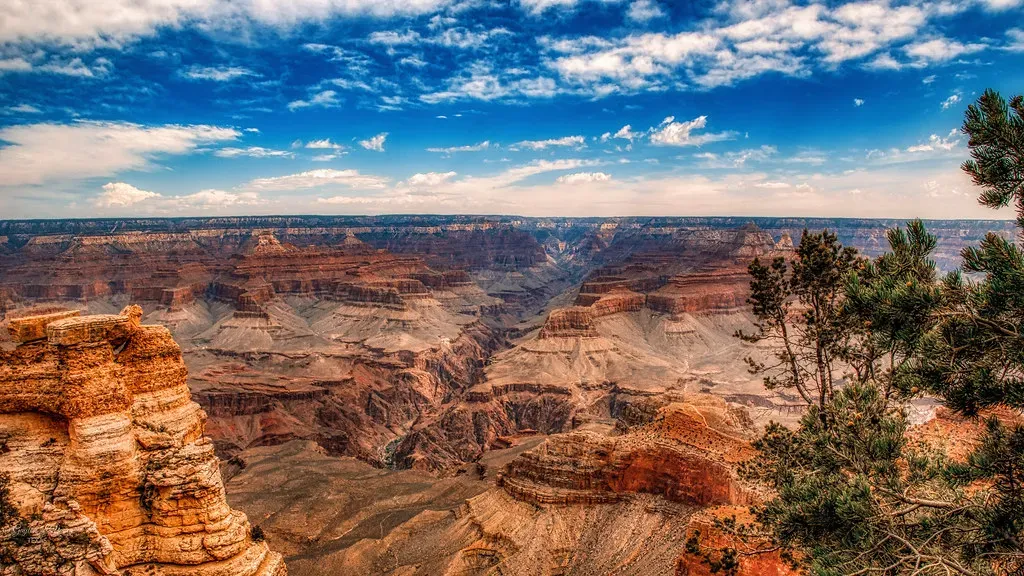
When you first learn about rock layers, you usually get a simple three-part story: layers are laid down horizontally, younger rocks sit on top of older ones, and any tilting or folding happens later. You might hear this as if it’s as rigid as gravity itself. When you stand at the Grand Canyon rim, though, that neat picture is immediately under pressure. You see stacks of nearly flat layers resting on top of older layers that have been tilted almost on edge, with hundreds of millions of years apparently missing in between.
Instead of proving the rules wrong, the canyon forces you to see them as principles with built‑in caveats. Superposition and original horizontality still hold, but only when you remember they apply at the moment of deposition, not necessarily to the tortured geometry you see today. Faulting, folding, erosion, and uplift can completely rearrange the stage after the initial performance. So when a layer looks like it should not be there – flat where everything beneath is twisted, or sharply bent without shattering – you are not watching a violation of stratification. You are watching stratification plus a long series of later events, piled on like edits to a manuscript you are trying to re‑read centuries later.
If you have come across claims that a recently exposed Grand Canyon rock layer “breaks all the laws,” it helps to ask two questions: new compared to what, and impossible according to whom. Geologists have been mapping, naming, and arguing over the canyon’s formations since the nineteenth century, and the official stratigraphic column has been revised many times as fieldwork improved. At various points, new layers have been recognized, reclassified, or traced into and out of view along the canyon’s length as erosion cuts deeper or slopes slump away.
For you, that means “new” usually means newly recognized, better described, or better exposed – not that some unheard‑of slab of rock just materialized to embarrass the textbooks. When a park sign or article mentions that a layer was identified in the 1970s, geologists are not saying the canyon suddenly grew a fresh band of stone. They are telling you that someone finally noticed, tested, and named a package of rock that had been sitting there for a very long time. The story is less about shocks that overturn science and more about slow, careful refinement – something that is a lot less flashy than the headlines, but far more impressive when you picture people hanging from ropes on vertical walls, measuring every meter.
The Great Unconformity: A Giant Gap That Looks Like a Broken Rule
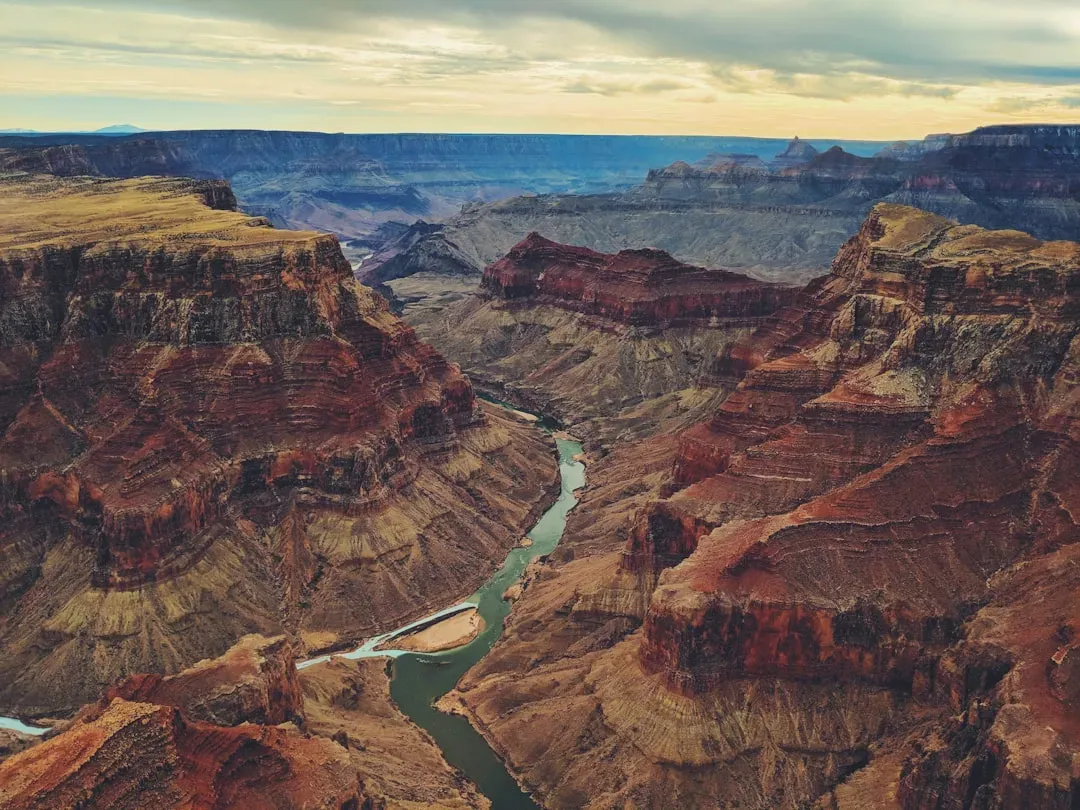
One of the most unsettling sights you’ll encounter if you look closely is the so‑called Great Unconformity – a nearly razor‑sharp boundary where very old, tilted crystalline rocks abruptly meet much younger, flat sedimentary layers. To your eyes, that contact really does look like a violation of the rule that layers should smoothly pile up through time. Instead, you get a brutal jump in age and character: deep‑time basement rocks below, relatively young sandstones and shales above, with a chunk of Earth’s history simply…gone.
When you learn what that unconformity really represents, the apparent violation turns into a lesson in patience. You are seeing a surface that once lay at or near sea level, where erosion planed off mountains, stripped away enormous thicknesses of earlier strata, and left a low, stable landscape. Only later did a new phase of sedimentation bury that surface under fresh layers. To you, it looks like missing pages in a book; to a geologist, it’s evidence that the book was partly ripped apart, left out in the rain, and then rebound with new chapters on top. The law of superposition still holds within each stack of layers, but erosion writes its own kind of negative history in between.
Folded but Not Shattered: When Layers Bend Without Breaking
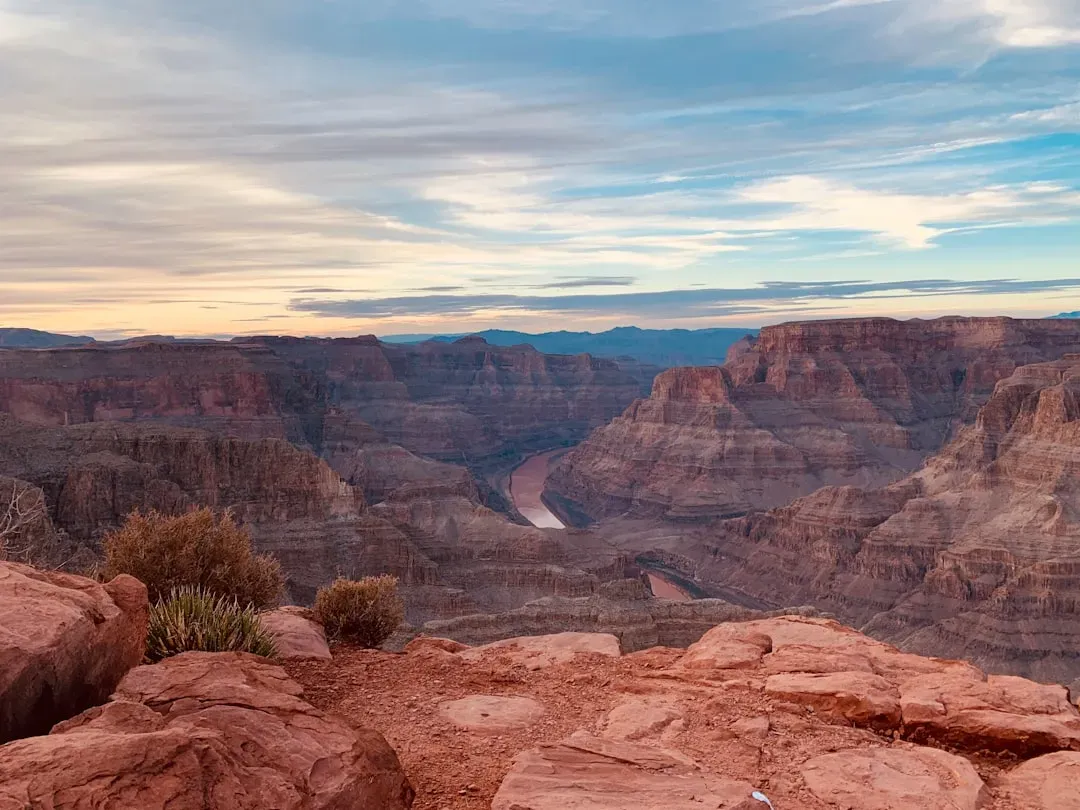
Another feature that can feel like an outright contradiction of the rules is when you see sedimentary layers bent into graceful arcs or kinks without obvious fracturing. Your everyday experience of brittle materials tells you that rocks ought to snap like a dry cracker if you try to fold them, especially if you imagine them already hardened deep underground. So when you spot intact beds draped into curves, it is tempting to think something about the usual picture of slow geologic change must be fatally wrong.
The key idea you are missing in that gut reaction is that rock strength depends on conditions. Under high temperature and pressure, or while still relatively young and not fully cemented, layered sediments can behave more like stiff putty than like porcelain. Give them enough time, and they can bend ductilely along broad folds, sometimes with only microscopic cracking. When you walk past those folded layers in the canyon, you are not seeing a miracle that explodes the laws of stratification. You are seeing the laws of rock mechanics and deformation layered on top of the basic rules, expanding the story rather than erasing it.
Flat Gaps and Sharp Contacts: Why “Too Clean” Boundaries Confuse You
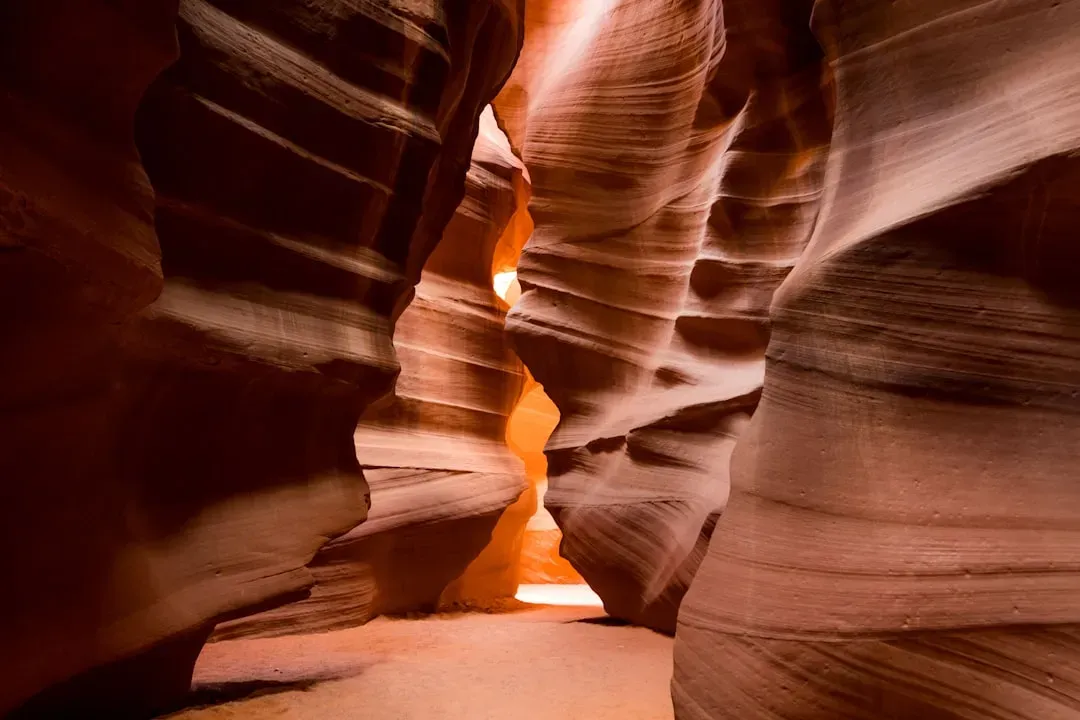
If you stare at certain contacts between Grand Canyon layers, you might notice how surprisingly flat and sharp they are. It can feel wrong that one rock type ends and another begins over great distances with only a thin, clean boundary in between. Shouldn’t there be irregular mixing, deep channels carved into the surface below, or messy transitions if real rivers, tides, and storms deposited these sediments slowly over time?
Here again, your everyday instincts mislead you. Natural environments like shallow seas, tidal flats, and wide river plains are perfectly capable of producing broad, relatively uniform surfaces, especially when water depths and energy levels are stable over large areas. A region can sit for long periods under a calm sea, quietly building up mud or limey ooze in an almost eerily even sheet. When conditions later change, the new layer may blanket that surface with similar uniformity. What feels “too neat” to you is, in many settings, exactly what you would expect from long‑lived, gently changing environments. The laws of stratification never promised chaos at every boundary; they only promised that each contact marks some kind of shift in conditions.
Disappearing and Reappearing Layers: When Your Intuition Wants Straight Lines
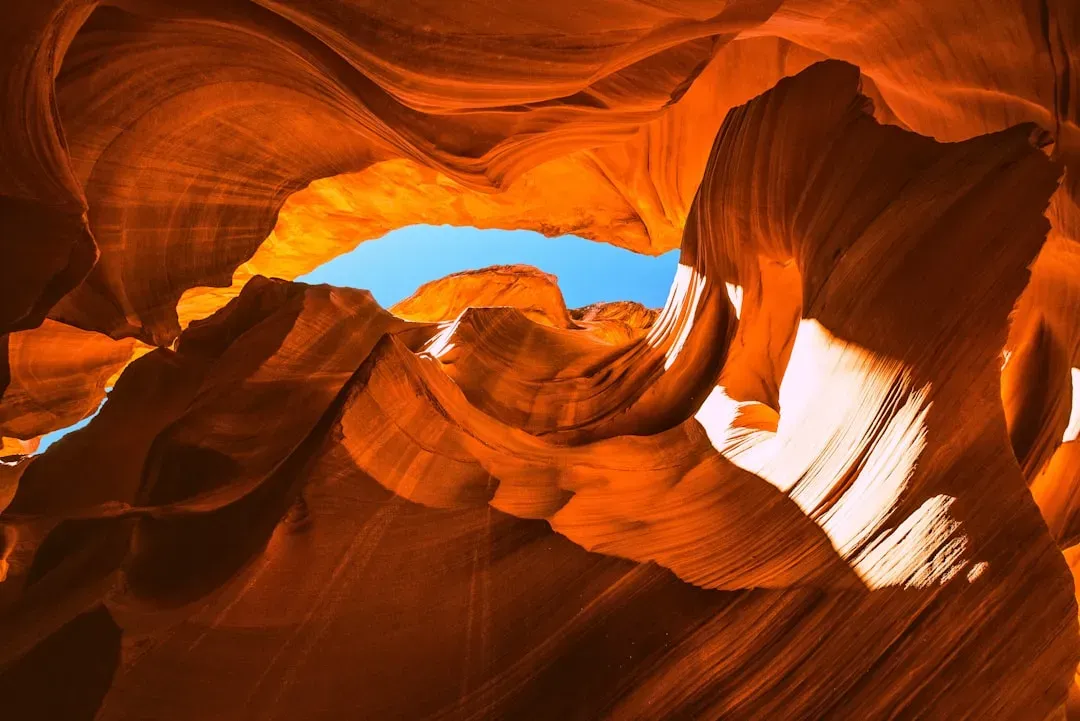
As you follow the canyon walls along their enormous length, you’ll see some layers thin out, fade away, or split into different rock types, only to show up again farther along. That patchiness can feel like another rule is being broken – shouldn’t a given layer be one continuous blanket if it formed at the same time everywhere? Your mind wants tidy horizontal lines, but the rock often refuses to cooperate.
What you are really encountering is the three‑dimensional complexity of real depositional environments. Sediment supply, water depth, shoreline position, and local topography all vary across a basin. Imagine a beach that grades into dunes landward and deeper water seaward; as sea level rises and falls, different parts of that system get preserved in different places. Over time, one type of layer can pinch out entirely or change character, and a “missing” formation in one cliff may be alive and well a few kilometers away. The laws of stratification do not require every layer to be perfectly uniform; they simply say that any given bed records a particular span of conditions where it exists.
Creationist vs. Conventional Readings: Why the Same Layers Tell You Different Stories
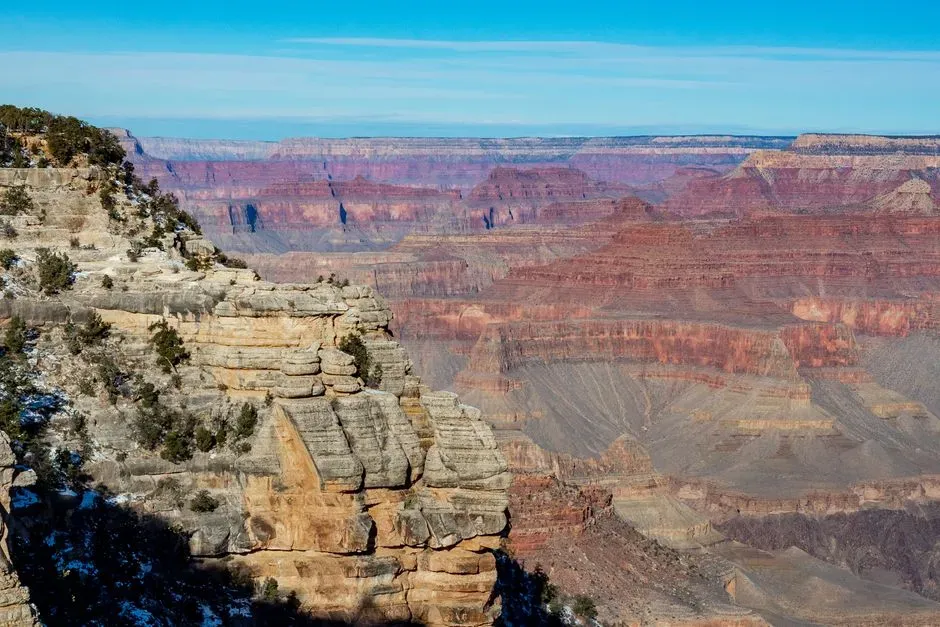
You have probably seen arguments that the Grand Canyon’s rock layers, especially the nearly flat Paleozoic sequence, prove a single, rapid, catastrophic flood rather than long ages. These claims often lean on the apparent simplicity of the “layer cake” pattern, the occasional sharp contacts, and the bent but unbroken folds, presenting them as fatal problems for conventional geology. If you are not already familiar with sedimentology, it can be very persuasive to be told that soft, quickly laid deposits explain everything in one dramatic event.
When you dig into the details, though, you start to notice features that do not fit a single short flood at all: soil horizons, trackways, burrows, reef‑like buildups, and stacked sequences of shallow and deeper water deposits that repeat over and over. You also see that folds, faults, and unconformities are not random scars but organized records of multiple phases of uplift and erosion. Conventional geologists do not see the canyon as contradicting stratigraphic laws; they see it as one of the strongest confirmations that those laws, combined with plate tectonics and surface processes, can explain enormous complexity. You may disagree with their timescales, but the idea that the canyon “violates every law of stratification” simply does not match what you find when you walk through the evidence slowly.
What “Violation” Really Means in Science (and Why You Should Welcome It)
Whenever you hear that some rock layer, fossil, or measurement “breaks the rules,” it’s worth pausing to ask what that actually means in science. You are not dealing with laws in the sense of unchangeable edicts; you are dealing with models and principles that hold within certain conditions. When a feature in the Grand Canyon seems to contradict your first‑pass understanding of stratification, the scientific response is not to throw the whole framework away. The response is to refine the framework so it can accommodate the new observation.
In practice, that looks like debates over how much uplift happened when, whether erosion or deep burial dominated during a given interval, how fluids moved through the rocks, or how regional tectonics shaped basin subsidence. You might find those arguments messy and even frustrating, but they are a sign that the laws of stratification are being treated as working tools, not as dogma. The canyon keeps offering up puzzles – sharp unconformities, folded yet coherent strata, laterally variable layers – and each one pushes the models to become a little more nuanced. Instead of proving that everything you were told was wrong, those “violations” show you where your first‑grade understanding needs a graduate‑level update.
How to Read the Canyon With a Skeptical but Curious Eye

Next time you look at a photo of the Grand Canyon – or better yet, stand on the rim – you can treat it like a test of your geological reading skills. Ask yourself what each visible boundary might represent: a change in sea level, a shift in sediment source, a long pause in deposition where erosion won, or a tectonic event that tilted or uplifted the whole stack. When you see a puzzling feature that seems to defy the rules, resist the urge to jump straight to the conclusion that the rules are broken. Instead, ask which additional processes or missing chapters might make the picture coherent again.
If you approach the canyon this way, you give yourself permission to hold two thoughts at once: that the basic laws of stratification are powerful and time‑tested, and that your personal version of them is probably too simple. You replace the fantasy of a single shocking layer that blows everything up with the reality of a landscape that has been challenging and sharpening geologists’ thinking for generations. In the end, the canyon does not need to violate every law to be astonishing. It is astonishing precisely because, when you read it carefully, it shows you how far those laws can stretch without breaking. Did you expect the real story to be this much stranger – and this much more satisfying – than the headline?