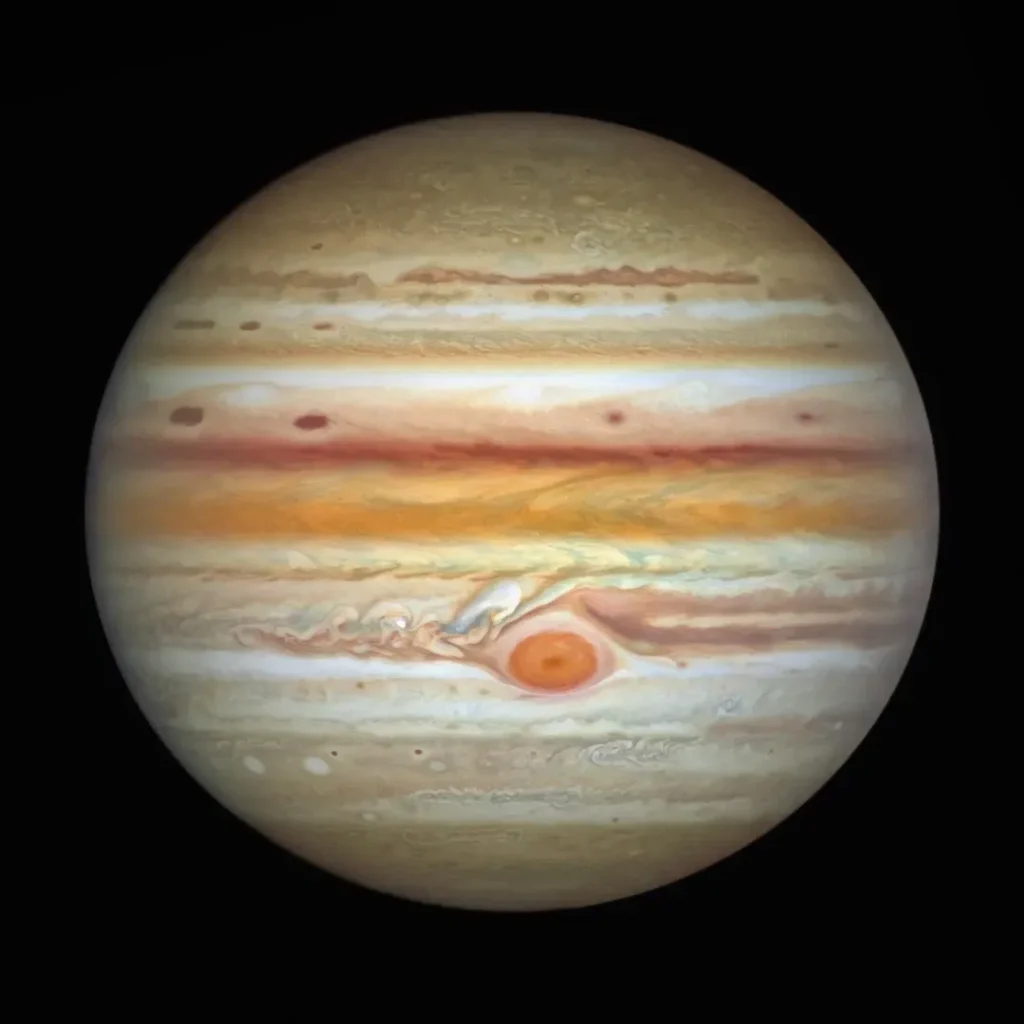
When you look at Jupiter through a telescope, you are literally watching a storm that started raging before the pyramids were built and has not stopped since. That swirling, brick-red oval on the planet’s face is not just a pretty pattern; it is a violent, towering cyclone wider than Earth that has outlived empires, religions, and entire eras of human history. You live in a world where hurricanes last days or maybe weeks, but this one has been going for centuries.
As you start to unpack what this Jovian monster really is, your sense of scale and time gets stretched in a way that almost feels uncomfortable. You are used to thinking of weather as fleeting, but on Jupiter, weather can become architecture, something almost permanent carved into the planet’s atmosphere. Understanding this storm is like standing at the edge of an alien ocean of physics, chemistry, and chaos, and realizing you barely know what “storm” even means.
How Long Has Jupiter’s Great Red Spot Really Been Raging?
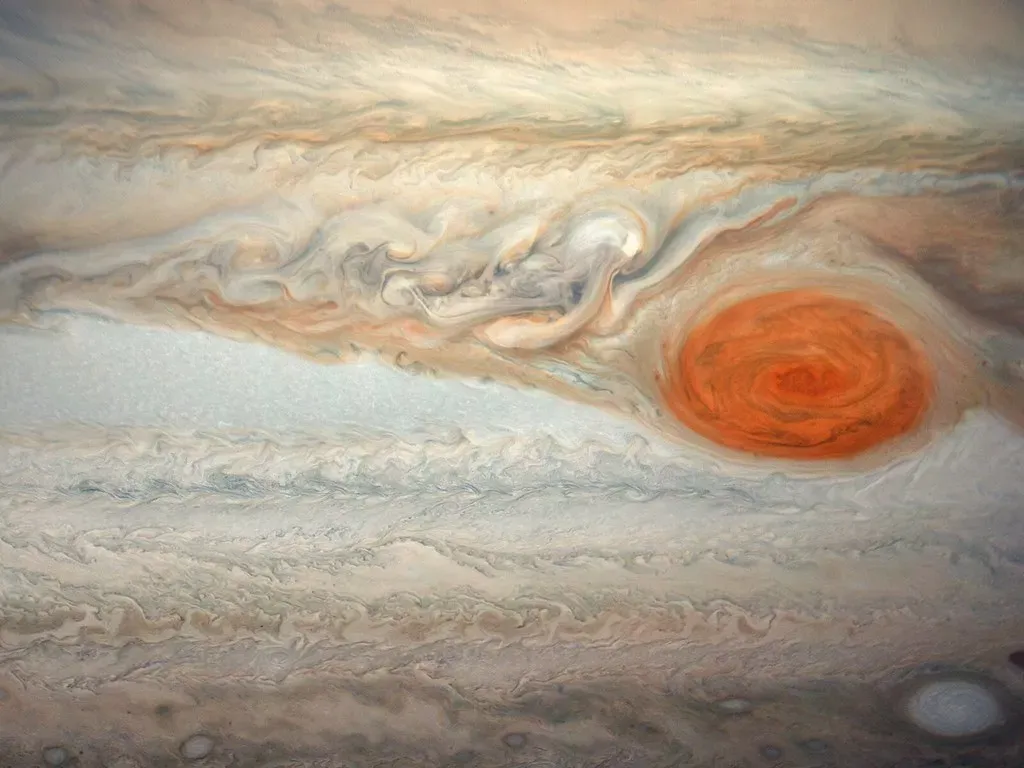
You often hear that Jupiter’s Great Red Spot has been raging for at least three hundred and fifty years, and that estimate is not an exaggeration. The first reliable observations that match the storm’s position and appearance go back to the mid‑seventeen hundreds, and some earlier sketches from the sixteen hundreds may also show the same feature, depending on how you interpret them. That means this single storm has been active since before electricity, trains, or modern science, continuing non‑stop through revolutions, world wars, and the entire digital age.
To put that in your own mental timeline, the Great Red Spot was already spinning when Isaac Newton was still alive and people crossed oceans on wooden sailing ships. While every hurricane you have ever heard about in the news was born, peaked, and died in less than a month, this storm has just kept going, evolving but refusing to disappear. When you picture ancient humans looking up at Jupiter’s dim red blemish, you are actually sharing a view with them, separated by centuries but linked by the same planetary scar.
How Enormous Is This Storm Compared To Your Entire World?
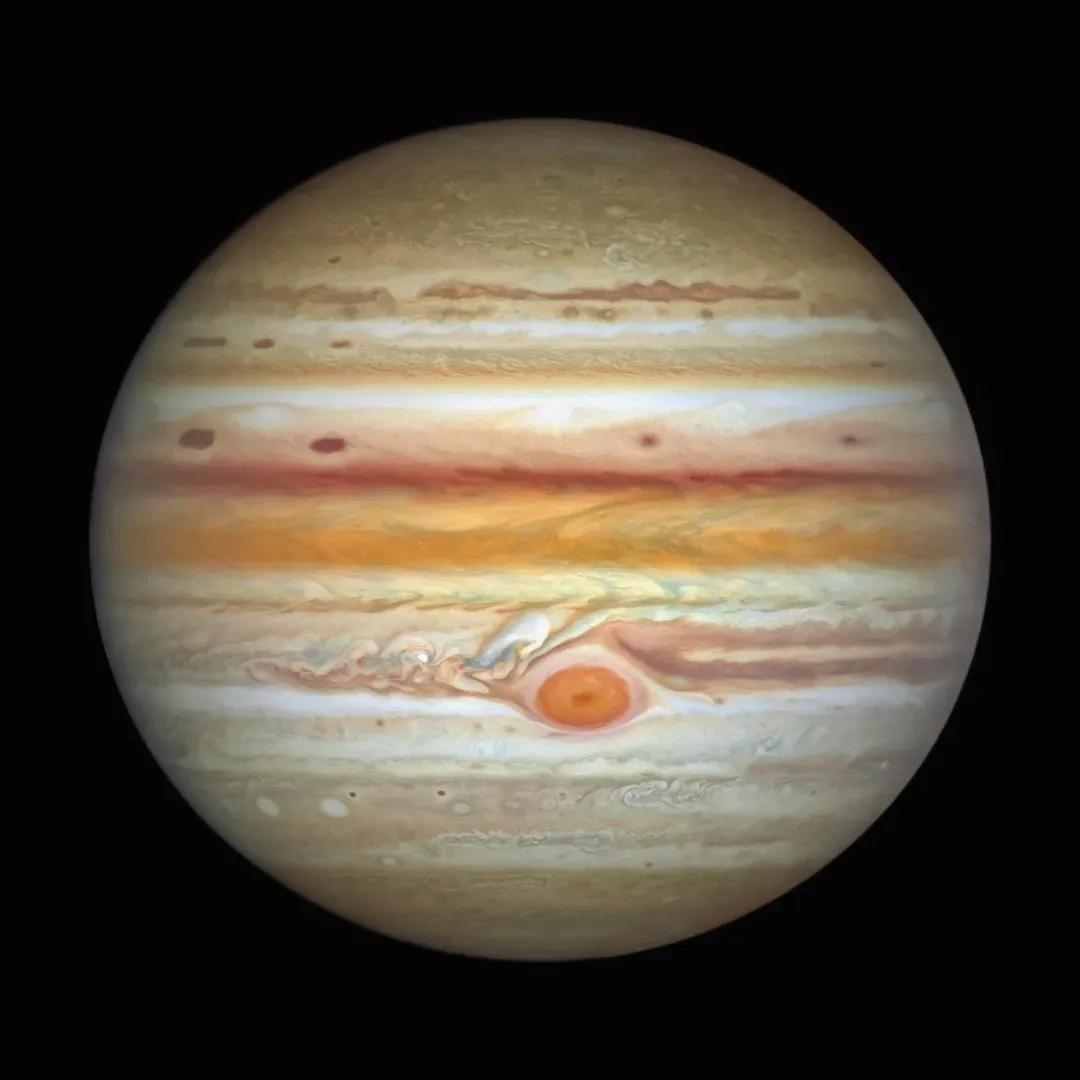
It is easy to shrug at space images because everything looks big and vague, but here you need real numbers: at its largest recorded size, the Great Red Spot could have swallowed about three Earths across its width. Even today, after shrinking over the last century or so, it is still big enough to fit at least one Earth comfortably inside. When you see a photo with a tiny blue circle overlaid on the red oval to represent Earth, your gut finally understands how absurdly oversized this storm really is.
Vertically, the storm extends far above the surrounding clouds, forming a towering structure of churning gases that rises many kilometers into Jupiter’s atmosphere. You are not looking at a flat pattern; you are looking at a three‑dimensional beast, like a spinning mountain of wind and clouds. If you could somehow hover at the edge of the Great Red Spot, the “wall” of the storm would tower over you in all directions, curving away with the planet, dwarfing anything you have ever seen on Earth.
What Makes This Jovian Storm So Violent?
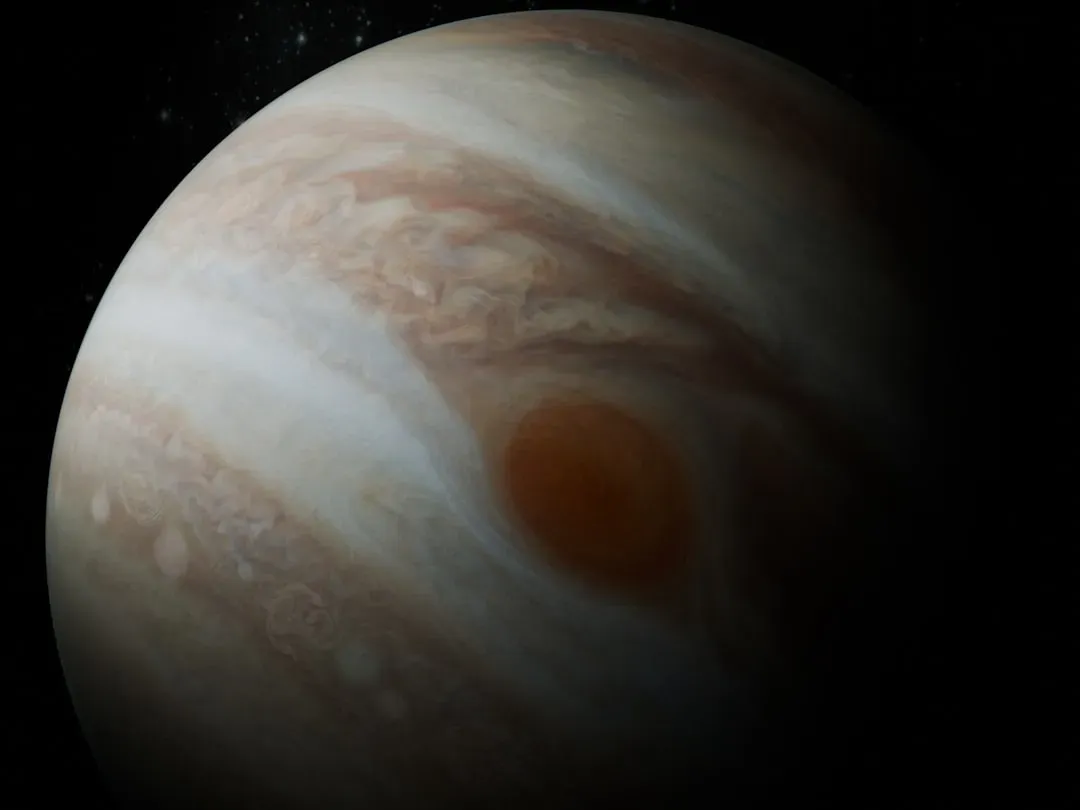
If you think hurricane winds on Earth are terrifying, you need to adjust your scale for Jupiter. Inside the Great Red Spot, wind speeds climb to roughly a few hundred miles per hour, comparable to the strongest category storms on Earth, but stretched across a region larger than your entire planet and powered by far more energy. Instead of a short‑lived burst of fury, you are looking at a sustained, churning whirlwind that has kept its momentum over centuries, fueled by Jupiter’s deep, restless atmosphere.
The storm is basically a gigantic high‑pressure system, a rotating oval of gas where material is trapped and whipped around in a continuous loop. The contrasting jet streams around it act like fast‑moving rivers of air that help keep its boundaries sharp and its circulation strong. Where on Earth friction from land, oceans, and the upper atmosphere bleeds energy out of storms, Jupiter’s mostly gaseous, deep atmosphere lets this vortex spin with far less resistance. You are seeing what a storm can become when nature removes almost every brake.
Why Does It Look Red, And What Are You Actually Seeing?
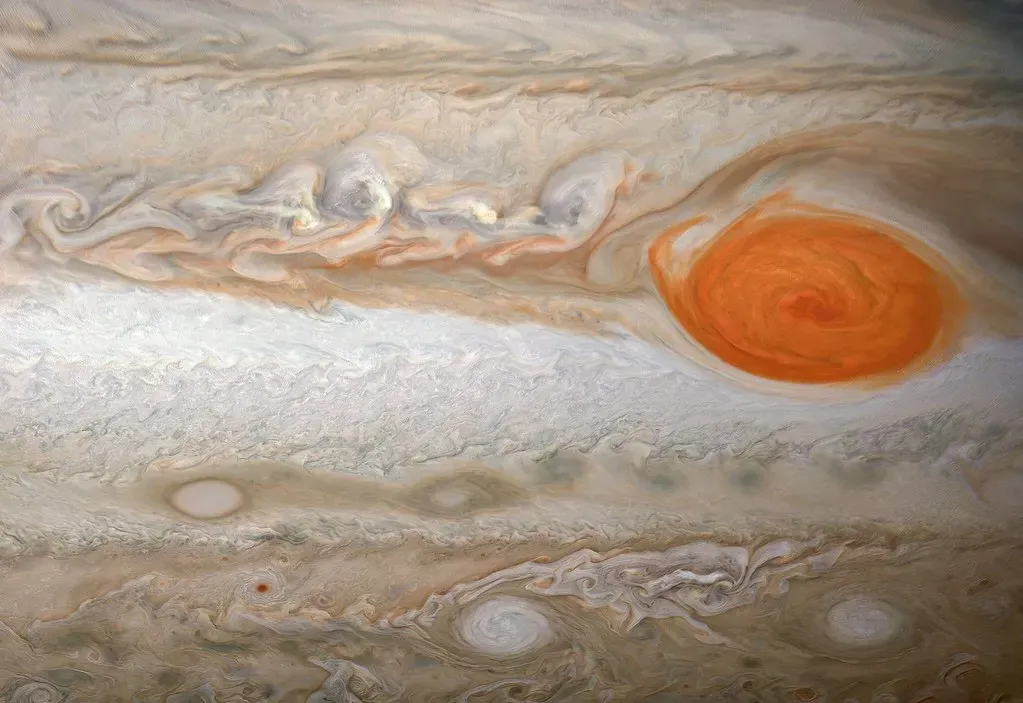
When you stare at images of the Great Red Spot, the color is probably the first thing that hooks you emotionally; it feels angry, bruised, and almost wounded. But that red is not a glowing fire or lava, it is tinted clouds made of chemicals like ammonia and possibly sulfur or complex organic compounds altered by sunlight and energetic particles. You are looking at a kind of atmospheric chemistry experiment on a planetary scale, where high‑altitude clouds get “sunburned” and stained into reds, oranges, and browns.
Interestingly, the color has not stayed constant over time, and that matters for how you interpret what you are seeing. Sometimes the storm looks deeper, brick red, while in other years it fades to a more muted salmon or even a pale beige. That suggests that what you see is a shifting balance of cloud altitude, thickness, and composition. In other words, you are never looking at a static painting on Jupiter; you are watching a living canvas, its pigments constantly mixed by winds and chemistry.
How Do You Even Study A Storm On A Distant Gas Giant?
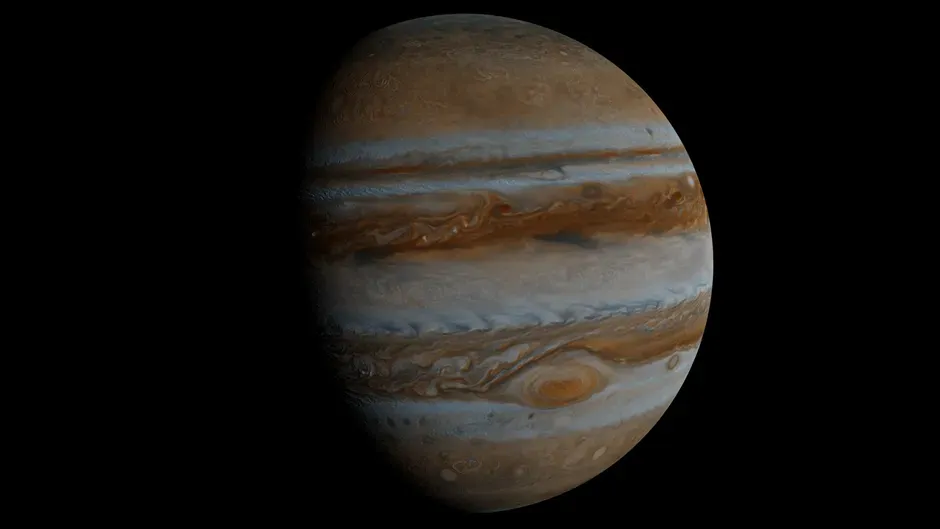
You might assume scientists can only guess at what is happening in the Great Red Spot, but over the last few decades you have collected a surprisingly rich set of tools to probe it. Telescopes on Earth and in orbit, across visible, infrared, ultraviolet, and radio wavelengths, let you see different layers of the storm and measure its temperature, motion, and composition. Each wavelength acts like a different pair of glasses, revealing either cooler high clouds, warmer deep layers, or subtle gases hidden in the mix.
Spacecraft flybys and orbiters have taken things further by giving you close‑up, time‑lapse views. Missions like Voyager, Galileo, and Juno have snapped high‑resolution images, tracked cloud motions precisely, and even measured gravity variations to peek under the cloud tops. With those measurements, you can estimate how deep the storm goes, how its winds behave below the surface, and how it interacts with the belts and zones around it. Studying the Great Red Spot has become less like staring at a distant blur and more like monitoring the “vital signs” of a patient you can never physically touch.
Why Has It Lasted So Long When Earth’s Storms Die So Fast?
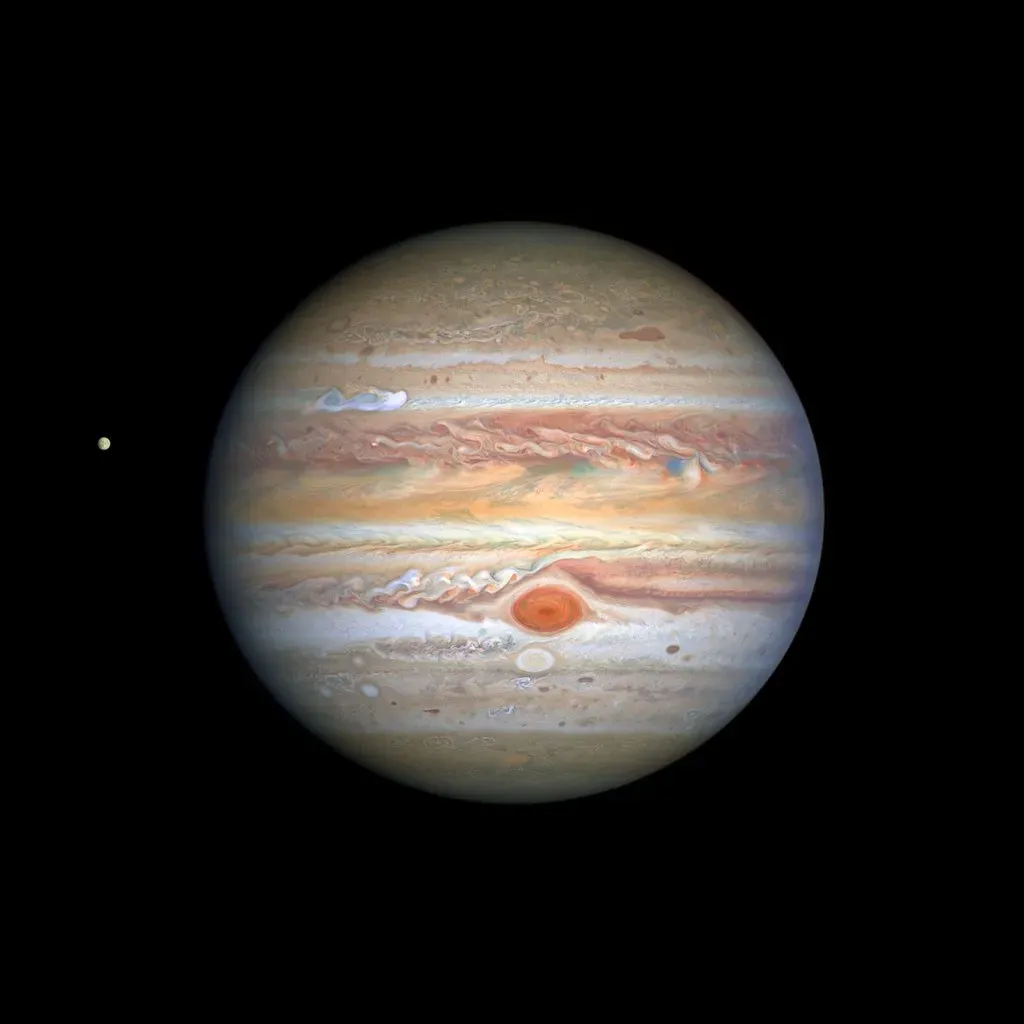
This is the question that really forces you to rethink what you know about weather: why does this storm endure while Earth’s strongest cyclones fade in days? A big part of the answer lies in Jupiter’s lack of solid surface; without continents or mountain ranges to break it up, the vortex does not slam into anything that can disrupt its circulation. Instead, it drifts through a deep, largely fluid atmosphere where energy can keep feeding into its rotation rather than being wasted as friction.
Jupiter itself also leaks a lot of internal heat, giving its atmosphere a constant energy source from below, not just from sunlight above. That heat can drive convection and turbulence, pumping energy into large‑scale features like the Great Red Spot and helping them hang on. Around the storm, powerful jet streams act like lanes on a highway, confining and supporting it rather than tearing it apart. You are watching what happens when a storm forms in almost perfect long‑term conditions, the way a wildfire might burn for months if it never ran out of fuel or obstacles.
Is The Great Red Spot Finally Shrinking And Dying?
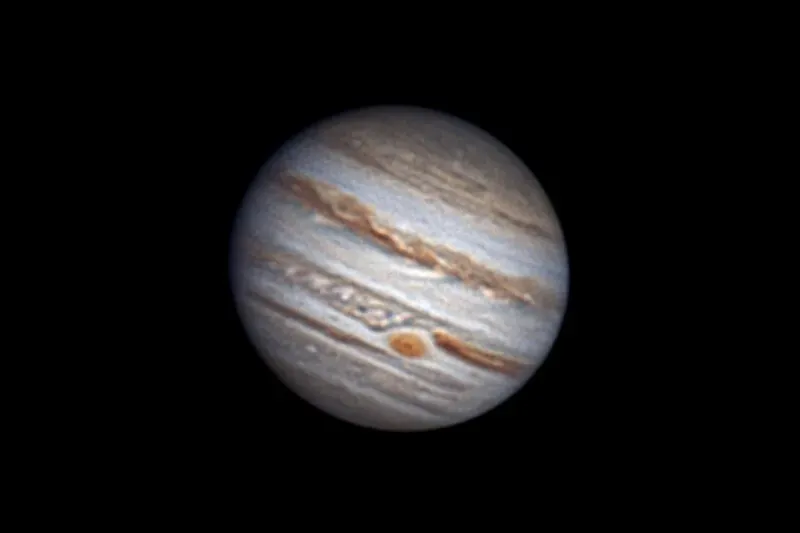
Over the last century or so, careful measurements have shown that the Great Red Spot is gradually shrinking, and that trend should matter to you if you like thinking on planetary time scales. Early drawings and photos suggested it once stretched wide enough to fit about three Earths across, while modern images show a storm closer to the size of one Earth across, with a noticeably rounder shape. You are essentially watching an ancient storm enter what might be its old age, though no one can say exactly how long that stage will last.
Despite the shrinking footprint, the winds inside the storm have not simply faded away; in some studies, certain parts of the vortex have even appeared to strengthen slightly. That means you should not imagine a weak, dying swirl, but rather a storm that is changing character while still remaining powerful. It might eventually break apart, merge into other flows, or transform into something smaller and less dramatic. Whatever happens, humans living now are among the first to see visible, measurable changes in a feature that once seemed almost eternal.
What Does This Alien Storm Teach You About Weather Everywhere?
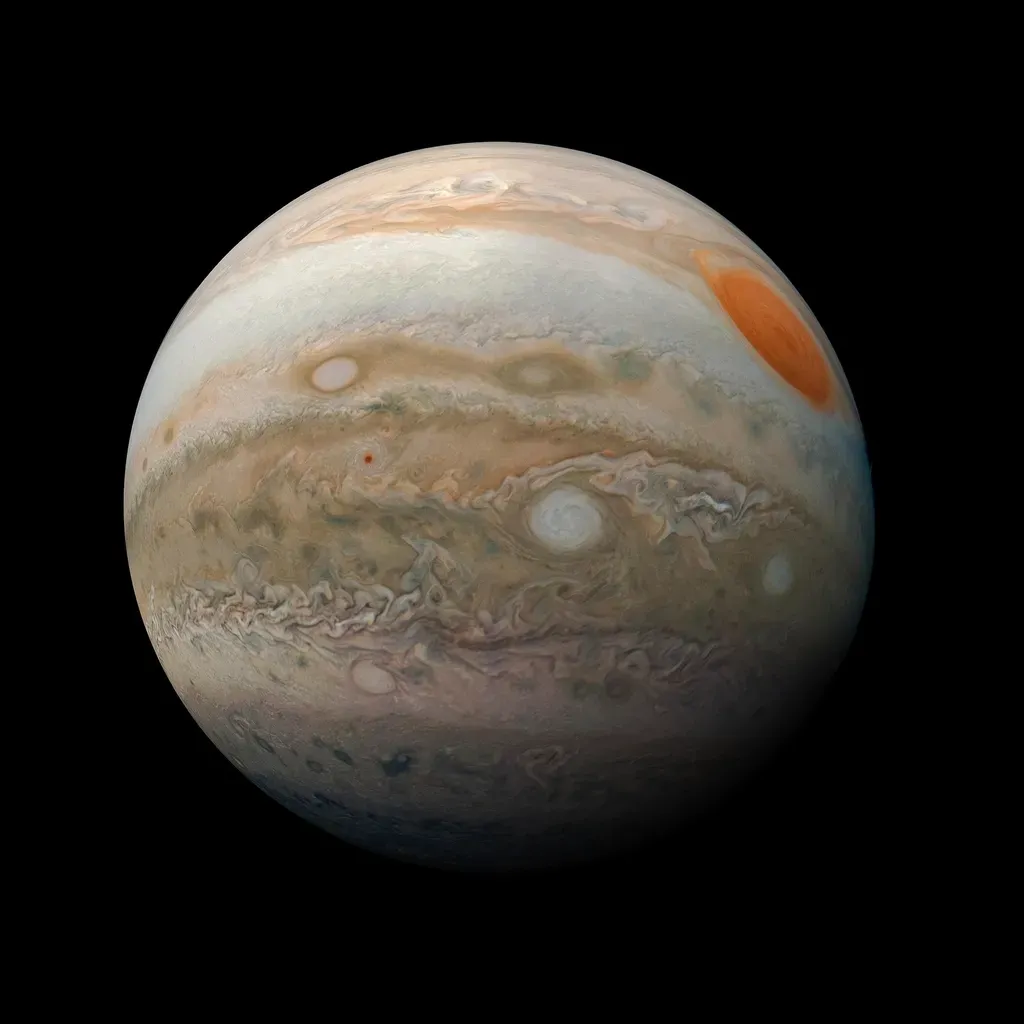
Once you get over the sheer spectacle, the Great Red Spot becomes something deeper: a natural laboratory for understanding how atmospheres work, including your own. By studying how energy moves through this gigantic vortex, how it interacts with neighboring jet streams, and how it evolves over time, you learn general rules about fluid motion, turbulence, and long‑lived weather patterns. Those same rules help you model jet streams on Earth, understand climate patterns, and even interpret storms and banding on other giant planets like Saturn and Neptune.
In a strange way, watching this distant storm is a bit like watching a slowed‑down, magnified version of your own planet’s atmospheric behavior. You can test computer models against centuries of observations and see whether they can reproduce a vortex that large and long‑lasting. If they do, your confidence in those models grows, and you can trust them more when they are used to predict future climate trends closer to home. The Great Red Spot reminds you that weather is not just local noise; it is part of a universal language that every atmosphere speaks.
Conclusion: Standing In The Shadow Of A Storm Older Than Your History Books
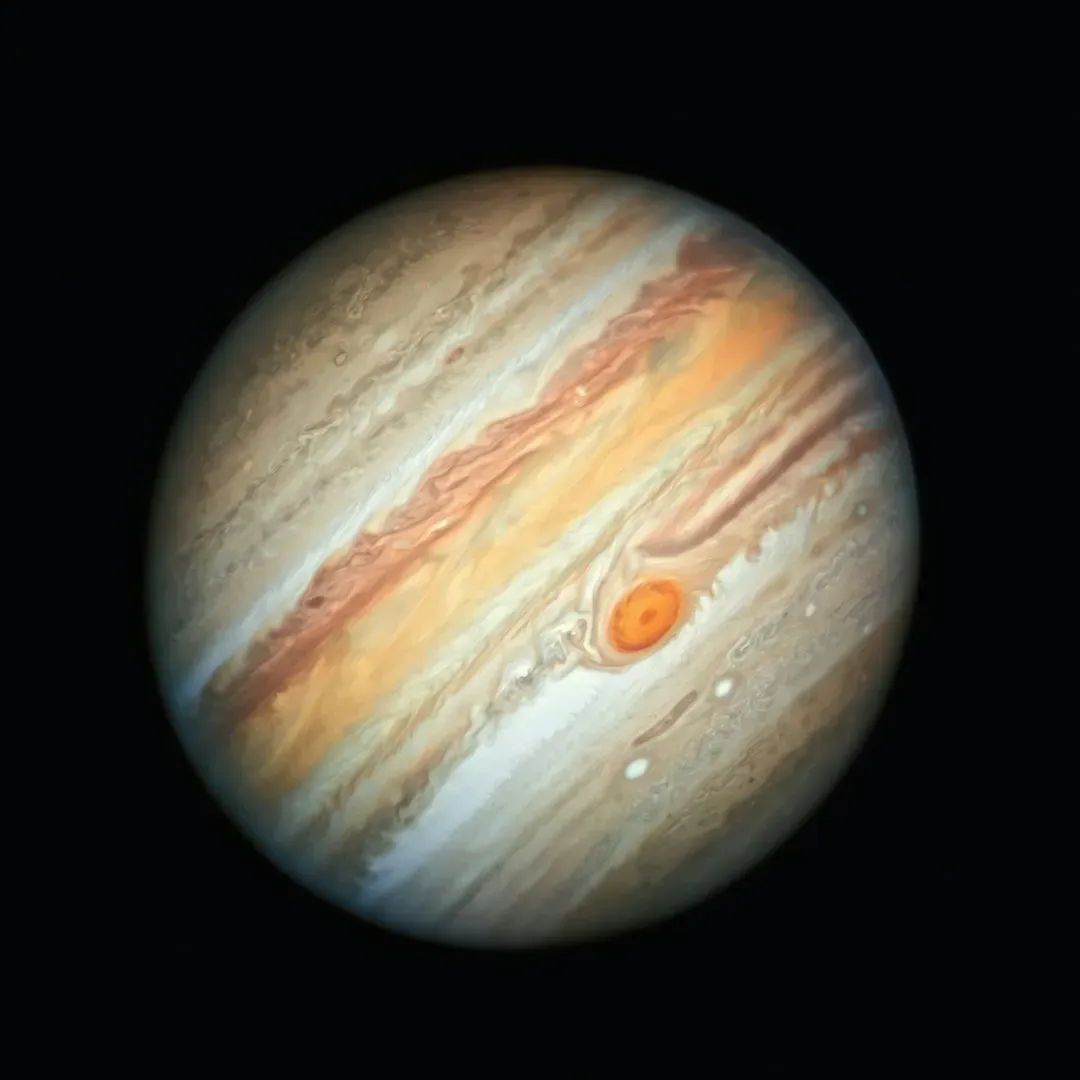
When you think about the Great Red Spot as just a pretty patch on Jupiter, it feels distant and irrelevant, but once you know its story, it hits differently. You are sharing a universe with a storm that began before modern civilization and is still howling across a world made of swirling gas and deep mystery. It sits there like a cosmic clock, ticking away centuries while you measure your life in decades and your storms in days.
If anything, this ancient vortex forces you to zoom out and see your own planet as just one more atmospheric experiment in a much larger laboratory. The same physics that sustains that red oval is at work in the breezes that move your clouds and the jet streams that steer your weather. Next time you see an image of Jupiter, you might pause for a moment and imagine yourself standing on an invisible balcony above that storm, looking down into an abyss of wind older than your modern world. In the grand theatre of the cosmos, does it surprise you that one of the most enduring characters is a storm?