If you have ever sat quietly and wondered what will happen to the “you” inside your head when you die, you’re not alone. For all our science, technology, and spiritual traditions, the moment of death still feels like a locked room we can only peer into through a keyhole. Yet, over the last few decades, researchers, doctors, and people who have brushed up against death have given us some surprisingly consistent glimpses of as life fades.
What emerges is not a single clean answer, but a strange, layered picture: bits of brain science, compelling personal reports, and deep philosophical questions about what “I” even means. Near death, some people say their sense of self expands; others say it dissolves into a kind of peaceful nothing. Some recall vivid, structured experiences; others report only a fog. In that uncertainty, though, sits something oddly comforting: the possibility that the end of life might be less about abrupt annihilation and more about a transformation of how the self is experienced.
The Fragile Neuroscience of “I”

One of the most surprising truths is that the sense of self is not a single thing, but a clever construction your brain is constantly stitching together. Various networks in the brain contribute: regions that track your body in space, areas that store your life story, and circuits that monitor your thoughts and emotions. When everything hums along normally, it feels like one seamless “me,” but biologically it’s more like a symphony than a solo instrument.
As the brain starts failing near death – whether slowly through illness or suddenly through trauma – that symphony starts to fall out of sync. Areas responsible for time, memory, and bodily awareness can fade at different rates, which is one reason people near death may feel detached from their bodies, lose track of time, or have experiences that do not quite fit with normal waking reality. In a strange way, what we call the sense of self is revealed as fragile: powerful while it works, but deeply dependent on the health of very specific, very mortal tissue.
Near-Death Experiences: Expansion or Illusion?
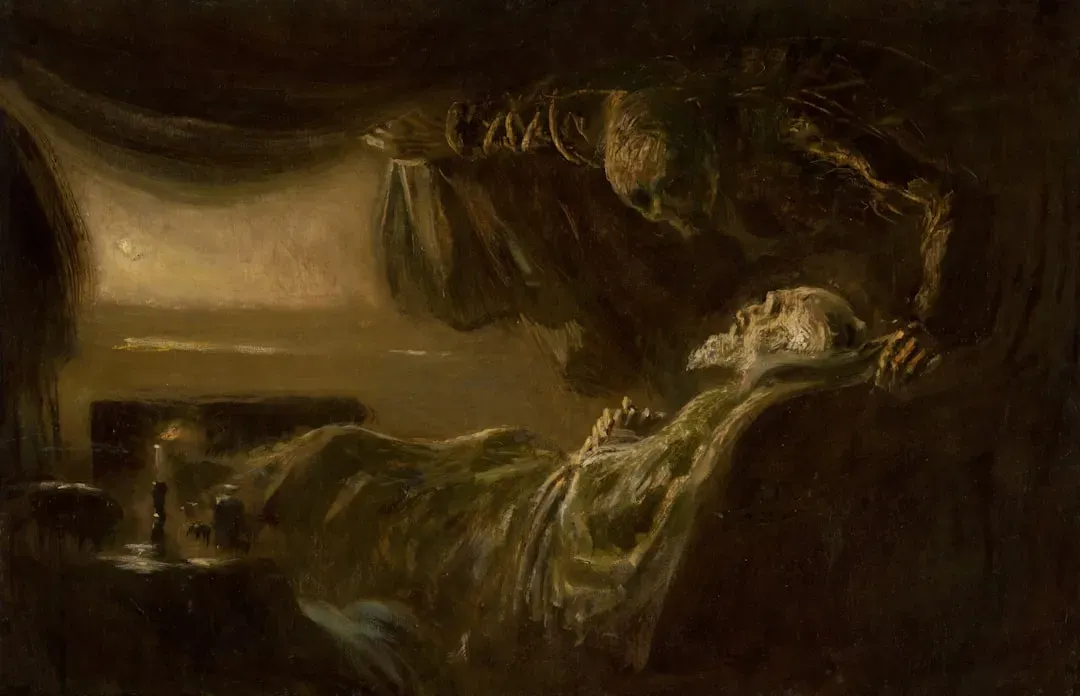
Near-death experiences (NDEs) are often described with eerie consistency: a sense of moving through darkness, encountering a bright presence, reviewing one’s life, or feeling overwhelming peace and love. People who have had NDEs will sometimes say their sense of self did not disappear; instead, it seemed to expand, becoming less tied to the body and more like pure awareness. For them, the “I” survived the body’s crisis, and sometimes even came back changed.
From a scientific angle, though, these experiences raise tough questions. NDE-like states can be triggered by drugs, lack of oxygen, or direct brain stimulation, suggesting the brain is capable of generating them under extreme stress. That does not prove NDEs are “just” hallucinations, but it does mean we cannot treat them as straightforward evidence that the self floats free of the brain. The honest answer is uncomfortable: NDEs are real experiences with real psychological impact, but whether they show the self surviving beyond death or simply breaking its usual rules as the brain fails is still an open, debated question.
Out-of-Body Feelings and the Breaking of Body Boundaries

One of the most dramatic reports near death is the classic out-of-body experience: a feeling of looking down on your own body from above, or existing as a point of awareness outside your physical frame. That sounds supernatural, but researchers have managed to induce similar experiences in labs by stimulating specific brain regions or tricking the senses with virtual reality. It turns out that your felt sense of being “inside” your body is more negotiable than most of us want to believe.
Near death, when blood flow and oxygen are compromised, those delicate body-mapping systems can misfire. The result is not random chaos but patterned distortions: a loosening of the usual boundaries of where “I” ends and the world begins. Whether that means consciousness is leaving the body or just getting really glitchy inside it is precisely the debate. Personally, I lean toward the glitch explanation, but I also think the emotional weight of feeling separate from the body can be life-changing, regardless of the underlying cause.
Time, Memory, and the “Life Review” Phenomenon

Many near-death accounts describe a kind of panoramic life review: moments flashing by, important relationships highlighted, or a deep sense of seeing one’s life as a cohesive story. Even people in sudden accidents sometimes report that time seemed to slow dramatically and memories surfaced in a rush. This suggests that our sense of self near death may temporarily become more narrative, almost like the brain is scrambling to compress a lifetime of identity into a last, intense highlight reel.
Neuroscientists think this could be linked to extreme surges of activity in brain areas that handle memory and emotion when the system is under threat. It might be a last-ditch attempt to make sense of everything, or simply what happens when certain circuits fire in an unusual pattern. Still, the idea that your self might briefly see its own story from a wider angle before fading is a strangely poetic overlap between cold neuroscience and the way people naturally talk about their final moments.
Dissolving Boundaries: Ego Death and Cosmic Connection

Not everyone near death feels more like themselves; some feel less. Reports often include a sense that the usual inner chatter quiets, that personal worries disappear, and that the boundaries between self and world start to dissolve. This is strikingly similar to what people describe on high doses of psychedelics: a feeling that the individual “I” thins out or disappears, replaced by a sense of unity with everything or with some larger presence.
From one angle, this looks like a breakdown of the brain’s “default mode” network, which normally supports self-focused thinking and autobiographical reflection. When that network is disrupted, the tight, separate self relaxes. Whether you interpret that as the self dying, expanding into something larger, or revealing its true nature probably depends more on your worldview than on the data. My own hunch is that ego death near the end is both neurological and meaningful, a natural softening of self-protection that lets people meet death with less fear and more acceptance.
The Emotional Self: Fear, Peace, and Unexpected Calm

The sense of self is not just thoughts; it is also feelings, and emotions near death can be complex. Many people imagine sheer terror, but in practice, reports from hospice workers and palliative care teams often describe a surprising amount of calm and even curiosity at the very end. As the body weakens and the brain’s arousal systems fade, the emotional tone of the self seems to shift from active struggle toward surrender.
This does not mean everyone dies peacefully; pain, confusion, and fear are very real parts of many deaths, and it would be dishonest to pretend otherwise. Still, the idea that the emotional self might soften rather than explode in panic is important. It suggests that the self is capable of adapting even to its own fading, like a dimming light that does not go out in an instant but lingers in a softer glow. For those of us who are terrified of losing ourselves, that possibility matters more than any abstract theory.
Cultural Stories and How They Shape the Dying Self
What we expect to happen near death shapes what we actually feel and remember. People raised with strong religious narratives often interpret their experiences – tunnels, presences, a sense of judgment or forgiveness – through that lens, while more secular individuals may describe the same sensations in psychological or cosmic terms. The raw experiences might not be entirely different, but the story wrapped around them helps define how the self makes sense of what is happening.
In that way, the sense of self near death is not just neurobiology; it is also culture, family, and personal history speaking through the last moments. Our deepest beliefs about meaning, justice, and what comes next can surface, giving a shape to feelings that might otherwise just feel like chaos. It is one reason conversations about death, spirituality, and values matter long before the end: they are, in a quiet way, training the self for how it might meet its own vanishing point.
So Does the Self Survive? A Cautious, Opinionated Conclusion

If you’re hoping for a definitive answer about whether the self survives death, science cannot honestly give you one, and anyone who claims certainty is stretching beyond the evidence. What we can say with some confidence is that the familiar, brain-based self – the one made of memories, habits, and stories – depends heavily on a functioning nervous system and unravels as that system collapses. From that perspective, the everyday “I” does not simply float off unchanged; it is intimately tied to a body that eventually fails.
At the same time, the recurring patterns in near-death experiences, the loosening of ego, the feelings of expanded awareness and connection, are hard to ignore. My own view is that near death, the sense of self often shifts from being a tight, defended character in a story to something more spacious, less obsessed with its own boundaries. Whether that spaciousness is just a beautiful final trick of the brain or a doorway into something beyond is a question that might stay open as long as humans are alive to ask it. Maybe the most honest and comforting stance is this: the self, it seems, may not slam into a brick wall at the end so much as it gradually lets go. And if the end of “me” is more like a soft release than a violent cut, does that make death a little less frightening than you imagined?