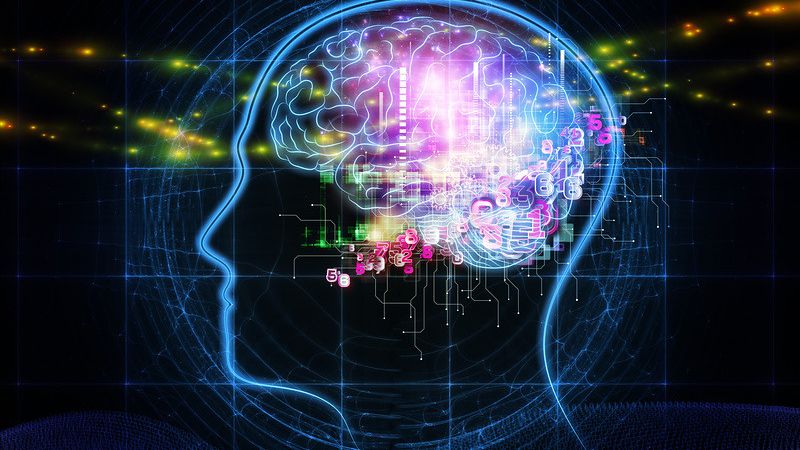
Picture this: your brain is scanned in ultra‑high resolution, every neuron mapped, every signal recorded. A supercomputer runs a perfect simulation of that data. Would that simulation be conscious in the same way you are right now, reading this sentence? The fact that serious scientists disagree about the answer is not a minor detail; it is a sign that something about consciousness remains deeply, almost disturbingly, mysterious.
For over a century, neuroscience has linked mental states to brain states with increasing precision. We can see which regions light up when you fall in love, solve a puzzle, or recognize a face. Yet, the hardest question refuses to budge: why does all this electrical and chemical activity feel like something from the inside? This stubborn gap is what pushes some researchers to argue that consciousness cannot be reduced to brain activity alone, or at least not in any straightforward way we currently understand.
The “Hard Problem”: Why Experience Exists At All

It is surprisingly easy to forget how strange consciousness really is. You are not just processing information like a calculator; you are having a lived experience of colors, sounds, tastes, pain, and joy. This inner movie, often called subjective experience or qualia, is what philosophers and some scientists call the hard problem of consciousness. The brain clearly correlates with experience, but correlation is not explanation, and that distinction is where the trouble starts.
Think of it this way: we can explain a camera by talking about lenses, sensors, and circuits, but that never tells us what it is like to actually see a sunset. Neuroscience gives a detailed wiring diagram; it does not yet bridge the gap from neural firing to the feeling of red or the ache of heartbreak. For many, this explanatory gap is not a tiny missing puzzle piece, but a canyon so wide that it suggests we might be using the wrong kind of theory altogether.
Brains As More Than Machines: Information, Meaning, And Context
One reason some scientists resist a purely mechanistic view is that brain activity seems inseparable from meaning and context, not just raw computation. A single pattern of spikes in your visual cortex can represent a face, a memory of your friend, or a threatening stranger, depending on the wider context of your life. The same physical signal can mean very different things to the person experiencing it, which makes consciousness feel less like a machine and more like a narrative the brain is constantly weaving.
In standard physical descriptions, particles and fields do not “mean” anything; they just are. Yet, consciousness is saturated with meaning: a song that makes you cry, a smell that transports you back years, a word that cuts deeper than a knife. Some researchers argue that if we describe the brain only in terms of physical interactions, we will always leave out the part that actually matters to us – the lived, meaningful side of experience. In their view, consciousness is not just what the brain does; it is what it is like to be the system doing it, and that “what it is like” may not be captured by physics alone.
Integrated Information And The Idea That Experience Is Fundamental
To tackle this, some theories treat consciousness not as a special secret sauce inside brains, but as a basic feature of certain kinds of information processing. Integrated Information Theory (IIT), for example, suggests that whenever information is both highly differentiated and deeply unified in a system, there is a corresponding conscious experience. In other words, consciousness might be linked to the structure of information itself, not just to neurons as biological hardware.
From this standpoint, the brain is conscious because it forms a complex web where information cannot be neatly split into independent parts. That leads some to a bold, controversial idea: that experience might be a fundamental aspect of reality wherever the right kind of integrated structure exists, a bit like mass or charge. While IIT is debated and far from universally accepted, it is one reason you increasingly hear serious people entertain the thought that consciousness is not just an accidental byproduct of matter, but something woven into the fabric of the universe in specific, structured ways.
Quantum Speculations: Weird Physics For A Weird Mind
Whenever consciousness comes up, quantum mechanics is never far behind. Some scientists have proposed that the strangeness of quantum phenomena – superposition, entanglement, nonlocal correlations – might be linked to the strangeness of consciousness. A few hypotheses suggest that microscopic quantum events inside neurons or their structures could play a role in generating subjective experience that classical physics alone cannot fully capture.
These ideas are highly speculative and controversial, and many physicists and neuroscientists are unconvinced. Still, the very fact that quantum theories of consciousness keep resurfacing says something important: our current classical picture of the brain as a purely deterministic machine does not feel fully satisfying to everyone who studies it. For some, if reality at its deepest level is nonclassical and probabilistic, it is at least plausible that consciousness taps into those features in ways we have barely begun to understand.
Consciousness Without Brains? Near-Death Experiences And Anomalies

Another reason some researchers look beyond simple brain activity is the accumulation of unusual reports at the edges of life and death. Accounts of near‑death experiences, for instance, often describe intense clarity, vivid perception, and profound emotion at times when the brain appears to be severely compromised. Most of these can be given plausible brain-based explanations, such as abnormal oxygen levels or disordered network activity, but not all scientists think the current data neatly fits those interpretations.
In a small number of carefully documented medical cases, people report accurate details about events that happened while they were clinically unresponsive or had very limited measurable brain activity. These reports are fiercely debated and do not yet amount to definitive proof of consciousness independent of the brain. Still, for some researchers, they are enough of a thorn in the side of purely brain‑bound theories that they remain open to the possibility that our standard models are missing something significant about how consciousness relates to physical processes.
Panpsychism And The “Mindful” Universe
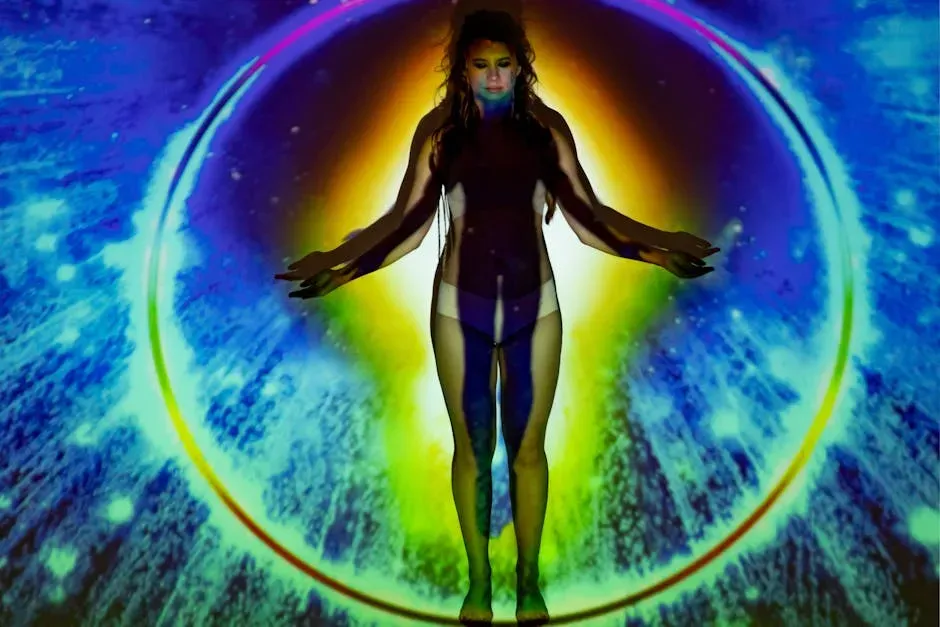
One of the most striking ideas gaining attention is panpsychism, the view that some primitive form of experience might be present, in extremely simple ways, throughout the physical world. In this picture, a rock is not secretly having complex thoughts, but the most basic ingredients of matter might have tiny, proto‑experiential aspects. Complex consciousness, like yours, would then emerge from the combination and organization of these simpler “mind-like” components in something like a brain.
This sounds wild at first, but it is partly driven by a sober problem: if you start with a universe made of purely non‑experiential stuff, how do you ever get the rich experience we know from the inside? Panpsychism offers a different move: instead of trying to manufacture experience out of zero, it says experience never drops to zero in the first place; it just becomes unimaginably simple at the lowest levels. Not everyone finds this attractive or necessary, but it is one of the clearest ways scientists and philosophers are trying to take consciousness seriously without pretending the hard problem has already been solved.
Limits Of Brain Scans: Correlation Without Full Explanation

Modern brain imaging can look almost magical. We can watch networks flare up when someone recognizes a loved one or feels pain, and we can sometimes even decode what category of image a person is looking at. These advances can give the impression that we are on the verge of fully explaining consciousness in terms of brain activity alone. But under the surface, the picture is murkier: we are very good at tracking where and when things happen in the brain, and much weaker at explaining why any of it should feel like anything at all.
Some scientists argue that no matter how detailed our brain maps become, they will still only show patterns of activity, not the inner texture of experience. Knowing that a specific cluster of neurons fires when you see red is not the same as knowing why red looks the way it does from the inside. This is why certain researchers see brain‑only accounts as powerful but incomplete tools, like a weather radar that can map a storm’s shape but can never tell you what it feels like to stand in the rain.
Why This Debate Matters: Identity, Ethics, And The Future Of AI
All of this might sound abstract, but it has very real consequences. If , then questions about personal identity, death, and the possibility of life after brain failure take on a different color. Even if you remain skeptical, simply acknowledging that we do not yet have a complete theory of consciousness can add humility to how we think about conditions like coma, disorders of consciousness, or severe dementia, where it is painfully easy to underestimate what someone might still be experiencing.
The debate also bleeds into technology. As artificial intelligence systems become more sophisticated, people increasingly wonder whether machines could ever be truly conscious or if they are destined to be expert mimics with no inner life. If consciousness depends on some special property that goes beyond standard computation or classical brain activity, then copying the brain’s input‑output patterns may never be enough. That uncertainty should, at the very least, make us cautious about claiming we will soon build conscious machines, or that minds can be neatly uploaded to digital hardware the way you copy files to a hard drive.
Conclusion: Consciousness As A Challenge We Should Not Shrink
My own view is that we should resist the temptation to shrink consciousness down to something clean and easily solvable just to feel comfortable. The evidence we have – from the stubborn hard problem, to odd edge cases around death, to the deep role of meaning and context in our lives – suggests that consciousness is not yet fully captured by talking about brain activity alone. That does not prove anything mystical or magical, but it does justify a healthy suspicion of explanations that quietly skip over the part that matters most: what it is like to be a conscious subject.
At the same time, it would be a mistake to swing to the other extreme and declare that science can never touch consciousness. The most honest stance is probably a demanding one: keep pressing the brain for answers, but stay open to the possibility that we may need new concepts, or even new physics, to do this mystery justice. Consciousness is where science, philosophy, and personal experience collide, and that collision is far from over. The real question is not just whether , but whether we are willing to let the mystery be as large and unsettling as it actually is – are you?