Most of us can rattle off the same travel bucket list in our sleep: the Grand Canyon, the Great Barrier Reef, Mount Everest. They are spectacular, no doubt, but they also hog the spotlight. Meanwhile, there are places on this planet so surreal, so oddly beautiful, that you almost wonder why they are not front-page famous. This article is about those quiet showstoppers – the landscapes that feel a bit like a secret whispered across continents.
What follows is not a list of places designed only for elite adventurers or people with endless vacation budgets. These are real, reachable corners of Earth that just happen to look like they were dreamed up by a sci‑fi writer or a painter on a wild streak. Some are fragile ecosystems you have to tiptoe through; others are raw, volcanic worlds that remind you how alive the planet still is. If you have ever felt that familiar itch to see something truly different, these 15 lesser-known natural wonders might just rewire your idea of what “beautiful” looks like.
1. Socotra Island, Yemen – The Alien Garden of the Indian Ocean
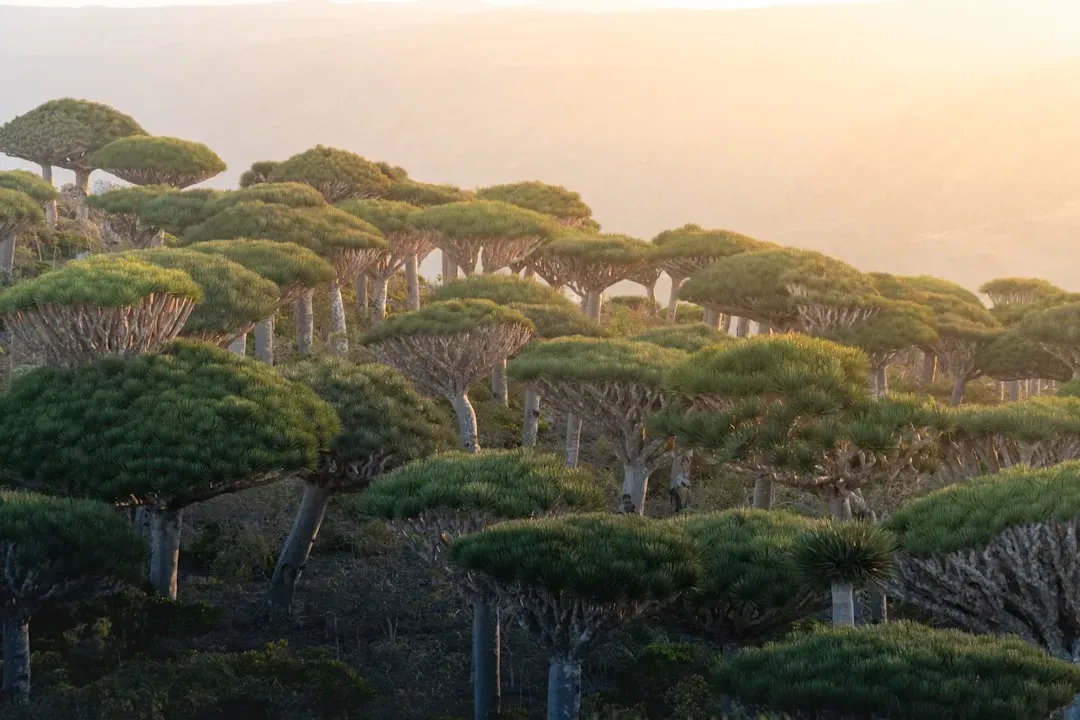
Picture walking through a landscape where the trees look like giant upside‑down umbrellas and the shrubs ooze bright crimson resin that people have used for medicine and dye for centuries. That is Socotra, a remote island in the Arabian Sea that split off from the African mainland millions of years ago, giving life there time to evolve into its own strange, self-contained story. Biologists describe it as one of the most isolated landforms on Earth, and roughly about one third of its plant species exist nowhere else.
The dragon’s blood tree, with its dense crown and blood-red sap, has become the island’s unofficial mascot, but it is far from the only oddity. Fat, bottle-shaped desert roses cling to bare rock, and stark white sand dunes roll straight into turquoise water. When you stand there, it feels less like a destination and more like a parallel planet that took a different evolutionary path. It is one of the clearest reminders that isolation can be the best sculptor of natural beauty.
2. Danakil Depression, Ethiopia – A Hellish Wonderland of Color
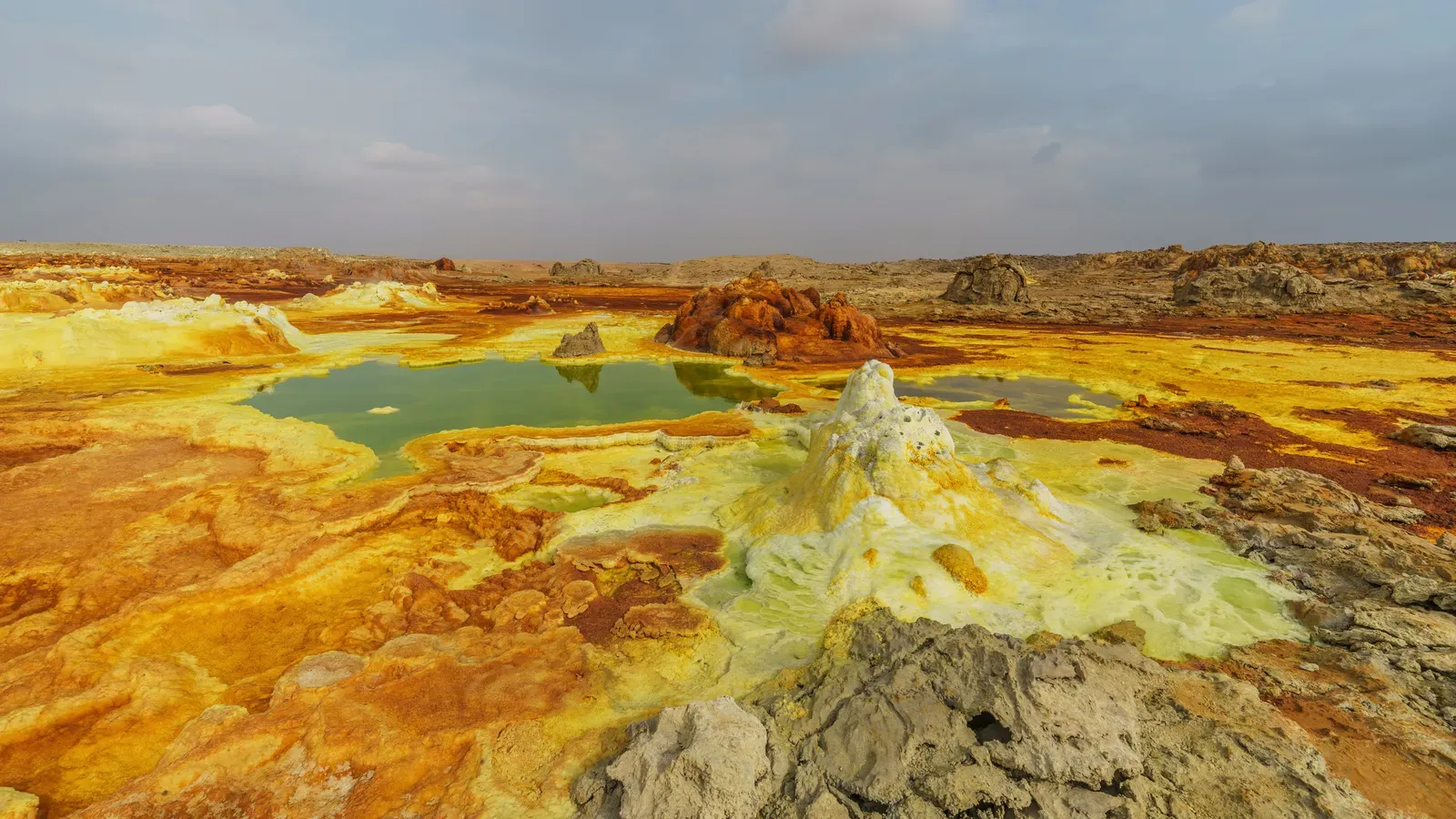
At first glance, the Danakil Depression looks like a place humans were never meant to set foot in. Temperatures can climb to some of the highest daily averages recorded on Earth, and much of the region lies well below sea level. Yet out of this brutal environment emerges a wild palette of neon yellows, emerald greens, and deep rust reds, created by hot springs, sulfur deposits, and salt crusts that stretch like shattered glass under the sun.
Standing by the hydrothermal fields of Dallol, you feel as if you have walked into a living chemistry set. Scalding acidic pools bubble near jagged salt chimneys, and the air smells sharply of minerals and heat. Scientists study the area as an analog for other planets, especially Mars, because it is one of the harshest, most extreme environments where life still clings on. It is harsh, yes – but also a powerful, slightly unsettling reminder of the planet’s restless interior.
3. Waitomo Glowworm Caves, New Zealand – A Starry Sky Underground
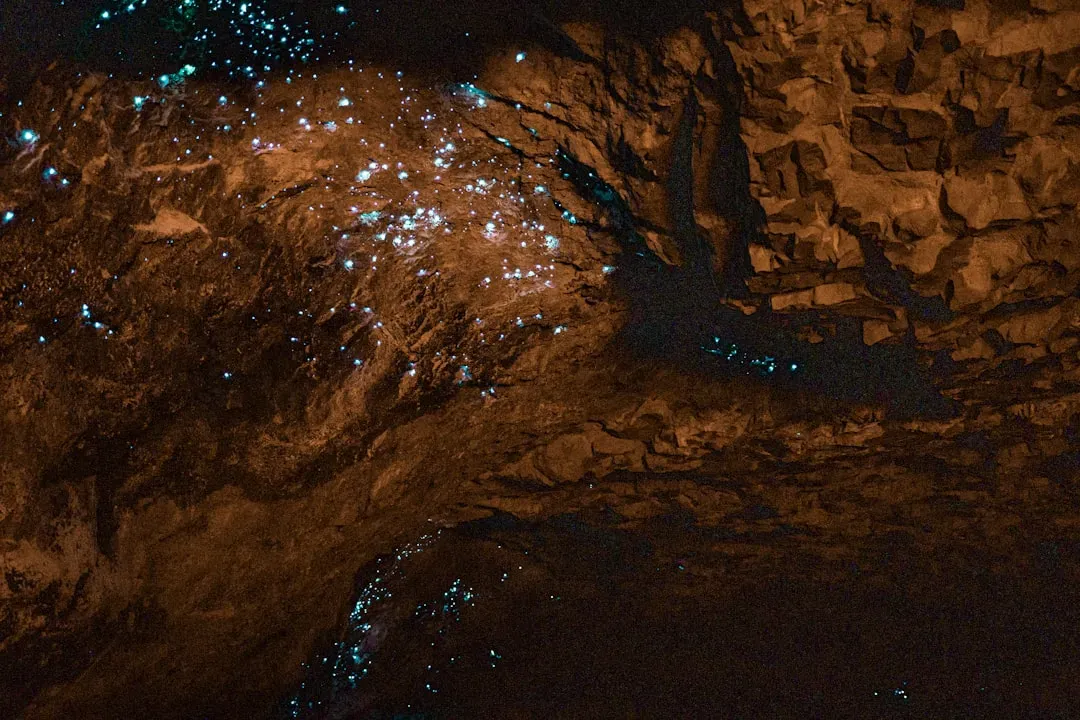
Just below the rolling green hills of New Zealand’s North Island lies a different kind of galaxy. In the Waitomo caves, thousands of tiny glowworms cling to the ceilings of limestone chambers, turning the darkness into a soft blue night sky. These insects, found only in New Zealand, use their bioluminescence to lure prey into delicate silken threads that hang like strands of glass.
Gliding quietly through the caves on a small boat, you float under these living constellations in near silence. There is something strangely humbling about realizing that this magical light show is just a survival strategy in the dark. The stalactites and underground rivers are impressive on their own, but the glowworms add a layer of quiet enchantment that makes you forget you are still on the same planet as rush hour traffic and fluorescent office lights.
4. Lençóis Maranhenses, Brazil – Sand Dunes Filled With Hidden Lagoons
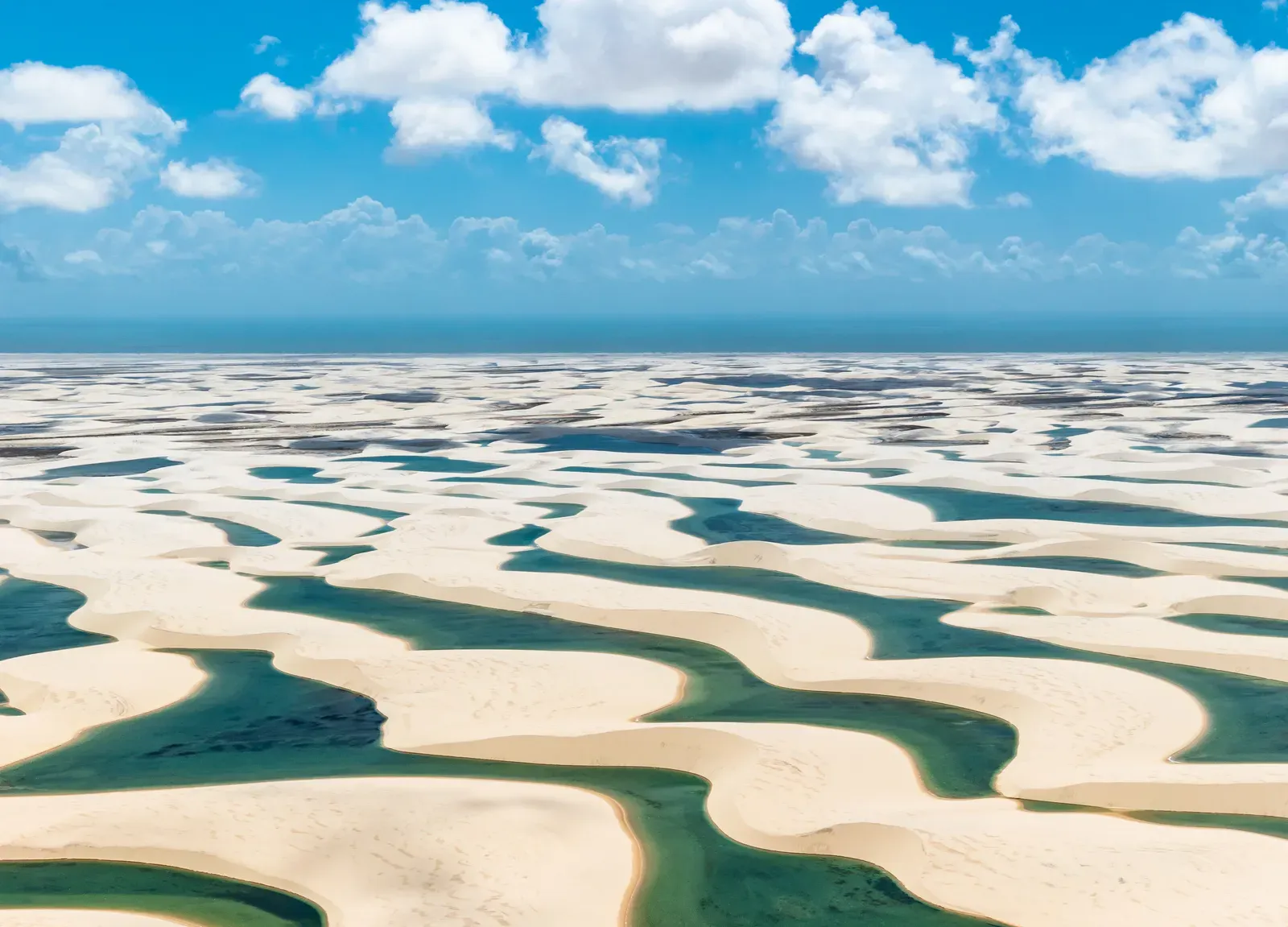
From the air, Lençóis Maranhenses in northeastern Brazil looks like an endless white bed sheet crumpled and folded by a giant hand. It is an immense field of bright sand dunes stretching inland from the Atlantic, but that is only half the story. During the rainy season, fresh water collects between the dunes, forming thousands of emerald and turquoise lagoons that turn the landscape into a mesmerizing mosaic.
The surprising part is that this is not technically a desert, because the region receives significant rainfall each year. Fish and tiny crustaceans appear in the lagoons, carried as eggs by birds or trapped from nearby rivers when water levels rise. Walking barefoot along the ridges and plunging into a warm, crystal-clear pool below feels more like stepping into a dream than a national park. It is one of those places that challenge everything you thought you knew about how landscapes are supposed to work.
5. Pamukkale, Türkiye – Cascading Terraces of White and Blue
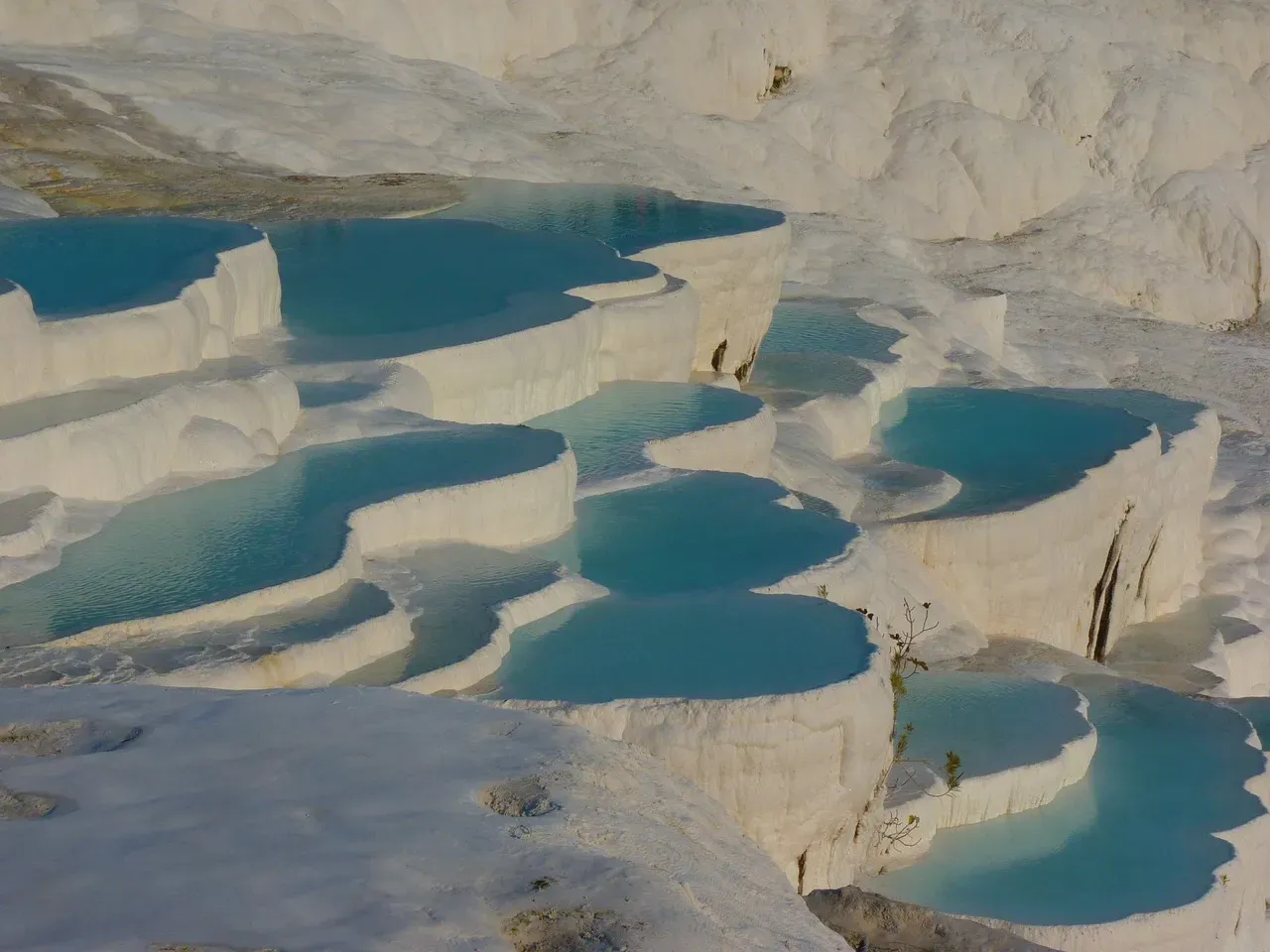
In western Türkiye, the hills seem to have been dusted in snow, even when the sun is blazing and the air is hot. On closer look, you realize the hillsides of Pamukkale are actually layers of white travertine terraces, built up over thousands of years by mineral-rich hot springs. As the water flows over the hillside and cools, it leaves behind deposits of calcium carbonate, which slowly harden into these gleaming, terraced pools.
Many of the shallow basins are filled with warm, pale-blue water that feels almost silky on the skin. Nearby lie the ruins of the ancient Greco‑Roman city of Hierapolis, whose citizens once bathed in these same springs. The combination of geological wonder and human history makes Pamukkale feel like a natural spa that has been running continuously for two thousand years. It is a rare place where science, relaxation, and archaeology share the same view.
6. Zhangye Danxia Landform, China – A Rainbow Painted in Stone
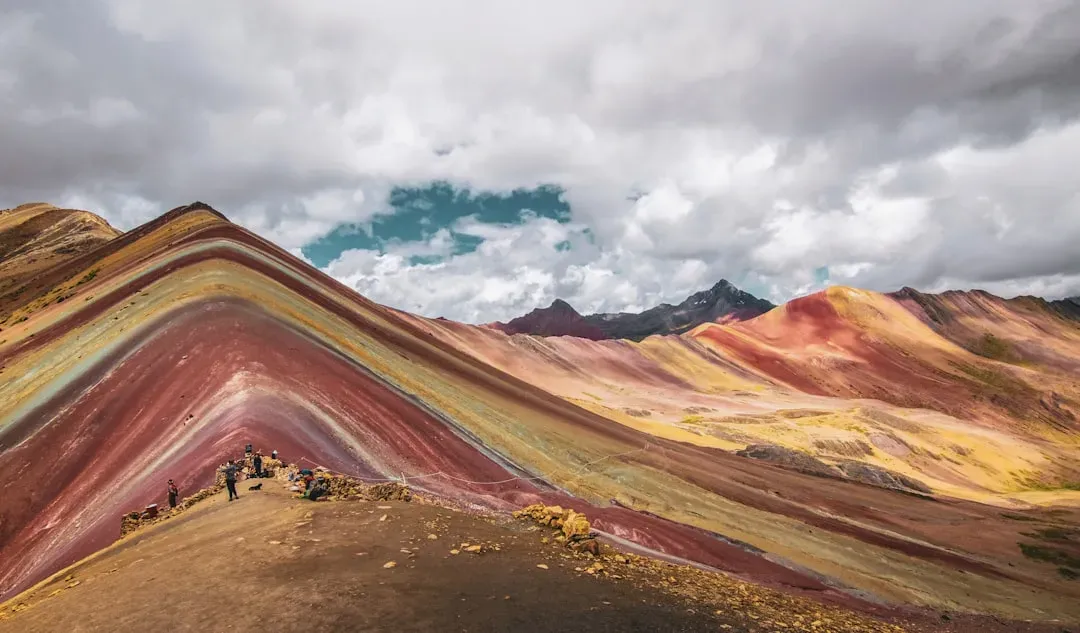
When photos of the Zhangye Danxia landform started circulating online, many people assumed they had been heavily edited. The hills appear banded with stripes of red, orange, yellow, and even pale blue, as if someone had taken a brush and painted the landscape by hand. In reality, these colors come from layers of sandstone and minerals laid down over millions of years, then bent and uplifted by tectonic forces before being sculpted by wind and rain.
Walking through the park, boardwalks and viewing platforms take you past ridges where the stripes wrap and twist like marbled cake. The colors are often most intense after rainfall, when the rock is slightly wet and the hues deepen. There is a strange satisfaction in learning that this unreal scenery is not a digital trick but the patient work of time and pressure. It is geology showing off – with zero subtlety and zero apology.
7. Svalbard’s Ice Caves, Norway – Blue Cathedrals Beneath the Glacier
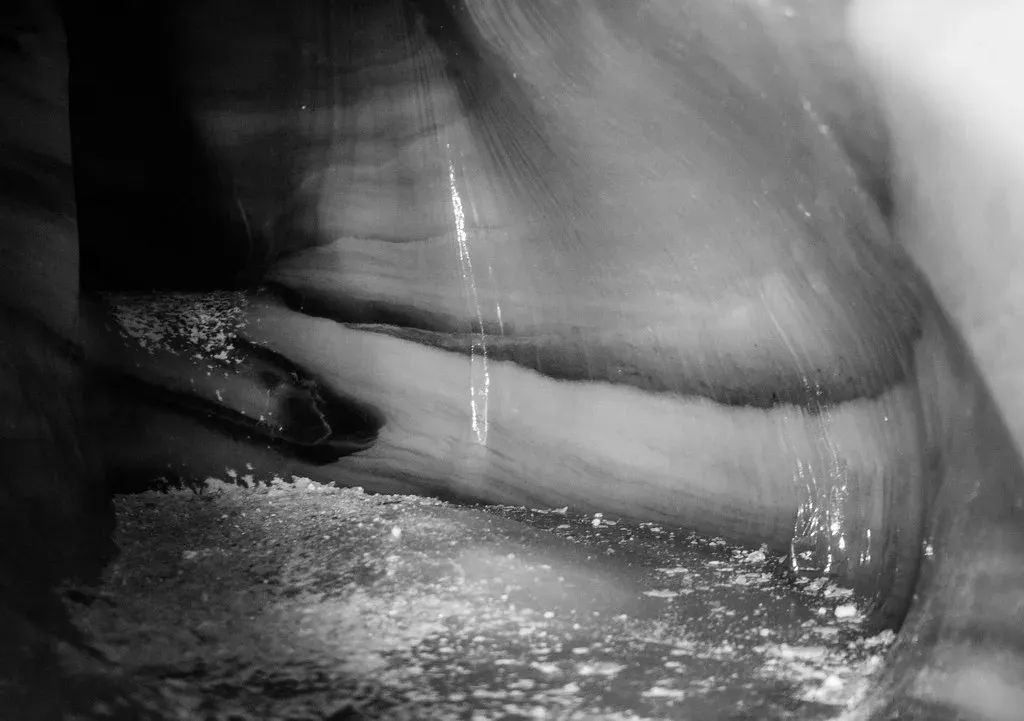
High in the Arctic between mainland Norway and the North Pole, the Svalbard archipelago is known for polar bears, sea ice, and endless polar night. Hidden beneath its glaciers, though, are shimmering ice caves that look like frozen cathedrals. These caves form as meltwater carves tunnels through the ice, creating smooth, sculpted corridors and chambers lit from within by a soft, electric blue glow.
Inside, the silence feels almost physical, broken only by the occasional drip of water or distant crack of shifting ice. The walls often hold bubbles, layers of compacted snow, and delicate structures that record past winters like pages in a book. Guides who lead small groups through these caves often point out how quickly they change; a passage that exists one year may be gone the next. It is thrilling and sobering at the same time, a reminder that even apparently solid ice is constantly in motion.
8. Lake Natron, Tanzania – The Mirror That Turns Red
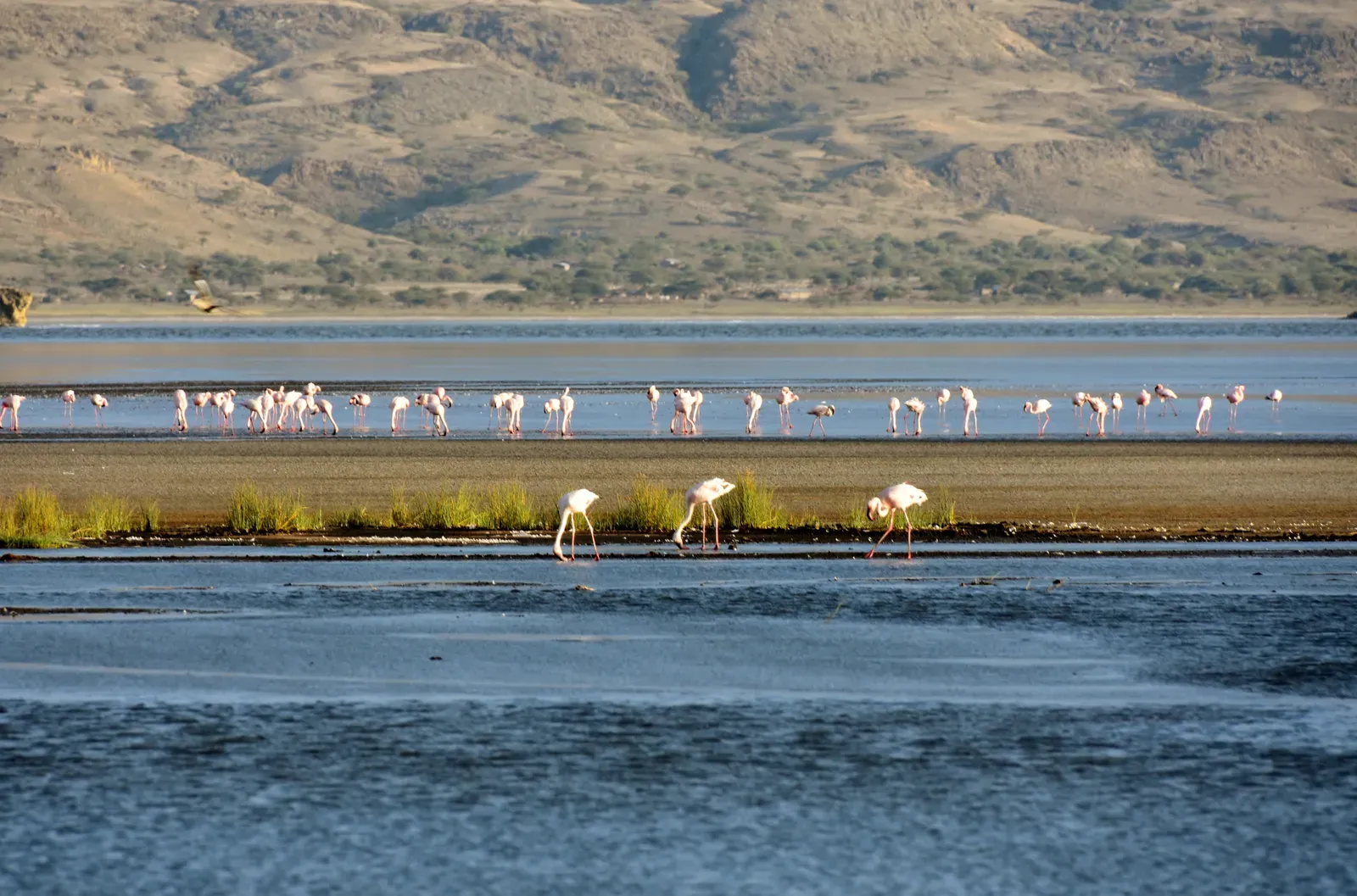
On the edge of the Great Rift Valley in northern Tanzania, Lake Natron looks otherworldly even from far away. Shallow and highly alkaline, the lake often takes on a deep red or orange hue, especially during dry periods when evaporation concentrates its minerals. Microorganisms and salt-loving algae thrive in these harsh conditions, and their pigments help drive the intense coloration that can make the water look almost like melted rust.
The surface can turn into a reflective, glassy mirror that captures the sky with uncanny clarity. Lesser flamingos flock here in huge numbers to breed, relying on the lake both for food and as a protective moat against predators. While stories sometimes exaggerate the lake’s danger, its chemistry is genuinely unusual and not friendly to most forms of life. Standing on its shore, you get the sense that the rules of normal lakes simply do not apply here.
9. Tsingy de Bemaraha, Madagascar – A Forest Made of Stone
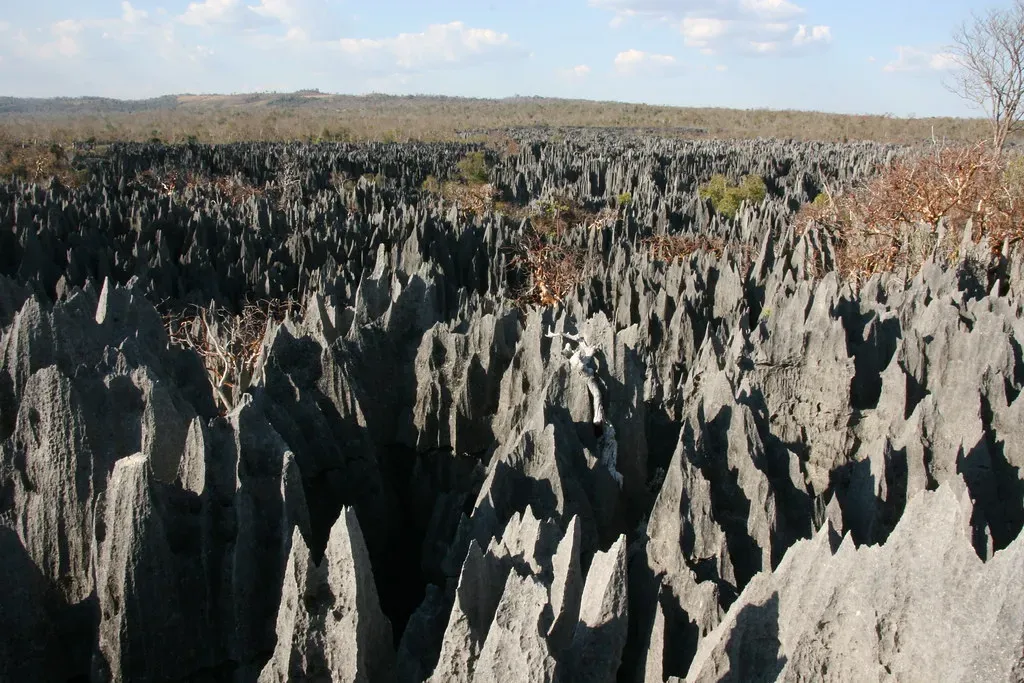
The Tsingy de Bemaraha in Madagascar is one of those landscapes that seems almost aggressive in its uniqueness. Instead of trees, vast tracts of land are covered by sharp, blade-like limestone pinnacles that can tower dozens of meters high. Over millions of years, rainwater dissolved and sculpted the limestone into this forest of stone, riddled with caves, canyons, and hidden pockets of life in the cracks.
Traversing the park requires hanging bridges, ladders, and careful steps along narrow ridges, with drop-offs on either side. In between the needle-like towers, pockets of vegetation shelter species that have adapted to life in this maze. Lemurs and birds move with a confidence that humans never quite achieve here. It is a place that rewards patience and humility, where every meter of progress feels earned and every view feels like it should be impossible.
10. Marble Caves of General Carrera Lake, Chile – Sculpted by Water and Time
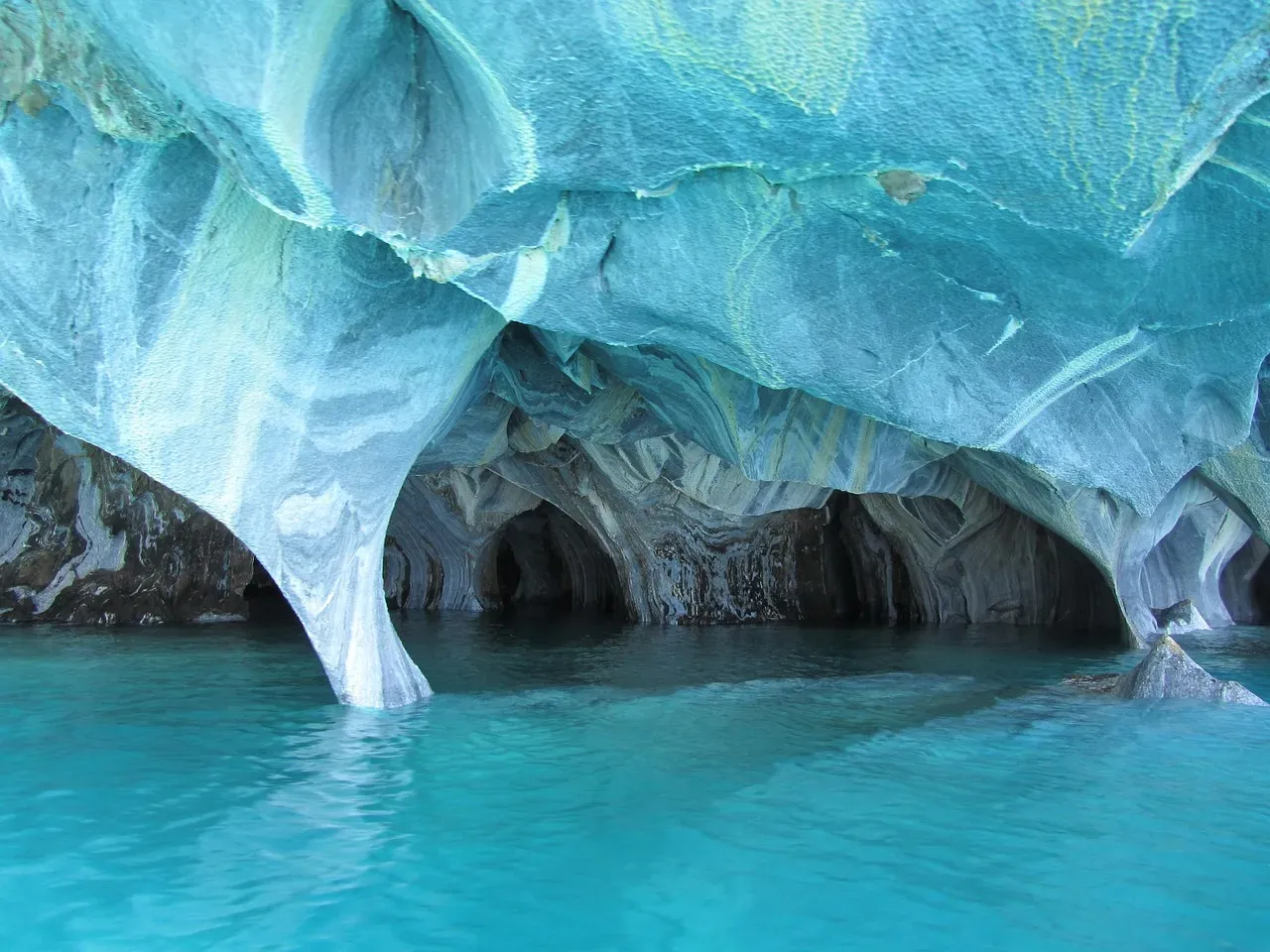
On a remote glacial lake straddling the border between Chile and Argentina, water has spent thousands of years carving intricate patterns into solid marble. The result is a network of caves and tunnels known as the Marble Caves or Marble Cathedral, where walls ripple in shades of white, gray, and blue. Because the lake’s water is fed by glaciers, its color shifts with seasons and light, reflecting softly onto the stone and giving the interior an otherworldly glow.
Small boats or kayaks slip inside on calm days, allowing visitors to float through arches and chambers where the ceiling seems to twist like smoke. The marble itself is metamorphosed limestone, hardened and then patiently eaten away by waves. There is a quiet intimacy to the experience; you are not looking down from above, but enclosed within the artwork that water and rock created together. It feels less like sightseeing and more like being let in on a secret.
11. Wadi Rum, Jordan – The Valley of Red Sand and Silent Cliffs
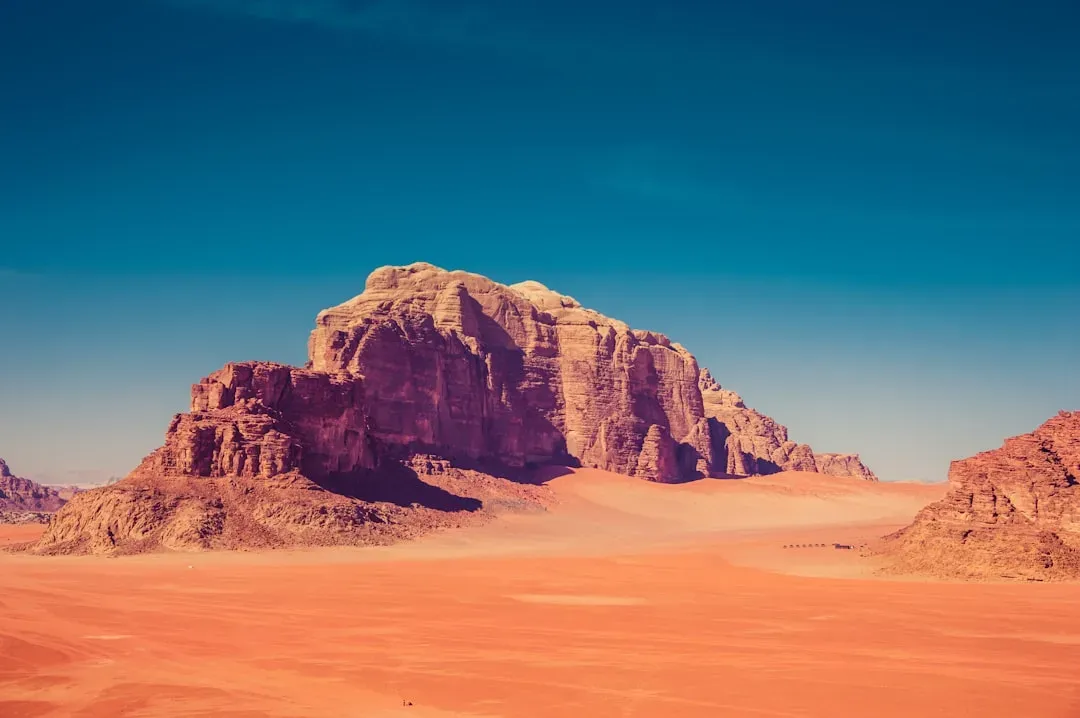
Wadi Rum is often called a desert, but that word hardly captures its personality. This valley in southern Jordan is a sweeping mix of red and orange sand, broken by towering sandstone and granite cliffs that rise abruptly from the valley floor. Wind and time have carved arches, pillars, and smooth domes, creating a landscape so stark and cinematic that it has stood in for Mars in several films.
At night, the sky erupts in stars with very little light pollution to compete. Bedouin communities still traverse and live in the region, their knowledge of the land built up over generations. There is something deeply grounding about sitting by a campfire there, watching the cliffs fade into silhouettes. Wadi Rum is not about sensory overload; it is about space, silence, and the realization that emptiness can be its own kind of beauty.
12. The Door to Hell, Turkmenistan – A Fiery Crater That Never Sleeps
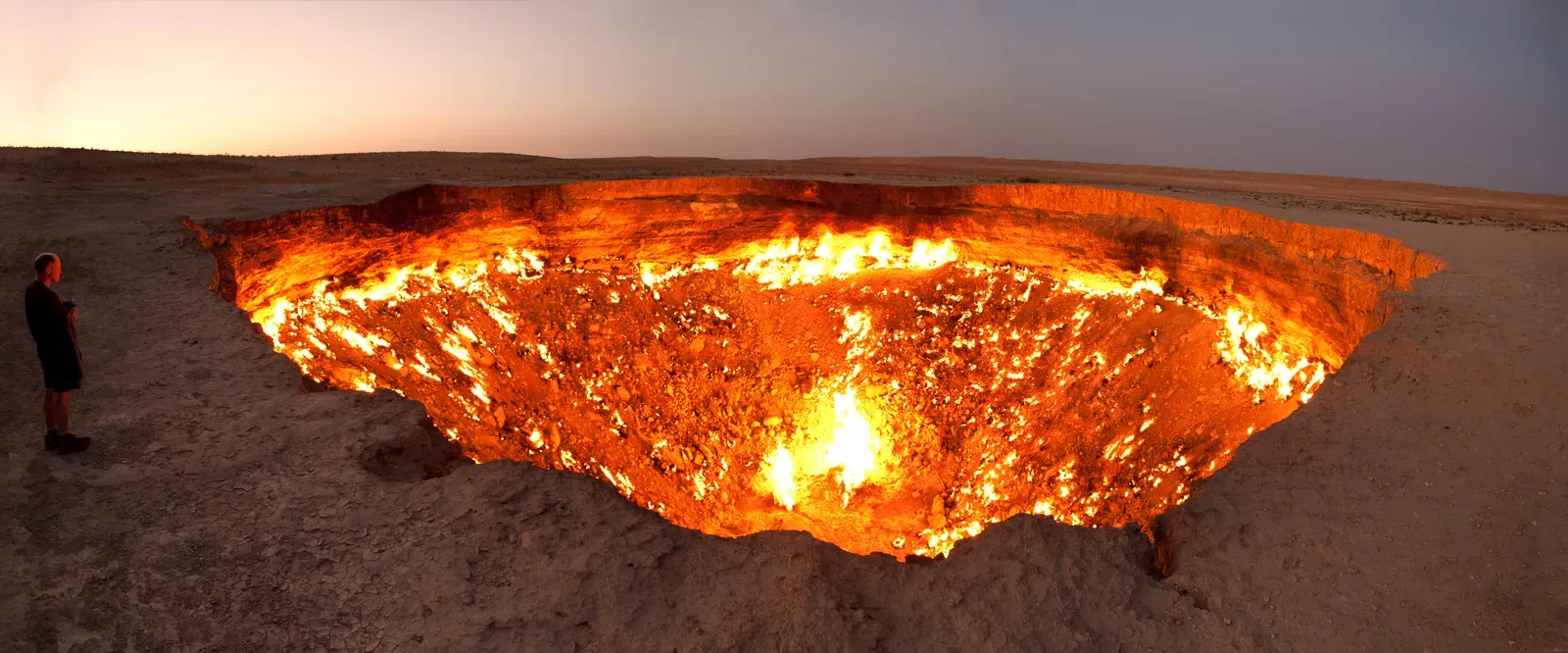
In the Karakum Desert of Turkmenistan, a collapsed natural gas cavern has been burning continuously for decades, creating a scene that looks like a portal in a fantasy novel. Locals nicknamed it the Door to Hell, and the name stuck for good reason. The crater, lit by countless flames dancing over its floor, glows an intense orange-red that is visible from far away at night.
The story behind it is tied to human activity and geology colliding. During gas exploration in the early 1970s, the ground gave way, creating the crater; the escaping gas was lit in an attempt to burn it off, and it has continued ever since. Standing on the rim, the heat hits your face and the roar of the fires drowns out conversation. It is unsettling and mesmerizing, an unplanned monument to the power and unpredictability of tapping into the planet’s buried fuels.
13. Plitvice Lakes, Croatia – Cascading Waters in a Karst Wonderland
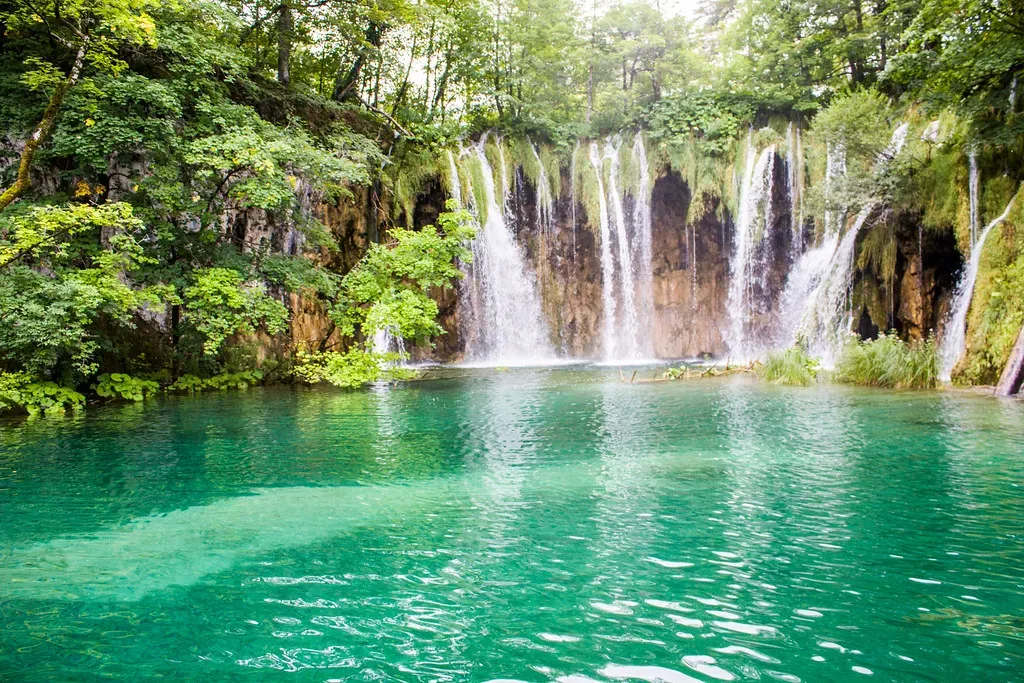
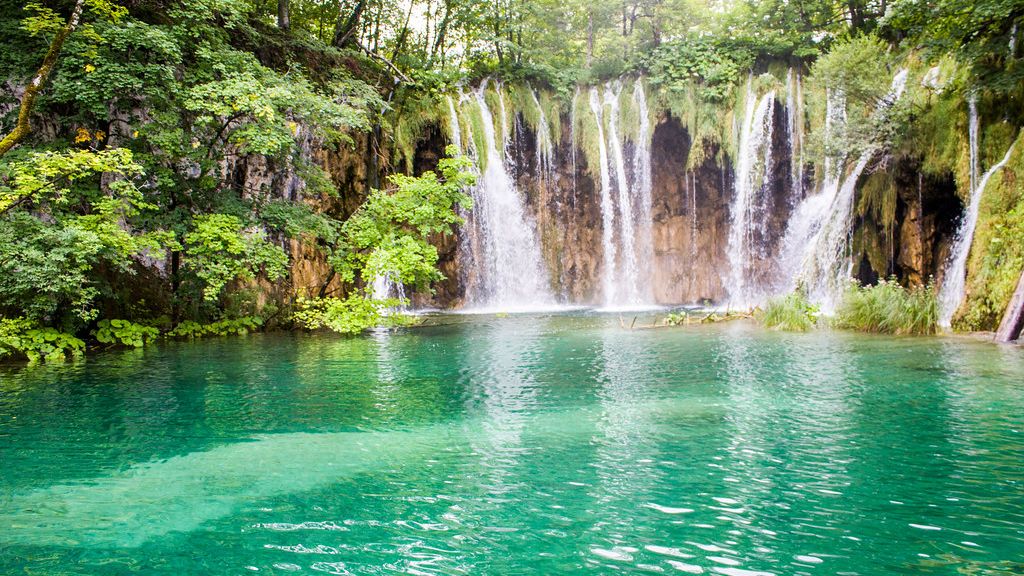
Plitvice Lakes National Park in Croatia feels like a place where water decided to become an architect. A chain of terraced lakes, ranging from clear turquoise to deep emerald, are connected by waterfalls that spill over moss-covered barriers of travertine. These barriers are constantly growing as mineral-rich water deposits new layers of calcium carbonate, building and reshaping natural dams over time.
Wooden walkways wind inches above the water, giving you the strange sensation of walking through the lakes rather than alongside them. Fish drift lazily below, while the sound of falling water follows you almost everywhere in the park. What makes Plitvice special is not just a single big waterfall but the cumulative effect of countless smaller ones. It is like stepping into a living watercolor painting where every corner reveals another cascade.
14. Highlands of Iceland – A Volcanic Tapestry of Fire and Ice
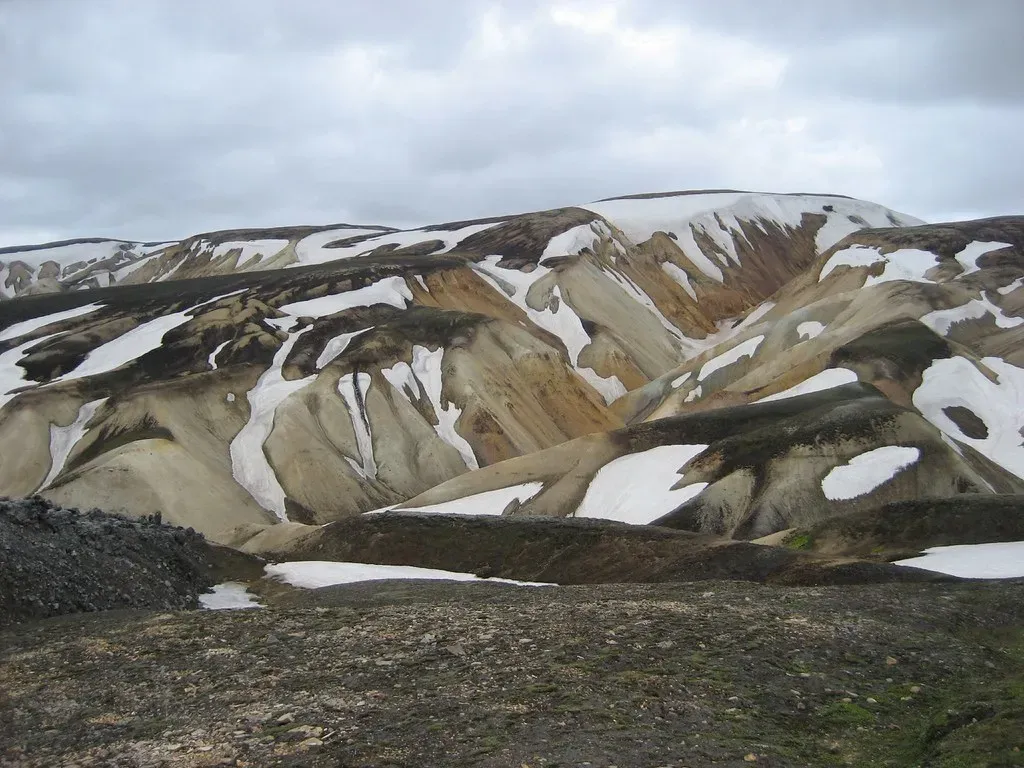
The Icelandic Highlands are not one single landmark but an entire region of raw, volcanic wilderness that most visitors barely skim. Here, colorful rhyolite mountains meet black sand deserts, steaming fumaroles, and patches of neon green moss that cling to lava fields. In places like Landmannalaugar, the hillsides seem painted in soft oranges, yellows, and greens due to different minerals in the rock, especially where geothermal activity still simmers below the surface.
Rivers braid their way through wide valleys, occasionally warmed by hot springs that invite weary hikers in for a soak. The weather can turn quickly, and there is a constant sense that the land is still under construction. It is not conventionally “pretty” in the postcard sense; it is striking, restless, and a bit moody. For many people, that wild unfinished quality is exactly what makes it unforgettable.
15. The Pinnacles Desert, Australia – Stone Spires Rising from Golden Sand
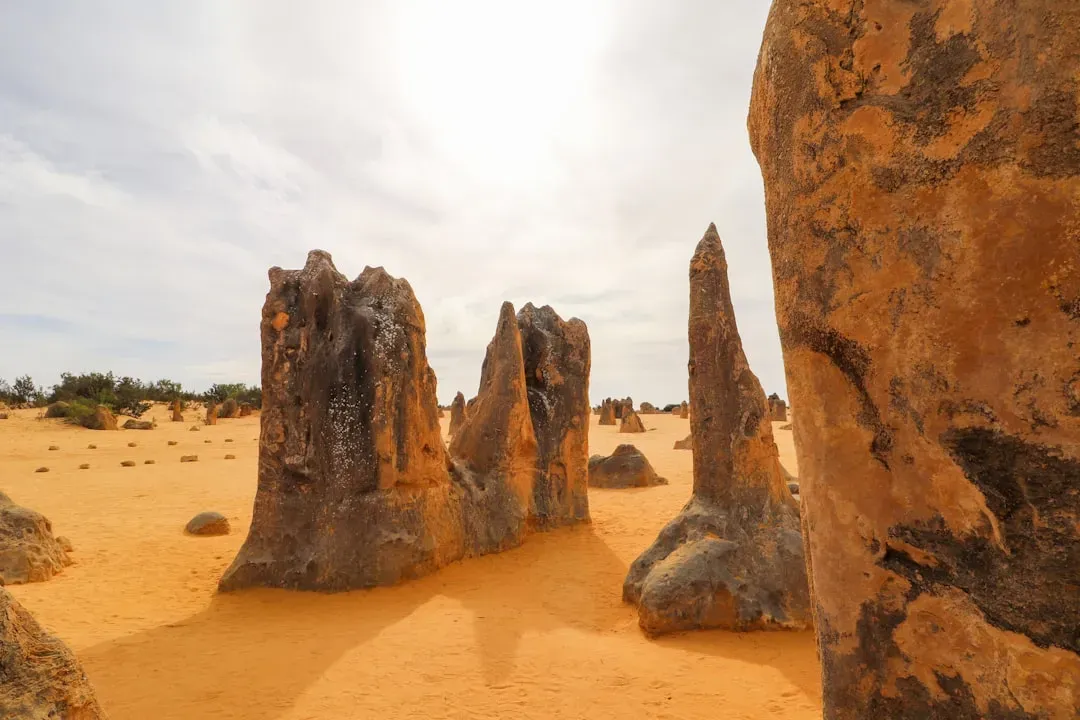
In Western Australia’s Nambung National Park, a sandy coastal plain is punctured by thousands of limestone pillars known as the Pinnacles. Some stand just a meter or two tall, while others loom several meters above the golden sand, creating a landscape that looks like the ruins of an ancient stone forest. These formations are the result of long-ago processes involving shell-rich sand, vegetation, and erosion that left behind the hardened cores.
As the sun moves across the sky, the pillars cast changing patterns of shadow that make the scene feel different from hour to hour. At sunrise and sunset, the contrast between the warm rock, the sand, and the sky becomes especially dramatic. Nights here can be surprisingly quiet, with a sweep of stars above and these silent sentinels below. It is a reminder that you do not always need towering mountains or massive waterfalls for a landscape to feel deeply strange and strangely moving.
Conclusion – Why These Hidden Wonders Matter More Than You Think
Looking at these fifteen places together, a pattern emerges: the most breathtaking landscapes are not always the most famous, and they are rarely the easiest to sum up in a single photo. Many of them are subtle, fragile, and constantly changing – ice caves that melt and reform, mineral terraces that grow grain by grain, deserts that shift with each storm. In a world obsessed with instant, shareable highlights, these quieter wonders demand something different from us: time, attention, and a willingness to be surprised without a script.
Personally, I find these spots far more compelling than many of the classic “must‑see” destinations, precisely because they refuse to fit our expectations. They blur the line between beauty and harshness, comfort and discomfort, order and chaos. Visiting or even just learning about them can quietly recalibrate how you see your own everyday surroundings, making a city park or local hillside feel newly alive. The planet is still full of odd corners that will knock the wind out of you if you let them – so the real question is, which kind of wonder are you willing to go out of your way for next?