If you have ever felt like you were floating above your own body, watching yourself from outside, you know how deeply unsettling and strangely beautiful that sensation can be. You might wonder whether you briefly slipped into another dimension, touched evidence of a soul, or simply experienced a glitch in your brain. , or OBEs, sit right at the crossroads of neuroscience, psychology, and spirituality, which is exactly why they fascinate so many people.
When you look at what scientists have actually discovered, the story turns out to be more complex and, in some ways, more intriguing than the typical paranormal explanation. You find a brain that is constantly building a model of where “you” are in space, a nervous system that can be tricked, and a mind that fills in the gaps with powerful images and emotions. As you explore the real science, you do not have to abandon wonder; you just start to see that the mystery may live inside you rather than outside the laws of nature.
What You Really Mean When You Say “Out-of-Body”

When you describe an out-of-body experience, you are usually talking about a moment when your sense of self seems to leave the physical body and hover or move elsewhere. You might feel as if you are above your bed in a hospital, watching doctors work on you, or drifting through a tunnel, or standing in the corner of a room looking back at yourself. Crucially, you still feel like “you,” but you no longer feel located where your physical body is. That split between the felt self and the physical body is the core of an OBE.
Scientists tend to describe this in less mystical language, but they are pointing at the same thing you are. In research, an OBE is usually defined as a state in which you experience yourself from a spatial perspective outside your own physical body. The details vary a lot from person to person: your experience might be vivid and life-changing, or brief and hazy, or more like a dream you barely catch. What all these versions share is a disruption in how your brain represents your body and your position in the world.
How Your Brain Builds the Feeling of “Being in Your Body”
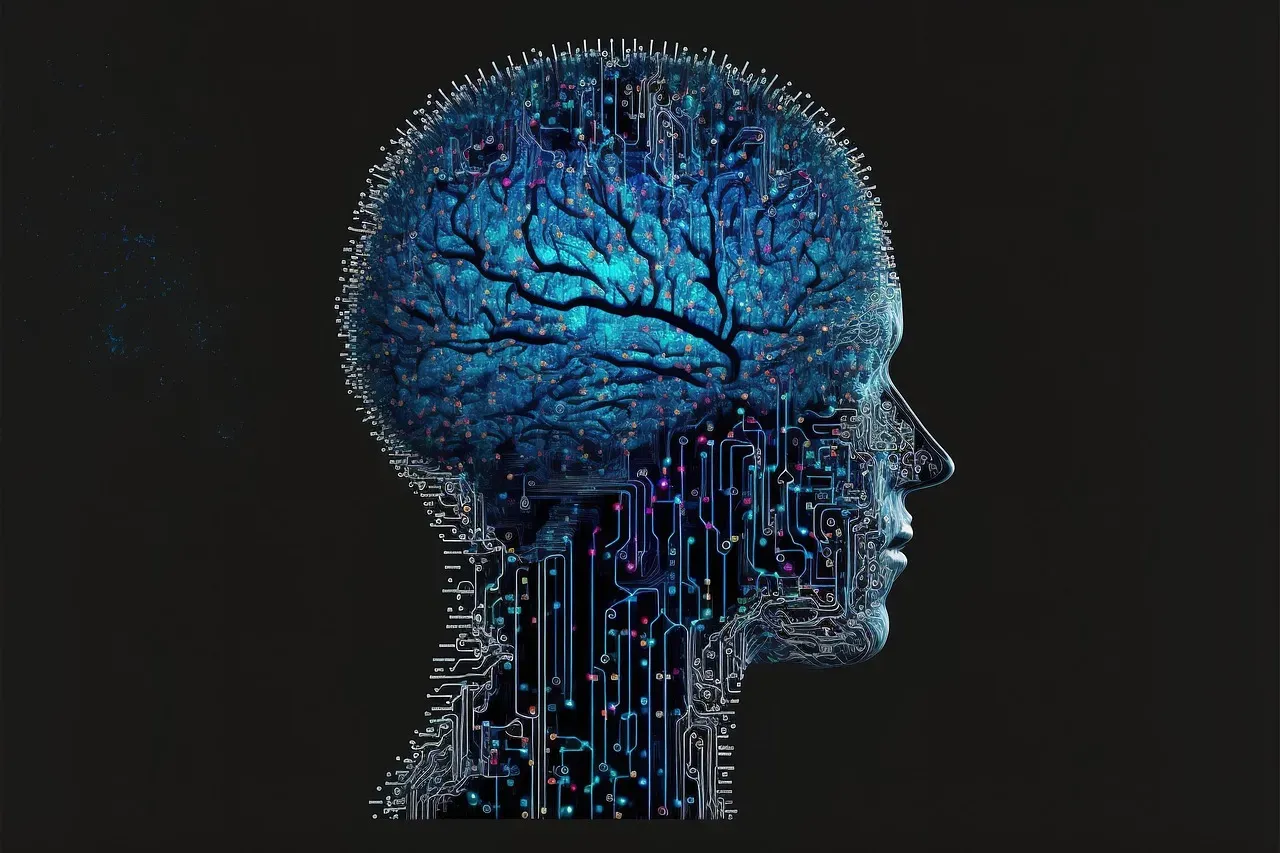
You might assume that feeling like you are inside your body is obvious and automatic, but your brain actually has to work surprisingly hard to keep that sensation stable. At any moment, it is blending information from your eyes, your inner ears, your skin, your muscles, and your internal organs to decide where “you” are in space. Think of it like a constant, real-time 3D rendering of your body and its surroundings, updated every fraction of a second. Most of the time, this system is so smooth you never notice it exists.
Researchers using brain imaging have found that certain regions, especially near the junction of the temporal and parietal lobes, seem to play a key role in this body-location sense. When these areas process sensory signals in a coordinated way, you feel anchored inside your skin. When something throws that coordination off – due to illness, stimulation, or unusual conditions – the carefully built map of “you” can slip. You then start to feel disembodied, as if the camera has jumped to another angle and your consciousness is suddenly following it.
When the Brain Glitches: Medical Triggers for OBEs
You might be surprised by how often out-of-body experiences show up in medical situations. People report them during epilepsy, migraines, strokes, general anesthesia, and especially when they come close to dying. In some epilepsy patients, electrical disturbances in brain regions involved in body awareness can trigger a sudden shift in perspective, where you feel yourself floating or watching from above. During severe migraines or strokes affecting similar regions, you can have altered perceptions of your body size, location, or ownership, sometimes evolving into full-blown OBEs.
Near-death situations add another layer. When your brain is under extreme stress – such as from lack of oxygen, severe blood loss, or cardiac arrest – it can enter a highly unstable state. In those moments, normal sensory input may be disrupted, and your brain may rely heavily on internal models and memories to construct an experience. You may then feel detached from your body, see a scene from above, or move through an oddly calm or bright environment. While that can feel profoundly spiritual to you, the current evidence suggests your brain is fighting to make sense of chaotic and failing signals.
Why Near-Death Experiences Feel So Real
If you have ever had a near-death experience, you know that it does not feel like a regular dream. The colors may seem sharper, the emotions deeper, and the sense of significance overwhelming, as if you have glimpsed something ultimate. Scientists think a few things are happening at once. Under critical stress, your brain may release powerful neurotransmitters and stress hormones that heighten emotional intensity and memory formation, which makes the whole episode feel deeply etched into your mind.
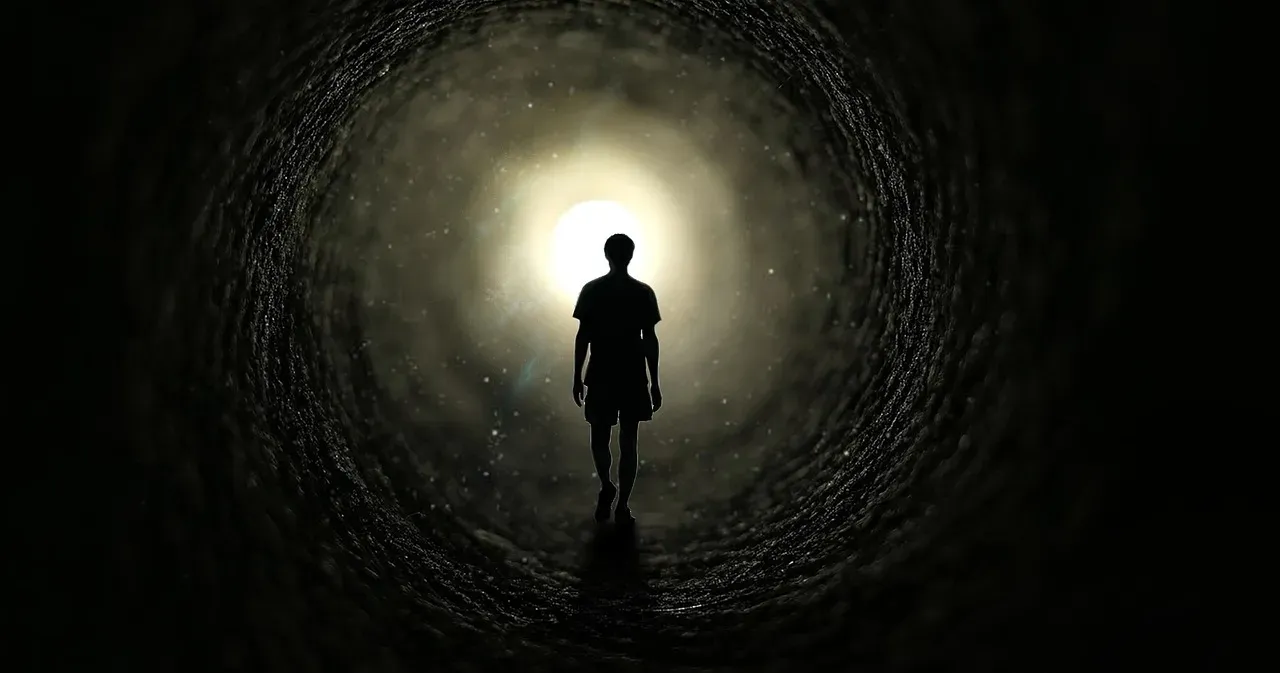
At the same time, when normal sensory input drops and brain activity patterns become unstable, your mind can shift into a state that blends dreamlike imagery with waking awareness. You might see tunnels, lights, or familiar figures because your brain leans on stored images and expectations to “fill in” what is missing. For you, this can easily feel like stepping outside your body and beyond ordinary reality. The science does not have all the answers yet, but the emerging picture is that your brain can generate extremely vivid and meaningful internal worlds, especially at the edges of life.
How Experiments Can Trick You Out of Your Body

You do not have to nearly die or have a seizure to feel out of your body; in controlled lab studies, you can be gently tricked into something surprisingly similar. In some experiments, you might wear virtual reality goggles that show you a camera view of your own back, while a researcher strokes both your real back and the virtual back in sync. After a while, your brain may start to treat the virtual body as “you,” and you might even feel as though your conscious self has shifted to that new viewpoint.
Other setups place cameras above you and feed that viewpoint into a headset, giving you a live, bird’s-eye view of your own body. When the timing of touch and sight is carefully aligned, you can suddenly feel as though you are floating above your real body, looking down on it. These illusions show you something important: your sense of where “you” are located is flexible, and your brain will happily update it if the incoming signals line up in the right way. That flexibility helps explain why, under more extreme or chaotic conditions, you can slide into an out-of-body state without any technology involved.
Sleep, Lucid Dreams, and the Borderlands of Consciousness

You might notice that many OBEs happen when you are falling asleep, waking up, or stuck in sleep paralysis. In those in-between moments, your brain is shifting between wakefulness and dreaming, and the systems that control body awareness do not always switch over smoothly. You can end up awake enough to observe your surroundings, but still flooded with dreamlike imagery or sensations. That mix can make you feel as if your mind has slipped out of your physical shell, even though your body never actually moved.
People who practice lucid dreaming or deep meditation sometimes report deliberately inducing states that feel like leaving the body. In these cases, you may be highly focused on internal images, sensations of floating, or imagined movement while your physical body remains motionless. When you strongly visualize yourself rolling out of your body or lifting from your bed, your brain can create an immersive inner reality that feels external. You are essentially hijacking the same body-mapping systems that usually keep you grounded and persuading them to accept a different story.
So Is It “Just the Brain,” or Something More?
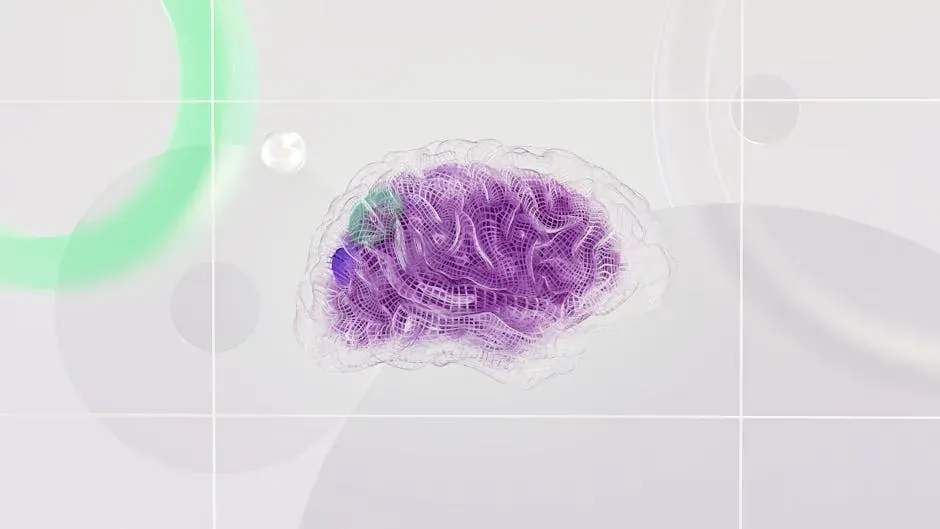
Given the evidence, you can confidently say that your brain is deeply involved in every out-of-body experience. Specific regions help anchor your sense of self to your body, and when those regions are disrupted, stimulated, or tricked, you can feel detached. Medical cases, brain imaging, and lab experiments all point in the same direction: OBEs are closely tied to how your nervous system integrates sensory information and builds a model of “you in the world.” From a strict scientific standpoint, you do not need to invoke a literal soul leaving the body to explain what you feel.
That does not mean you are required to let go of all spiritual interpretations if they are meaningful to you. Science can tell you what kinds of brain activity accompany an OBE; it cannot definitively settle big philosophical questions about consciousness or the existence of something beyond the physical. What you can do is hold both realities in mind: on one level, you are looking at a fascinating, fragile neural process; on another, you may be grappling with personal questions about life, death, and identity. Recognizing the brain’s role does not cheapen your experience; it can actually deepen your respect for just how astonishing your own mind really is.
What You Can Learn From OBEs About Your Own Mind
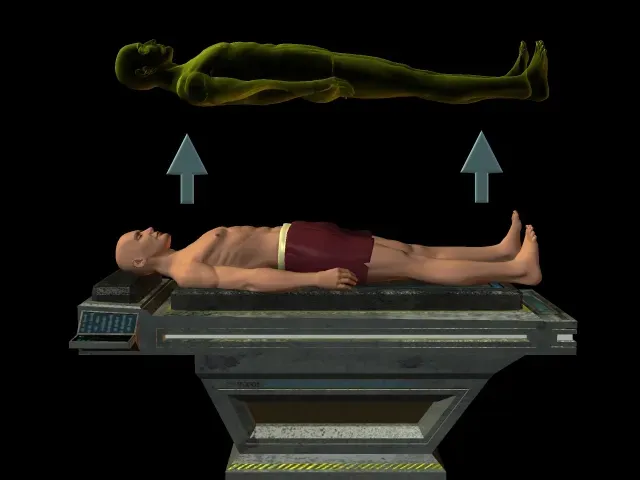
When you take OBEs seriously – not as proof of fantasy, but as real experiences with real brain mechanisms – you gain a rare window into how your sense of self is built. You see that feeling “inside your body” is not guaranteed; it is a dynamic, ongoing achievement that can wobble under pressure. That understanding can make you more curious about other everyday illusions, like how time sometimes feels slow and sometimes fast, or how pain can vanish when your attention shifts elsewhere. All of these are hints that your lived reality is at least partly a construction, not a raw feed from the outside world.
You can also use this knowledge to be a little kinder to yourself when your mind does strange things. If you have had an OBE, you might worry that you are losing your grip on reality, or that you are somehow broken. Knowing that similar experiences show up in many people, and that researchers can even reproduce aspects of them in the lab, can be reassuring. Instead of seeing your OBE as something to fear or dismiss, you can treat it as a powerful reminder that your brain is both vulnerable and remarkably creative. In a way, invites you to see your own consciousness as the most mysterious place you will ever visit.
In the end, when you look closely at OBEs, you are not just chasing ghost stories – you are exploring the machinery that lets you feel like a self at all. That machinery can falter, improvise, and astonish you, especially on the edges of sleep, illness, and life itself. You may never know exactly what your experiences mean in some ultimate sense, but you can understand the conditions that make them possible and the brain systems that give them shape. And once you realize how easily your inner camera can jump to a new angle, you might quietly wonder: how many other times has your mind edited reality without telling you?