
You probably think of as something that lives in particle accelerators, obscure textbooks, or sci‑fi movies. It sounds distant, abstract, and very far from your daily life. But whether you notice it or not, the weird rules of the quantum world are quietly shaping what you see, touch, and use every single day.
Once you start spotting it, you realize you’re basically swimming in quantum effects: from the light in your living room to the phone in your pocket and even the chemistry inside your body. You do not need a physics degree to appreciate this. If you can handle a good story and a bit of imagination, you can understand how quantum strangeness is hiding in plain sight around you.
1. Why Metals Shine and Wires Conduct Electricity

When you flip a light switch and see a metal lamp glint, you are looking at electrons following quantum rules. In a metal, the outer electrons of the atoms are not locked to individual atoms the way they are in wood or plastic. Instead, they form a kind of shared cloud that flows through the entire piece of metal, like a sea of tiny charged particles. tells you which energy levels these electrons can occupy and how easily they can move.
Because these electrons are in allowed quantum states that span the whole material, an electric field from a battery or outlet nudges them into motion, giving you an electric current. The shiny look of metal is another quantum side effect: the electrons can absorb and re‑emit a huge range of light frequencies, so most visible light gets reflected back to your eyes. If the electron energy levels were different, your “silver” spoon might look dull, dark, or even transparent.
2. Why LEDs and Screens Glow in Vivid Colors

Every time you look at your phone, TV, or a glowing LED bulb, you’re watching electrons hop between quantum energy levels. Inside an LED, electrons are pushed through a special semiconductor material. They drop from a higher energy state to a lower one, and when they do, they release the extra energy as a particle of light. The color you see depends on the exact size of that energy gap, which is fixed by the material’s quantum structure.
This is why some LEDs are deep blue, others bright red, and some look almost daylight white: you’re basically choosing the energy spacing of the electrons. In modern displays, you rely on carefully engineered quantum behavior to get sharp, saturated colors. is not just a bonus here – it’s the design manual that tells engineers how to build materials that emit exactly the light your eyes respond to best.
3. How Lasers Make That Strange, Perfect Beam

Lasers feel almost magical because they break every rule you expect light to follow. Ordinary light bulbs send out a jumble of colors and directions, but a laser pointer gives you a tight, pure beam that can travel long distances without spreading much. The trick is something called stimulated emission, which is rooted directly in . If you get an atom or molecule into an excited energy state and then hit it with exactly the right kind of photon, it is nudged into dropping down and emitting a second photon that is perfectly in step with the first.
When you force a whole group of atoms to do this, you create a chain reaction: photon after photon, all matching in color, direction, and phase. That is what gives a laser its sharpness and power. The barcode scanners in shops, the optical fibers carrying internet data, and even some medical surgeries you hear about all depend on this disciplined quantum dance of particles of light inside a laser cavity.
4. Why Atoms Form Molecules and You Have Solid Matter

If you zoom far into your body or a glass of water, you eventually hit a question that sounds almost philosophical: why do atoms even stick together? Classical physics struggles here, but gives you a clear answer. Electrons in atoms occupy specific standing wave patterns around the nucleus, like musical notes that are allowed or forbidden. When two atoms come close, their electron waves can combine into new shared patterns that lower the total energy.
Those shared patterns are what you call chemical bonds. The shapes of molecules, their flexibility, their ability to dissolve in water, and the way they react all come from the rules that govern these electron waves. Without , atoms would not build the stable, diverse molecules you rely on, and things like DNA, proteins, and even simple table salt would not have the properties you take for granted.
5. Why the Sun Shines and Keeps You Warm

The warmth on your face on a sunny day is powered by nuclear fusion deep in the Sun, and is what lets that fusion happen at all. In the Sun’s core, hydrogen nuclei are trying to fuse into helium, but they are all positively charged and should strongly repel one another. Classically, the temperatures in the core are high but not quite high enough to let them crash together often enough to keep the Sun shining steadily for billions of years.
Quantum tunneling changes the story. It allows particles to sometimes slip through energy barriers they do not have enough energy to climb over in a classical sense. That means some pairs of hydrogen nuclei can fuse even when, by ordinary logic, they “shouldn’t” make it. Over countless trillions of interactions, these rare successes add up to a stable fusion engine, which then floods space with photons that eventually reach you as sunlight.
6. How Modern Electronics and Microchips Actually Work
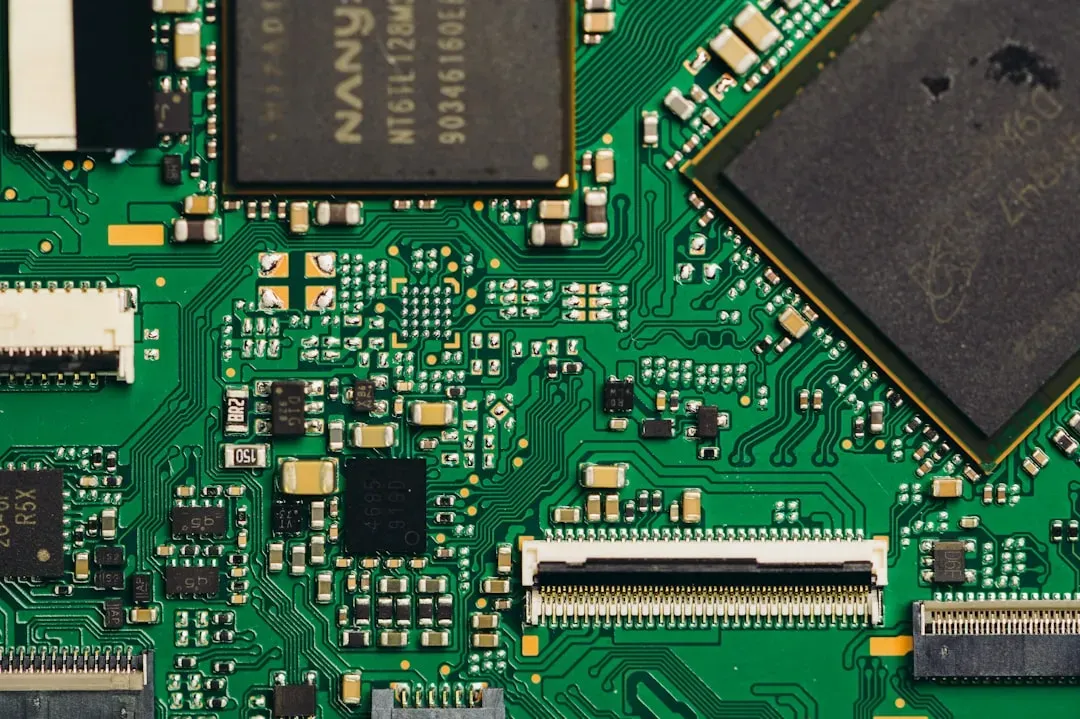
Your laptop, smartphone, and game console would not work at all without one of the most famous quantum devices: the transistor. At the heart of each transistor is a semiconductor whose ability to conduct electricity can be turned up or down using tiny voltage changes. Electrons in a semiconductor can live in specific energy bands, and dictates the exact band structure. By tweaking the material and adding impurities, engineers can control how many electrons are available to move and how easily they can cross tiny barriers.
When you combine billions of these quantum‑behaving switches on a chip, you get the logic gates and memory that run your apps, store your photos, and power your searches. Even the way currents leak through ultra‑thin layers, or the way electrons tunnel across tiny gaps, is described by quantum theory and must be carefully managed. Every time you tap your screen, you’re triggering a cascade of quantum‑governed events at an almost unimaginable scale.
7. Why Magnets Stick to Your Fridge (and Some Materials Don’t)

That familiar clack of a magnet grabbing onto your fridge door is another quiet quantum story. Inside a magnetic material like iron, each electron acts like a tiny spinning magnet. gives these spins only certain allowed orientations and links them together through interactions that depend on their wave‑like nature. Under the right conditions, many of these spins line up in the same direction, creating a strong overall magnetic field.
In materials that are not magnetic, the electron spins either pair off in opposite directions or get arranged in a more random way, so their magnetic effects cancel out. You can think of it like a crowd: in a magnet, everyone is chanting the same slogan, while in a non‑magnetic material, people are mumbling different things and their voices blur into noise. Quantum rules decide which of these crowd patterns is possible and stable, and that choice is what lets you pin notes to your fridge with a simple magnet.
8. Why Your GPS and Clocks Can Be So Precise

When you check a map app and your location pops up within a few meters, you are indirectly using without realizing it. The satellites that give you GPS signals rely on extremely precise clocks, and many of the best reference clocks humans have built are atomic clocks. In an atomic clock, you are using the fact that electrons in an atom jump between energy levels at a frequency that is absolutely fixed by quantum rules.
By tuning a microwave or optical signal until it perfectly matches that frequency, the clock can keep time much more steadily than any mechanical device. Those precise ticks are then used to synchronize signals between satellites and receivers on Earth. If you did not have this quantum‑based timing, your GPS would drift quickly, and even financial systems and communications networks that depend on accurate timestamps would become unreliable.
9. How Smells, Photosynthesis, and Biology Hint at Quantum Life

It is tempting to think lives only in cold labs, but your own body offers hints that this is not true. In photosynthesis, for example, plants and some bacteria harvest light and move the captured energy through complex molecules to reaction centers where it can be stored. Evidence suggests that this transport sometimes uses quantum coherence, letting energy explore multiple paths at once and find efficient routes, especially at very short timescales.
There are also ideas that some aspects of smell may depend on quantum effects, such as electrons tunneling in response to the vibrational frequencies of odor molecules, not just their shapes. While the details are still an active area of research and not everything is settled, what you can say with confidence is that quantum rules apply everywhere, including in warm, messy biological systems. You may literally be experiencing quantum behavior when you enjoy the scent of coffee or walk through a forest.
10. Why Light Can Behave Like Both a Wave and a Particle

Flick on a light, and it feels so simple: you see a beam, maybe a soft glow, and that’s it. Under the surface, though, light is following one of the strangest quantum rules of all. In many experiments, light behaves like a continuous wave, spreading out, interfering, and forming patterns. In other setups, it hits a detector as individual packets, or photons, like a shower of tiny bullets. You live with this wave‑particle duality all the time, even though it feels completely alien to everyday intuition.
What makes this relevant to you is that countless technologies depend on treating light as both. Fiber‑optic communication, solar panels, digital cameras, and even your eyes all rely on absorbing or emitting light in discrete photons while also guiding it as a wave. When you adjust a camera exposure or dim smart lights at home, you are quietly managing streams of quantum particles that refuse to fit neatly into a single classical picture.
Conclusion: Living in a Quietly Quantum World
When you step back and look at your day, it is almost funny how invisible seems, given how deeply it shapes your world. You flip switches, swipe screens, cook dinner, navigate across town, and enjoy sunshine without ever seeing an electron wave or a tunneling event, yet those unseen processes are running the show. The more you learn, the more you realize that classical physics is like a rough sketch, and is the fine detail that makes the sketch come alive.
You do not need to memorize equations to appreciate that reality is stranger and richer than it looks on the surface. Next time you notice the glow of an LED or the pull of a magnet, you can remind yourself that you are watching quantum rules play out on a human scale. In a sense, you are not just living in a universe where is true – you are benefiting from it every time you reach for your favorite device. Now that you’ve seen how deep it goes, what other everyday things are you suddenly curious to see through a quantum lens?