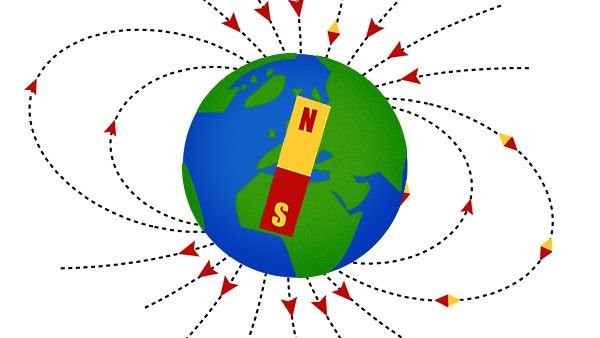

If you could peel back the atmosphere and look at Earth the way a physicist does, you wouldn’t just see a quiet blue planet. You’d see an enormous, invisible force field wrapping around you, pulsing, wobbling, and slowly drifting over time. That force field is Earth’s magnetic field, and even though you can’t feel it directly, it quietly shapes everything from your compass readings to the planes you fly in and the power grid you rely on.
You might imagine this field as something stable and permanent, like a bar magnet buried in the planet, but it’s more like a restless heartbeat coming from deep inside Earth’s core. It drifts, flickers, weakens, and strengthens on timescales from seconds to millions of years. Once you start to notice how often it shifts, you realize that the ground beneath your feet is much less “fixed” than you were taught in school – and that these changes are already nudging technology, navigation, and even the atmosphere in ways you probably don’t see day to day.
The Hidden Engine Deep Inside Your Planet
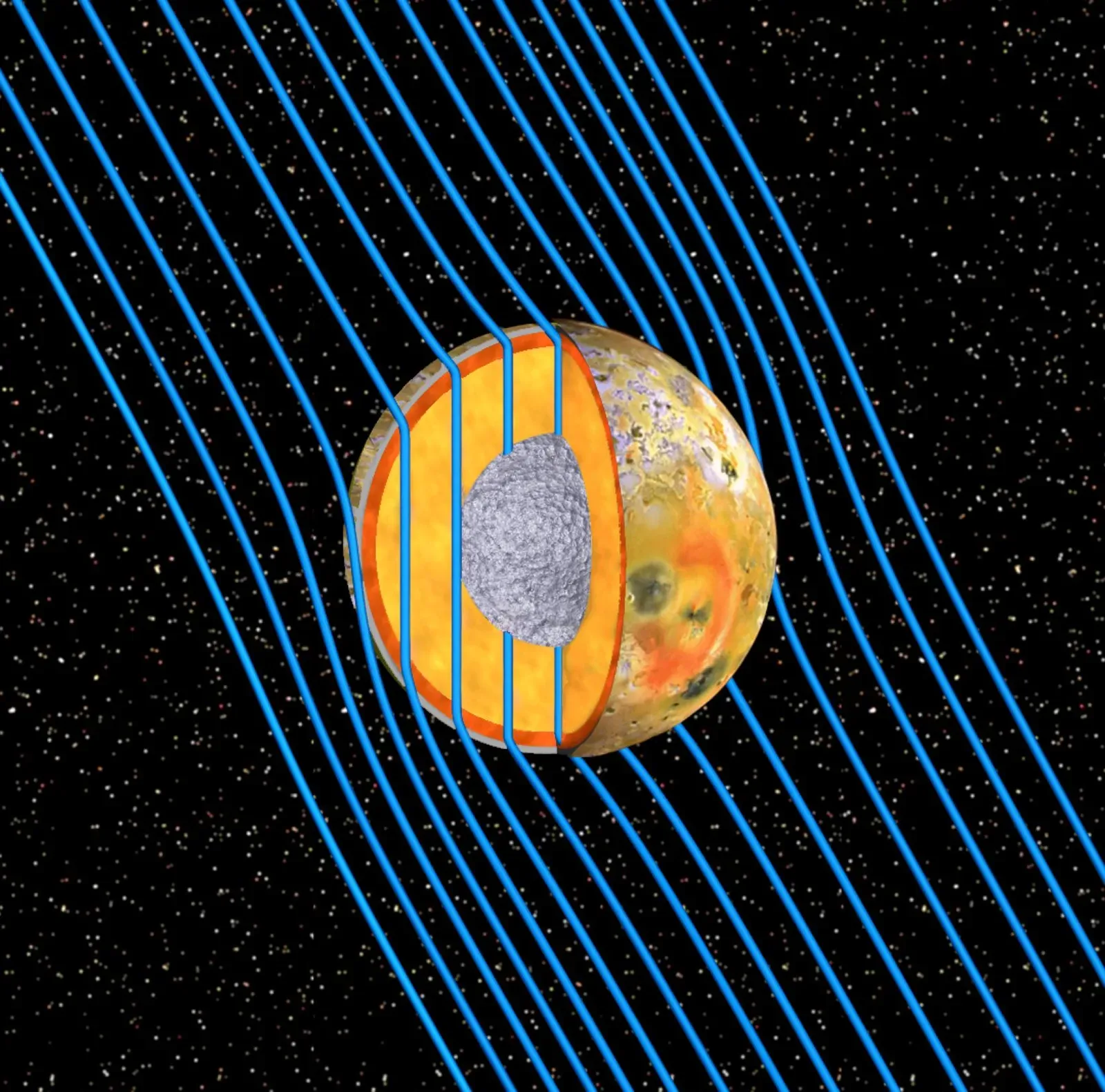
To understand why Earth’s magnetic field keeps shifting, you have to picture what’s going on roughly three thousand kilometers beneath you. Down there, the outer core is a vast ocean of molten iron and nickel, hotter than the surface of the Sun, churning and swirling in slow but powerful currents. As this liquid metal moves, it creates electric currents, and those currents generate the magnetic field that reaches far into space – this process is called the geodynamo, and it’s constantly in motion rather than frozen in place.
You can think of it a bit like a giant lava lamp, but made of metal: blobs of molten iron rise and sink, shear and twist, dragging the magnetic field lines along with them. Because the flow patterns are turbulent and never perfectly repeating, the field flickers and drifts too. When you hear that the magnetic poles are wandering or that the field strength is changing, you’re really hearing about slow changes in those deep, invisible currents that you’ll never see but that are shaping the very space around your body right now.
Why Your Compass Is Lying a Little More Each Year
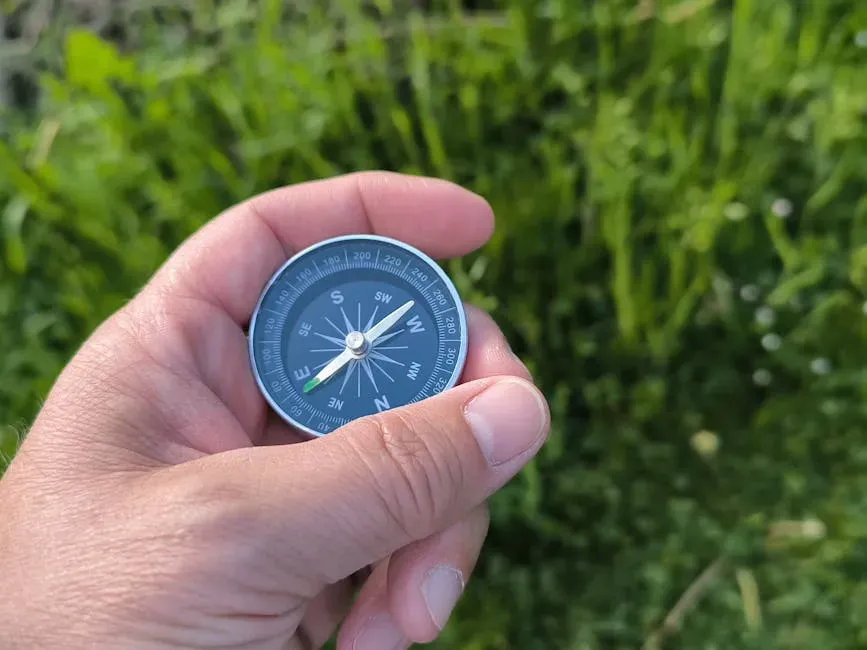
If you grew up thinking that a compass always points to “true north,” you were quietly misled. Your compass actually points toward magnetic north, and that point is on the move, migrating across the high latitudes as the field shifts. Over the last century or so, you’d see magnetic north wandering by hundreds of kilometers, which means that navigation charts, smartphone maps, and aircraft systems all have to be updated regularly so they don’t slowly drift off course.
You feel this most directly when you rely on simple tools like a compass in the wilderness or when an app corrects your heading based on your location. The difference between true north and magnetic north, called declination, changes from place to place and over time, so a bearing that was accurate for you ten years ago may now be slightly off. Even airport runways occasionally get renamed when the magnetic headings they’re aligned with shift far enough, a quiet reminder that you’re living on a planet whose “north” is never truly fixed.
Magnetic Reversals: When North Becomes South

Every so often in Earth’s deep history, the magnetic field has done something that sounds almost science fiction: it flips. What you know as magnetic north becomes magnetic south, and vice versa, in an event called a geomagnetic reversal. Rocks on the seafloor record these flips like stripes in a barcode; as lava cools, tiny magnetic minerals lock in the direction of the field at that moment, and when you look back through millions of years, you see long stretches of one polarity punctuated by periods where it reversed.
You might wonder whether such a reversal would throw your world into chaos, and the answer is more subtle than you might expect. Geological evidence suggests life on Earth has sailed through countless reversals without obvious mass extinction tied directly to the flip itself. For you, the bigger concern would be how a weaker and more disordered field during the transition could affect satellites, navigation, and radiation exposure in the atmosphere. The field does not suddenly vanish, but it can become patchy and complicated, which would force you and your technologies to adapt to a more unpredictable magnetic environment.
The Magnetic Shield Standing Between You and Space
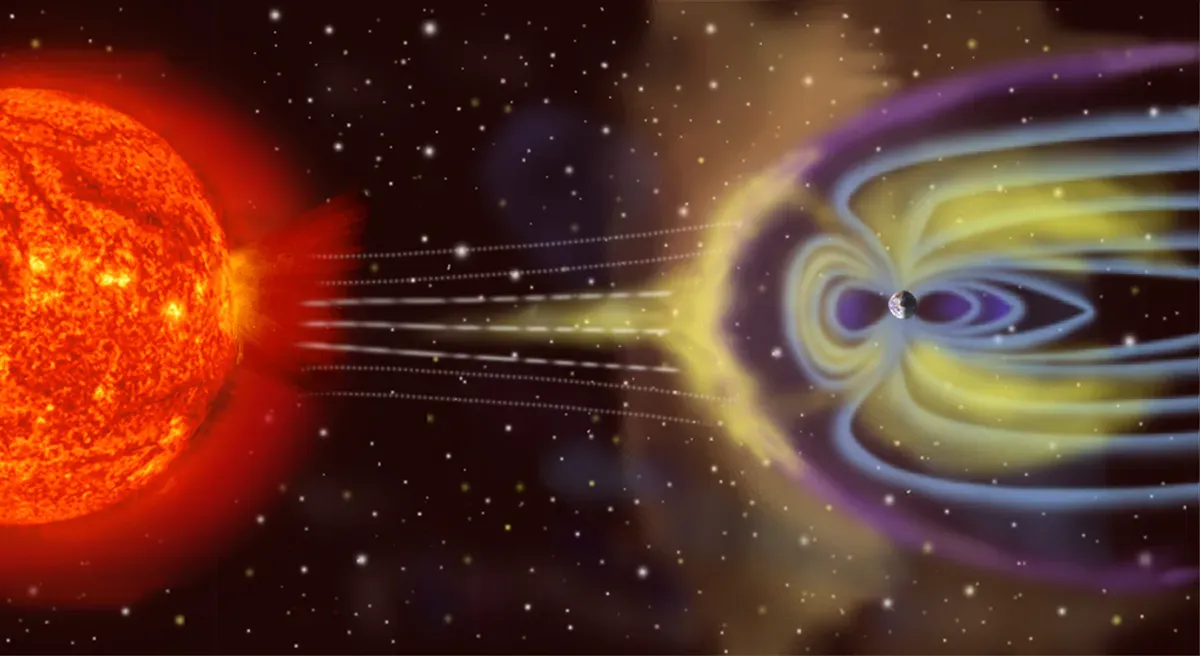
Earth’s magnetic field is not just a curiosity for physicists and geologists; it is a shield that stands between you and a storm of charged particles constantly blowing off the Sun. This protective bubble, called the magnetosphere, deflects much of the solar wind around the planet, funneling some particles toward the poles where they light up the sky as auroras. Without this shield, your atmosphere would be stripped more easily and the radiation environment at the surface would be far harsher for you and every living thing around you.
When the magnetic field changes, the shape and strength of that shield change as well. During strong solar storms, the magnetosphere gets compressed and disturbed, and the way it couples with Earth’s field can shift depending on how that field is oriented and how strong it is. For you, that can translate into more intense auroras at lower latitudes, but also a greater risk of disruptions to satellites, GPS signals, and power lines. The quieter or more disorganized the field becomes, the more vulnerable your technological systems are to space weather you never see directly.
How Shifting Magnetism Messes With Technology
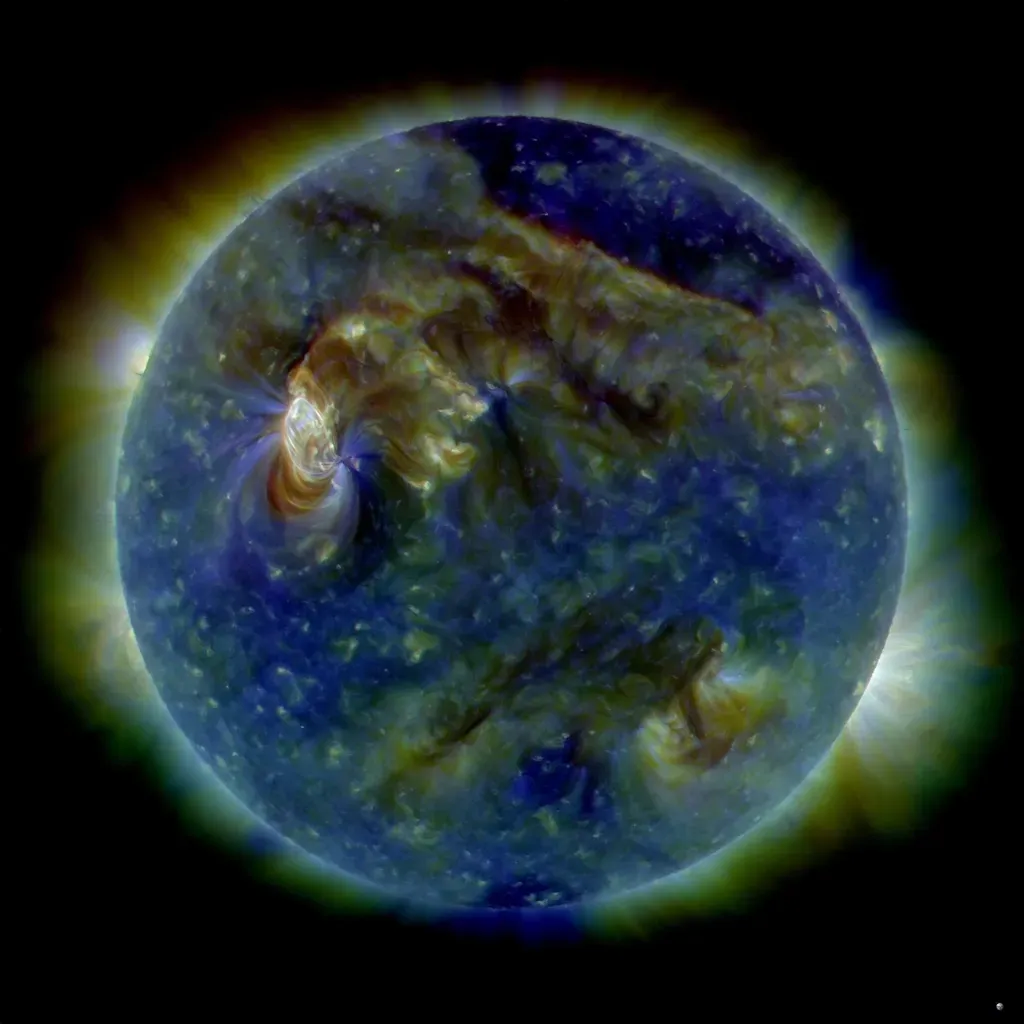
You probably do not think about Earth’s magnetic field when you open a navigation app, but that invisible structure is quietly baked into your devices and infrastructure. Smartphones rely on magnetometers that need to be calibrated against the shifting field to give you accurate headings. Surveyors, drillers, pilots, ship captains, and even farmers using precision agriculture tools have to account for changing magnetic data so that a plotted route in one decade still lines up with the real world in the next.
On a larger scale, rapid disturbances in the magnetic field can induce currents in long conductors like power lines and pipelines, creating what engineers call geomagnetically induced currents. During strong solar storms, those currents can overload transformers or corrode infrastructure, which is why power grid operators pay close attention to space weather and magnetic measurements. You live in a world that is increasingly wired and interconnected, and every time the field shifts or gets jostled by the Sun, those changes can ripple through the technologies you take for granted, from long-haul flights to internet cables resting quietly on the seafloor.
Animals, Migration, and Your Own Sense of Place

Long before you started carrying a compass in your pocket, other creatures were already reading Earth’s magnetic field with astonishing sensitivity. Many birds, sea turtles, salmon, and even some insects appear to use magnetic cues to navigate over long distances, combining them with stars, smells, and landmarks to find their way. When the magnetic field shifts, these animals may need to adapt, adjusting their internal maps so that traditional routes still lead them to feeding grounds or nesting sites instead of leaving them subtly off course.
You might not have a conscious magnetic sense in the same way, but the idea that your planet carries a built-in directional grid shapes how you design maps, routes, and global systems. Researchers are still exploring whether humans have a weak, unconscious response to magnetic fields, but even without that, you are deeply tied to these invisible lines every time you follow a plane’s path over the pole or trust a ship’s heading across an open ocean. As the magnetic landscape changes, so do the routes that both wild animals and human travelers carve across the globe, slowly rewriting the story of movement on your planet.
Living on a Moving Magnet: What You Can Expect Next
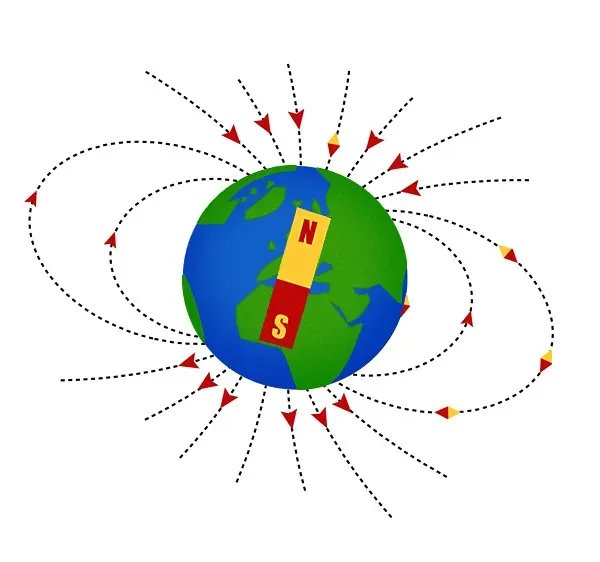
When you step back and look at the big picture, you’re living on a constantly moving magnet, and that motion is normal rather than a looming disaster. The field weakens in some regions, strengthens in others, and the poles wander; over geological time, reversals come and go. For you, the realistic future involves closer monitoring, more frequent updates to navigation models, and better shielding of vulnerable technologies, rather than a sudden, dramatic collapse of the magnetic shield overnight.
You can already see the response in how scientists maintain global magnetic models, update aviation and maritime charts, and work with engineers to harden satellites and power systems against space weather. As measurements improve, you gain a clearer, real-time picture of how the field is evolving, which helps you anticipate and manage its effects. The more you treat Earth’s magnetic field as a living, dynamic system instead of an unchanging backdrop, the better prepared you are to navigate a world where even “north” is never completely still.
In the end, Earth’s magnetic field is less like a solid rod stuck through the planet and more like a living, breathing web that flexes and drifts as the core turns and the Sun blows. You might not feel it against your skin, but it quietly shapes your sky, your technology, and the paths of countless creatures sharing this planet with you. Next time you watch an aurora, glance at a compass, or board a flight that arcs over the pole, you’re seeing the fingerprints of this restless field on your daily life – did you ever imagine that something you cannot see could matter this much to the way your world actually works?