

If you grew up thinking the universe was a big, predictable machine ticking along by clear rules, quantum entanglement is here to gently (or not so gently) wreck that picture. The more you look at it, the more it feels like someone slipped a science‑fiction plot twist into the basic fabric of reality, then dared you to notice. Yet this is not speculation or sci‑fi imagination; it is one of the most well‑tested, stubbornly real features of the quantum world.
What makes it so wild is that entanglement does not care about your intuition, your common sense, or what you learned in school about cause and effect. It links particles in ways that make the usual ideas of “here,” “there,” and “in between” feel strangely outdated. As you walk through this, you will see that you do not live in a neat, classical universe. You live in something far weirder, and far more beautiful, than most people ever realize.
You Live in a Universe Where “Spooky Action” Is Real

Imagine you have two coins that always land on opposite sides: whenever you flip one and see heads, the other, no matter how far away, will turn up tails the instant you look at it. That is roughly the feeling of quantum entanglement, except the “coins” are particles and the rules are written in the language of probability instead of simple heads or tails. When two particles are entangled, their properties become deeply linked, so that measuring one instantly tells you something about the other.
Here is the part that should make you pause: this correlation shows up even when the particles are separated by huge distances, with no time for any signal to travel between them at or below the speed of light. Decades of experiments have carefully closed loopholes and confirmed that what you see cannot be explained by hidden, pre‑agreed plans inside the particles. You are forced to accept that nature really does allow this strange, “spooky” connection that stretches across space, even though it refuses to be used like a faster‑than‑light message system.
Local Realism, Your Old Comfort Blanket, Has Been Ripped Apart
For most of your life, you have probably assumed two quiet background beliefs about reality. First, that things have definite properties whether you look at them or not. Second, that influences cannot jump instantly across space; they travel through space step by step. Physicists call this mix “local realism,” and it feels so natural that you almost never question it. Quantum entanglement, however, rams straight into it.
Experiments built around Bell’s inequalities test whether the universe obeys local realism or something stranger. Again and again, measurements have broken those classical limits, telling you that at least one of your cherished assumptions has to go. Either properties are not fixed until you measure them, or influences are not strictly local in the way you thought, or the whole idea of a simple underlying reality is too naive. You do not get to keep the old picture and the experimental results at the same time; the data force you to choose weirdness.
Measurement Is Not Passive: You Help Create the Outcomes You See
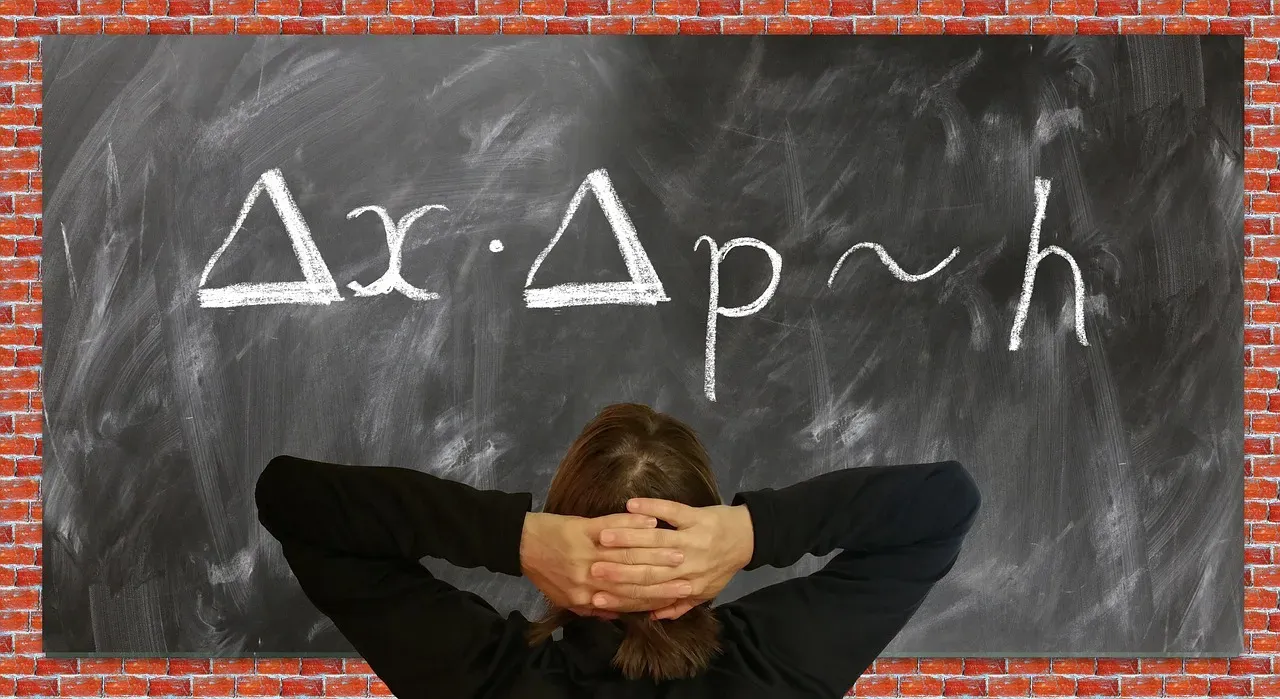
In everyday life, you think of “measuring” as just looking at what is already there. You check the time; the clock did not change because you glanced at it. In the quantum world, though, measurement is not a quiet, passive act. When you measure an entangled particle, you do not simply reveal a pre‑written value; you participate in selecting the outcome from a spread of possibilities described by the wave function.
This becomes even more unsettling when you realize that different choices of what to measure can change how the entanglement shows up. Your decision about which property to observe on one particle helps determine how the correlations with its partner play out, even across distance. You are not magically controlling events in the past or sending signals faster than light, but you also are not just reading a script that was fixed long ago. The universe meets you halfway, and measurement is part of how reality settles on a concrete story.
Space and Distance Are Not as Solid as You Think
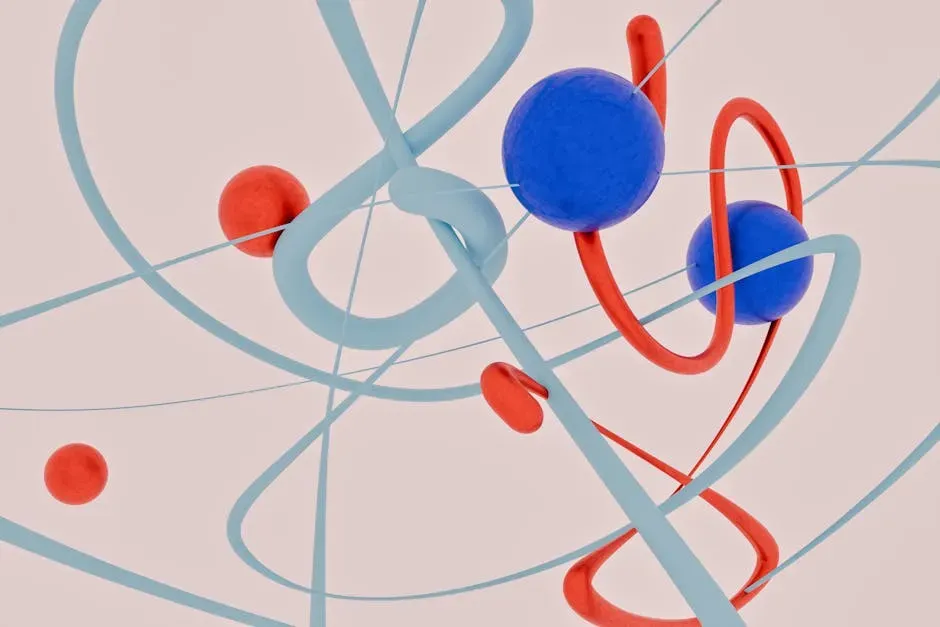
You probably picture space as a grand stage: things exist at specific locations, and events unfold in that arena. Entanglement quietly undermines that picture. When two particles are entangled, the best description of them is not “this one is here, that one is there, each with its own separate state.” Instead, you have a single, shared quantum state that stretches over both locations. The pair behaves more like one system smeared across space than two independent objects.
In practice, this means that the basic building blocks of the universe do not always respect our everyday boundaries between “here” and “there.” At fundamental scales, the world is stitched together by correlations that ignore distance in a way you cannot easily visualize. Some modern ideas in physics even treat entanglement as the raw fabric out of which spacetime itself might emerge, suggesting that what you call “space” is more like a pattern in these quantum links than an underlying, rigid container.
Entanglement Is Not Just Weird: You Can Actually Use It
It is tempting to treat entanglement as a philosophical curiosity, good for late‑night debates and mind‑bending documentaries. Yet you are already living in a world where it is turning into a practical tool. Quantum encryption schemes use entangled particles to let two people share keys in a way that makes eavesdropping almost impossible to hide, because any interference disturbs the delicate correlations you rely on.
Quantum computers, which you hear more and more about, lean heavily on entanglement to process information in ways that classical machines cannot match. Instead of bits that are only zero or one, you get qubits that exist in superpositions and become entangled with each other, allowing certain problems to be tackled far more efficiently. Quantum sensors, too, exploit entanglement to reach sensitivities beyond classical limits, hinting at new ways to measure time, gravity, and tiny signals that would otherwise be lost in noise.
You Cannot Use It to Break Causality, No Matter How Clever You Are
At this point, you might be wondering whether entanglement lets you send instant messages across the galaxy or peek into the future. The answer, frustrating as it may feel, is no. The correlations you see in entanglement only show up clearly when you compare results after the fact. On any single side, your measurement outcomes look random, like a fair coin toss, even though they are mysteriously linked to the results on the other side.
This is where quantum theory draws a hard line: you can have nonlocal correlations, but you cannot turn them into faster‑than‑light communication that breaks cause and effect. When you and a partner measure entangled particles far apart, neither of you can control the outcome you get. Only when you later bring your records together do you see the eerie pattern. The universe gives you weirdness, but it quietly protects the deeper rule that information cannot jump ahead of light to rewrite history.
Your Intuition Is Outdated, but You Do Not Have to Be

If all of this feels confusing, you are in good company. Your brain evolved to deal with thrown rocks, running water, and human faces, not with particles, wave functions, and abstract Hilbert spaces. It is natural to find quantum entanglement hard to picture, because your inner mental tools were simply not built for it. The mistake would be thinking that your intuition is the final judge of what can be real.
Instead, you can treat entanglement as an invitation to update how you think, the way you once had to accept that the Earth goes around the Sun or that time dilates at high speeds. You do not need to do all the math to appreciate the message: your comfortable picture of separate objects with fixed properties, interacting only through local pushes and pulls, is not the full story. The universe is telling you, with every successful experiment, that reality is more deeply connected and less classical than you would ever guess from daily life.
What Entanglement Reveals About Your Place in the Cosmos
When you take entanglement seriously, you start to see yourself differently. You are not just drifting through a cold, mechanical universe; you are part of a reality where connection is fundamental, not optional. At the tiniest scales, particles that were once together can stay linked in ways that ignore distance, as if the universe quietly remembers their shared past even when they are worlds apart.
That does not mean you are mystically entangled with every person you have ever met, but it does hint that the universe is not built out of isolated, independent pieces. Instead, it behaves more like a vast, interwoven tapestry of relationships and correlations. When you look up at the night sky, every star and every particle is playing by these strange rules, whether you notice or not. You are living inside that story right now, carried along by a cosmos that is richer and stranger than any fiction you could write about it.
Conclusion: Living With a Stranger, Truer Reality
Quantum entanglement does not politely fit into your old mental categories; it tears them open and leaves you with something far less comfortable but far more honest. You live in a universe where distant things can share a single state, where measurement helps shape outcomes, and where classical ideas about locality and realism have already been tested and found wanting. Yet out of this strangeness you get powerful technologies and deeper insight, not chaos.
When you let this sink in, you begin to see that reality is not obligated to match your expectations – your expectations have to catch up with reality. The universe turns out to be more like a subtle, interconnected web than a tidy assembly of separate, rigid parts. You can ignore that and cling to your old stories, or you can lean into the weirdness and let it change how you see everything from information to space itself. Knowing what you know now, which picture of the world do you really want to live with?