
If you’ve ever stepped outside at night, looked up, and suddenly felt very small in the best possible way, this is your year. The sky above you is not just a backdrop; it’s an active, moving stage where planets, shadows, and falling space dust put on shows that you can actually watch with your own eyes.
What makes it even better is that you do not need fancy gear, a degree in astronomy, or a remote desert observatory to enjoy most of these events. With a bit of timing, a basic understanding of what you are looking at, and maybe a warm drink in hand, you can turn an ordinary evening into something you’ll remember for decades. Let’s walk through five sky shows that are worth marking on your calendar this year.
1. A Total Lunar Eclipse That Turns the Moon Blood-Red
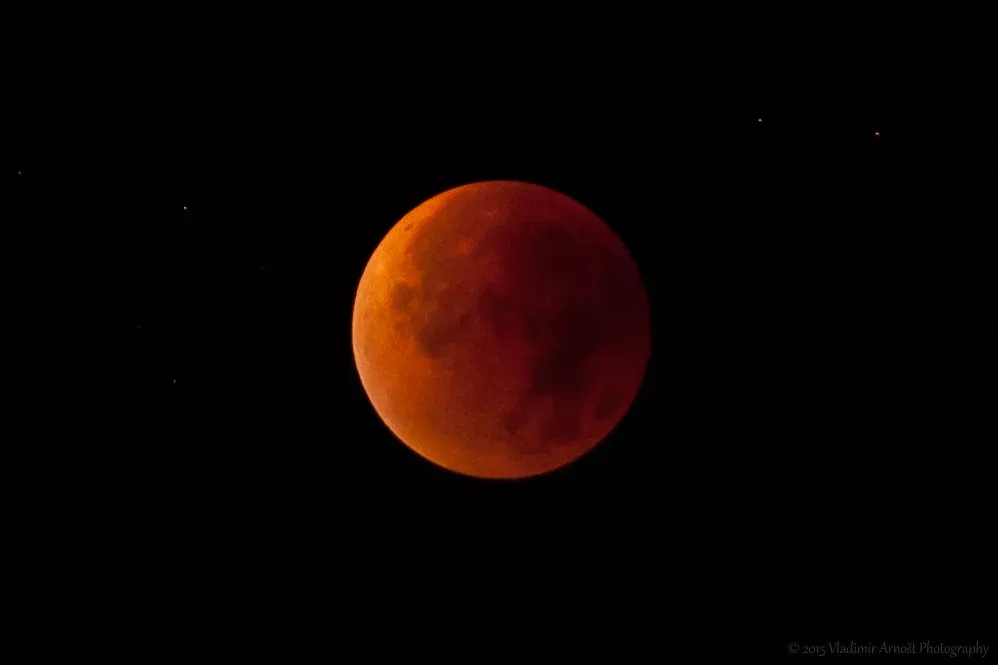
Imagine stepping outside late at night and seeing the full Moon slowly vanish, then reappear painted in a deep, rusty red. During a total lunar eclipse, Earth slides directly between the Sun and the Moon, and your planet’s shadow washes over the lunar surface. Instead of going dark, the Moon glows in shades of copper or crimson because sunlight is bent through Earth’s atmosphere and filtered toward it, a bit like a worldwide sunset being projected onto the Moon.
You do not need a telescope for this at all. If the eclipse is visible from where you live, you can watch the whole thing with your naked eyes from your backyard, balcony, or even a city park. To make the most of it, you’ll want to know the phases of the eclipse: when the partial shadow starts nibbling at the Moon, when it reaches totality (the fully red phase), and when it fades away again. Setting an alarm for totality is worth it; that’s the silent, eerie moment when the familiar white Moon looks completely transformed, and you really feel the scale of the universe you are standing in.
2. A Dazzling Meteor Shower Painting the Night with “Shooting Stars”
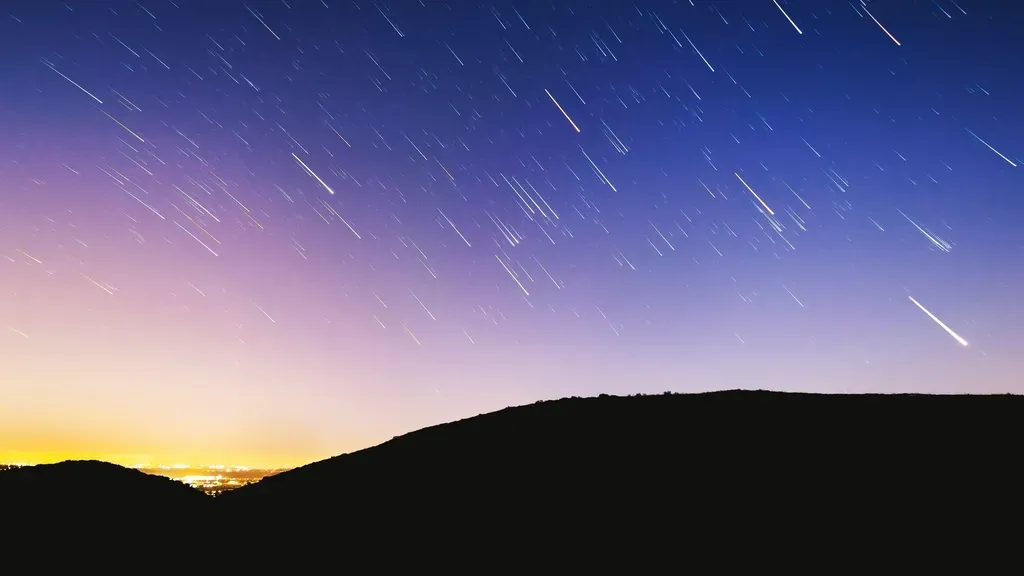
You know those moments when you spot a single “shooting star” and feel weirdly lucky? Now imagine seeing dozens, or even more, in just an hour. That is what a strong meteor shower can give you. These showers happen when Earth plows through a trail of dusty debris left behind by a passing comet or asteroid, and those tiny bits burn up high in the atmosphere, leaving bright streaks across your sky.
To really feel speechless, you’ll want to plan it right. You should pick a night when the meteor shower is expected to peak and find the darkest spot you reasonably can, away from harsh city lights. Give your eyes at least twenty minutes to adapt to the dark; resist the urge to check your phone, because that bright screen resets your night vision. Then, just lie back, let your gaze soften, and watch the sky as a whole. The best part is that the more patient you are, the more the sky starts to come alive, turning a random night into a slow, quiet fireworks show created by ancient dust.
3. A Planetary Conjunction That Brings Worlds Shockingly Close
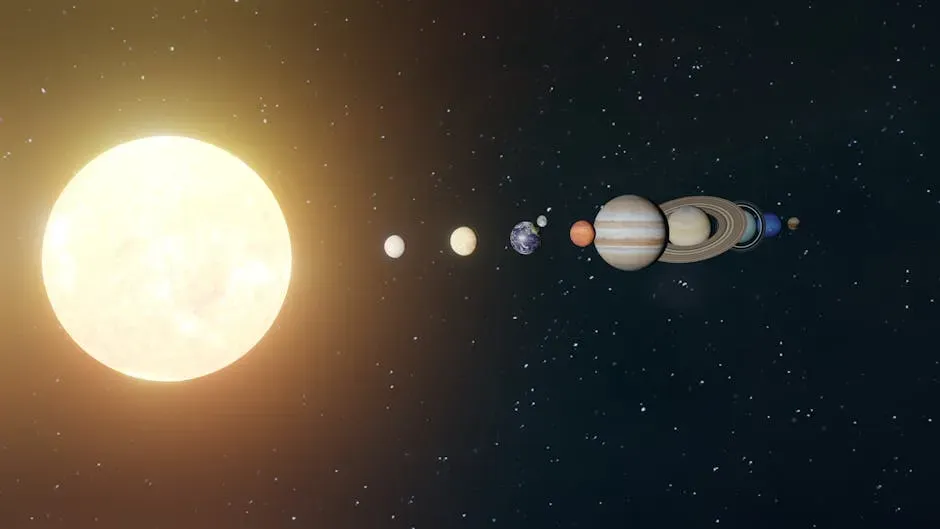
Every so often, you look up and two bright “stars” are sitting so close together that it almost feels like they’re about to collide. In reality, of course, you are seeing a planetary conjunction: two planets lining up from your viewpoint on Earth so they appear side by side in the sky. When bright planets like Venus, Jupiter, or Saturn participate, the effect is dramatic enough that people with no interest in astronomy suddenly start asking what on Earth is happening above them.
You can enjoy a conjunction just by facing the right direction at the right time, usually around dawn or dusk when planets shine clearly but the sky still has some color. If you have binoculars, you can take the experience further by noticing subtle details: the tiny disc of each planet, perhaps some of Jupiter’s moons as pinpricks of light, or the delicate separation between the two worlds. What blows your mind is not just how pretty it looks, but the thought that you are seeing two massive planets, millions of miles apart, momentarily sharing the same small patch of your sky like old friends meeting at the horizon.
4. A Brilliant Planet Shining at Opposition
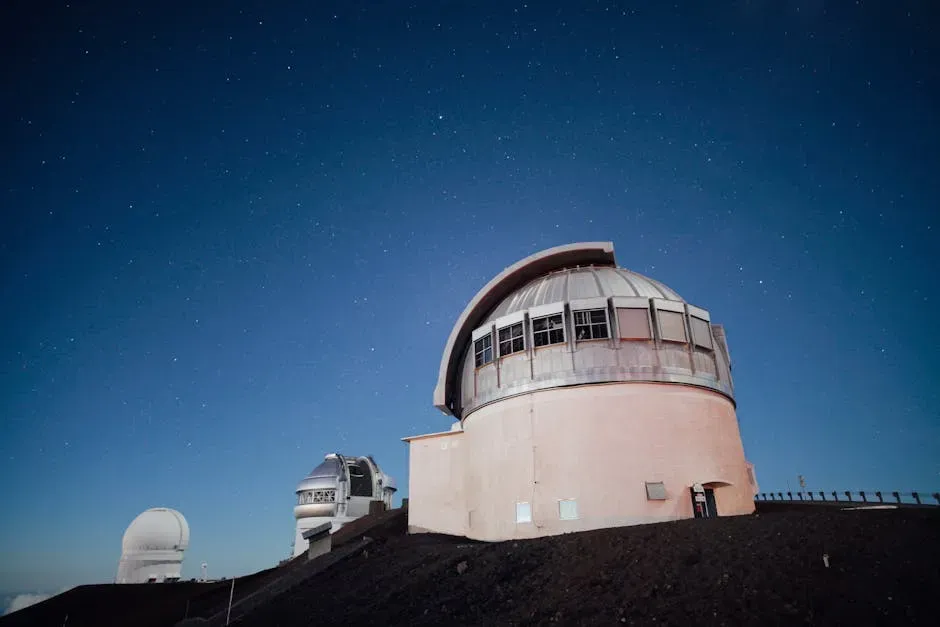
There are nights when one “star” is so bright it almost looks artificial, as if someone hung a lantern in the sky. When a planet like Mars, Jupiter, or Saturn reaches opposition, it is roughly opposite the Sun in your sky and at or near its closest point to Earth. That alignment makes the planet brighter and larger-looking through a telescope than at any other time in its orbit, and even with your naked eyes, you’ll notice how much it stands out from the rest.
If you have even a small beginner’s telescope, opposition is when it truly earns its keep. You can point it at Jupiter and see cloud bands and its four biggest moons lined up like a miniature solar system, or aim at Saturn and catch those iconic rings that never stop looking unreal. If you do not have equipment, you can still enjoy tracking that bright “star” from night to night, noticing how it rises in the east as the Sun sets, climbs higher through the night, and sets in the west at dawn. Following a planet during opposition makes you feel like you are personally witnessing the clockwork of the solar system, not just reading about it.
5. A Crescent Moon Embracing a Bright Planet at Twilight
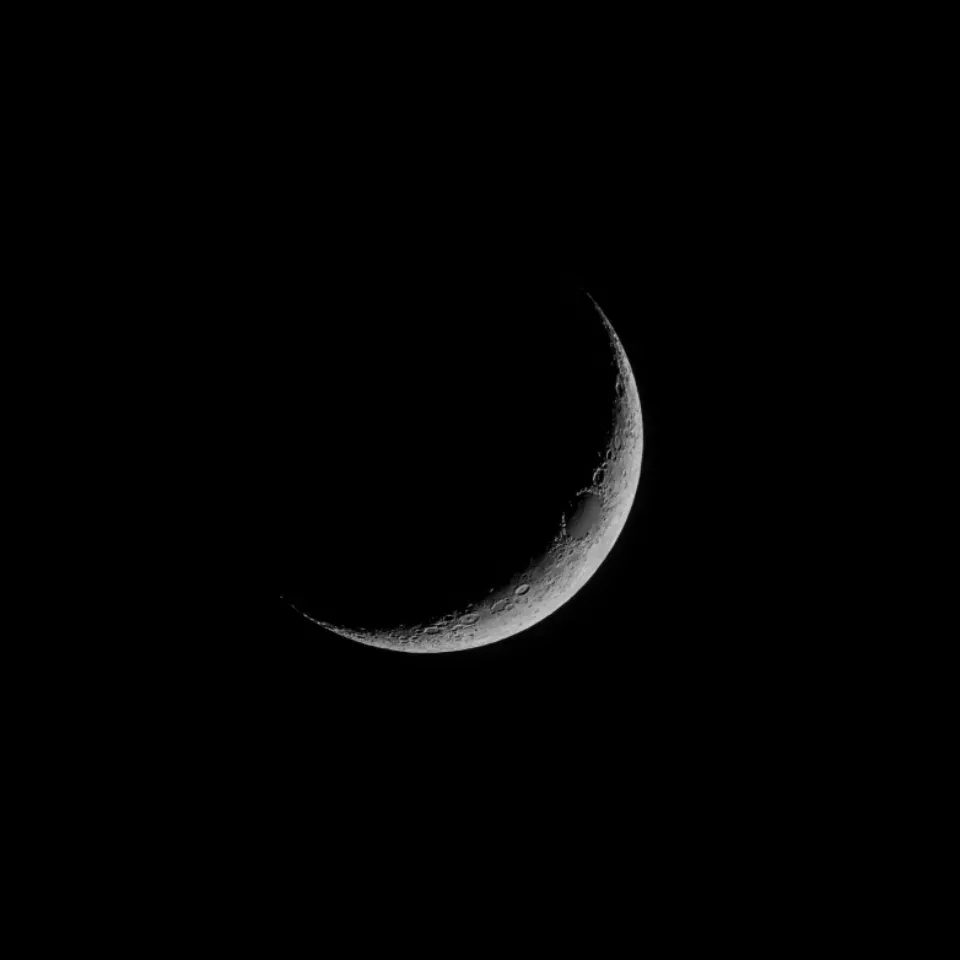
One of the most quietly breathtaking sights you can see needs no special date, ticket, or dark-sky trip: a slim crescent Moon nestled close to a bright planet like Venus or Jupiter during evening or morning twilight. These close pairings, called lunar-planet conjunctions, happen when the Moon’s path carries it near a planet from your point of view. The scene can look almost artistic, like someone arranged a minimalist painting just for you in the sky.
To enjoy it, pay attention to sky forecasts that mention the Moon passing near bright planets and step outside during the first hour after sunset or before sunrise. The contrast between the fading blue or purple of the sky, the thin glowing curve of the Moon, and the single bright point of the planet is incredibly photogenic, even with a phone camera. When you see it, you get a strange mix of feelings: calm, because the scene is so simple and silent, and awe, because you’re watching your Moon and another world share the same small arc of sky for a brief moment before drifting apart again.
When you step back and look at all these events together – eclipses, meteor showers, planetary meetups, and bright oppositions – you start to realize how busy your sky really is. You are not living under a static dome of distant lights; you are riding a moving world through a dynamic neighborhood, and these events are simply the times when the universe becomes hard for you to ignore.
If you mark a few dates, give yourself time outdoors, and let your curiosity lead the way, this year’s night sky can turn into a series of unforgettable experiences instead of just a backdrop you rush past. The next time you notice the Moon looking strange, a suspiciously bright “star,” or sudden streaks of light overhead, will you glance up and move on – or stay out a little longer and let the cosmos show off for you?