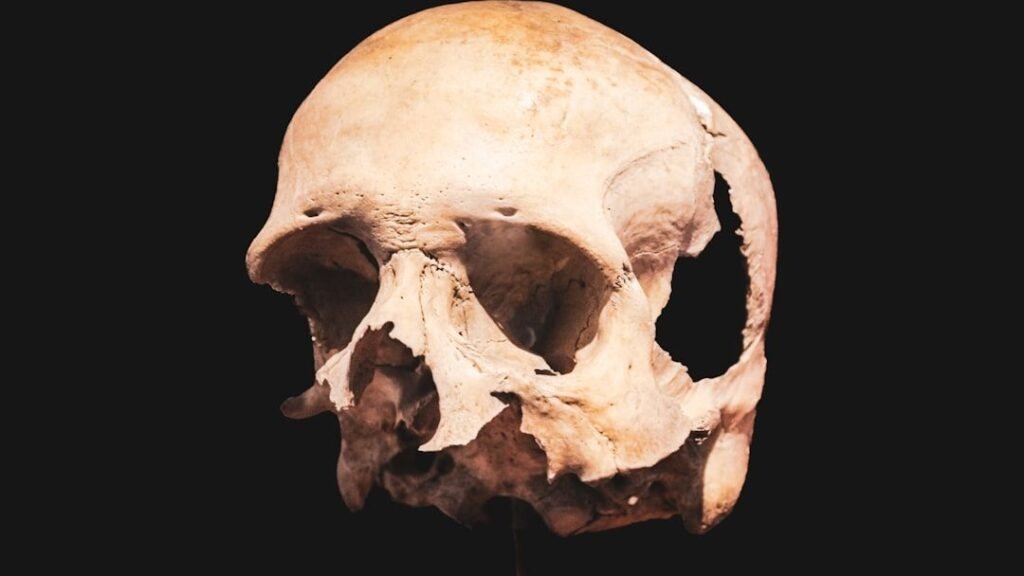

‘We can no longer ignore diseases in the deep human past’: Malaria influenced early humans’ migrations across Africa, study suggests – Image for illustrative purposes only (Image credits: Unsplash)
A new study has uncovered how the threat of malaria steered prehistoric humans away from danger zones in sub-Saharan Africa for more than 70,000 years. Researchers demonstrated that these avoidance patterns influenced population distributions well before the rise of farming, upending the idea that infectious diseases only mattered after societies settled down. This finding highlights the overlooked power of ancient pathogens in molding human history.[1]
Diseases Demand a Place in Deep Prehistory
Scientists long assumed infectious diseases like malaria emerged as major threats only with the shift to agriculture and denser populations. That view overlooked the reality of hunter-gatherer life, where mobility offered some protection but risks still loomed large. The latest research flips this narrative by tracing malaria’s footprint back 74,000 years.[1]
Eleanor Scerri, an archaeological scientist at the Max Planck Institute of Geoanthropology in Germany, captured the shift in perspective. “Our work shows that we can no longer ignore diseases in the deep human past,” she stated. “They don’t just have a small effect, they have – in the case of malaria, at least – transformative impacts that have helped to shape who humans are today.”[1]
Unpacking the Malaria Stability Index
To probe this hidden influence, the team devised a novel approach without relying on scarce ancient DNA from early Africa. They drew on reconstructed climate records spanning 74,000 years, broken into 1,000- to 2,000-year slices. Modern data on mosquito habitats and malaria transmission filled in the gaps for the parasite Plasmodium falciparum and its Anopheles carriers.[1]
From these, researchers computed a “malaria stability index” for regions across sub-Saharan Africa at each time point. They then overlaid this with maps of early human settlements. Patterns emerged clearly: people consistently shunned high-risk zones, a behavior that persisted for over 70,000 years and locked in fragmented population structures by 13,000 years ago.[1]
Andrea Manica, an evolutionary ecologist at the University of Cambridge and co-author, noted the escalation over time. “The key message from our paper is that malaria was already a bit of a problem before agriculture,” he said. “But it likely became even worse after people became sedentary and settled at high density as a consequence of food production.”[1]
Hotspots and Fragmented Populations
Central West Africa stood out as the epicenter of persistent danger. Warmer, wetter conditions there fueled mosquito breeding, creating enduring hotspots that fragmented human groups. Archaeological evidence, though limited in the region, aligns with this picture of isolated settlements.[1]
These dynamics contrasted with broader climate trends. While rainier periods boosted malaria risks overall, humans did not simply follow the wettest or warmest spots. Instead, disease avoidance carved distinct paths, independent of agriculture’s later pull.[1]
What Matters Now: This pipeline opens doors to mapping other ancient diseases’ roles, from different vectors to varied pathogens.
Rethinking Evolution’s Pathogens
The work, published in Science Advances, marks the first direct tie between early habitation and malaria risk.[1]
- Avoidance lasted over 70,000 years, predating farming by millennia.
- Population structures solidified by 13,000 years ago due to these patterns.
- Central West Africa shows lasting fragmentation, mirroring modern hotspots.
Biological anthropologist Simon Underdown of Oxford Brookes University, who reviewed the study, reinforced its weight. “Disease has always been with us, and it actually shaped what humans could do, where humans could move,” he observed.[1]
Caveats remain, including sparse archaeology and reliance on climate proxies over direct genetic traces. Still, the model proves robust for vector-borne threats.
Looking ahead, the researchers aim to extend their methods. Manica pointed to the promise: “We have shown that it is possible to track a disease back in time and assess its potential impact on past inhabitation. The next phase is to start exploring other diseases besides Plasmodium falciparum to see their role.”[1]
This study quietly reframes human origins, placing pathogens alongside climate and resources as architects of our past. By illuminating these ancient constraints, it invites a fuller accounting of what drove our ancestors’ world.