
If you look closely at your own mind and the people around you, you quickly notice something unsettling: for all the brain scans, lab studies, and psychological theories, a lot of what you do still does not fully make sense. You make choices that go against your own interests, feel emotions that arrive out of nowhere, and sometimes act in ways you later cannot explain, even to yourself. Modern science has peeled back many layers of the human psyche, but at the core, some behaviors remain stubbornly mysterious.
In this article, you will walk through nine behaviors scientists can describe, measure, and sometimes even predict, yet still cannot completely explain at a deep, satisfying level. You will see where research is strong, where it is shaky, and where experts openly admit that they are still guessing. As you read, you might catch glimpses of your own habits, fears, and irrational impulses – and realize that you are far from alone in your strangeness.
1. Déjà vu: When the Present Feels Like a Memory

Every now and then, you step into a room, hear a phrase, or see a particular scene and feel a jolt of certainty that you have already lived this exact moment before. It feels so specific and vivid that, for a second, you might swear reality just glitched. Researchers can tell you that déjà vu is common and usually harmless, and they can even trigger something similar in the lab using virtual environments or electrical stimulation of certain brain regions. But when it comes to the precise mechanism – what exactly misfires, and why – it is still not fully nailed down.
One leading idea is that déjà vu happens when your brain’s memory systems briefly get out of sync, so a new experience is mistakenly tagged as familiar. Another suggestion is that your brain does very fast matching between the present scene and many partial memories, and sometimes it falsely flags a high-confidence match. You experience that misfire as a creepy, uncanny familiarity. What no one can yet explain is why this happens for some moments and not others, why it is so emotionally intense, or why you cannot usually predict when it will show up again.
2. Blushing: The Only Emotion You Wear on Your Face

Think about how strange blushing really is: your face heats up and turns red, your heart might race, and the more self-conscious you feel, the worse it gets. You are effectively broadcasting your embarrassment to everyone around you at exactly the moment you most want to hide. Scientists understand the basic mechanics; your sympathetic nervous system widens blood vessels in your face, especially around the cheeks and ears, sending more blood to the surface. But why your species evolved this reaction – and why it seems so uniquely human – remains a puzzle.
One popular theory suggests that blushing helps you communicate regret, shame, or submission, signaling to others that you recognize a social slip and want to make peace. That might make it easier to repair relationships and reduce conflict. Still, no one can definitively prove why your body chooses such a dramatic, uncontrollable display rather than something more subtle. You cannot consciously start or stop it, you cannot reliably fake it, and you might even blush when you are alone and just imagining a humiliating moment, which makes the whole thing even more puzzling.
3. Phantom Vibration Syndrome: Feeling Phones That Are Not There

If you have ever reached for your pocket because you were sure your phone buzzed – only to find nothing happened – you have experienced phantom vibration syndrome. You might feel your leg tingle or your hip buzz while you are walking, working, or trying to relax, and a split second later you realize your brain invented the sensation. Studies have reported a large number of people experiencing this, especially those who carry their phones close to their bodies or check them frequently, but there is still no single agreed explanation for it.
One idea is that your nervous system becomes so attuned to your phone’s real vibrations that it starts over-interpreting random signals, like muscle twitches or friction from clothing, as alerts. Another view is that your brain is simply filling in expected patterns based on habit and anticipation, the same way you might mis-hear your name in background noise when you are waiting for it. What researchers do not fully understand is why some people barely notice this effect while others feel phantom buzzing or ringing so often that it bothers their daily life, even when they try to cut back.
4. The Placebo Effect: Getting Better from “Nothing”

You have probably heard that sugar pills sometimes make people feel better, but the reality is even more unsettling: a placebo can trigger real, measurable changes in your body, from pain relief to shifts in brain activity and even changes in some physical symptoms. You can be told that a pill has no active ingredient and still feel an effect, especially in certain conditions like pain, depression, or fatigue. Scientists know that expectations, conditioning, and the context of treatment all play a role, yet the full story is still wide open.
When you expect a treatment to help, your brain can release its own painkillers, like endorphins, and adjust how sensations are processed, making unpleasant experiences feel more manageable. At the same time, your beliefs, your trust in the person giving the treatment, and your previous experiences all blend into a powerful psychological cocktail. What remains murky is how far this effect can go, why it is strong in some people and weak in others, and how exactly your brain turns a belief – something intangible – into a cascade of physical changes throughout your body.
5. Sleepwalking: Acting Without “Being There”

Imagine getting up in the middle of the night, walking through your home, maybe even trying to cook or leave the house, and then having no memory of it the next morning. If you have ever sleepwalked, that is not a horror movie plot; it is your own brain running a sort of partial upgrade. In sleepwalking, parts of your brain responsible for movement and basic actions seem to wake up, while the regions tied to self-awareness and full consciousness remain in deep sleep. Researchers can describe this fragmented state, but they still cannot fully explain why it happens in some people and not others.
Sleepwalking tends to happen during deep, non-dream sleep and often runs in families, suggesting a genetic component. It can be triggered or worsened by sleep deprivation, stress, certain medications, or disrupted sleep schedules. Yet even with these patterns, you still do not have a clear, unified theory that explains the underlying mechanism, predicts exactly who will do it, or why some sleepwalkers engage in complex, risky behaviors while others just shuffle a few steps. The fact that your body can carry out coordinated actions without your conscious mind truly “online” raises big questions about how much of daily life runs on automatic pilot.
6. Extreme Altruism: Risking Your Life for Strangers

Every so often, you hear about someone who jumps onto train tracks to save a stranger, rushes into a burning building, or donates a kidney to a person they have never met. From a cold, survival-focused standpoint, these actions look irrational; you are putting your own life or long-term health at serious risk with no clear benefit. Evolutionary theories can explain why you might sacrifice for your family or close group, but extreme altruism toward strangers is harder to fit neatly into that framework.
Some researchers suggest that your brain is wired with powerful empathy circuits that can override self-preservation impulses in the right moment, especially when the danger to someone else is immediate and vivid. Others argue that helping strangers might still serve a deeper social or reputational function, boosting your status or your group’s cohesion, even if that is not what you are consciously thinking. What remains deeply mysterious is why, in a crowd, only a small handful of people will act in truly extreme ways, while many others freeze or stand back. You might like to imagine you would be the hero, but science still cannot confidently predict who will actually leap.
7. Procrastination: Delaying What You Know You Should Do

You know the feeling: a task sits on your to-do list for days, weeks, or even months, and every time you think about it you feel tension, guilt, or dread. You are fully aware that starting would make your life easier and your future self happier, yet you still open another tab, scroll a little more, or clean your kitchen instead. Researchers have linked procrastination to impulsivity, emotional avoidance, and how you weigh immediate discomfort against future rewards, but the behavior still refuses to be explained by a single neat theory.
From the outside, procrastination looks like a time management issue, but for you it usually feels more like an emotional struggle. You might be avoiding fear of failure, perfectionism, or even fear of success, while your brain pushes you toward short-term mood repair – anything that feels less threatening right now. Brain imaging studies suggest that parts of your brain involved in rewards and emotions can overpower longer-term planning centers in certain moments. Still, this does not fully explain why you might procrastinate badly in one area of life but stay highly disciplined in another, or why a sudden surge of motivation sometimes appears seemingly out of nowhere.
8. Sudden Creative Insight: The “Out of Nowhere” Idea

Think about those moments when an idea suddenly clicks while you are in the shower, on a walk, or drifting off to sleep. You might have wrestled with a problem for hours with no progress, only to have the solution pop into your mind when you are no longer trying. Researchers know that your brain keeps working on problems in the background, and they have tracked how different networks related to mind-wandering, attention, and control light up during creative tasks. Yet the exact moment of insight – the sudden, almost magical feeling of “now I get it” – remains hard to pin down.
One view is that when you relax your focused attention, your brain can connect distant ideas that were previously kept separate by strict task-focused control. You experience that new connection as a flash of inspiration. Another idea is that your unconscious processing gradually builds up evidence for a solution until it hits a threshold and crosses into awareness in a single leap. What is why some problems yield to this process while others do not, why insights can feel so emotionally powerful, and why you cannot simply choose to summon them on demand whenever you want.
9. Near-Death Experiences: Vivid Journeys at the Edge of Life

People who come close to dying sometimes report remarkably similar experiences: moving through a tunnel, encountering a bright light, feeling detached from their bodies, or having a life review that feels more real than reality. You might be tempted to treat these as proof of an afterlife, while many scientists lean toward brain-based explanations involving oxygen deprivation, abnormal electrical activity, or the effects of extreme stress on perception. The challenge is that you cannot easily study a near-death experience in a controlled lab environment without obvious ethical issues.
Various hypotheses suggest that as your brain is starved of oxygen or flooded with certain chemicals, its normal processing breaks down and produces intense visuals, altered time perception, and a sense of peace or detachment. Some aspects of near-death experiences can be loosely mimicked using certain drugs or brain stimulation, which hints that they may come from internal brain activity rather than anything outside the body. Still, many questions stay unresolved: why the narratives are often so structured, why people from different cultures report both shared themes and striking variations, and why these experiences can permanently change your attitudes and priorities long after you recover.
Conclusion: Living with Your Own Mystery
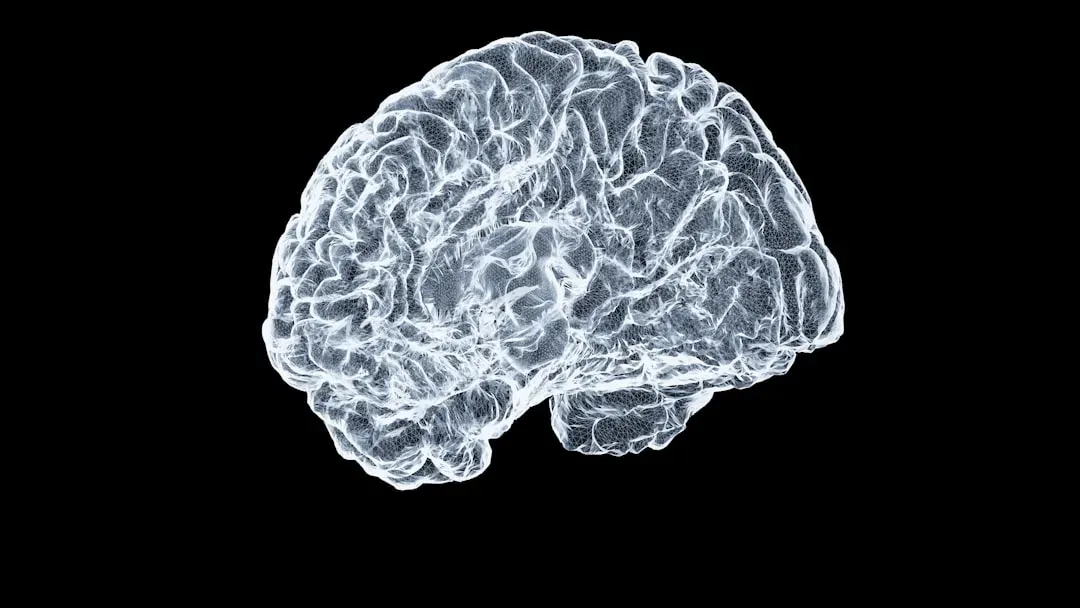
When you step back and look at these nine behaviors together, a pattern emerges: your brain is not a neat, transparent machine you can easily understand. It is a wild mix of survival instincts, social wiring, emotional shortcuts, and unconscious processes that sometimes work beautifully and sometimes produce baffling side effects. Science has made huge progress in describing what happens during déjà vu, blushing, sleepwalking, and the rest, but there are still big gaps between brain scans and lived experience – between what can be measured and what it actually feels like to be you.
If anything, these mysteries are a reminder that you are not supposed to have yourself completely figured out. You can use psychology and neuroscience to navigate your habits, soften your irrational edges, and understand your patterns a bit better, but there will probably always be parts of your mind that remain hazy and hard to map. Maybe that is not a flaw but part of what makes being human so strangely compelling. When you notice your own quirks and glitches next time, will you judge them – or quietly wonder what else your brain is doing that you still do not see?