
Walk through your day and you’ll barely notice it, but invisible energy is doing almost everything for you. It’s carrying your texts across continents, cooking your food from the inside out, holding your body together, and even quietly pushing galaxies apart. We live inside a web of forces and fields that we can’t see, touch, or taste, yet they dictate what’s possible in our lives as surely as gravity keeps our feet on the ground.
Once you start to look for these unseen players, the world begins to feel very different – less like a solid, simple place and more like a dynamic ocean of subtle currents. Some of these forces are so well understood that we use them without thinking; others are still mysterious enough that top scientists argue about what they really are. Let’s walk through the most important ones and see how they quietly shape everything from your morning coffee to the fate of the universe.
The Quiet Pull of Gravity
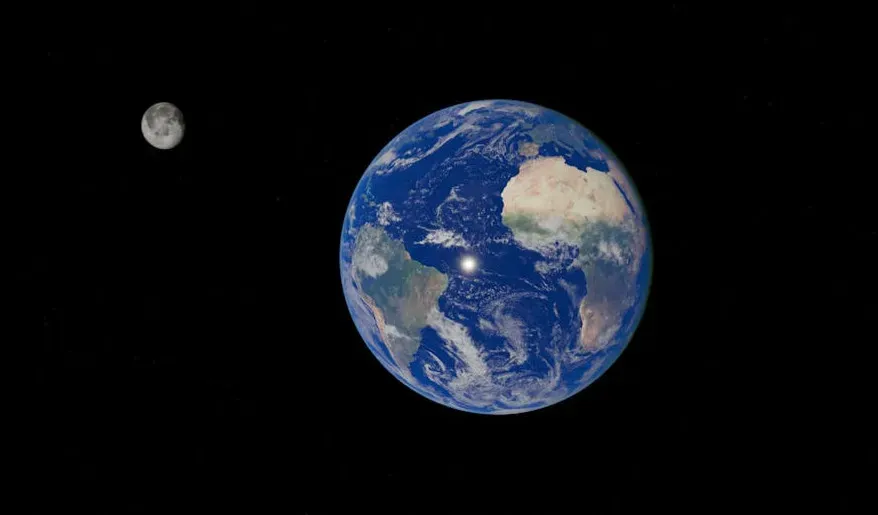
Gravity is the original invisible force, so familiar that most of us stop noticing how strange it actually is. It reaches across space without any visible connection, pulling apples from trees, guiding the Moon around Earth, and steering Earth around the Sun. On a much grander scale, gravity is what pulls clouds of gas together to ignite new stars and sculpt entire galaxies over billions of years.
On the human scale, gravity is both a limitation and a quiet enabler. It keeps your muscles working, your bones strong, and your sense of balance constantly tuned, because your body is always negotiating with this downward pull. Engineers design skyscrapers, bridges, and even smartphone accelerometers around it. The oddest part is that in modern physics, we still don’t have a single fully unified explanation for gravity that plays nicely with quantum mechanics, so the force that feels most obvious to us is, in many ways, still the least understood.
Electromagnetic Fields: The Invisible Web Around You
If gravity is a gentle pull, electromagnetism is the loud, energetic force powering modern life. Every time you flip a light switch, tap your credit card, or open your laptop, you’re relying on electromagnetic fields racing along wires and through the air. Light itself is an electromagnetic wave, just like radio, Wi‑Fi, and X‑rays, all differing only in wavelength and energy.
It’s hard to overstate how entangled we are with this unseen web. The beating of your heart is monitored by its electrical signals, and brain activity is tracked through minuscule electromagnetic fluctuations. MRI scanners map your tissues using strong magnetic fields and radio waves. Even the chemical bonds that hold molecules together are, at a deeper level, electromagnetic interactions between charged particles, so the solidity of your chair and the smoothness of your screen are really just electromagnetism playing out in unimaginably large numbers.
Quantum Fields: The Strange Fabric Beneath Reality
Dive a layer deeper, beyond atoms and particles, and the world starts looking more like a restless sea than a set of billiard balls. In modern physics, what we call “particles” are really excitations in underlying quantum fields that fill all of space. The electron field, the photon field, the quark fields – they’re always there, even in what we casually call “empty” space.
This view sounds abstract, but it has very real consequences. The stability of matter, the behavior of lasers, the way semiconductors work inside your phone – all depend on quantum field effects. Vacuum isn’t truly empty; it’s buzzing with temporary “virtual” particles flickering in and out of existence, influencing how forces act at tiny scales. We can’t sense any of this directly, but precision experiments and technologies like atomic clocks and quantum computers are already taking advantage of these strange, invisible rules that lie beneath everyday reality.
Dark Matter: The Hidden Mass Holding Galaxies Together
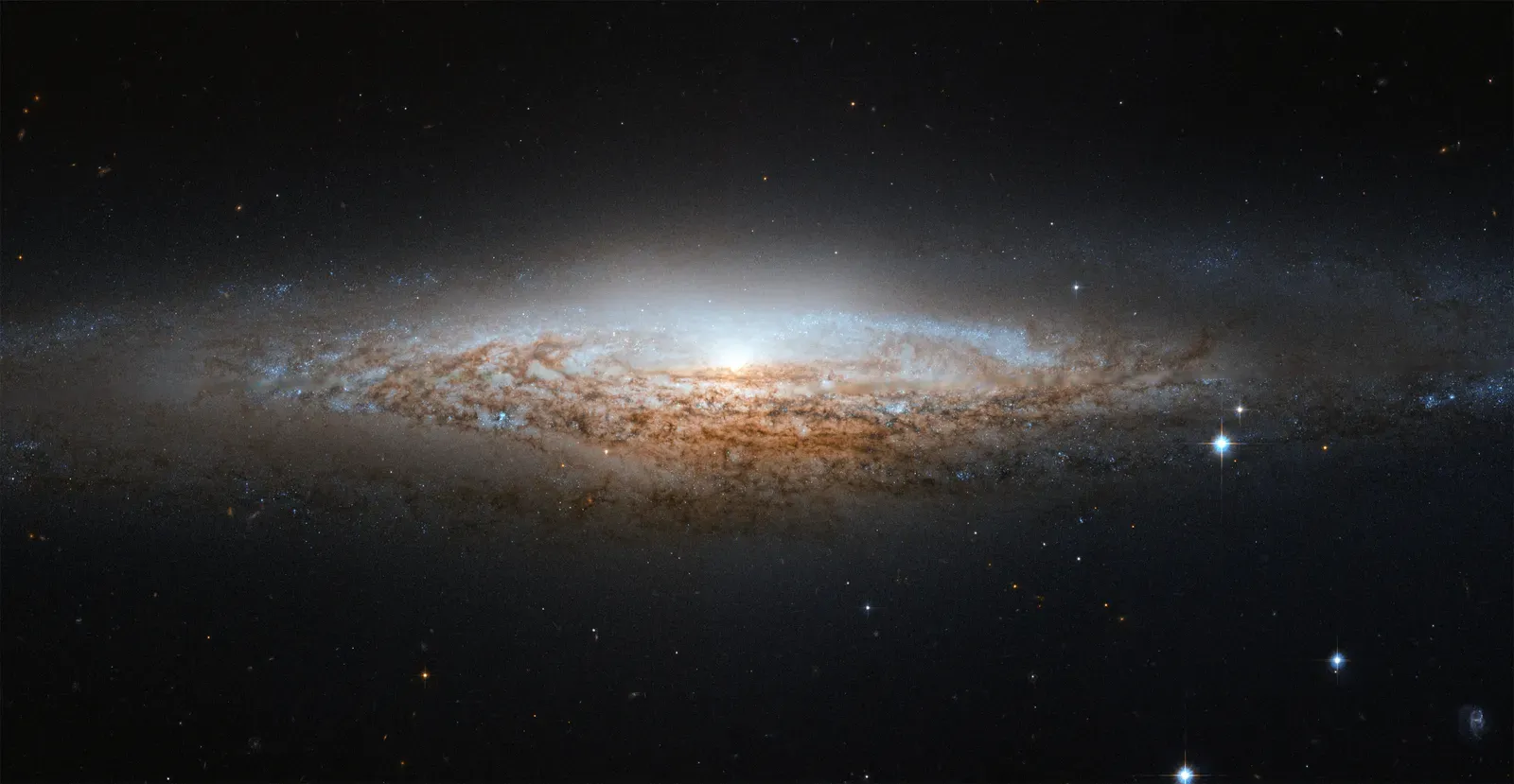
Now we move into the genuinely eerie. When astronomers measured how fast stars orbit within galaxies, they found something unsettling: the stars are moving so quickly that, based on visible matter alone, the galaxies should fly apart. The best explanation so far is that there’s a huge amount of unseen mass – dark matter – whose gravity holds everything together. It doesn’t emit or reflect light, but its gravitational fingerprint shows up everywhere.
By now, observations suggest that most of the matter in the universe is actually this invisible kind, not the stars, planets, and gas we can see. We map it indirectly through gravitational lensing, where light from distant galaxies is bent by dark matter’s gravity like glass warping a view. Strong experiments deep underground and in particle colliders are trying to catch even a single interaction from these elusive particles, but so far, no definitive detection has been made. It’s a humbling reminder that the universe we experience day to day might be only a small fraction of what’s really there.
Dark Energy: The Mysterious Push Accelerating the Cosmos
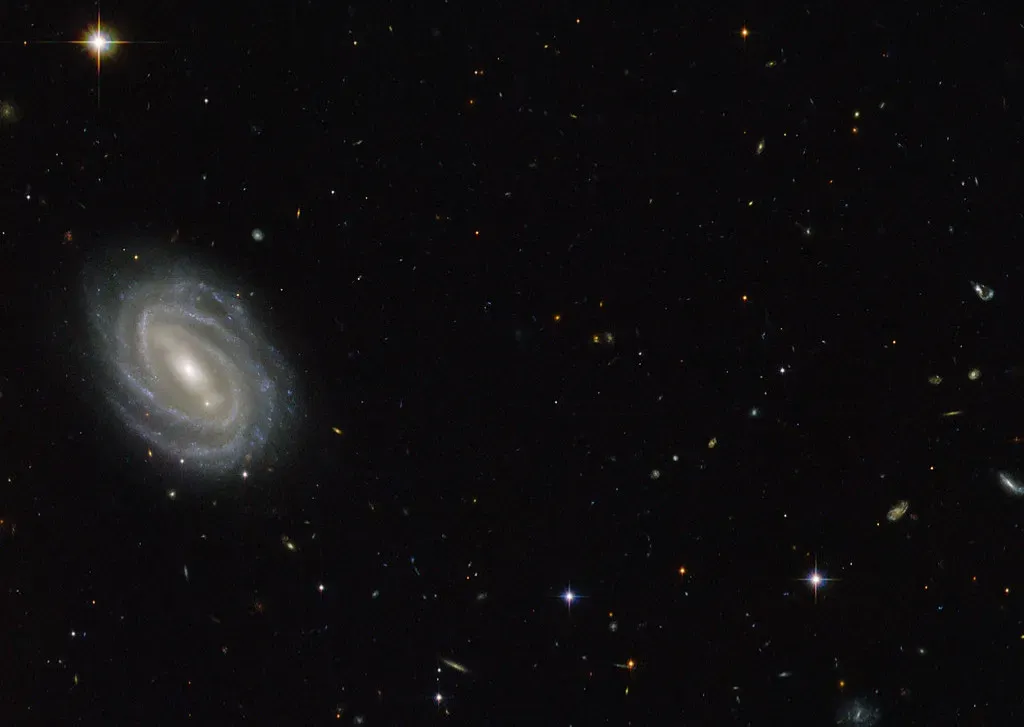
As if dark matter weren’t strange enough, the universe has an even more puzzling invisible player: dark energy. In the late twentieth century, astronomers discovered that the expansion of the universe is not slowing down from gravity, as most expected, but speeding up. The most consistent explanation is that space itself is filled with a kind of energy that exerts a repulsive effect on large scales, driving galaxies apart faster and faster.
Dark energy appears to make up the majority of the total energy content of the universe, yet we have almost no clear idea what it actually is. It could be a property of space itself or some new field we haven’t fully described yet. We infer its presence from how distant supernovae, the cosmic microwave background, and galaxy distributions behave, almost like listening for a hidden drummer by the rhythm in the music. For everyday life, dark energy doesn’t matter much, but in the long term it may decide whether the cosmos thins out into a cold, lonely expanse or evolves into something even stranger.
Earth’s Magnetic Shield and the Dance of Space Weather

This tag does not indicate the copyright status of the attached work. A normal copyright tag is still required. See Commons:Licensing.
العربية ∙ বাংলা ∙
Bahaso Jambi ∙
Deutsch ∙ Deutsch (Sie-Form) ∙ English ∙ español ∙ euskara ∙ فارسی ∙ français ∙ italiano ∙ 日本語 ∙ 한국어 ∙ македонски ∙ മലയാളം ∙ Plattdüütsch ∙ Nederlands ∙ polski ∙ پښتو ∙ português ∙ русский ∙ slovenščina ∙ svenska ∙ Türkçe ∙ українська ∙ 简体中文 ∙ 繁體中文 ∙ +/−
http://www.af.mil/weekinphotos/wipgallery.asp?week=97&idx=9 (Full Image), Public domain)
Far above your head, Earth is wrapped in a protective magnetic field generated by molten metal churning in its outer core. You don’t see this field, but if it vanished, life on the surface would have a much harder time. Charged particles from the Sun – carried by the solar wind – would slam more directly into the atmosphere, stripping it away over long timescales and bombarding the surface with high‑energy radiation.
Right now, that invisible shield funnels much of the solar wind toward the poles, where particles collide with molecules in the upper atmosphere and create shimmering auroras. During strong solar storms, these interactions can disrupt GPS, radio communications, and power grids, even though the particles and fields involved are completely invisible to our senses. Space agencies and observatories constantly monitor the Sun because a single powerful storm can affect satellites, aviation, and infrastructure in ways that most people never realize until systems start glitching.
Biological Electricity: The Hidden Currents Inside You

We often talk about “energy levels” when we feel tired, but there’s a literal kind of energy flowing inside you every moment: electrical signals. Every thought you have, every muscle you move, and every heartbeat you feel depends on ions – charged particles – moving across cell membranes. Neurons communicate through rapid voltage changes, creating complex patterns of activity that make up your perceptions, memories, and decisions.
These internal currents are so delicate that tiny imbalances can cause seizures, arrhythmias, or muscle weakness. Yet they’re also robust enough that we can measure them from outside the body using devices like electrocardiograms and electroencephalograms. When I first saw my own heart rhythm on a monitor, it struck me how mechanical and mystical it felt at the same time: just spikes on a screen, and yet those same spikes are my continued existence. This quiet, invisible electricity is the difference between a living body and a lifeless one.
Wireless Signals: The Hidden Traffic of the Digital Age

Look around your room right now, and imagine every wireless signal made visible. You’d see a storm of overlapping waves: Wi‑Fi from your router, Bluetooth from your headphones, cellular signals from nearby towers, maybe even satellite navigation signals streaming down from orbit. All of that is encoded energy, racing through the air at the speed of light, carrying messages, videos, coordinates, and alerts.
These signals are carefully engineered slices of the electromagnetic spectrum, modulated in ways that allow your devices to separate and decode them without chaos. The power levels used are typically low, far below the energies that can damage tissue, and large reviews of research so far have not established clear evidence of harm from everyday wireless exposures at those levels. Still, there’s an understandable unease about being bathed in invisible signals all the time. It’s a rare mix of wonder and wariness: we rely on this unseen traffic for almost everything, while often feeling instinctively uncomfortable with things we can’t see or easily grasp.
Psychological and Social Energy: The Intangible Forces Between People

Not all “unseen energy” is physical in the strict scientific sense, yet it can still shape the world profoundly. Think about the mood of a room when you walk into a tense meeting or a joyful celebration. You can’t measure it with a voltmeter, but your heart rate, posture, and thoughts adjust almost instantly. Psychologists talk about emotional contagion, the way feelings spread through groups, and social psychologists study how expectations, norms, and shared beliefs subtly direct behavior.
This kind of energy shows up in everything from financial markets to social movements. Confidence, fear, trust, and outrage can surge through a population, shifting elections or crashing stock prices without any obvious physical cause. It’s less magical than it sounds; it’s millions of brains responding to each other’s signals, stories, and cues. Yet it feels very much like an invisible current, one that can lift people to acts of courage or sweep them into destructive spirals, depending on how it’s guided and understood.
The Future of Harnessing Invisible Forces
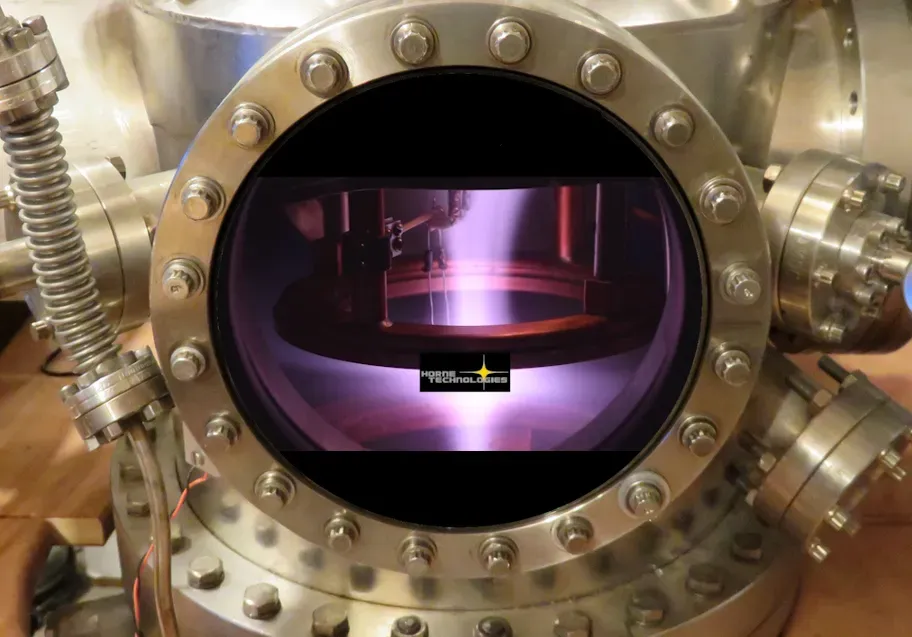
As our understanding of these unseen energies deepens, the line between science fiction and engineering blueprint keeps moving. Quantum technologies aim to exploit delicate quantum states for ultra‑secure communication and powerful new computers. Advances in fusion research are trying to bottle the energy process of stars, offering the hope – still not guaranteed – of abundant, low‑carbon power if the technical challenges can be solved.
We’re also getting better at sensing what used to be completely hidden. Gravitational wave detectors now listen for ripples in spacetime from distant black hole collisions. New telescopes and space missions map dark matter and dark energy more precisely. Even in medicine, increasingly sensitive imaging and brain‑computer interfaces are learning to read and sometimes influence the invisible electrical patterns inside us. The more we see, the more we realize how much is still in the dark, and that tension between knowledge and mystery is probably what will keep propelling science forward.
Conclusion: Living in an Ocean of the Unseen

From the gravity that keeps your coffee in its cup to the dark energy pushing galaxies apart, we are immersed in invisible forces whether we acknowledge them or not. The solid, everyday world turns out to be a kind of surface layer on an ocean of fields, currents, and interactions, many of which we’ve only started to understand in the last few generations. Some, like electromagnetism, we’ve learned to harness so completely that they feel ordinary; others, like dark matter, still lurk mostly as clues and questions.
There’s something strangely comforting in realizing that mystery isn’t the exception but the rule. Our lives are guided and sustained by energies we can’t see, yet we’ve found ways to detect, measure, and even ride them, like surfers learning to catch waves that were always there. Maybe the real shift is not in discovering that invisible forces exist, but in accepting that our view of reality will probably always be partial, evolving, and a bit humbling. When you think about your next ordinary day, how much of it will you see differently, knowing how much of it is powered by what you’ll never directly see?