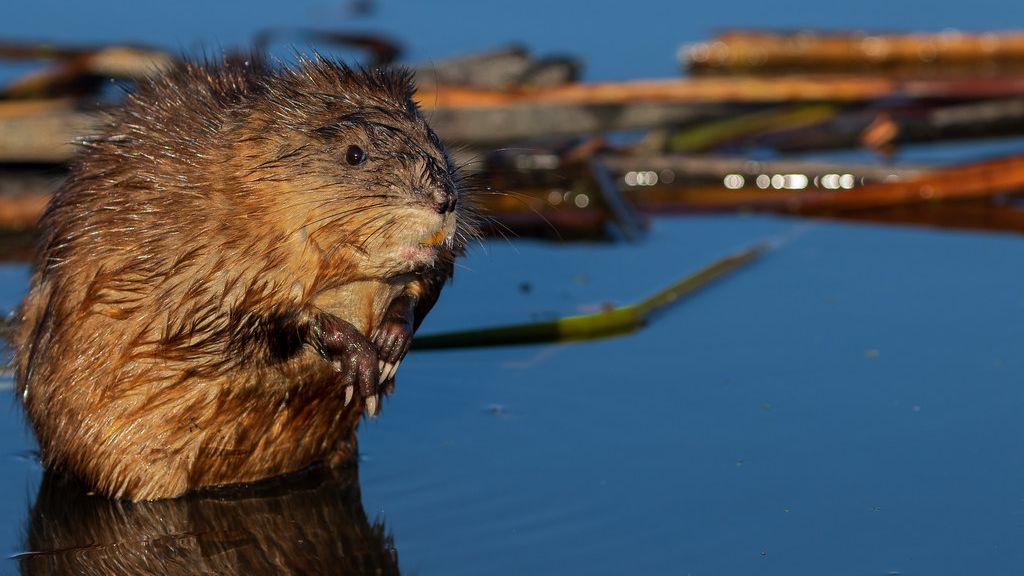

If you have ever walked past a cattail marsh at dusk and heard a splash you could not quite place, there is a good chance a muskrat was behind it. These shy, semi‑aquatic mammals live just out of sight in ditches, ponds, river edges, and sprawling wetlands across much of North America, quietly shaping the watery worlds around them. You might think of them as just “big water rodents,” but once you look closer, they’re far stranger, tougher, and more important than they first appear.
As you explore muskrats a bit more deeply, you start to notice how many secrets are tucked into those muddy banks and reed beds. You learn how they engineer tiny islands, breathe in ways that seem almost impossible, and survive winters that would shut you down in minutes. By the time you reach the end of this, you may never look at a roadside marsh the same way again – and you might even find yourself stopping just to watch the ripples.
1. You’re Sharing Wetlands With a True North American Native
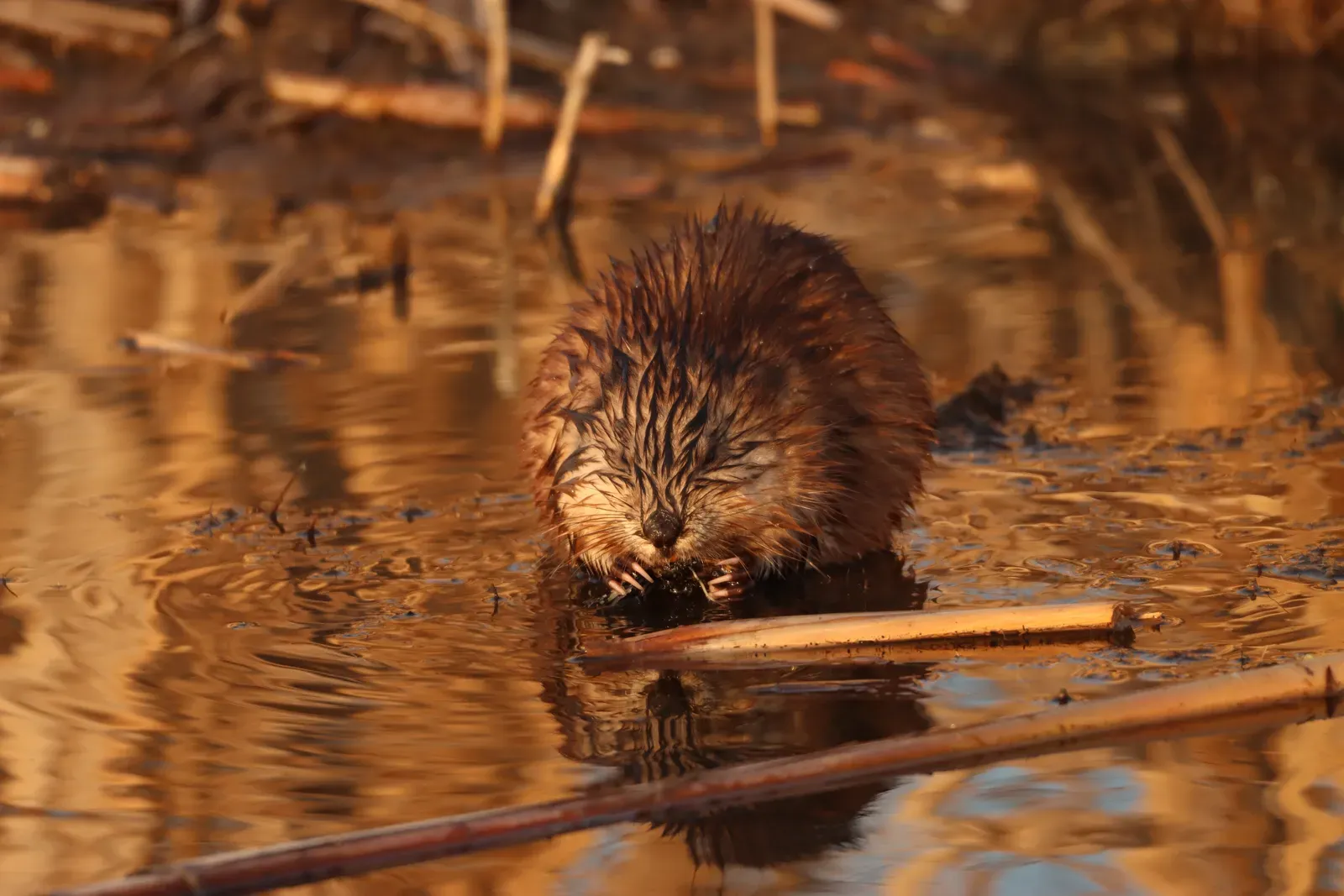
When you stand beside a North American marsh, you’re on the home turf of the muskrat, a species that evolved here and spread across much of the continent on its own. You’ll find muskrats from the Arctic treeline of Canada down through the United States and into parts of northern Mexico, thriving anywhere there’s shallow, slow‑moving water with dense vegetation. If you picture a map covered in ponds, irrigation ditches, beaver ponds, and river backwaters, you’re basically tracing muskrat country.
What makes this so striking is that muskrats are genuinely at home in human‑altered landscapes too. When you drive past drainage ditches along farmland or stormwater ponds in suburbs, you’re often driving past potential muskrat habitat. Instead of disappearing when people arrive, these animals quietly slot themselves into the small neglected corners of the water world that you may barely notice. You’re living in the same neighborhood, whether you know it or not.
2. You’re Looking at a Rodent, Not a Miniature Beaver
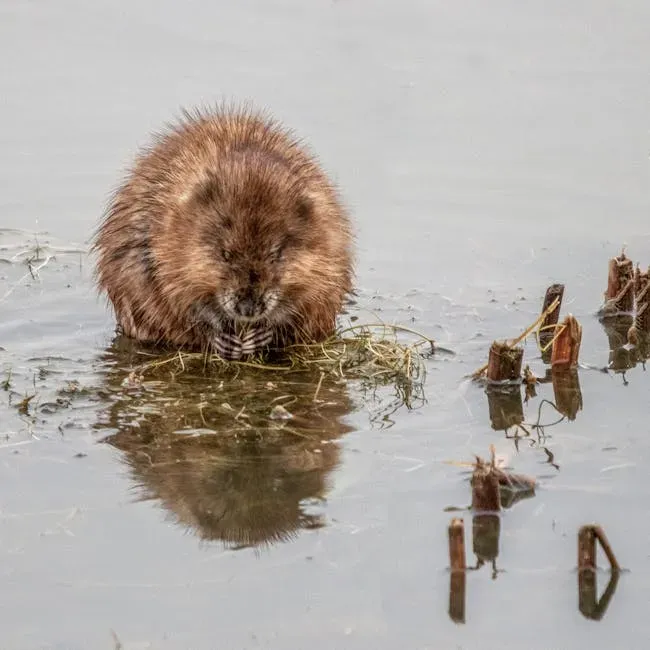
If you see a brown, chunky animal swimming with just its head and part of its back exposed, you might be tempted to call it a baby beaver. In reality, you’re looking at a rodent cousin that belongs to a different branch of the family tree. Muskrats are much smaller than beavers, typically about the size of a large rat or a small rabbit, and their tails tell you the real story: a muskrat’s tail is long, narrow, and vertically flattened, while a beaver’s tail is short, wide, and paddle‑shaped.
Once you know this difference, you suddenly start sorting out the mystery creatures you’ve seen over the years. That animal slipping along the canal at twilight with the skinny tail cutting the water behind it? Muskrat. The one smacking a broad, flat tail loudly on the surface and hauling branches as big as your arm? Beaver. You begin to realize that your mental image of “water animals” has been oversimplified, and you can read the water like a little field guide in motion.
3. You’re Watching a Marsh Engineer at Work
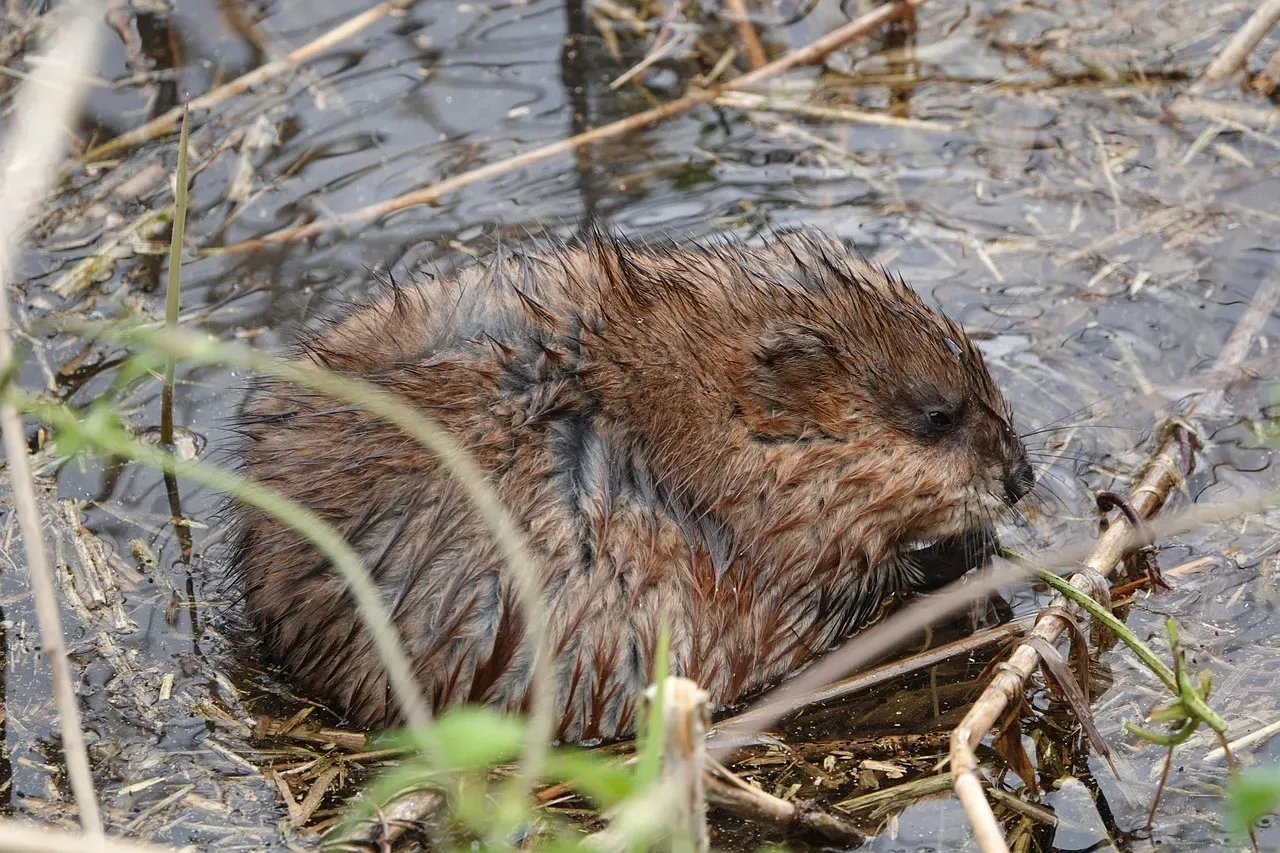
When a muskrat cuts stems of cattails or bulrushes and drags them into piles, you’re watching a small‑scale wetland engineer in action. Instead of just burrowing into banks, muskrats also build mounded lodges of plant material in shallow water, sometimes making clusters of little islands that rise just above the surface. These structures give them safe nesting spots, dry platforms during high water, and protection from many predators that do not like to swim or claw through the jumble of stems.
Those same piles of vegetation become unexpected real estate for other creatures. Birds may perch or nest on top, amphibians and insects use the tangle as shelter, and the underwater parts provide hiding places for fish and invertebrates. You might think of a muskrat lodge as a tiny apartment complex in the marsh, built by one species but quietly sublet by many others. When you see random hummocks sticking up in a marshy lake, it’s worth wondering whether a muskrat started the whole thing.
4. You’re Dealing With a Surprisingly Tough Winter Survivor
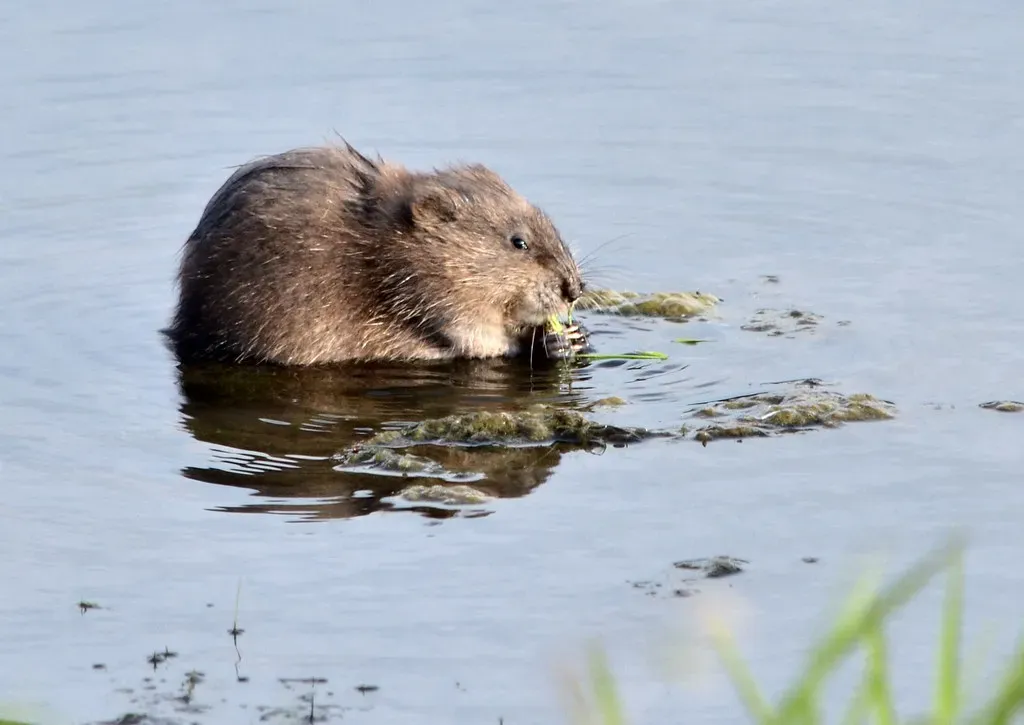
If you have ever stepped outside on a sub‑zero morning and rushed back indoors, you can imagine how hard freezing conditions hit a small mammal. Yet muskrats manage to stay active under ice‑covered ponds and rivers, even when you would assume everything is locked down for the season. They keep using their underwater tunnels and lodges, insulated by layers of vegetation, mud, and snow that hold in precious warmth. While you wrap yourself in coats and blankets, they rely on fur, fat, and clever engineering.
What really helps them is their ability to access food without exposing themselves too often to deadly cold. Muskrats cache plant material near their lodges or burrow entrances, creating underwater “pantries” they can visit by swimming under the ice. In some places you can see little breathing holes or slightly melted spots where a muskrat has been passing regularly. When you picture that hidden world beneath winter ice, with narrow tunnels, stored food piles, and quiet movement, you start to appreciate how adapted these animals are to climates that would crush less prepared species.
5. You’re Looking at a Specialist in Breathing Underwater (Almost)
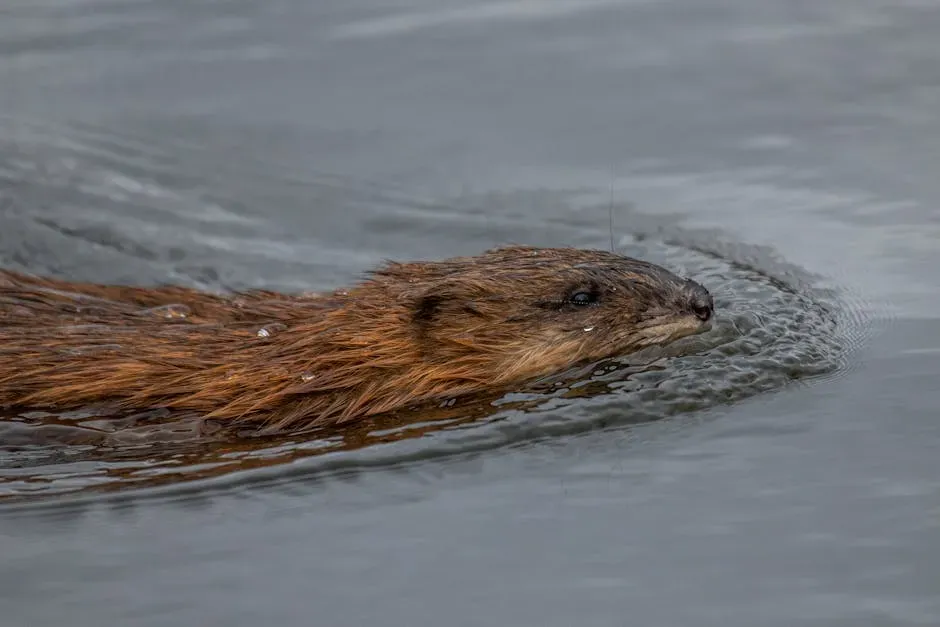
If you’ve ever tried to hold your breath and swim the length of a pool, you know how fast your lungs start screaming. Muskrats flip that experience on its head by staying underwater for far longer than you’d expect from such a small creature. Thanks to their physiology, they can hold their breath for many minutes at a time, allowing them to travel long distances underwater between feeding spots, burrows, and lodges without surfacing where predators might be waiting.
Part of what lets them pull this off is the way their bodies store and use oxygen. They have relatively large lungs for their size and can carry more oxygen in their blood and muscles, which lets them stretch each dive further. For you, that means when you see a muskrat vanish below the surface near one bank and then see ripples appear far away a short while later, you’re watching a master of underwater stealth. It’s almost like the marsh itself opens and closes around them while you stand there waiting for a head that never pops up where you expect.
6. You’re Seeing a Creature That Can Reshape Plant Communities
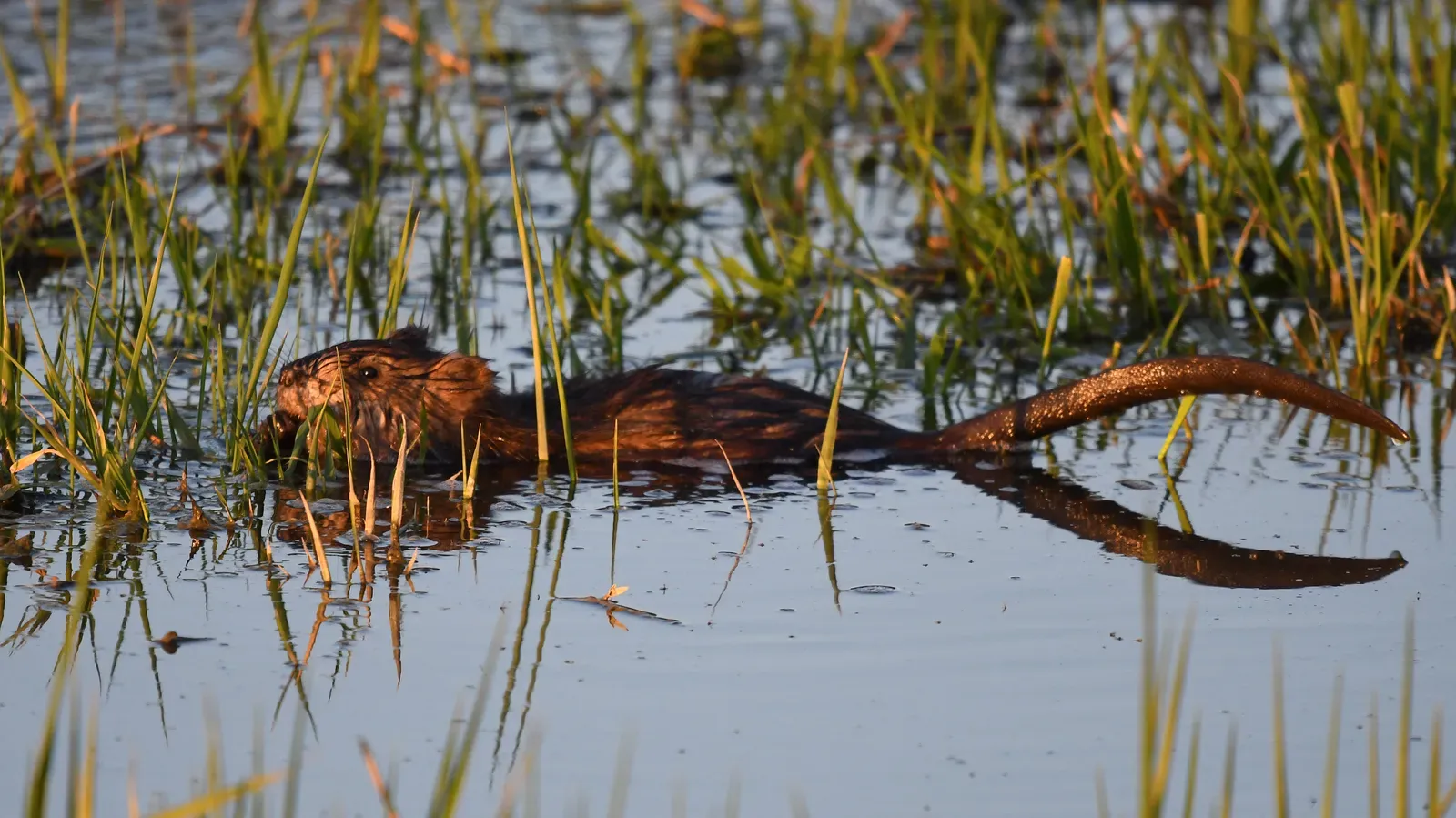
When a muskrat moves into a wetland, it does not just nibble a few leaves and quietly blend in. It’s a heavy browser on aquatic plants, especially stems and roots of cattails, rushes, and water lilies. Over time, a group of muskrats can thin out dense patches of vegetation, carving open pools of open water in places that once looked like an unbroken green carpet. If you return to the same marsh year after year, you may see areas shift from thick plant stands to more open channels, with muskrats playing a major role.
This feeding pressure can have mixed effects, and that’s where you, as an observer, get to think like an ecologist. In some areas, muskrats help prevent a single plant species from taking over, making room for more diversity and more kinds of birds, insects, and fish. In other places, high muskrat numbers can strip vegetation so severely that shorelines erode or nesting cover disappears. When you notice big swings in plant cover in a marsh, muskrats are one of the silent forces you should keep in mind.
7. You’re Sharing Space With a Key Link in the Food Chain
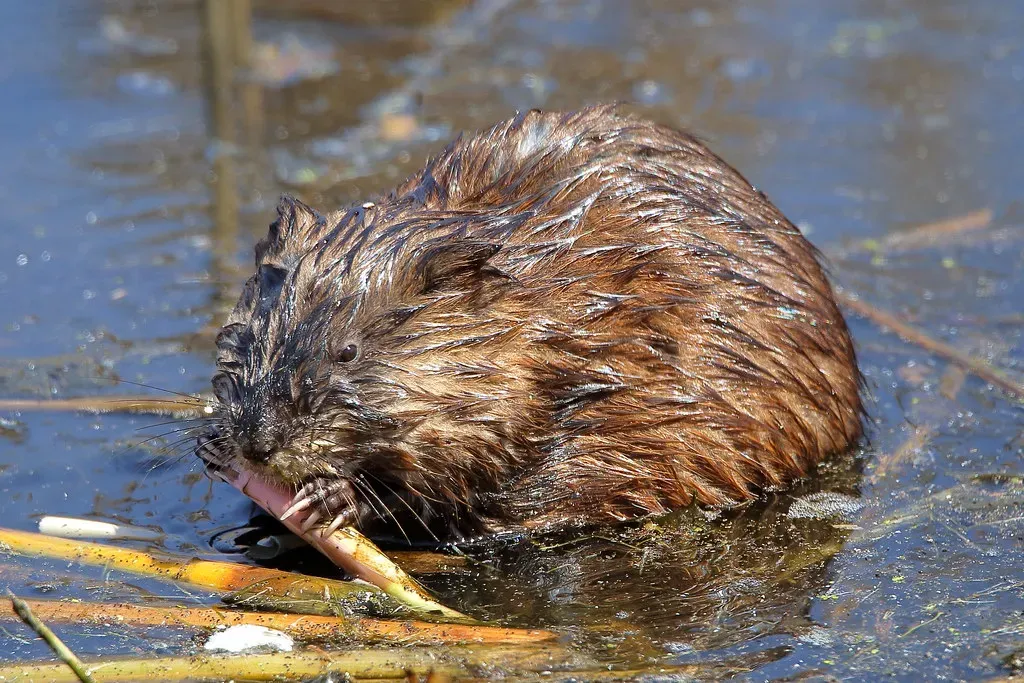
Every time a muskrat paddles across open water, it is taking a gamble, because a long list of predators is watching for exactly that moment. Foxes, coyotes, mink, otters, large raptors, and even snapping turtles see muskrats as a solid meal. That means muskrats are not just plant eaters; they’re also a reliable energy source handed upward through the food web. If you think of wetlands as giant energy‑exchange systems, muskrats sit right in the middle, turning tough plant matter into something predators can use.
For you, this helps explain why areas with healthy muskrat populations often support richer communities of carnivores. When prey is abundant, predators can raise young more successfully and maintain territories, which in turn influences everything from rodent numbers to bird nesting success. The next time you see a hawk patrolling over a marsh or spot fresh tracks of a mink along a muddy shore, you can guess that muskrats are helping fuel that presence. Even when you do not see the muskrat itself, you’re seeing its ecological shadow.
8. You’re Witnessing a Species That Thrives Near People – With Trade‑Offs
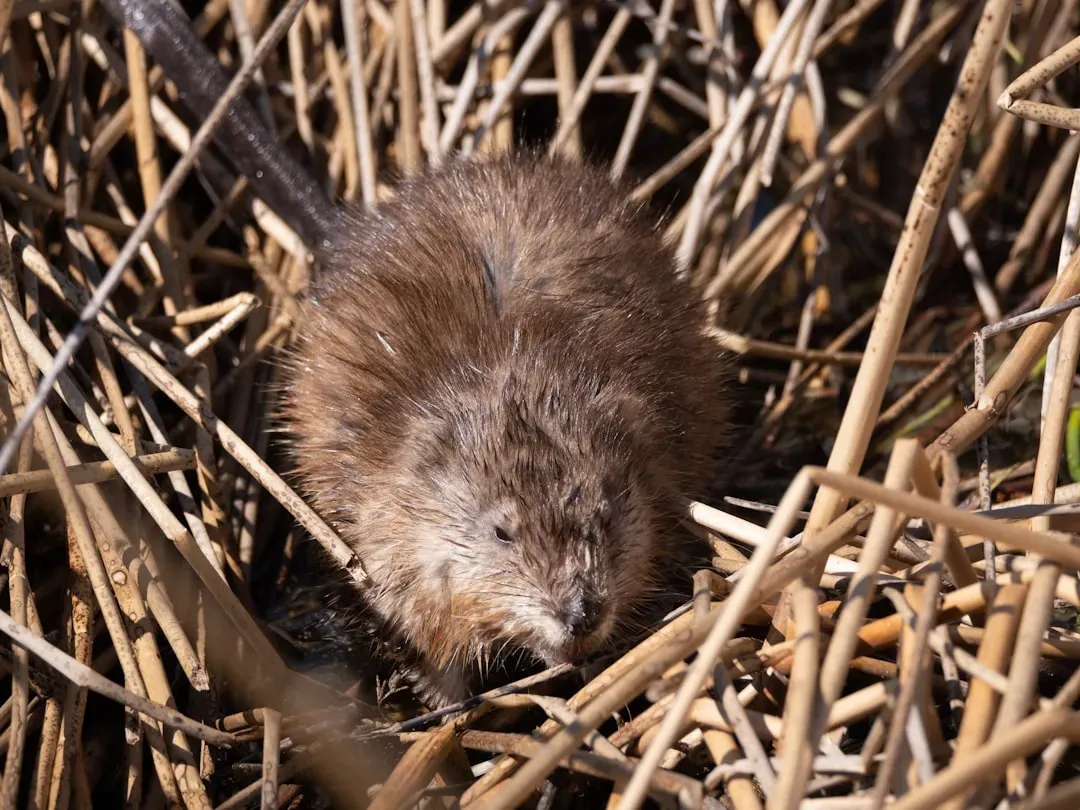
Unlike many sensitive wetland species, muskrats often tolerate or even benefit from certain kinds of human activity. Agricultural drainage ditches, irrigation canals, and suburban stormwater ponds all provide them with banks to burrow into and vegetation to eat. If you live near any kind of managed waterway, there is a real chance that muskrats are already there, slipping between culverts, bank edges, and clumps of reeds when you are not looking. They are opportunists, turning your infrastructure into habitat.
But from your perspective as a landowner, farmer, or manager, this can create real friction. Muskrat burrows can weaken levees, pond dams, and canal banks, sometimes contributing to leaks or collapses that cost money and time to repair. You may find yourself in the familiar tension of admiring a wild animal’s adaptability while also worrying about damage to your property. Recognizing muskrats early, watching where they tunnel, and working with local wildlife agencies can help you balance appreciation with practical protection.
9. You’re Looking at Fur That Shaped Parts of North American History
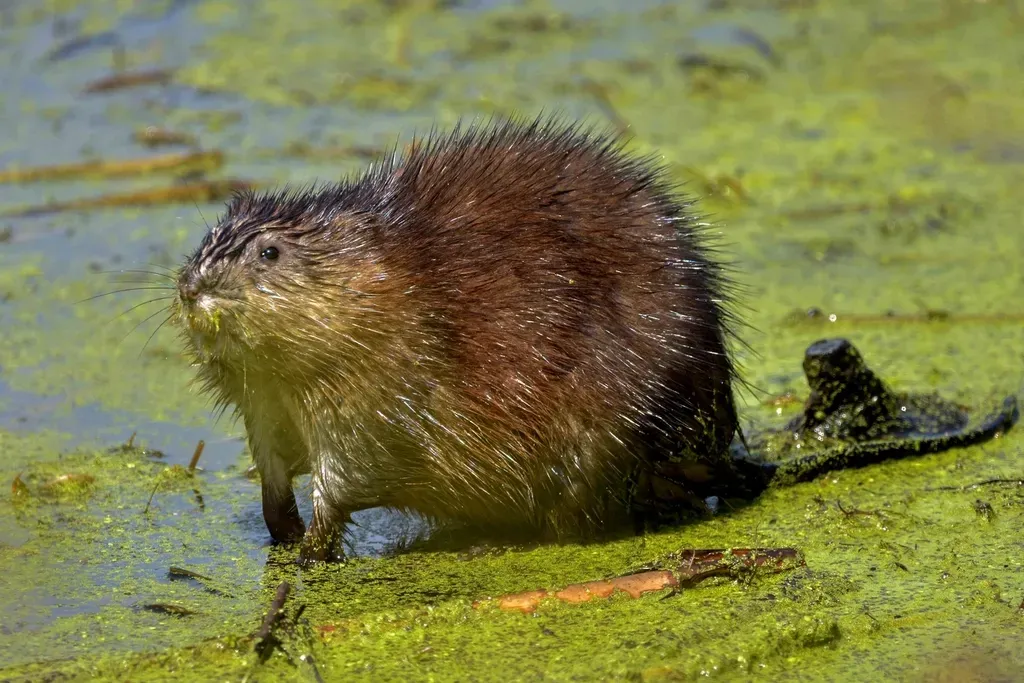
When you see a muskrat’s dense, waterproof coat glistening as it climbs onto a log, you’re looking at a resource that humans have valued for generations. Muskrat fur is thick, soft, and well suited for cold climates, which made it a significant part of the North American fur trade. Trappers and traders moved through wetlands across the continent in part because of animals like muskrats, whose pelts could be sold into larger markets. In some regions, muskrats still hold cultural and economic importance for local and Indigenous communities.
Today, fur demand has shifted, and many people see muskrats more as wild neighbors than as commodities. Still, the historical role of muskrat trapping lingers in place names, old trap lines, and traditions passed down through families who worked the marshes. When you stand beside a quiet pond and see a muskrat surface, you are brushing up against a thread of history that runs through trade routes, winter camps, and the early economies of many rural areas. Your modern moment with that small swimmer carries far more human story than you might guess at first glance.
10. You’re Encountering a Species That Warns You About Wetland Health
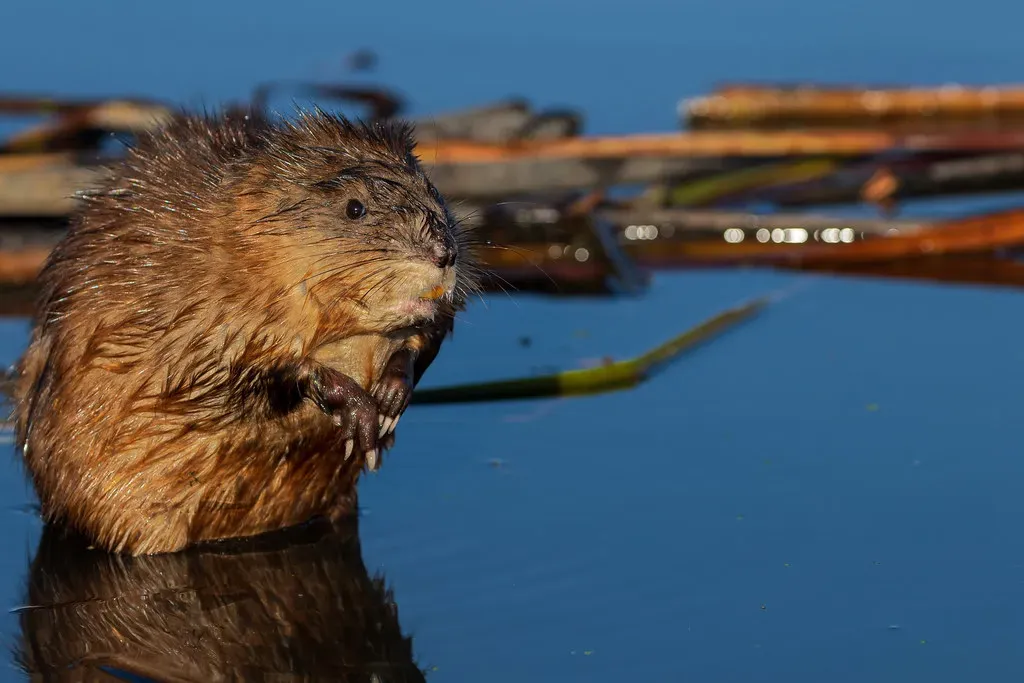
Because muskrats rely so heavily on shallow water and dense aquatic vegetation, their presence – or sudden absence – can give you clues about the health of a wetland. If a marsh that once held plenty of muskrat lodges suddenly falls silent, it may signal problems like water pollution, sudden water‑level changes, or loss of plant cover. On the flip side, when you notice fresh feeding platforms, new lodges, and regular tracks and droppings, you’re probably looking at a system still capable of supporting a complex web of life.
For you as a casual observer, this means you can treat muskrats as one of several “living indicators” when you get to know a local wetland. Combine what you see of them with your impressions of bird diversity, frog calls, and plant variety, and you start to build an informal picture of ecosystem health. You do not need fancy instruments to notice when regular muskrat sightings drop off or when lodges vanish after a shoreline gets heavily altered. Your own attention becomes part of the monitoring process, linking your curiosity to the fate of the marsh.
Spending time with muskrats, even just as a patient watcher on the bank, changes the way you read water, plants, and the quiet movements that stitch a wetland together. You start to see not just a brown animal slipping through the reeds, but a native rodent, ecosystem engineer, winter survivor, underwater specialist, food‑web linchpin, and historical player all rolled into one unassuming shape. The next time you pass a ditch or pond and spot a V‑shaped wake cutting the surface, you can ask yourself: how many of these hidden stories are rippling just below the waterline right in front of you?