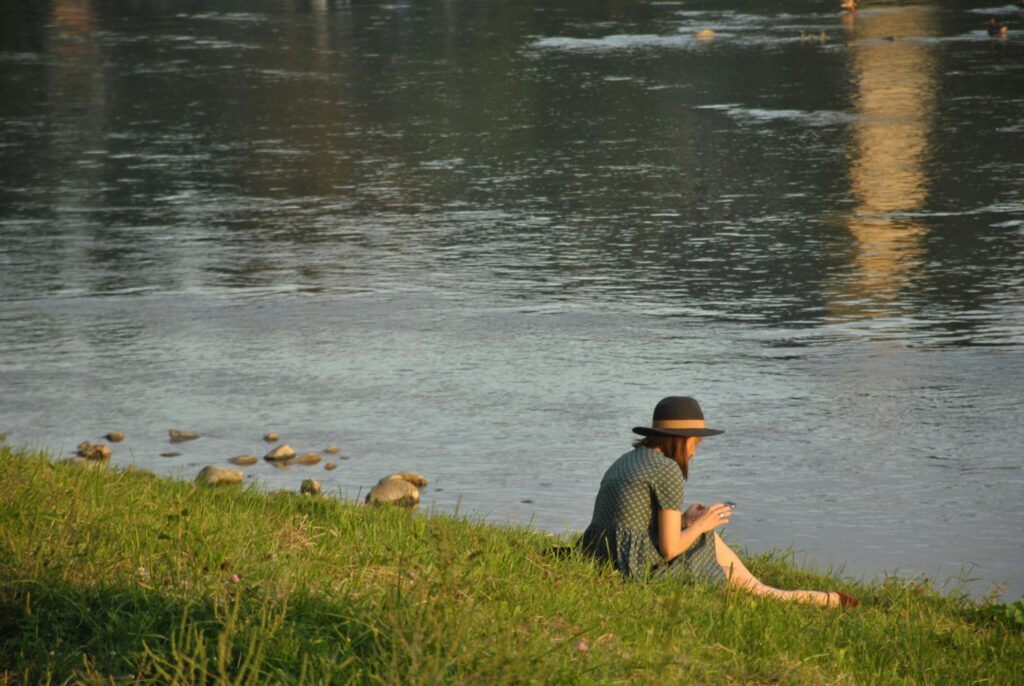

Have you ever noticed how a stubborn problem suddenly feels solvable the moment you sit by a river, walk along a shoreline, or listen to rain hitting the pavement? It feels almost suspicious, like nature is cheating for you. For a long time, people treated this as poetic metaphor: water as cleansing, flowing, purifying. But modern neuroscience has been quietly saying something much bolder: your brain actually shifts into a measurably different state around natural water, and that state has characteristics we simply do not reproduce with concrete, glass, and LED lights.
I still remember rewriting an entire life decision on the edge of a lake after weeks of mental gridlock at my desk. At the time, I blamed coffee and coincidence. Years later, reading the neuroscience and environmental psychology research, it felt eerie how closely the data matched what that moment felt like from the inside: calmer yet sharper, less noisy yet somehow more creative. This article unpacks what is known, what is still speculative, and why the built environment keeps failing to copy what a simple stream can do to your thinking.
The Brain-on-Water State: Why Neuroscientists Treat It as Its Own Thing
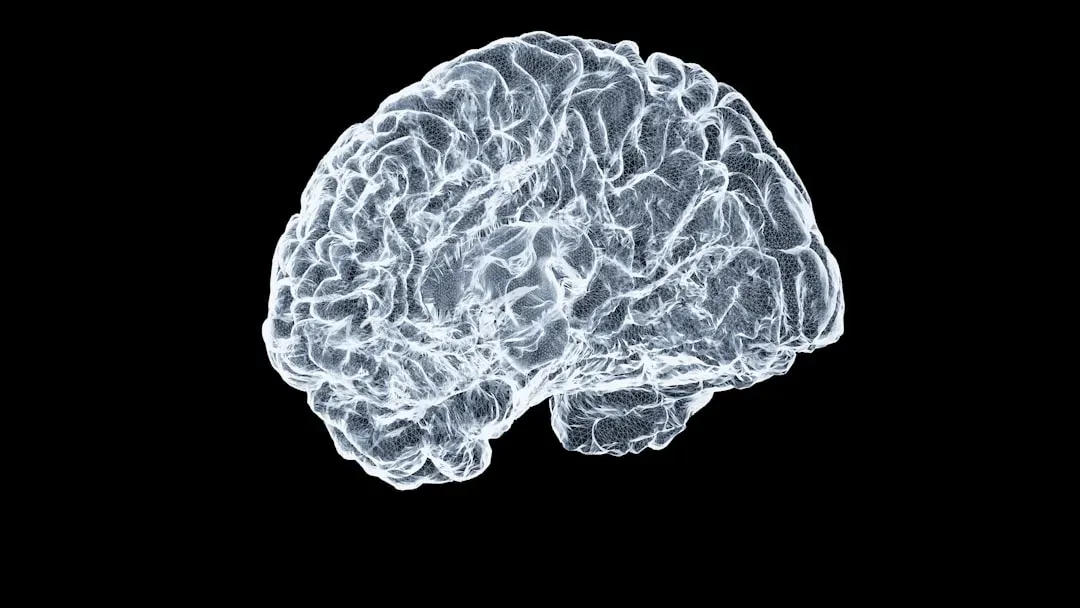
When scientists look at brain activity in natural environments, they don’t just see “relaxed” or “stressed”; they see distinct patterns of activation and synchronization that behave like particular modes or states. Around natural water, especially moving water, people often show a paradoxical combination: reduced mental fatigue, lower signs of stress, and simultaneously better performance on tasks that demand working memory, attention, or flexible problem solving. That cocktail is unusual enough that researchers increasingly talk about it as a characteristic cognitive state instead of a vague mood.
In brain imaging and EEG studies, exposure to natural scenes with water tends to increase patterns associated with restful alertness and open, diffuse attention, rather than the clenched, hyper-focused state you get when you’re doom-scrolling or grinding through email. It’s a bit like the difference between the mental state of staring at a blank wall versus looking out over the ocean at dusk: both are low-effort, but only one seems to invite ideas in instead of squeezing them out. Neuroscience does not claim some magical “water-only” circuit, but the signature mix of calm physiology with sharpened cognition shows up reliably enough that it deserves its own label rather than being lumped into generic relaxation.
Soft Fascination: How Water Frees Up Your High-Level Thinking
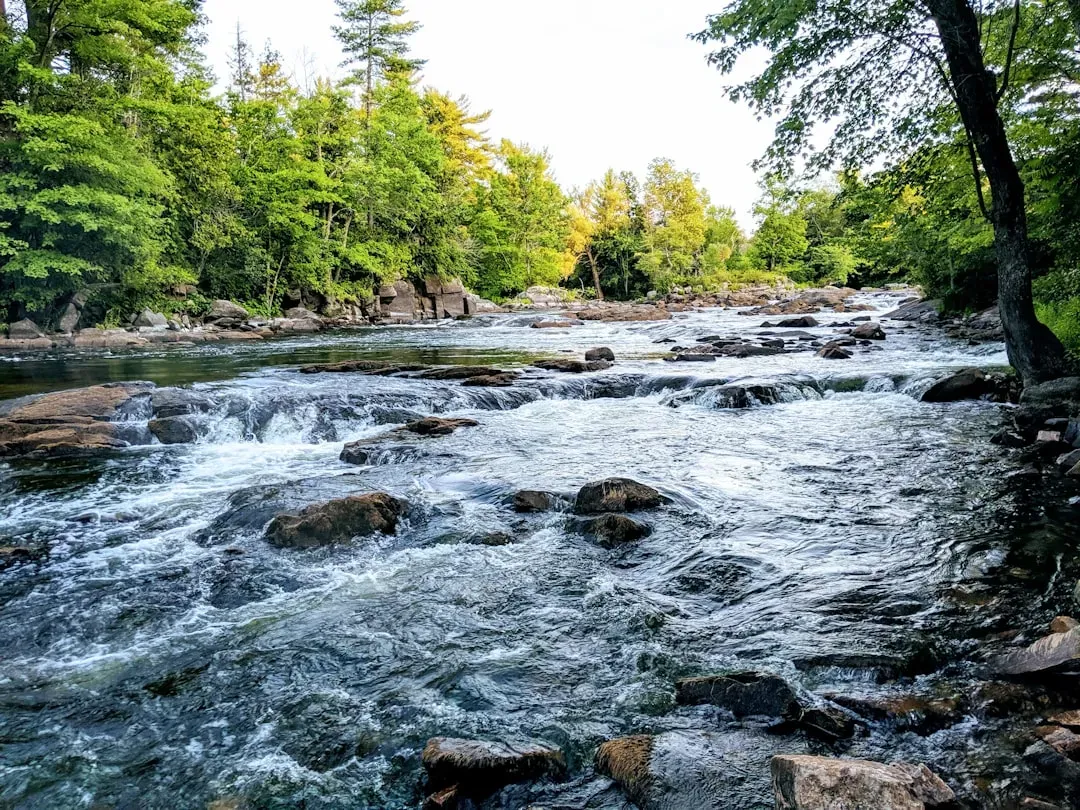
One of the most important ideas here is something psychologists call soft fascination. Unlike billboards, push notifications, or car horns, which grab your attention rudely and demand immediate processing, gently moving water holds your attention without hijacking it. The ripples, reflections, and shifting patterns are interesting enough to keep your sensory systems engaged, but they do not require planning, reacting, or making micro-decisions every second.
This matters because your brain’s executive networks – the systems you use for planning, self-control, and creative problem solving – operate like limited, easily drained batteries. When your surroundings constantly poke those systems, they burn out quickly. Around moving water, soft fascination essentially babysits your lower-level perception while your higher-level networks finally get breathing room. It is during that quiet, lightly engaged state that insights bubble up, connections form, and problems untangle, not by force but almost by accident.
The Sound of Flow: Why Water’s Noise Is Neurologically Special
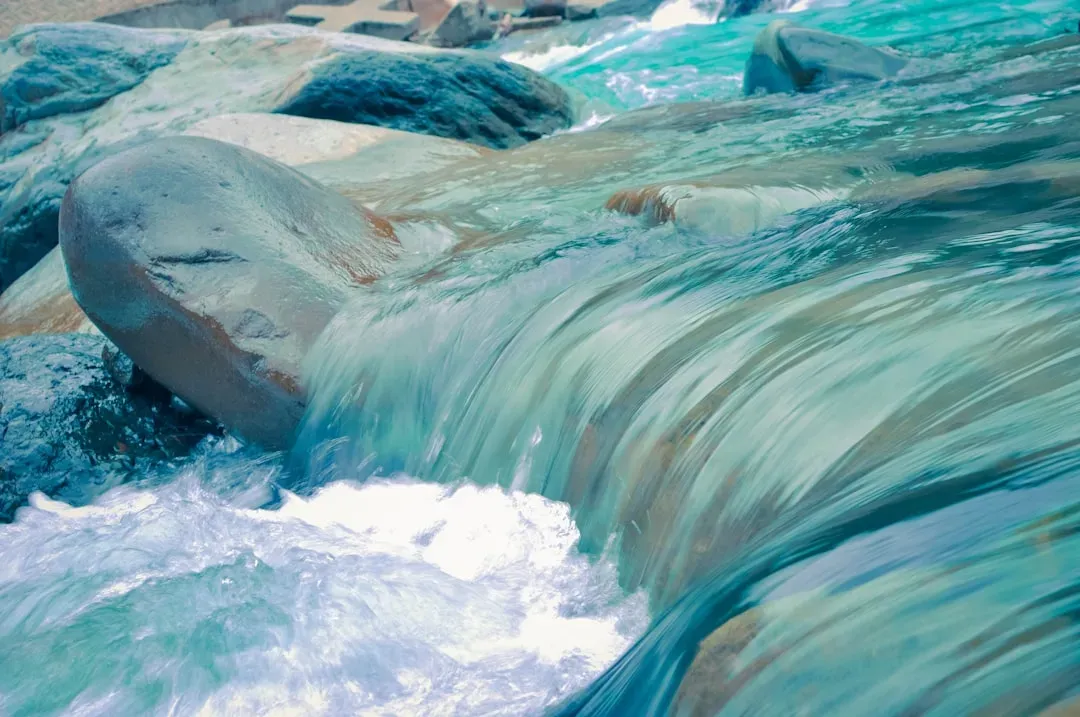
The sound of moving water is not just a pleasant soundtrack; acoustically, it behaves in a way that shapes your brain’s internal noise. Natural water sounds are a mix of many frequencies layered together in a constantly changing but statistically predictable pattern – somewhere between pure randomness and rigid repetition. This kind of sound, often falling into what researchers informally group as broadly “colored” noise, can mask sudden jarring sounds while still feeling alive rather than mechanical.
For your brain, that means fewer startling micro-interruptions and less need to scan for threats in the auditory background. The result is a more stable attentional field: you can focus on a thought without your nervous system flinching every few seconds. Studies have found that certain broadband natural sounds, especially water, are linked with lowered physiological arousal and improved performance on tasks that require sustained attention. Put simply, the sound of a stream is not just calming; it’s actively smoothing the internal chatter so your thoughts can line up instead of tripping over each other.
Visual Rhythms: Why Watching Waves Is Not the Same as Staring at a Screen

Visually, moving water offers something your office wall, phone, or even a screen saver cannot quite mimic. The surface of a river or the pattern of waves on a shoreline is complex, fractal-like, and constantly shifting, yet still constrained and rhythmic. It presents your visual system with endless micro-novelties – tiny changes in highlights, edges, and motion – but within an overall pattern that feels predictable and safe. This is a sweet spot for your brain: engaged but not on guard.
By contrast, artificial visuals in built environments often swing between two extremes: sterile monotony (blank walls, straight lines, static objects) or aggressive stimulation (fast cuts, bright ads, flashing notifications). Both are mentally tiring in their own ways. Monotony leads to boredom and mind-wandering without direction, while hyper-stimulation forces constant filtering and inhibition. Natural water visuals sidestep that tension. They give your brain an endlessly interesting puzzle whose pieces never feel threatening, and that supports the kind of clear, wandering-but-coherent thinking that people often mislabel as “just daydreaming.”
Biophilia and Blue Spaces: Why Water Hits Deeper Than “Nice View”

There is a growing body of evidence that humans are not neutral toward nature; we are biased in its favor, especially toward certain kinds of environments often called blue spaces – places where water is a prominent feature. From an evolutionary perspective, this is not surprising. For most of human history, proximity to fresh water meant survival: drinking, food, transportation, and cooling. Your nervous system did not forget that in a couple of centuries of high-rises and air conditioning.
Psychological and public health research repeatedly finds that people living near natural water, or spending more time in blue spaces, report better well-being, lower stress, and sometimes even show reduced risk of certain mental health difficulties. While correlation is not destiny, the consistency across cultures and age groups is hard to ignore. The key point is this: water is not just aesthetically pleasing; it plugs into very old wiring that tells your body and mind, at a deep level, that you are in a context where resources are available and immediate threats are manageable. That underlying sense of safety is a powerful foundation for clearer, braver thinking.
Why the Built Environment Keeps Failing to Copy What Water Does
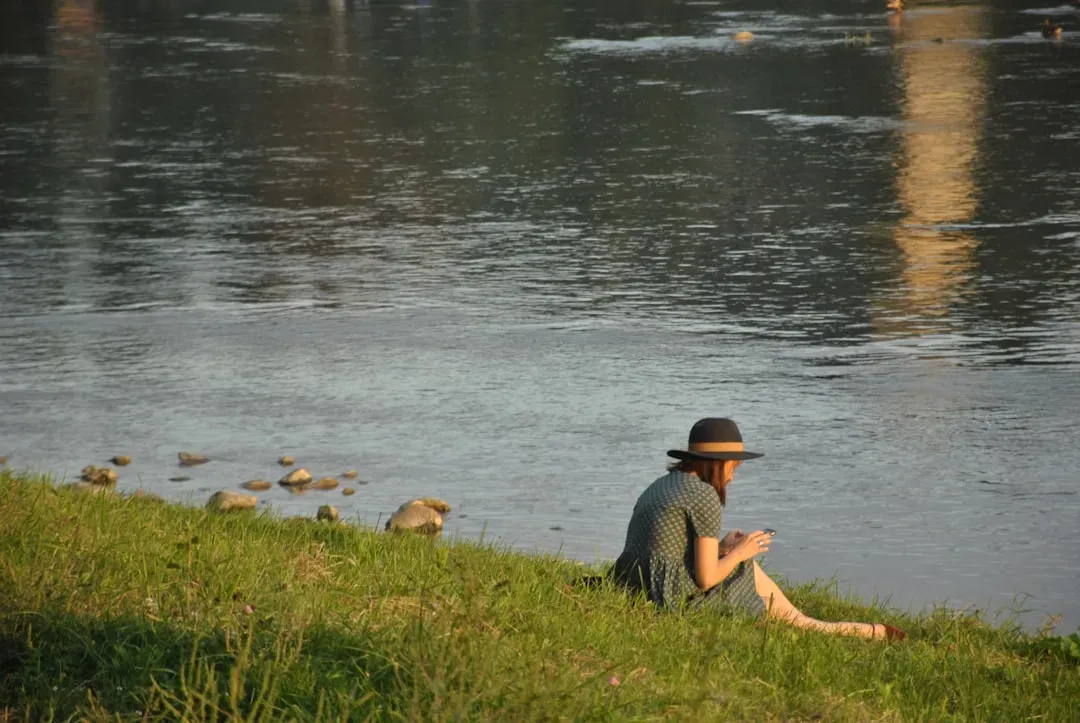
Cities and buildings have tried to fake this for decades: decorative fountains in malls, digital waterfalls on LED walls, nature videos on loop in waiting rooms. Some of this helps a bit, but the data are pretty blunt: the cognitive and emotional benefits of real natural settings, especially with water, are consistently stronger than their artificial imitations. You can mimic the look and the sound, but it seems you only capture pieces of the state, not the full shift in how the brain operates.
Part of the problem is that built environments are layered with competing signals your nervous system cannot ignore: traffic noises, social surveillance, signage, sharp lighting, and the knowledge that you are in a place built around productivity, consumption, or performance. Even a beautiful indoor fountain in a lobby lives alongside clocks, screens, elevators, deadlines, and subtle social tension. The result is like trying to meditate in the middle of a crowded open-plan office with a nature soundtrack playing overhead: better than silence, maybe, but still miles away from sitting alone by an actual river.
From Stress Brain to Insight Brain: How Water Shifts Your Mode of Thought
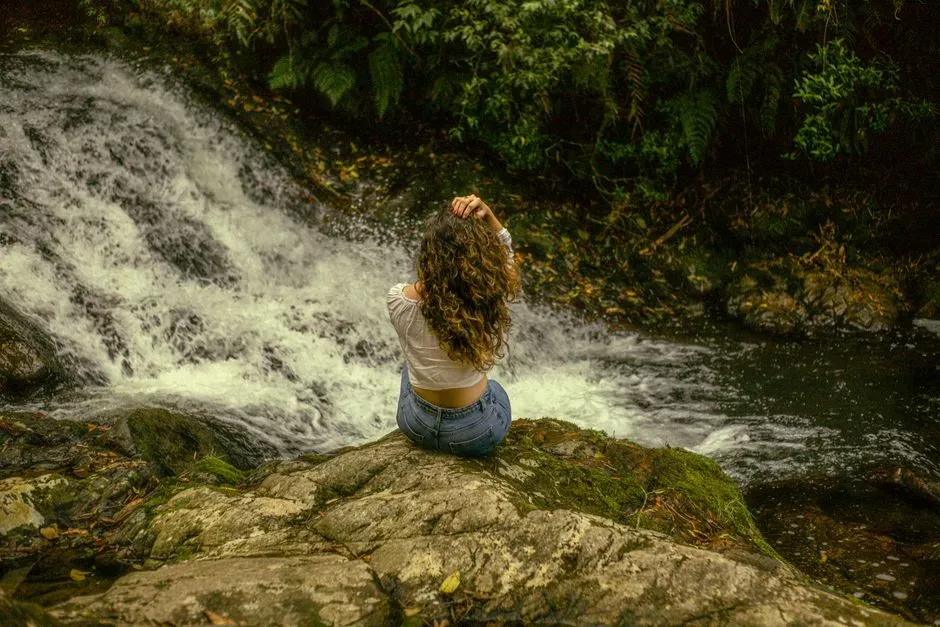
When you are jammed in a city or locked at your desk, your brain tends to default to what you might call stress brain: narrow focus, risk scanning, and short-term problem solving. This mode is great for dodging bikes, answering emails, or reacting quickly, but it is a terrible space for big-picture thinking, emotional processing, or creative insight. Around moving water, multiple systems push you away from that mode: lower physiological arousal, softer sensory input, and a backdrop that quietly signals safety and abundance rather than scarcity and urgency.
As those signals add up, your brain leans into a more expansive mode, sometimes described in research as associated with mind-wandering, default network activity, or internally directed attention. That sounds abstract, but you know the feeling: instead of hammering at a problem, your thoughts hover around it, reframing it, connecting it to old memories, pulling in half-forgotten ideas. This is often when you realize that the thing you thought was the problem is not the real one, or that the obvious answer was sitting in plain sight. Water does not solve your issues; it just turns down the noise and shifts the operating system so you can finally see what was there all along.
How to Actually Use Water to Think Better (Without Romanticizing It)
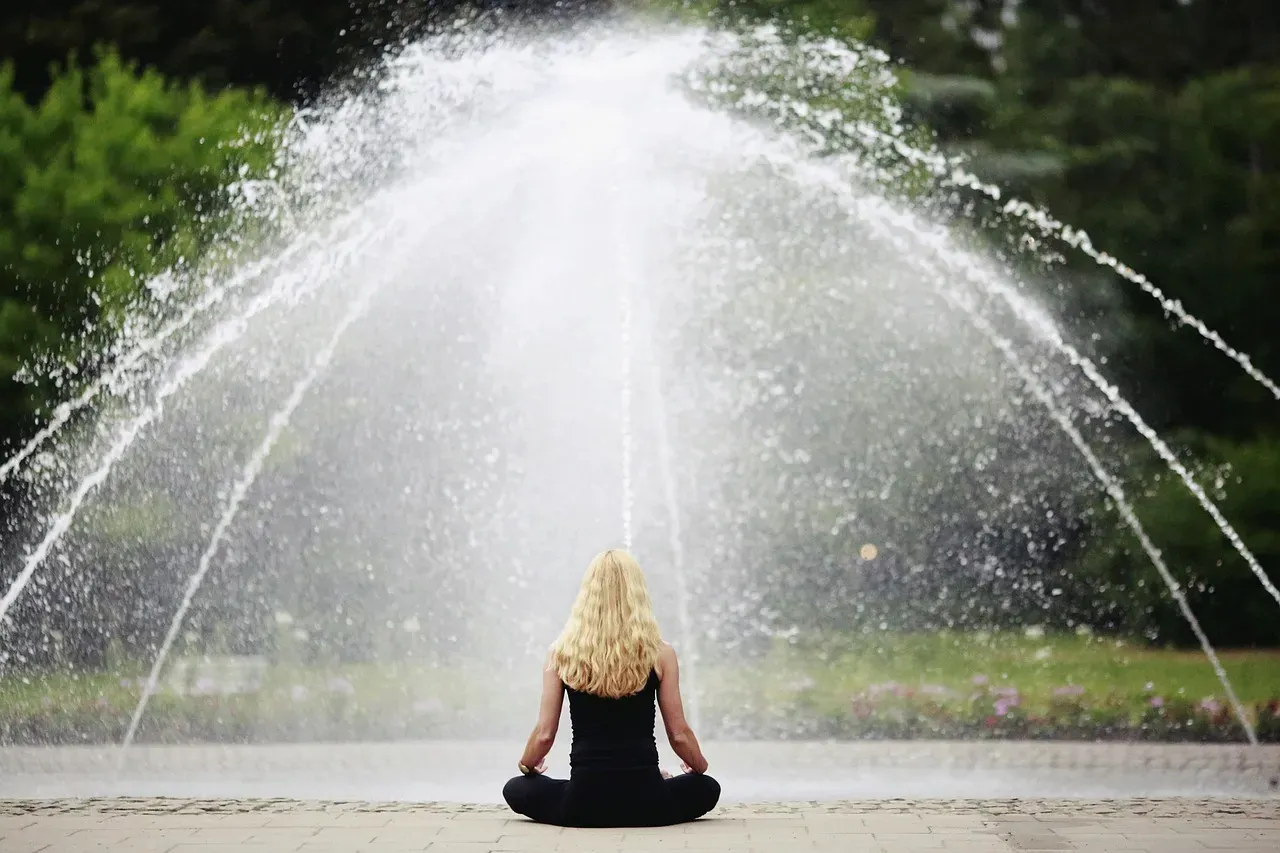
None of this means you have to move to a beach town or become the person who posts sunrise lake photos every morning. It does mean you can treat water as a serious tool in your mental health and thinking toolkit rather than a poetic backdrop. If you have access to a river path, lake, or coastline, try deliberately pairing your hardest thinking with short walks there: bring a small notebook or a voice recorder, not your inbox. Notice how your ideas change after ten or twenty minutes compared to staring at your screen in the same time window.
If you live far from natural water, you are not doomed, but you should be honest about the limits of substitutes. High-quality recordings of natural water sounds, videos of streams or oceans, and indoor water features can nudge your brain in the right direction, especially if you also reduce competing stress signals like notifications and harsh lighting. The key is to create as much of that soft fascination state as you can: gentle motion, layered but non-jarring sound, and an environment that feels safe enough for your guard to drop. It will not perfectly reproduce a wild river, but it can still move you away from constant stress brain into something more spacious.
Conclusion: The City Is Lying; Your Brain Belongs by the Water More Than You Think

Our culture quietly pushes a story that sharp thinking lives in glass towers, busy cafes, and high-tech offices, while lakes and rivers are for vacations and idle daydreaming. Neuroscience and psychology are increasingly telling a different story: your brain’s clearest, most generative state shows up more reliably on a shoreline than under fluorescent lights. The built environment is excellent at driving productivity and frantic responsiveness, but it remains embarrassingly bad at producing the calm, insight-rich mode that helps you make wise decisions and stay mentally healthy.
My own bias is unapologetic: we should stop treating time near water as a luxury and start treating it as infrastructure for a functioning mind. You do not need mystical explanations or spiritual branding to justify it; the nervous system data are already loud enough. In a world that keeps turning up the volume on everything, a river, a fountain, or even a scruffy little urban stream can be the rare place where your brain finally remembers how to think in full color. Next time you are stuck on something that actually matters, are you going to open another tab – or go find some water and let your mind change state on purpose?