You are surrounded by ancient light, even though you can’t see it with your eyes. Every second, a faint glow from the early universe washes through you, carrying a frozen record of what the cosmos looked like shortly after it began. This glow is called the cosmic microwave background, and once you understand what it is, you start to see your own place in the universe in a very different way.
Decoding this oldest light is like learning to read the universe’s baby photos. You’re not just looking at pretty patterns in the sky; you’re tracing how matter clumped together, how stars and galaxies formed, and how the conditions for life eventually emerged. When you follow the story hidden in that glow, you end up learning as much about yourself as you do about the cosmos.
The Moment the Universe First Became Transparent
Imagine standing inside a thick fog where you can’t see your own hand, and then suddenly, in an instant, the fog clears and the world becomes visible. That’s roughly what happened to the universe about three hundred and eighty thousand years after the Big Bang. Before that time, the cosmos was a hot, dense soup of particles and light constantly crashing into each other, so photons (particles of light) couldn’t travel very far without being scattered.
As the universe expanded, it cooled enough for electrons and protons to combine into neutral hydrogen atoms. This simple change meant light no longer bounced around like crazy; it could finally travel freely through space. The radiation released at that moment has been moving almost undisturbed ever since, stretching and cooling as the universe expanded. When you hear about the universe’s “oldest light,” you’re really hearing about this dramatic clearing of the cosmic fog, when the cosmos took its first visible snapshot.
What the Cosmic Microwave Background Actually Is
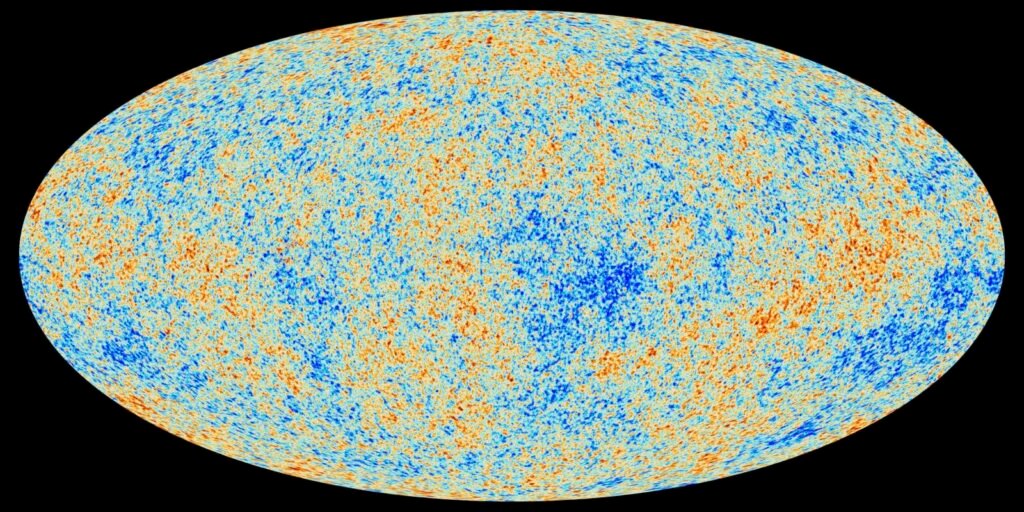
When you hear “cosmic microwave background,” it can sound abstract and remote, but you’ve probably seen a tiny hint of it without realizing it. Older televisions, when not tuned to a channel, showed a bit of static; a small fraction of that snow was caused by this ancient cosmic radiation. Today, sensitive space telescopes detect this faint glow not as visible light, but as microwaves, a form of low-energy electromagnetic radiation.
To you, the important thing is that this radiation fills the entire sky, coming equally from every direction, like a soft, invisible bath of energy. Its temperature is just a few degrees above absolute zero, remarkably uniform with only very slight variations. Those tiny temperature differences are not noise; they’re the treasure map. They encode where matter was slightly denser or slightly thinner in the early universe, and that’s where the real story about your cosmic origins begins.
The Tiny Fluctuations That Became You
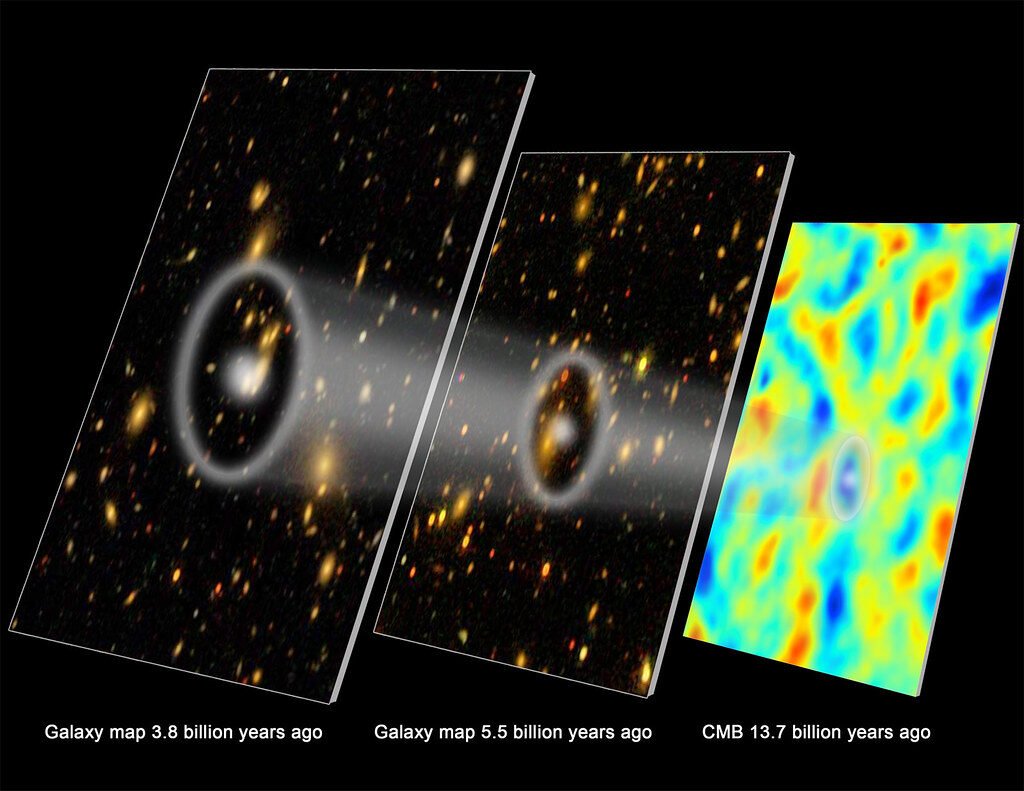
At first glance, maps of the cosmic microwave background look like a mottled pattern of tiny hot and cold spots. To your eyes they might seem like random speckles, but to cosmologists, those spots are the seeds of everything. Places that were a little denser in the early universe had slightly stronger gravity, so they pulled in more matter over time, slowly growing into clouds of gas, then stars, galaxies, and eventually clusters of galaxies.
When you trace that chain of events, you realize that you are literally built from those early fluctuations. The atoms in your body followed the gravitational script written in those tiny temperature variations. In a very real sense, the pattern of specks in the cosmic background helped decide where your galaxy would form and where your planet would eventually orbit a star. You’re not just living in a universe shaped by those early ripples; you are one of the outcomes of that ancient pattern.
How This Oldest Light Confirms the Big Bang
If you want to know whether an idea about the universe is serious, you ask what it predicts and whether reality actually looks like that. The Big Bang model predicted that, if the universe began hot and dense and later expanded and cooled, there should be leftover radiation filling space with a specific temperature and spectrum. When astronomers discovered the cosmic microwave background in the twentieth century, they found exactly that: a nearly perfect “afterglow” with the properties that a hot young universe would leave behind.
As more accurate measurements came in, you could test the Big Bang picture in even more detail. The tiny fluctuations in the background light match what you’d expect from sound waves traveling through the early cosmic plasma, frozen in place when the universe became transparent. When you compare the data to theoretical models, they line up uncannily well, making the cosmic microwave background one of the strongest pillars supporting the idea that the universe had a hot, dense beginning rather than having looked the same forever.
What You Can Learn About the Universe’s Ingredients
By studying the fine details of the cosmic microwave background, you can actually weigh the universe and see what it is made of. The size and strength of the temperature fluctuations tell you how much normal matter there is, how much dark matter is present, and even how much dark energy is driving the expansion of the cosmos. You’re basically reading a cosmic recipe list written across the sky, with each type of matter leaving its own fingerprints in the pattern.
This might sound incredibly abstract, but it has direct implications for your understanding of reality. When you learn that normal matter, the kind that makes up you, planets, and stars, is only a small fraction of the total cosmic budget, your everyday experience gets put in perspective. Most of the universe’s content is invisible and interacts weakly or not at all with light, yet it shapes the structure of everything you see. The oldest light becomes your guide to a hidden universe that your eyes alone would never reveal.
How the Oldest Light Measures Space and Time
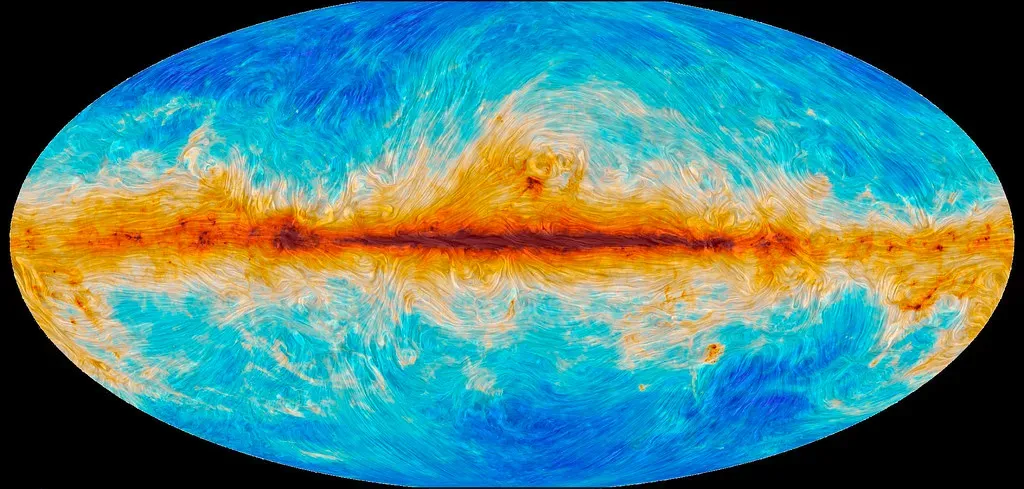
One of the most surprising things you can do with the cosmic microwave background is use it as a ruler and a clock. The size of specific features in the background pattern tells you how fast the universe has been expanding, and therefore how old it is today. By comparing the apparent size of those features in the sky with physical models, you can estimate the age of the universe with remarkable precision, landing on a figure of many billions of years.
For you, this means the oldest light does more than whisper about where matter went; it also tells you when things happened. It sets the timeline for the birth of the first stars, the formation of galaxies, and the long path to planets like Earth. When you say the universe is a certain age, you are leaning heavily on this fossil light as your evidence, trusting its journey across space and time to carry a reliable timestamp from the cosmic past.
Hints About the First Fractions of a Second
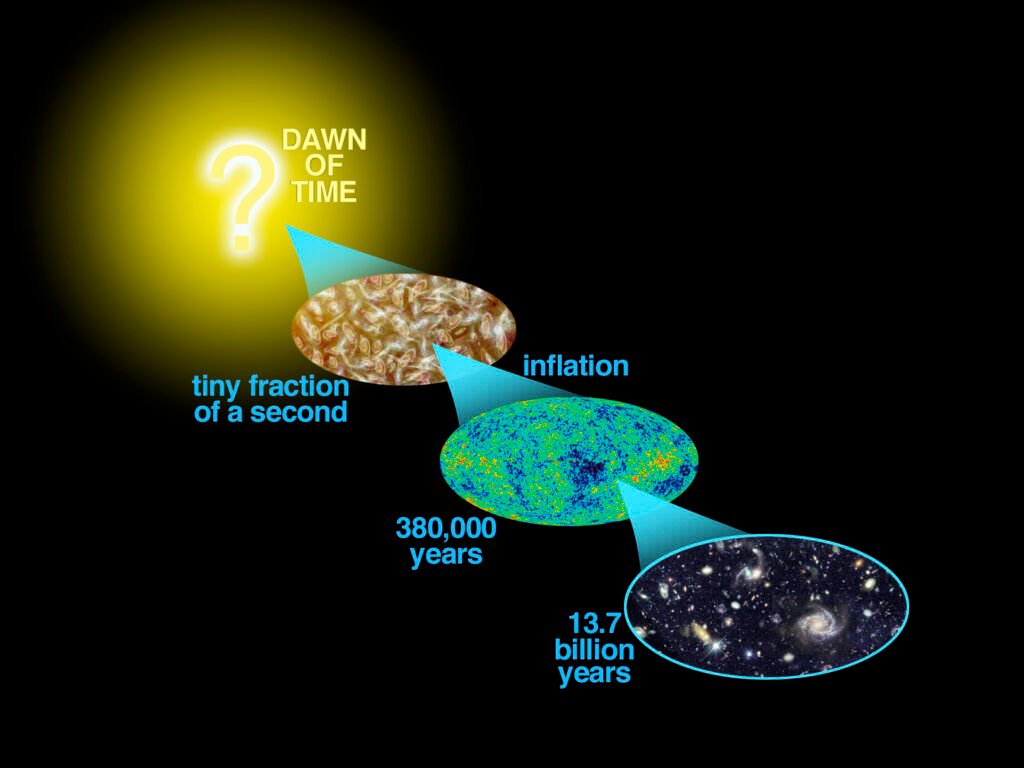
Although the cosmic microwave background comes from hundreds of thousands of years after the Big Bang, it still carries clues about far earlier moments, including the first tiny fraction of a second. Many theories propose that the universe went through a dramatic burst of extremely rapid expansion, often called inflation, in its earliest instant. That process would have stretched microscopic quantum fluctuations into the cosmic seeds that later became galaxies, leaving a characteristic pattern in the background light.
When you look closely at the statistical properties of the cosmic microwave background, you see signs that support this idea of an early rapid expansion, even if some details are still being debated and explored. You might also search for very subtle signatures, like specific polarization patterns in the light, that could further confirm or refine these early universe theories. In this way, the oldest light acts like a messenger from times you can never see directly, letting you test ideas about physics at energies and conditions you can’t reproduce on Earth.
What This Means for Your Own Cosmic Story
It’s easy to think of the cosmic microwave background as something remote and purely scientific, but if you let it sink in, it reshapes your sense of personal identity. You are living in a universe whose earliest moments are still echoing all around you, and you are made from material that followed a path laid out in that ancient pattern. The same gravity that pulled matter into the first galaxies also guided the formation of your star system and, eventually, your body.
When you look up at the night sky, you’re seeing only the latest chapter in a story that began long before any star was born. The oldest light reminds you that your existence is not random or disconnected, but part of a continuous cosmic unfolding. Your atoms carry a history that stretches back to the first few hundred thousand years of the universe and, in a deeper sense, all the way to the mysterious earliest instants that the background light still hints at. You are not just an observer of this ancient glow; you are one of its outcomes.
In the end, decoding the universe’s oldest light gives you more than numbers and models; it gives you a new way to see yourself. You learn that you’re woven into a tapestry that began with tiny ripples in a hot, young cosmos, preserved in a faint microwave glow that still bathes you today. The more you understand that glow, the more your own life feels like a small but genuine part of a vast, ongoing story. When you think about the universe’s baby picture now, does it change how you see your own place in the world?