

You think your five senses are impressive? Sight, hearing, smell, taste, touch. They serve you well enough, sure. But the moment you start digging into the animal kingdom, it becomes almost embarrassing how limited human perception really is. There are creatures out there experiencing reality in ways that would make your brain short-circuit if you could borrow them for even a second.
While your senses are limited to what you can see, smell, hear, taste, and feel, some animals have entirely different perceptions, often possessing the same senses as humans but at far higher intensity and sensitivity. Some have senses you don’t even have a name for. Think electrical fields. Infrasonic rumbles crossing kilometers of open savanna. A nose that can smell underwater. Honestly, the list goes on in ways that are hard to wrap your head around.
Get ready to feel very, very ordinary. Let’s dive in.
1. Mantis Shrimp: The Creature With the Most Complex Visual System on Earth
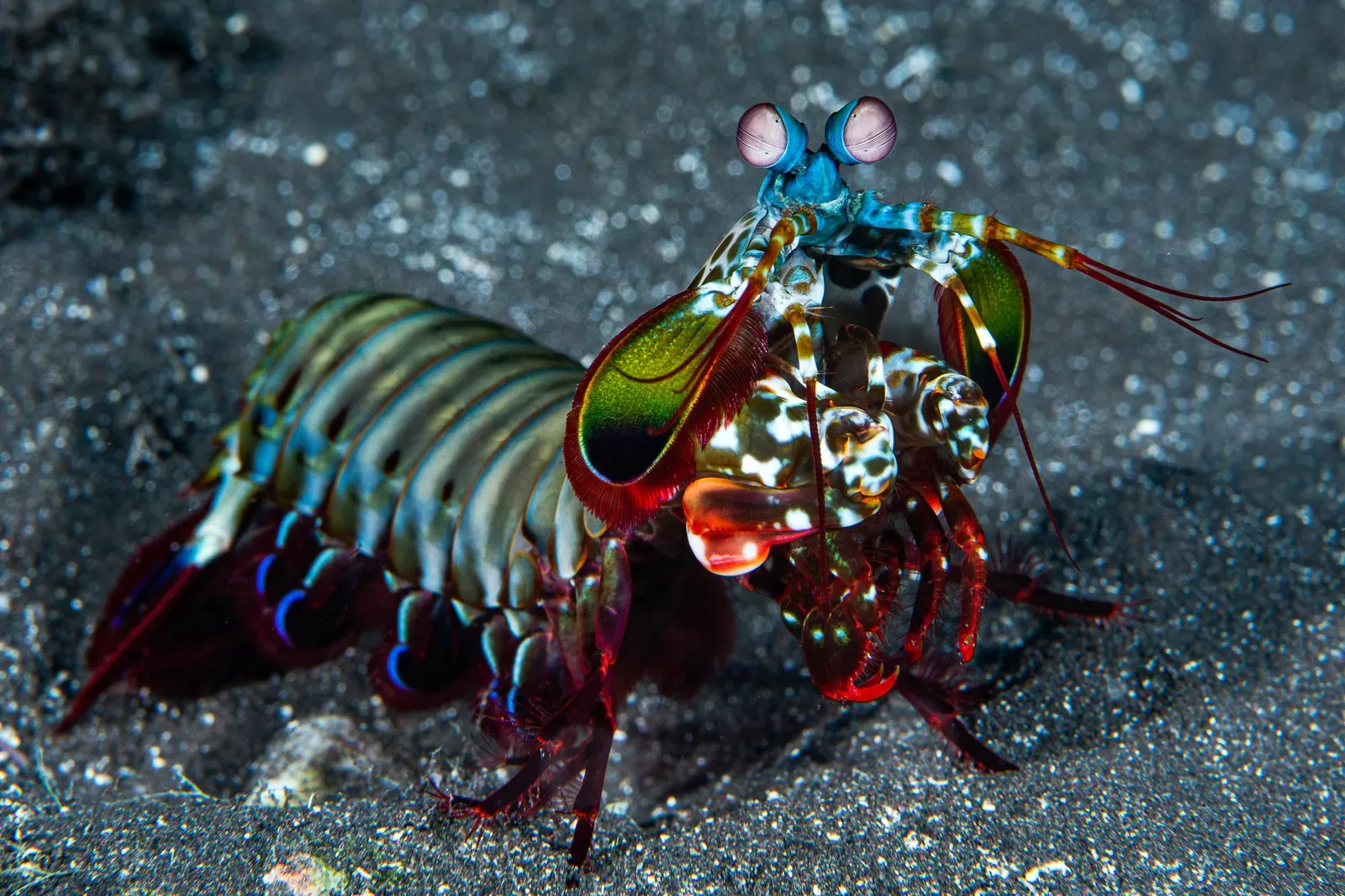
If you think seeing in color is a gift, wait until you hear this. The mantis shrimp has 16 types of photoreceptors that can detect visible and ultraviolet light, and they are the only known animals to see circularly polarized light. For comparison, you operate with just three types of color receptors. Three. The mantis shrimp has more than five times that number.
Each eye of the mantis shrimp has “trinocular vision,” meaning it can gauge depth and distance on its own by focusing on objects with three separate regions, and they can see a special spiralling type of light called circularly polarized light that no other animal can. Visual inputs like color and polarization travel from the eyes to the brain along multiple parallel pathways, which allow the mantis shrimp to process visual inputs concurrently. Their vision isn’t just richer than yours, it operates on a completely different logical framework altogether.
2. Great White Shark: The Underwater Electrical Detector
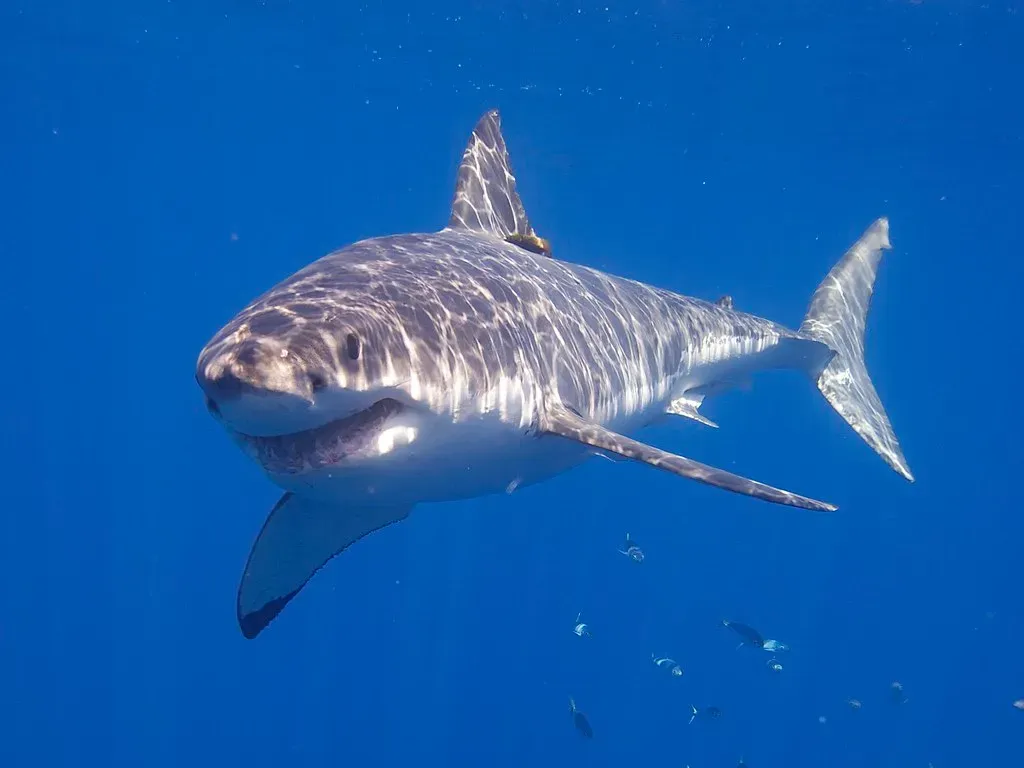
Here is a thought that should genuinely unsettle you. Even if you were completely still at the bottom of the ocean, a shark could find you. Not by sight. Not by smell. By the tiny electrical field your body generates just by being alive. Sharks possess one of the animal kingdom’s most sensitive electroreception systems through specialized organs called ampullae of Lorenzini, which are jelly-filled canals opening through pores in the shark’s snout that can detect electric fields as weak as five nanovolts per centimeter, allowing them to detect the minute electrical fields generated by the muscle contractions of prey animals, even when hidden under sand or murky water.
Sharks and rays use organs called the ampullae of Lorenzini, while electric fish rely on patches of electroreceptors scattered across their skin. It is even possible that sharks use Earth’s magnetic field to navigate the oceans using this sense. So not only can they sense your heartbeat from a distance, they may also be using the planet’s own magnetic field as a GPS system. Let’s be real: that is not just a super sense. That is borderline supernatural.
3. Elephant: The Master of Infrasonic Communication

You have seen elephants at a watering hole or a nature documentary, going about their enormous lives as though everything is perfectly coordinated. It is. You just cannot hear how. Elephants communicate using very low frequency sounds, with pitches below the range of human hearing, and these “infrasounds” can travel several kilometers, providing elephants with a “private” communication channel. Your ears simply are not built to receive the conversation.
Infrasound in the range of 1 to 20 Hz may be generated and detected by elephants over distances in excess of 10 km. The unique anatomical relationship between the length, mass, and elasticity of elephant vocal folds indicates that elephants have evolved the capacity to produce lower-frequency sound than any other terrestrial animal, and they have been shown to have the ability to produce and detect sound over the widest range of frequencies of all nonhuman mammals. Think of it as a secret radio frequency. A whole civilization of communication, playing out right beside you, completely inaudible.
4. Duck-Billed Platypus: Nature’s Most Unexpected Electroreception Expert
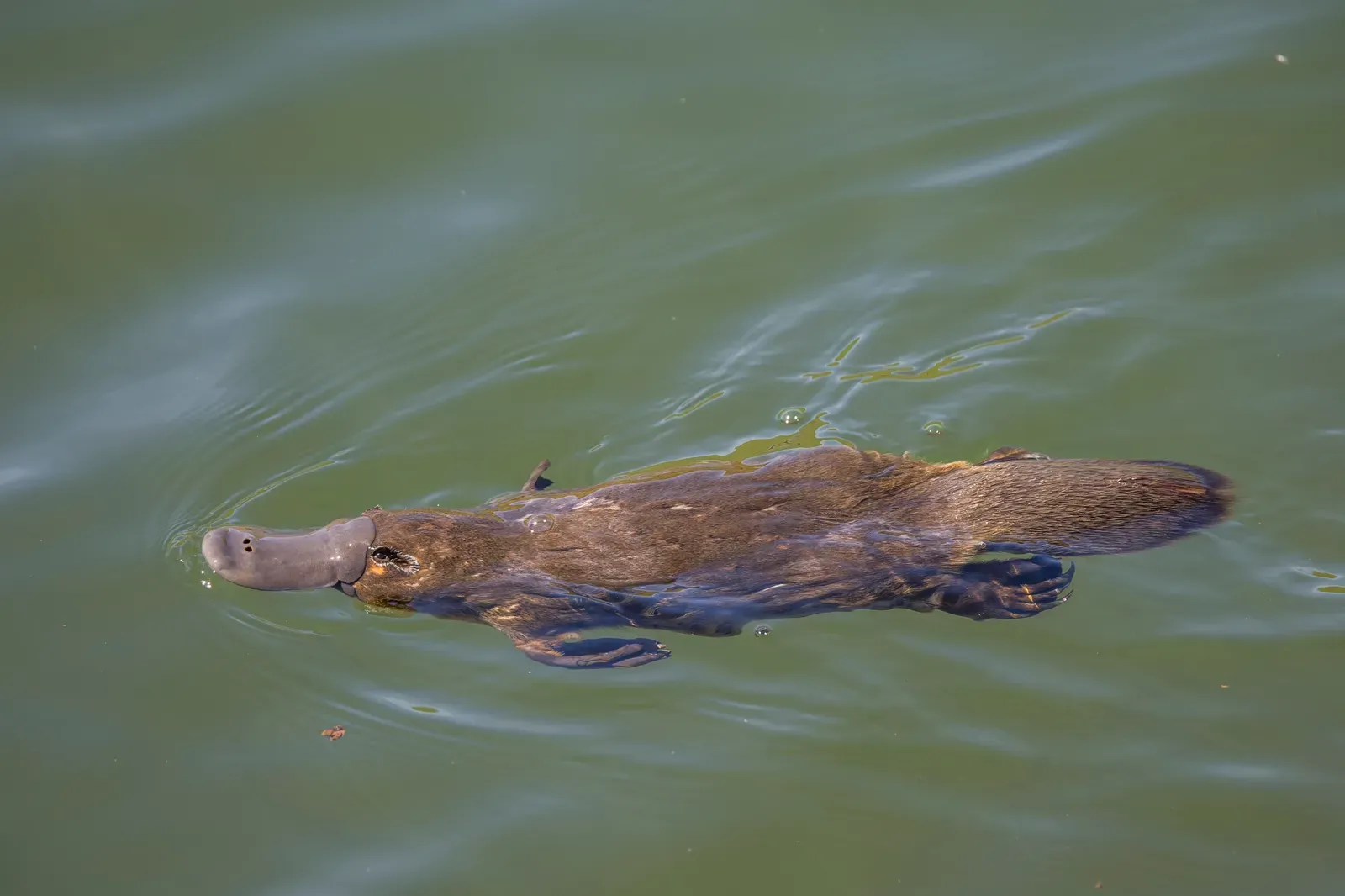
The platypus already wins awards just for looking the way it does. An egg-laying mammal with a duck bill, beaver tail, and otter feet. Yet somehow that still is not its most remarkable feature. The duck-billed platypus possesses one of the animal kingdom’s most sophisticated electroreception systems, with a distinctive bill containing thousands of specialized electroreceptors that can detect the tiny electrical fields generated by the muscle contractions of prey animals, and when hunting, platypuses close their eyes, ears, and nostrils, relying entirely on electroreception to locate prey in murky waters.
The platypus has almost 40,000 electroreceptors arranged in a series of stripes along the bill, which probably aids the localization of prey. The platypus electroreceptive system is highly directional, and by making short-latency head movements called “saccades” when swimming, platypuses constantly expose the most sensitive part of their bill to the stimulus to localize prey as accurately as possible. It is as if evolution handed the platypus a built-in sonar system and then dressed it up in the most confusing body imaginable.
5. Star-Nosed Mole: Touch Sensitivity Taken to an Almost Absurd Level
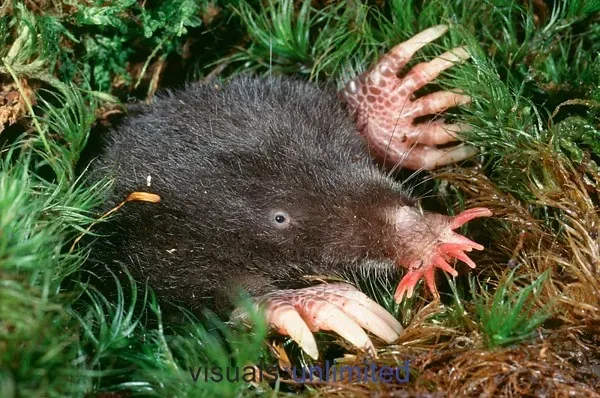
The star-nosed mole has very poor eyesight and few defense mechanisms, but it does have a powerful nose. What look like small fingers on the tips of their snouts are called tentacles, and these tentacles form a bright pink star that contains thousands of nerves. It looks like something from a science fiction film. Yet that bizarre star is arguably the most sensitive touch organ ever studied in any animal.
Star-nosed moles are somatosensory specialists that explore their environment with 22 appendages that ring their nostrils, and the appendages are covered with sensory domes called Eimer’s organs. Star-nosed moles combine touch and echolocation, processing information in under 100 milliseconds to identify prey, and this fusion maximizes efficiency in low-visibility environments. That is processing speed so fast that the mole has essentially already decided what it found before your conscious mind could even register the question.
6. Bat: The Original Echolocation Engineer
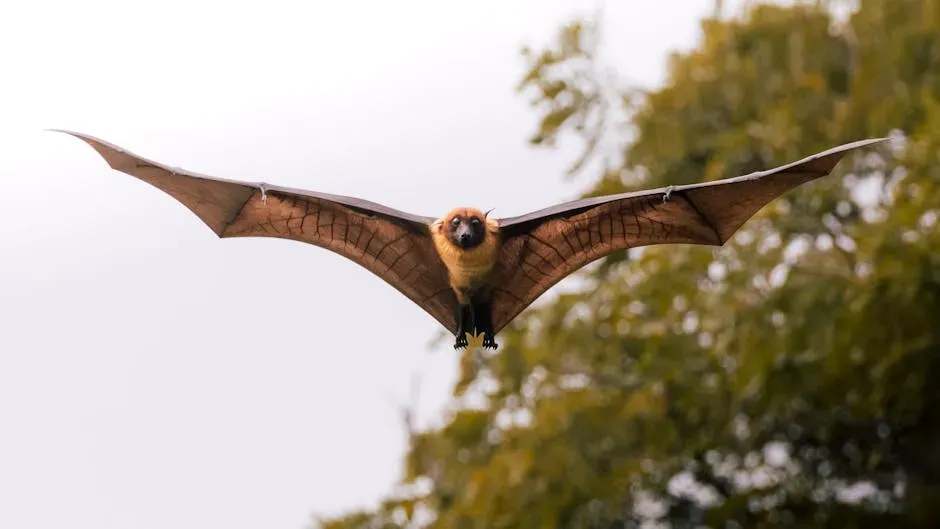
You may already know that bats use echolocation, but the sheer engineering precision behind it is something worth truly appreciating. Bats emit ultrasonic calls that bounce off objects, allowing them to build detailed spatial maps of their surroundings, and this system enables precise navigation and insect capture in complete darkness, even at high speeds. They are essentially flying with their ears rather than their eyes.
Bats and many other species use ultrasound to echolocate, which involves firing an astoundingly high-pitched noise out into the environment, and this series of high-frequency sound waves reverberates off anything it contacts, such as a tasty prey item buzzing nearby. Some bat species have evolved specialized nose structures, like leaf-nosed bats, that help focus their sound emissions for even greater precision, and this extraordinary sensory adaptation has allowed bats to dominate the nocturnal flying niche for over 50 million years. Fifty million years of success. Hard to argue with the engineering.
7. Pigeon: The Living GPS With a Magnetic Compass

You would not guess it looking at them pecking at crumbs in a town square, but pigeons carry one of the most sophisticated navigation systems in the entire animal kingdom. This remarkable adaptation involves specialized cells containing magnetite, a naturally magnetic mineral, in their beaks and inner ears, along with light-sensitive proteins called cryptochromes in their eyes that may allow them to visually “see” magnetic fields, and pigeons can navigate successfully over thousands of miles, even when released in unfamiliar locations or when visual landmarks are obscured.
A 2025 study in Science presents two lines of evidence that pigeons sense magnetic fields in their inner ears: brain mapping found populations of neurons whose activity is triggered by magnetic fields, and brain activity of pigeons exposed to a rotating magnetic field was compared to that of control birds, with activity found in the part of the brain linked to the semicircular canals. Their magnetic sense appears particularly important for maintaining direction during long flights and on cloudy days when solar navigation is limited, and scientists have discovered that disrupting pigeons’ exposure to magnetic fields significantly impairs their navigational abilities. Your phone needs a data connection. The pigeon needs nothing.
8. Pit Viper: Seeing the World in Heat
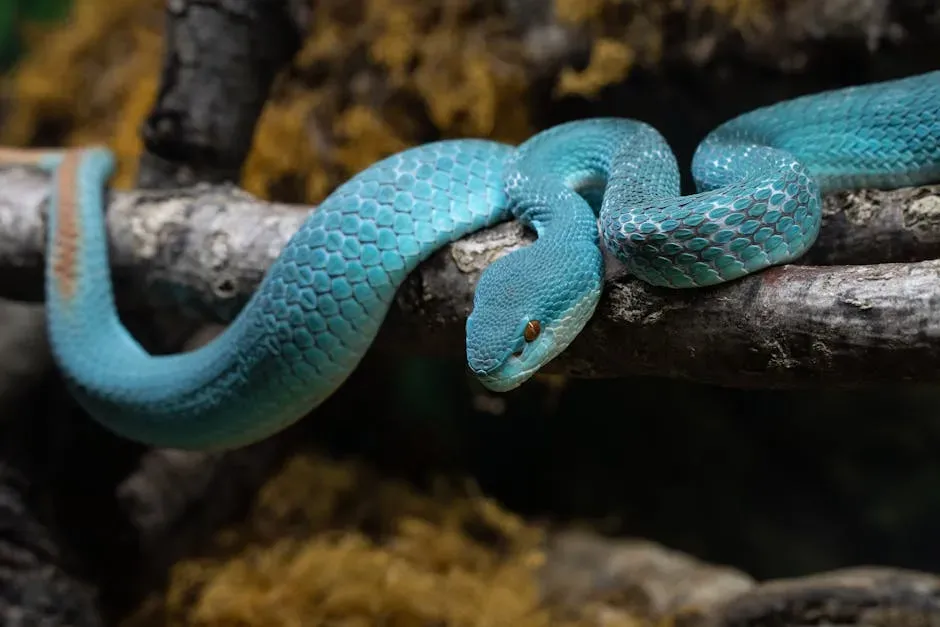
Pit vipers have essentially solved the problem of hunting in complete darkness, and the solution is more elegant than anything humans have built. Certain species of snake have holes below their eyes called pit organs, which house receptors that can detect heat emitted up to a metre away. It is the biological equivalent of thermal imaging goggles, except they have been wearing them for millions of years.
Pit vipers, boas, and pythons are equipped with heat-sensing pits on their faces that can detect the body heat of their prey, and this ability makes them expert hunters, even in complete darkness. These heat-sensitive organs are so accurate that snakes can strike with precision even if they cannot see their target. Think about that. No eyes needed. No light needed. Just the warmth radiating from a living body, and that is enough to make a perfect strike in absolute darkness.
9. Catfish: The Animal That Tastes With Its Entire Body
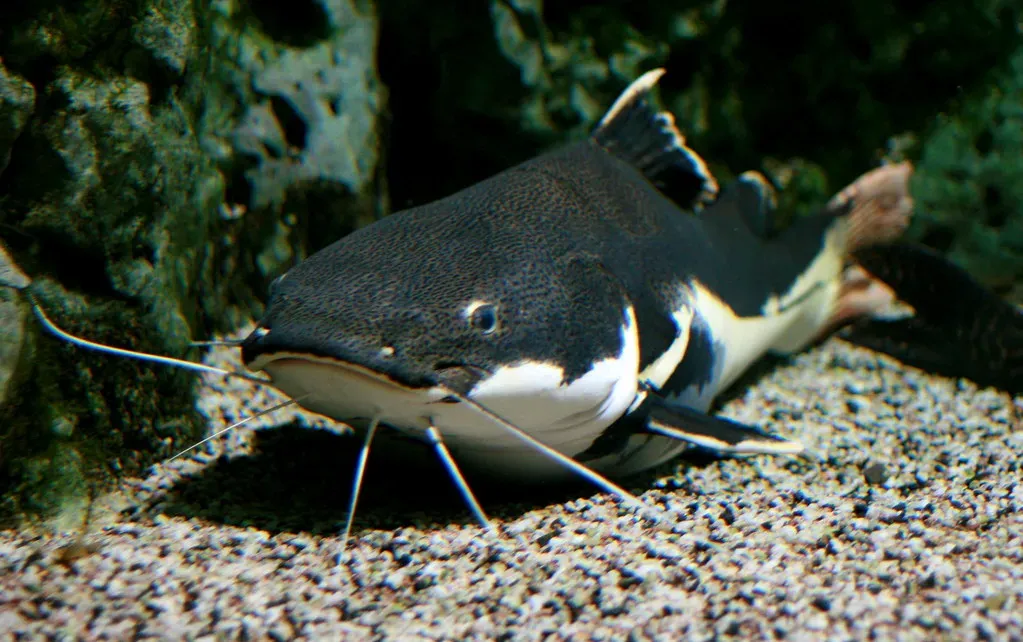
Here is a sense experience you simply cannot imagine. The catfish has taste-detecting receptors or cells located all over its body, and no matter which direction it swims or how murky the water is, its receptors make it easier to determine if food is nearby. Catfish swim in some of the murkiest freshwater in the world, so they may not always see their food, and their super-sense of taste helps them find prey more efficiently.
A catfish has tiny hair on its body that are extremely sensitive to vibrations, so much so that it is believed the catfish can detect earthquakes days in advance. So you have an animal that can literally taste the water around it through its skin while simultaneously sensing seismic tremors through microscopic body hairs. I honestly think the catfish is one of the most underrated animals in this conversation. A muddy river is its entire world, and it reads that world like a book.
10. Jumping Spider: Eight Eyes and a View That Covers Everything
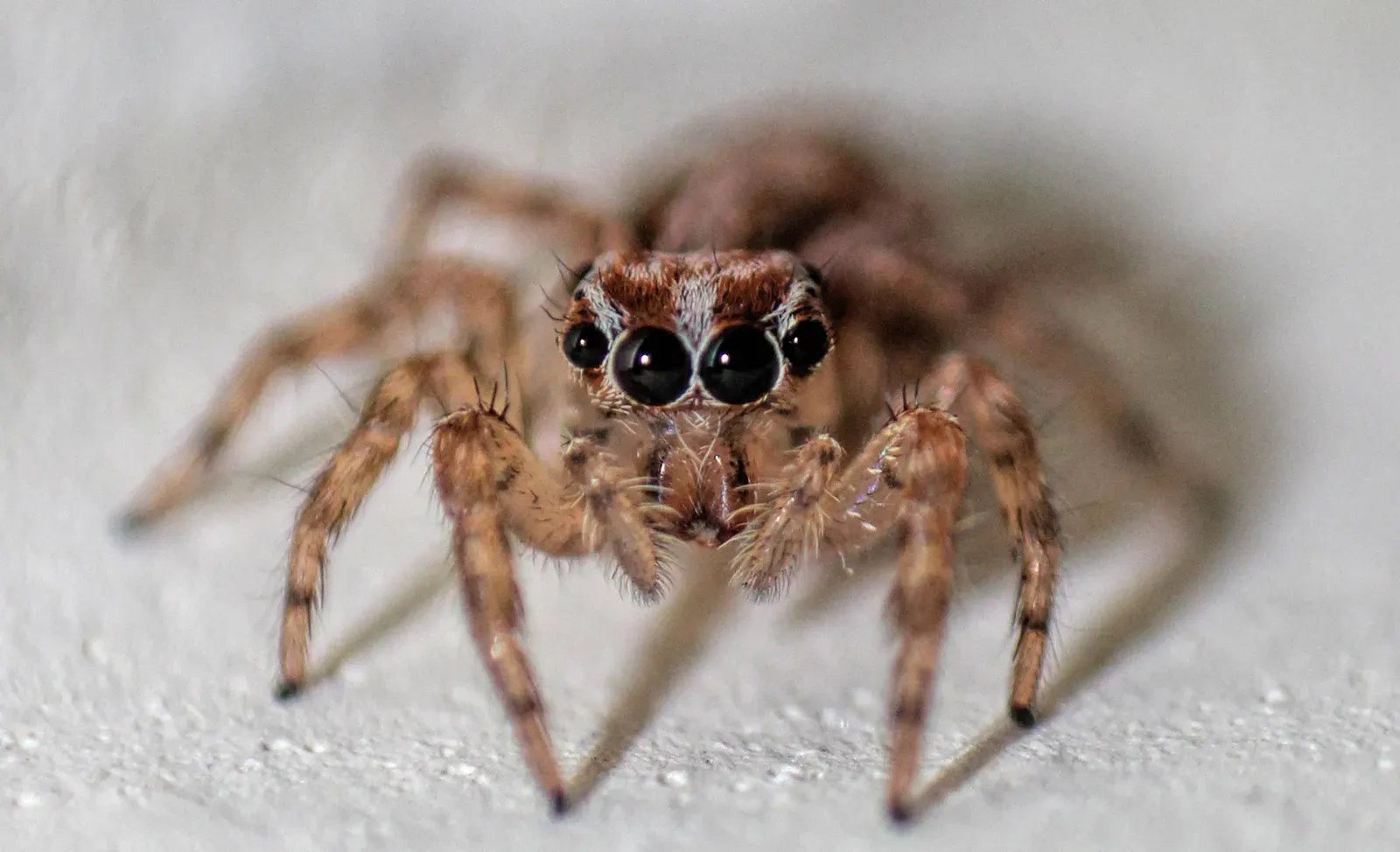
Most spiders have eight eyes, but the jumping spider is special. It is not just the number, it is the layout and design. Jumping spiders have panoramic vision thanks to the eight eyes on their heads, positioned in a way that creates a wide range of sight, and this arachnid’s vision not only helps it spot its next meal, but it also detects predators that are lurking about, giving the jumping spider quite an advantage over its prey, as it can move in any direction with ease.
Eagles have eyesight calculated to be four to eight times more powerful than that of humans, and they have a higher number of light-sensitive cells and a wider field of view, allowing them to detect movement from incredible distances. The jumping spider, though tiny, uses a similar principle of maximizing light-sensitive coverage, operating with a visual system where almost no angle goes unmonitored. It is like having a security camera system built into your skull. Nothing sneaks up on a jumping spider. Nothing.
Conclusion: The World Is Far Stranger and Richer Than You Can Sense

Every time you walk through a forest, wade into the ocean, or even step into your garden, you are surrounded by creatures experiencing a version of reality you genuinely cannot access. These animals only prove that what humans can perceive is limited to a very narrow band of what is possible, and while humans might have highly developed intellectual abilities, these creatures with their super sensors are not less impressive either.
The mantis shrimp sees dimensions of color you lack the hardware to imagine. The shark feels your heartbeat through the water. The elephant hears a conversation happening several kilometers away, completely beyond your range. It is humbling, honestly, and a little thrilling. Such adaptations demonstrate that sensory evolution is not about superiority but specialization, each animal perfectly tuned to its world in ways that still leave scientists astonished.
The animal kingdom is not just diverse in body shape. It is diverse in perception itself. Which of these super senses surprised you the most? Drop your thoughts in the comments below.